The Don Linke Trialogue will perform at Bay View Jazz Fest
A Great Lakes bay view allows one to look outward, into the horizon of pure beauty and possibility, and sidelong, upon known shore-hugging entities that still command respect and affection — partly because they, too, honor that open horizon.
That’s sort of how I see the Bay View Jazz Fest, on Friday night, June 3, the year’s best one-day way to discover what’s happing in Milwaukee jazz by providing venues for a spate of top-notch bands to choose from, all for free, in one evening.
I know I’ve always enjoyed it and found gratifying new discoveries along with the fresh, stimulating reassurances of well-established composers and creative improvisors.
The event bejewels the “downtown” street of Bay View, South Kinnickinnick Avenue.
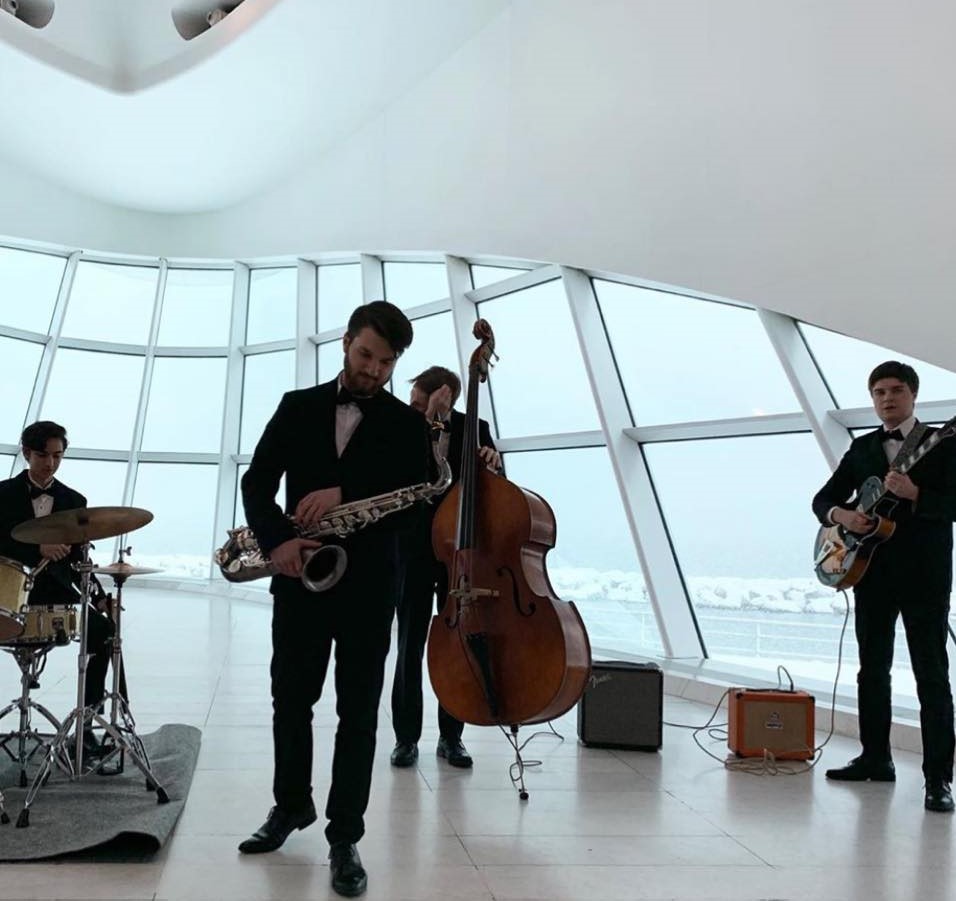
I’d recommend the Jamie Breiwick Trio, The Don Linke Trio and The Russ Johnson Quartet for starters, (led respectively by a trumpeter, a guitarist-vocalist, and a trumpeter). The Cosmic Endeavors quartet (pictured above at the Milwaukee Art Museum) and The Jamill Shaw Quartet look promising. But pick and choose as you see fit.
If you enjoy and appreciate the jazz art form, or are just curious about it, don’t miss it.
See ya there.
Here’s the official fest poster with the line-up and pertinent info:
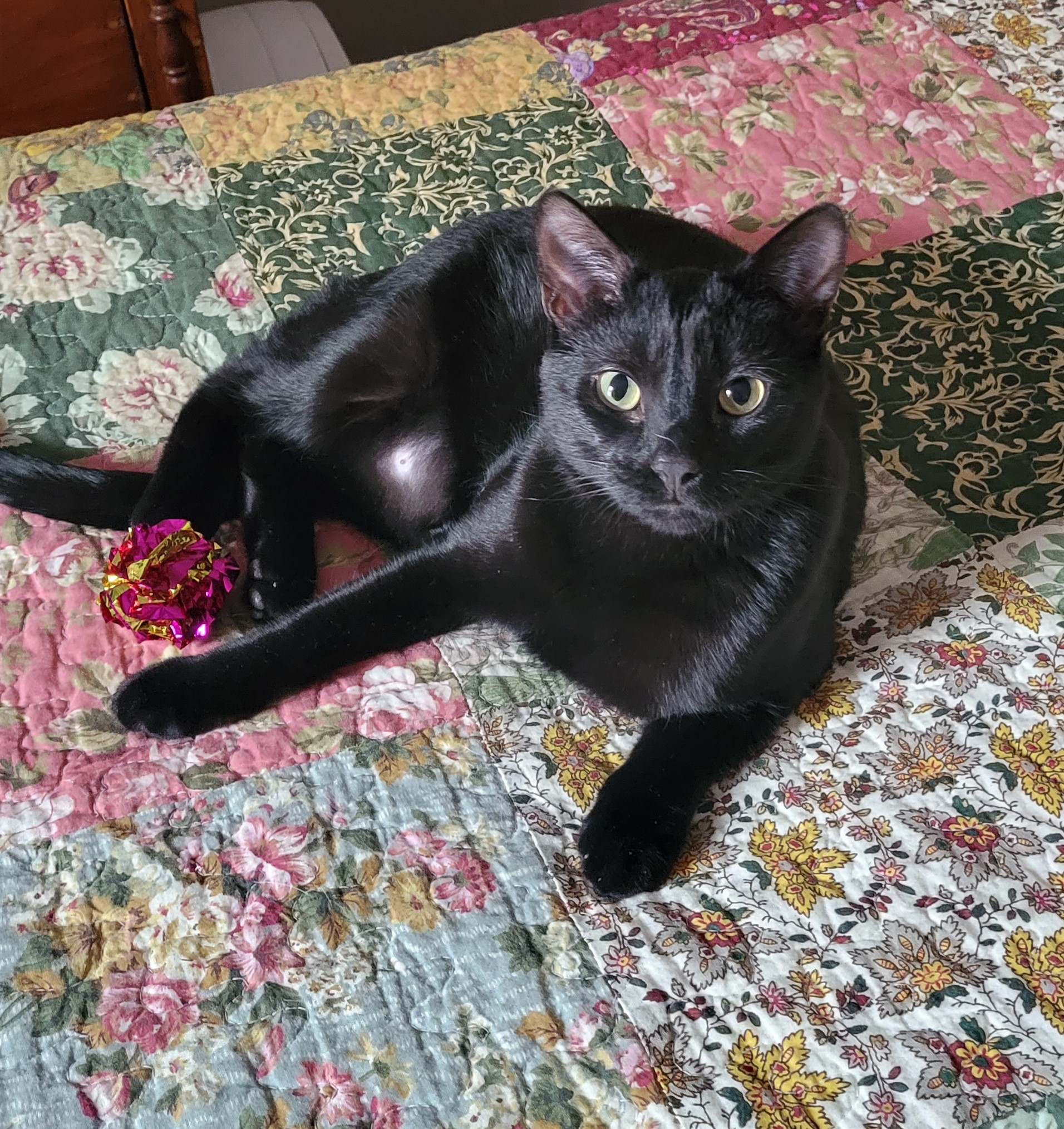
Please be on the lookout or hear-out regarding a small black cat that may have escaped hour upper flat tat 3432 N. Fratney St. Milwaukee (where last seem, but not even outside…) He is named “Eddie” and usually responds to a friendly voice calling him, a treat might help — to rattle cat treats in a container. If you find, locate or capture him, please call Ann at 414-573-5144, or Kevin at 414-949-1432. We’re offering a reward of $ for his safe capture or return.
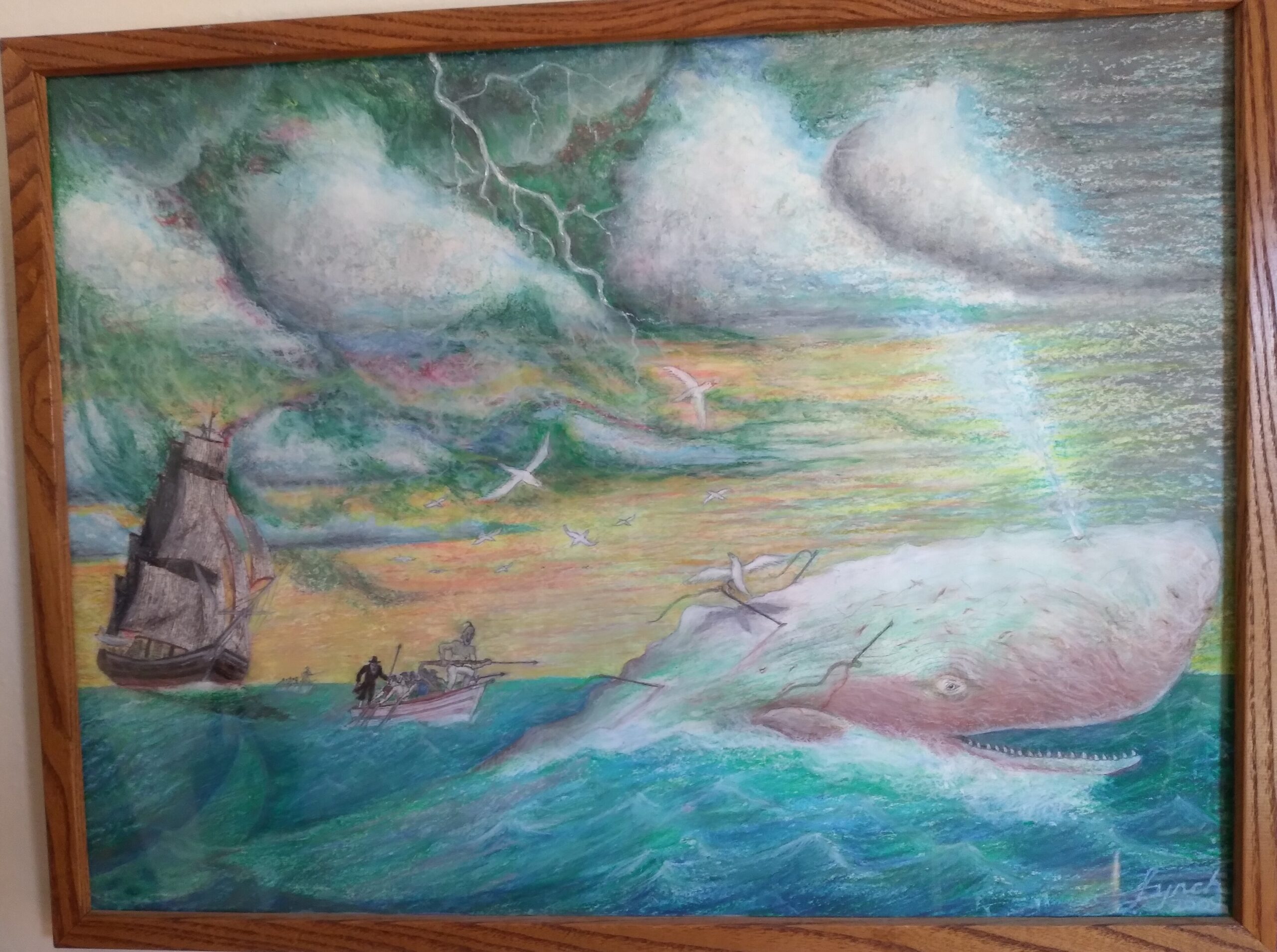
“Thar she blows!” the cry comes from high up in the crow’s nest. “Thar she blows, a hump like a snow hill! It is Moby Dick!”
Feminizing all whales is part of the romance of the high seas. This she is really a he, the great White Whale who’s hunted monomaniacally by Captain Ahab in Herman Melville’s profoundly precient and symbolically pregnant masterpiece, Moby-Dick or, The Whale.
Those who’ve read this blog over the years may be aware of the precipitous esteem I hold for this extraordinary book. It has inspired me to write a novel about its author, somewhat forestalled by a myriad of circumstances, but forthcoming in due time.
This is a book that an artist of some repute whom I know aptly characterized as “the first postmodern novel” — published in 1851! It might also be the most critically commented-upon work of fiction in modern history, and the most widely referenced in popular culture, certainly among books that are not often actually read.
It has also inspired the visual artist in me.
So I’ve undertaken a series of pastel drawings with Moby Dick as my motif. And one of the perhaps more successful of these will soon be on display in an art exhibit at the Jazz Gallery Center for the arts.
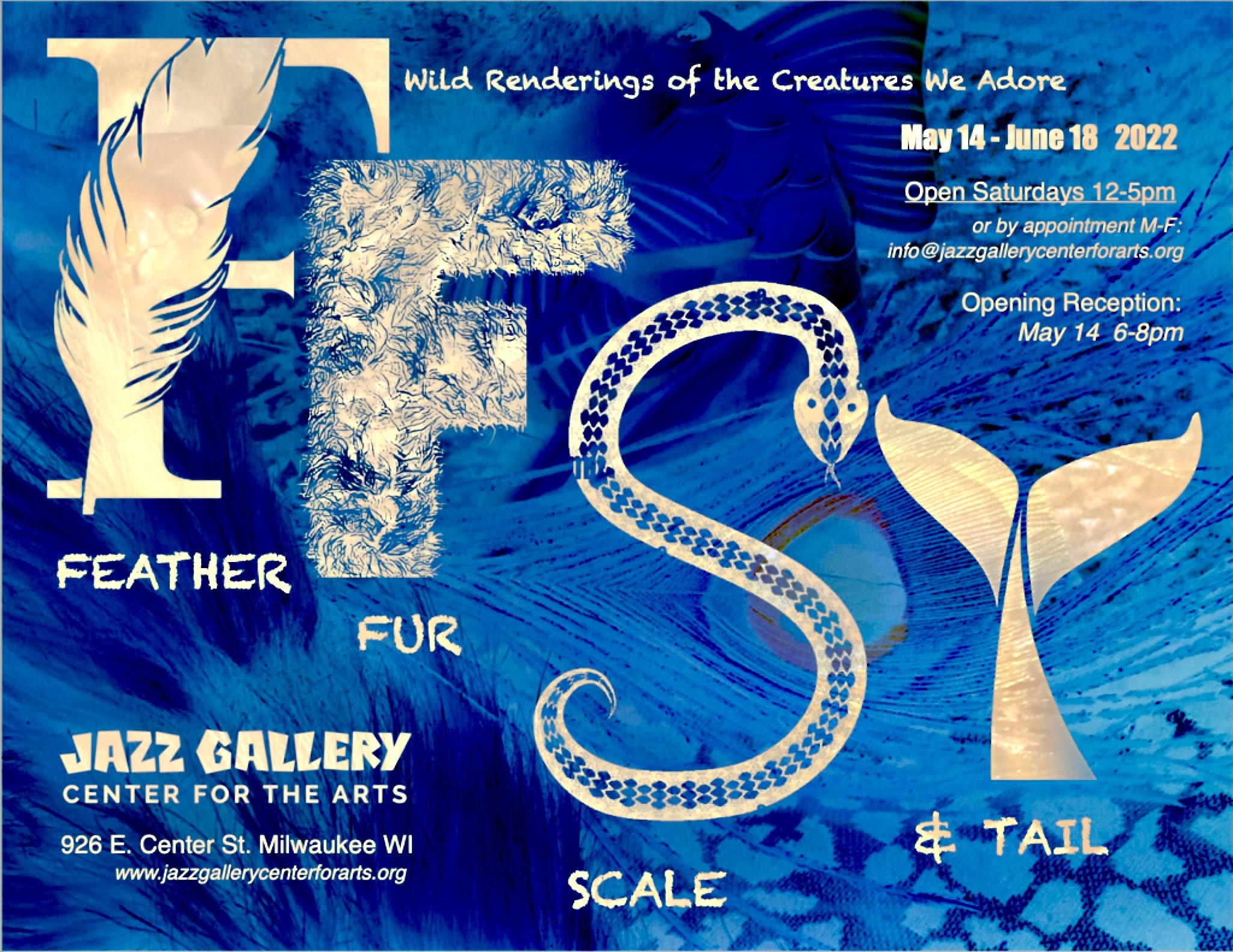
The exhibit is announced in this poster, though one correction the opening reception’s time has een changed to 5 to 7 p.m. Saturday:
The exhibit will include Linocut Print | Sculpture | Comic-Book Illustration | Photography | Assemblage Box-Making | Encaustic | Pastels | Screen Print | Painting | Digital Drawing
This event has brought me to the realization I should have a digital copy of this pastel professionally made. My apologies for the poorly depicted image at top. But you get the idea from my hand-held photo. I hope it strikes your fancy or interest enough to visit the opening or ensuing gallery days of this promising show.
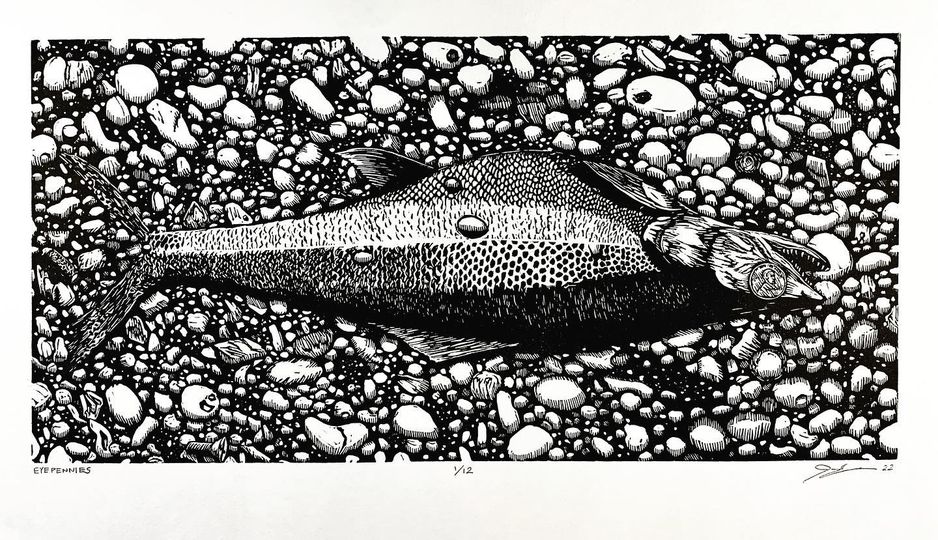
Here’s an image of another artwork in the show, a block print by Jay Arpin.
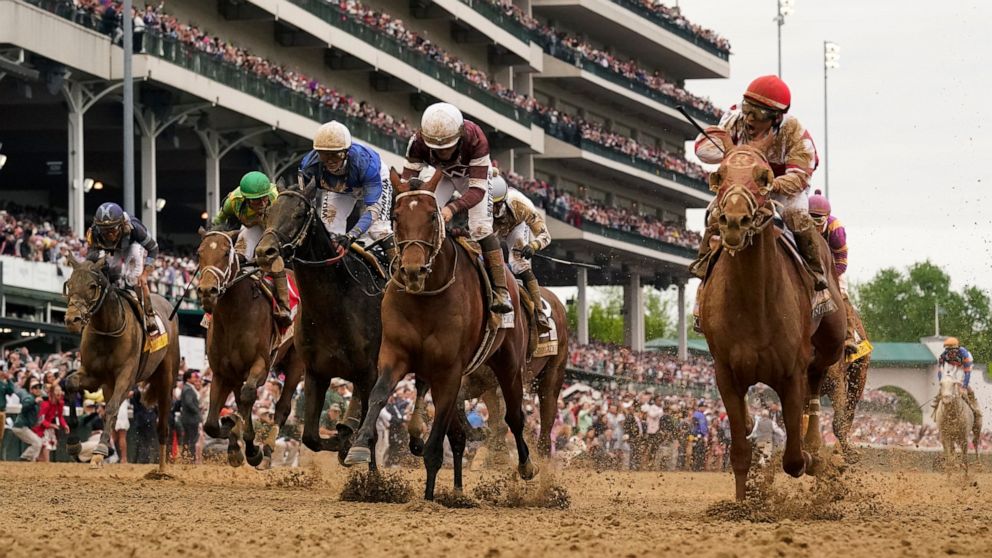
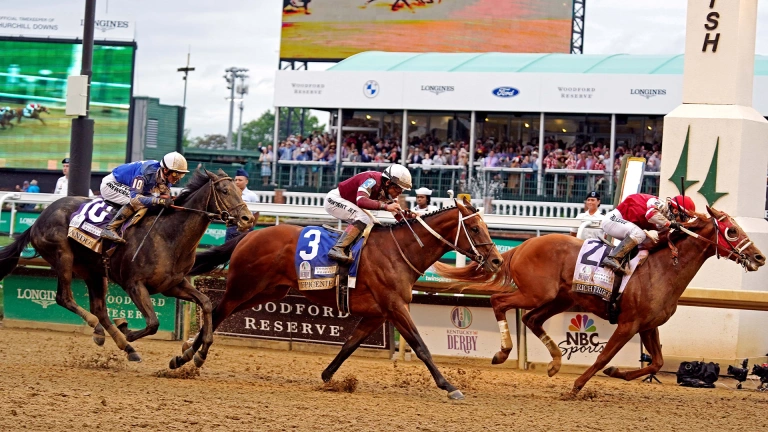
An astonishing upset: Jockey Sonny Leone (right) exhorts Rich Strike — the field’s longest-shot — past the leaders in the final few strides of the Kentucky Derby.
You watch the bird’s-eye replay of the race, with Rich Strike electronically highlighted to follow, and immediately you feel yourself rooting for this improbable horse, when you see where he is approaching the final turn — still behind sixteen horses!
After watching and re-watching the most electrifying two minutes in sports I’ve seen in a long time, I realized I needed to write something about Rich Strike’s astounding upset victory in the Kentucky Derby. This is culture of the most suddenly impactful sort, marking a legend like a streaking arrow, enriching history. It’s hard not to love the underdogs who’ve toppled the mighty, and the benefits that might signify, when the vast majority of the globe’s inhabitants live far beneath the mighty.
This event was also amazing to me because I had no rooting or betting interest in this. I do enjoy horse racing, but so casually that I usually even forget that the Kentucky Derby is happening, as I did this time.
So, there’s no built-in subjective reason this should be so thrilling for me.
This race has several key components: the horse, of course; the jockey, the horse’s long-shot betting odds, and the nature of this race itself.
First the horse, and all his improbability. He has never won a race before and didn’t even really qualify for this field. He was added only because another horse was scratched shortly before the beginning.
So, to the race: Rich Strike spends the first mile absolutely straggling, or so it seems, with only a few horses behind him.
Here’s the full race:
But the leaders set an extraordinarily fast pace, which will help determine what happens in that final turn. It’s always a great pleasure to watch the collective rhythm of racing horses — surging, sprinting, and jockeying for position, tails a-wagging.
The thundering hooves continue until the horses are nearing the final turn and the home stretch.
Here the tell-tale overhead camera pinpoints Rich Strike. It’s amazing to see the ground he makes up from here:
Even as Rich Strike finally clears a bunch of horses and finds the inside railing clear and open, the betting favorite, Epicenter, has just surged powerfully into the lead. And the final turn is in process, so Epicenter can see the tall, white finishing pole by now and looks dead-on determined to not lose the lead.
Meanwhile, Rich Strike has grabbed your attention as jockey Sonny Leone — riding his very first Derby — maneuvers the three-year-old out of a jostling mess of horses. Increasingly I realize what a brilliantly savvy horseman he was. Yet, you still don’t think the longest shot has a chance, nor any other horse, at that point. The announcer Larry Collmus, is now bullishly calling the drama, growling out “Epicenter takes the lead!” with stentorian power. He’s a great race caller, with a perfectly attuned sense of drama dynamics.
And yet, here is where the greatest underdog begins to accelerate and, as you watch him zoom past horses, you begin to lose your breath. He has to finally move back inside around the number-three horse to make his final hurdle-to-glory run.
And sure as hell, there he is, gaining on the two lead horses. Here’s where the fast pace comes into play because, despite the impressive lead of the two battling horses, they may be losing gas. And Rich Strike apparently has saved enough in that first half mile that he could now show the world how powerful and brilliant a sprinter he is — at the very end. And what kind of character he has. You certainly could sense that this horse wanted it more than any other, because there was a hard-to-measure willfulness in that dazzling final dash to victory.
At the finish line, Rich Strike has come “out of nowhere” to win The Kentucky Derby by one length. NBC
You begin to see why the overhead video already has 12.7 million views. Because I lacked historical perspective, I’d like to share a Twitter comment from Zeus Gunior, a horseracing fan of 50 years:
“Absolutely, positively the greatest final turn run I’ve ever seen. And I’ve been watching the triple crown races for 50 years. Rich Strike was on after burners. Super charged to the max. Amazing rider, even more – amazing horse. Faster than the wind.”
Mr. Gunior combines a modern, relatively high-tech analogy “on after burners,” which references how supersonic jets employ a surge even after their main fuel line is expended. And then, of course, “faster than the wind” is an aptly elemental simile that lifts the horse into an almost mythical stratosphere, as the wind can move as fast as a hurricane, or a typhoon.
And because horse racing is one of the most ancient and time-honored sporting events, you feel it’s elemental drama and majesty.
But something has to provide a measure of explanation for this extraordinary performance.
That is a topic for anyone to chew on who sees this race. I’m a bit gassed myself, in the best sense, thanks to a thrilling and inspiring champion.
Finally, only a few strides from the finish line, the announcer is loudly hailing the two shoulder-to-shoulder leaders, Epicenter and Zandon — he suddenly gasps and must yell out another name for the first time: “Rich Strike is coming up on the inside! Oh, my goodness! The longest-shot has won The Kentucky Derby!”
He has won by a whole length. Suddenly. Unbelievably. A legend is born.
Jazz artist Jamie Breiwick’s voice and vision have steadily grown, like rippling concentric circles, since he first caught the attention of fellow musicians, critics, and the public. The wind of his trumpet blowing plays a factor, but the wavelike depths arose from his extraordinary knowledge and honoring of the modern jazz tradition, while finding places in contemporary pop vernaculars for his voice, and realizing the wellsprings of his own creative identity.
That analogy seems apt as his seminal inspiration was Miles Davis, who shaped the tides of jazz time for decades, with an uncanny, lyrical and impressionistic sensibility, even as funky as he could get. “I had a Miles t-shirt in high school that I wore constantly,” Breiwick recalls. “The breadth of music he made is really staggering, whether bebop, free, rock, fusion, electronic, experimental, pop, hip-hop. He really blazed a lot of trails and left us with a lifetime of inspiration.”
Right now, Breiwick ranks among the four or five most important jazz musicians in Wisconsin and, among them, the youngest one on a still-rising arc of creative possibility. His prolific recorded output includes with De La Buena, and the influential 25-year band Clamnation. The pandemic threw many artists askew, but Breiwick pressed full-speed ahead, with voluminous recording and releasing on his own B-Side Recordings label.
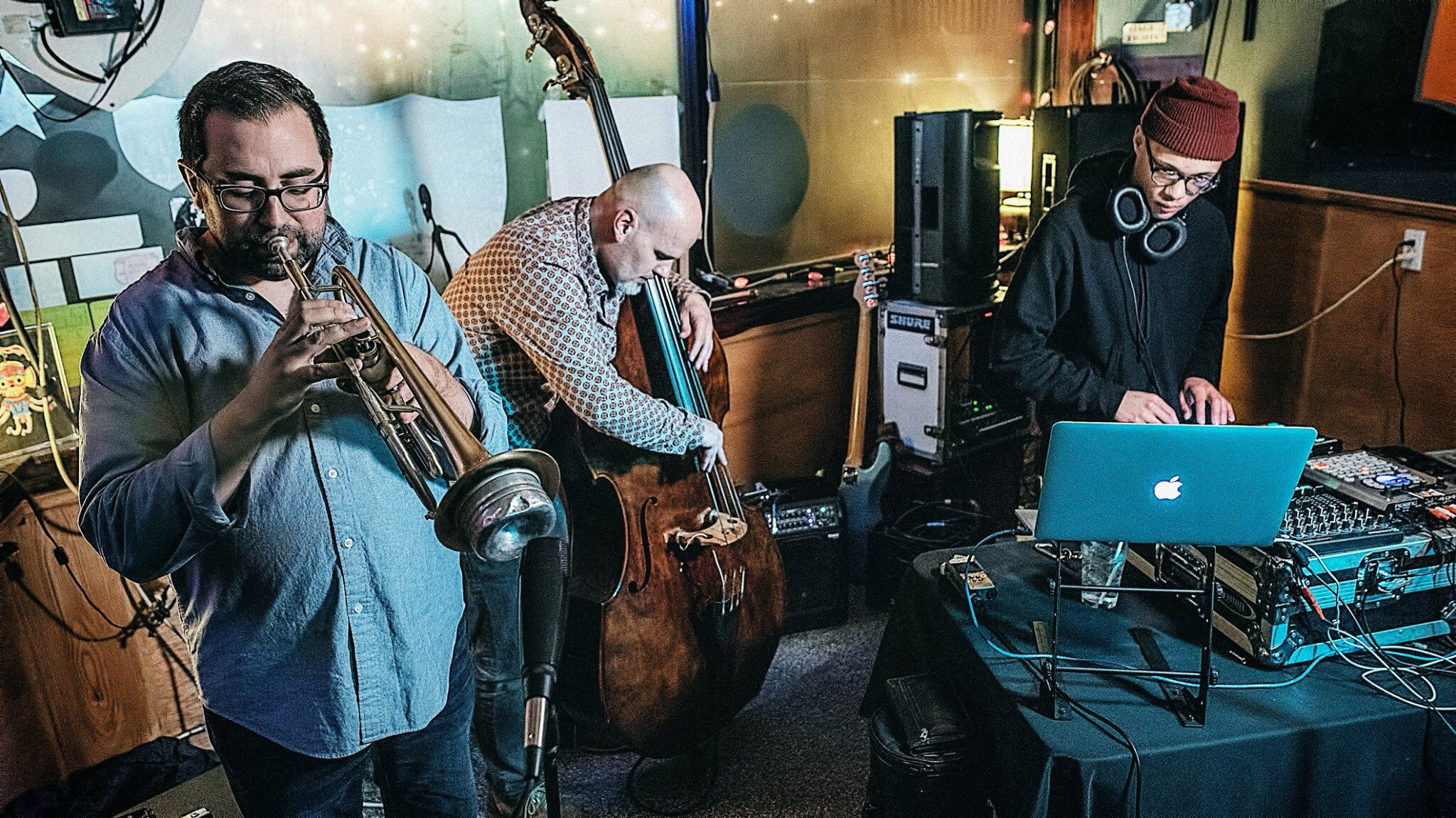
The group KASE: Jamie Breiwick, trumpet and electronics; John Christensen, bass; knowsthetime, turntables and electronics.
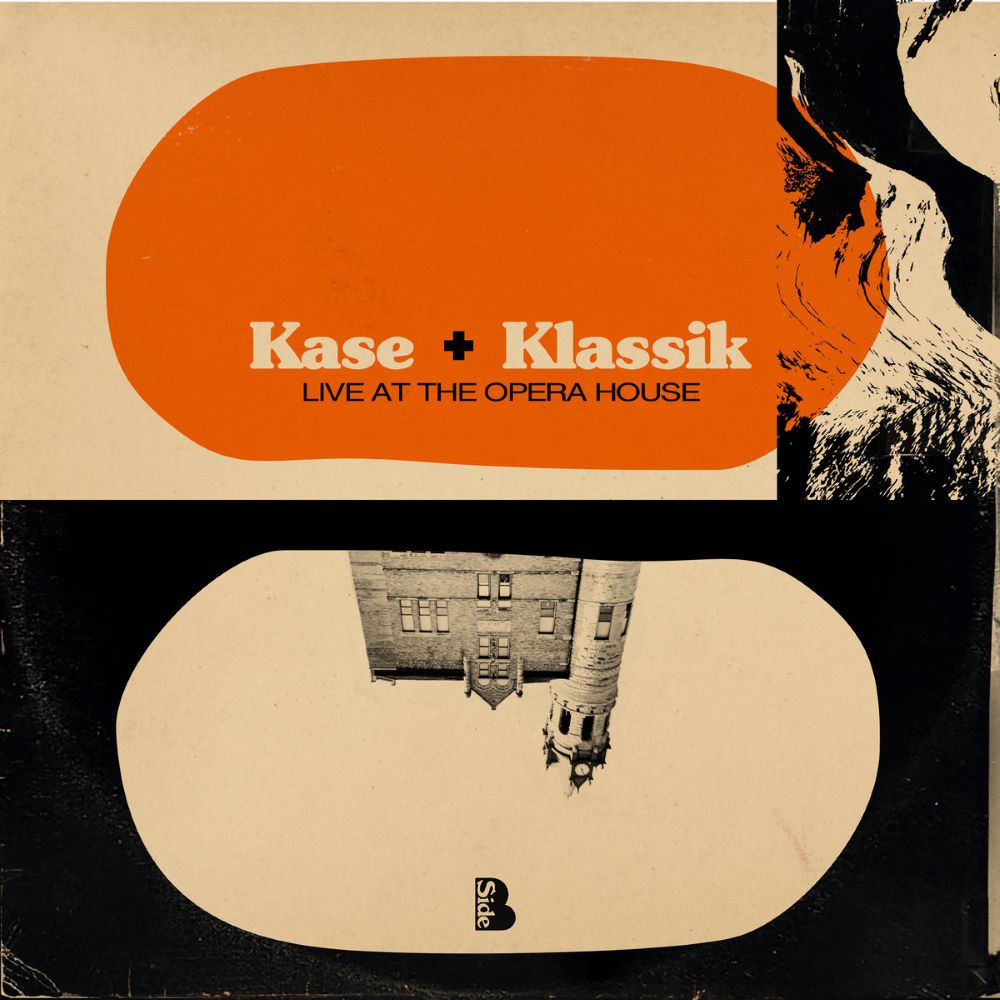
Breiwick’s graphic design talents sped this output. He creates all his own album covers (and those of others) with an imaginative but clean, post-1960s Blue Note Records compositional style. He just published a book of his jazz cover designs concurrently with an emblematic album, KASE + Klassik Live at the Opera House. His jazz-hip-hop-electronics trio, with bassist John Christensen and turntablist Jordan Lee, joined Klassik, perhaps the region’s most musically gifted improv hip-hop singer-song maker, who also plays keyboards and saxophone. KASE logically expands Breiwick’s creative ripples into exploring “sonic landscapes” – Miles ahead, atmospheric, wonder-inducing.
The cassette cover of “KASE + Klassik Live at the Opera House,” designed by Jamie Breiwick. Courtesy B-Side Graphics
Breiwick’s recorded and group projects have probed ground-breaking jazzers, including Davis, Thelonious Monk, Ornette Coleman, and world-music traveler Don Cherry. He’s also played and recorded transcribed Davis solos for two Hal Leonard play-along books, among six various he’s recorded. He values innovative contemporaries like Jason Moran, Ambrose Akinmusire and Nicholas Payton, “an incredible trumpet player and musical conceptualist,” and “a thought leader and outspoken BAM (Black American Music) advocate.” He also teaches music at Prairie School, near Racine. How good is Breiwick teaching music? In 2013, he was nominated for the first-ever Grammy Music Educator Award, selected as one of 200 semi-finalists among over 30,000 nominees.
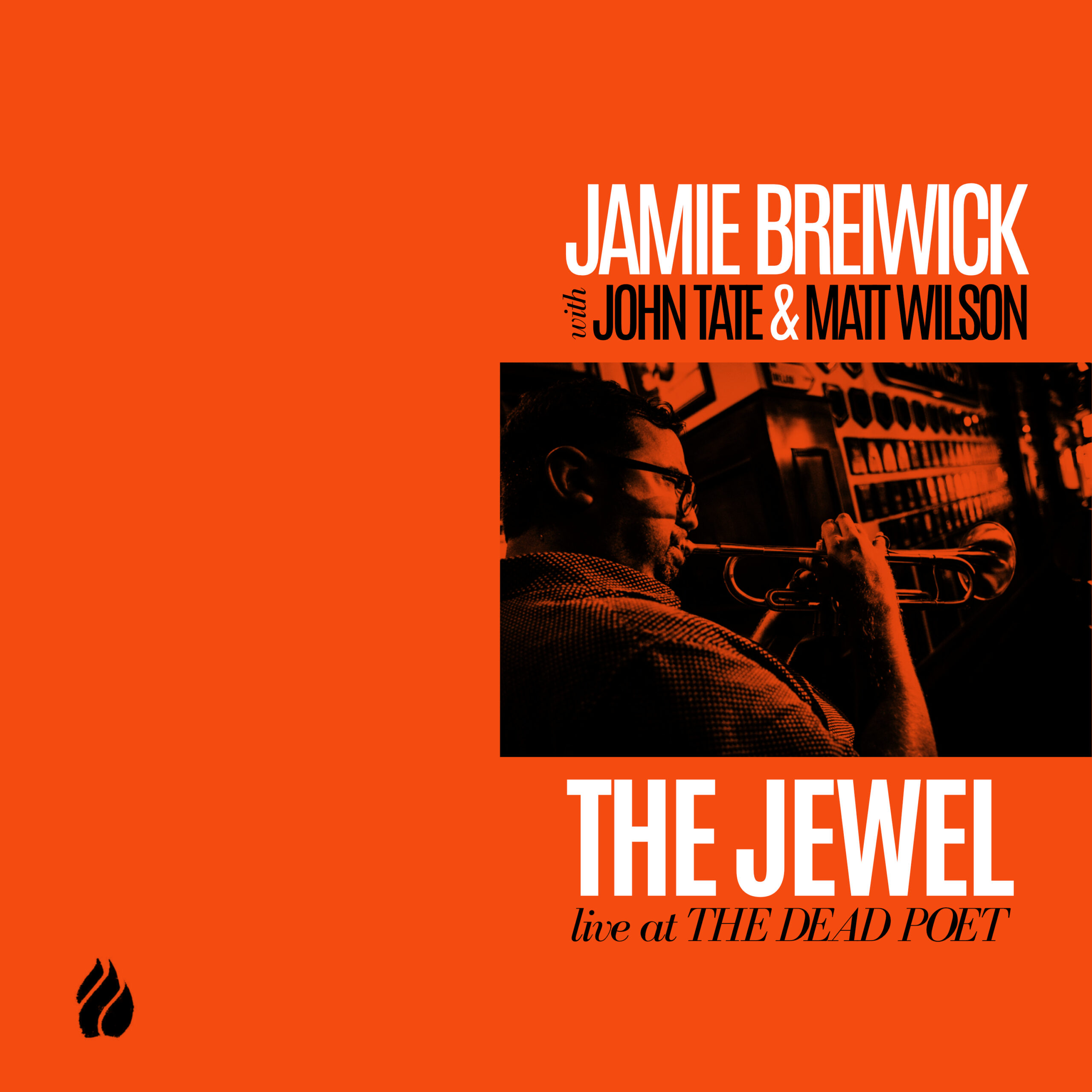
The cover of The Jewel: Live at the Dead Poet.
Shortly before the pandemic, Breiwick recorded The Jewel: Live at the Dead Poet, a New York trio recording on the leading independent label Ropeadope, with internationally acclaimed drummer-bandleader Matt Wilson, thus extending his national modern-jazz bona fides.
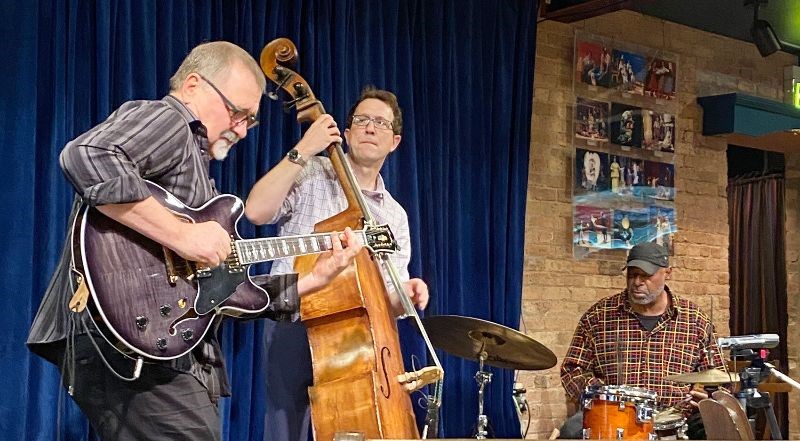
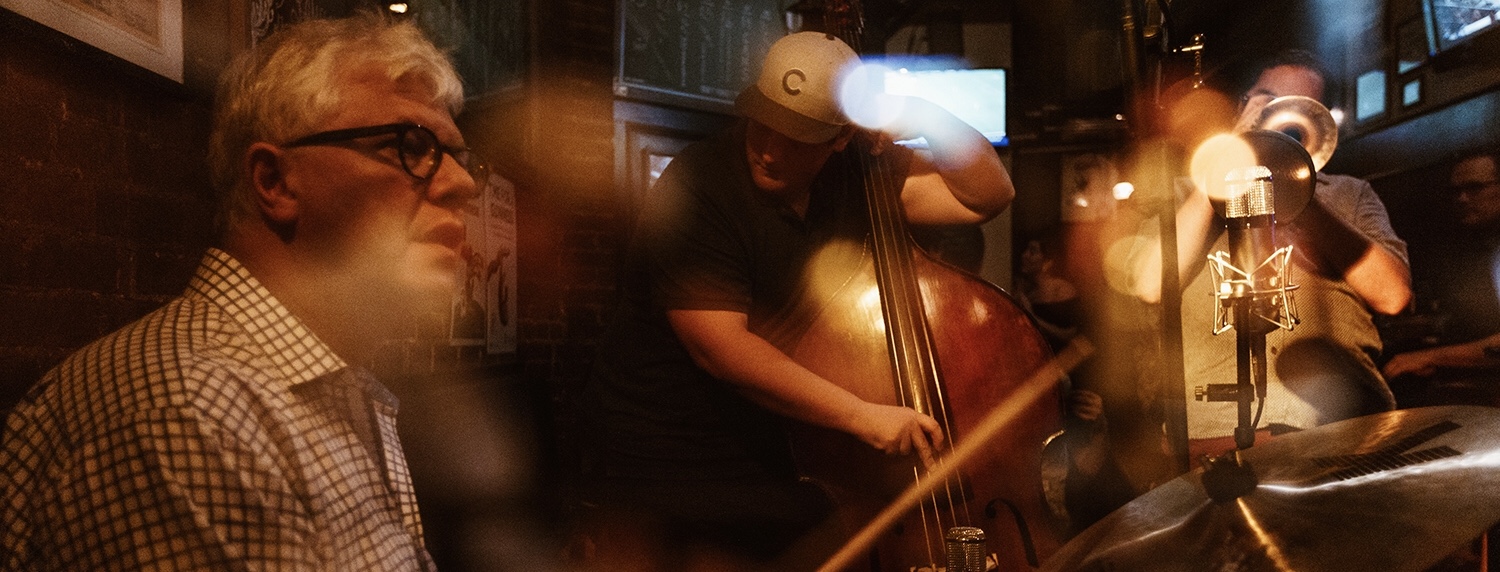
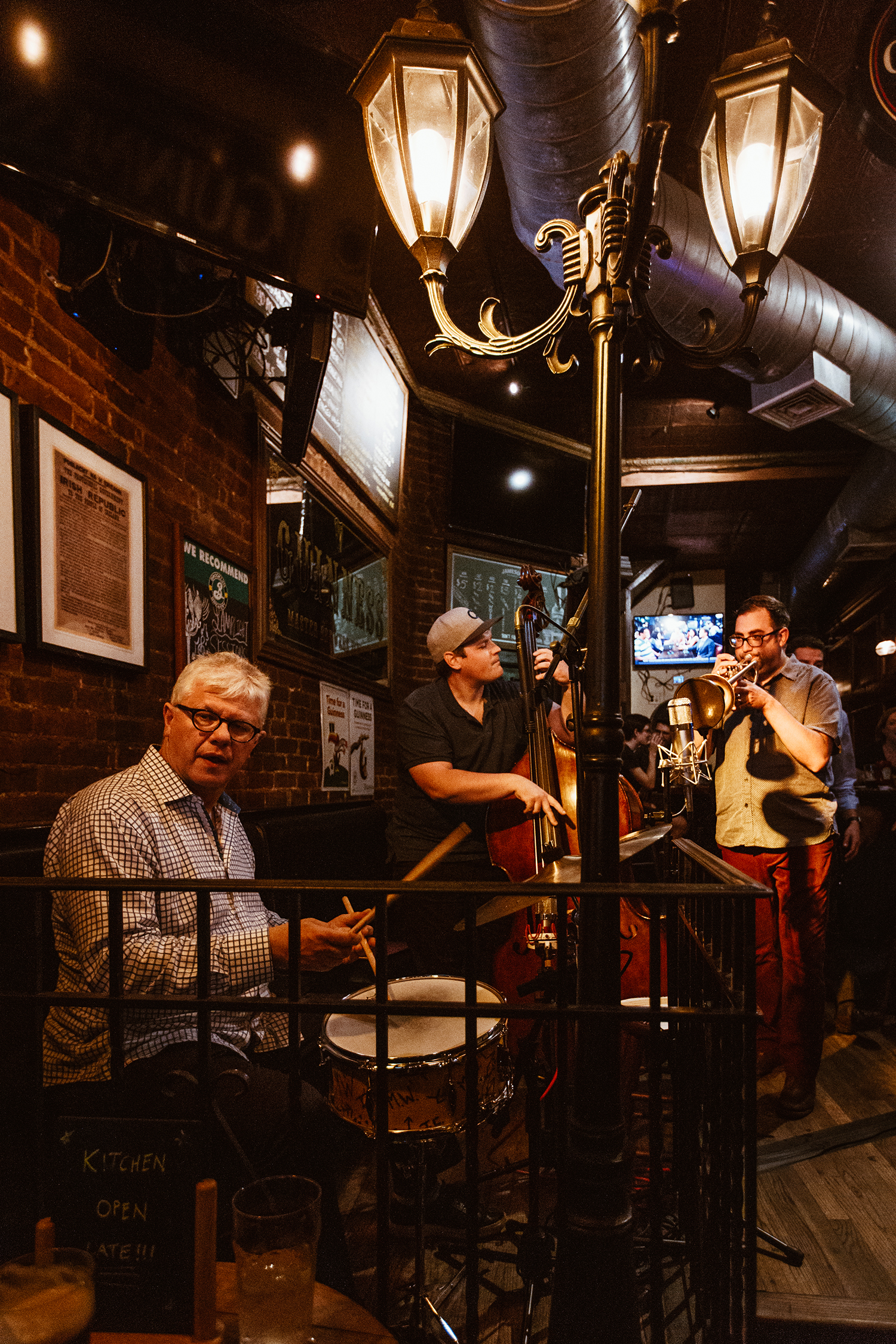
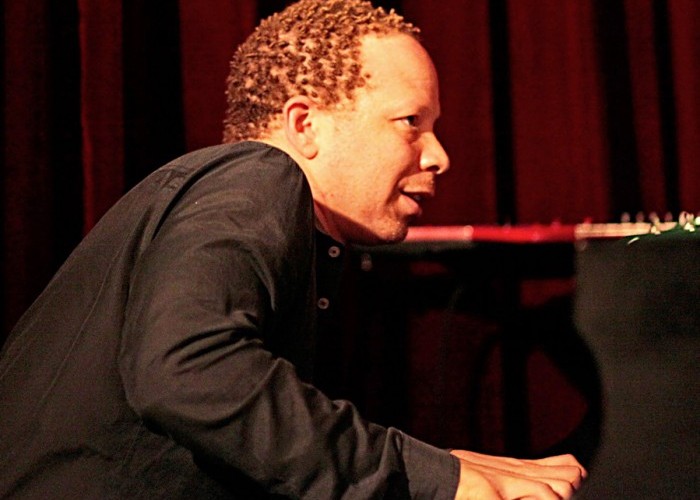
Breiwick plays a live date (here and in photo at top) with renowned drummer Matt Wilson and bassist John Tate.
Breiwick leaves popular success largely to his evolution and artistic authenticity.
“I think it is all in the delivery – people can tell if you are sincere or not. I try to create music and art that I would like myself and try not to be too corny or contrived, while at the same time recognizing my influences. What did Coltrane say? ‘You can play a shoestring if you are sincere,’ I think that is perfect.”
But he knows jazz musicians always need help in America’s capitalist society. Today they can increasingly help each other with online resources. In 2010, Breiwick co-founded Milwaukee Jazz Vision, an online organization that promotes jazz and its community in the Milwaukee area.
His visual-designer talents suggest deeper creative destinations. “It is a similar path of discovery. Visual art and music relate in so many ways – texture, structure, organization, color, tone. Five or six of my favorite designers are also musicians. There’s some sort of elemental connection between the two disciplines…Miles Davis was an incredible painter. Jean-Michel Basquiat deeply loved music and often used musical imagery or references such as Charlie Parker and Dizzy Gillespie in his works.”
Perhaps his most daring recent recording is Solve for X, duets with a longtime collaborator. Guitarist-synthesist Jay Mollerskov took samples of Breiwick’s own trumpet solos, to create sonic counterpoints and textural backdrops for Breiwick to play against. It works like a musical mosaic – outward refracting, rather than narcissistic. That’s because Breiwick knows of whence he came, as a trumpeter and creator.
“I’m inspired by a lot of things, all sorts of music, visual art, architecture, history, stories, traveling,” he says. “I am just trying to better find out who I am, and ultimately just trying to keep moving forward.”
“Like (trumpeter) Clark Terry said, ‘Emulate, assimilate, innovate.’”
So, Breiwick’s self-discovery proceeds. As to forward progress, only time, his seemingly ever-expanding wave, will tell.
_________________
This article was originally published in slightly shorter form in the May 2022 print magazine edition of The Shepherd Express, available free at many locations around Milwaukee County.
James McMurtry has embarked on his first tour in several years. He will perform solo in dates running through April, then continue with his band in May, on a tour running through the end of July.
Upper Midwest McMurtry dates include April 22 at Old Town School of Music, in Chicago, June 11 at the SPACE, in Evanston, June 12 at Shank Hall in Milwaukee (https://shankhall.com/), and June 14 at The Ark in Ann Arbor.
Imagining James McMurtry in his element: He squints hard, and sees humanity and the world with laser vision, in the cruel Texas-glare sun, amid imperious cactuses. Flies buzz like hungry little devils. James coughs in the dust, but a man knows what he’s gotta do. Especially if he’s as driven as he is. He could drive a cattle herd across that behemoth state, and beyond, like the one his father Larry McMurtry famously depicted in his famous novel Lonesome Dove.
But such epic drives are rare now, as cattle growing and marketing are bad for the planet. James knows this, even as he commemorates, partially in Spanish, a deceased cowboy friend and his tradition in his recent song “Vaquero.” So, he turns off his vintage Ford Falcon convertible, peers at the horizon, the hot wind rippling his long gray hair. He lifts his cowboy hat, wipes sweat off his grimy brow, then plops the hot hat right back on. Part of him wishes he has a horse raring to go, instead of a smelly old car. So, he reaches over to the passenger seat, unbuckles his 12-string Gibson acoustic guitar, climbs out, leans against the car, and starts up a big sky-type chordal pattern.
He sings, “No more buffalo…” This thought he seems to care about greatly, as metaphor and as reality. Why and how? The guitar has plenty to do with it.
James McMurtry at home: He ended another Livestream pandemic solo home concert recently with that song, set his guitar down and said “thank you” to the silent audience that can applaud only with Facebook comments. I think “No More Buffalo” is something of a signature song, and I think he feels that way, too. You could make an obvious case for “We Can’t Make It Here,” too, or perhaps “Just Us Kids,” or “Choctaw Bingo.” The majestically big-picture “Long Island Sound” and one troubled man’s stunningly confessional “Decent Man” are more recent candidates.
But those songs are mostly anthemic, and clear hallmarks, whereas James is also an expert in understatement, of tracing the shadows of the underserved. Among his more indelible intimate American portraits is the stoic loser of “Rachel’s Song,” who might be quite typical of many contemporary divorced people, stumbling along spiritually on a deserted street. It’s telling that Jason Isbell, a younger talent of superlative songwriting skills, has covered this song, with tender insight.
As an American troubadour McMurtry rivals any we know today. But he’s also only the peculiar kind he’s capable of being. That happens to involve an atypical genius which has been insufficiently addressed to date, in its artistic fullness.
Indeed, the often-surly glory of his artistry is piling up just a bit: Not only have I not yet written about his latest album The Horses and the Hounds, but I’ve also come to realize that his fullest artistry doesn’t just lie squarely on his most salient talent, the lyric-endowed song.
McMurtry started playing guitar at age seven (first taught him by his mother, an English professor) but didn’t start writing songs until he was 18, he has said.
The stereotype is the gifted singer-songwriter as a type of literary whiz. We don’t associate their guitar-playing and songwriting skills as part of a shared prism of expression and narrative, especially coming out of the folk tradition, where a songwriter is expected to do little more than simply strum through simple chord changes.
James McMurtry performing “Down Across the Delaware.” Courtesy YouTube.
Today McMurtry seems, song after song, compelled to self-accompaniment as integral to his storytelling technique, like a sonic cinematographer, or musical dramatist. He’s never showy, yet the guitar can pull you into his distinctive musical world with a magnetic force and, when he’s playing 12-string, his rhythmic patterns and pulses sparkle with harmonic auras that can be stunning. His guitar blends rhythm playing, rich chording, and finger-style adornments. His digits tell their own story yet boost and entwine his songs, which explore a variety of cadences and moods, in well-observed and psychologically resonant narratives.
He admits he takes his sweet time writing songs. But performing his songs, with glimmering and chiaroscuroed backdrops, seems a weekly task of this troubadour, with his well-oiled work ethic. Witnessing that online has been a precious upshot of the COVID pandemic’s forced social distancing.
So, the realm of that interactive song-guitar dynamic is where we must assess McMurtry. He may be the greatest songwriter now working in his prime – one video-watcher, himself a songwriter, called him “The Dustbowl Dylan … and the best everyman songwriter alive.”
Yet McMurtry might also be our greatest singer-songwriter/self-accompanist, capable of extraordinary yins to his yangs. That’s why his assessment as an artist must be recalibrated. A comparable songwriter and more gifted singer, Willie Nelson, also is an extraordinary guitarist, but sort of when he wants to be – periodic fluent solos between verses on his battered old guitar named Trigger.
Another artist who comes to mind in comparison is Leo Kottke, but Kottke is known primarily as a virtuoso fingerstyle guitarist. If McMurtry set his mind to it, I think he could do a guitar-oriented set like Kottke does.
This has much to do with the virtuosity and artistry he has refined, especially over the last year and a half at his home. He has performed Livestream with skilled diligence each Wednesday and Sunday. This is a logical extension of his weekly, self-imposed Wednesday night gigs at Austin’s Continental Club, whenever he’s not touring. 1
This recalls somewhat our greatest living songwriter, Bob Dylan, because they both seem driven to constantly work or tour, Dylan especially at an advancing age. We should remember what Thomas Edison famously said: “Genius is two-percent inspiration and ninety-eight per cent perspiration.”
***
I first became aware of the synchronicity of McMurtry’s guitar playing and song-craft when I got a 10-feet-away seat for a solo acoustic recital at Milwaukee’s Shank Hall in 2014. Here was my immediate response:
“Friends, it was Thursday at Shank Hall in Brew Town and James McMurtry was dealin’, alone, with nothin’ but a 12-string guitar. That surprisingly stacked the deck for a show that rated four aces, period. He’s so skilled – playing bass accompaniment to his typically deft figurations – that I never missed his band. At times, the 12-string’s shining harmonic resonances at a fast-chugging tempo sounded like a chrome-plated locomotive at full speed. Best 12-string playing this side of Leo Kottke.”
I’ve seen only brief video-response comments on McMurtry’s solo acoustic performances during the pandemic; we are more aware of his electric playing with his band. A singer-songwriter named Sean, the same person quoted about the “Dustbowl Dylan,” also comments: “Sometimes you can tell the road has worn him down a bit, but his guitar playing is always the driving force of his band. His electric sound is effortless, full, and he can create an amazing sustain.”
So, attention must be paid: McMurtry’s self-accompaniment has become even more deft, fluent, and effective as the driving force of his songs. It’s as if he insists on sustaining a strong or at least simpatico heartbeat for even his most diminished characters, like the nameless, quietly desperate person in “Cutter,” bereft yet clinging to better memories. The song – which also poignantly reflects the too-common gulf of understanding between even close friends – closes Complicated Game with stunning power.
I hope McMurtry considers shepherding and curating a dozen of the best solo acoustic songs he has Livestreamed in recent times for an album. Now that would be something, quiet but deeply resonant.
You see, I’m shifting gears: To fully contextualize my focus on his guitar-to-song-singing synchronicity, I need to delve properly into the depths of his song-writing prowess.
So, as I said, “No More Buffalo” (from the fatefully titled 1997 album It Had to Happen) is, too me, one of the great environmental protest songs we have. 2 It’s so good because it starts with a chest-filling chordal statement that portends something, in a G-D-A-G progression. The song sustains or suspends on that major key sequence until a few anguished B-flats, most tellingly on the phrase “I swear” on the late-in-the-song lyric: But man, they were here, they were here I swear. Yet, McMurtry sort of sidles up to that point, by telling a story of a group of graying guys who probably haven’t changed their ways in just about forever. But at least one of them remembers and feels something and sees how things have changed. So, the song’s narrator finally tunes into the problem. But see how the revelation sneaks up on him:
We headed South across those Colorado plains
Just as empty as the day
We looked around at all we saw
Remembered all we’d hoped to see
Looking out through the bugs on the windshield
Somebody said to me
(chorus) No more buffalo, blue skies or open road
No more rodeo, no more noise
Take this Cadillac, park it out in back
Mama’s calling, put away the toys
The narrator now remembers and believes, too – just maybe the noble, hulking giants are still out there. He continues until this interchange of voices:
I never thought they’d ever doubt my words
I guess they were just too tired to care
I’d point to the horizon, to the dust of the herds
Still hovering in the air
Somebody said it ain’t any such
Man you wish so hard you’re scaring me
‘Cause those are combines kicking up that dust
But you can see what you want to see
And go on chasing after what used to be there
Top that rise and face the pain
But man, they were here, they were here I swear
Not just these bleaching bones, stretching across the plain
Those anonymous “somebody saids” make the rhetoric work, persuasive without haranguing, or preaching. “Somebody” could be anyone, or his own subconscious and memory reflecting each other. So, we feel the loss, as if the hoary bison embodied something invaluable in life. Even the rodeo, the celebration of Wild West conquerors who helped desecrate the land and its creatures, and committed genocide of Native Americans – even the mano contra toro — has become passe.
And by the end, the title refrain, one more time, has gained momentum, a power you feel in your own bones. It’s like their car is speeding up, hurtling towards a horizon falling to the abyss of irrevocable passage. Since I heard it and it sunk in, I’ve never been able to think about the buffalo or the travesties and waste of The West without McMurtry’s song ringing in the back of my head.
This is a band performance of “No More Buffalo” but McMurtry, as usual on this song, plays acoustic guitar. Along with those chords, Daren Hess’s bass drum and tom toms open the song, resounding like cracks of revelation in a gorge of environmental ignorance. Then, listen to those drums, a brilliant stroke, rumble through the song, just like the tromping thunder of the great vanquished herds. This piece slays me every time, earning its emotional impact every step of the way. 2
***
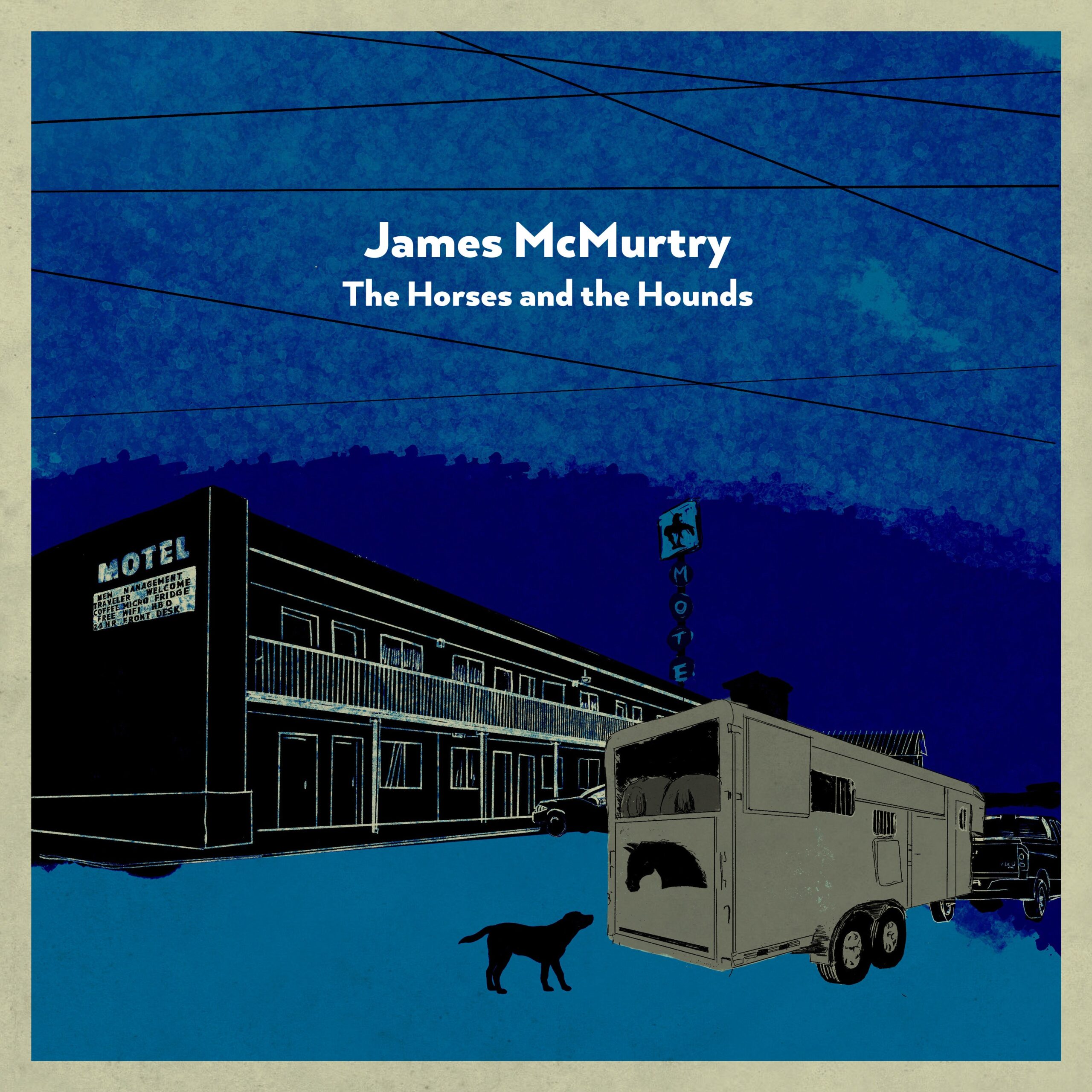
Courtesy New West Records
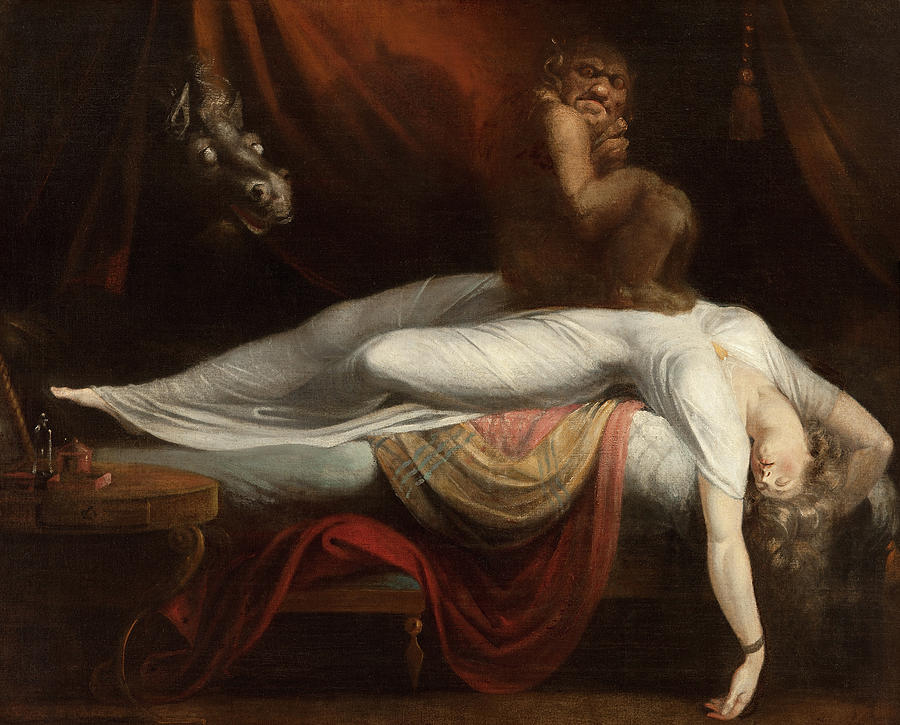
This brings me to his latest album. The titular phrase, “the horses and the hounds,” recurs as several meanings. Ostensibly it seems to tell – as the wonderfully blue-tinged noir album cover does – of a working stiff who drives a horse-truck trailer. What other meaning? “The singer finally admits, “Still, I’m running from the horses and the hounds.” He’s running from horses? These magnificent, larger-than-life creatures, often with very close relationships with humans – can occur in dreams, a phenomenon artistically acknowledged as early as in Henry Fuseli’s famous 1871 painting “The Nightmare.”
Henry Fuseli’s famous 1871 painting “The Nightmare.” Courtesy fineartamerica.com
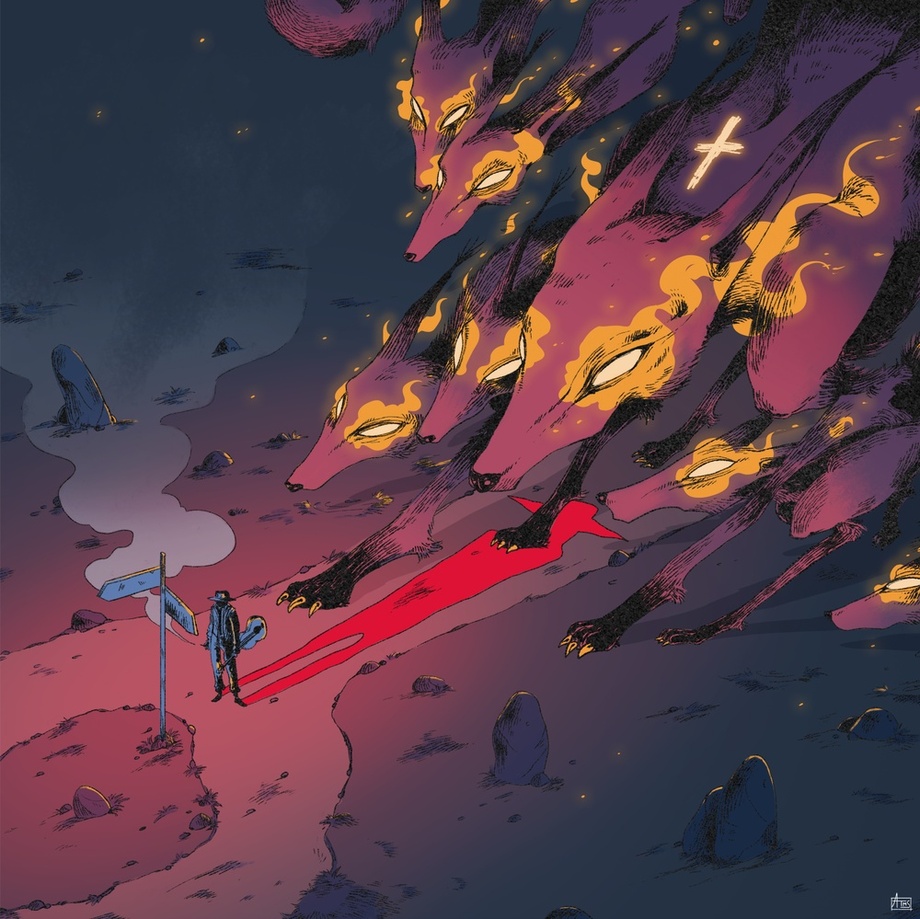
As for the hounds: There’s always the mythical hellhounds that bluesman Robert Johnson endured, and maybe helped chase him to his early grave. They sure haunt his legacy and the blues tradition. It’s an enduring metaphor for psychological affliction or terror.
Hellhounds on the trail of blues legend Robert Johnson. Art print by Elena Barbieri. Courtesy INPRINT
McMurtry also often trades in the interface of hard-grit reality and troubled dreams or memories. He talks about one of the new album’s most substantial songs, “Decent Man,” a story that might give any man in this situation nightmares.
McMurtry reimagines a Wendell Berry short story, which derived from Woody Guthrie’s song “Tom Joad,” itself a musical portrait of the protagonist of novelist John Steinbeck’s Dustbowl tragedy The Grapes of Wrath.
The “decent man” is the guy the narrator kills with a .38 pistol. No less than his best friend. It’s unclear why he shot him, but he circles semi-coherently around his mental state:
“If the truth be known, I wasn’t doing that well/ Iwasn’t paying attention, I brought it on myself/ and I blamed it on the gods that seem to smile on everybody else/ I got so inside out, I didn’t know what was real.”
That sounds like what? Maybe like too-many men in tough life situations where a conflagration of circumstances put them in a paranoid or aggrieved state, and a gun is too easy to reach for, and to irrationally think it will solve a complicated problem. It usually makes thing worse, much worse. It’s an all-too American dilemma and tragedy, repeated with shocking, even numbing, frequency.
Listen: My fields are empty now/ my ground won’t take the plow./ It’s washed down to gravel and stones./ It’s only good for buryin’ bones. That is the song’s actual chorus, one of the most devastated choruses you’ll ever hear. It’s a murder ballad of uncommon ingenuity, yet understanding of common human foibles, and suffering. And loss. Most of all.
In McMurtry’s version of the story, the killer’s daughter, named Lola, visits him in jail. She still loves her dad, despite the horror of his deed, and that bothers the prisoner as much as the crime itself. His own daughter’s love throws this man off balance so that he must reconsider his still-fresh self-loathing. “I don’t know how she even stands to look on her daddy’s face,” McMurtry sings. There’s no better way to comment on this story than the songwriter’s summation: He was more than just a decent man/ best friend I ever had./ When you’re shooting at a coffee can/ a thirty-eight don’t kick that bad. / But it kicks right through my bones every second of every day/ clacking by like cobblestones under broken wheels.”
Even if he’s profoundly affected, in shock, he still doesn’t seem to know why he did it. Because life is too confusing or abject? Does that disquieting possibility offer any hope for absolution or healing?
It’s powerful stuff. How does Lola really feel? And the victim’s family? And “poor dad?” – The song strives for some empathy for him.
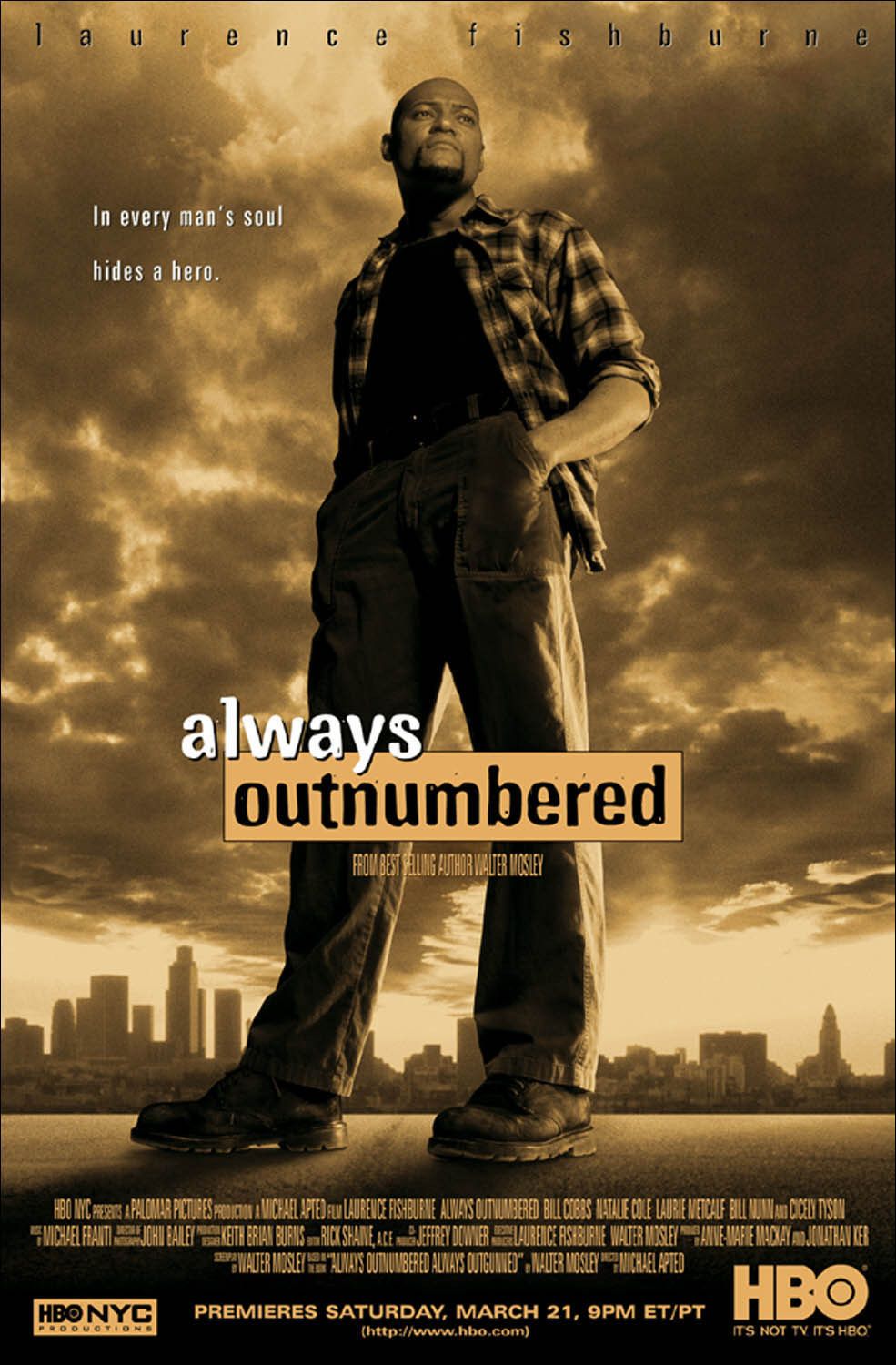
Laurence Fishburne played Socrates Fortlow in an HBO adaptation of a Walter Mosley novel. IMDb
The killer recalls Socrates Fortlow (pictured above), a fascinating murder/rape ex-convict created by novelist Walter Mosley who never understands the reasons for his crimes, yet becomes a street philosopher of redemptive power, while always remaining “at risk.”
McMurtry credits Horses producer Ross Hogarth who “probably got the best vocal performances I’ve ever done.” On “Blackberry Winter,” in his upper singing register, McMurtry is his most emotionally engaged.
A man looks back at the seeming end of his primary relationship, and having to refuse his woman, who apparently still has feelings for him, “to tell her no, to tell her no.” It’s a tough task to do at once, emotionally at least. And does he really need to? “Blackberry winter” is a Southern term for damaging early spring freezes, after blackberries have blossomed. Couldn’t he see if some berries – from the original branch their relationship grew upon – are still salvageable?
McMurtry is expert at painting pictures of troubled, just-barely-getting-by common folk, in the era of American democracy in peril. Or so it seems, with working folk still struggling while the rest of “the economy” – investors, Wall Street, big business, etc. – seems to flourish. Many of these working folk are now Trumpsters, sadly, because they had nowhere else to turn, feeling their dreams are threatened. So, they hang onto common biases of white fear or “supremacy,” as a psychological crutch holding up a nominal ideology.
Trump – a successful faux television demagogue to whom the Electoral College handed the keys to The Bully Pulpit – understood, voiced, and “validated” their grievances. The Democratic Party had forgotten about them a long time ago, as Thomas Frank argues cogently in “Listen, Liberal: Whatever Happened to the Party of The People?” So, the song’s emotional impact radiates like an extended electric shock, about a characteristic state of American being. It poses the implicit question: Do you know someone like this? Might one of these people be you?
What are we gonna do for these people? Will politicians ever address their concerns and suffering honestly, instead of only as an election ploy? Frank argues you won’t get it from the contemporary professional upscale liberal (think of Silicon Valley culture and comparable ones) where funding and values go to support entrepreneurship and “innovation” that does little for the plight or incomes of ordinary folk.
These may even be “innovative” ways to exploit them. Of the working class, these elevated folks think that, if you don’t have a college degree, it’s your fault, Frank explains. Even teachers, by their thinking, are suspect professionals, beneath their value system. The current Democratic party has shifted closer to addressing the huge lower end of the equality gap since Frank’s 2016 appraisal, but in 2022 President Biden hasn’t yet substantially addressed racial justice and other issues crucial to inequality, to bridge the political gap Democrats helped create for Trump to exploit and widen. Inflation and high gas prices don’t help, even if the latter helps the effort to protect Ukraine from Russian invasion.
The narrator of “Blackberry Winter” might be telling her “no” because he can’t afford to support her, or some other circumstance of a tough life, devalued and forsaken. McMurtry’s characters often live close to the edge, like so many Americans. “And tell you no,” isn’t delivered in a way suggesting any disdain, based on a contaminated relationship. In this vocal register he sounds a bit like Jackson Browne. 3 So there’s a plaintive weariness beneath his straightforward talk, which also conveys something palpable and spiritual, and common to humanity, like “everybody has holes to fill, and you know those holes are all that’s real,” as Townes Van Zandt. once sang.
McMurtry is akin to fellow Texas troubadour Van Zandt whom he’s covered him from time to time – he does covers very occasionally — including Van Zandt’s “Rex’s Blues” on his 1998 album Walk Between the Raindrops and on his live 2004 album Live in Aught Three. 4
In a 2019 interview, McMurtry commented on America’s current tribalism: “Everybody wants to feel a part of something. They are in a group thing. They don’t want to think individually. It’s easy to make money off of that. It’s not just American, it’s human. It’s always been like that…
“It’s hard-wired caveman stuff. We have to learn how to think our way around that. Basically, our minds will have to evolve faster than (our) simian brains are able to evolve on a cellular level. That hard wiring is going to stay in there unless we learn to short-circuit it in some way, or we are just going to perish.” 5
In solo renditions of his newest songs, his guitar-playing’s fluent sense of rhythmic propulsion and drama, and his quirkily apt harmonic changes – which sometimes recall those of Joni Mitchell – cast just the right tone, emotional grist, and gravitas. The Horses and the Hounds has plenty more character-packed scenarios, no more poignant than truck-driving “Jackie,” whose fate ambushes the listener with McMurtry’s matter-of-fact tone. And yet, there’s also the self-deprecating comic relief of “Ft. Walton Wake-Up Call.” After doing “Decent Man” and “Jackie” consecutively on a Livestream, he peered at his setlist and muttered, “Well, I got a bunch a’ real downers in here this time. Break out the Prozac.” His speaking delivery is as dry as tumbleweed too old to tumble.
The Horses album, with old drumming mate Darren Hess and a bunch of studio aces, is a continuation of a major artist at the peak of his powers, who seems philosophically bittersweet, slyly heartfelt, and still cranky enough, and still comparatively obscure, given his talents. He’s capable of very catchy songs, but his ordinary-Joe voice always earns its emotional truths, and he’s no attention-seeking self-promoter, so he never compromises his art. In that way, he may be keeping himself close to the real people reflected in his characters.
His music is a vivid way to refocus reality to where our social responsibilities might best align. With “the people.” McMurtry’s seemingly forgotten folk dwell low in societal shadows, with some, in effect, face-down in American dirt, because you can’t get lower, without being buried alive.
_____________
(Author’s note: This essay was submitted to nodepression.com, which didn’t accept it because, they said, “We don’t publish essays on individual artists.” Ironically, the first article they ever published of mine was also an essay of comparable length. Their editors have since changed.)
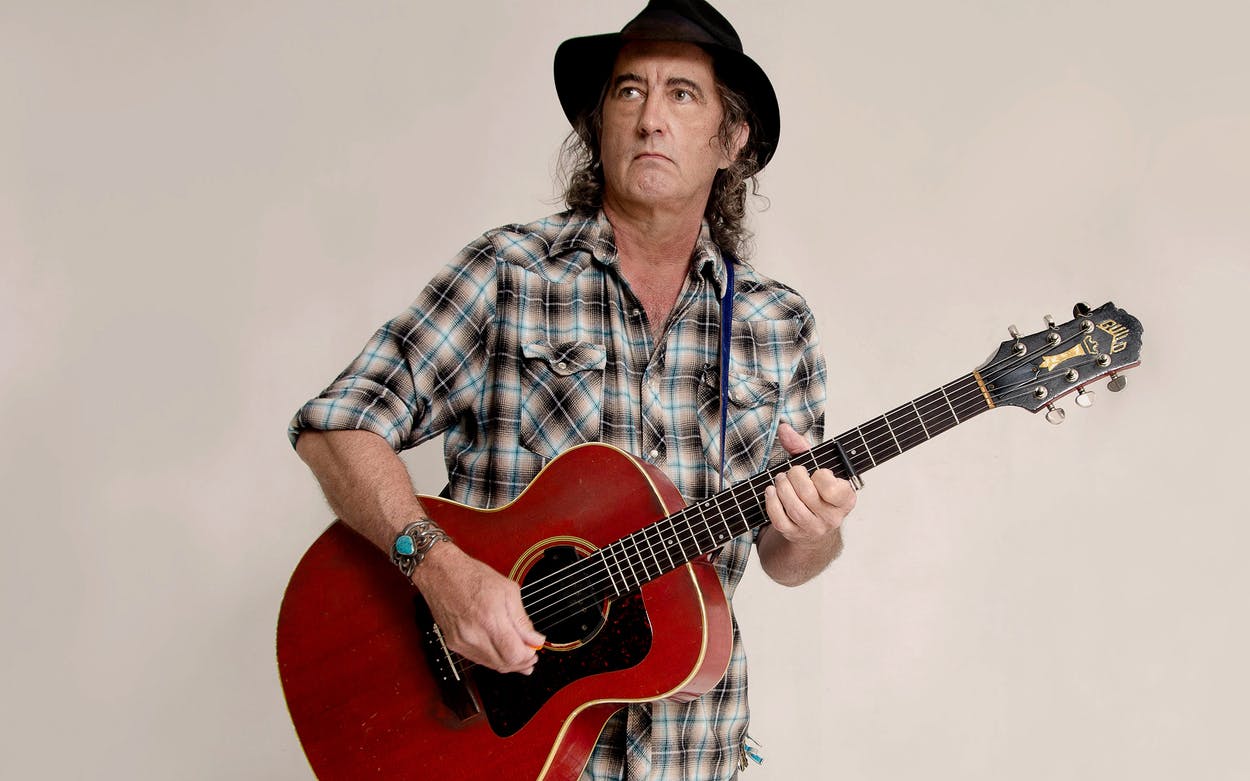
I’m not a guitarist, so I won’t get gear-geeky here. But I’ll report that, on his Livestreams, McMurtry regularly alternates among four (or five) acoustic guitars: a 12-String Ovation, a 12-string Fender, a red 6-string Guild, and, I believe, a 6-string Fender. Sometimes he pulls out a big, dark brown 8-string baritone guitar, which he refers to as “The Beast.” In November, he used it to play the title song from The Horses and the Hounds. He seems to have slight preference for the 12-strings.
Buffalo appear to be making a comeback. I’d like to think McMurtry’s song, released in 2007 made some difference in consciousness and action.
“No More Buffalo” is also on the 2007 collection, James McMurtry, The Best of the Sugar Hill Years.
Perhaps not coincidentally there’s an influence. McMurtry recorded most of the album at Jackson Browne’s Groovemasters Studio in Los Angeles.
Caleb Horton, in a James McMurtry Primer blog, vividly explains the connection in the kinds of emotional impacts of their music: “The easiest way to explain it is that James McMurtry and Townes Van Zandt exist along a ten-beer continuum. McMurtry plays to that fourth beer, right before you decide to have six more, where you’re sitting down, and sadness somehow feels like the world’s only honest emotion. Van Zandt plays to beer number ten, where pharmacy vodka with a wolf on the label is in the cards and tomorrow doesn’t even exist because the sun’s down.” Horton continues. “Point is, I can only listen to Townes Van Zandt two or three times a year. The man’s music should come with a warning label…like they do with European cigarettes. James McMurtry is in the same tradition, but he opens the blinds in the morning. I can listen to him. And that’s how I recommend him to people.” Caleb Horton, A James McMurtry Primer http://bitterempire.com/james-mcmurtry-primer/
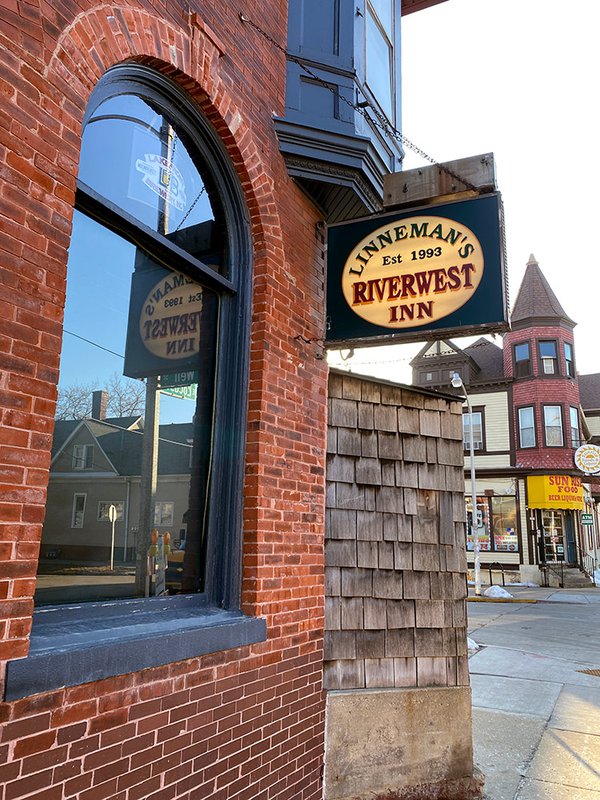
Linneman’s Riverwest Inn. Photo by Michael Burmesch, courtesy The Shepherd Express.
Since the 1980s, Riverwest has moved like the river it borders—a place of restless culture and commingling social currents. Literary, artsy Woodland Pattern, opened in 1980, remains Riverwest’s signature cultural center, along with Linneman’s Riverwest Inn, a music venue open since 1993, which has especially helped spawn the careers of local singer-songwriters, including Christopher Porterfield and The Record Company’s Chris Vos.
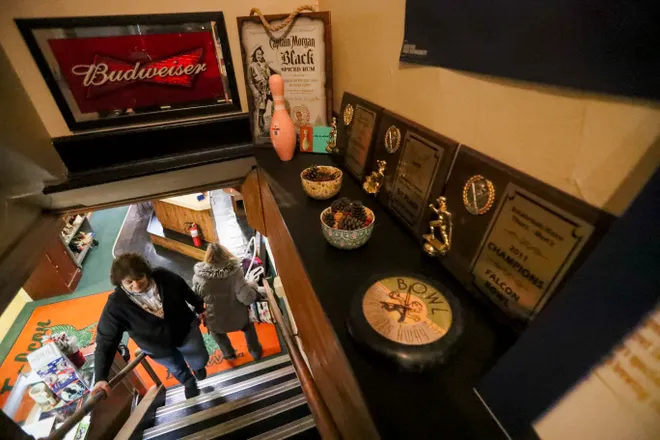
Center Street now has about six music and arts venues, including Company Brewing and The Jazz Gallery Center for the Arts, which re-imagines the celebrated 1980s Milwaukee Jazz Gallery. Neighbors recently bought the historic multi-purpose crossroads Polish Falcon Bowl, a hearty-spirited nexus of community activity for decades, including The Riverwest Follies.
The Riverwest Investment Cooperative recently purchased the Polish Falcon Bowl (above) to keep it viable for the community. Courtesy Milwaukee Journal-Sentinel
I’ve lived here most of my adult life, with an interval in Madison. In a sense I never left—much of Madison is culturally and politically comparable to Riverwest. In 1973, the Eastside Housing Action Committee joined Madison activists to rent a Locust Street storefront for a Milwaukee chapter of the Wisconsin Alliance, a statewide socialist organization.
This alternative publication’s predecessor, TheBugle American, resided in Riverwest until 1979 and the Crazy Shepherd found its way to the neighborhood 40 years ago. Another primary socio-political entity, Outpost Natural Foods, remains “the real heart of the counterculture west of the river,” Riverwest historian Tom Tolan writes. Now a successful regional chain, Outpost’s membership-and-volunteerism system sparked its growth—once oriented to “revolution,” now towards community and personal health.
Black Husky Brewing. Courtesy blackhuskybrewing.com
Milwaukee-style commercial success stories in Riverwest include Lakefront Brewery and Black Husky Brewing, as well as the restaurants Cafe Corazon, Wonderland, Big Daddy’s Barbeque and Soul Food, the slightly gourmet Nessum Dorma, Riverwest Filling Station, Cafe Centro, Dino’s MKE,and the carry-out food services, Scardina Specialties meats and deli, Shwarma King and Sticky Rice. Among the most colorful Riverwest retailers is Fischberger’s Variety, self-described as “Milwaukee’s punk-rock palace for gifts,” brims with stylish and witty toys, gifts, offbeat greeting cards, and knitting products. And Burke Candy remains, with always-tantalizing retail shop offerings. All these places are worthwhile.
Fischberger’s Variety Store on Holton Street. Courtesy onmilwaukee.com
A mark of the neighborhood’s deep-grained culture is Moberg Piano Sales and Service on Keefe Avenue, plum full of real acoustic pianos of all kinds.
In time, the neighborhood shifted politically, from the radically driven ESHAC to community-growth values, while remaining strongly left-leaning and bohemian. Witness the Peace Action Center, The Riverwest Artists Association, The Riverwest Neighborhood Association, community-oriented radio station WXRW, Riverwest Food Pantry and a vital arm of Milwaukee Riverkeepers environmental activists. The new Daily Bird may not replace the former Fuel Café’s punk-rock vitality. However, two indie recording studios recently opened.
Another Riverwest distinction: It now boasts the first two designated “bicycle boulevards” in Milwaukee: at E. Wright Street and N. Fratney Street (where I live). These streets have speed bumps each block and car traffic is limited. New curb bump-outs limit sharp car turns at intersections, and make pedestrian crossings shorter. A traffic circle was added to the Wright and Fratney Street intersection. Traffic circles are intended to allow traffic to flow through intersections slowly and efficiently, without requiring a full stop on either side. Bikers rejoice and roll, of course. And I now see neighbors walking their dogs right down the middle of Fratney Street.
Riverwest remains arguably the city’s most diverse and alternative-culture neighborhood, defying the city’s notorious segregation. Gentrification never infiltrated, despite condo development on bordering Commerce Street. Mortgages and rents remain moderate and median household income is $44,820, compared to the nation’s average of $62,843. A notably working-class population remains, with 39% holding a high-school degree or less, compared to the nation’s 30 to 35 percent working class. Historical ethnicities are Polish and Puerto Rican—a neighbor’s flagpole flies Puerto Rican and American colors year-round, and up the street is bi-lingual elementary La Escuela Fratney. Riverwest’s racial make-up is 64% white, 20% black, 8% Hispanic, 5% mixed races, and 3 % Asian.
________
This article was originally published in shorter form in a special neighborhoods history section of the April issue of The Shepherd Express magazine.
Earth Poets and Musicians, The Coffee House, in Plymouth Church, 2717 E. Hampshire St., Milwaukee, 7:30 p.m. Saturday, April 16, in . Donations will benefit the Indian Prairie Project via the Milwaukee Audubon Society. Pre-registration is required due to ongoing COVID concerns. Register Here
***
Dave Stoler Trio, Blu Nightclub, Pfister Hotel, April 22 (Earth Day). No Cover.
***********
If you are anywhere in southern or central Wisconsin right now, be alerted: pianist Craig Taborn, will give a solo piano concert at Café CODA in Madison tonight, at 7 p.m. Thursday, April 14.
The Minnesota native has a load of contemporary and cutting-edge jazz performance and recording credits. After early influence from heavy metal and contemporary classical music, he discovered how such dynamics might reflect the profound cross currents of jazz when he assimilated pianist-composer Cecil Taylor’s brilliant 1985 orchestral album Winged Serpent (Sliding Quadrants).
From there, Taborn proceeded to learn the jazz idiom, and eventually work with James Carter, Tim Berne, Roscoe Mitchell, Chris Potter, Dave Holland, John Zorn, Vijay Iyer, Kris Davis among others. In Madison, you’ll likely hear a generous sampling from his most recent ECM solo album’s Shadow Plays. These are mostly storytelling vignettes of certain concerns and concepts he values (“Bird Templars” or “Now in Hope”) or he thinks need highlighting (“Conspiracy of Things” or “A Code with Spells”).
For example, the album opener, “Bird Templars,” in a minimalist pulse, acts out the fluttering life-breath of a bird, with basso notes and tender, increasingly tensile interactive treble phrases that gradually suggest the growing symbiotic relationship between bird protectors and their aviary friends.
***
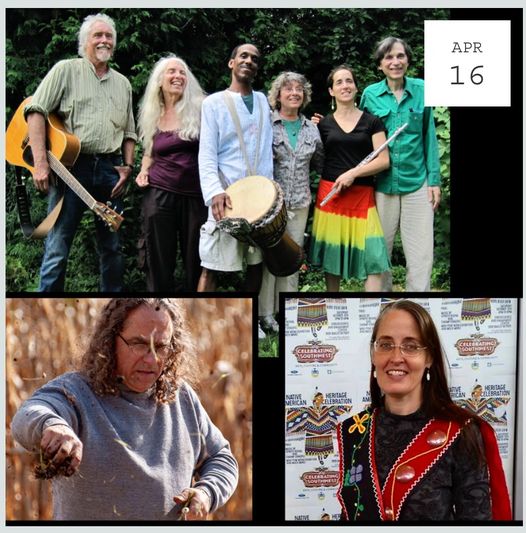
The Earth Poets and Musicians (pictured at top) will perform their 35th annual Earth Day concert on Saturday, April 16. The event will also include ecologist Jim Uhrinak (lower left) and and poet/singer Margaret Noodin (lower right) who is an Indigenous studies professor at UWM and and Director of the Electa Quinney Institute for American Indian Education.
Then on Saturday, the interdisciplinary Earth Poets and Musicians will present their 35th annual concert to celebrate Earth Day ( which actually isn’t until Friday, April 22) at Plymouth Church. It will feature Jahmes Finlayson, Holly Haebig, Suzanne Rosenblatt, Harvey Taylor, ecologist Jim Uhrinak, and poet/singer Margaret Noodin who is an Indigenous studies professor a and Director of the Electa Quinney Institute for American Indian Education. Here’s a Youtube of a TEDxUW-Milwaukee Noonan presentation: https://www.youtube.com/watch?v=ddyFh1Rdho4&t=65s
This event will focus this year on the Indian Prairie Project, and reclaiming awareness and appreciation of the Indigenous Menominee Community. Donations will benefit the Indian Prairie Project via the Milwaukee Audubon Society. The event will be streamed at 7:30 p.m. and archived for later access. Check the website the week of the concert to see if the show will be live.
***
Finally, if you’re planning (like me) on helping clean up your city’s natural spaces on Saturday, April 23 with Milwaukee Riverkeepers, you might fortify your body and spirit the night before (Earth Day evening) with a heaping helping of the Madison-based Dave Stoler Trio: protein-packed, hard-swinging, straight-ahead jazz, at Blu Lounge, at the top of the Pfister Hotel, 424 E. Wisconsin Ave., in Milwaukee, from 7 to 11 PM, Friday, April 22. (There’s no cover, so don’t forget the musicians’ tip jar).
Pianist Stoler’s straight-ahead bona fides (powered significantly by his long-time trio mates, bassist Chuck Ledvina and drummer Dave Bayles) don’t suggest his range and versatility. The Madison native assembled his own full jazz orchestra for a tribute concert of the music of the great composer and arranger Thad Jones a few years back for the Isthmus Jazz Festival.
He’s also the co-founder and keyboardist of the coolly ebullient 16-member Steely Dan tribute band Steely Dane, and has long held up the pianistic end of the Tony Castaneda Latin Jazz Sextet, and The Ben Ferris Octet and The Darren Sterud NOLA Tribute Band.
Among national and regional musicians in the know, he’s highly esteemed. Quiet as it’s kept, Stoler’s recording, Urban Legends is a classic of its kind, and remains available on cdbaby.com. and Spotify, and features drummer Billy Hart, bassist Ron McClure and tenor saxophonists Rick Margitza and Rich Perry, of the Maria Schneider Orchestra.
Stoler performs regularly with his trio and quartet at Smalls Jazz Club in New York City.
And if you miss this Friday date, the same trio will be performing at Blu on Saturday night at 7 p.m., under the guise of The Dave Bayles Trio, with a completely different repertoire. Actually, this might be the most seasoned working jazz piano trio in Wisconsin. Stoler, Bayles, and Ledvina served as the house band for about a decade in the night club atop the rotating Hyatt Regency Hotel in Milwaukee. So they may have unparalleled experience performing at high altitudes (for downtown Milwaukee). And answer me this: How often you can get “nosebleed” seats that are only a few feet away from the stage area?
Lynne Arriale at the Jazz Estate, Sunday, March 3. (note the wrist brace on her left arm) Photos by Jerry Grillo
I had no intention of reviewing Sunday night’s live performance by the Lynne Arriale Trio at The Jazz Estate in Milwaukee, and I’ll try to be brief here, as my blogging goes. But I was prompted a bit by longtime Milwaukee jazz vocalist Jerry Grillo’s brief laudatory Facebook comments on the trio, along with his nice photos of them performing, a la the late and lamented uber jazz fan Augie Ray.
But it was the power, the beauty and the soul of the performance that remains simmering within me.
I walked away and commented to companion Ann, “I would say she is the best jazz piano artist to emerge from Milwaukee in my lifetime.” I’m not getting into comparisons, as there are several jazz pianists from Milwaukee who are arguably as good at the keyboard as Arriale. (And my “critic’s hat,” in effect, is the one sitting an arm’s length away from me, either a baseball cap or a “bebop hat”).
But I emphasize the term “piano artist” in making that assertion. And the quality of this performance was even more stunning given that she had just reinjured an old left-wrist injury earlier Sunday, which must disable her in certain functions (with a permanently disabled left hand myself, I know of what I speak). And yet, I heard little evidence of problems in her playing, aside from some Tyner-influenced deep left-handed chording not as powerful as one might hope, from hearing her recordings. Perhaps some of her two-handed voicings weren’t what she really wanted.
But the Milwaukee native is an extremely evolved artist in her now long and accomplished career as a jazz piano trio leader and composer. Her last two albums especially reveal how her vision, insight and passion cohere with her sense of being a fellow human and citizen in America, and of the world in very troubled times.
First, she spoke to the audience a bit nervously about her injury, but then about our times and how she has felt, thought, and responded to them. She said, partly due to the pandemic, she hadn’t performed in public in three years before her previous night’s gig at Cafe Coda in Madison, with these same “local” but superb bandmates, bassist John Christensen and drummer Mitch Shiner.
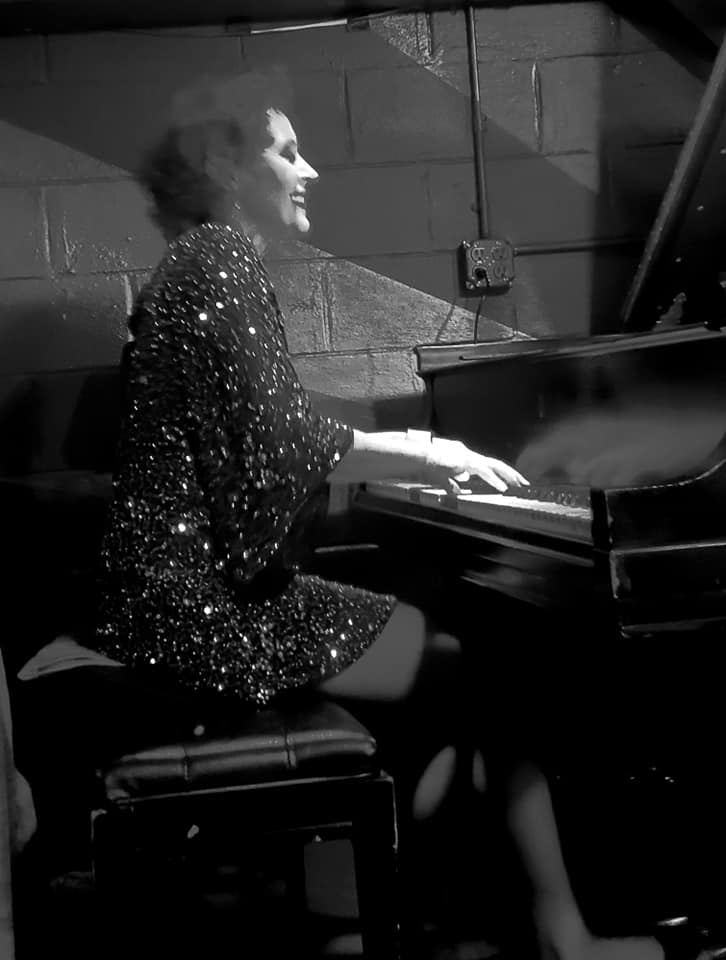
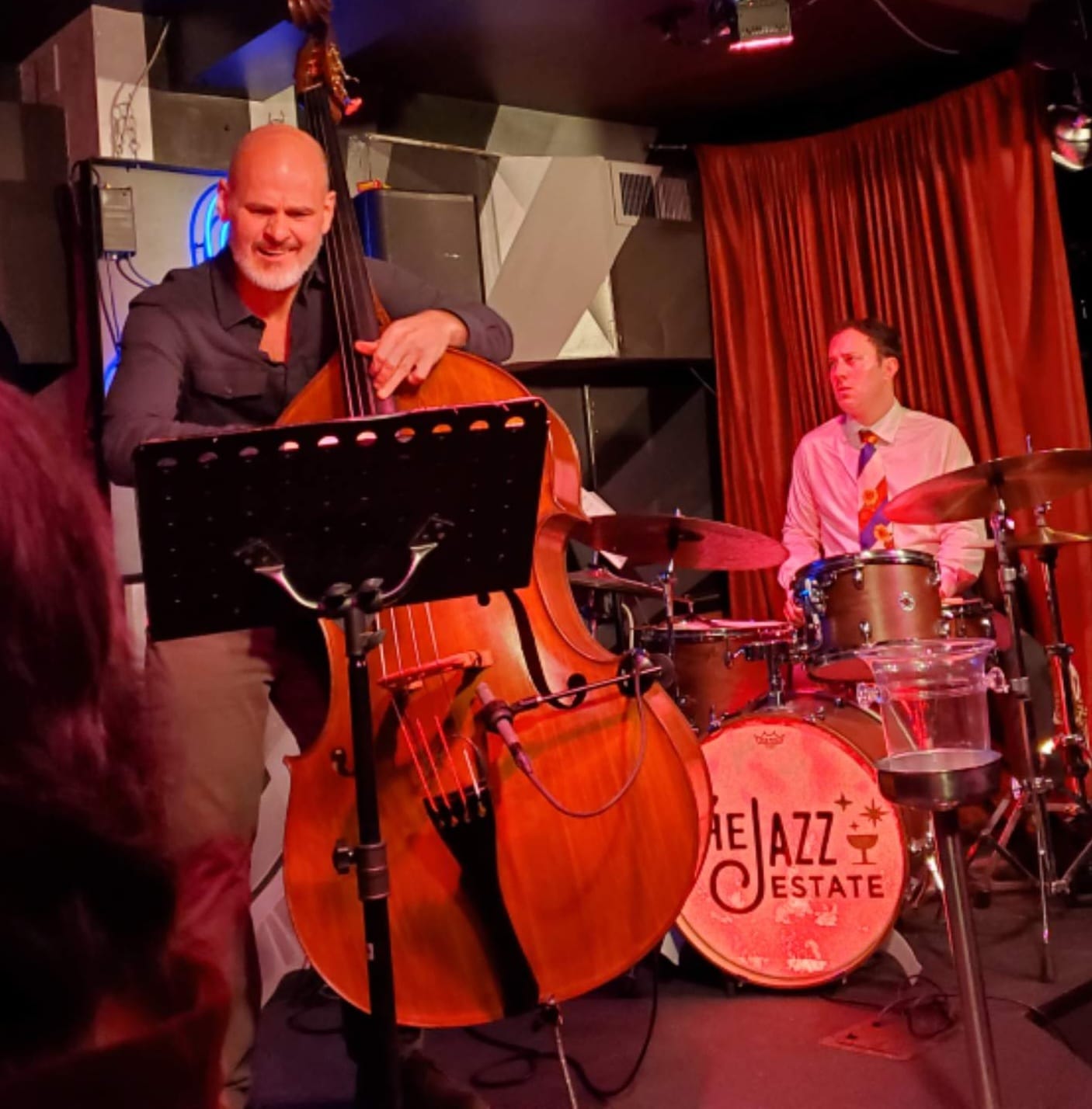
Bassist John Christensen and drummer Mitch Shiner with pianist Lynne Arriale at the Jazz Estate Sunday.
She opened with several pieces from her previous album Chimes of Freedom (the great mini-epic Dylan song) and began with the album’s opener, “Sometimes I Feel Like a Motherless Child,” the soul hymn which probably disarmed her nerves and any doubters in the crowd. Her butterflies had flown.
Emotional and musical eloquence radiate from her playing with heartfelt ardor and honesty, and focused intensity. She demonstrated throughout that she can do just about anything she wants to on the piano, including moving into a wide variety of moods and jazz idioms, from gospel-ish to bluesy to multi-valent modern jazz forms and vocabularies.
And she proved on her new album of all originals how accomplished she is as a composer, with some quite beautiful melodic and striking harmonic constructions. She also seems to be an extremely deft album and performance programmer. The new album’s title The Lights Are Always On, comes from an extended quote by an immigrant doctor from Kuwait who has worked long and hard to treat COVID patients, and the phrase is a brave promise to all prospective patients.
Arriale’s title tune perfectly conveys that committed sentiment, and that continued for various other heroes she celebrates on the album, from marchers for social and racial justice to “Sisters,” embracing all women sharing a need and passion for international solidarity for the advancement of their gender. Another piece, “Honor,” captured the Trump impeachment heroism of Lieut. Col. Alexander Vindman, with apt yet understated resolve and courage. Another feted Justice Ruth Bader Ginsburg.
Yet she also mixed in an (Eastern) Indian music-influenced original called “Dance of the Night,” which drifted a bit into non-Western modalities, and where Shiner deftly played his traps drums with his hands.
Shiner’s intricate rhythms here reflect his having studied (Eastern) Indian percussion, and helped sustain the piece beautifully. 1
Both he and Christensen proved poised and highly attuned to the pianist, even with a lot of her material they probably haven’t played much at all. As Grillo commented on Facebook, Arriale is world-class, and these two musicians played in that class Sunday with authority.
She betrayed her baby boomer roots by playing Joni Mitchell’s “Woodstock,” but on her own musical terms. One more piece, late in the second set, and the night’s only unannounced piece, helped to deepen the subjective experience of honoring heroes, and of understanding something of what it takes to deal with the most challenging ebbs and flows that any hero must face in today’s world.
The music was Lennon and McCartney’s “Let It Be.” Arriale, deeply attuned to the lyrics of the songs she covers, allowed us all to breathe and perhaps even meditate a bit on the more high-pressure evocations of marching protesters, overwhelmed healthcare workers, and defenders of American democracy. This segment of extended grace was as moving as any moment of the evening, and allowed us all to be human, fallible, even neurotic, even as the latent heroism, perhaps within ourselves, challenges us to step into the necessary fray, with honesty and a measure of commitment.
This all added up, for me, to an immeasurable level of artistry in this trio performance. Arriale herself forgot Christensen’s first name at one point, and played through pain in her hand and wrist, and her own profound, if unspoken, personal losses. We were hearing a sort of heroism at work, her generous spirit and commitment, her exquisitely pointed and expansive testimonies.
Can music change the world? Well, I still like to think it can be a powerful trigger, a wellspring released from within any potential hero’s response.
Eddie “Little Count Dracula.” Photo by Kevin Lynch
***************
Chapter 1: Taking “the leap” with a little black cat who thinks he can Fly.
It was the best of times, with our two aging cats, slowly and uncertainly getting to know each other. Then, it was the worst of times, though Ann and I had the best of intentions, when we brought “Eddie” into the house.
It’s debatable whether, for me and my gal pal Ann Peterson, it was “the age of wisdom,” as Dickens once proclaimed, to begin a famous tale. When I moved in with Ann last year, we instantly became a three-cat household, deeply exacerbating the absurdity of me being a cat owner my whole adult life, while being allergic to cats. Before too long, my asthmatic wheezing started getting worse, despite Ann’s assiduous dusting and vacuuming.
But Taj, her big, crazy black cat, got sick about five months after we moved together and, as cats will do, he died quite soon afterwards. It was a great loss I’m sure for Ravi, her creamy-white semi-Siamese scaredy-cat, who had been housemates with Taj since Ravi’s kittenhood. 1
Ann Peterson with our first set of three cats (L-R) Chloe, Ravi (in background) and Taj (facing Ann), before the black cat passed away. Photo by Kevin Lynch
But it seemed an even greater loss for Ann, I think. First of all, Taj was unbelievably attached to her. A “pet psychic” she had once hired, did a phone “reading” long distance and declared of Taj: “That is the neediest cat I have ever encountered.” He was persistently jealous of any book she was reading and tried to horn in past the book, to stick his face into hers, especially when she was reading prone, in bed. Ann loved and hated Taj’s clinginess in seemingly equal measure, and his often hyper-goofiness entertained her no end, well, until the end.
However, she is also the most squishy-hearted, animal-centric person I’ve ever met (She claims her two sisters are “worse” and, indeed Cary and Jennifer both own more pets than we do). She actually had two cats and two dogs when I first met her although, by the time she moved to the east side from Wauwatosa, the two dogs had died.
So, she began to make up for those losses by volunteering to walk dogs at the Humane Society on Saturday mornings. Now, she daily checks on the current dogs on her cell phone, to see which ones might’ve been adopted overnight and, to her great chagrin, which end up being returned to the Humane Society for not quite fitting into the household.
“Oh, Capone is back!” she cried out yesterday. Of course, you wonder why the dog ended up with that name. “But he’s the sweetest guy, so polite,” she always says of most any returning dog who apparently violates parole. Yeah, sweet like crafty Capone was, just before he pulled his gun to waste an old crony who’d betrayed him.
Ann promised me she would never again try to bring a dog into her house, despite all her angst and strong affection for these mangy, sometimes handsome, and eager dogs. So, I was hardly surprised the day she suggested we look for a kitten who might begin to replace the playmate/pal role that Taj made in Ravi’s life. By then it had become clear that Ravi and my cat, Chloe, though now beginning to peaceably coexist, would unlikely ever be close buddies, as Chloe had been in a one-cat household for so long.
So, I agreed to the idea, somewhat warily, and sure enough, Ann quickly found a three or four-month- old black kitten in a foster home, waiting for just the right real home.
We went to visit the cat — a lean, wiry shorthaired little critter, unlike the fat and long-haired black Taj. He was just as charming and crazy as you would expect a kitten to be, so we were hooked.
Chapter Two: Life (and Fear and Loathing?) with Eddie “Little Count Dracula” the cat.
When we brought him home, almost instantly all hell broke loose. I only slightly use the term figuratively, as it wasn’t long before the cat, whom we named Eddie, took on the role of a satanic intruder. I thought Eddie was a fine name, not because it’s my middle name, but because he right away reminded me of Eddie Haskell, the smart-ass neighborhood troublemaker on Leave it to Beaver. He even talked a bit like Eddie, with sort of a whiny, scratchy voice, not at all like my Chloe’s almost lyrical meow.
And when it’s time for chow he schmoozes me with intense body rubbings against my legs, just like Eddie Haskell would schmooze Beaver’s mom — “Good-afternoon, Mrs. Cleaver, you’re looking especially lovely today” — and might get rewarded with a piece of cake, despite having just dunked her son’s face in a mud puddle in the backyard. Otherwise, Eddie the cat often runs away from me because I’ve begun to become sort of the “bad cop” in our disciplinary efforts. Of course, that mad dash is at least as much his manic energy at work, as cat toys of all sorts bounce and skitter around the floor.
Ann and I quickly got dizzy watching Eddie zoom back-and-forth through our Riverwest flat, but that was laced with anxiety because Eddie was often chasing either my Chloe, or Ann’s Ravi, and usually tackling and roughing up the victim a bit. If it were football he would be repeatedly charged with a personal foul for unsportsmanlike conduct.
Eddie soon was creating chaos for all of us while, of course, charming us with his kittenish playfulness and goofiness. It’s as if he had memorized the book a cat is reading in a New Yorker cartoon: How to Be Very Annoying and Cute. Part of the problem and the charm is that Eddie seems to be an extremely smart cat, which is saying something giving the superior intelligence of the species in general. So, he’s crafty, stealthy, cunning, and seemingly, at times, cold-blooded. In other words, he’s an unrepentant scoundrel.
Okay, here’s a cute example of his smarts. He invented a game with one of the little sparkly squishy balls he and the other cats play with. When an empty laundry basket is on the kitchen floor, Eddie will toss the ball into the basket, and then tip the basket over sideways. So now the ball is caught in the side webbing of the basket. But rather than simply pull the ball out again, Eddie delights in the fact that it is “in jail,” perhaps like he should be. So, he starts pushing the tipped basket around and it rotates across the floor on a circular axis, with the squishy ball dancing around along its sides. Neither I nor Ann, another lifelong cat-owner, have ever seen a cat do such a thing.
On the downside, at the most, shall I say, existential level for me, my asthma was once again getting worse, with three cats and Eddie often infiltrating our bed at night. Oh joy.
So, for my health and Ann’s relative nightly peace, we’re trying to keep Eddie out of the bedroom at night, another challenging “game” the elusive rascal’s too good at. Even when we successfully get him out of the room, our early morning slumber is often roused by the unnerving sound of Eddie jiggling the doorknob, trying to open it. If he had opposable thumbs, I would readily imagine him, already up on his hind legs, marching in upright, putting his paws on his hips and staring at us indignantly.
Ann wasn’t blind to the ever-complicating situation and a couple of times even broke down in tears, declaring her notion of finding a new playmate for fraidy-cat Ravi “was all a bad idea.”
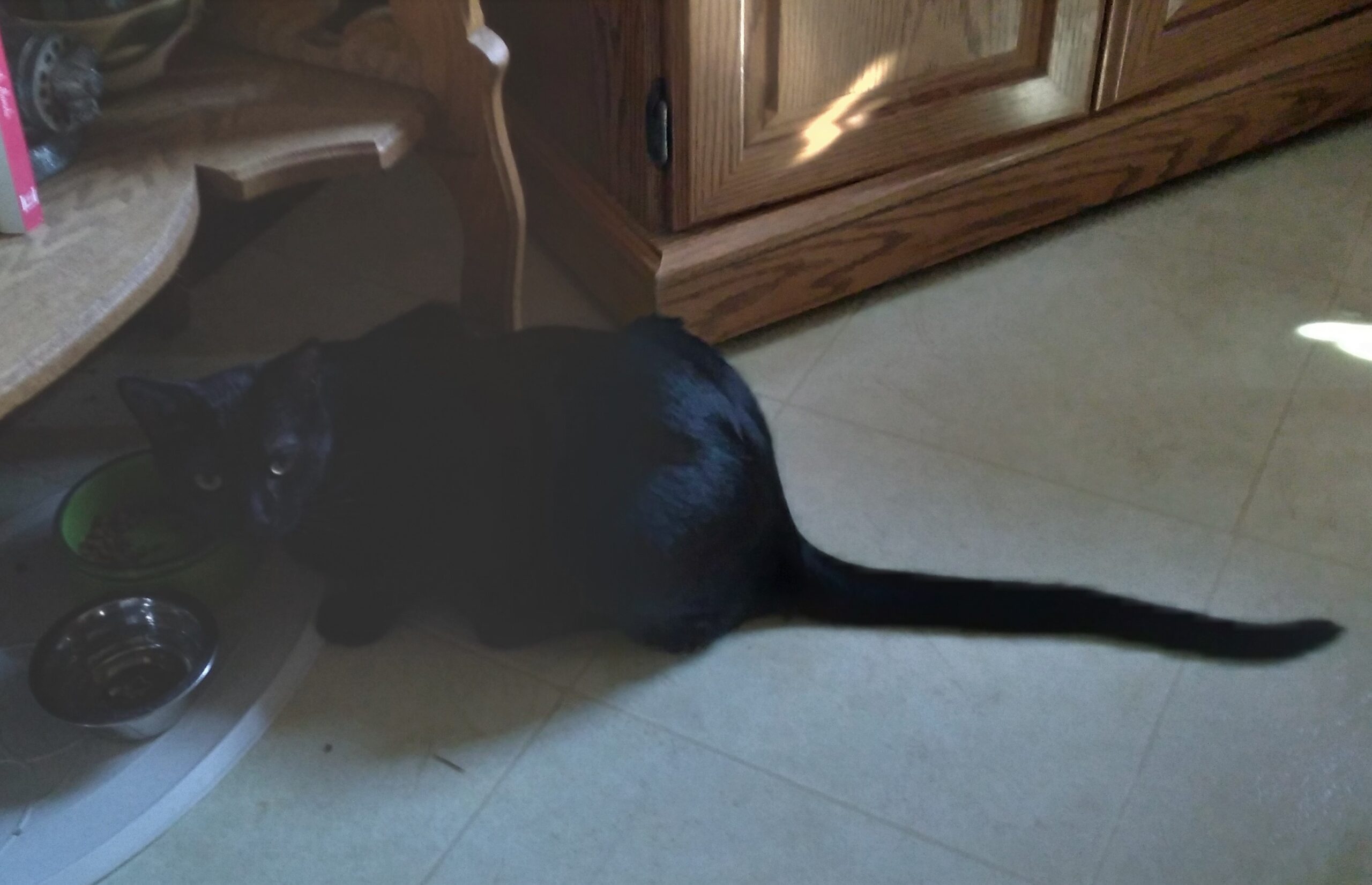
Let’s step back just slightly. This story’s title comes from perhaps Eddie’s most distinguishing physical trait, which may also have symbolic value. As you’ll see in the top photograph, he has what Ann admits to being “a ridiculously long tail,” nearly two tails long. It does make you wonder, and I’ve begun to think of Pinocchio and his mythical nose, which would grow longer every time he told a lie. Perhaps Eddie’s tail grows just a tad longer every time he commits a household transgression, which is quite often. After apparently learning his lesson, Pinocchio, the wooden marionette, one day turned into a real boy, his fondest wish. If Eddie the real cat one day turned into a wooden marionette, someone’s fondest wish might come true, and things would be quieter and, um, “safer” around here, with no strings attached.
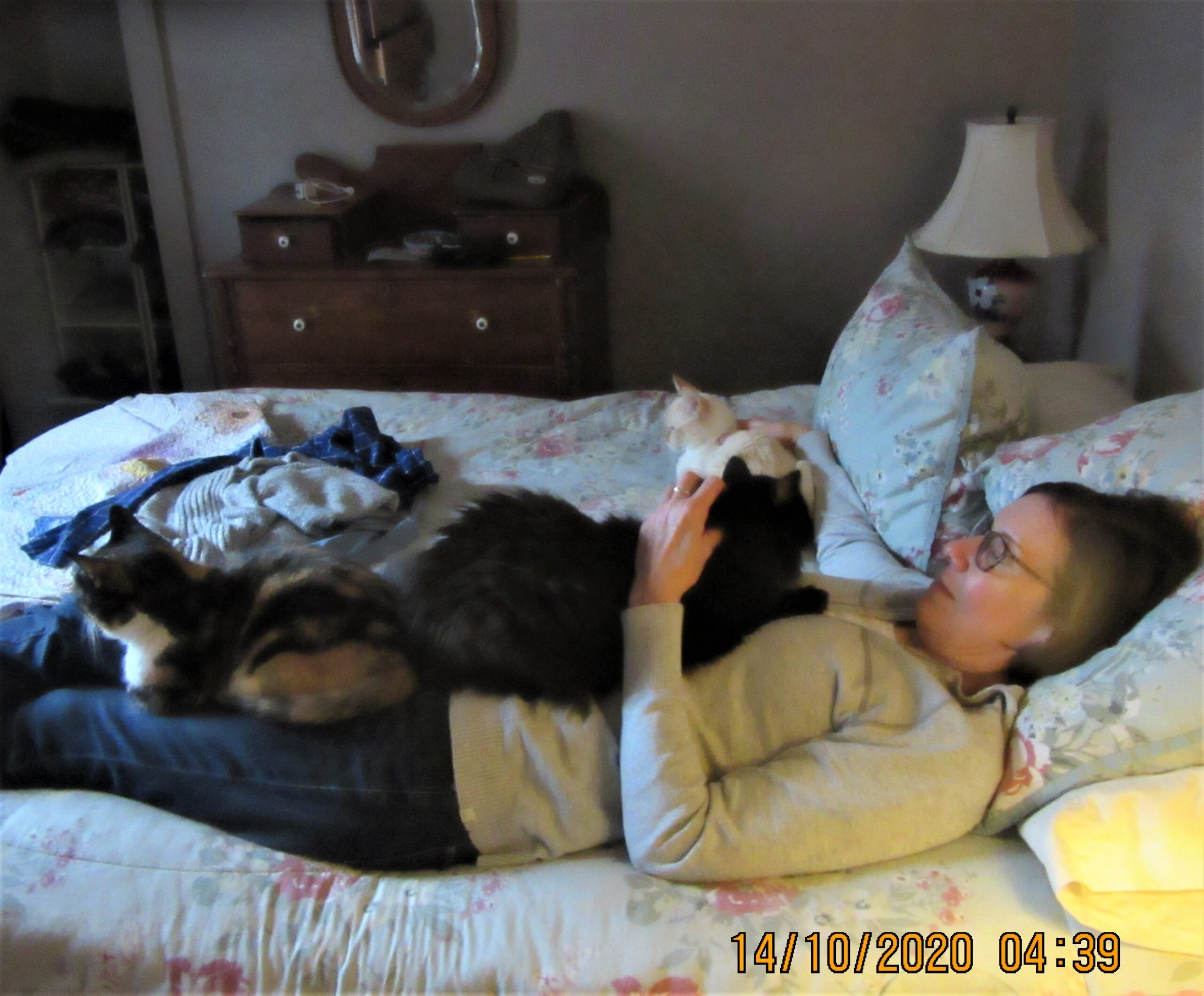
If one of these days his tail tip begins to grow a satanical spear-blade tip, we’ll know something is, um, following him and maybe us. Should I have honored Poe, not Dickens, in this tail of two black cats? Or perhaps Dr. Seuss, given the scene illustrated below? Taj’s bushy black tail actually had a crooked kink in it. By contrast, my calico cat’s black -and-brown-speckled tail has a lily-white tip, a signifier or not (Of course, Ravi can attest, Chloe has proven no angel in this house).
Understand, poor Ravi was an almost neurotically meek and fearful cat since the first time I met him, although Ann claims he improbably would initiate wrestling matches with Taj. Since his “black bro” has passed, and since Eddie arrived, Ravi has taken on the “clinging cat” role, and to a whole new level – from Taj’s in-Ann’s-face to on-her-head, that is, starting each nap or evening bedtime by laying literally on her head, and often kneading her hair into a rat’s nest, though I suspect Ravi might run away if he saw a small furry marsupial scampering around the house.
Ann prefers not to have her picture taken but, one day, realizing the situation’s ludicrousness, she wryly took a selfie, of her and Ravi (see below). Now she has finally begun to protest to minimize the hair kneading.
“The Cat as a Hat”: Ann (holding back a giggle) and Ravi, in bed. Photo by Ann Peterson
I think these photographs speak for themselves, worth the proverbial thousand words. So, as this little story has exceeded a thousand words already, I need to close. Things are getting a bit better around here, though I know any number of new owners would have by now deemed Eddie as severely violating his parole, and shipped him back to the Humane Society. I’ve never wanted to do that, while biting my lip when “Little Count Dracula” bites Ann’s neck or elsewhere, yet again. She has tearfully admitted she could never return him, despite the household strife. His high zaniness quotient does keep all four of us entertained, each in our ways.
We can only hope, somewhere over the horizon and a lucky rainbow, the worst of times around here come closer to the best of times.
_______________
Culture Note: Despite Ann’s doubts of how much I liked her first two cats, I had been predisposed to do so partly because of their names. Her daughter Teresa had named Ravi after the great Indian sitar player Ravi Shankar who of, course, turned George Harrison and the Beatles onto Indian classical music and its spiritual implications. Shankar also influenced guitarist-composer Mike Bloomfield, who witnessed the sitarist’s Western star-making performance at the Monterey Pop Festival in 1966, and then wrote the title tune of the Butterfield Blues Band’s profoundly influential second album East-West. Though Ann doesn’t recall the genesis of Taj’s name, I prefer to think that a name-giver in her family really liked the music of Taj Mahal, the marvelously eclectic blues musician.