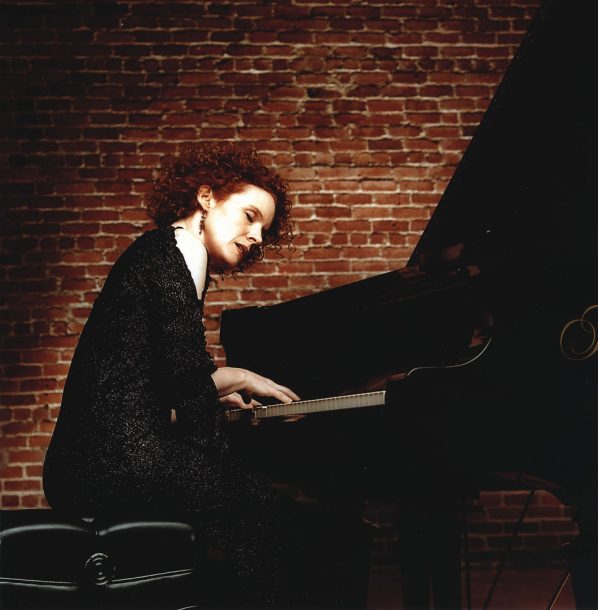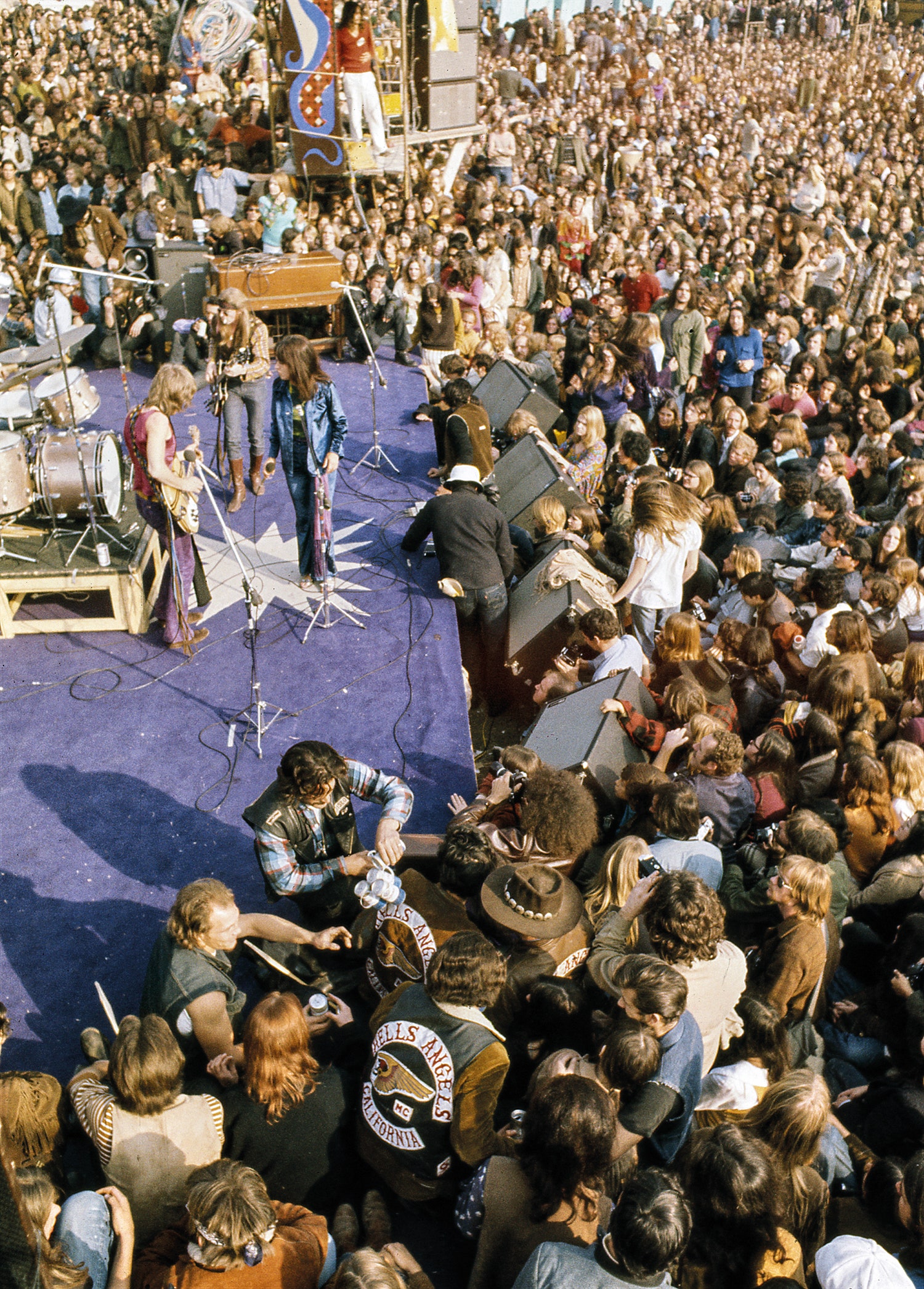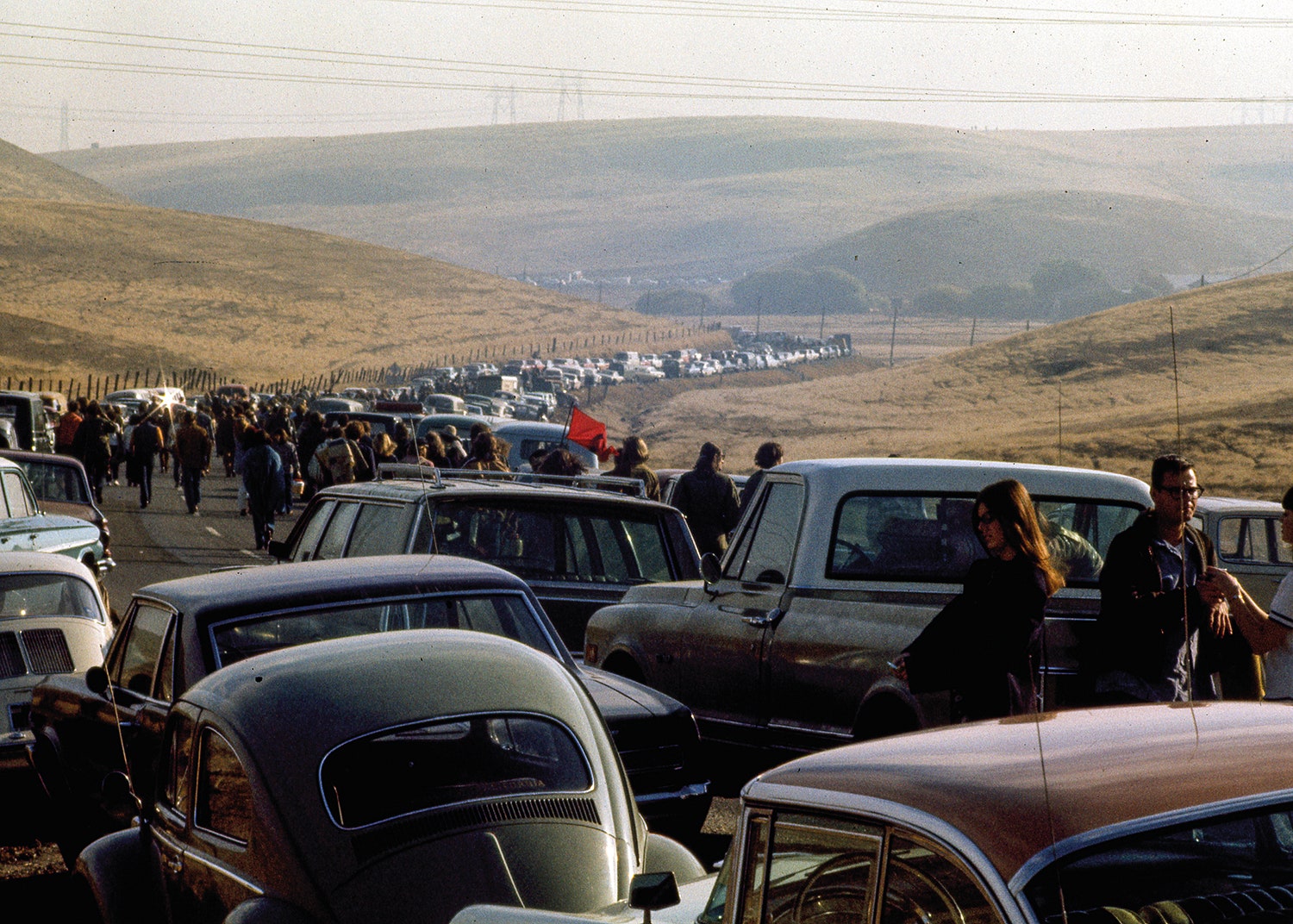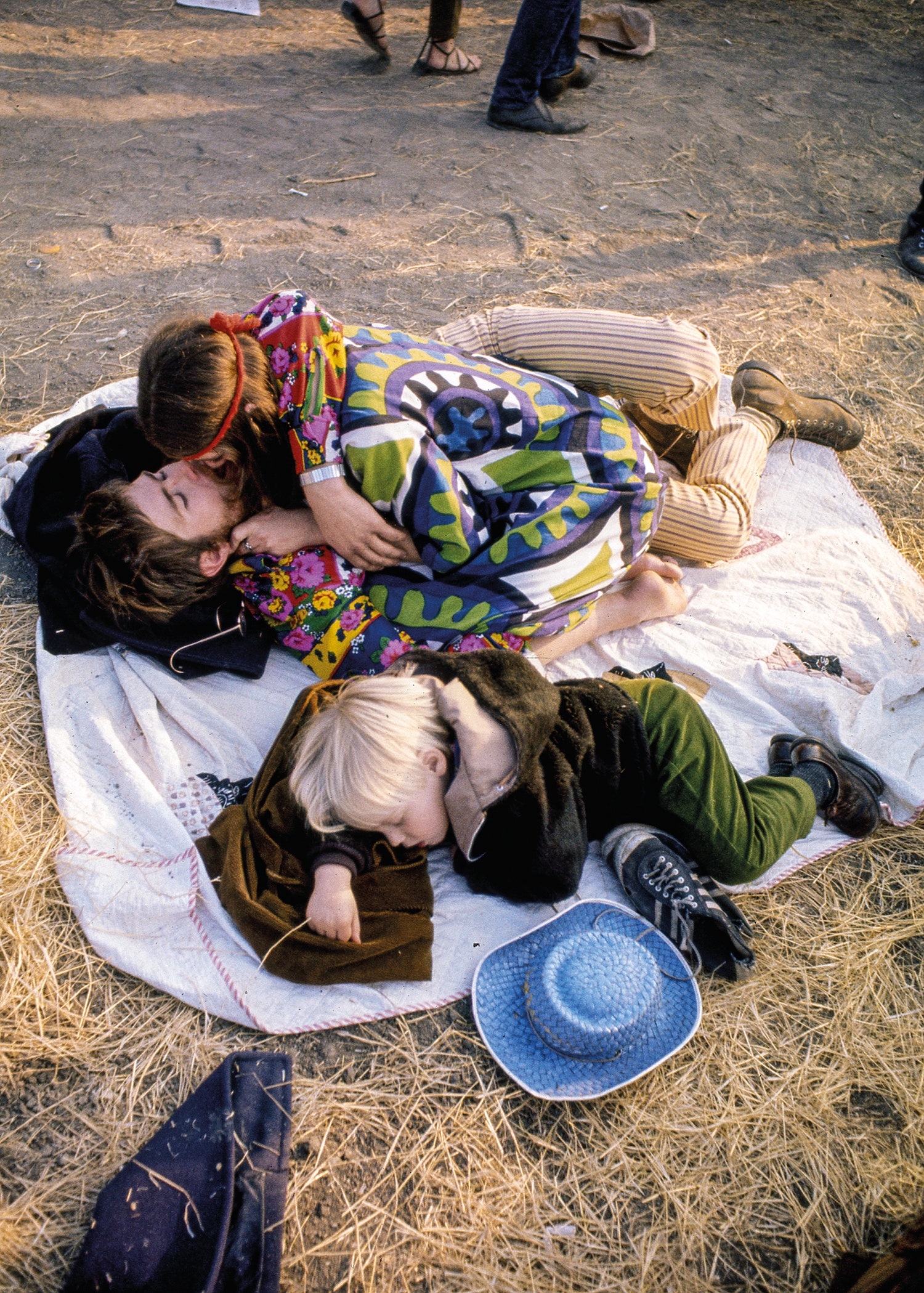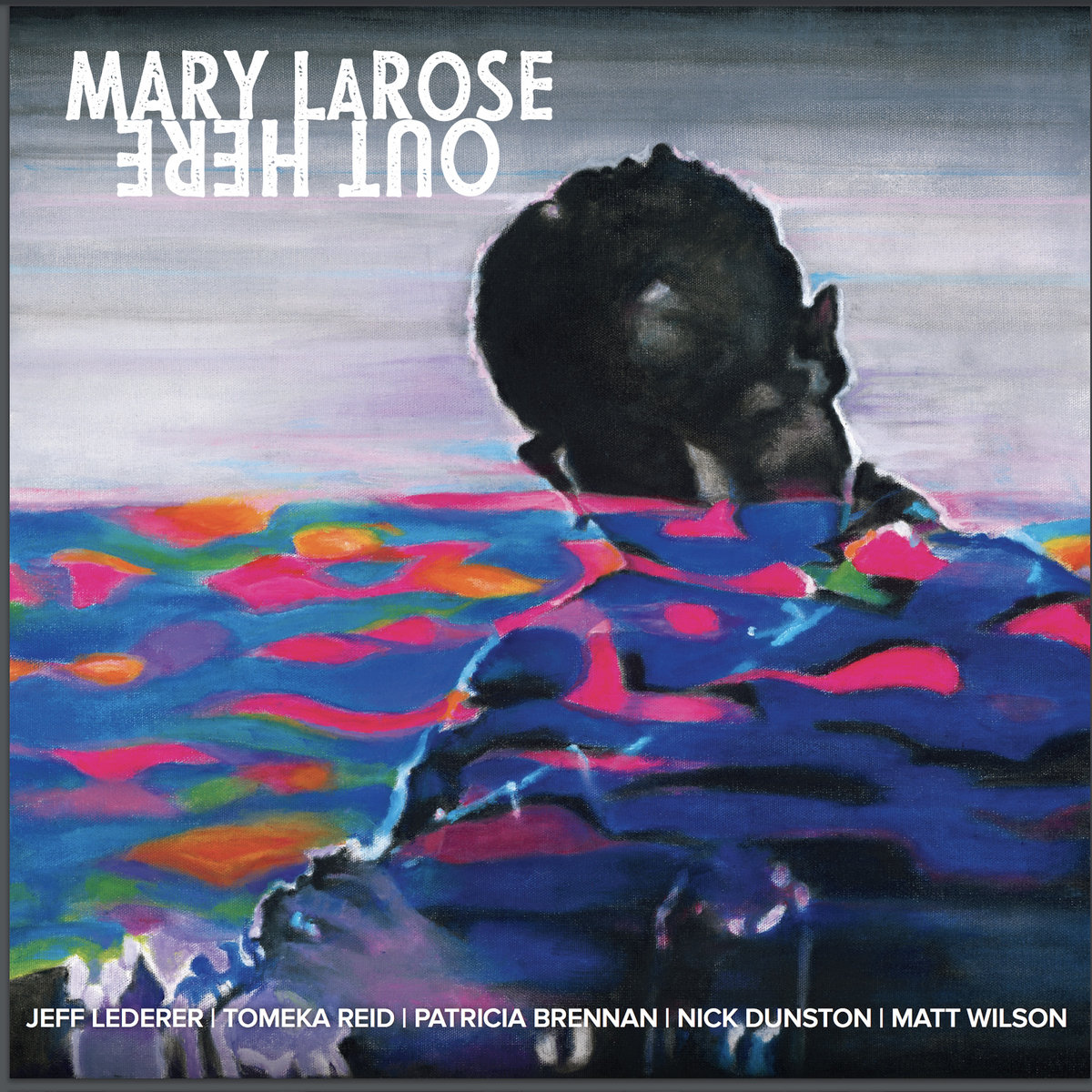

Happy new year to all CC readers in 2021, with a huge assist from Mike Neumeyer, one of my favorite musicians of the year

Culture Currents Holiday Greetings for 2022! First, a miscellany of memories of 2021, photo-essay style, of this blog’s year, and of friends, especially some dearly departed ones (Don’t worry, there’s a musical New Year’s pay-off below).

Your blogger refurbishes an old sculpture of his titled, “Tricycle Nightmare.” Photo by John Klett

CC’s Kevernacular out for some CC-style skiing, shot from Lincoln Park’s highest point, the windswept tee box of Hole No. 6.

Who can forget The Milwaukee Bucks making history by defeating the Miami Heat, the New Jersey Nets and the Phoenix Suns, to win their first NBA championship…in half a century? The crazed crowds at Fiserv’s Forum’s Deer District (above) played their part in the fever that stoked the team. 

Don’t forget, in 2020 the Bucks also began a brief strike that led all of professional sports in bringing attention to police violence against unarmed black people and systemic racism in America.

Successful businessman, publisher and business-success author Jack Covert, who passed in 2021, once had a slightly more unseemly identity, as owner of Dirty Jack’s Record Rack, a small mecca for Milwaukee music fans in the 1960s and ’70s. 

An NPR “American Masters” poll this fall posed the question “What work of art changed your life?” I could not answer with a simple response. One such transforming event was the exhibit of the late Arshile Gorky’s brilliant blend of surrealism and abstract expressionism, at the Guggenheim Museum, in the early 1980s. Above is Gorky’s “The Plow and the Song” from 1946.

Another life-changing work for me was seeing Picasso’s “Guernica,” though I never saw the whole painting, an odd circumstance described in my NRP poll post, regarding the epic anti-Fascist work(s).

The ultimate life-changing work for me — my first encounter with Melville’s “Moby-Dick” obtaining a copy of the 1930 edition, sumptuously illustrated with woodcuts by Rockwell Kent, including this magnificent rendition of the great white whale. 

I also honored a great friend, musician, and culture vulture, Jim Glynn (at right) on the anniversary of his death. Jim also served as the best man at my wedding in 1997 (above).

Some of my happiest reporting of the year was interviewing Kai Simone (above), the first-ever executive director of Milwaukee’s Jazz Gallery Center for the Arts. She signifies a fresh new direction, while extending the tradition of the venue’s namesake, The Milwaukee Jazz Gallery, whose heyday in the 1980s contributed greatly to the city’s community and culture.

Speaking of the Jazz Gallery Center for the Arts, my favorite single piece of art this year was in an exibit there. Jessica Schubkegel’s evocative and eloquent sculpture “Chrysallis” (above). made of medical textbook paper and wire, graced a group exhibit, ReBegin: New Works for New Beginnings, in response to the COVID epidemic.

.

Perhaps my most personally meaningful trip was a visit to Two Rivers, Wisconsin (above), on the shore of Lake Michigan, which included a fine nature-preserve walk and visiting the field where my father, Norm Lynch (with the ball, below) quarterbacked a great high school football team (three straight seasons undefeated) in the 1940s .

That Washington High football field in Two Rivers remains (below), but is now the domain of geese, who keep it well-fertilized with au natural “yard-markers.”


As COVID threats eased, for a while, Kevin and Ann finally dined out, at Tenuta’s Restaurant, in Bay View, a glorious meal gifted by Ann’s colleagues.


Another fine 2021 memory was of my old friend, composer/jazz pianist Frank Stemper (above), here receiving applause in Austria, where his new work, Symphony No. 4 “Protest,” was premiered. While in Europe, Frank and his spouse Nancy visited Omaha Beach, site of the D-Day landing of allied troops who turned the tide of WWII (below).


“Enter” by Marvin Hill 

Two linoleum-cut prints (above) by the late artist Marvin Hill, whom I memorialized in 2021 on the anniversary of his passing in 2003.

***.

OK, so much for that little montage of 2021 moments for Kevernacular.

Your reasonably dedicated and unreasonably beleaguered blogger wants to pause at this late point in the day (into evening) to wish all of my Culture Currents readers from 2021, and times fore and aft, a very happy new year (!). If some of the year’s blogs “spoke to you” in any way, it goes to bolster my notion that, indeed, Vernaculars Speak!

I am deeply grateful for your interest in this sometimes waywardly-searching blog. Today I’ve been struggling to meet a deadline for The 14th annual International Critics Poll for El Intruso, a Spanish publication for people interested in creative and experimental music. That’s involved plenty of H-Hour auditioning of review CDs that I purchase or receive.

Believe me, it’s been very pleasurable labor, discovering, savoring — and having my mind slightly bent at times by — the new music that comes my way, as a veterans music and arts journalist.

Throat-clearing aside (no, I don’t have COVID!) I can think of no better way of musically wishing you all a happy new year by sharing two brief but delicious videos by one of my favorite Milwaukee musicians of 2021. I’m talking about vibraphonist and marimba player Mike Neumeyer.

He is one of the most irrepressibly vibrant (please pardon the pun, which simply popped out in my comparative state of mental fatigue) musicians I’ve ever had the pleasure of meeting (at a free-jazz workshop he led at the Jazz Gallery Center for the Arts, in 2020, shortly before the pandemic struck), and of sharing time with, although ever since it’s been all virtual.

At least we humbly enjoyed ourselves on New Year’s Eve with a bottle of sparkling Proscutto rose, and some scrumptious curry and Nam Khao (deep-fried rice ball, cured pork sausages, peanuts, scallions, cilantro, shredded coconut) from Riverwest’s Sticky Rice Thai Carry Out, on Locust and Weil Streets. Yep, the foodie details are making me hungry too, so I better get to the felicitous point here. 1

I have extolled the talents and spirit of Mike Neumeyer several times this year in this blog (which are obtainable in a simple search with his name at  the top of the Culture Currents page, I don’t think you’ll be disappointed).

So I don’t have much energy for further glowing, or even moderately striking, praise for vibist Neumeyer, although I will point out that his positive energy is a great antidote to the stresses and strains of another year of enduring COVID, and much of the madness and travesty that passes for politics in America today. Mike is not above clowning it up a bit but, Lord knows, we need every scrap of comic relief we can get these days.

So, skipping further ado, I will simply direct you to his two versions of “Auld Lang Syne,” One version is short and sweet. The other, also brief, allows for a few grace notes of reflection and perhaps even resolution, for the listener.

Thanks again Mike, for a great year of music and memories  And keep up the (ahem)

good vibes. Two (maybe three) increasingly horrid “vibes” puns, and I’m out!

“Auld Lang Syne” played by Mike Neumeyer:


And now, to extend the holiday celebrate a tad more, sample a slightly slower draft of the grand old song, with a little aftertaste of the old year, now bygone forever, save memories:


Surprise! As an extra treat, especially for all you boys and girls who’ve been not too naughty this year, let’s rewind to the spirit of December 25th, and Mike’s rendering of one of the most timeless holiday songs ever born.

_______

1 We also watched a wonderful film on video on New Year’s Eve. It’s the multi-Academy award-nominated The Father, starring Anthony Hopkins and Olivia Colman, and written and directed by Florian Zeller. If you haven’t seen it, The Father is uncannily disarming and disorienting in evoking, for the viewer, the point of view of a family patriarch – played with dazzling power and poignance by Hopkins – whose mental powers and pride are rapidly dissembling amid Alzheimer’s.

In watching it, you might begin to doubt either the movie or yourself, but by the end, in reflection, it all makes brilliant sense, in the saddest and most moving of ways. The full-movie video follows immediately with insightful comments from the principals.

Here’s the trailer:


Artist Rockwell Kent followed Moby Dick to the ends of the earth

For me, this is Rockwell Kent’s most magnificent evocation of Moby Dick. We see him breaching in the night, an act of exultation which demonstrates his godlike presence in the sea, and his cosmic relationship to the heavens. This is hardly an evil whale.

Moby-Dick prints by Rockwell Kent

And then there were humans and leviathans, both pursuing light and the night. Where to? Why? Because Ahab is evil? Or is the white whale? Melville found horror in whiteness, but his profound and prescient chapter on the subject deflects nearly as much as it reflects.

For artist Rockwell Kent, deep in that same pursuit, the devil was in the details, the textures of truth. Enter here. You may begin to feel the night engulfing, and lacerating. Kent actually produced 280 noir-Deco woodcuts for the 1930 Random House edition of Moby-Dick, and so charged the era’s imagination that Melville’s behemoth tale, long homeless for a meaningful audience, became palatable, bite by bite. The 135 short chapters, such an orgy of wonder and mystery, found their brethren in images.

And the forsaken story finally found its audience, with the printmaker’s incalculable assist. I recently responded to an NPR survey about the single work of art that changed one’s life, and chose this book, and shared how Kent’s work primed me for the great American odyssey. But another recent blog, from which most of these images are borrowed, prompted me to flesh out Kent’s work more than before. That blog, A Smart Dude Reads Moby-Dick, is also recommended especially …for Moby-Dick doubters and procrastinators.

https://avidly.lareviewofbooks.org/2012/09/20/a-smart-dude-reads-moby-dick-episode-1/

Begin with zealous artistry, probing atmosphere and characterization, and tale-spinning flourish, if I may offer something of the meaningfulness of these images. I invite you to soak them up and read the short comment texts included. You may be on your way to the sea’s beckoning horizon.

Some include full-page reproductions of Melville’s book, with text and illustration, for a counterpoint of mind and eye, from the ground-breaking 1930 edition (still available in a Modern Library a paperback edition). Kent was a knife-wielding poet of shadow and light, as you begin to see in the first image, from the chapter entitled “The Counterpane.” The counterpane (quilt) and arms dance amid their rest. In the text, notice how narrator Ishmael focuses on the visual effect of his experience. But in that moment? Where do dreams go to live, or die? Comedy lies waiting, as much as fate, but so much more!

Below, we see Ahab (who doesn’t appear in the book until Chapter 28) in two telling moments. First, he gazes defiantly into the sea light, infernal for him. We then should let Melville’s words introduce him, with the first page of “Sunset” (Chapter 37), our post’s first indication of the narrator’s sense of the power of atmosphere for his story, and for his subject. The second image below shows Ahab full-figure, master of his domain, if not of his wretchedly magnificent mind. Note the small hole in the deck carved out to steady his whalebone leg — Moby-Dick’s hellish handiwork, and the virtual spleen driving the tale.

Arguably the second most colorful character in Moby-Dick besides Ahab (if not Moby Dick himself) is the Polynesian first harpoonist Queequeg. Covered with tattoos, he’s a king in his native land; sells, and prays to, shrunken heads; and memorably befriends the narrator, a relationship that, in its way, begets the whole story, as the final chapter reveals. Here Melville introduces Queequeg in the chapter “Biographical.” The scene depicted may reference a later chapter, “The Monkey Rope” where he attempts a stunt-like action during whale-cutting with Ishmael, situated at the other end of the chain. He saves Ishmael’s life.

This print below exemplifies Kent’s mastery of what would become known as noir atmosphere, which would almost simultaneously begin being exploited by film-makers (see previous blog):

NPR American Masters question: What single work of art changed your life?

. The two crew members and the backdrop create a stunning mood and composition, with Kent brilliantly sculpting light and darkest shadow. Perhaps such a scene was inspired by Melville’s contemplation of “the darkness of blackness,” an inherent American condition, he believed, derived from the work of Nathaniel Hawthorne, the great writer to whom Melville dedicated his masterpiece.

The following three prints share a beautiful affinity and, thanks to a blog’s latitudes, I decided not to choose among them. Rather, I want to allow them together, along with the preceding print, to cast a long shadow of spiritual striving and unease, from Kent to you. Such stunning atmospherics might take him anywhere in his artistic quest. But he was working very much in Melville’s expansive and doomed milieu. Such strangeness, such black beauty. It was genius meeting genius.

Below, we get a taste of the deep learning pervading this epic. Here the mythological character Vishnoo alights upon a whale with seeming preternatural ease. Ishmael compares him heroically to Hercules, St. George, and Jonah, aptly it seems. Yet he’s not an immortal God, rather but one dueling with destiny.

For me, this below is one of Kent’s most breathtaking images. Is he taking artistic license with the scale between the whale and whaling boat? To a hardy crew at sea for many months, stretched to their human limits, having to live with the existential risk of the whale hunt, it may hardly seem an illusion.

And finally comes the long-awaited chase of the White Whale, now successfully transformed into a hated entity by the demagogic Ahab, hypnotizing his crew, all but first mate Starbuck. And then, “He raised a gull-like cry in the air, ‘Thar she blows! — Thar she blows! A hump like a snow-hill. It is Moby Dick!’ ” Here we see natural excitement foaming with the monomaniacal captain’s greed and vengeance.


Artist Rockwell Kent demonstrates above the spectacular power of Moby-Dick in this image. Kent’s work predates a number of brilliantly-realized illustrated editions of the book. But, for me, that edition has never been surpassed. For example, the image above I believe inspired the cover of a 2007 edition of the novel, a “Longman Critical Edition” (below). But that striking yet odd Longman image fails to show the source of the explosive disruption, the whale himself.

Courtesy amazon.com

However, as successful artistically and commercially as the Kent-illustrated volume was, it had one glaring flaw, readily evident on the cover (below). There’s no indication that Herman Melville is the author! Rockwell also designed the book cover, which might help explain how Melville’s name was overlooked. Marketing doubtlessly had the other hand in that decision. Random House likely figured they had a great coup with Kent’s illustrations. In the Art Deco 1920s, he may have been better-known than Melville himself. It was yet another of a long series of insults and betrayals — now posthumous — to a great American writer who struggled mightily for his art, and to support a large extended family. 1.

Moby Dick or the Whale" (1930) book by Herman Melville illustrated by Rockwell Kent. sold at auction on 1st February | Bidsquare

___________

  1. Picky pedantics might also object that the Random-House cover failed to hyphenate Moby-Dick which was Melville’s chosen title (subtitled “Or, The Whale”) for the book, even though the whale’s name in the book’s text has no hyphen.


Jamie Breiwick matches creative wits with Tim Ipsen: Sparkling results

Milwaukee trumpeter-composer Jamie Breiwick is brimming with creative output of tidal proportions. His latest (unless something appears next week) is this often exquisitely crafted yet free-flowing work, with bassist Tim Ipsen.

Breiwick’s assured grasp of modern jazz tradition exploits this spare sonic palette with textural and expressive language via Don Cherry and Miles Davis. Yet his facility recalls the finest beboppers. It opens ambitiously with “Green Aesthetic,” a wistful yet questing theme that feels like, rather than from the head, playing from the ground up, with feet in the dirt, through the heart, to the horn. Ipsen’s bass resonates eloquently in restatement. “The Cilla Suite” seems to honor the sea through three episodic movements.

“All the Moons” beams with Breiwick’s innate lyricism evoking, for me, a Wisconsin fantasia, the cow jumps over “all the moons.” “Father Figure,” tonal and lovely, recalls Art Farmer’s luminous warmth. “Le Flume” translates aptly as “spectral random wave.” “Un Moment” encompasses three parts—free, spacious, and swinging, over Ipsen’s walking bass. “Rip Glass” ends it ingeniously with Breiwick on “water trumpet.” Burble-gurgle and quenched.

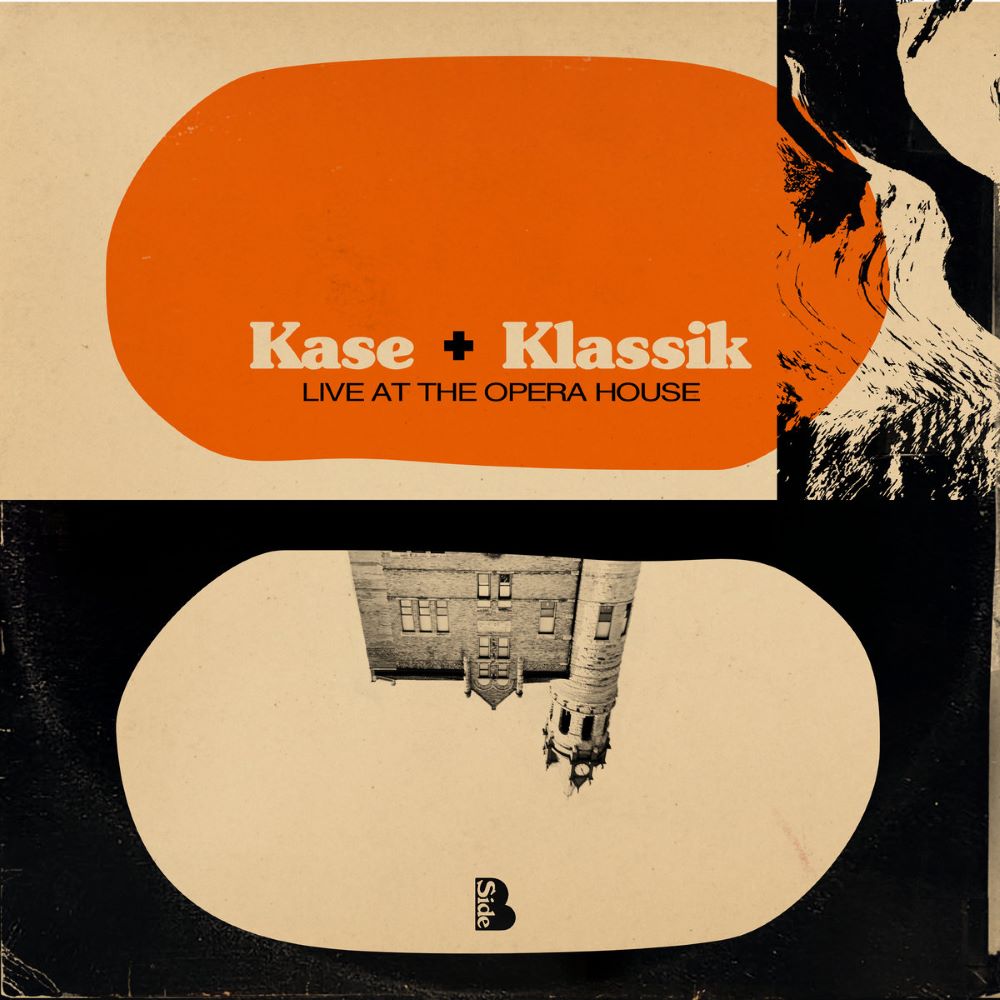
Artwork courtesy B-Side Records 

This album review was originally published in The Shepherd Express: https://shepherdexpress.com/music/album-reviews/duets-b-side-by-jamie-breiwick/


Trumpeter Jamie Breiwick’s hungry brain cooks up another musical feast


He’s the father of four young children, an educator and jazz musician, but Jamie Breiwick is one artist who didn’t let the Pandemic slow him down. He’s about to release his third album in recent months, and more is right around the bend. And yet, it’s not nearly as repetitive as it might seem, as all three albums have different instrumentation, personnel and varying styles.

The Jamie Breiwick Trio presents a trio of album release events in Milwaukee and Chicago, this weekend.

The events highlight the new album The Jewel, recorded live at The Dead Poet in New York, with drummer Matt Wilson and bassist John Tate, and available to purchase at the events.

The first event is in Milwaukee at Blu, at the scenic top of The Pfister Hotel, 424 E. State Street, on Friday from 7 to 11 p.m. The second Milwaukee performance will be at Saint Kate — The Arts Hotel, 139 E. Kilbourne Ave., at 7 p.m. Saturday. 

The third event is at The Hungry Brain, 2319 Belmont Avenue, at 9 p.m. Sunday, Dec. 19, in Chicago.

Breiwick also released, in recent months, albums with his jazz-hip-hop trio KASE and and Duets with bassist Tim Ipsen, and with more coming soon. Quite clearly, this artist is eating up musical real estate right now like a hungry-brained monster.

The trio at Blu will be bassist John Tate, who recorded the album, and drummer Devin Drobka, one of Breiwick’s most gifted and loyal collaborators. Leading Milwaukee drummer Dave Bayles will perform at Saint Kate.

The trio at Hungry Brain will be all three recording participants including bassist Tate and acclaimed drummer-bandleader Matt Wilson.

Trumpeter Jamie Breiwick has demonstrated great versatility with recent recordings with his hip-hop jazz ensemble KASE (pictured above), the album “Duets” with bassist  Tim Ipsen, and the new album “The Jewel,” a straight-ahead collection with acclaimed drummer Matt Wilson, focusing on compositions by many jazz greats.  Courtesy OnMilwaukee.com Above photo by Brian Mir

Wilson is a prolific recording artist as a leader, with his latest album, Honey And Salt (Music Inspired By The Poetry Of Carl Sandburg), receiving a myriad of accolades. As an accompanist he’s recorded with, among many others, Charlie Haden, Wynton Marsalis, Pat Metheny, Andrew Hill, Bobby Hutcherson, Lee Konitz, Hank Jones, Frank Kimbrough, Larry Goldings. Anat Cohen, and Paul Bley.

This blogger (Kevin Lynch) had the honor of writing the liner notes to the recording, so I know how good the music is (I’ve also heard Breiwick’s Duets album and the one with KASE.).

At this point, the album, on Ropeadope Records, will be available at the events as download cards. Physical CDs will be available at a later date.

Breiwick’s new album is distinguished by one of the most diverse and fascinating collections of compositions by modern jazz composers in recent memory, including Thelonious Monk, Ornette Coleman, Pharaoh Sanders, Sun Ra, Carla Bley, and longtime Milwaukee jazz star Buddy Montgomery. Breiwick added one original, the title tune, The Jewel. 

________


Is this the best? Marcin Wasilewski’s cutting-edge piano trio forges ahead

Marcin Wasilewski Trio - En attendant - Amazon.com Music

This magnificent piano trio graced the Polish Center of Wisconsin in November 2008, an event etched in my memory as the last concert I attended with my parents, before they died. “That was the best live jazz I’ve heard in years,” said my father, a lifelong jazz buff. For good reason, as the trio, with intact personnel for 26 years, demonstrates on En attendant. My father’s favorable impression also spoke to the threesome’s range of appeal.

Marvin Hill toiled artfully through life, with visionary wit, and knowledge of darkness, on a path to the other side

Wendy and Marvin Hill. Courtesy Wendy Carroll Hill

He’s been gone since 2003, but Marvin Hill is hardly forgotten. My home brims with his wondrous and witty linoleum-block prints. And just as his memorial postcard (see below) was graced with his self-description as “a very lucky man,” I feel blessed as well, with his art and for having known him. I don’t know when exactly Marvin made that self-portrait, but I suspect it was near the end of his life. He seemed like the sort who appreciated his time on this planet, and knew that he had left a rich legacy, filled with hundreds of pathways into his imagination, each adventure returned as a sharply-honed visual story of wonder, humor and mystery.

He died on this day, December Second, in 2003, of non-Hodgkin’s lymphoma, at 51. His widow, Wendy Hill, who did most of the hand-coloring for his prints, sent out the above postcard in June of 2005, to announce a Marvin Hill booth at Art Fair On the Square. As if nothing had changed, except that angelic tribute to Marvin’s life, talent and spirit. .

He was a sweet, but droll man, with a vibrant creative fire. I once visited his rural studio, slightly pungent with the smell of printer’s ink, and it seemed alive with a slightly cock-eyed aura of artistic affirmation. His artwork was popular, yet idiosyncratic and personal, never pandering. He was always one of the most interesting artists at any art fair he exhibited at, and he was duly feted when chosen as The Featured Artist, for the 1999 Art Fair on the Square in Madison. He designed the official T-shirt for that year’s fair, which he autographed for me and I still have it. Hill exhibited widely at fairs and galleries, and won national awards for his work. 1

Though he once lived on the same street in Milwaukee I now live on, he and Wendy ended up in Johnson Creek, halfway between Madison and Milwaukee, and Madison seemed his strongest market.

I wrote an appreciation of him when he died, for The Capital Times in Madison, and I’ll share some of my thoughts from that time:
“Marvin Hill pulled you into his world with art that could be otherworldly, or as comfortable as a pair of old slippers. The pair you slip on after an especially vivid dream, or to sit down with the book that has you under its spell. Books and dreams were Marvin’s milieu.

Or he got you with his warm, twinkling smile, and his passion for art, stories and life –  in a dimension behind the door unlocked with ‘the key of imagination.’ His art was “The Twilight Zone” captured in a frame. Marvin lived the life of the mind, expanded, printed and hand colored.

His art could challenge you but it was hard to resist. He made inexpensive linoleum block prints, one of the most unpretentious of art forms. Yet Marvin took quantum leaps with this medium….

“Marvin’s style blended noir-ish German Expressionism with an utterly American sense of possibility. Space, time and gravity expanded and contracted. He sensed the chaos theory hidden just beneath the dusty surface of ordinary life.”

“‘He was fully formed intellectually when I met him when he was 21’, says Madison artist and cartoonist P.S. Mueller, who says he and Hill ‘starved together’ as street people in Carbondale, Illinois.

.” ‘But he never used drugs, ever. He always said, ‘I don’t use drugs, they interfere with my hallucinations.’ ” 2

That’s how funny and delightfully outre the guy could be.

Now, I will share some images of Marvin Hill art, with commentary.

He only made one print of my personal favorite among those I own (see his edition designation, “1/1” or “one of one” beside the title). This (and three Hill “artist’s proofs” I own — a test print marked “A/P” he sold inexpensively and may or may not have run an edition of) also confirmed to me a closeness in our aesthetic and literary sensibilities.  They were sort of personal favorites that he made for himself, yet still offered to for sale. So they the A/P’s too might be one-of-a-kind Marvin Hills.

My favorite among these is also the smallest single image I ever saw him produce. It is titled  “Fritz Lang walks His Dog” and I post an enlarged version for you to appreciate. Now, shrink it in your mind: The actual image is only 3/4 of an inch by 2 and 2/5th inches!

The enlargement allows you to see the image, but remember, enlarging also roughens its craftmanship. Hill wasn’t obsessive about razor-sharp technique, but his chops constantly served his quirky genius in perfect simpatico, perhaps like the great jazz trumpeter Miles Davis, at times a bit scraggly, but that enhanced the art’s peculiar, funky beauty.

The squinty size of “Fritz Lang” is a “big” part of the piece’s brilliance. It’s like a secret portal into his imaginative world, and into how his conception and style manifested themselves. The idea of movie director Lang and his dog recalls an Alfred Hitchcock movie cameo, though this is more sly, as we see only only the projected shadows of Lang and his dog. It also carries an ominousness, as Lang’s most seminal film is M with Peter Lorre as a serial killer preying on children in Berlin in London. The 1931 film, part of the German Expressionist art movement, is pretty much the prototype for all film noir. 3.  Hitchcock arguably predates M with his 1926 fog-bound silent film The Lodger, about a London serial killer, both films likely inspired by Jack The Ripper’s legend.

But Peter Lorre’s creepy breakout performance, enhanced by his weird nasal-breathing speaking style and demonic laugh, helped give Lang’s “talkie” greater notoriety, for its shock value and aura of paranoia — and stylistically, with his more incisive cinematographic intersecting of light and shadow. Knowing all that, Marvin Hill uses his noir-ish wit to humanize the German director, while maintaining his mystique.

Another noir-ish Hill piece which was an “artist’s proof” shows how subtle his craft can be. It’s titled “Enter” (below).

“Enter,” Marvin Hill. Hand-colored linoleum block print (artist’s proof)

The figure entering the dark room is engulfed in a sort of ectoplasmic atmosphere, an effect unusual for knife-executed block-cut prints. It’s unclear whether the figure is the vulnerable one, entering the dark enclosure, or the threatening one, entrapping a frightened person hiding within. The psychological ambiguity intensifies its power. I have positioned it as as a sort of “welcome” for guests to my home, or now, to my office.

A brighter, rather comical Hill print nevertheless retains his surrealistic weirdness. Some have characterized it as “a bit goofy,” true enough, but it held a place of honor in my divorcee bachelor-flat kitchen for many years.

Marvin Hill, “Man Attacked by Green Beans,” hand-colored linoleum block print (artist’s proof). 

I love the animation of “Man Attacked by Green Beans,”  everything is flying askew (not unlike

Marvin could also celebrate serenity and domesticity, as in this elegantly framed (but still inexpensive) print, below, simply titled “e.”, as in the name of the sleeping feline in portrait.

Marvin Hill, “e.”, hand-colored linoleum block print.

Next, the Deco-styed print (below) takes us into Hill’s dream realm, and suggests his striving to connect or follow nature, to transcend the limits of gravity-bound humanity. It feels like a late-period Hill, though I think it may be the first of his I purchased, before Wendy began hand-coloring his images. His sense of time was elastic, reaching into the fates of futurity as well as backward, with symbolic ease, and wonder.

Marvin Hill, “Dream Suite # 3,” linoleum block print.

Photo of Kevin Lynch at Marvin Hill art booth at Art Fair on the Square, in Madison, by Beth Bartoszek Lynch. 

This photo (above) was taken in summer of 2005, at the first posthumous booth of Marvin Hill art at Art Fair on the Square, maintained by his widow, Wendy Carroll Hill. It shows some of his small work and some of the more ambitious work he achieved late in his life, like the stunning, large mandala-like three-dimensional print, to the right of your blogger, in this photo. The several evident circular images, to me, suggest Marvin’s expression of a holistic experience of the world, his coming to grips with where his journey beyond might take him, not into nothingness, really, but to part of a circle (reincarnation?) that will be unbroken, bye and bye, one can hope.

Yet another marvelous Hill image, which my ex-wife and I bought together, and which she now possesses, depicts a shaman in a small shack high in the mountains. It might allude to the end of his life, or beyond. His corporeal end, to any outside observer, and to Wendy, was impossibly sad. He he lost the use of his hands and arms — an artist still at the peak of his powers, which at times seemed visionary, in his humble way. There are more sad details I won’t get into here. I will recount some of Wendy’s narrative, from my 2003 Capital Times obit appreciation:

“He couldn’t take care of himself, he couldn’t walk, but he was still so positive. One day, he looked out the window and said, ‘It’s all good.’

“I said, ‘It’s all good? It sucks! ‘

” He said, ‘No, I want to know what’s going to happen, what’s on the other side.’ ” 4

Fortunately for Wendy, Hill’s work has steadily sold online in recent years, and a goodly but diminishing amount remains available online, including more ambitious works. 5 One uses the above bird-seeking “Dream Suite” image as one of multiple motifs, each dominated by a blackbird in the dazzling 3-D montage titled “Jack’s Message Dream Suite.”

Another, “Lao Tzu and Rene Descartes Engage in a Philosophical Battle,” articulates his self-expressed intellectual hunger and spiritual curiosity (image below).  It’s telling that Hill positions the ancient Chinese philosopher in the dominant dueling position. Descartes, riding a mechanical dragon, uses a book “shield” and wields a giant pointed circumference compass; while Lao, atop a “real” dragon, counters with a traditional saber and a walking stick. Mathematician, metaphysician, and philosopher Descartes is, of course, best known as the Western paragon of rationalist philosophy as a demarcation of reality. Though his historicity as a real person is debated, Lao is credited as the founder of Taoism and reputed author of the philosophical text Tao Te Ching.

By contrast to Western rationalism’s prioritizing the brain’s reasoning powers, Taoism embraces an inquiry into primary sources, the un-apprehended aspects, or vast realms of existence, that may help form our cosmos, our world and affect our lives. Accordingly Tao signifies “the source and ideal of all existence: it is unseen, but not transcendent, immensely powerful yet supremely humble, being the root of all things. People have desires and free will (and thus are able to alter their own nature). Many act ‘unnaturally’ upsetting the natural balance of the Tao. The Tao Te Ching intends to lead students to a ‘return’ to their natural state, in harmony with Tao.] Language and conventional wisdom are critically assessed. Taoism views them as inherently biased and artificial, widely using paradoxes to sharpen the point. ” 6

Marvin Hill, “Lao Tzu and Rene Descartes Engage in a Philosophical Battle.” Linoleum-cut block print. Courtesy www.marvinhill.com

Surveying Hill’s oeuvre, one senses his Taoistic leanings, an intense awareness of forces beyond the empirical. Another ambitious print, is even more surreal than “Man Attacked by Green Beans.” Titled “Nonattachment,” wherein gravity has evidently abandoned a man in his home, and he and his possessions all float freely. Is this evoking a strange scientific phenomenon, or an underlying truth of contingency regarding reason, and even ownership? Were Marvin’s humble and drug-free “hallucinations” also possibly insights? Given his ever-leavening humor, he was a serious reader, and a pan-cultural, pluralistic thinker, clearly interested in the dialectical (and in paradox), and beyond.

I think Marvin Hill’s equilibrium helped focus his insights. He seemed to know how far to go with his dreams. As D.H. Lawrence wrote: “The Holy Ghost (the winged soul within us) bid us never be too deadly in our earnestness, always to laugh in time, at ourselves and everything, Particularly our sublimities. Everything has its hour of ridicule – everything.”  6 Marvin could always laughed in time, like, say, pianist Victor Borge, a musical comedian with exquisite timing. A prime Hill illustration of perfect comic timing is the piece titled “Does Awakening Come All at Once?” The image is of a bespectacled man (le artiste?) getting a blueberry pie splat in the face. Or, there’s the tart irreverence of “Thoreau is Driven from the Garden by Unruly Nature,” the ironic title delivering plenty.

And then, the affliction arose and eroded him. Sorrow welled, though not Marvin’s, until his knife and wit lay still, for the last time, December 2, 2003.

Finally, another Hill “artist’s proof” (below) would become a posthumous gift from him to me (actually sent to me by Wendy, in gratitude for my patronage and coverage of Marvin) – a portrait of the great American poet Walt Whitman, clearly in the autumn of his life. Marvin knew just how to visually honor the mighty, innovative, and quintessentially American poet, also known for his massive capacity for compassion, as a dedicated Civil War nurse. Hill depicts Whitman’s head, well, as if upon a hill. Whitman here seems like granite, or one more great face, to be carved into Mount Rushmore, alongside other American giants, including his contemporary Abraham Lincoln, whom Whitman honored in magnificent verse, better than any other poet.

I didn’t consciously intend this, but “Walt Whitman” sits in my office, atop a bookshelf, the highest location of any artwork I own.

_______________

1 Art Fair on the Square, held each Independence Day Weekend, is sponsored by The Madison Museum of Contemporary Art, and is one of the state’s most rigorously-juried outdoor art fairs, along with Milwaukee’s Lakefront Festival of the Arts.

2. Even given Mueller’s story about he and Hill as classic “starving artists,” Hill had earned an MFA in printmaking from Drake University.

3. Among other many great Fritz Lang (primarily) films noirs: include: “Metropolis (silent),” “You Only Live Once,” “Ministry of Fear,” “Scarlet Street,” “Clash By Night,” “The Big Heat,” “and “Beyond a Reasonable Doubt.”

4. Here’s a scan of my 2003 newspaper appreciation of Marvin Hill. You might save or download it to a picture file to magnify and read it better.

5. The Marvin Hill website: http://www.marvinhill.com

6.. https://en.wikipedia.org/wiki/Laozi

7. D.H. Lawrence, Studies in Classic American Literature, Penguin, 1923,1977, 79


The day the Rolling Stones nailed a country song (their own) to the wall

Album cover for “Some Girls.” Amazon.com

The Rolling Stones song “Far Away Eyes,” has been described as a country satire, which it certainly seems like, given the comic exaggeration in the lyrics and Mick Jagger’s swaggering delivery. But I think it also reflects the Stones longtime love of the country music vernacular.

So, if a satire, it’s a deeply affectionate one, as I hear it. Watching them, you can see they’re having a good old time. And listening to the band, it sounds as authentic traditional country (Bakersfield style) as many of the acts you might see these days at the Grand Ol’ Opry. The gently sashaying tempo embraces the song like a romancer sweeping a girl (with faraway eyes) off her feet in semi-slow motion.

And here. the Stones nailed the country style to the wall, in 1978 — with a song they wrote — though you might guess they were covering country songwriting legend Harlan Howard. For a bunch of Brits, you gotta hand it to them — oh, maybe a ten-gallon hat and a bolo tie. The song helps underscore their long-professed love of country music.

I decided to post this after I did a simple Facebook post and got no response. So I decided to to to post it again, and again, got crickets.

I did get some appreciative comments and responses from some of my rock ‘n’ roll friends, with whom I directly shared the post.

The lack of response otherwise might suggest I don’t have many country music friends, which is probably true. When I got deeply into American vernacular roots music somewhat belatedly in the late 2000’s, I did not really cultivate many friends who were into these American genres. I always had an appreciation for roots music styles, but after my divorce I almost involuntarily made an emotional investment in Texas outlaw style country, primarily courtesy of Townes Van Zandt.

I started writing for nodepression.com, and was even putting together material for a prospective dissertation on American roots music as a literary form, while I was pursuing a doctorate degree in English at Marquette University. However, I only got halfway through the course work, so my roots music material has either languished or been cherry-picked for publication in some form.
But I enjoyed this video so much I wanted to share it more. So I’m giving it another shot as a blog post.

By the way, here’s my Facebook comment on the song:

This shore is tasty, showin’ how well The Stones handle full-blown country in 1978, from the “Some Girls” album. I admit I never knew Mick could handle the piano like a honky-tonker, while delivering a typically stylish vernacular vocal. And Ron Wood plays a mournfully bittersweet pedal steel solo. The harmony refrain goes down like a shot of 90-proof Jim Beam.

The relative indifference to the posting may have to do with the song’s relative obscurity, despite its quality. It did make it onto a single but only as the B Side to “Some Girls.” It’s also on the 1978 album titled Some Girls.

The Rolling Stones – Far Away Eyes (1978, Vinyl) - Discogs

discogs.com

Finally here’s a Facebook exchange about “Far Away Eyes” between myself and Cal Roach, my next door neighbor, who also happens to be a music critic (no kidding).

  •  

    Close enough! I’m pretty sure that was on my mom’s tape as well. I think whether or not Mick realized it he was always bridging the gap between country and blues the way he sang. Which is kind of the most legitimate way a white guy from England should be getting away with doing Bo DiddleYour cheating hearty and Willie Dixon covers, eh?

    Reply

    2h

  • Kevin Lynch

    Yep that sounds about right. We might throw in Hank Williams, for the hell of it. If he’s never done it, I can hear Mick nailing “I’m So Lonesome I Could Cry” or” Your Cheatin’ Heart.”
    _____


Wisconsinite Frank Stemper goes Euro on us with a new orchestral piece, “Protest.”


Composer-pianist Frank Stemper. Courtesy frankstemper.com

Pound-it-out-piano player? Erstwhile composer? Slightly obsessive golfer with a chip shot on his shoulder? Whatever he is, Frank Stemper’s done gone Euro on us, proving his composer’s erst is a while around now, or ‘Round Midnight, or whatever time it is in Austria.

Best known recently in Milwaukee as a jazz pianist, most often with the brilliant bassist Hal Miller, Frank Stemper is actually a longtime composer of “legit” music, heavy on the quotation marks. That’s not because he’s not really a legit composer, as he’s highly honored in that realm. It’s because, since returning to his hometown, Stemper reclaimed jazz as his personal “classical” music, thus we look at his history in the “modern” Euro-classical tradition a tad more from the vernacular perspective.

But no doubt about it. When Beethoven hit his muse — like a musical linebacker crashing head-on — in the 1970s, Stemper was sent reeling, but soon steadied himself with a composer’s pen in hand. 1

Here’s the Beethoven bobble head Stemper received recently from your blogger for a milestone birthday. Look at that middle linebacker’s mug. Plus, Beethoven is one “middle linebacker” who, in his later years, never would’ve been drawn offside by an Aaron Rodgers “hard count,” as he was stone deaf! How he composed his late-career masterworks remains one of the miracles of the ages. Courtesy eBay 2

A Stemper friend since grade school, I wrote the poetry libretto for his doctoral dissertation work, for soprano and chamber orchestra, Seamaster, premiered in Milwaukee by Marlee Sabo and the Milwaukee Chamber Orchestra.

But Stemper has ventured oe’r rough seas to far reaches of orchestral tidal waves and islandic chamber work, since then. He spent several decades as professor of composition at Southern Illinois University in Carbondale, where he first hooked up with bassist Miller, who spent a residency there, some years ago.

Stemper’s composing style, generally speaking, is post-Schoenberg expressionistic, often with almost compulsive modulations, and extreme dynamic ambushes.

He tries to harness sound, broken free from tonality, and flying. It’s usually bracing stuff and can be stimulating fun for those in the grappling mood. Among his most impressive works was a vividly-imagined piece called Secrets of War, written in response to the Illegitimate Iraq War, which was nominated for a Pulitzer Prize.

A cursory look at the score of Symphony Number 4 (Protest), shared by the composer, suggests, amid muscular scoring, plenty of space, or grace notes, with small chamber-like details and interplays. This may reflect Mahler’s influence, though his model (such as it may remain), The Second Viennese school, employed plenty of chamber-like moments in larger orchestral scores. Beethoven’s propulsive dynamics and tempi seem inherent to Stemper’s language. Characteristically he’s more concerned with ensemble players arriving at the end of phrases or passages in rhythmic unison, rather than on pitch, allowing for freedom and ambiguity of tonality. Swift sequences of tonally chromatic sharps and flats abound, and improvised moments are invited.

Similarly, bass clef passages seem to work more for dramatic effect, than tonal grounding. One extended passage of bass clarinet and clarinet tangling with each another amidst similar byplay from bass trombone and trombone promises quasi-comical (or dangerous?) effect. Ah, such squabbling occurs in social-movement protests, certainly on the left, and most certainly on live battle lines of opposing political camps, as I’ve personally witnessed.

(The program also included Beethoven’s Piano Concerto No. 1 and Smetana’s woozy, stirring and nationalistic Le Moldau, two pieces which faintly befit Stemper’s influences and American-oriented programmatics.)

Stemper’s oeuvre amounts to ultimately a personal, and original style of new music. sometimes delving into wit-leavened, honest sentiment, mined from his remarkable memory for historical details and contours. 

By the way, his scored piano music reveals jazz influences yet often super-charged in intensity or with harmonic density and piston-like rhythms akin to Dave Brubeck, but in concentrated samples. It’s powerfully realized in the latest recording of his music, Blue 13: The Complete Piano Music of Frank Stemper, by Junghwa Lee.

The new piece, an orchestral work titled “Protest” reviewed below, also shares some qualities with “Secrets,” i.e. extra-musical sounds, bumps-in-the-night, rattles, and vocal-isms from orchestra players.

Stemper had been coy about the programmatic aspects of “Protest,” having referred to it as simply “Symphony No. 4” to his golfing buddies, perhaps fearing it might not live up to explanations even to himself, before the piece was born in performance.

As a score, the 16-minute piece seems subversive of classical symphonic notions of sonata-allegro form, based on major-minor key interplay and traditional three-part, long form. But I’ve hardly studied it extensively. The score includes instructions for ensemble players to “whisper” even at the very end. This might conveniently obscure the possibility of distracted audience members doing same, by then. But I doubt you’ll find Stemper’s music boring, though perhaps provocative of instant comment. So it goes. 3

Slaughterhouse Five: Book Analysis | bulb

However, the piece hardly bombed. Stemper claims it received four or five curtain calls. Nevertheless, I was told by a semi-reliable concert witness to “pay no attention to that man behind the curtain!” (opening and closing it with convenient alacrity).

Before departing overseas, Stemper betrayed natural, if comical, anxiety about the trip, since he hadn’t had an orchestral piece premiered in quite some time. So I can’t wait to actually hear it, and/or protest it.

Stemper’s music has found happy homes (though perhaps as a “problem child”) in a number of European and other foreign orchestras, including previously with conductor Guntram Simma, who commissioned this work (with funding from the city of Dornbirn) and debuted it with the Collegium Instrumentale Dornbirn.

American composer Frank Stemper (right) confers with conductor Guntram Simma during rehearsal for Stemper’s Symphony No. 4 (Protest), in Dornbirn, Austria. Photo by Nancy Stemper.

For now, we have a substantially appreciative and not overly judgmental review, by a German critic. Stemper is pictured after the performance in the bottom photo of the review layout.

If this review page opens in a German text, a mouse right click should allow you a translation function: https://www.kulturzeitschrift.at/kritiken/musik-konzert/guntram-simma-und-das-collegium-instrumentale-verstroemten-bei-dornbirn-klassik-viel-energie-und-aussagekraft

p.s. Qualifiers aside, I really do like most Stemper music that I’ve heard over the years. I’m not sure whether it likes me as much.

_________

1 The rough-and-tumble analogy to demanding modern music holds true in that pianist Stemper — a high school footballer and amateur rugby player — once badly injured one of his hands playing the “impossible” piano part of Schoenberg’s song cycle Pierrot Lunaire. Old Schoenberg clearly won that arm-wrestling match — from his grave.

2. However, I did not purchase the Beethoven bobble head from eBay, rather it came from Art Smart’s Dart Mart and Juggling Emporium, on Brady Street. in Milwaukee.

3. The Kurt Vonnegut reference above, to his famous philosophical phrase “So It goes,” from the novel Slaughterhouse Five is quoted in hopes that at least part of the implicit “protest” evoked in Stemper’s piece is anti-war, and especially meaningful for Europeans who still honor the allied D-Day invasion that turned WWII. After the performance, composer Stemper and his spouse Nancy visited Normandy Beach, France, site of D-Day in World War II. The visit to Omaha Beach prompted these reflections by composer Frank Stemper:

“I cannot imagine what it was like to be part of something so grotesque, and I am glad that I cannot imagine it.  And thankful.  I had to go there, I guess to thank those that had to do it. Nancy’s dad was in the Pacific building air fields on islands. The CBs.  My dad was in rural Georgia taking care of German POWs – he never made it to any war zone.  He was scheduled to go to serve as a shrink at the Nuremberg trials, but his points ran out and he was discharged…Gus (Valent) paid at (Guadalcanal)  

Anyway, it’s life.  It’s our flawed species…Link below to one of the many D-Day videos – although this is mostly just the old soldiers remembering.  
The bad news is that D-Day and war in Europe was the so-called “Conventional War,” by the rules – as absurd as that sounds.  But it does have some validity and meaning when compared to the war in the Pacific.  The Japanese didn’t know the rules, and, I’m afraid, that THAT part of WWII made D-Day look like a picnic.  Damnit.”

The Stempers also provided these photos, including of another artist’s work, honoring that occasion (footnote photos by Nancy Stemper, unless otherwise indicated):


Omaha Beach, Normandy. 

“Les Braves” Normandy beach memorial sculpture, to the fallen and the victorious, by Anilore Banon.


NPR American Masters question: What single work of art changed your life?

This is the colorized cover of the Kindle edition of Herman Melville’s “Moby-Dick” as illustrated by Rockwell Kent for the 1930 edition, but with the author’s name added. (see below) 
Well, I gotta right to sing the blues, Or to sing praises, like a fool, to the earthly heavens where art might come from. And if it is the blues, it’s the kind that inspires you rather than keeps your head just above water.
You see, my song sort of went on and on (by Facebook comment standards), spilling over the 12-bar blues form like water in a sinking ship. But the editors at PBS American Masters Facebook page didn’t jettison any of my load of responses to the provocative question: What single work of art changed your life?
They’ve received 247 responses and counting. Here’s my response. I couldn’t quite help myself. I have even expanded on it here, with a bit more text and imagery.
___
As a long-time generalist arts journalist, I’ve encountered so much extraordinary art in all its forms. How to pick one? I might say seeing Picasso’s “Guernica,” but it was an oddly truncated experience, as the Metropolitan Museum of Art closed before I could see all of it. I’d literally been stopped in my tracks on the staircase for long minutes because the center of Guernica filled the doorway view at the top. Then the doors closed, as the museum was closing for the day. I didn’t have time to return before flying back home. The great work moved to Spain a short time later, in 1981. So, I live with a reproduction of it, and that oddly but profoundly unfulfilled experience. 1
Imagine seeing, through a doorway, the middle of this astonishing political mural by Picasso, being stopped in your tracks by it on a museum staircase — and then the gallery doors closing on you at 5 p.m. That’s my sadly truncated but unforgettable experience of seeing the mighty “Guernica.” Courtesy Magazine Artsper
“Guernica,” of course was named for the Spanish town bombed in 1937 by Nazi planes, complicit with Fascist dictator Franco  — the first act of modern war terrorism on a civilian population of nascent World War II.
***
And then, seeing Arshile Gorky’s often-gorgeous metamorphosis from surrealism to abstract-expressionism — closely reflecting my own artistic sensibilities — at the Guggenheim Museum of Art is another life-changing moment.
The plow and the song - Digital Remastered Edition Painting by Arshile Gorky
Arshile Gorky’s 1946 painting “The Plow and the Song,” (above) lyrically transmutes his memories of homeland Armenia to the modernist present. The memories were rooted in his long, desperate childhood escape, by foot, with his sister Vartoosh and mother, from the Armenian holocaust conducted by the Ottoman Empire. Their mother, Sushan der Marderosian pictured below — in this wrenchingly poignant Gorky painting from about 1926, with the artist at the age of their exodus — died of starvation in 1918. (Courtesy pixels.)
Pleased with my Milwaukee Journal review of the Guggenheim show, Gorky’s nephew Karlen Mooradian contacted me. I was fortunate enough to obtain an in-person interview with him and Gorky’s sister Vartoosh Adoian Mooradian (Gorky’s original name was Vosdanig Adoian) in Chicago, but I was never able to publish anything from the interview. I did glean great insight from Mooradian’s 1980 book The Many Worlds of Arshile Gorky, about his artist uncle, who committed suicide in 1948. He profoundly influenced many abstract expressionists, none more than Willem de Kooning. 2
The Artist and His Mother, 1926 - 1936 - Arshile Gorky - WikiArt.org
****
Then, music vibrates on and on in my life, where the single transforming moment could be the Butterfield Blues Band’s ground-breaking East-West album, or first hearing John Coltrane’s achingly eloquent and exalting A Love Supreme suite, or his searing Live at Birdland, and imaging being there, in that fire.
John Coltrane “Live at Birdland.” Courtesy deep groove mono
___
Or, by contrast to such earnest passion, the lacerating sneer of Dylan’s “Like a Rolling Stone” which helped pinpoint the existential waywardness of the freedom my generation declared from bourgeois convention and responsibility. Or, by another contrast, Dylan’s affirmatively flashing “Chimes of Freedom,” poetry aflame in music
Or, hearing Beethoven or Mahler in fearless, heaving performances, in Milwaukee and Madison. Grammy-winning conductor John DeMain especially unlocked much of Mahler’s glorious might with the Madison Symphony Orchestra, in a full Mahler symphonic cycle in the 1990s and 2000s.
In theater, a darkly, full-chested staging of Macbeth at American Platers Theater, and a thunderbolt-raging King Lear at UW-Milwaukee. So, yes, the commonality here seems an appetite for grand gestures, of many sorts.
***
That’s why I finally must land on the experience of reading Moby-Dick for the first time (as some readers of this blog might’ve guessed). I was already in my ‘40s and, knowing its reputation and having seen Huston’s movie version, I remained unprepared for how inexorably the book swept me away, even though many readers understandably turn back to the shore. And yet, there’s so much you’d miss. Even the cetology I gobbled up like so much krill going down a cavernous throat.
Yet the haunting had begun several decades earlier when I found a copy of the 1930 Random House edition which brought the book to widespread readership.
My plastic-covered copy of the 1930 Random House edition of Moby-Dick, what I still believe is the definitive version of an illustrated edition of the book, with art by Rockwell Kent. Photo by Kevin Lynch
___
The visual artist in me responded to this powerfully. I knew then, my day of reckoning with the book loomed somewhere in the future. There have been many illustrated editions of this book since, and some are steeped in their own fiery inspiration. But none so eloquently captures the spirit of the book as it manifest itself in the Depression era, as does that 1930 edition.
Rockwell Kent, in his way, approaches Melville’s genius in his 228 woodblock prints. The black and white Deco-influenced imagery is proto-noir, capturing the sense of lost-at-sea and impending doom and, in deft knife strokes, the essence of characters lurking inside their ravaged, or mortally infected, souls. 3
Infected by what? The blood-lust fervor of Ahab, akin to a demagogue manufacturing an enemy, in the whale that took his leg. The expansively stentorian Ahab, recalling Lear, captivates the whole crew in his questing rage — except for first mate Starbuck and, to a degree, Ishmael, who remains somewhat remote, and “aloft.”
Alas, Random House jumped on their perceived marketing coup with the new edition so strongly that they failed to put Melville’s name anywhere on the cover, only including “Illustrated by Rockwell Kent” on the spine. It was yet another of countless insults to the great and long-forsaken writer, right at the emergence of his genius to broader acceptance. The current Kindle version (at top), at least, corrects that “oversight” with the original cover (colorized though it is).
Captain Ahab — Rockwell Kent – Biblioklept
Here’s a brooding but burning portrait of Captain Ahab, by Rockwell Kent. 
___
So, back to Melville’s text:
The extraordinarily antiphonal voices of Ishmael and Ahab echoed through my head and psyche, across the oceanic expanses of poetic writing, gritty details, and surprising humor, which might make some virtually sea-sick, but hang onto the horizon as the crow’s nest sways!
It was indeed postmodern in 1851, in how Melville strangely constructed it, and summed up his own creation as well as anyone: “It is the horrible texture of a fabric that should be woven of ships’ cables and hawsers. A Polar wind blows through it, and birds of prey hover over it.”
“Thar she blows!” from “Moby Dick,” 1930, illustrated by Kent. Courtesy “History of Art: Masterpieces of World Literature: Herman Melville.”
___
Yet it persists, remaining afloat as a metaphor and allegory for America, in the tall, creaking bones of The Pequod, manned by people from many races. And what else did it all mean? Defying fate? Or God? Or nature? Or Nature? Hubris as delusion, or the destiny of grace embraced, one storyteller’s backward glance into timelessness?
Rockwell Kent Ishmael Going Abroad Giclee Art Print | Etsy
Here, Pequod first harpoonist Queequeg, who deeply befriends Ishmael early in the novel, remains vigilant for the White Whale, even while down in the forecastle where the crew bunks. Illustration by Kent. Courtesy Etsy.
From childhood, oceanic depths had always scared me. In time, Melville’s mounting whorl of words, and his own extraordinary life story, compelled me to begin writing a novel about its author.
These days, people critique the book’s scarcity of women characters. Yet, as Sascha Morrell comments. “On the other hand, the novel makes numerous appeals to the maternal forces of nature. It also breaks down gender norms and boundaries, from Ishmael’s surrender to Queequeg’s ‘bridegroom clasp,’ to Ahab’s boasting of his ‘queenly personality’ to the ambiguous mingling of ‘milk and sperm’ in the infamously erotic chapter ‘A Squeeze of the Hand.’”
Another she doesn’t mention is one of my favorite chapters, the stunning awe of gigantic maternal nursing in “The Grand Armada.” For that matter, tell (the late) Elizabeth Hardwick, author of a brilliantly concise and empathetic Melville biography, how much it lacks for a human female presence. Or Laurie Robertson-Lorant, author of a comprehensive Melville biography. Or Elizabeth Schultz, the doyenne of visual art about “The Great American Novel.”
Moby Dick breaches like a god reaching for the stars, (or to “kiss the sky,” as Jimi Hendrix would exult in the 1960s). in this image by Kent from 1930.
___
On the other hand, one could quote any number of astute observers on the book’s magnificence: Hardwick, F. O. Matthiessen, Harold Bloom, Leslie Fiedler, Alfred Kazin, and Lewis Mumford all come to mind, worth looking up. Most recently, I revisited D.H. Lawrence on Moby-Dick and he says: “A wonderful, wonderful voyage. And a beauty that is so surpassing only because of the author’s awful flounderings in mystical waters. He wanted to get metaphysically deep. And he got deeper than metaphysics. It is a surpassingly beautiful book, with an awful meaning, and bad jolts.” Read his essay in Studies in Classic American Literature for more. 4
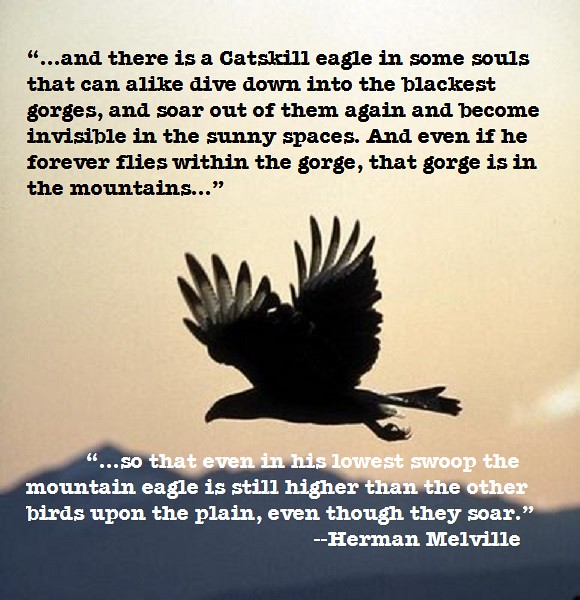
So, living on the Heartland edge of a Great Lake, I remain haunted by this and more, by Saint Elmo’s Fire and the diabolical blood ritual, by Pip seeing God’s foot on the treadle of the loom, by the Catskill Eagle emerging from the woe that is madness, by Ahab’s burning obsession, by the massive will and long, mysterious memory – is it consciousness? — of the white whale and, of course, by Queequeg’s coffin, a miraculous, sacred offering from a brotherly friend, somehow rising, just free of the hellish vortex.
“Now small fowls flew screaming over the yet yawning gulf…”
_________
1 Picasso was adamant that Guernica remain at the Met until Spain re-established a democratic republic. It would not be until 1981, after both the artist’s and Franco’s deaths, that Spanish negotiators were finally able to bring the mural home.
2 Mooradian’s The Many Worlds of Arshile Gorky includes 70 illustrations, a Q& A interview with Willem DeKooning about Gorky, as well as interviews with Alexander Calder, Lee Krasner Pollock, Malcolm Cowley, Reuben Nakian, Barnett Newman, Peter Blume, Meyer Schapiro, Saul Steinberg and other important figures in modern art and criticism.
3 The edition of Moby-Dick with Kent’s illustrations remains in print. I recommend the version with an introduction by Elizabeth Hardwick, published by The Modern Library, in paperback 2000.
4. Studies in Classic American Literature, DH Lawrence, Penguin, 1923, 1977, 159

A Two Rivers trip: a luminous lakeside and nature preserve, football glory, and the original ice cream sundae

The twin rivers of Two Rivers surround the central city. Courtesy Pinterest.org. 

A Trip to Two Rivers, Wisconsin: nature abounds, football glory and the original ice cream sundae 


PHOTO ESSAY Part 1 The Lighthouse Inn Embraces the Edge of Lake Michigan.

Two Rivers, Wisconsin, is a Lake Michigan coast community that sits somewhat inauspiciously between Milwaukee and the far-more-desired coastal destination of Door County. But this small city — also always somewhat in the shadow of the larger Manitowoc, about nine miles south — has plenty of charm, beauty, atmosphere, and history.

The West Twin River of Two Rivers. Courtesy two-rivers.org

With a population of 11,700, Two Rivers is largely situated between its nominal two rivers, which creates a virtual island for the central city proper (see photo at top). The lakeside and waterways make for a bountifully green environment (photo above).

The city also holds a natural interest for me, as both my parents grew up there, met, and became high school sweethearts destined to marry. Yet I have too belatedly partook of the city’s allure, after having visited here only once, in the late 1990s, since a family reunion a handful of decades ago, which included the extended families of the four Two Rivers Lynch siblings: My father Norm Lynch (and his wife Sharon, a Two Rivers native), and my uncles Jim and Jack (and his spouse Barbara), and my aunt Eileen.

Travel partner Ann Peterson and I were staying in The Lighthouse Inn, the very place the Lynch families stayed at back then for the reunion. Memories bubbled up as we sat in the hotel’s bar.

A highlight of the reunion for me was when Jack Lynch, our hip California uncle, summoned brother Norm Lynch’s three oldest children — me, Nancy and Maureen — to his hotel room. Then, with a cagey grin, he pulled out a pipe filled with marijuana. We proceeded to get high and float through the rest of the day in a refracted, altered state.:Like, zowsville, man. My mother detected us and determined the cause, and was less than pleased with Jack for “corrupting” her children.

An animated moment at the Lynch family reunion, in the mid-1980s, in the bar of the Lighthouse Inn. From left are my mother, Sharon Lynch (seated), my uncle Jack Lynch (standing in navy and white jacket), my Aunt Eileen Lynch, my sister Sheila Lynch, and Eileen’s old Two Rivers friend Joyce Amman.

One more of 1980s Lynch family reunion at Lighthouse Inn in Two Rivers. (L-R) Uncle Jack, the surgeon, with Uncle Jim who, after a distinguished career as a Colonel in the Air Force, earned a degree in art and reinvented himself as a visual artist in Seattle. Next to Jim is his second wife, Sherri.

Yet so much time had now passed that all four of the Two Rivers Lynch children, raised by the family matriarch Frances Lynch, have now passed as well.

So, settling in at The Lighthouse Inn, with its reunion memories, I had a slight feeling of bittersweet remorse. The rarity of such reunions derived from the four Lynch children being so scattered: Norm in Milwaukee, Eileen in Austin, Texas; Jack in Sacramento, California and Jim, the oldest and the one with the strongest ties to the family’s original home, in Seattle.

The Lighthouse Inn, on Lake Michigan in Two Rivers. Courtesy trip101

A big part of the history and mythology of Two Rivers for me personally also has to do with my father’s exploits as quarterback of a remarkable high school football team, for The Two Rivers Purple Raiders of Washington High School. From 1943 to 1946-47, the team, also known as “The Golden Air Patrol,” went undefeated 24 consecutive games over the three years my father quarterbacked. However, dad always emphasized to me, it’s very much the story of a talented and dedicated team and a brilliant head coach, Harry O’Mealy (more on that below, in Part 4).

But  Ann and I had also wanted to explore the Woodland Dunes Nature Preserve, not far from the hotel.

And the hotel provided quite a romantic vista, with the magnificently setting sun on the horizon accompanying my vague awareness of the shipwrecks that haunt the Two Rivers shoreline. A few years ago, a new monument was erected to commemorate one of the state’s deadliest shipwrecks ever, of The Vernon, in the treacherous waters of Lake Michigan near Two Rivers, on October 28, 1887, coming from Frankfurt, MI. We missed the anniversary by one week, being there on Oct 22-23. But as the photos hopefully show, the Great Lakefront was plenty evocative of whatever the imagination might summon. See feature story link, here, followed by my photos of the lake from The Lighthouse Inn.

https://www.wearegreenbay.com/from-the-local-5-digital-desk/two-rivers-monument-honors-lives-lost-in-one-of-wisconsins-deadliest-shipwrecks/

Print of dramatic seafaring scene painting in restaurant of Lighthouse Inn in Two Rivers.

The Lighthouse Inn Bar overlooking Lake Michigan in Two Rivers


The mutating dusk sky in two views looking south towards Manitowoc (on the distant horizon) from Lighthouse Inn.

Looking north towards the Two Rivers lighthouse on the breakwater, from Lighthouse Inn


Sunset on Lake Michigan, from The Lighthouse Inn 

The next morning, the moon lingered above Two Rivers, not quite ready to let go of its nocturnal domain.


Part 2  — The Woodland Dunes Nature Preserve, in Two Rivers 

The entrance to the woods of the Woodland Dunes Nature Preserve

At first, I though maybe this little fella might’ve been “playing possum.” We came back his way later. Sadly, he wasn’t.

Here’s a rare photo of the semi-mythical Woodlands Pharting Ogre which audibly followed us for a short while on our hike through the preserve


Part 3 — Two Rivers history, including its distinction as the Birthplace of the Ice Cream Sundae.

Inscription beneath Civil War soldier statue (below) outside Two Rivers City Hall (formerly Washington High School): “In memory of those who fought in defense of the Union.”

Two Rivers City Hall (formerly the site of Washington High School). The original school was a larger red brick building (since razed) but visible in the yearbook photo below.

And what of the birth of the ice cream sundae? Well worth pondering as National Sundae Day is about to arrive on November 11th. Here’s the lowdown:

“In 1881, George Hallauer asked Ed Berner, owner of a soda fountain (in Two Rivers), to top his dish of ice cream with chocolate sauce, hitherto used only for ice cream sodas. It became a popular concoction, but was only sold on Sundays. One day, a little girl asked for one, saying they could pretend it was Sunday. Voila — sundae (the spelling is attributed to a mistranscription on the check).” 1

Ann Peterson at the site of Berner’s Ice Cream Parlor, established 1881, the legendary

birthplace of the ice cream sundae, in Two Rivers, Wisconsin. It’s now a museum and ice cream parlor (below).


Part 4 — Gridiron glory of the undefeated Two Rivers Raiders

Evan Gagnon describes the unparalleled era of Two Rivers’ Washington High football coach Harry O’Mealy, in his book Neshota: The Story of Two Rivers, Wisconsin:

” ‘It’s never too late.’

A pat phrase, maybe, but it pretty well sums up the philosophy of Harry O’Mealy, the winningest football coach ever to tear up the turf at two Rivers Washington high school.

“Clever, articulate, highly competitive and always a jump ahead of the opposition, O’Mealy pushed his Golden Air Patrol in about the same fashion that Vince Lombardi drove his Packers and the results on a comparative basis were about the same.” 1

I love O’Mealy’s philosophy, “It’s never too late” (to win a game), even if mathematically there comes a time. Still, with onside kicks, and sideline passes etc., great teams and quarterbacks can make it seem like they’re bending the arc of time towards improbable victory. That stirs the souls of faithful, hanging onto the chance for a great comeback win.

At top is a print of a well-known Two Rivers Reporter action photo that ran (lower) as the featured photo in the news story of the team’s final 1946 game against arch-rival Manitowoc. Norm Lynch, an up back on the return team, returns the opening kick-off for a big gain, but he was tackled by Shipbuilder No 30 downfield.

Pictured above is the starting offensive lineup for the Two Rivers Raiders of Washington High in 1946. The team went undefeated for three consecutive seasons from 1943 to 1946. My father, Norman Lynch, is the quarterback (32) behind center and in front of the T-formation of three running backs. The second partial photo is of a 50-year team reunion, posing in the same configuration. Norm Lynch is the guy in the dark sport coat.

There was no playoff system to determine a state championship for Division 3 high school football in 1947, but this team would’ve been a prime contender. The Washington High Raiders of 1980 did win their division’s state championship.

This page from my father’s yearbook (above) documents the scores for the 1946-47 year, including the season-opening 40-0 blowout of Pius XI, one of the state’s biggest private schools. The Pius players were also physically much bigger than the Raiders. Note also the remarkable disparity of total season points between Two Rivers and its opponents (260-39). The Raiders specialized in head-spinning plays to deceive the defense, including their version of the fabled “Statue of Liberty” play which required precise timing and execution. The team’s brilliant, innovative head coach and play-caller Harry O’Mealy (standing at left in photo at right) is pictured with his assistant coach. O’Mealy signed his quarterback Norm Lynch’s yearbook there, with the inscription: “Get that pitching arm in shape for St. Nobert’s next fall. Harry O’Mealy.”

Curiously, my father went to St. Norbert’s College on a football scholarship but did not pursue football in college. Why, he never really explained, though I think he was already thinking about marriage and a family with his betrothed, Sharon Jann. In his junior year, they moved to Milwaukee when he transferred to Marquette University, where he received his bachelor’s degree. I was born a short time afterward.

So part of my little quest was to visit the football field where the photo of my father ‘s kick return took place. Though the high school is now in suburban Two Rivers, the original football field is still there, though the goal posts are long gone. It’s very spacious, far bigger than a single football field.

In fact, during the 1930s and 1940s, the original Washington High’s facilities were used for summer training by a number of professional football teams, including the Philadelphia Eagles in 1941 and 1942.

Sadly the glorious field’s fall season has now been taken over by a loose-knit “team” we might call The Two Rivers Honkers, who line up in several directions at once, as the photo of me below shows. The Honkers specialize in the “double-wing formation,” but are especially skilled at leaving lumpy “yard markers” in the grass, which one now encounters at least every yard or so. The field is right beside the East Twin River, as you can see the street bridge at the right.

But all I could do was invoke an old expletive from a Marquette High Jesuit:

“Cripes Mini-Manure!!”

For all the forsaken past, I summoned the spirit to pose in a football runner’s manner, following in the old man’s footsteps, to recalled to glorious days of yore (below).

Photos above and below by Ann Peterson.

Other photos by Kevin Lynch, unless otherwise indicated.

________

1. Birthplace of the ice cream sundae: https://www.roadsideamerica.com/story/11967