Is it Jurassic Jazz, or a new creature with a very big sonic footprint?

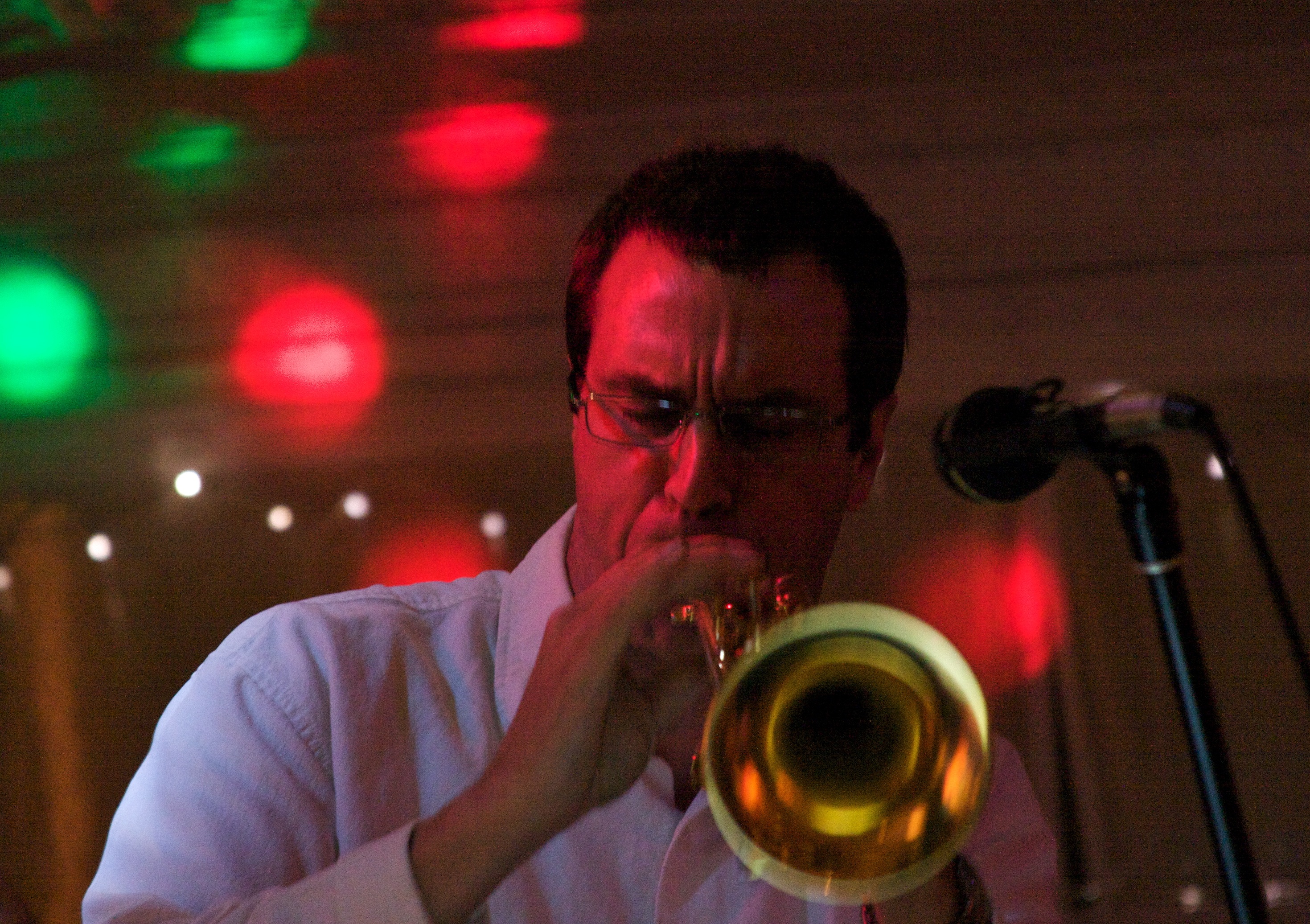
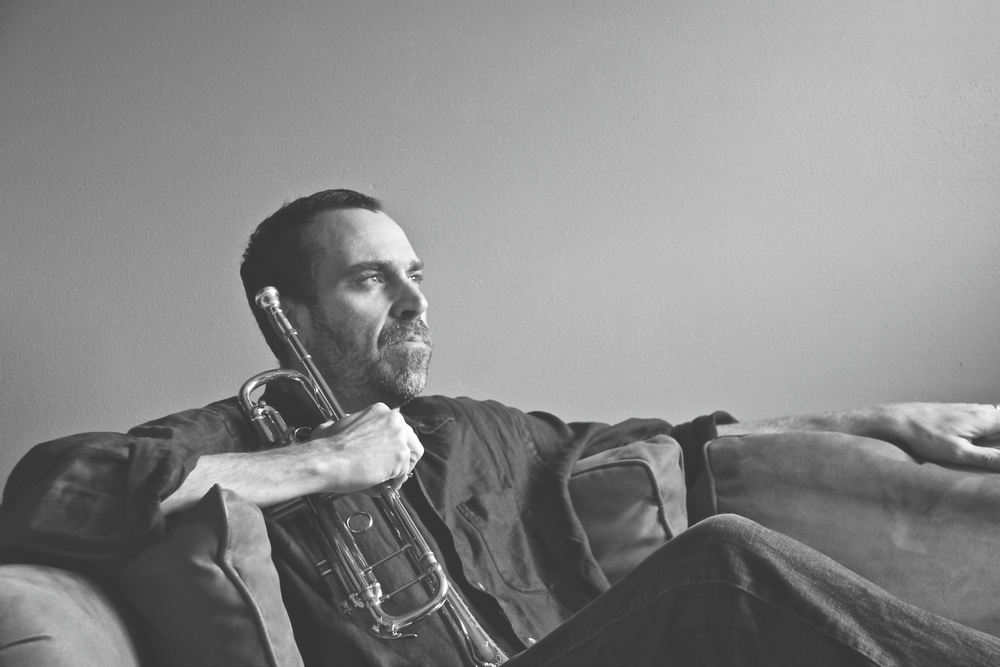
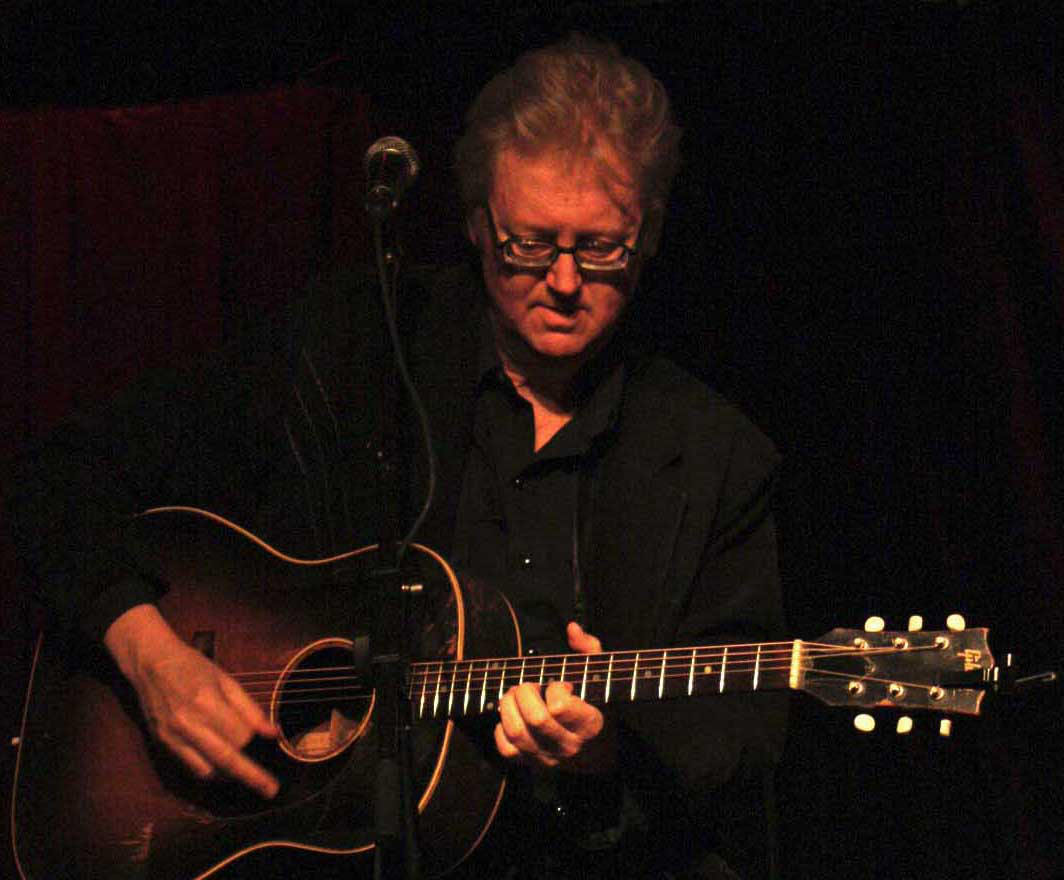
ryan truesdell photo by Marc SantosVerona native Ryan Truesdell, who began jazz study at Verona High School, now leads The Gil Evans Project during a recent live recording at The Jazz Standard in New York.

All the brass horns gleam, whisper and shout. Tonal colors multiply, merge and melt, without digital trickery.  Today’s jazz orchestra composer-arranger’s pen conjures sumptuous landscapes for the soloist’s ramble.

Impressive recordings of them proliferate lately, some winning best-of-the-year polls and wide acclaim. But aren’t big bands a creaking dinosaur of the swing era? Something is afoot, a reborn beast with a huge sonic footprint.

The creature may herald a new golden age of the jazz orchestra. Consider, the most expansive jazz form remains historically important and globally influential.

Two of the best last two rock concerts I attended both included a horn section: Greg Allman’s band in Milwaukee, and the 11-piece Tedeschi-Trucks Band in Madison, a jazzy blues-rock group that many critics, including myself, consider the best band in popular music today. Lyle Lovett’s Large Band (essentially a Texas-swing jazz orchestra) has revitalized that country singer-songwriter’s career.

Then pop superstar Lady Gaga recorded with timeless Tony Bennett — their acclaimed, hit album Cheek to Cheek impressed even picky jazz critics with repertoire from the first golden age of big bands. They recorded and are touring with a full jazz orchestra, with two dates at Ravinia Festival in Highland Park Friday and Saturday June 26-27.

In Milwaukee, The All-Star Superband has played weekly almost steadily throughout the 21st century, performing a challenging and diverse repertoire. They will play a benefit concert at 5 p.m. Wednesday (ed.: June 24) at the Briggs & Stratton Big Backyard at the Zoo Terrace for Easter Seal of Southeastern Wisconsin, preceding the charity’s annual Walk With Me fund-raiser at the Milwaukee County Zoo. Here’s the big band’s website: http://www.allstarsuperband.com/home.html

Led by bassist Gary Christensen, the orchestra highlights renowned saxophonist-flutist Warren Weigratz, widely-traveled alto saxist-clarinetist Tim Bell, trumpeter Kaye Berigan (whose uncle Bunny starred in the first golden age) and other top-flight area pros who relish the band’s power and palette. The Superband’s cover charge every week goes to charitable benefits. This is high-calorie music played for the love of it, and shouldn’t be missed.

To the west, The Madison Jazz Orchestra, formed in 1986, performs monthly and with comparable ambitious quality to Milwaukee’s big band: http://www.madisonjazzorchestra.com/The_Madison_Jazz_Orchestra/Home.html

A “battle of the bands” between these Milwaukee and Madison orchestras would be epic.

Also, The Large Unit, an avant-garde nonet of European musicians will perform Wednesday (ed.: June 24) at 8 p.m. in Milwaukee at Sugar Maple, 441 E. Lincoln Ave., as part of the annual Okka Fest.

A critical measure of the golden age of any medium is the level and range of artistry at work among a wide array of serious practitioners, without obvious commercial hooks. Still, I’m defining jazz orchestra broadly (see discography) to include rock- or blues-oriented groups with at least three horn players who improvise, to show the large form’s ongoing influence.

Two auspicious and related examples of full jazz orchestras with brand-new recordings are The Thompson Fields by the Maria Schneider Orchestra and Lines of Color by The Gil Evans Project, formed and led by Verona WI native Ryan Truesdell. Truesdell also produced Sky Blue, Schneider’s previous double-Grammy-nominated orchestra album, and the orchestras share a handful of musicians. Last year’s most conceptually ambitious, if not best, jazz recording was Identities are Changeable by Miguel Zenon and his “Identities” Big Band.

But the Evans influence seems ascendant, in Schneider, Truesdell and the brilliant Canadian composer-orchestra leader Christine Jensen, among others. The primary influence of Schneider, the premiere orchestra leader in jazz today, is Evans, the impressionistic sorcerer who conjured palpably evocative backdrops for Miles Davis’ classic albums, Miles Ahead, Porgy and Bess, and Sketches of Spain. Schneider served as Evans’ musical assistant for three years before his 1988 death.

41º VOLL-DAMM FESTIVAL INTERNACIONAL JAZZ BARCELONA

“The Thompson Fields” reveals Maria Schneider as an uncommonly gifted composer and arranger whose poetic, nature-evoking Midwestern sensibility radiates though her orchestra. Courtesy artisthouse.com

Equally taken by Evans, Truesdell befriended the late bandleader’s family who eventually allowed him to investigate Evans’ unpublished, unrecorded scores. The first result was the sensational Gil Evans Project album Centennial: Newly Discovered Works by Gil Evans, arguably the jazz event of 2012. Now comes Lines of Color, a vibrant, witty, swinging live-at-the-Jazz Standard follow-up.

Here The Gil Evans Project, live at the Jazz Standard, records a portion of Evans’ “The Time of the Barracudas”: https://www.youtube.com/watch?v=AG_-ffjASIc

Numerous recent orchestra recordings defy the worst economic catastrophe since the Great Depression, and jazz’s small presence in corporate-controlled, bottom-line radio and music industries. Try maintaining a 16-to-18 musician ensemble that requires extensive rehearsal, a collective response to one leader’s creative whim and will, in an art dominated by the “rugged-individual” instrumentalist.

“Shocking” is what Truesdell calls all the recording and activity (see below and discography). “But people are getting grant money and finding ways,” he said in a phone interview. “And it is so much cheaper to make a recording now. You can you record them on your own. Or they do live recordings which are so much easier to do. There is a cost-effective ways of making a big-band work.

“I don’t know if it’s a new golden age, but people are trying to do something different. Everybody’s got a quartet or trio, so people are searching for something kind of different and some musicians think their voice will be different if they go larger.”

Gil Evans, extending Duke Ellington’s innovations, actually opened the door in the late ‘50s for a modern jazz orchestra concept. That continued in ensembles led by Thad Jones and Mel Lewis, Oliver Nelson, Gary McFarland, Gerald Wilson, Chico O’ Farrell and Toshiko Akiyoshi. Composer-arranger Claus Ogerman’s 1989 collaboration with Miles Davis Aura reimagined the trumpeter’s glory days with Evans. This all persisted despite the peaks and valleys of jazz popularity. However, jazz fusion spawned a period where big bands and brass-heavy rock bands embraced electricity and rock beats, including The Don Ellis Orchestra; The Buddy Rich Big Band; Woody Herman with star blues-rock guitarist Michael Bloomfield; Blood, Sweat, and Tears; Bloomfield’s Electric Flag, and the most commercially successful, Chicago.

The hard-swinging and rocking Don Ellis Orchestra with soloist John Klemmer performing “Indian Lady.” from Electric Bathhttps://www.youtube.com/watch?v=tQk-jFjeACw&feature=em-subs_digest

Nevertheless, today most jazz orchestras use the pure acoustic power, color and range inherent to a sonic palette that Gil Evans expanded by employing all the wind instruments of a classical music orchestra, in ingenious voicings and settings.

“I think it’s a combination of people for whom the jazz orchestra is their voice, and of leaders in small ensembles finding their voices in larger ensembles,” Truesdell says. “And how they’re doing it, I guess they don’t pay people very much, just like everybody else,” he laughs. He adds that all the recording groups aren’t touring nearly as much as big bands did in the swing era.

However both his and Schneider’s orchestra owe much of their financial viability to the highly sophisticated artists-run ArtistShare label, which draws on individual “crowd-funding” sponsors, facilitated by the networking the Internet has provided DIY efforts. Formed in 2003, ArtistShare has produced nine Grammy awards and 18 Grammy nominations with a roster including Pulitzer-prize and Oscar-nominated writers, Guggenheim fellowship recipients and NEA Jazz Masters. 1

Among other important current recorded ensembles are The Clayton-Hamilton Orchestra, the Vanguard Orchestra, Darcy James Argue’s Secret Society, The SFJazz Collective, The Christine Jensen Jazz Orchestra, The John Hollenbeck Large Ensemble, Quiet Pride: Elizabeth Catlett Project led by Rufus Reid, The Chris Potter Underground Orchestra, The Archie Shepp Attica Blues Orchestra, and 2015 Grammy album winners, Arturo O’Farrell and the Latin Jazz Orchestra for The Offense of the Drum and Gordon Goodwin’s Big Phat Band, for Life in the Bubble.

Composer-arrangers like Quincy Jones — best known for work with Michael Jackson and Miles Davis — and Vince Mendoza freelance with numerous jazz and symphony orchestras. Mendoza’s widest exposure came with his sumptuously simpatico enhancements of Joni Mitchell on her double Grammy-winning “standards” album Both Sides Now, including a Grammy for Best Instrumental Arrangement Accompanying a Vocalist.

Another excellent recent recording was Fly! By Mitch Shiner and the Blooming Tones Big Band, led by a graduate of Mequon High School. Last winter, Milwaukee saw The Jazz at Lincoln Center Orchestra led by composer-trumpeter Wynton Marsalis in a superlative holiday concert featuring today’s hottest jazz singer, Cecile McLorin Salvant.

Perhaps the seeds for a new golden age of orchestra were sown in 1997 when Marsalis and his orchestra bested all “legit” composers for the Pulitzer for Best Musical Composition, for the soulfully solemn orchestral oratorio Blood on the Fields. It has spurred other ambitious jazz orchestral inquiries into African-America history.

Schneider strengthened the legitimacy of a new jazz composer era by winning three Grammy awards for classical music in 2014 including best Best Contemporary Composition for her first classical orchestral recording Winter Morning Walks, two song cycles of poetry with soprano Dawn Upshaw and two chamber orchestras.

Many classic big bands from the swing era still remain intact and tour under new leadership. Milwaukee just heard The Woody Herman Orchestra recently at UWM for Jazz Appreciation Month in April. Herman, famous for his always forward-thinking Thundering Herd, was a Milwaukee native.

Another powerful heartland ensemble is the 13-member Chicago Yestet, which injects political awareness into modern big band style with hip-hop, R&B and pop strains. Led by Madison native Joel Adams — a Woody Herman band alumnus — the mini-big band features acclaimed Milwaukee trumpeter Russ Johnson, and Madison rapper/hip-hop historian Rob Dz (CD reviewed here recently. The Chicago Yestet will play at the Brink Lounge in Madison Sept. 5, amid a spate of Chicago and Wisconsin dates: http://www.chicagoyestet.com/)

And speaking of universities, speaking of universities, the persistence of the jazz orchestra goes back to education. Despite the ever-present lure of small-combo guitar rock-pop, countless young musicians dedicate themselves to orchestra instruments and to rigorous, competitive high school and college ensemble programs, as a cursory survey of Down Beat magazine’s large annual education section proves.

Superband

The highly accomplished and dynamic All-Star Superband has played weekly for most of the 21 century throughout Milwaukee. All their performances proceeds go to local charities. Courtesy All-Star superband.

“There are 2,318 rehearsal big bands on the planet,” asserts Gary Christensen, leader of the All-Star Big Band. “On YouTube I came across a young people’s big band in Japan really nailing this high-level jazz piece. So it’s like, wow, they really are everywhere!”

The UWM Jazz Ensemble and The Marquette University Jazz Band, of varying sizes, function alongside the school’s traditional classical music instruction. Most jazz orchestras require strong reading ability of sometimes devilishly complex charts, the disciplined ear for harmonizing, counterpoint and tricky time signatures, as well as individual imagination and virtuosity for soloing.

A gifted composer-arranger like Schneider, Marsalis, Argue or Jensen — or the SFJazz Collective’s multiple composer-arrangers, including the brilliant Miguel Zenon — can make musical magic with such forces. And magic, that transports the imagination and spirit, never goes out of style.

____

See sidebar post on CC for a Selected Discography of the Modern Jazz Orchestra: https://kevernacular.com/?p=6335 

1. Among the notable artists and recordings underscoring the importance of the ArtistShare brand and kick-starter funding concept are Pulitzer-nominated composer Patrick Williams, The Clayton Brothers, Milwaukee-raised trumpeter Brian Lynch for the Grammy-winning large-ensemble Eddie Palmieri Project’s Simpatico, Bob Brookmeyer, Danilo Perez, Jim Hall, SFJazz Collective’s Robin Eubanks, Ingrid Jensen, Donny McCaslin, Jane Ira Bloom, Torben Waldorff, Geoff Keezer and Alex Sipiagin.

Coming soon, a more in-depth interview with Ryan Truesdell, creator and music director of The Gil Evans Project.

This article was originally published in OnMilwaukee.com:http://onmilwaukee.com/music/articles/jazzgoldenage.html

This article is dedicated to the memory of my father, Norman Lynch, who introduced me at a young age to the power and possibility of the jazz orchestra. He especially loved Stan Kenton and often said, “My dream always was to play trombone in the Kenton Orchestra.”


norm and kev

Norm and Kevin Lynch, beside a Stan Kenton poster, The Jazz Estate, Milwaukee, 1983.

A discography: Exploring the jazz orchestra’s wilds and wonders

During research for my jazz orchestra article, I put together this discography, which attempts to trace the recorded development of modern jazz orchestra in roughly chronological order. It begins at the transition point from bebop, represented by Dizzy Gillespie, who often thought of the bop combo concept in larger terms. The key breakthrough is Birth of the Cool, the album by Miles Davis which introduced most listeners to the arranging talents of Gil Evans, though Stan Kenton more widely turned a new college generation onto the jazz orchestra’s excitement and possibilities. birth-of-cool But Evans had an important developing ground. One can hope that, in the future, appreciable CD recordings emerge by The Claude Thornhill’s orchestra from the 1940s-50s. Evans began his ambitious and fast-forming apprenticeship with the Thornhill orchestra. Those early recordings, not listed here, are contemporary to some of the rough-cut gems of brilliance that Ryan Truesdell has uncovered and polished up for the Gil Evans Project. The reassertion of Evans’ centrality is one of the most significant developments in what may be a new golden age of jazz orchestra. https://www.youtube.com/watch?v=FoU1drxfdYM

Here’s a selected discography of the modern jazz orchestra (Roughly in chronological order from first noteworthy recording. Subsequent recordings listed for single bands may be quite a few years later, eg. first Liberation Music Orchestra is 1969 and the third listed, Not in Our Name is 2006, during The Iraq War):

Live at Newport Dizzy Gillespie (with Mary Lou Williams performing from her “Zodiac Suite.”)

Birth of the Cool Miles Davis with Gil Evans

Live at Newport, His Mother Called Him Bill, Far East Suite and Digital Duke Duke Ellington Orchestra

Space is the Place, Live at Montreux   Sun Ra Myth-Science Arkestra sketches Sketches of Spain, Porgy and Bess, Miles Ahead and Miles Davis/ Gil Evans: The Complete Columbia Studio Recordings (all with Miles Davis),The Complete Pacific Jazz Sessions, Out of the Cool and The Individualism of Gil Evans Gil Evans Orchestra

The Magic Touch Tadd Dameron and his Orchestra Stan_Kenton's_West_Side_Story_CD_coverWest Side Story and Adventures in Jazz Stan Kenton Orchestra

Africa/Brass and Ascension John Coltrane

Thelonious Monk Big Band and Quartet in Concert Thelonious Monk with Oliver Nelson

Continuum and Live at The Village Vanguard  Thad Jones-Mel Lewis Orchestra

Big Swing Face, Mercy Mercy and Live at Buddy’s Place ‘76 The Buddy Rich Big Band

Electric flag

A Long Time Comin’  The Electric Flag

Electric Bath Don Ellis Orchestra

Charlie Haden’s Liberation Music Orchestra, Dreamkeeper, and Not in Our Name, Liberation Music Orchestra

Brand New  (with Michael Bloomfield), and Giant Steps Woody Herman

Blood, Sweat and Tears  Blood, Sweat and Tears

The Resurrection of Pig Boy Crabshaw and In My Own Dream Paul Butterfield Blues Band

Chicago Transit Authority and Chicago II  Chicago

Walking in Space and Miles & Quincy Live at Montreux Quincy Jones

Escalator Over the Hill Carla Bley Orchestra

Back to Oakland  Tower of Power

Let My Children Hear Music Charles Mingus

Creative Music Orchestra 1976 and Creative Orchestra 1978 (Koln) Anthony Braxton

Mingus Big Band 93: Nostalgia in Times Square and Live in Tokyo at the Blue Note Mingus Big Band

toshiko

eil.com

 Tales of a Courtesan, Insights and Carnegie Hall Concert (with Freddie Hubbard a/o) Toshiko Akiyoshi-Lew Tabackin Big Band/Orchestra

In Case You Missed It Charli Persip Superband II

Fly with the Wind and Song for My Lady McCoy Tyner

Winged Serpents (Sliding Quadrants) Cecil Taylor Orchestra of Two Continents

David Murray Big Band conducted by Lawrence“Butch”Morris David Murray Big Band

Joe Henderson Big Band Joe Henderson Big Band

With All the Bells and Whistles and Live at Concerts by the Sea Bob Florence Big Band

1997: The new golden age begins?:

blood

youtube.com

Blood on the Fields (Pulitzer Prize winner) and A Love Supreme Wynton Marsalis and the Lincoln Center Jazz Orchestra

Monterey Moods Gerald Wilson Orchestra

Overtime Dave Holland Big Band

Time’s Mirror Tom Harrell joni all music Jazz Pana Vince Mendoza w/ Arif Mardin, Epiphany w/ London Symphony Orchestra, and Both Sides Now w/ Joni Mitchell

New Works Celebration and Music for String Quartet and Orchestra Bob Brookmeyer New Art Orchestra

Live at the Miramar Gary Christensen’s All-Star Superband

Habitat and Treelines Christine Jensen Orchestra sky blue Produced by Ryan Truesdell, “Sky Blue” by Maria Schneider was nominated for two 2008 Grammy Awards for “Best Large Jazz Ensemble” and “Best Instrumental Composition” (for ‘Cerulean Skies’).

Concert in the GardenSky Blue and The Thompson Fields Maria Schneider Orchestra

Centennial and Lines of Color:Live at the Jazz Standard Ryan Truesdell presents The Gil Evans Project

Live at Dizzy’s Club Coca-Cola  Joe Chambers Moving Pictures Orchestra

Infernal Machines, and Brooklyn Babylon Darcy James Argue’s Secret Society

Revelator, Everybody’s Talkin’ (live) and Made-Up Mind Tedeschi-Trucks Band

Jazz is Politics? and Just Say Yes, Chicago Yestet.

zenon

amazon.com

Identities are Changeable Miguel Zenon Quartet and “Identities” Big Band

Fly!  Mitch Shiner and the Blooming Tones Big Band

The L.A. Treasures Project Clayton-Hamilton Orchestra

Quiet Pride: The Elizabeth Catlett Project Rufus Reid

Live: I Hear The Sound Archie Shepp Attica Blues Orchestra

The Offense Of The Drum Arturo O’Farrell & The Latin Jazz Orchestra

Overtime: Music of Bob Brookmeyer The Vanguard Jazz Orchestra

Imaginary Cities Chris Potter Underground Orchestra

Inside Voices Kenosha Kid

East of the Sun ICP Orchestra

The Blessing, The Eternal Interlude and Songs We Like A Lot (to be released June 23) John Hollenbeck Large Ensemble

Author Michael Perry reflects on his friendship with two Wisconsin photographers


Here’s a postlude to the recent Culture Currents review of There’s a Place: Photographs by J. Shimon & J. Lindemann, the marvelous retrospective of the Wisconsin-based photography couple’s work, which recently closed at the Museum of Wisconsin Art in West Bend.

The newspaper piece linked to below was written for Roughneck Grace, a column in The Wisconsin State Journal by noted Wisconsin author, humorist, musician and intermittent pig farmer Michael Perry, best known for his funny and perceptive books Population 485; Truck: A Love Story; and Coop: A Year of Poultry, Pigs and Parenting.  He’s also the leader of Michael Perry and the Long Beds, a quite respectable a roots music group, whose last recording was Tiny Pilot.

perry

Yep, Perry — pictured here with his amigos — is perfect material for Shimon and Lindemann, though this photo, courtesy of Perry, may or may not be by them.

ShimonLindemann_SelfGardenDusk1998

“Self-portrait in the Garden at Dusk, Whitelaw, WI,” 1998, Palladium Print, by J. Shimon & J. Lindemann.

In his column, Perry reflects on the gratitude he feels in his experience of his friendship with John Shimon and Julie Lindemann. I met the couple some years ago while they mounted a photo show, and they struck me as affable, interesting, vital and wholly dedicated to their life, their art and its unusual photographic standards and modus operandi.

Lindemann, as readers may know, suffers from a terminal cancer.

Here is Perry’s column, “Gratitude sometimes paid in tears”:http://host.madison.com/wsj/news/local/columnists/michael-perry/michael-perry-gratitude-sometimes-is-paid-in-tears/article_2ed7bb34-a66e-5e7c-a27e-3634ea506b73.html

Thanks to my Madison friends Ann and Richard Meyer for alerting me to Perry’s column, which arrived as a clipping in snail-mail today.

___________

Ornette lives! A brief appreciation of Ornette Coleman and “The Cry” (1930-2015)

Ornette scan0269

“Ornette Coleman,” enamel on panel, by Wayne Deutsch, 1997 

I just wanted to offer a few thoughts on Ornette Coleman. Upon hearing of his death yesterday, I thought of an old friend with the self-dubbed nickname of “Jazz Bob” who  sought out and savored “The Cry” in jazz.

As in, “(Art) Pepper has ‘The Cry.'”

Bob referred to the almost involuntary depth of piercingly ardent expression in the voice of many great jazz musicians, and blues musicians, for that matter.

Bob referred most often to saxophonists, but “The Cry” also emits from other horn players, trumpeters and trombonists. Ornette Coleman’s alto sax almost invariably had “The Cry,” and the sustenance of it had plenty to do with all the intellectual innovation and theory he applied to his music gradually over the years.

He called its approach to music — which became quite ambitious on its own terms — “harmolodics.” I think the idea came down to allowing the voice — and its expressive or creative purpose — of the instrumentalist or singer to thrive, to remain paramount in whatever harmonic or rhythmic context it finds itself in.

As critic/author Howard Mandel explains in the NPR appreciation, this philosophy allowed Ornette to play with an extraordinary array of musicians, because Coleman always sought out the commonality of the human voice in any performer.

He also espoused the famous idea, “Let’s play the melody, not the background.” This liberated him and many others from the strictures of playing somewhat hidebound by chord changes.

Most jazz musicians still work largely within those harmonic guidelines, but Ornette’s concept of “free jazz” liberated the musician’s concept of what music’s possibilities were. Nor was it ever really “free” in the sense of randomness. He invariably had a feel for the blues in his playing. Yes, “The Cry.”
Of course, one of his greatest collaborators and proponents — the late, great bassist Charlie Haden — also died not long ago. Listen to Haden’s recorded comments in Howard’s appreciation. And search out Ornette and Charlie Haden playing together. I suppose I’ll offer a YouTube of the mournfully eloquent Coleman dirge “Lonely Woman” as a funereal appreciation of Ornette. This is Coleman, Don Cherry on trumpet, Haden on bass and Billy Higgins’ ever-dancing drums: https://www.youtube.com/watch?v=DNbD1JIH344

But there is so much more, of course, including one of the most delightfully up-beat, swinging and funky tunes anyone has ever recorded, “Ramblin'” which reveals Ornette’s Texas blues roots.

Aside from any of his groundbreaking and, I think, quite listenable early ’60s recordings with the Ornette Coleman Quartet on Atlantic Records, you might also search out Dancing in your Head, or Virgin Beauty or Sound Grammar which are Ornette engaging with rock rhythms to varying degrees. It ain’t fusion like you know fusion. Then there’s some of his best middle-to-late period acoustic group work on The Complete Science Fiction Sessions, including a couple of stunning vocals by Asha Puthli.

In his 2006 liner notes to Sound Grammar, Coleman writes, “Sound stimulates newborn babies and could cause the infant to cry. Sound itself is used in endless forms of communication.”
So the sound of “The Cry” that Jazz Bob valued in such musicians is primal and likely underlies human celebration, joy, passion as well as pain and sorrow, throughout life. Is not the same true of other creatures?
Finally, I would like to share a marvelous painting (above) by Iowa artist Wayne Deutsch, a portrait of Ornette Coleman, which I think captures his personality, intelligence and spirit beautifully.

Ornette lives!

____________

As I posted already on FB, here is Ornette authority Howard Mandel (author of “Miles Ornette Cecil: Jazz Beyond Jazz,” a highly recommended book) with his NPR appreciation of Ornette. http://www.npr.org/sections/ablogsupreme/2015/06/11/413630335/ornette-coleman-jazz-iconoclast-dies-at-85

Jonathan Klett’s potent video film “Truth, Communion, Immense Possibility, and Art”

jon

Culture Currents (Vernaculars Speak) is proud to post this guest blog from the gifted young Milwaukee young video filmmaker, Jonathan Klett. Now based on the east coast, he’s the sort of hell-bent-to-make-a-difference artistic envelope-pusher that needs to be heard.

He will be heard. That’s because I guarantee that he will speak to most of my readers with the rhythmic, melodic, textural and ultimately emotional thunder of his documenting, and his wizardry at amalgamating the potency of his media elements. “I am Trayvon Martin,” one of the petitioning posters declares.

You see this brief film — much of it shot in Baltimore during the recent protests — and you see how the truth bleeds and how it soars. You know that change will come.

Why? Because, as Jonathan allows me to suggest in one segment, art and music generates the power for moral agency and, as one poetic protester asserts to the crowd “The moral universe bends to the arc of justice! Get ready America, we are bending it!”

jon 1

Right on, brothers and sisters! Fight on for truth, justice and peace in our lifetime, and our children’s. Jonathan — the son of two of my oldest friends, John and Mary Klett — makes me believe in our children, in the millennials inheriting the malleable madness, the palpable power, our democracy flirts with daily.

Look, people, listen and arise. Make a difference: https://www.youtube.com/watch?v=Xo4P-x90frA

_______

Still shots from short film by Jonathan Klett from “Truth, Communion, Immense Possibility, and Art”

given with full permission – ‘Lost in Decay’ by Drop Electric, a DC band I’ve been filming for two years. Cheers — Jonathan Klett.

Jonathan Klett’s potent video film “Truth, Communion, Immense Possibility, and Art”

jon

Culture Currents (Vernaculars Speak) is proud to post this guest blog from the gifted young Milwaukee young video filmmaker, Jonathan Klett. Now based on the east coast, he’s the sort of hell-bent-to-make-a-difference artistic envelope-pusher that needs to be heard.

He will be heard. That’s because I guarantee that he will speak to most of my readers with the rhythmic, melodic, textural and ultimately emotional thunder of his documenting, and his wizardry at amalgamating the potency of his media elements. “I am Trayvon Martin,” one of the petitioning posters declares.

You see this brief film and you see how the truth bleeds and how it soars. You know that change will come.

Why? Because, as Jonathan allows me to suggest in one segment, art and music generates the power for moral agency and, as one poetic protester asserts to the crowd “The moral universe bends to the arc of justice! Get ready America, we are bending it!”

jon 1

Right on, brothers and sisters! Fight on for truth, justice and peace in our lifetime, and our children’s. Jonathan — the son of two of my oldest friends, John and Mary Klett — makes me believe in our children, in the millennials inheriting the malleable madness, the palpable power, our democracy flirts with daily.

Look, people, listen and arise. Make a difference: https://www.youtube.com/watch?v=Xo4P-x90frA

_______

Still shots from short film by Jonathan Klett from “Truth, Communion, Immense Possibility, and Art”

given with full permission – ‘Lost in Decay’ by Drop Electric, a DC band I’ve been filming for two years. Cheers — Jonathan Klett.

Wisconsin Proud: Shimon and Lindemann reveal courage, commitment and salt-of-earth soul


ShimonLindemann_SelfGardenDusk1998

Shimon and Lindemann, “Self-portrait at Dusk, Whitelaw, Wisconsin,” 1998. Courtesy Milwaukeemag.com

There’s a Place: Photographs by J. Shimon and J. Lindemann, closing Sunday, June 7, The Museum of Wisconsin Art, 205 Veterans Avenue, West Bend, WI 262-334-9638 wisconsinart.org

John Shimon and Julie Lindemann have delved deeply into the nether reaches of Wisconsin existence for decades as photographic antiquarians.  And matters of complex humanity emerge in the superlative retrospective of their joint artistic career, which closes this weekend at the Museum of Wisconsin Art. What makes it urgent to see are the facts that these are as important as any Wisconsin artists that we have right now, and that this first-ever museum retrospective of their work may be also the last one in the lifetime of this artistic duo, given Julie Lindemann’s declining health. 1

Consequently, There’s a Place has remarkable depth and emotional power, which also originates in the subtle dramatics they achieve in these encounters with their subjects, which convey in a larger sense their profound love for this state, for its people, culture and labors, and for its natural cyclical beauty.

Time after time, in the blow-up, largely black-and-white photographs, we see people — whom most others do not — revealed both because of and despite themselves. That revelation comes largely through the documentary acumen and instincts of the artistic duo. The longtime couple’s commitment to the Wisconsin experience through its people — especially its outsiders, working-class, punks and elderly — has resulted in a remarkable response to this exhibit, which may be the most popular in the museum’s history, according to Greg Cisler, a MOWA security guard and gallery guide.

“This weekend we had free admission and thousands of people came through,” Cisler said Saturday. “And many of them came out visibly affected at an emotional level. This couple has touched many people’s lives.”

Cisler says that Julie Lindemann did not even attend the April opening as she continues her battle with her late-stage metastatic cancer, diagnosed in 2012. It has spread to her hips, making it too uncomfortable for her to sit up straight, according to a recent Milwaukee Magazine interviewer.

And yet the tall, blond Lindemann you see posing in many of the photographs is a striking and almost theatrical visage. She generously displays her statuesque frame in various negligee and lounging attire, conveying strength in an arty-punk style and sexual self-assurance. So knowledge of Julie’s medical condition casts a poignant pall over these images.

That’s the danger in what they’re going through now, Julie told Milwaukee. “We never had pets, never had children…we kept shoveling it all into the art.”

But they do have their many friends, right here and through the state. The photographers got to know many of their subjects quite well. So there’s potency in the couple’s close scrutiny of their subjects combined with the latitude they allow them to just be themselves, but in the most self-possessed manner.

The irony is that the couple’s devotion to old, laborious and elaborate photography techniques, and typically silver gelatin prints, embraces a concept that befits and elevates today’s instantaneous, selfie-buzzed social media, in the sense that everyone involved is putting themselves out in a public, self-conscious manner, putting on for the camera, and yet they cannot truly hide themselves.

So what you begin to see is that the public front people present seems partly a function of managing their existential situation. To this point, perhaps the photograph that most closely ties its subjects to the dichotomies of Julie Lindemann’s collaborative self portraits is the couple “Faye and Ken at Home, Milwaukee.”

shimon faye and ken

Shimon and Lindemann, “Ken and Faye at Home, Milwaukee,” 1994, courtesy djibnet.com

The middle-aged couple is all done up evidently for a formal night out on the town. Faye’s dressed to kill, her shapely figure poured into in a little black leather dress, a punkish hairdo and heavy jewels. She’s also hanging onto the hand of Ken, an utter sad sack, all dressed up with no place he wants to go.

His body seems almost mummified in his all-white tuxedo. His bearded, bespectacled face has collapsed in his hand, his arm resting on a chair. He seems a poster child for clinical depression. Only then might you look back at Kaye’s face and see the stress emanating from it, and a certain tense posture in her rather stiff-backed pose.

So the jig is up rather quickly. You can feel how their effort at putting on a festive front is dissolving from within. That front amounts to kind of survival mode, what so many of us do to get through the day — put on our clothes and make-up, and go out in the suit of armor to face the challenges of work and society and especially the inevitable decay of life itself, the inexorable force of time which we all struggle to resist, even as we “seize the day,” or try to.

In a rather spooky coincidence, Ken seems to have a literal brother, or at least a kindred in affliction and visage, in the show. Jimmy von Milwaukee: Burt Reynolds Pose, 2006, reveals a bearded man strikingly similar to Ken in looks, and with a face haunted with  tenuous yet courageous mortality. Wearing only a zebra-print thong, Jimmy displays his body in a pose reminiscent of one made famous by actor Burt Reynolds in his macho prime. And yet this man’s slender body is laced with lesions that look like AIDS-related Kaposi’s sarcoma, according to a nurse practitioner friend of mine who attended the show.

That’s when you can go back to the photographs of Julie and see, aside from her sinuous sensuality,  the slightly grim determination in her angular facial features and the fixed eyes peering from behind her stylishly retro black glasses.

You see it in a vivid color photo where she invites you into her kitchen with its array of accessories, condiments and decorations, signaling that she’s about to prepare a sumptuous meal of food she and John have probably grown themselves. So we see that fundamental Wisconsin can-do-ism, the pioneer spirit brought to the present and celebrated with a hint of desperation.

There’s a Place is about people revealed in home, neighborhood or work settings, and the relationship of the Wisconsinite to her land is more specifically dramatized in one of their most stunningly and beautifully subtle photographs. Drought (#3) printed on Mulberry paper.

shimonlindemann_drought

Drought (#3) 2012, Tea-toned Cyanotype on Masa Mulberry Paper. Courtesy portraitsocietygallery.com.

Again, Julie is the subject, but here more a situational actor in another near-life-size, unsettlingly noirish scene. A large watering can hangs from her hand, clearly dry to the last drop. She steps out from behind a screen door on to a terrain which — along with the cracked, disintegrating house paint — is ravaged and dying of thirst. It’s not something we think about as locally threatening in this verdant state. But the current realities of Texas and California should remind us of the environmental catastrophe that mega-industries and profligate corporate irresponsibility have bought us face-to-face with.

Amid the exquisite beauty of its hushed, simmering hues, Drought addresses global warming with as much artistic drama and persuasion as any image I have seen in quite some time.

Despite the brave embracing of realities and the couple’s “beauty is decay”
aesthetic, There’s a Place is hardly a doom-and-gloom exhibit . For many of the portrait poses, including many of Julie’s, you can accept the comparative health that she and their friends have enjoyed and displayed over the decades of this show’s documentation.

For example, Jeri with her 1956 Pink Cadillac: 

ShimonLindemann_JeriPinkCadillac2013i

Jeri with her 1956 Pink Cadillac, Green Bay, Wisconsin, 2003.

She seems hale and hearty in blue jeans — rolled up bobby-sox style — tattoos and red lipstick, sitting proudly on her vintage stylish Caddy. A portrait of Happy Days-era Wisconsin which, recall, depicted a mythical Milwaukee. That’s probably an abandoned factory behind her, but you sense Jeri’s day-to-day resilience and pluck. Of course, one also senses that Shimon and Lindemann relate as much to Samuel Beckett’s absurdly cheerful Happy Days couple – trapped up to their hips in rocky sand — as with those days ruled by The Fonze.

Yet the couple’s awareness of the slowly engulfing environmental crisis does not keep them from celebrating our state’s still-glorious splendor in imaginative and quiet magnificence. I’m speaking of one of their most recent pieces, a triumph of photographic, sculptural and curatorial imagination called Maple Canopy. Constructed from an armature of an old metal sun canopy, it hovers over the back of the gallery above a plush four-sided seat that — as you gaze at the photo montage overhead — naturally invites you to lay across the seats, to take it all in.


canopy 3

When you do, the canopy’s translucent montage of maple trees — shot from a ground level view through the branches skyward — draws your eyes into a leafy, spatial panorama. The gallery lights radiate through the leaves from above, lending a late-afternoon glow.

You might find yourself catching your breath at this point. It’s a quietly transcendent experience that powerfully reminds us of what we need to take care of — so that the land maintained by people like these dedicated farmer-photographers continues to sustain what we expect of Wisconsin’s great agrarian and conservationist traditions.

canopy 2

Photos of Shimon and Lindemann’s “Maple Canopy” installation, 2015 (here and above) by Kevin Lynch.

Here you sense they’re also well-versed in Aldo Leopold, the great Wisconsin naturalist-writer. As the show title invites, “there’s a place” in these branches and light, of embracing refuge, exploration and growth, both outward-bound and inwardly meditative, a genuine Wisconsin experience. And for that, the installation Canopy is the finest piece of new art by state artists I’ve seen this year, a masterpiece of their oeuvre.

Yes, these are also very much artists of our time, even as we see them in photos, and in a quirky accompanying series of short films, rooting around on their farm, using ancient tractors and farming tools.

In this world, rust never sleeps. Hearts have the power of pistons. Long may their work endure and find new audiences both in Wisconsin and nationally.

“There’s a place, where I can go/ when I feel low, when I feel blue. And it’s my mind, and there’s no time, when I’m alone…In my mind there is no sorrow/ don’t you know that it’s so? There’ll be no sad tomorrow/ don’t you know that it’s so?” — Lennon and McCartney

___________

1. Post-script: Artist Julie Lindemann died of cancer on Tuesday, Aug. 25, 2015, at her home in Appleton. She was 57. In her final years, she and partner John Shimon gained due renown, being named Milwaukee Journal-Sentinel Wisconsin artists of the year in 2014, and being honored with the acclaimed and remarkably popular WOMA retrospective. Still, the loss to the state’s art scene —  of a quotidian yet specially-attuned sensibility — remains palpable in the memory of this exhibit.


Alone and live, guitar wizard David Torn’s far-reaching sonic colors recall Pink Floyd and beyond

David Torn live 1

The intimate confines of The Jazz Estate seemed to expand with each imaginative foray of guitar explorer-whizard David Torn.  Photo by Ann Peterson

David Torn expanded the compressed space of The Jazz Estate in Milwaukee Wednesday, by enlarging the listener’s aural experience.

But he’s no mere studio effects geek. It was like hearing one guy do Pink Floyd live. What did it sound like? Imagine a lone guitarist balancing the dark side of the moon on his nose while walking a tightrope over Niagara Falls and other natural (and unnatural) wonders he seemed to enter.

His long white mane aglow, Torn seemed a spaceship commander, fiddling with knobs on the amp control set up at his right hand and stepping on several effects pedals almost as often as he executed sometimes outrageously adumbrated chords or oddly beguiling melodies.

The concentric reverberations from multi-source loop effects or tremolo whammy bar distortions ebbed and flowed as the sorts of stratospheric aural washes he’s adorned many movie soundtracks with.

Yet like a reassuring pilot, Torn was calm, droll and unpretentious onstage, considering how arty as his concoctions he can sometimes get. At times he seemed a tad lost in it all, and he admitted that sometimes an aspect of his system breaks down and does whatever will happen. Good thing we weren’t really at 30,000 feet! Or were we?

He informed us that one piece was a “blues” and another “the country tune” — reassuring some, mystifying others. To bring the spaceship analogy slightly back to earth, the total experience seemed often like sonic painting and especially voluminous sculpture, to the ears of this listener, once an undergrad art sculpture major.

Thanks to Matt Turner of The Jazz Estate, and Devin Drobka and Unrehearsed MKE for the event, Torn’s first ever Wisconsin visit.

After a Thursday date in Chicago, Torn plays May 31 at Club Cafe in Pittsburgh, and at Cat’s Cradle Back Room on June 6 in Carrboro, NC, as his first American tour in 20 years continues, in support of his new CD only sky on ECM Records.

James McMurtry talks about the making of “Complicated Game” and more

j m sklar

Texas singer-songwriter-guitarist-bandleader James McMurtry finds some time off the long, dusty road for some fishing and a cool, wet one. Courtesy NY Times. Photo by Benjamin Sklar

I don’t mind. It’s a pretty good job. I don’t have to say, ‘You want fries with that?’ ” — James McMurtry, on a music career’s highs and lows, years of heavy road touring, and the pressure to record. 

My former colleague Jane Burns did a fine phone interview with McMurtry about his masterful new album Complicated Game, shortly before he came to Madison to perform at The High Noon Saloon.

We worked together at The Capital Times before the Madison daily newspapers merged. She’s been a copy editor, editor and writer, and I was the paper’s arts reporter. I recall one of our first interactions was after she did a tad of nip-tucking on a lead of mine — on a deadline, of course — and I got a bit huffy about it. But I soon felt very good about her handling my copy and we became fast friends, partly because of our mutual tastes and interests in roots musics, and sports — and her insight and professional fair-mindedness. She also does a great job covering the emergence of women’s sports. She helped make my tough last days at The Capital Times bearable, especially while I endured a bad, painful illness that disabled me professionally. 

A natural wit, Jane also writes one of my favorite off-beat and best-titled blogs, Sneezing Through the Roundabouts: http://sneezingthrough.blogspot.com/

Not long ago, Jane wrote a major piece on the Iowa roots-rock band Scruffy the Cat for NoDepression.com. I hope she finds time for more of that, however, in today’s topsy-turvy news media world,  dailies tend to work staffers harder than ever today, for diminishing pay and benefits. Especially if they have no union. — KL (Kevernacular)

Here is Jane’s interview feature on McMurtry: http://host.madison.com/entertainment/music/james-mcmurtry-s-songs-mix-tough-times-and-romance/article_76054d42-e388-576d-9d30-031dab811d08.html#ixzz3bRoAw14Rq

Guest blogger Jane Burns is a veteran journalist whose reporting career has run the gamut from covering NCAA Final Four basketball tournaments to donning plastic shoe covers and hairnets to explore the many cheese factories of Wisconsin. As much as she loves basketball and cheese, it’s music that stole her heart long, long ago.
Thrown into the mix of everything else she’s covered in her career, she’s also written about music and the arts. She’s currently a reporter at the Wisconsin State Journal, and has also worked for the Des Moines Register, USA Today, The Minneapolis Star Tribune and The Capital Times.
James McMurtry’s “Game” reveals more of himself, and of a vividly evoked America

JamesMcMurtryComplicatedGameLPart (1)

James McMurtry’s first CD of new material since 2007, “Complicated Game” reveals much more of the man inside the great songwriter than just his dusty boots.

James McMurtry is back and attention must be paid. He should be playing larger venues than he does, as a great American songwriter, as good as we have South of Bob Dylan. He’s also an ace guitarist who can play solos as concisely and tellingly textured as his brilliantly compressed short-story songs.

And like Dylan, his voice is only serviceable, by conventional standards. It conveys a droll incisiveness, and yet can surprise with its expressiveness. But he works from the realm of understatement rather than the over-singing that “sells” a lot of music  — even for some good performers — a tendency the “American Idol” syndrome of pop culture has facilitated.

McMurtry’s grainy voice comfortably wears his vivid and real American writing like a tough, shabby jacket, collar turned up against the wind.

He’s arguably America’s greatest living songwriter who’s more storyteller than poet (comparably great Lucinda Williams, daughter of a famous poet, seems to balance story and poetry*). On Complicated Game he looks inward more than usual, right from the album opener, “Copper Canteen,” a strained relationship song that feels like the echoing chill of countless American marriages. The wife tries to improve a church-avoiding deer hunter-ice fishman who has recurring dark nights of the soul:

When I wake up at night/in the grip of a fright/and you hold me so tight to your chest/And your breath on my skin/still pulls me back/until I’m weightless and then I can rest. It’s a great evocation of the alone-together syndrome, and the existential compression of a lifetime suddenly rushing way too fast into the rearview mirror. 1

Here’s a solo rendition of “Copper Canteen,” with McMurtry on 12-string guitar:https://www.youtube.com/watch?v=IM_BjzDCDXs

Then there’s the romantic refrains, as in “You Got to Me” and “She Loves Me,” the latter about a man who shares his woman with a parking lot attendant, but holds onto the conviction that she loves him despite the “complicated game” that life on the road makes of love. It’s a story of brave-to-the-point-of-foolish amour, of hope against against the odds. Between the lines, love is dribbling between his fingers onto his boots, like a woman’s heart seemingly turned to sand. Sequenced as the fourth song — after “You Got Me” and the stiff-upper-lip bounce of “I Ain’t Got a Place in This World” — this would seem to be the same woman who held him to her chest, in the grip of the midnight fright, and made him believe in love.

The game is signified right in the stark, black-and-white album cover photograph: Two electrical cords extending from McMurtry’s feet intersect, like two human pathways, just as they disappear into the border’s white void, as if swallowed up by the inscrutably horrifying “whiteness of the whale” which Melville famously meditated on. So electricity, which fuels McMurtry’s artistic power of communication onstage, may have betrayed him, because the symbolic intersection of human hearts is now out of his reach, and control. Though “it was part of our agreement” he never saw the innocuous parking ticket-taker coming. You hear the vulnerability in the self-defensive shell of his voice. It sounds autobiographical.     james m   James McMurtry. Courtesy youtube.com

So we see more into McMurtry — as a human being, as a man — through his extraordinary powers as a songwriter. That quality makes this recording special, a more deeply radiating beacon in his increasingly impressive recording catalog, and authentic at several levels. Perhaps he’s short-changed in love, but McMurtry’s strongest calling is inevitably to that long, winding road, a gravitational force, which a woman must accept or reject.

He unflinchingly gazes across the blighted American horizon. With superb literary skill, he fashions composites of people he’s known or met who haul heavy hearts. With largely unadorned, perfectly-pitched accompaniment, “South Dakota” speaks intimately of raising cows: It was barely even fall/ but that blizzard got them all/Left them sprawled across the pasture stiff as boards.

The song is inhabited by a returning war veteran who reflects: “There ain’t much between the Pole and South Dakota/ and barbed wire won’t stop the wind/ You won’t  get nothing here but broke and older. I might as well re-up again.” The song is dedicated to the songwriter’s family and father, the renowned novelist Larry McMurtry, and anyone “who has ever had responsibility for the health and welfare of a cow.”

Larry’s son typically offers a dead-insect windshield view — but which retains the land and the people’s indomitable spirit. “Carlisle’s Haul” frames such harsh magnificence in terms of a crab-fishing job: “It’s hard not to cry and cuss/ when this old world is bigger than us/ and all we got is pride and trust in our kind.” McMurtry’s observational story-telling powers have been compared to his father’s, which produced The Last Picture Show, Lonesome Dove and the screenplay to Brokeback Mountain, among other indelible works.

But the younger McMurtry also recalls Charles Dickens in the way his gritty details and array of eccentric characters serve a broader critique of society and industrialization. His 2005 protest anthem “We Can’t Make It Here” still defines our economic times as well as anything.

Complicated Game begins to feel like a great artist’s most mature statement to date, and also a recording that ought to resonate across the nation’s political spectrum for its invocations of American freedom, and of its discontents. Both seem to flow through his veins by now. But McMurtry’s holding steady.

“Deaver’s Cross” is a righteous bluegrass song and the first of two remarkably magnanimous pieces for a guy stereotyped as a grumpy pessimist: So when you’re fishing that March brown hatch/Won’t you share your morning’s catch/with those whose ground you walk across/May their memory be not lost. 

A song that follows, after a few of the tough-minded ones, reminds us that, though unmistakeably a bleach-boned Texas troubadour, McMurtry has clearly traversed America, gigging and searching for dusty companionship. And hell if he can’t celebrate, even as he stares down reality, in the lovely, Uilleann-piping ode to “Long Island Sound.” Riding a gentle, rolling melodic wave evoking that long, lapping coast, he sings: These are the best days, these are the best days, boys put your money away, I got the round. Here’s to all you strangers, the Mets and the Rangers, long may we thrive on the Long Island Sound.

It’s the understated peak of the record and it catches the setting sun on a horizon of rooftops, because McMurtry has climbed this high to see what a magnificent place the great old island is. And then, the two closing lines are poetic strokes; he turns and spies New Mexico and Carolina — by way of Austin — from that metaphoric peak. He might be looking at Anywhere, U.S.A.

scan0586 Liner photo from James McMurtry’s “Complicated Game.” Photo by Shane McCauley

And yet, McMurtry remains too much of a cold-eyed critic of easy social conventions to leave us with only comforting thoughts. The album closes with its strangest song “Cutter,” about a sorry soul who physically mutilates himself with a knife, for reasons ostensibly sociological and psychological, yet ambiguous: “I miss my dog from years ago/ Where he went, I still don’t know./whiskey and coffee while I burn my toast, and build a cage for all my ghosts.” He could be one of countless desperate military veterans, or other American survivors. McMurtry’s under-appreciated vocal vibrato nails the man’s unsteady, just-hanging-on societal mask.

Nevertheless, as he told recently told Rolling Stone, he sees his characters as “enduring, not fading away. Standing against the current that wants to wash you away but can’t, yet.” 2

Despite his prodigious gifts as a wordsmith, McMurtry has a justified reputation for being tight-lipped with journalists, and he turned me down once when I asked for a brief interview, after a show in Milwaukee. McMurtry live James McMurtry live at The High Noon Saloon in Madison with guitarist Tim Holt. Photo by Marc Eisen.

However, after his recent show at the High Noon Saloon in Madison, with no journalistic intentions, I meandered up to his merchandise table, before he got to it. Then suddenly I heard James talking to me, chatting about how he had to jettison his former band name, The Heartless Bastards, “because a more popular band had taken the name.” I’d been eyeing the LP version of Live in Aught-Three, with the formerly named Bastards.

The moment almost felt like his story about the woman who’d never leave him because “she loves me” and he was there first, with his bastards. In the next few moments his nominal loss took on a full human embodiment.

He still works with the same trusty band mates he had in “aught three” — guitarist-accordionist Tim Holt, bassist-harmony vocalist Ronnie Johnson, and drummer Darren Hess. But for his 2007 Just Us Kids record and 2008’s Live in Europe tour and CD/DVD, the great British rock ‘n’ roll keyboardist Ian McLagan had joined the band, and McLagan subsequently moved to Austin, McMurtry’s home base. I’d previously seen McMurtry solo, so I’d hoped to hear McLagan. I asked James if he still played with Ian. “Oh, well, he died,” he said. And then he quickly turned away from me, as if fleeing into the protective shell of the crusty artful observer.

Had he stayed to chat a bit longer I’d probably have told him that two hours before I drove to Madison from Milwaukee — with tickets to his show pre-purchased — my sister Betty called me. Our sister Maureen had died that morning, of a heart attack, at age 60. In a daze of shock, I drove to Madison, because I know Maureen — a music lover and especially a lover of the film musical of Dickens’ Oliver! — would’ve wanted me to. She would’ve appreciated McMurtry’s flinty yet humane tale-spinning. Had I planned a formal concert review, or had not Maureen suddenly died, I might’ve had wits enough to find out that Ian McLagan died in December, in Austin, Texas. 3

Though this moment of revelation seemed painful for McMurtry, he gathered himself gracefully. His fleeting openness with this fan disarmed the journalist in me. I purchased one of the small, inexpensive poster paintings of McMurtry his assistant was hawking. He signed it, while situating himself right at the exit of the saloon, autographing an array of CDs and LPs from fans filing out. Rather than letting them come to the table, he’d come right to his loyal listeners, those who hear and feel his songs.

For some things in this tough road hombre’s life, it is not a complicated game, and he seems grateful for that.

________

  • Among living songwriters, Dylan, of course, is a self-proclaimed poet. Bruce Springsteen, Joni Mitchell, Neil Young, John Prine, Leonard Cohen and Paul Simon are right there, among songwriters, as well. But unlike those great artists, McMurtry, 53, seems to be entering the prime that Lucinda Williams, 63, is in. Also in the discussion is Steve Earle, 61, and up-and-coming Gillian Welch, 48. And anyone who tells a story as concisely, powerfully and beautifully as can James and Lucinda has much of the poet in them. Lucinda, for sure, is the better performer than James. Please discuss if you care to.

1 “Copper Canteen” was reportedly inspired by a McMurtry trip to Wisconsin and to The Steel Bridge Song Fest, in Sturgeon Bay, a wonderful annual event billed as “the world’s only collaborative songwriting festival,” This year’s festival is June 11-14 http://www.steelbridgesongfest.org/

The opening stanza of the song McMurtry’s knowing description of a man cleaning his hunting gun and hoping for an opportunity to “kill one more doe” — goes against my “Bambi-loving” grain. But I accept the song as an honest characterization of life in rural Wisconsin. Turns out, McMurtry’s a gun owner and gun lover, as is evident by his blog. As I would’ve expected, McMurtry is an extremely thoughtful, reasonable and responsible gun owner.

He addresses the sea change of public opinion on gun regulation prompted by the Newtown massacre. He’s one of many gun owers who disagree with the extreme scare tactics of The National Rifle Association, which he says he quit when Charlton Heston was president, saying he was “just sick of the rhetoric.” McMurtry also offers a take on the broader culture wars of guns, which he sees as being perpetrated mainly for profit by the gun industry. Then he makes this observation, which fits right into Culture Currents:

“Of course, the gun industry is not the only industry contributing to our cultural divisions. Entertainment is all over it. And we seem to be mimicking the entertainment industry, evolving into a nation of stereotypes, one big reality show with a country/hip-hop soundtrack, scripted and sculpted to resemble some Hollywood dream of every white man’s America, where rednecks are proud of the moniker, though their cotton-farming great grandparents are spinning in their graves at the very notion, because they worked like hell to elevate their descendents from the mere suggestion of the term ‘redneck.'” http://www.jamesmcmurtry.com/blog.html

2. http://www.jamesmcmurtry.com/

3. Ian McLagen was a member of the original British invasion band The Small Faces. He went on to a stellar solo and session-sideman career, performing with The Rolling Stones, Bob Dylan, Bonnie Raitt, Chuck Berry, Bruce Springsteen, Green Day and countless big names who play large theaters, or auditoriums or arenas. Which begs the question: Why doesn’t James McMurtry have a larger following?

This review was originally published in a shorter form in The Shepherd Express: http://shepherdexpress.com/article-25797-james-mcmurtry-complicated-game-%2528complicated-game%2529.html