Guitarist David Torn’s far-out and far-in music goes on tour, with a new album


david Torn live

David Torn performing live recently at  SubCulture in New York City. Photo © Claire Stefaniat

David Torn plays at the The Jazz Estate in Milwaukee

Few guitarists can make their instrument sound larger more or expansive than David Torn. He’s a self-described “guitarist/texturalist” and his deeply resonating tones may remind some of Bill Frisell. But Torn’s been doing this a bit longer and he coaxes his instrument into realms that neither Frisell nor any other plectrist can attain.

But judge for yourself. Torn will perform solo at 8 p.m. Wednesday May 27 at The Jazz Estate, 2423 N. Murray Ave. in Milwaukee (414) 964-9932. http://jazzestate.com

(Torn will also play in Denver on Friday, May 22; Minneapolis on Tuesday, May 26; and Chicago on Friday, May 29. See tour list for details and more dates:http://www.davidtorn.net/CMS/news.html )
Torn’s music sounds far out and far in. Yes, somewhat spacey but also deep inside —  like the sound of your own central nervous system, or your heartbeat, or psyche, or even your soul. Perhaps no other guitarist – Jeff Beck aside —  can conjure such a wealth of sonic wonder, strangeness, intimacy and beauty.

This is Torn’s first national tour in two decades. He’s played on or composed many film soundtracks, including No Country for Old Men, The Big Lebowski, Traffic, The Departed, The Twilight Saga: Breaking Dawn, and  Hans and the Real Girl and played on recordings by John Legend, David Bowie, Madonna, Tori Amos, k.d. lang, Laurie Anderson, Don Cherry and many others. He also produced Jeff, a Grammy-winning album by Jeff Beck (who performs in Milwaukee on Friday, May 22).

Torn’s solo works include Best Laid Plans (1984),Cloud About Mercury (1986), Door X (1990), Tripping Over God (1995), What Means Solid, Traveller? (1996), Splattercell‘s Oah (2000), and the ECM release Prezens (2007).

Torn’s guitar wizardry permeates his new ECM album only sky. A tune like “Spoke with Folks” has a dipsy-do lyricism that recalls Frisell somewhat, but Torn radiates a more gleaming, metallic tone and fractures it into shards of varying textures that seem to surge and mutate from your speakers.

David Torn - only sky cover

CD cover to David Torn’s new release “only sky,” Courtesy ECM Records.

He also unfurls shimmering atmospheric backdrops to his guitar phrasing, which surprises with sonic smears of incalculable character at any given moment. Torn consistently seems to develop and unfold his pieces with a composed, if idiosyncratic, sense of purpose and form, though he sometimes rides a jazzy swagger.

“Was a Cave… There” sounds like a cave that was…opening with echoes of a small tonal explosion, then a sequence of thick, sonic streaks, whirls and echoes that seem to breathe with a shared life force.  Around the three-minute mark, an enchanting circle of sound begins repeating, counterpointed by a more shaker-like texture. Over this, he finally layers spectral swatches of industrial noise.

On the tune “Reaching Barely, Sparely Fraught,” his broad melodic gestures have a slow, stately elegance that may charm even those who prefer mellow acoustic music.

So what are some of his secrets? On only sky he uses guitars, oud, loops, and effects pedals.

torn live

David Torn, Photo © Claire Stefaniat

“In some real ways I don’t think of myself as a “real” guitarist,” he says, but rest assured, Torn can do many things that a “real guitarist” cannot, or wouldn’t even imagine.

Torn explains that he “regularly abuses the instruments as an excuse, a conduit for creating music based upon summoning often poly sonic (and, polytonal) atmospheres, textures and all manner of moods. And I’ve discovered a pallet that calls for the regular usage of ‘interrupted devices.’ For example, sampling and/or processing Tim Berne’s alto sax – via my guitars pickups and mics (then heard through my amplifier, mixed with the guitar sounds) — while in the midst of a so-called guitar solo.”

“Or bad electric guitar noise (like a 60-cycle hum, or a crackling cable, or a sliver of semi-chaotic singing bird feedback) might be folded into a repetitive rhythm guitar part, or included as a distinct component clearly compositional intent…”

Torn puts words together a bit like he put sounds together, but his greatest gift is clearly the guitar in his hands. So perhaps it’s best to let his music wash over you, and come away cleansed, yet a bit older and more experienced, in the sense that Jimi Hendrix famously queried about.

_____________

This article was originally published in OnMilwaukee.com


Guitarist Manty Ellis tells all about Milwaukee jazz back in the day

manty

Manty Ellis

Manty Ellis is a central figure in modern Milwaukee jazz history as a guitarist, bandleader educator and music shop owner.

As noted in a previous Culture Currents blog, his style is deeply grounded in Wes Montgomery and John Coltrane, yet his muscular, rhythmically charged inventiveness draws parallels to James “Blood” Ulmer and  legendary Canadian guitarist Sonny Greenwich.

He co-founded the Wisconsin Conservatory of Music’s renowned jazz program with Tony King and has performed with numerous jazz greats, including Sonny Stitt, Eddie Harris, Stanley Turrentine, Frank Morgan and Richard Davis and taught such celebrated Milwaukee natives as Brian Lynch, Carl Allen, Sonya Robinson and Jeff Chambers. He’s been a recipient of Arts Midwest’s jazz master award and, at 80, remains very active on the local scene.

More recently, Ellis began laying groundwork for the Jazz Foundation of Milwaukee, based on the successful model of The Jazz Foundation of America. Incorporated in 1990, the national organization formed to address the urgency of helping elder jazz musicians in need. This is pertinent in light of our troubled economy and the fact that so many jazz musicians go without adequate health insurance or job security through most of their careers. 

Ellis also hopes the new foundation might it strengthen the local jazz scene through outreach events.

Though times have changed, for a perspective on Milwaukee’s jazz scene — what it was to understand what it is and might become — Ellis proves an invaluable wellspring of knowledge.

Several younger jazz musicians — trumpeter Jamie Breiwick, pianist Mark Davis and guitarist Kenny Reichert — sat down with Ellis recently for a remarkable, eye-opening interview that probed the veteran musician’s extensive historical knowledge of the city’s jazz scene. The question and answer-style interview is presented in two parts. It traces the arrival and impact of important jazz figures like Buddy Montgomery, Melvin Rhyne and Frank Morgan. Also, in Ellis’ telling, you discover that Milwaukee provided the first gigs for two internationally famous jazz musicians, Herbie Hancock and Ramsey Lewis.

Morgan

The late alto saxophone great Frank Morgan is among the musicians who lived in Milwaukee that Manty Ellis reminisces about in his interview. Courtesy cache.boston.com

Ellis also understood, and sometimes witnessed, much of the backroom dealings that impacted the jazz scene in the ’50s and ’60s, including club owners and other figures allegedly connected to the Mafia, which he discussed especially in part two of the extended conversation. A non-musical revelation is that Ellis is a cousin of sharpshooting Stephen Curry, point guard of The Golden State Warriors, and recently voted the NBA’s Most Valuable Player for 2014-15.

These are Ellis’s recollections largely unedited and unverified. Nevertheless, the general outline and dynamics he sketches are Milwaukee jazz history that rings true and lend a distinctive character to a city jazz scene that’s long gone under-appreciated.

Breiwick, Davis and Reichert performed a distinct service to Milwaukee culture by documenting Manty Ellis in this important artist’s late phase of his career.

Here’s part one of the interview, posted on Breiwick’s blog:

http://jamiebreiwick.net/2015/02/09/a-conversation-with-manty-ellis-part-one/

Here is part two of the interview:

 http://jamiebreiwick.net/…/…/manty-ellis-interview-part-two/

A third part of the interview will be posted on Breiwick’s blog and on Culture Currents soon.

Jeff (Because) Poniewaz hovers over the freeway

whale wallThe Milwaukee “Whaling Wall,” destroyed in May, 2006.  Courtesy the wylandfoundation.com

Look up. That swatch of black hair streaking across the sky. Or is it a great raven twirling through the air currents? Now it slows, hovers. It’s all that’s visible. All that’s visible of him.

Because, poet Jeff Poniewaz now floats over the freeway of our city and our life. He’s up there, with the departed whales of Milwaukee’s freeway. Why? Poniewaz means “because” in Polish.

jeff poniewaz

The late poet and environmental activist Jeff Poniewaz. Courtesy riverstcurrents.com

Here’s also why. For what he wrote about those whales. That uncanny feeling of seeing Jeff arose yesterday from the title and meaning of his excellent 2007 chapbook Whales Hover(ed). The title poem is “Whales Hovered Over the Freeway.”  And it arose from the river of warm, rich memory of recent Milwaukee poet laureate Poniewaz that flowed through the overflow crowd at Feerick’s Funeral home Saturday. His 50-year partner Antler, another recent Milwaukee poet laureate, recalled his lost soul mate in glowing words, along with many other friends and admirers.

Since Jeff died on December 13, I had been searching for his slim chapbook which I had put on the book shelf facing my computer keyboard, amid a bunch of thick tomes, on Melville, music, writing and culture. Somehow it had eluded me.

But yesterday after the memorial, I cast my eyes again across the row of books and something led me to the ocean-blue book’s unmarked sliver of a spine, nestled between a stout hardcover of Melville’s novel Redburn and poet Mary Oliver’s American Primitive collection.

It felt like me spotting a black flash of Jeff’s hair, soaring in the sky, from the corner of my eye. So I retrieved one of the strongest statements this eco-poet ever made about the natural word and art, about human over-development and misplaced priorities.

The poems deal with what was Milwaukee’s portion of The Whaling Walls, a vast array of stunning life-size murals of whales by artist Robert Wyland. His whale murals enchant and lend meaning to over 100 other cities worldwide, a remarkably ambitious and laudable cultural project which, unlike much public art, rarely causes controversy, for the beauty and accessibility of the art.

Here, Wyland’s mural had adorned the County Courthouse complex over the I-43 expressway entering the Marquette interchange. The city destroyed the mural, titled “Whale Commuters,” during Courthouse reconstruction on May 23, 2006.  The mural lasted less than a decade. An extenuating circumstance was that once a freeway driver apparently looked at it a moment too long and a fatal multi-car pile-up ensued.

So the city simply destroyed it, instead of relocating the mural to a less distracting location.

scan0574

There are 79 cities worldwide which have commissioned Wyland’s Whaling Walls. But Milwaukee couldn’t handle the truth of this wondrous art. The city screwed up royally. 

The story gets worse. Wyland later offered to paint a whale wall on the Wells Street side of the Milwaukee Public Museum, the building he had originally wanted to do. However, as was the original problem, the museum has refused the offer due to the lack of any connection between Milwaukee and the ocean and therefore whales as well.

Yet seagulls had live nests with eggs destroyed in the mural site demolition.

Dynamic nature often reaches far beyond strict geographic boundaries in showing a given communty’s connectness to the life forces around the globe. Melville wrote the greatest ocean story of all, Moby-Dick, on a land-locked farm in western Massachusetts. We know how the Great Lakes flow to and fro from — and wouldn’t exist without — the ocean. The name of Jeff’s enlightened publisher was Inland Ocean Books. The museum’s refusal was small-mindedness at its worst for a cultural institution. 3

Yes, such a move would’ve been more effort and cost than simply demolishing the whale mural. But since then, millions of tax dollars and countless hours of labor have poured into ongoing freeway development and expansion — much of it questionable — and destroying natural habitats around Milwaukee County. My friend Ann Peterson not long ago saw a solitary Great Blue Heron searching around above the ugly far west side freeway construction site for the natural habitat he had previously returned to as part of its natural habitat.

jeff back cover

Front and back covers of Jeff Poniewaz’s chapbook. Images and reproduced poem below copyright 2007 by Jeff Poniewaz and Inland Ocean Books.

The mural destruction, and its significance to our city, should not be dismissed as water over the bridge, or expressway. Atonement and wiser choices still await past mistakes and transgressions, especially when nature-ravaging development continues heedlessly.

Jeff’s now-airborne spirit won’t die or stop fighting for a more harmonious relationship between humanity and our environment.
Here is Jeff’s title poem from his collection, along with the chapbook’s cover photographs which illustrate the whale mural’s fate. He chose the Melville quote at the end to conclude the poem.
Spread your wings sweet Jeff and soar, yet always circle back to us. We need you still.

As our mutual friend Richard Gallas declared at yesterday’s memorial, no poet he knew was more fierce than Jeff. Gentle, loving, and righteously fierce.

scan0576

scan0577

scan0578

scan0579

_____________

  • 1 In 2008, twenty-seven years after Wyland’s quest began, the artist and the Wyland Foundation completed the monumental goal of painting 100 life-size public marine murals. These murals were painted in life-size dimensions to increase appreciation and understanding for aquatic habitats and the life within. Perhaps, most importantly, they have reshaped attitudes about marine life conservation.

“We know now that water connects all the countries of the world,” Wyland says. “Our goal with these projects over the last three decades has been to convey the urgency of conservation issues to the public. The health of our ocean and waterways are in jeopardy, not to mention the thousands of marine animals and plants that face extinction if we do nothing.”

The completed “Wyland Walls” campaign is one of the largest art-in-public-places projects in history, spanning five continents, 17 countries, and 79 cities around the globe

2 small portions of mural with adult & baby dolphin and “Wyland” signature installed at northern portal of the Kilbourn Tunnel at I-43 Northbound in February 2007

3http://en.wikipedia.org/wiki/Milwaukee_County_Courthouse


Chicago Yestet gears up with music of empowering politics

yestet
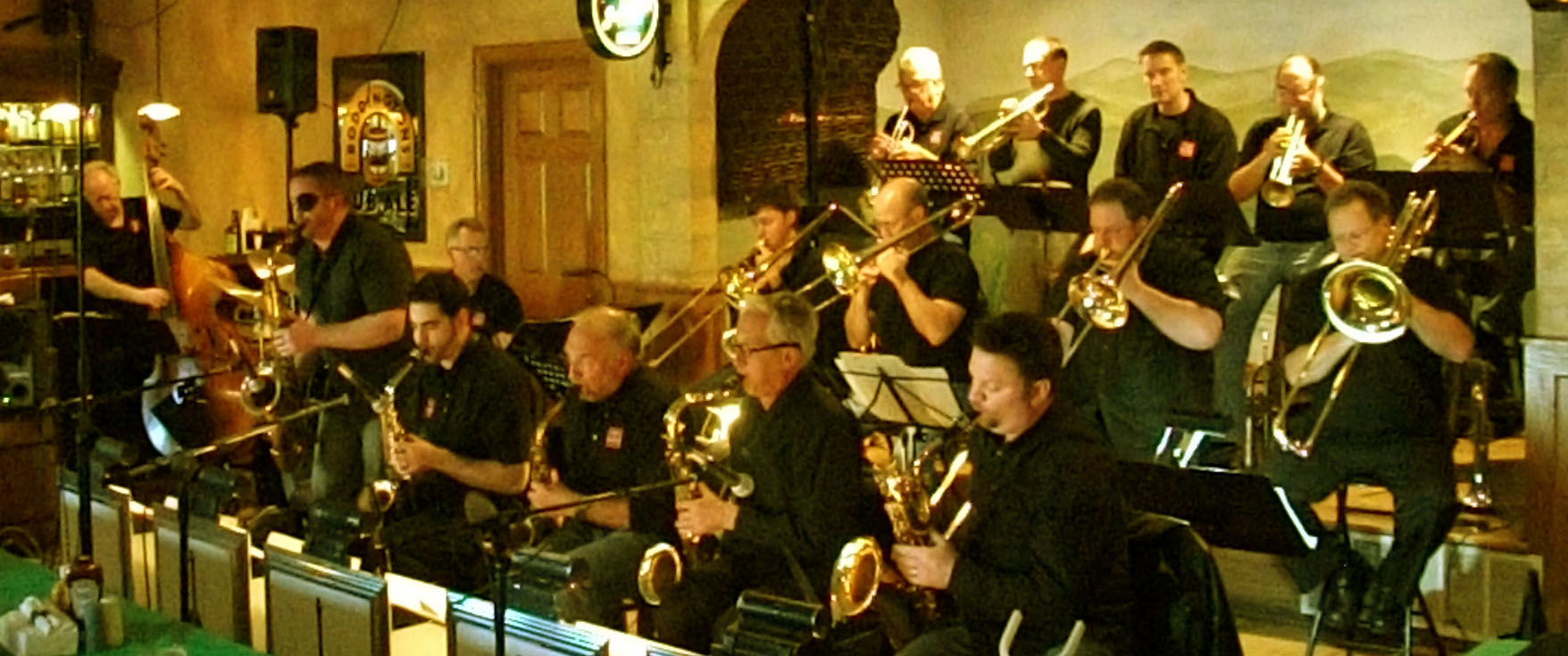
     This powerhouse 13-piece heartland jazz band shouts and signifies mightily, striving to bridge America’s huge political divide by universalizing the group’s social values. On the CD cover, the Yestet’s name and album title adorn golden meshing gears—the economic promise of an America that works together, by contrast to our dysfunctional “just say no” Congress.
     Trombonist-bandleader-composer-arranger Joel Adams holds passionate political viewpoints. The Madison native sometimes irked club owners who feared his pointed onstage comments might turn off customers.The band’s first album Jazz is Politics? (released during the last George W. Bush administration) conveyed what James Baldwin called “the fire next time,” prophesizing our current race-relations crisis.
     A savvier Adams now accents the positive and the progressive, with wit and populist eclecticism. The Yestet promotes purposive commonality to overcome polarization and the forsaking of the middle class and the poor.From the opening bars of “In the Here and Now,” this recording bursts into your ears and head. Adams’ brawny clarion trombone solo introduces vocalist Maggie Burrell, who rides kicking waves of brass with insightful commentary about social media’s pitfalls of facile friendships and easy betrayals of confidence. (Continued below).
yestet 3
Chicago Yestet vocalist Maggie Burrell
Yestet_2_megabone_large
Joel Adams playing his “Mega-bone” in concert. 1
yestet bandThe Chicago Yestet. All band photos courtesy chicagoyestet.com
     Scott Burns’ Coltrane-esque tenor in the modal groove bespeaks the ’60s, and Adams’ belief that jazz should emulate that era’s activism.The Yestet also persuades with romantic analogy. “What Was Ours” recollects a strong relationship ruined by sexual politics.
     Their populist flair includes a cover of Paul McCartney’s philosophically yearning “The Long and Winding Road” with an added rap spin that works. Madison rapper Rob Dz’s vocal style and viewpoint blends stylish R&B allure with this hip-hop historian’s grasp of the spoken-word art. Dz conveys sensuality or sagacity with a tonal flip of a switch, without typical hip-hop macho posturing.This band’s bracing synergy embodies its values, without browbeating.
     Their ringing message recalls Chicago political mastermind David Axelrod’s “Yes We Can!” slogan, which spearheaded Obama’s first presidential campaign. These musical citizens understand the familiar weariness in pursuing our messy democracy’s long and winding road. But it’s still ours to reclaim, and it “leads to your door.”
_________
1. Yestet bandleader Joel Adams is a native of Madison, Wisconsin and a graduate of the celebrated University of North Texas jazz program. He has toured with Woody Herman’s Thundering Herd, and played with Joe Williams, Clark Terry and Dizzy Gillespie. He’s also worked for many years with Clyde Stubblefield, a drummer best known for his pioneering work with James Brown. In the Chicago area, Adams has performed with the Chicago Jazz Ensemble, John Faddis in the Chicago Jazz Orchestra, as well as with Doug Lawrence, Jimmy Heath and Arturo Sandoval.
    The current Yestet lineup includes the great trumpeter Russ Johnson, whose own CD Still Out to Lunch! I have reviewed here recently. Johnson moved to Milwaukee from the east coast and has added an exciting voice to the Midwest jazz scene.
The Yestet CD is available on http://www.cdbaby.com/cd/chicagoyestet2 as is their first album Jazz is Politics?
Visit the Yestet on their website at http://www.chicagoyestet.com/
The Yestet also has one of the best quotes I’ve read on a band’s website:
“Whenever I become discouraged (which is on alternate Tuesdays, between three and four), I lift my spirits by remembering: The artists are on our side! I mean those poets and painters, singers and musicians, novelists and playwrights who speak to the world in a way that is impervious to assault because they wage the battle for justice in a sphere which is unreachable by the dullness of ordinary political discourse.” — Howard Zinn, author of A People’s History of the United States and Artists in Times of War. 
This review was originally published in slightly modified form in The Shepherd Express at https://expressmilwaukee.com/article-25346-chicago-yestet-just-say-yes-%2528tiddlywinks%2529.html

The Tedeschi-Trucks Band sets a high bar for American vernacular music

IMG_0186[1]

The Tedeschi-Trucks Band at the Orpheum Theatre in Madison Saturday night. Photo by Kevin Lynch

I promised myself I wouldn’t do a full review of this whole concert and I really won’t, because I’ve written about the consistently remarkable Tedeschi-Trucks Band extensively in the last couple years.

So, frequent readers of this blog, bear with these remarks.

But seeing the band last night much closer up than I did at Red Rocks Amphitheater the summer before last, I gotta say: Synergy, inspiration, surprise, telling detail, emotional truth and buckets of soul. Like the great sprawling Southern oak tree projected as the band‘s stage backdrop, they seem to replenish their freshness and power the older they get. Considering they’re still only a few years old as a unit, they convey a rare assimilation of the deep, entwining cultural roots that they draw from, which conveys a far greater age than their temporal years.

047


One of the most impressive aspects of this group is that — though it gains a big, enthusiastic audience, especially at live shows, from its power and skill with rave-up type numbers — it also possesses deep, thoughtful and lyrical dimensions.

And the way they often segue from a powerhouse tune directly to a quieter one like “Midnight in Harlem,” one of their trademark songs, suggests how they relate one sensibility to the other. After a loud rock-out, Trucks slid seamlessly into his slide guitar raga-esque improv introduction to “Midnight,” one of the more sublime songs in popular music today. Keyboardist-flutist Kofi Burbridge set another layer of the finely-sketched scene with his simmering organ, stoking a groove that ripples like wind through trees. Written by gifted backup singer-songwriter Mike Mattison, the song’s a concise, beautiful short story of diminished but dogged expectations,  partly a testament to America’s countless forsaken, “I saw old man’s shoes, I saw needles on the ground…” midnight in Harlem, midnight in Anywhere, USA.

Set in the context of a long subway ride, the narrator witnesses and deeply feels the exposed naked city yet somehow, in the face of windblown streets and the “subway closing down,” he remains steadfast, now walking, yet riding a metaphoric train of hope, a moonlit dream. Then Derek Trucks musically pinpoints the tragedy — and the dream’s inextinguishable flame — in his magnificently-built guitar solo, like a steady fire in America’s heart. Of course, having a woman singing a song penned by a man also gives “Midnight in Harlem” gender universality.

Another set highlight was “Idle Wind,” the most luminous song on their last album Made Up Mind.

It’s built around a fine oceanic image that recalls some of Ishmael’s lyrical reveries in Moby-Dick which is, of course, among many other things, a great coming-of-age story, as is “Idle Wind.” Hear Tedeschi sing these cross-currents of lyric, idea and musical radiance:

How I wish I could fly
Like a bird in the summer sky
Just a ship with a sail
In an idle wind, idle wind

Now I’ve got things to do and I’m telling you
And I don’t wanna stay anymore
And when I was a child I’d dream on high
Now I’m old and I don’t really care

I’m just trying to make somebody happy
I’m just trying to make somebody smile

In the middle of “Idle Wind” arose an extended duet by the band two drummers, JJ Johnson and Tyler Greenwell, that added a feisty dimension to the song, while remaining tasteful, musical and engaging.

My point is that such literary and dream-based songs serve to offset the predominant powerhouse blues, gospel and jazz gumbo that burbled throughout the concert with a rich dynamic range.

TedeschiTrucksBand

Derek Trucks and Susan Tedeschi and their collective-style band consistently display a deep love and understanding of the roots of American vernacular musics. Courtesy isthmus.com

They closed the set with their surefire rave up, “Bound for Glory.” The groove’s heaving, funky sway and the call to shared spiritual ecstasy is nearly irresistible, especially when they reach the refrain’s climax, where Tedeschi again attained an almost outrageous level of soul-scorching exhortation, and Trucks unleashed one of his most incendiary guitar salvos.

A few words about presentation, regarding Susan Tedeschi. She knows how to display her earthy beauty with self-assurance, but without ever primping or strutting onstage, like most pop divas do today. Half the time she wears specs onstage, probably to see her guitar fret board on tunes she doesn’t have completely under her fingers. This is a serious musical artist, not a “chick singer.” Her every action and expression directly serve the music, which all authenticates her physical presence.

Late in the show, two brilliant covers proved telling, one preceding “Bound for Glory” and one after, the first encore. Two covers at such a juncture in the concert suggests a lack of new material that they feel is performance-ready, but also their superb skill in cherry-picking and re-invigorating strong material in the roots music canon.

The band tore into the former song, “I Pity the Fool (Who Falls in Love with You)” with lusty abandon. In1967, The Paul Butterfield Blues Band recorded ostensibly the definitive version of this old R&B song on their superb horn-powered album The Resurrection of Pigboy Crabshaw. The irrepressible Tedeschi and her big, brawling band lifted Butterfield’s take to new heights (though I’d have loved to have heard Butterfield do it live.)  In the middle of “Fool,” Tedeschi ripped off the nastiest guitar solo I’ve ever heard her play, conveying the bruised defiance of the song’s jilted lover. Trucks followed with a cooler, mewling slide solo which evoked actual pity.

And then the encore: “I’ve Got a Feeling,” one of the ballsiest Beatles rock ‘n’ roll songs of their late period (from the Let It Be album). Here again, the band found the “feeling deep down inside” right in their wheelhouse and knocked it out of the park.

Speaking of sports references,  Wisconsin winning a huge NCAA basketball tournament game to advance to the “Final Four” — right before the concert started — hardly hurt the esprit de corps of the wildly enthusiastic, sold-out crowd at the Orpheum Theater.

Susan Tedeschi’s parting words: “Good luck in the Final Four, I know you guys are gonna do great.” She’d begun the concert with a conspiratorial smirk, “Congratulations on winning …I know you won, because you’re in my bracket.”

I have no need to temper my previous assessment of this band as the best I’ve heard on tour (and on record) in today’s popular music — for their stylistic range, depth of talent and inspiration, which I’ve discussed previously in this blog. In fact, having just heard live the excellent Gregg Allman band about a week earlier, I realize how much TTB has also raised the bar for the great tradition of Southern blues-rock vernacular music, which the Allman Brothers Band once defined.

Enthusiasm for this band of old souls spans several generations. A twenty-something sitting next to this baby boomer often responded physically to the performance throughout the set. Early on, she exclaimed to me about Trucks’ brilliance.  At the end, she turned to me with her eyes aglow. I said, “I could’ve listened to two sets of that.”

“I could’ve listened to four sets of them,” she said.

________

Special thanks to Eric Schumacher-Rasmussen and his brother-in-law Tom Clark.

For those who care to see and hear just what I reviewed, here is a Yahoo live posting of the TTB’s March 28 Madison performance. https://screen.yahoo.com/live/event/tedeschi-trucks-band

Here’s an excellent radio interview with Derek Trucks before the band’s Orpheum Theater performance in Madison by Stuart Levitan, host of Books and Beats, on The Mic 92.1 in Madison: http://www.themic921.com/media/podcast-books-and-beats-with-stu-SundayJournal/books-and-beats-hr-1-032215-25920062/

“Revival’s in the air” at Gregg Allman’s Potawatomi concert

GreggAllman_Mar_25_2015

Gregg Allman singing with guitar (at left) performed with his band, and guest guitarist Harvey Mandel (not pictured) at the Northern Lights Theater. Photo by “Quazar”

Gregg Allman — Potawatomi Casino, Northern Lights Theater, Milwaukee, March 24-25

Gregg Allman may still be playing cards with old man Fate and he opened Wednesday night’s concert by inviting those who may have lost money in the casino to come in and drown their sorrows in some blues.

But God knows Allman has drawn many bad cards in his life, and it’s nearly a miracle he survived this long, with an almost savior-like gift for rebirth and renewal. Especially in a life that’s been often gritty, unsavory and tragic, marked by the unforgettable deaths of his superlative guitarist brother Duane and Allman Brothers bassist Berry Oakley in a hauntingly similar motorcycle accident a year later, and going fatherless from age two. This Allman has borne the weight of drug addiction that very nearly killed him, and several trying marriages, including a disastrous one to pop diva Cher.

So the man who played the Northern Lights Theater still has the long, blonde hair, beard and tattoos of a spiritual renegade, and many in the enthusiastic crowd perhaps felt like fellow travelers as the 67-year-old singer-songwriter-organist and guitarist transformed some of his trademark songs and put an indelible stamp on a number of blues high water marks.

His unassumingly magnificent 2011 album Low Country Blues reasserted Allman’s profound commitment to the Southern blues idiom, deeply infused with gospel and strains of rock ‘n roll and jazz. The band’s consistently imaginative light show began with an extended slide and film clip tribute to classic bluesmen from Muddy Waters to Blind Lemon Jefferson to Robert Johnson.

So it was no surprise that Allman and his band really opened the floodgates of soulful passion with a stone classic T-Bone Walker song “Stormy Monday Blues,” which he recorded on the Allman Brothers’ great Live at the Fillmore East album from 1971. Allman has massaged and expanded the tune for all its worth and made it the occasion to introduce his surprise guest performer Harvey Mandel, one the most singular and compelling blues-rock guitar stylists of his generation.

harvey-mandel-seated-2013-jenn_390Underappreciated Detroit-born guitar innovator Harvey Mandel performed as guest guitarist with the Gregg Allman Band Wednesday night. Photo courtesy chicagobluesguide.com

Though he played with Canned Heat and even the Rolling Stones, Mandel has the comparatively low profile career of a brilliant guitarist who doesn’t happen to sing. His guitar takes care of that, with one of the most thickly textural voices on the instrument. Looking gaunt and seated throughout his stint, 1 Mandel’s guitar at times it emitted curling fuzz, and diverged into searing trash-talk licks of his own sonic language, echoing thick, cavernous notes and sharp rhythmic arabesques.

By contrast, Allman’s music director and lead guitarist Scott Sharrard, is highly fluent, clean-toned and passionate but comparatively conventional. Of course, having more than one top-notch guitarist is a grand Allman Brothers tradition. Right about “Stormy Monday” Allman’s muscular horn section and rhythm section pumped the classic blues lament for all its worth.

A show rich in contrasts included an early song delving as deeply into Allman’s soul as he gets, but with fascinating lyrical restraint. Jackson Browne’s song “These Days” fits as a tender, bittersweet slice of autobiography for Allman as he struggled with grief in the early ‘70s.  The horns faded away and the song ruminates along gentle sing-song waves and Allman refashioned Browne’s more optimistic ending into a poignantly confessional closing line: “Don’t please don’t confront me with my failures/I’m aware of them.”

What’s great about Gregg Allman is that he builds on that sense of failure, like a prizefighter, or a lonely long-distance runner. Another Allman Brothers tradition has been to liberally re-work their material as jazz musicians do.

So some tunes powered-up fresh like “Midnight Rider” and the marvelous instrumental “Les Brers in A Minor” from Eat a Peach, which steamed and pulsed along like a soaring zephyr, though not quite as expansively as back in the double-dagger guitar days of Duane Allman and Dickey Betts. Still, it ended with the sort of glowing fireball of resolution that made that band something to so often savor.

However at the gig’s end, the band’s trademark rave-up “Whipping Post” lost some of its intensity and extraordinary drama without Allman’s streaming organ (he played guitar on the song) and without the deliciously stunning paroxysm of the repeated, several-octave interval leap near the end that once electrified countless fans. Tell me I just want to re-live the good old days. It’s something all musicians who last this long must deal with.

And perhaps Gregg Allman prepared for that eventuality long ago when he composed the memorable phrase that comes after that climax “Good Lord, I feel like I’m dying!”

But in all, it was an excellent show with only a few technical blunders such as a bit too much bass on the acoustic tunes and, on a few songs, harsh, rhythmically flashing lights from two spots away from the stage which quickly irritated the eyes.

And let’s hope that this Allman brother returns often, before the good Lord feels like he’s dying.

______________


1 Harvey Mandel is reportedly battling cancer, and financially strapped. Here’s a link to a Facebook page dedicated to raising money for his medical expenses: https://www.facebook.com/pages/Harvey-Mandel/112897798778305

This review was originally published in onMilwaukee.com: http://onmilwaukee.com/myOMC/authors/onmilwaukeecomstaffwriters/greggallmanconcertreview.html

Trumpeter Russ Johnson re-imagines Eric Dolphy’s classic album “Out to Lunch!”

lunch Russ Johnson — Still Out to Lunch! (Enja)

Right from the open blast of horns and stealthy walking bass, this transports you to the album Out to Lunch!, modern jazz at a 1964 peak. The tune, “Hat and Beard,” a musical portrait of Thelonious Monk, stakes common ground in startling interval leaps that wind player Dolphy and pianist Monk shared.  Nationally-reputed Milwaukee  trumpeter Johnson dares to revisit the urbane lunch counter inhabited by Dolphy, trumpeter Freddie Hubbard, vibist Bobby Hutcherson, bassist Richard Davis and drummer Tony Williams. 1

Quotidian-detailed and genius-infused, the original album merged astringent structure and sardonic expression. Johnson’s quintet, with pianist Myra Melford and saxophonist Roy Nathanson, forgoes reverent replication and goes for broke, the original material securely in their DNA, and freshly arranged. Johnson and Nathanson’s horn voices interplay like close  brothers sharing squabbling rivalry and terse love.

russ (1)

Russ Johnson (center) recently performed selections from “Still Out to Lunch!” with musicians from the recording. Courtesy corneliastreetcafé.com

Also find strange beauty, in “Something Sweet, Something Tender.” Melford recasts Hutcherson’s tart gleaming-sculpture vibes with her crisp attack and pungent voicings.

Several inventive extra tracks wisely enhance the original material Drummer George Schuller, is the son of pioneering “Third Stream”  arranger and composer Gunther Schuller.  “Little Blue Devil” from his father’s “Seven Studies on Themes by Paul Klee” open the door connecting modern art and modern music – and revealing the sense of subtle blues comedy that many people thought “serious” jazzers lacked in the ‘60s.1

lunch

The original album cover of the recording that inspired Russ Johnson’s new CD. Courtesy lectro.ws

Plus, their reviving of two obscure but worthy Dolphy compositions, “Intake” and “Song for the Ram’s Horn,” make this a work that expands on the historical context of Dolphy’s original masterpiece. This is the best kind of jazz repertory — pushing forward — as it expands our insights on how modern jazz greats did so, not so long ago.

________

1 This is Johnson’s second excellent album within a year following Meeting Point, which I reviewed in the Shepherd Express, Culture Currents, and NoDepression.com.

2 Dolphy himself recorded several Schuller Third Stream pieces including “Variant on a Theme of Thelonious Monk (Criss Cross),” and another on a John Lewis theme, on the 1961 Atlantic album John Lewis presents Contemporary Music: Jazz Abstractions – – Compositions by Gunther Schuller  & Jim Hall. Those two pieces are available as part of the Ornette Coleman box set on Rhino Records, Beauty is a Rare Thing: The Complete Atlantic Recordings. The complete album is available on a Rhino re-issue. “Third Stream” music strove to blend techniques and aesthetics of modern “classical” music and modern jazz.

This review was published in a slightly shorter form in the Shepherd Express:

https://expressmilwaukee.com/article-permalink-25207.html


Discovering the black community’s role in the Underground Railroad’s “Hidden History”


Gateway to Freedom- The Hidden History of the Underground Railroad

Book cover image courtesy www.kansascity.com

The three-foot-long rectangular box holding the fugitive slave rattled along the railway toward New Bedford, Henry Brown enduring a torment of his own devise. Who’d suspect a grown man hidden in such small crate? He made it, more than 250 miles in 24 hours. “Nothing saved him from suffocating but the free use of water…and the constant fanning of himself with his hat,” recounted his rescuer. Two dumps of the crate on his head nearly killed him.

Henry “Box” Brown exemplifies the resourcefulness and courage of fleeing slaves, a theme of Pulitzer-winning historian Eric Foner’s Gateway to Freedom: The Hidden History of the Underground Railroad. The book demonstrates that the “railroad” — a loose system of slave fugitive liberation — had a grassroots interracial genesis, and spread primarily through Maryland, Pennsylvania, Virginia and Delaware, though it extended all the way to Canada.

ug

An artist’s depiction of fugitive slaves on the so-called underground railroad. Courtesy discoversalemcounty.com

At the author’s best, the sheer number of escapes, heroes and villains carry the reader along, as if galloping through a valley of subterfuge and salvation that might also doom freedom at any time. One fugitive’s betrayal pivots on both a southbound carrier pigeon and a “stool pigeon.” The stories convey the sometimes breathtaking effect of the spontaneously growing collaboration between whites and blacks.

underground_railroad_monument

The Underground Railroad Monument, in Battle Creek, Michigan, memorializes the heroism of fugitive slaves who escaped to freedom via the covert communication and transportation system in the antebellum era. Courtesy afriendlyletter.com

Foner corrects the historical extolling of white abolitionists as the slave’s primary liberators. After a four-chapter chronological backdrop, he takes us to the dawn of the Fugitive Slave Act in 1850, which federally mandated the return of fugitive “property” — Foner delves into the black community’s complex response to the crisis generated, amid increasing freedom flights. Abolitionist “vigilance committees” arose along border states. African-American William Still proved a one-man liberation force, and free blacks did most of the dangerous hiding and assisting of fugitives, and public protesting of their “renditions” to re-enslavement. 1

Abolitionist factions squabbled. Pacifist William Lloyd Garrison disparaged the role of the black church in the effort. However, Foner illustrates the crucial sanctuary and deliverance the black church and community provided. Many newspaper ads described fugitives in possessive detail: one slave “wears a truss for hernia…” The great black orator and journalist Frederick Douglass emerges as a precursor of both Martin Luther King Jr. and Malcolm X, for espousing violent resistance, if necessary. Yet evidently few bloody confrontations ensued — the Fugitive Slave Act proved difficult to enforce, as was the Constitutional language that dictates the return of runaway human “property.”

Foner’s mother lode source was New Yorker Sydney Gay’s meticulously documented “Record of Fugitives,” more than 200 runaways he aided, including Harriet Tubman, the era’s most fearless angel of mercy. Gateway’s cumulative power sometimes clots with repetition of similar anecdotes, but one learns vividly the dogged persistence of America’s ugliest reality and the complicated passion shared by abolitionists and slaves for freedom, if not equality.

tumblr.com ht

Harriett Tubman courtesy

To further understand how America came to war with itself, one might try Harriet Beecher Stowe’s 1852 literary sensation Uncle Tom’s Cabin, a virtuoso feat of imaginative agitprop that helped transform American sentiment on slavery.

Or read the finest slave narratives, of Douglass or Henry Bibb — authentic, moving and eloquent testimonies regarding the cold-blooded lash, the brutal convoluting of “Christian” values.

Narrative-of-the-Life-of-Frederick-Douglass-an-American-Slave oakland

Courtesy oaklandmcc-store.com

Foner crucially delineates the profound challenge and existential risk that engulfed an inter-racial generation as the nation thundered toward dissolution, or Civil War.

Today myriad African-Americans struggle mightily, as much of the world embraces the black cultural and social genius that emerged from slavery. Meanwhile, the Dixie-publican Tea Party — inflamed by a black president from Illinois, as was the slave-holding South by a heroic white one — burns with ancient contempt, as our political discourse and democracy suffer.

Our heightening community-vs.-institution racial tragedies might also gain illumination from perhaps America’s true “Greatest Generation.”

5919752521_0e228c86d7_b

Foner touches on the role that so-called “radical Wisconsin” played in the abolitionist movement, becoming the only state to declare slavery unconstitutional. Despite highlighting all the slave roles in self-liberation, Foner curiously neglects naming Joshua Glover, the slave who was rescued by a Milwaukee mob led by Sherman Booth. There are several memorials to this liberation effort including this mural on the Interstate 43 overpass in Milwaukee (above) and a sign at the place on Booth Street and Glover Street in Riverwest where Booth provided a safe house for Glover.

_______

1. Joshua Glover was a runaway slave from St. Louis, Missouri who sought asylum in Racine, Wisconsin in 1852. Upon learning his whereabouts in 1854, slave owner Bennami Garland attempted to use the Fugitive Slave Act to recover him. Glover was captured and taken to a Milwaukee jail. A mob led by Sherman Booth broke into the jail and rescued Glover, who then escaped to Canada via the Underground Railroad. The rescue of Glover and the federal government’s subsequent attempt to prosecute Booth helped to galvanize the abolitionist movement in the state that eventually led to Wisconsin becoming the only state to declare the Act unconstitutional.” https://www.flickr.com/photos/auvet/5919752521/


2 One fascinating aspect of the underground railroad strategies that Foner does not touch on was the creation and use of quilts by sympathetic African-American women, as documented in a remarkable art exhibit in Milwaukee several years ago. The women employed a series of symbols sewn into the quilts that acted as covert signals to slaves when the collaborators would hang the quilts out for fugitives to see. Read about this in my Culture Currents feature review of the show “If these quilts could talk: signals along the Underground Railroad.” https://kevernacular.com/?p=1063

This book review was first published in The Milwaukee-Journal Sentinel taps section, Sunday March 15, 2015: http://m.jsonline.com/entertainment/books/eric-foner-highlights-black-communitys-role-in-underground-railroad-b99458445z1-296218481.html

On Charlie Sykes, “right to work” in Wisconsin, and the will to power

rally DeVriesAFL-CIO union president Phil Neuenfeldt speaks at a rally Wednesday at the Wisconsin state Capitol, the second day of protests against the Republican-led legislature effort to fast-track a controversial “right to work” bill in Wisconsin. NOTE: Another protest rally at the Capitol building is scheduled for noon, Saturday, Feb. 28., as is public testimony to the labor committee. Photo by Mike DeVries, courtesy of The Capital Times. Here’ s a link with a photo essay on the protest:http://host.madison.com/gallery/news/local/govt-and-politics/photos-wednesday-s-right-to-work-rally-at-capitol/collection_1476aa0a-bd31-11e4-8575-5fe1191072e7.html#0

The subject of this blog is power. But the first thing to understand about the protest rally I attended on Tuesday at Wisconsin’s State Capitol in Madison — against the fast-tracking of a “right to work” bill for Wisconsin law — is that this was no gathering of leftist agitators.

The day before the rally, Milwaukee ultra-conservative radio talk show host Charlie Sykes referred to the people he imagined assembling as “Unionistas,” implying militant Communist plotting, a typical and dated political fear-mongering.

I must comment on Sykes because he is so influential among Wisconsin conservatives and “Tea Party” members and anyone who feeds off his highly rated WTMJ program.

Talk about power. He broadcasts on the most powerful radio station in the state, by far. Fully aware that right-wing politics feeds off talk radio, radical Governor Scott Walker has a constant direct line to Sykes’ program.

CharlieSykes

Popular ultra-conservative Milwaukee radio talk show host Charlie Sykes also gets his share of speaking engagements. Photo courtesy courtesy bizjournal.com

I recall the governor’s current radio mouthpiece when I worked with him for The Milwaukee Journal  in the 1980s. Then a cityside reporter, Charlie Sykes would walk around the newsroom with a curiously remote air. He never spoke to me, or to very many fellow reporters that I ever noticed. He just seemed a little odd to me, and this was before I had any notion of his political views.

Now I interpret his newsroom manner as an imperious sense of superiority, and perhaps a sense of political alienation because — although professional print journalists work hard to be objective reporters — most reporters’ personal politics tend to be centrist or liberal leaning.

However, another former Journal colleague who knows Sykes and claims to be friends with him is Joel McNally, the affable and left-leaning writer with the infectious giggle. Back then, Joel was a newsroom star, writing a popular satirical column for The Journal, often about political matters. 2.

McNally commented a few years ago about his friend Sykes, regarding one of his programs that seemed to promote racial hatred:

“There’s nothing satirical about promoting racial hatred,” McNally wrote in The Shepherd Express for which he now does a weekly column. “I’ve written a lot of satire. You create satire by pretending to adopt a point of view you disagree with and promoting it with such exaggerated, ridiculous arguments that the whole idea is exposed as absurd.

“Sykes and his mean-spirited audience do not think the idea of poor inner city blacks living it up while ripping off taxpayers is absurd. That’s actually one of the basic premises of his show.” 3.

Sykes claims that covering some of the urban problems in Milwaukee changed his own politics because he perceived that liberal “welfare state” solutions were untenable. He apparently did a black-and-white ideological flip-flop —  if he was ever a liberal at all. Before too long, he left the newspaper.

It’s been a long time since he’s been a legitimate journalist, in the traditional sense, of serving the public interest with information they can use to make up their minds about a news story or a political development. His program thrives on his right-wing assumptions and biases, just as liberal talk programs do on theirs, to some degree. But none of those are really heard in Milwaukee.

Meanwhile, Sykes’ morning show is so often sadly under-informed and under-reported, or selectively informed at best. He operates in relationship to a reality that’s not much more connected than Rush Limbaugh’s to that of an ordinary working or working-poor Milwaukeean, or American. Unless most of their information comes from such radio talk.

protest crowd

The crowd gathered at the Wisconsin Capitol Tuesday to protest the fast-tracking of a “right to work” bill. Another protest was held Wednesday.

Now, to the “right to work” bill protest I witnessed Tuesday. Contrary to Sykes’ glib characterization, the spirit of this event was as patriotic and American as God and country, mother and Apple Pie. Laborers of many different trade unions, some in hard hats, filled the crowd. A group of machinists did their own march around the capital to protest the right-to-work bill (see photo).

2015-02-24 00.33.51

The program began with emcee Phil Neuenfeldt, Wisconsin’s AFL-CIO president, leading the crowd in The Pledge of Allegiance. Then the Solidarity Singers sang “The Star-Spangled Banner. “ our national anthem. Neuenfeldt then asked a priest, Father Jim Murphy, to give an invocation, which was a prayer for the gathering.

Several big American flags flapped in the icy wind, along with various union flags, amid the thicket of protest signs. People in the Tea Party, and politicians who cater to them, like to wrap themselves in the American flag and think their extreme aversion and often paranoia about government is what America is about.

This gathering at our state capital was what America is about. Mahlon Mitchell, president of the Professional Firefighters Association of Wisconsin, reprised a refrain he used several years ago for the hundreds of thousands of people who gathered here in the summer of 2011 for protests of Gov. Walker’s Act 10 destruction of public sector union bargaining rights.

“We know what democracy looks like, right?” Mitchell called out to the crowd.

“ Democracy looks like this!” the multitude roared in massive and hearty unison on this cold but sunny and crystal-clear February afternoon.

Mitchell was one of a number of eloquent speakers, all associated with Wisconsin unions.

But Neuenfeldt summed the situation up quite well in his opening remarks:

“Right to work in Wisconsin is not the Wisconsin way. This bill is an attack on all Wisconsin families, an attack on our paychecks. It’s an attack on our ability to put food on the table and a roof over our heads. And it’s an attack on our rights as workers.”

“We know it’s out of state special interests pushing this bill.  They want power.

“They don’t care if you had a good job or decent benefits or can afford to spend your kids to college. What they want is more profits and they want to do it on the backs of workers.

“We know, and history teaches us, that a strong union movement builds the middle class and raises all boats. There is nothing more American than workers coming together, through their unions, to stick together. That’s what we’re doing here today, coming together to have each other’s backs, right?

“Unions lead to better trained workers, a safer workplace, and a strong stable middle-class.”

The word that sticks with me amid all this well-put, all-American common sense is the word power.

Neuenfeldt addressed the Republican power issue: “We didn’t send our elected officials to Madison to rush through a bill, to limit the public debates, in an extraordinary way, on important economic issues. We sent them to Madison to make sure every person in Wisconsin has a chance at the American Dream. Not to rush through a bill in an undemocratic way. Right-to-work will put downward pressure on our entire economy.”

The fast tracking of the bill, employs the same strategy used in at least two neighboring Midwestern states which are now “right to work.” The governor’s stated philosophy is “divide and conquer” – build resentment in non-union workers against union workers. Since making that statement to a rich donor,  Walker has deftly played “rope a dope” with the press and the public on the issue during his last term and last election, saying “right to work” was a distraction” and that he would “do everything in his power” to prevent such a bill from reaching his desk.

Now Walker has safely gained re-election for a second term, and is gallivanting around the country to try for presidential bid, and he has changed his tune. His Republican cronies in the legislature worked up this bill, which he now says he will sign when it gets to his desk.

This is yet another oppressive power grab by this gubernatorial administration.

Walker, son of up Baptist preacher, talks about God giving him the blessing to pursue his ongoing quest for more power. Yet, there’s something to learn from a philosopher who studied power. I speak of Frederick Nietzsche, the existentialist thinker and writer but especially as contextualized by the great American philosopher William Barrett, a great interpreter of existential philosophy, especially in his classic book Irrational Man: A Study in Existential Philosophy.

Irrational_Man

“Irrational Man” book cover courtesy Wikipedia.org

Understand, I don’t consider myself an existentialist, per se. But the philosophy substantially informs my thinking. I was raised a Catholic and today informally call myself a Unitarian agnostic, who still prays in my own ways, just like Father Jim Murphy does, publicly and privately.

Any reflective person cannot ignore modern history which includes the existentialist philosophical movement. It grew out of the experience of World War II, and the horrors of the Holocaust, which drove many people to question whether God was still alive.

Though many people think of existentialism as European, the philosophy profoundly informs the American experience, with our history of The Civil War, The Gilded Age, and especially since The Great Depression and the post-war experience.

That dark “Twilight Zone” sense of dread that life’s uncertainties, unfairness and pitfalls can impose on the celebrated American individual is perhaps an “irrational” fear, but a very real one. Didn’t most of us feel it on 9/11, and perhaps the 99 per cent of us during our Great Recession? Existential dread permeates most classic American crime fiction and the great American tradition of film noir cinema.

But my subject is political power, in this instance. Nietzsche, as interpreted by William Barrett, has plenty to say: “Power as the pursuit of more power inevitably founders in the void that lies beyond itself. The will to power begets the problem of nihilism.”

Barrett writes that Nietzsche prophesized remarkably that “nihilism would be the shadow, in many guises and forms, that would haunt the 20th century. Supposing man does not blow himself and his earth to bits,  and that he really becomes the master of this planet. What then? (Barrett’s book was published in 1958 and the paperback edition in 1962 through the height of the Cold War, an even larger existential treat).

Note how relevant Barrett is to today: “Power for power’s sake, the matter of how far powers extended, leads always to the dread of the void beyond. The attempts to stand face-to-face with that void is the problem of nihilism. For the existentialists who felt that the other higher eternal realm (of religious belief) is gone, Nietzsche declared, man’s highest values lose their value. The only value Nietzsche can set up to take the place of these highest values that have lost their value for contemporary man is: Power.

“To the degree that modern life has become secularized these highest values anchored in the eternal, have already lost their value. So long as people are blissfully unaware of this, they of course did not sink into any despondency and nihilism; they may even be steady churchgoers.

“Nihilism, in fact is the one subject on which we speak today with the self-complacency of commencement-date orators. We are always ready to invoke the term against a new book on new play that has anything ‘negative’ to say, as if nihilism is always to be found in the other persons, never in ourselves.”

Nihilism never goes away. Now the gruesome brutality of the Middle Eastern radical terrorist group ISIS seems as nihilistic as anything. Will we start another ground war again? Walker would, he says.

Barrett continues to nail us: “And yet despite all its apparently cheerful and self-satisfied immersion in gadgets and refrigerators, American life, one suspects, is nihilistic to its core. It’s final quote ‘what for?’ Is not even asked, let alone answered.”

It’s uncanny that he wrote this in the late ‘50s-early ‘60s, but it is also the era of the TV show “Mad Men” as well.

“Unless our Faustian civilization can relax its frantic dynamism at some point it might very well go psychotic,” he concludes. “To primitives and Orientals, we Western men already seem half-crazy. We need to know what in our fundamental way of thinking needs to be changed so that the frantic will to power will not appear is the only meaning we can give to human life.”  4

At the pro-union rally protest I attended, clearly the head of the AFL-CIO and all the other speakers had plenty to say about thinking that needs to be changed, and about giving meaning to human life.

But what do Scott Walker and the Republicans — by rushing this bill through — have to say other than talking about “freedom.” The freedom, that is,  to work without paying dues, and yet receiving all the benefits and pay rates that a union works hard for all the company’s workers to enjoy? Walker and the Republicans want to outlaw union fees that people who prefer not to join a union might pay for the benefits, the better training, the workplace safety, and wages union provides them.

It’s “peddling a double standard” as Democratic State Senator Robert Wirch said, because Wisconsin chambers of commerce require all businesses to pay fees to them so that the powerful commerce chambers will protect them when they need legal or funding help or otherwise.

But the Republicans want to legally strip workers of that protection. The subject of this sort of government intrusion on private business affairs is worthy of a full public debate and discussion.

Scott Walker has been a career politician since he since he was in college at Marquette University. He allegedly played dirty tricks in running for a school office by removing from on campus news boxes all the newspapers that endorsed his opponent, among other questionable tactics. A short while later he dropped out, far short of his degree. Shortly after that he began the full quest, a will to power that has been driving his life ever since.

Do you have much sense that he cares about Wisconsin today, as he traipses around the country trying to get billionaires and to give him money for his presidential run?

For his occasional son-of-a-preacher pieties, one senses he is walking through a nihilistic void of pure power seeking, with political caginess but heedless hubris, over which even some conservatives shake their heads in dismay. “I wouldn’t bet against me on anything,” he recently boasted to a reporter. 5.

His grandiosity grows. When asked recently how he’d take on the ISIS terrorists he made a distasteful association with Wisconsin protesters: “If I can take on 100,000 protesters, I can do that across the world.” 6.

Who does he speak for other than his vainglorious self, in disarming platitudinous rhetoric, except to the extreme right political base, and Republican Party establishment looking for an electable candidate, and most of all to the richest one percent in America. Who else is he really working for?

_____________

Photos by Kevin Lynch, unless otherwise noted.

  1. The remarkable story of that huge event, which helped to inspire the Occupy Wall Street movement is documented in the book Uprising: How Wisconsin Renewed the Politics of Protest, from Madison to Wall Street  by John Nichols, Washington correspondent for The Nation magazine, and associate editor of The Capital Times in Madison, and another former colleague of this writer.
  2. McNally was also the union steward of the first newsroom union to ever grace The Milwaukee Journal in the mid-1980s. I happened to be the first personnel case that the new union stood up for. I was laid off from my job as a part-time staffer in the features section in what amounted to a power move by an editor vying for a high position and trying to show he could tighten up a budget.  The lay-off had nothing to do with my performance.

An independent arbitrator decided that the newspaper had unfairly laid me off without offering to relocate me to another position, although I did apply unsuccessfully for a couple of other positions. Thanks to the new union’s president Jack Norman, steward McNally and others, I got my part-time staff position back, along with nine months back pay.

  1. https://expressmilwaukee.com/article-permalink-20907.html
  2.  William Barrett, Irrational Man: A study in Existential Philosophy, Anchor Books, 1962, 203-205.
  3.  Here’s the video of Walker’s comment: http://dailysignal.com/2015/02/01/scott-walker-wouldnt-bet-anything/
  4. https://us-mg205.mail.yahoo.com/neo/launch?.partner=sbc&.rand=acrals92f0pdh#mail


.

Bill Camplin’s “Understory” digs deep, while casting a long shadow on the present


understory

Bill Camplin – Understory (self-released)

Bill Camplin observes and invokes life with unblinking candor on his inspired new recording. This crystal-clear Nashville-recorded session stands as Camplin’s strongest-ever album of original work. Peerless in its naked, high-baritone beauty, his voice employs Dylanesque duskiness and deftly doled drama, often wrapped in rueful irony.

Camplin testifies to human foibles and futility, as personal confession and for those underfoot, suffering exploitation. Therein lie his “understories,” insightful, humane and possessing a perfect pitch of indignance.

“Old Man Sleep” requires little reflection, yet begs for it. Camplin witnesses a street-wandering soul, addressing the elder beyond earshot with extraordinary tenderness. Haunting falsetto phrases recall the great jazz singer Andy Bey. Camplin, a master of linguistic quirk, notes: “in the alley of existence your slur lives on.”

“Seems I’ve Seen This Night Before” attests to Everyman’s flounderings: I’m losing all concept of what I intend/playing the victim and stumbling away.

By contrast, “Fatcats,” is a romping blues-funk protest – with streaming organ backdrop — against the (Wall Street) “fatcats who want it all.”

“Rage Against the Night,” stands as Understory’s masterpiece, high, street-corner poetry worthy of the best Dylan or Townes Van Zandt, whispering Lear-like existential pathos. Sostenuto cello and majestically descending guitar chords soon recall John Cale-Lou Reed scenarios. Camplin’s voice unleashes a sort of threepenny-opera passion. “Rage” summons hearts and minds with time-borne challenges and no easy answers, only faith in perseverance and, in its affirmative key of C, will for justice:

The flood of history as it advances forth among us/

and the drained potentials that the deluge washes from us/

Between our future and our past, let us rage against the night.


Out on a thunderclap, oh, the light is breaking/

children’s voices calling as they are waking/

Spring erupts again to put forth the final fight

camplin w satch

Bill Camplin performing with violinist Randy Sabien and guitarist Satchel Paige Welch. Courtesy dwightfpl.wordpress.com

The album bristles with musical variety as Camplin’s son and album producer Satchel Paige interjects pithy, conversational guitar fills and hand-in-glove gestures, especially on the brilliantly arranged “All in the Name of You.” Trumpet, cello, organ and pedal steel help till Understory with spades of fresh vigor. We should hear more from the talented Mister Paige before long.

Yet Understory’s flat-earth CD cover abstraction might also suggest voices rising from graves, and the veteran songwriter addresses, amid our gadget-clogged distraction, the eternal question of finally relinquishing the temporal spirit, “Where Do We Surrender?”

“Take your souls, take them out on the highway…release yourself to a deadly extreme… ….where do we confess we can on longer try?” Here’s Camplin performing the song, at an Earthkeepers Mississippi River Sacred Sites Benefit. https://www.youtube.com/watch?v=7mOf7cZ4j5M

But Camplin, the 68-year-old co-owner of Fort Atkinson’s roots music mecca Café Carpe, ain’t going nowhere soon, one hopes. 1 He’ll release a live recording of a renunion of the Cardboard Box band, named for his 1975 album. He plans two more volumes of his masterful Dylan interpretations, documented first in Dylan Project One from 2003, along with another album of originals still unfolding down the dusty roads of his mind, and a “country” album.

Don’t wait for those to catch up with Camplin. Here’s an Understory: One day, he suddenly disappears, like many a mythical or forgotten troubadour-poet eccentric. They bury him in an ungainly cardboard box in a modestly marked grave on the banks of the Rock River. Then his remains wash away in the streams of time. Which, as we know, waits for no one.

Understory is available at Cafe Carpe, 18 S. Water Street West, Fort Atkinson, and at  cdbaby.com: http://www.cdbaby.com/cd/billcamplin3

________

1. Cafe Carpe, also a fine eatery, has a long history as a Midwest crossroads for great and obscure singer-songwriters and vernacular groups. The Carpe also provided the artistic sowing ground of Peter Mulvey, Jeffrey Foucault and the collaborative group Redbird, among others. Among recent acts I’ve seen there include Redbird (Mulvey, Foucault, Kris Delmhorst and David Goodrich) at their holiday season concert series and, last month, Steve Forbert, another baby boomer rudely defying the ravages of age.

For information, visit: http://cafecarpe.com/listening/

This review was originally published in a shorter form in The Shepherd Express: https://expressmilwaukee.com/article-permalink-25043.html