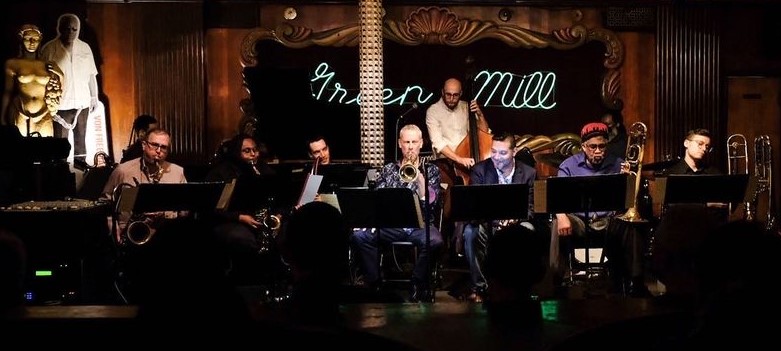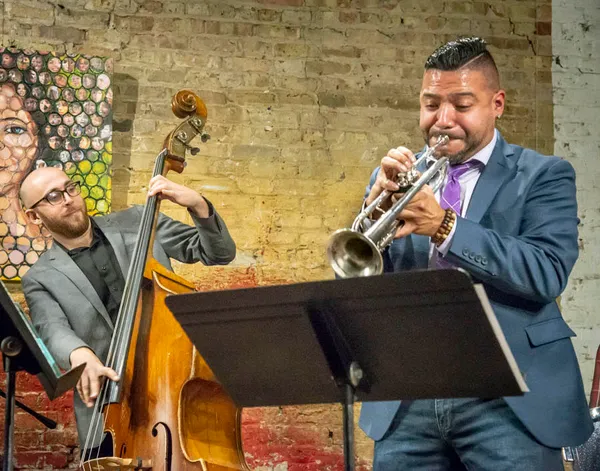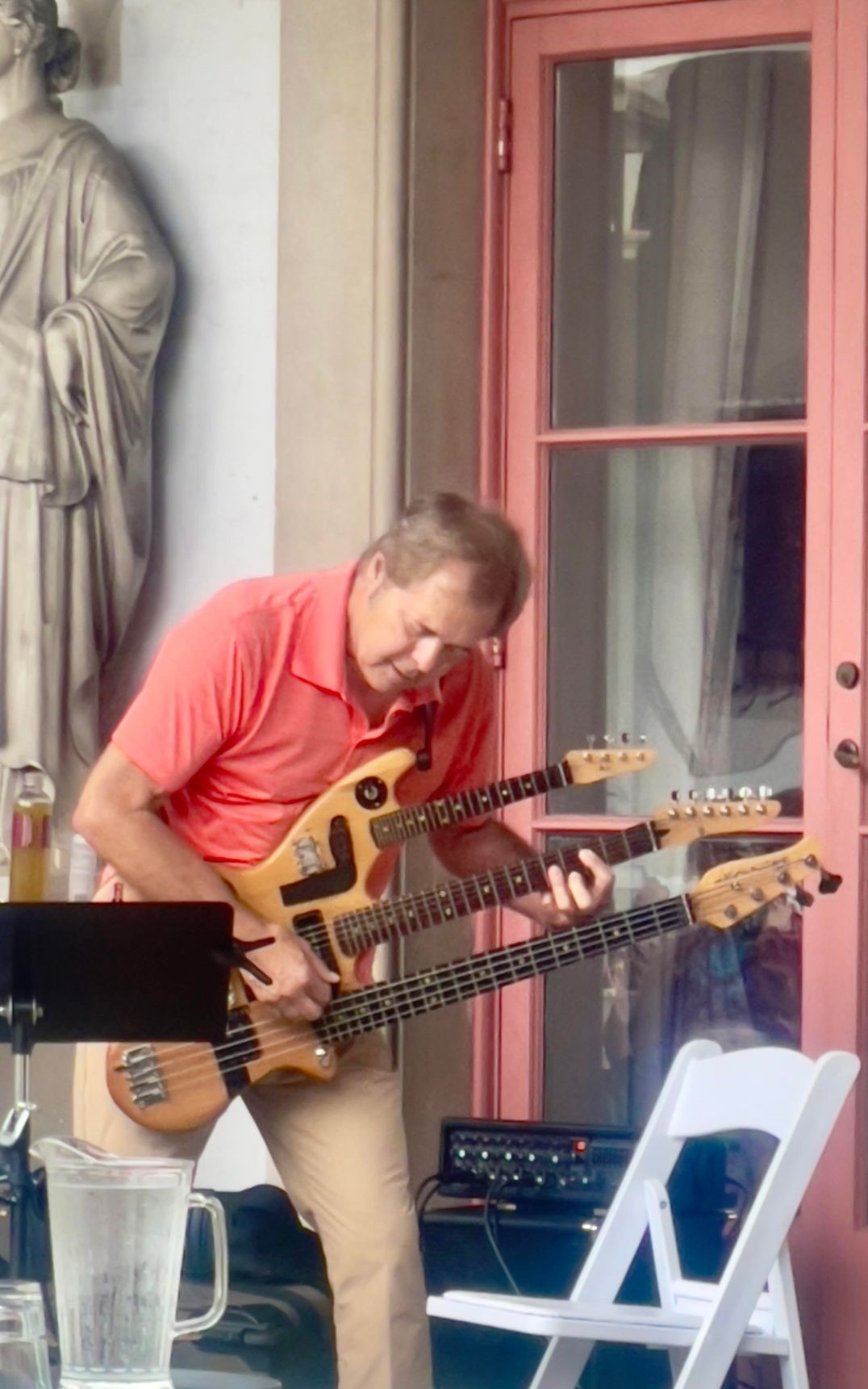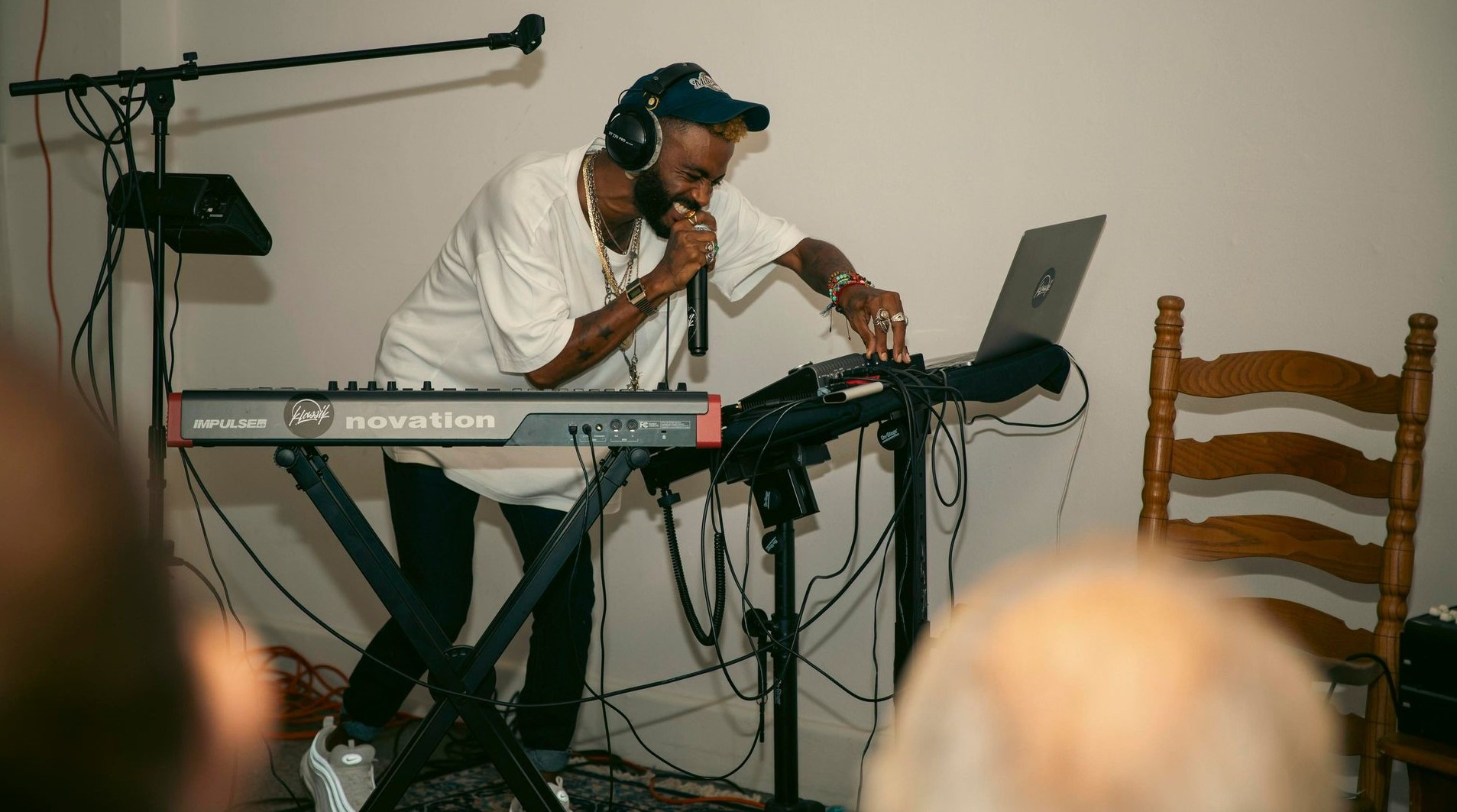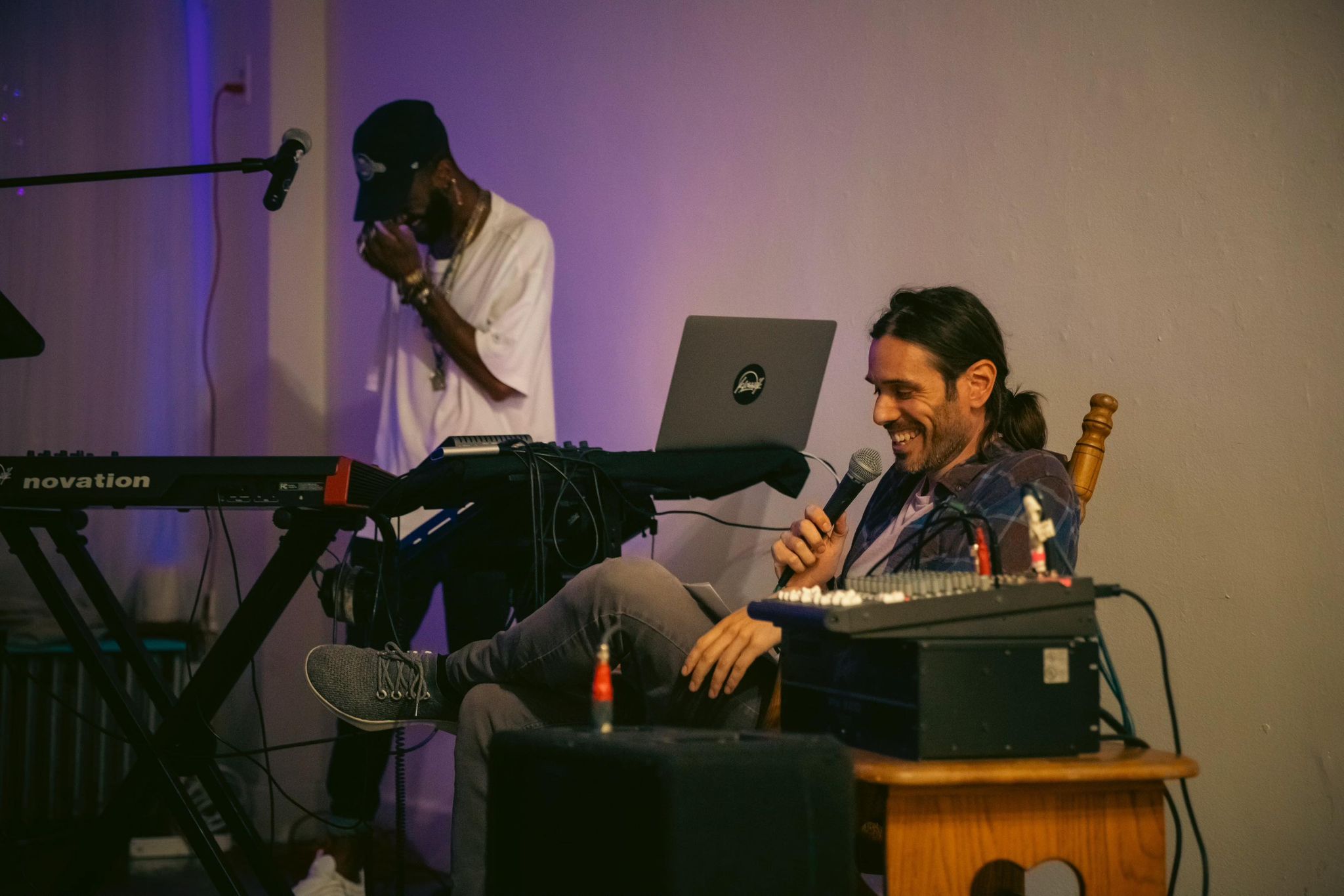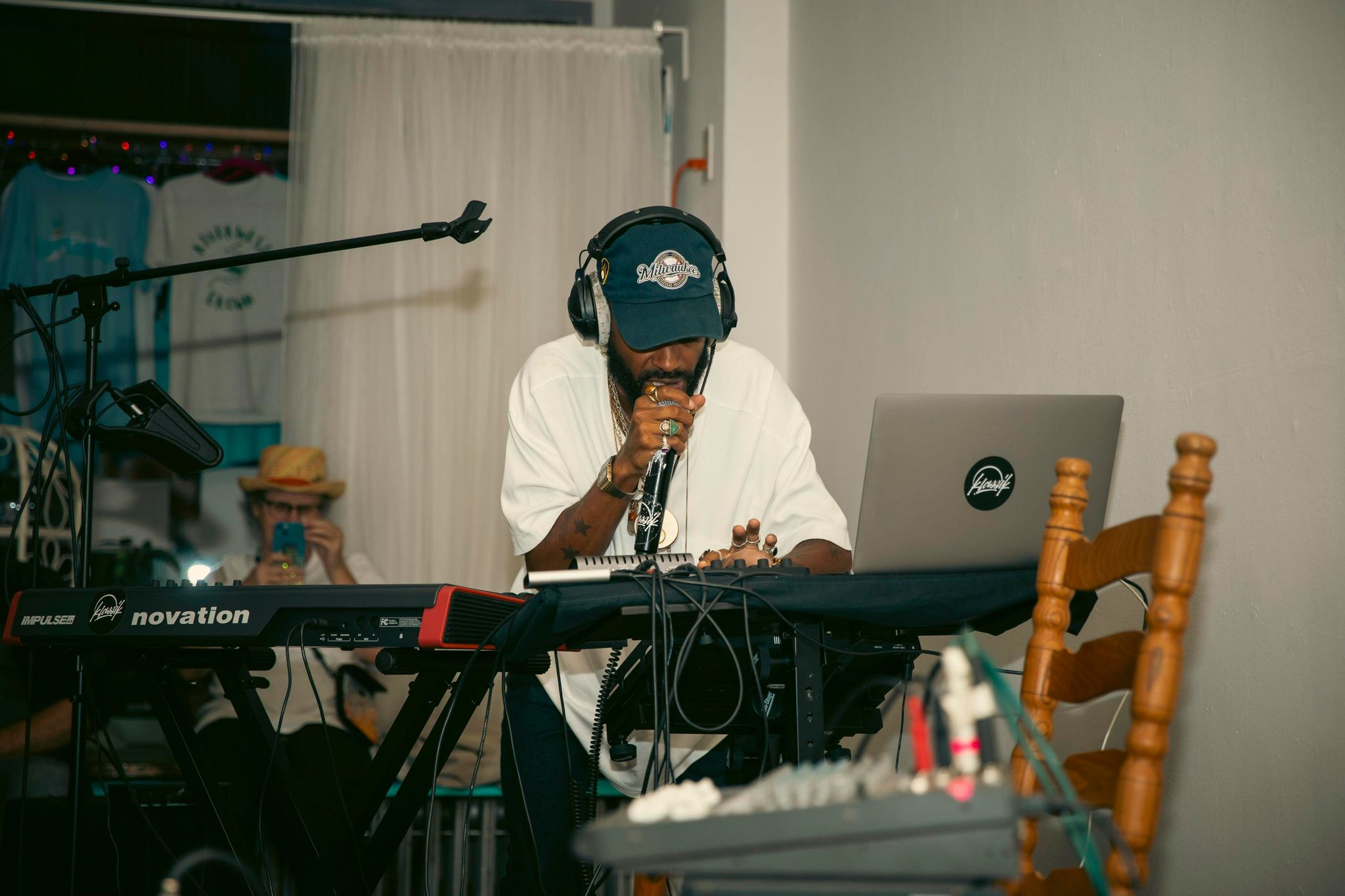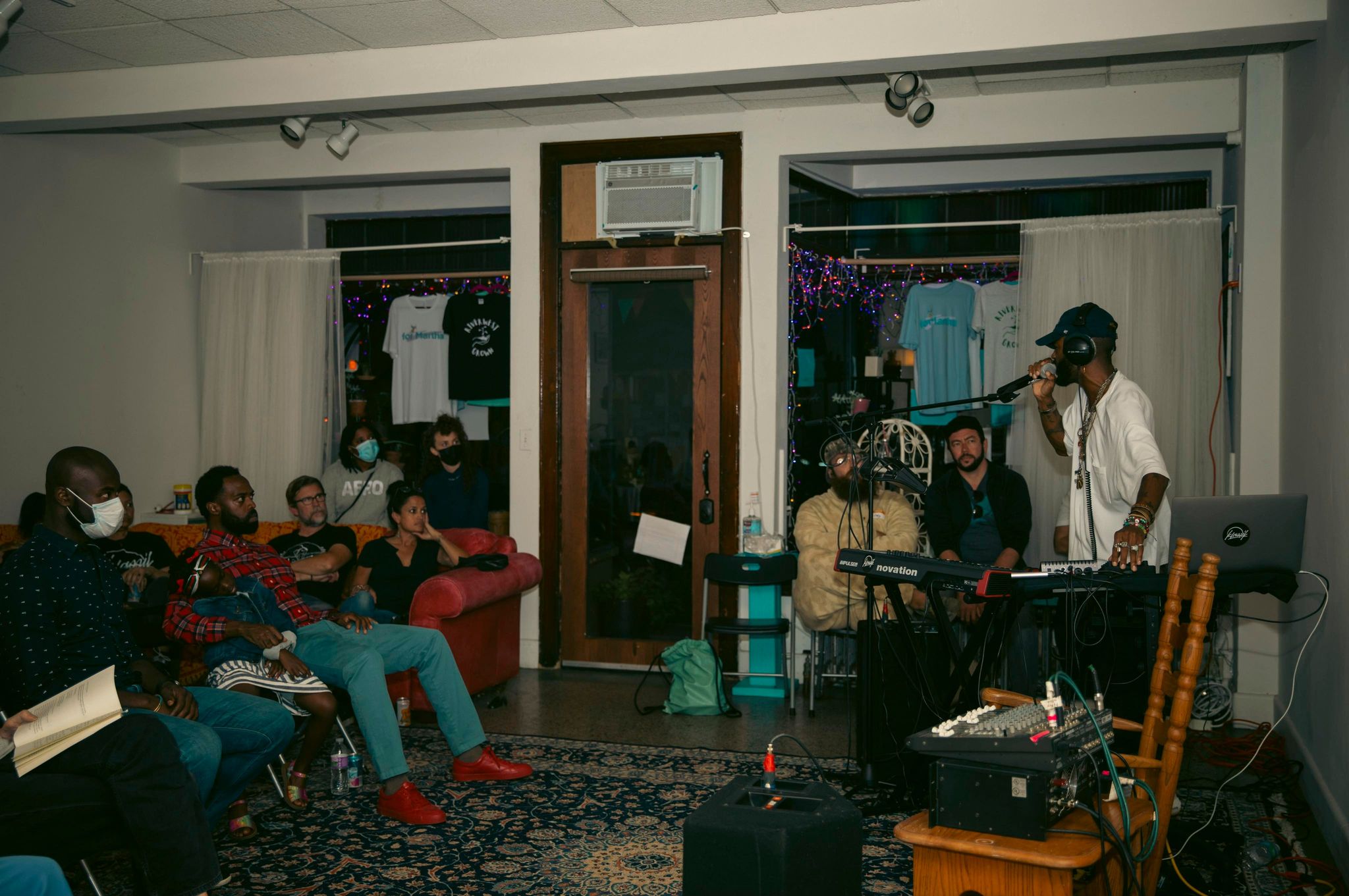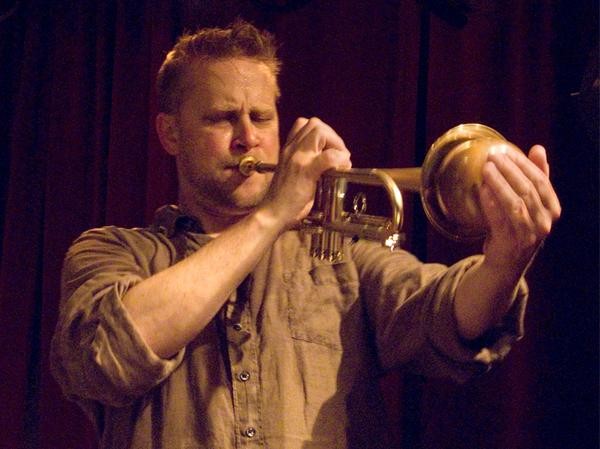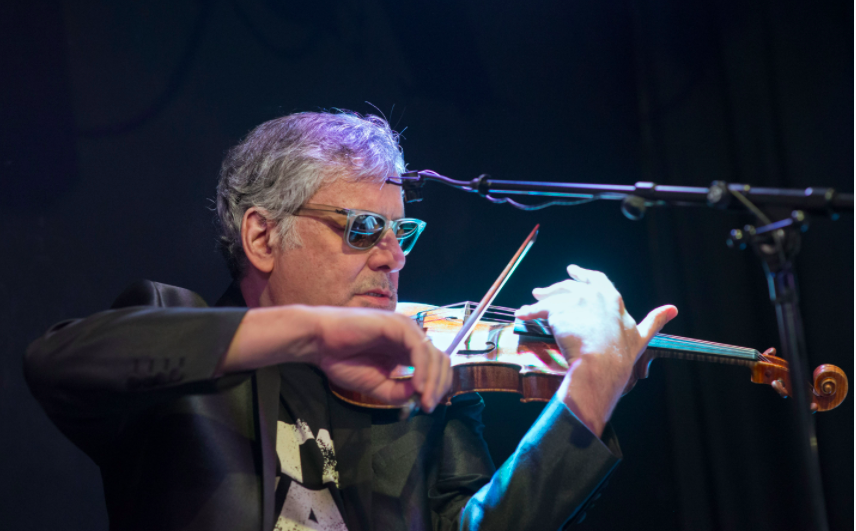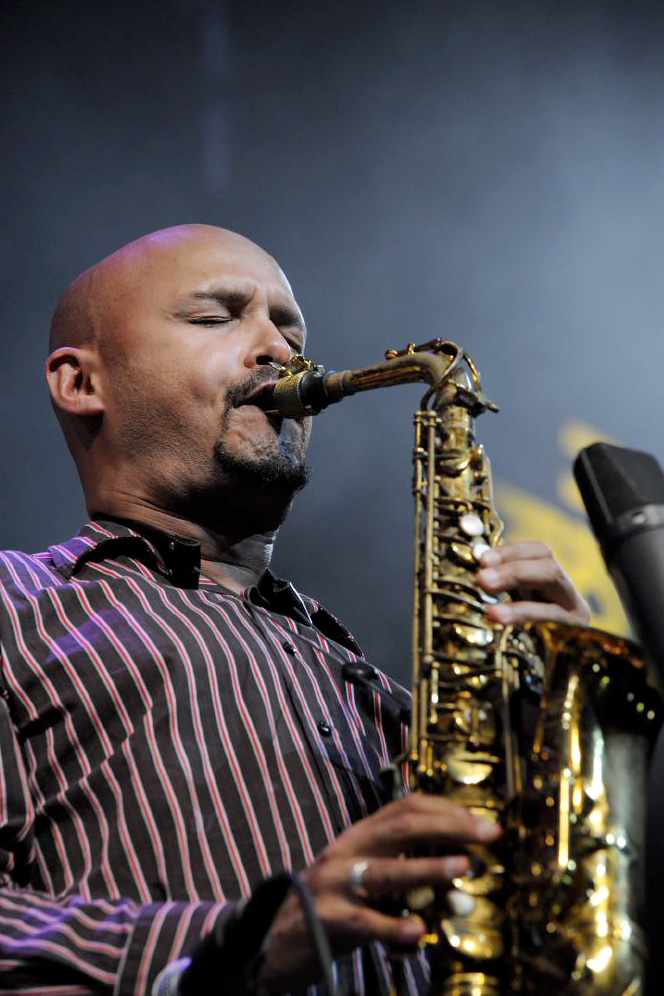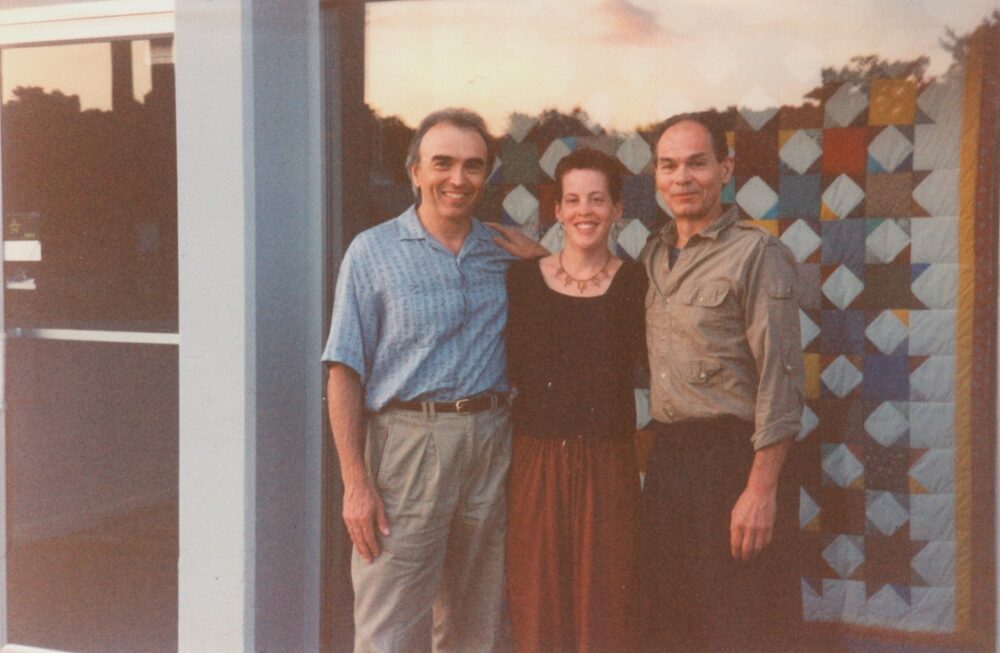

Andrew Trim will perform at an album release event, at 7 p.m. July 27, Anodyne Coffee Roasters, 224 West Bruce Street, Milwaukee, WI 53204.
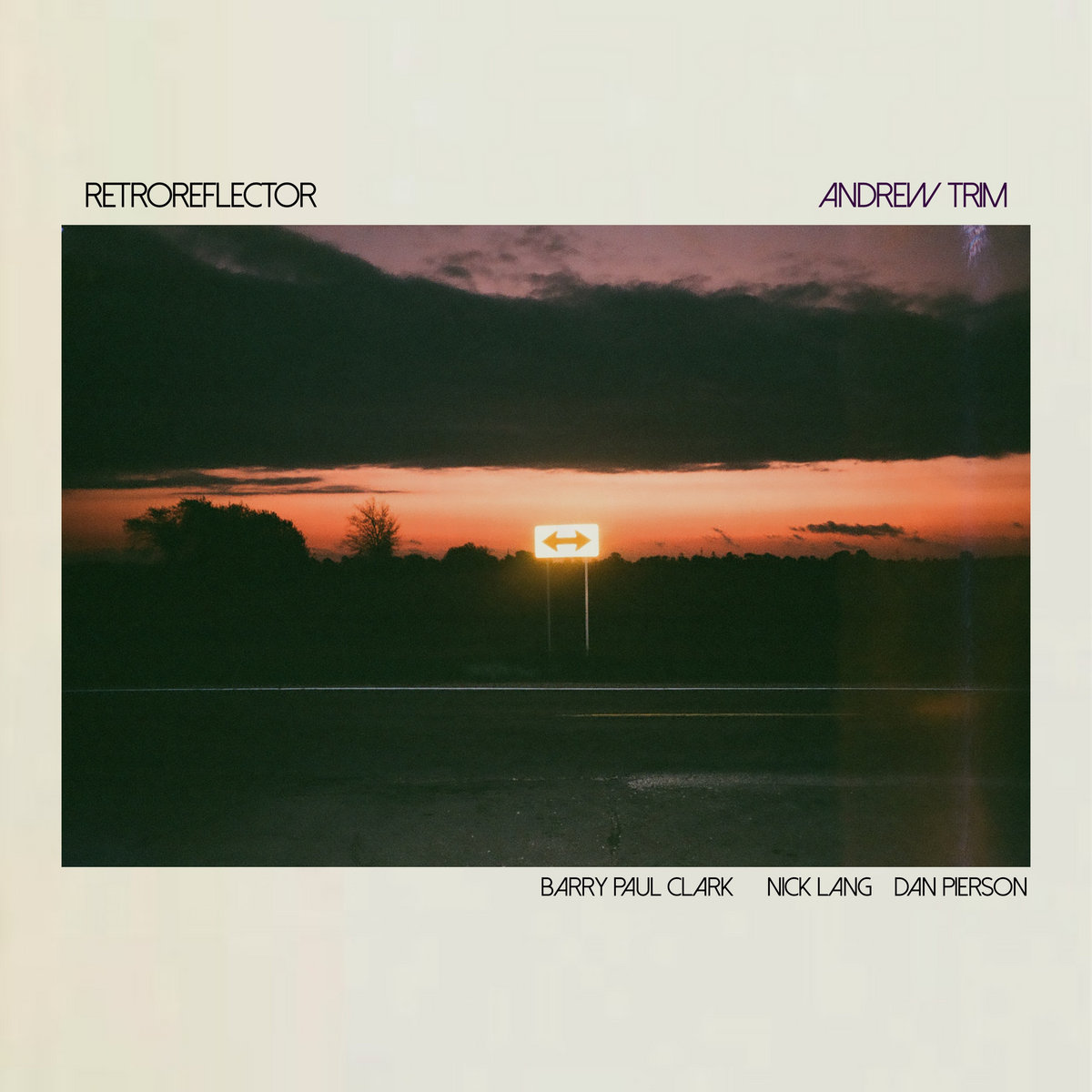
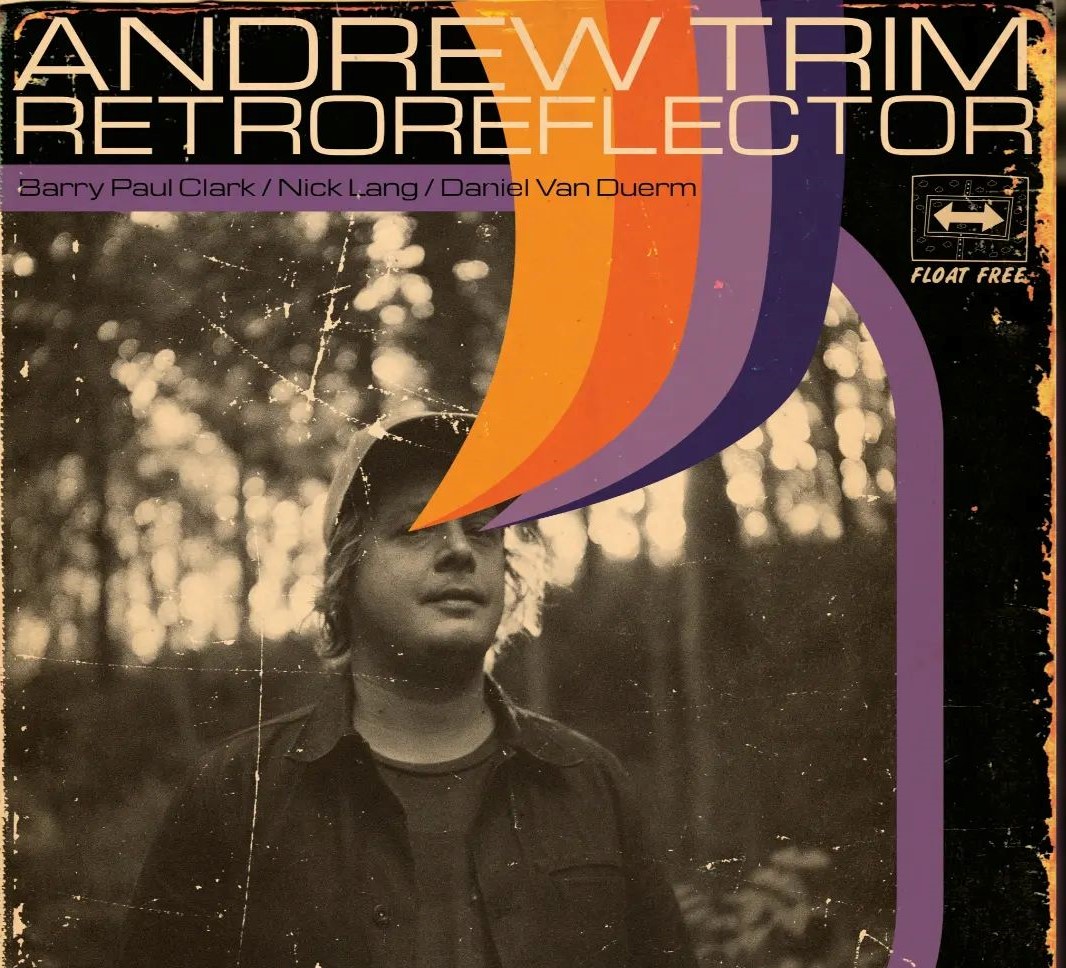
With his somewhat curious album title, Retroreflector, one wonders what guitarist Andrew Trim is reflecting on retrospectively. The slyly infectious groove his quartet lays down on the title tune leads you Pied Piper-like behind textural footsteps sketched out with deftly articulated power chords.
To me, this backwards-glancing album title lands upon Hendrix, as in “slight return,” a la “Voodoo Child (Slight Return),” the coda to his masterpiece Electric Ladyland. Yet Trim is not leaning too heavily on the Hendrix mystique; rather he’s beginning to carve out his own space inhabited by both pugnacious power chording and poetry.
Speaking of poetry, the second tune, “Swirl,” evoked for me one of my favorite poems, Herman Melville’s “Shiloh,” a politically-pointed reflection on a graveyard of perpetually sleeping Civil War soldiers. Trim endows his more ambiguous subject matter with a certain grace, even if that poem was never specifically associated. A tentative melancholy is buoyed by lyrical wonder. “Shiloh” the poem almost sneaks up on its tragedy with the tender attentiveness: skimming lightly, wheeling still/ the swallows fly low/space over the field and clouded days,the force field of Shiloh –/ over the field were April rain/ Solaced the parched ones stretched in pain…” Melville deftly evokes the men on death’s doorstep. Trim’s theme seems to melt in the air as it picks out atmospheric spots, as if circling bird paths. Then guest guitarist Dave Miller injects a rough counterpoint, evoking the dire conflict contained in each stolen life six feet under – “… Through the pause of night/ that followed the Sunday fight/ around the church of Shiloh –/ the church so lone, the log-built one, / that echoed to many a parting groan…” The poem quickly inserts a painfully poignant statement about the politics of the war between brethren.
I hope other listeners find enough in Trim’s artistry to pursue this, if not other poetic or artistic analogues. This veteran Milwaukee guitarist as developed into one of the most original instrumental voices in Milwaukee, one deeply infused with a latter-day, anti-sainthood of psychedelia.
Guitarist-composer Andrew Trim. Courtesy bandcamp.com
And throughout, I detect a wide range of possible other influences, perhaps most striking Bill Frisell’s haunted pastoral jazz style, on “Lullabye.” The limpid, arcane melody sounds like a question sung out loud, in pure sound. On “Eclipse Plans” I sense some of Jeff Beck’s exquisitely executed guitar distortion. Elsewhere, consider Pat Metheny’s bright-beaming electronica or, by contrast, the driven Black-rock of the guitar-led trio Harriet Tubman. Such associations reflect the impressive range of Trim’s sonic vocabulary.
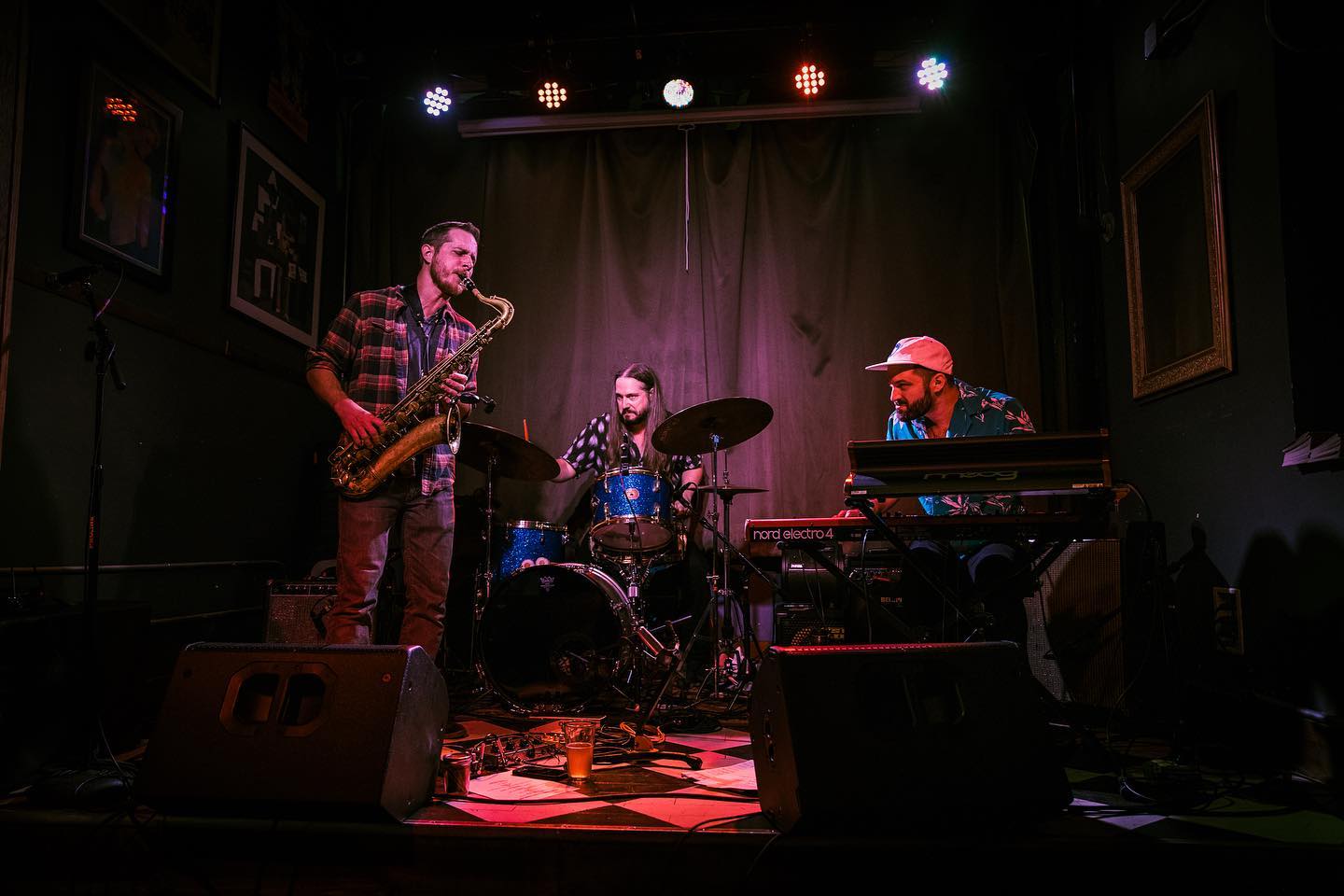
Also, in ensemble, Retroreflector is sustained superbly by Trim’s bandmates: Dan Pierson on keyboards and synthesizers, Barry Paul Clark on bass, and Nick Lang on drums.
Ultimately Trim’s exploratory work, for its tough harmonic brio, also reaches for his own brand of beauty, that which dwells in the deep cavern between raw, unmined sound and sunlit silhouettes.
Andrew Trim recently posted a meme on Facebook (below) which aptly characterizes his venture on Retroreflector: “Reach for the moon: A door opens into a smaller room.”
I suspect something extraordinary, perhaps even sacred, may dwell in that enclosure. Such are the revelations of committed creativity.
Review: And She Was Love, Akindele John, paintings, Woodland Pattern Book Center, 720 E. Locust Street, through Aug. 14.
Lest we forget, or never really knew, the ebony majesty of the African woman stands tall against the sky, as a great tree on the savanna, its tangled branches dancing and beckoning. That, of course, is the crowning Yoruba beauty of obinrin, of mama, of her mane’s unfettered play in air, the web and shadow of her hair. The observer’s eye then descends, from forehead and cheeks to neck, the sculpted shining beauty.
There is no mistaking the analog in Akindele John’s painting exhibit, And She Was Love, a visual paeon to African womanhood at the Woodland Pattern Book Center, through Aug. 14. The many-limbed supplication to the sun thrives in what John strives to capture, the “nappturality” of “Black women who have chosen to exclusively wear their hair in a natural, Afro-textured state.”
John knows of what he paints, born in Ogun State, Nigeria and living currently in Lagos, the cultural, economic and entertainment capital of Africa. And as one of the continent’s largest and busiest seaports, Lagos carries plenty of logos (in Jungian terms) as a means of disseminating African cultural Diaspora.
This is an exhibit of six large portraits, each mirroring the other in deceptively simple posture of elegance, perhaps too easy to whisk through, yet calling distantly, like a horizon’s lioness roar, for attentive patience, for a measure of meditative honor. Who has been more typically overlooked, derided, and forsaken as surely as Ralph Ellison’s Invisible Man, if not the woman of the world’s motherlode continent, and most notoriously, her countless offspring in America? Will one not discover in the amazing grace of these eyes, memories that even myth cannot erase, those of the signifying tree and a “poor wretch like me?”
This show’s officially marketed image, “Beautiful Comforter,” a woman holding a fluttering dove, is nothing overstated and yet fulsome in its slightly contained expressivity.
Akindele John, Girl with a Rose
She conveys a sage serenity. The brushstrokes, playful yet like a hand’s hollow, allow the work to breathe and hover in its own space. Two mirroring portraits, “Girl with a Rose” and “Girl with a White Cup,” apparently of the same woman, both boast Afros as unfettered as a black starburst, celebrating that hairstyle as a sort of spiritual assertion set against a sunlit halo, as all these heads are. John postures them admittedly saintlike in his celebration, yet vividly human. Her womanly femininity, the grace of her hand, adorned with yellow rose, all contrast to that burst, but remain of a piece, as self-defined power, and vibrant maternal fecundity.
Another, titled “The Blue Story,” depicts a woman holding an open book (Toni Morrison’s The Bluest Eye?). Here, as most everywhere, literacy is power, and font of expressed wisdom. And is this perhaps an essential signifier of this grandly eccentric book center itself, even a candidate for its permanent collection?
Throughout these works the artist’s painterly arabesques – here loose, there tight – which enclose and define the forms, also articulate a gestural freedom that seems to reflect their worldly engagement, and the sensate essence of each woman’s presence.
Akindele John, “We are Here and Now”
However, one of these paintings, which all blend and contrast oil and acrylic paint, is not a single portrait. And it’s the most compelling in the show, taking the liberty of slightly melding two women’s images, almost as Siamese twins. “We are Here and Now,” presents two figures embodying the sisterhood of “we”; one gazes to the left, and the other downward, forthright in awareness and reflection and, perhaps most vividly, each woman’s neck is a study in swan-like repose. Yet, in another of a sequence of finely-wrought contrasts, the bouquets in each woman hands are an expressionistic hive of power and possibility.
Finally, this is the one painting that superimposes, behind the two women’s heads, a rectangle over the sun circle, a cohering formal device, for sure. Nevertheless, the balance of all these portraits’ details, their accumulative contrasting dynamics, seem to whisper depths in their beauty, a yin-yang, see-saw type of tale, of her all-too-often tortured journey, from Middle Passage to chattel degradation, to Emancipation Proclamation and far beyond, what she has endured and conquered, and what she promises to be, with the sureness of sunrise.
1 The exhibit was facilitated in partnership with Genre: Urban Arts, with crucial assistance from that organization’s creative director and owner Nakeysha Roberts Washington, a Woodland Pattern board member
Woodland Pattern Book Center, 720 E. Locust Street. Courtesy unbanmilwaukee.com
The musicians tip jar, accompanied by The Dave Bayles Trio, at The Uptowner Bar. All photos by Kevin Lynch
THE DAVE BAYLES TRIO AT THE UPTOWNER BAR, EVERY TUESDAY
THE DAVE BAYLES QUARTET AT RIVERWEST PIZZA, FRIDAY, JULY 8
_____________________
“I took the one less traveled by/ And that has made all the difference.” – Robert Frost, “The Road Not Taken.”
Dave Bayles is something of a poet of the drums. Since the drums are the most fundamental of instruments in jazz, and in most African-American vernacular musics, that sort of makes him a poet of musical essences. You can hear and feel the magnetic power of his verse-like cadences in the propulsive swing he generates with other musicians.
This skill is so well established that he’s arguably Wisconsin’s premiere straight-ahead jazz drummer. He’s best-known as the long-time drummer of the all-star sextet We Six. That band comprises faculty of the Milwaukee Jazz Institute, where Bayles is principal percussion instructor. For many years, Bayles has also driven the engine of The Dave Stoler Trio, led by the powerhouse Madison pianist. He’s also backed up many big jazz names, including Peter Bernstein, Rick Germanson, Benny Golson, Slide Hampton, Brian Lynch, Brother Jack McDuff, Charles McPherson, Melvin Rhyne, and Phil Woods. Bayles is also now drumming for the resurrected Toty Ramos Latin Jazz Sextet, which played at Riverwest Pizza last week.
Drummer-bandleader Dave Bayles at The Uptowner
However, all that implies a well-trod path, gilded with justifiable esteem, along which the heartbeat of modern mainstream jazz strides. Fair enough.
And yet, quiet as it’s kept, the drummer-bandleader has led THE DAVE BAYLES TRIO, an intimate and compulsively exploratory trio gig through the backroads of the pandemic to the present – every Tuesday night at The Uptowner Bar, on the corner of Humboldt Boulevard and Center Street in Milwaukee.
The Dave Bayles Trio, (L-R) Russ Johnson, trumpet; Dave Bayles, drums; Clay Schaub, Bass.
“It is a delightful, creative group that I thoroughly enjoy,” Bayles muses modestly. Yet the trio has built much intrepid synchronicity along the road not taken. They plan on releasing a live album recorded at The Uptowner.
The regular trio includes the redoubtable and elastically adaptable bassist Clay Schaub. Out front is Russ Johnson, IMO the Midwest’s most powerfully creative and masterful trumpeter – north of Chicago’s Wadada Leo Smith and Marquis Hill, who now actually spend most of their time on the East Coast.(p.s. This Tuesday, July 12, Johnson and Schaub will be out of town. They will be replaced for this week by alto saxophonist Clay Lyons and bassist Doug Hayes.)
Russ Johnson at The Uptowner
So, if you stop by on a Tuesday night, you’ll begin to sense the phenomenon of talent and creative verve that sustains Johnson’s pre-eminence, which he reasserted recently in Madison in an all-star jam session led by the brilliant pianist-composer Johannes Wallmann, to celebrate the retirement of two veteran and beloved Madison jazz radio programmers. That night, Johnson’s trumpet blistered through the firewall of wonder when the music called out for it, and sang seductively at other times.
The informal vibe of The Uptowner is conductive to experimentation and unfettered daring, to venturing a few huge steps beyond.
So, if you want a taste of what the great jazz writer Whitney Balliett once called “the sound of surprise,” stop on by.
The venerable building that houses The Uptowner recently had its roof replaced, and Bayles relates that “someone said that one night we blew the roof off the joint.” Hyperbole? It may not be so improbable. This ship is full-steam ahead. Bayles asserts, “The gig will be going on until the building falls down.”
Here are a few photos of the group at The Uptowner, “workin’ and steamin’ ” into a stratosphere that’s a free ride for all patrons.
Ah, but don’t forget the musicians tip jar.
THE DAVE BAYLES QUARTET AT RIVERWEST PIZZA: And yet, now that summer is high, Bayles is about to debut a new quartet outdoors, on the beguiling terrace of Riverwest Pizza, 932 E. Wright Street, from6 to 9 p.m. this Friday, July 8. This quartet features singer Pamela York, saxophonist Chris Medsen, and bassist Jeff Hamann. Bayles hopes to continue this gig, though at intervals less frequent than his trio at The Uptowner.
Regardless, this quartet promises to be a breath of fresh air, in the best sense.
WHAT: Award-winning jazz, blues, bossa-samba group VIVO, at Bayshore Sounds of Summer
WHERE: The Yard at Bayshore Shopping Center, 5800 Port Washington Rd.
WHEN: 6-9 p.m. Friday, July 1, 2022
ADMISSION: Free
The steamy air slithers into your lungs and comes out as salty slime, a runnin’ down your breast. But your friends, baby, they don’t treat you like a guest. At least not here.
Apologies to Grace Slick, but this here is Slick weather. Really, what we have here is margarita weather, Wisconsin style. What we do not have is a failure to communicate.
So, salt up that slippery glass rim to replenish your sodium loss, toss in a clatter of ice cubes, mix in the tequila and fruit concoction — and one more ingredient:
VIVO is Wisconsin’s musical analogue to a margarita. And yet, it takes you places you can’t quite get to with the floozy-booze, which tends to lead you on a circular path that has blotto at the bottom, as good as it feels. But VIVO’s places are where humanitv — artfully multiplied by five or six players and palm-tree breezes — transports you, wherever the award-winning jazz-bossa-samba group wants you to go. You’ll be thankful for the trip. You might even get up and dance in the heat, because it’ll be 6 p.m. or even pushing sundown.
VIVO live. Courtesy Wisconsin Rapids Times
Who’s VIVO? I’d start with winds and keyboard whiz Warren Wiegratz. For 25 years, he led Streetlife, the high-energy jazz-funk-fusion band that raced all over the musical map as the long-time house band for the Milwaukee Bucks.
But there’s a more suave side to sax-burner Wiegratz. With VIVO, you get to hear more of him romancing the flute and melodica. VIVO vocalist Pam Duronio — who also peppers mallated bongos — sings an intoxicating array of jazz, blues, bossa nova and samba songs, often in Spanish and Portuguese. She also possess an radiant aura that relaxes as well as it stimulates. This VIVO stuff is musical therapy, if you let it be
VIVO singer and percussionist Pam Duronio performs with multi-instrumentalist Warren Wiegratz in a performance on the Milwaukee lakefront a few year back. Photo by Kevin Lynch
And what about this musical synchronicity? The percolating ensemble is veteran, through and through, but at its organic core is this: Duronio is a long-time marriage partner with ace guitarist Tim Stemper — who can blaze and beguile with the best of them. And almost always the winding twain shall meet, in harmonies of the most satisfying and surprising sort.
So I am heading down to Bayshore tomorrow evening, with my gal pal, around six for a tall glass of VIVO, partly because I have an excuse to celebrate and live it up a bit, as it’s my birthday tomorrow.
But you sure don’t need such an excuse to drink in this group and drink up, and feel a little more alive than you did before.
Album review: Johannes Wallmann Precarious Towers (Shifting Paradigm Records)
Pianist-composer-bandleader Johannes Wallmann rises to precipitous heights in his 10th album, Precarious Towers, proving his ability to create a concept album, with the extra-musical aspects streaming gracefully throughout. 1 His band includes Down Beat magazine “rising star,” Chicago alto saxophonist Sharel Cassity, Milwaukee vibraphonist Mitch Shiner, Madison bassist John Christensen, and Milwaukee drummer Devin Drobka. “This is the all-star band from this incredibly fertile region of creative jazz in southern Wisconsin and Chicago that I’ve wanted to put together for years,” Wallmann says.
The album lives up to such expectations. Created during the pandemic, it addresses that experience variously, from the whimsically personal to the overtly political. But the music remains powerfully compelling and listenable modern jazz from one of the Midwest’s supreme musicians, who also leads the jazz studies program at the University of Wisconsin-Madison. The concept arose from watching his house-bound daughter ambitiously build tall structures with Lego segments, until they fell. Her father sees such effort as reflecting human aspiration, but also hubris. The title tune is indeed rhythmically precarious, with complex off-center tempi, especially from drummer Devin Drobka, a master of striking indirection and accent, while invariably still propelling a tune. Vibist Shiner elicits bluesy feeling reminiscent of Milt Jackson (here, and on the one cover, “Angel Eyes”) and altoist Cassity throughout displays a boppish sax voice that sings as deftly as it swings, a sort of Bird on flaming wings.
“McCoy” honors Wallmann’s greatest pianistic influence in a handsome Tyner-ish minor mode theme. Wallmann unleashes glittering arpeggios and resounding octaves. “Never Pet a Burning Dog” displays the composer’s wit, as an analog to proper pandemic precautions, and the changes here suggest that McCoy Tyner’s modal style is not mutually exclusive from shapely chord changes.
Keyboardist Johannes Wallmann (center) and saxophonist Sharel Cassity, who released the new album “Precarious Towers,” perform together recently at the Madison Jazz Festival. Photo by Kevin Lynch
The album climaxes with a three-part suite titled “Pandemica.” Part one, self-described as “pensive,” unfolds like an adagio etude. Part two, subtitled “Unreliable Narrator,” alludes to today’s head-swimming online media overload, with Shiner’s vibes well-articulating droll commentary. The final movement is explicit: “Defeat and Imprison the Conman Strongman.” It’s a dolorous yet ingenious Dorian-mode theme, with the “cognitive dissonance” of competing lines between bassist John Christensen and Wallmann’s left hand.
The album’s two-part denouement, in effect, is by turns lyrical “Try to Remember” (Wallmann’s tune, not the stage standard), and a fun piece inspired by a Madison tradition, entitled “Saturday Night Meat Raffle,” (to win high-protein food) which conveys a certain off-kilter social dynamic in a Frank Zappa-esque way. Throughout this brilliant album, the band brims with virtuosic elan and restraint, in service of Wallmann’s musical evocation and storytelling.
And Cassity, who recently shone brilliantly (with Wallmann) at the Madison Jazz Festival, is a star in a galaxy that still seems a tad remote from wider appreciation. So, look upward, and listen for her.
One might also read in all this album’s permutations, the precariousness of this nation’s democracy, but infused with hope and collective determination. 2
Wallmann’s album last year, Elegy for an Undiscovered Species, for jazz quintet and string orchestra, was named a “best of 2021” album by Down Beat magazine. It was also among the top 10 jazz best albums of 2021 in this writer’s international critics poll. Wallmann also leads the jazz program at the University of Wisconsin-Madison, as the inaugural John and Carolyn Peterson Prof. of Jazz Studies.
Another bonus of this album is its delightfully comical (“Look out below!”) cover, courtesy of the uncannily resourceful graphic designer Jamie Breiwick (best known as a jazz musician), employing artwork by Amy Casey. In my book, it’s a candidate for album cover of the year.
Saturday the sky sang brilliant blue, the wind whispered Mary, and the sun burned like the jazz, from warm to hot. I returned to arguably the best summer jazz festival in Wisconsin, The Madison Jazz Festival. The event immersed the city in jazz for nine days, in the streets, clubs, and concert halls, and on the ever-inviting Union Terrace, overlooking Lake Mendota.
The Terrace is where I made plans to meet one of my dearest friends from my 20 years in Madison, Richard “Ricardo” Meyer. It had been too long since I had seen Ricardo. All the music was free admission on The Terrace, and pretty much world-class, in a diversity of styles. So we only paid for drippingly-delicious cones from the Union’s famous Babcock ice cream stand, and for burgers and brats at the bandstand-side food vendor.
When we arrived, Emma Dayhuff and the Phoenix Ensemble was in full gear, and providing some of the most incendiary music of the afternoon. The quartet included tenor saxophonist Isaiah Collier, alto saxophonist Greg Ward, and drummer Vincent Davis, led by bassist Dayhuff, who is a PhD candidate in jazz performance at the UW-Madison. She’s already garnered enough reputation to be working this day with leading Chicago musicians Collier, Ward, and Davis.
Isaiah Collier, sax, Emma Dayhuff, bass, and Vincent Davis, drums, perform at the Madison Jazz Festival. All photos of the festival by Kevin Lynch
One elderly listener near me grumbled “they don’t have any singer,” perhaps a bit challenged by the extended solos, especially of tenor man Collier. But I assured him that the next act will be led by a singer.
After the break, Twin Cities vocalist Sarah Greer changed the pace and mood decidedly with a blend of originals and standards. She showcased a voice with extraordinary dynamic range, especially on the top end, recalling the extraordinary pop-soul singer Minnie Ripperton.
Then came the band that I knew would be top-notch. It was billed as Sharel Cassity and the UW Faculty Band — Johannes Wallmann, keyboards, Peter Dominguez, bass, and Matt Endres, drums.
Twin cities jazz singer Sarah Greer.
Sharel Cassity and the UW Jazz Faculty Band at the Madison Jazz Festival (above and below.).
For me, and I suspect many others, the revelation of the afternoon was alto saxophonist Cassity, which is saying something considering I expected Greg Ward to be the top alto player of the day. He’s superb, for sure, yet I didn’t hear all of his set with Emma Dayhuff.
However, between what I’ve heard of Cassity on Precarious Towers, the new album by Johannes Wallmann (to be reviewed on this blog soon), and on this afternoon, her sound and soul are as sundrenched as the day. That’s not to say Cassity’s playing lacks a wide range of shades, shadows and nuances. She has all the chops she needs to express in a soulfully post-bop manner. These days it’s risky to comment on gender, but I can’t think of a better female saxophonist I’ve heard. She’s right up there with the best alto players of any gender.
And despite having a brand-new album of his own to promote, Wallmann was generous enough to allow Cassity the spotlight, as the quartet performed largely her own original compositions from her albums. This gambit hopefully will help promote his new album once people realize that, on Precarious Towers, she’s the horn soloist — in effect, the sonic element catching the sunlight atop those towers. 1
Sharel Cassity’s playing and horn catch the sunlight on the Union Terrace Saturday
What was most memorable Saturday was when she paused to explain how one piece was inspired by a quote by the Rev. Martin Luther King Jr. She proceeded to recite the King quote: “I refuse to believe that mankind is so tragically bound to the starless midnight of racism and war, that the bright day of peace and brotherhood can never become a reality. I believe that unarmed truth and unconditional love will have the final word in reality. This is why right, temporarily defeated, is stronger than evil.”
She then played her tune “Be the Change” from her album Evolve.
This all had remarkable resonance to me because, just before her set, my friend Ricardo Meyer had revealed to me that he had rejected the draft during the Vietnam War as a conscientious objector. His alternative duty was two years in Mexico doing public service and, while there, he attended the historic 1968 Mexico Olympics. This event is most famous for the occasion of two African-American sprinters, Tommie Smith and John Carlos, raising black-gloved fists in the air during the awards ceremony for the 200-meter dash. Though interpreted controversially as a gesture of black power, Smith later said in an interview, “It was a cry for freedom and for human rights. We had to be seen because we couldn’t be heard.”
Of course, Martin Luther King Jr. had been assassinated in Memphis in March, seven months before those Olympics. In the many years since, the need for the transformation that King envisioned remains a struggle, all the more reason for anyone and everyone to “be the change,” as Cassity puts it.
At Saturday’s Madison Jazz Festival event, my old friend Richard “Ricardo” Meyer offered up the fist-in-the-air “for freedom and human rights,” echoing the famous gesture of American sprinters Tommie Smith and John Carlos (below) at an awards ceremony in the 1968 Olympics, which Ricardo attended. The video below documents the occasion.
________
1 A bit of research shows Cassity has plenty of reason to claim a spotlight: From All About Jazz: Listed as “Rising Star Alto Saxophone” in Down Beat Magazine for the past 11 consecutive years (this persistent “rising star” categorizing makes me wonder if she’s butted up against a critical glass ceiling).
“Sharel has appeared on the Today Show, earned her MA from The Juilliard School under full scholarship, won the 2007 ASCAP Young Jazz Composers Award & has been inducted into the Oklahoma Jazz Hall of Fame. Cassity has shared the stage with jazz luminaries including Herbie Hancock, Wynton Marsalis & the Jazz at Lincoln Center Orchestra; as well as mainstream artists Aretha Franklin, Natalie Merchant, Vanessa Williams & Trisha Yearwood. She has released five albums as a bandleader and appeared on over 30 as a sideman, toured 24 countries and performed at leading venues like the Newport Jazz Festival, Monterey Jazz Festival & the North Sea Jazz Festival.”
In one of the toughest scenes in “Small Town Wisconsin,” alcoholic Wayne Sobierski, pounds down liquor while desperately searching for overnight accommodations for the night in Milwaukee. badfeelingmag.com
Small Town Wisconsin runs only through Tuesday, June 21, at the Oriental Theatre in Milwaukee, but continues through Thursday at Marcus Theaters in Franklin, New Berlin, Delafield, and Saukville. For times and tickets: https://mkefilm.org/oriental-theatre/events/small-town-wisconsin
Small Town Wisconsin is now available for purchase or rent on YouTube, here:
As was my mother, I consider myself something of a movie buff. As a professional arts journalist, I have only occasionally reviewed films, as I’ve worked for publications with designated film critics, per se.
But the new film Small Town Wisconsin hit me pretty hard, partly because it is a small-town Wisconsin story (my folks are from Two Rivers) that strives, like a salmon swimming upstream, towards a big spawning ground of dreams, the big city of Milwaukee Wisconsin (my hometown).
Director-turned-executive producer Alexander Payne understood the qualities he values in this film. He’s provided some of the richest indie-courting-the-mainstream films we’ve had in recent years: Citizen Ruth, Election, About Schmidt, Sideways, The Descendants, Nebraska and Downsizing. So, he produced Small Town, which was written by Jason Naczek and directed by Milwaukee-native Niels Mueller and has racked up a slew of film festival awards. I suspect Payne saw the heart he brings to all his films even though this, to my eyes is, more than his satires, among other things, a gentle poke at small-town manners.
Producer Payne is also an actor’s director, having elicited some of the finest roles of various actors’ careers, including Laura Dern, Bruce Dern, Reese Witherspoon, Jack Nicholson, Sandra Oh, Paul Giamatti, George Clooney, Will Forte, (Aaron Rodgers-ex-girlfriend) Shailene Woodley, and character actor June Squibb, among others. So, there’s the imprimatur.
The biggest name actor in Small Town Wisconsin is Kristin Johnson, the Emmy award-winning actress for Third Rock from The Sun.
What we have here is a sort of fish-out-of-water story, times two. The main character Wayne Stobierski (Daniel Sullivan) is slowly being reeled out of his comfort zone — as a failing divorced father virtually immersed in alcohol, literally kicking and screaming — up into the harsh reality of losing any custody of his adorable son, Tyler (Cooper J. Friedman). He seems basically a good guy and an extremely sympathetic character, but Wayne also has anger-management issues. So, it’s obvious to everyone how he’s floundering as a father.
Wayne’s only daily responsibility is to one goldfish, Buster, who also is symbolically forced out of his little water bowl simply by Wayne’s inebriated neglect. So, we fear Wayne will meet a similar fate, which hangs over the story. Point beer tall boys, with occasional whiskey shots at the local bowling alley bar, seem to be his primary fuel (the small town’s street scenes are in Palmyra).
So, the writer and director proceed to force Wayne up on a tight rope, in varying degrees of intoxication, with the poor schlep tottering between high-spirited comedy and utter pathos. Bowling scenes seem a variation on those of The Big Lebowski and provide the most notable cultural context for small-town Wisconsin — easygoing solo and team sport play to sustain folks through the state’s long, cold winters. The director strives for balanced political context by including cardboard cutouts of both Donald Trump and Hillary Clinton observing the bowling matches. Wayne’s comical lane mishaps extend to an offbeat scene of him driving around drunk with his bowling ball, another symbol of self-destructiveness.
It is only Wayne’s fundamental if dysfunctional decentness that persuades his ex-wife Diedra (Tanya Fischer), to warily allow him one last weekend with his son, on two conditions: that he explain to Tyler that he’ll be moving to Phoenix with her and her new husband, and that Wayne be accompanied by a chaperone, his best friend, Chuck (Bill Heck), an archetypal clean liver. Tyler clearly loves his father even though he realizes he’s an alcoholic and understands, at a basic level, what the word means.
Wayne struggles to break the news to his son Tyler — that the boy will be moving with his mother and stepfather to Arizona. wsaw.com
That relationship provides most of the film’s heart squeezing and tear-jerking which is, in my book, hard earned, but with golden aspects, like the humble luck of finding a great baseball card in a random gum pack and making hay with that card. In fact, Wayne shows his true colors by financing his last big bid for his son’s heart (and perhaps more) by selling his baseball card collection, including his Hank Aaron rookie card. Though he pitches the weekend to Deidra as a typically rustic fishing and camping outing, Wayne’s secret idea is grander: give Tyler something he’ll always remember his dad by, a trip to Milwaukee, and the boy’s first major league baseball game.
Indeed, it’s a small odyssey with one eloquent classical allusion. Wayne declares Milwaukee’s baseball stadium as what “the ancient Romans called a coliseum.” Wayne, a drinking-on-the-job car mechanic, plans a night or two in Milwaukee’s finest hotel the Pfister, and the big game, “Milwaukee versus Chicago” (curiously the Cubs and Brewers are never specifically named). Sullivan, and increasingly Heck and Johnson, carve out richly-textured characters. Chuck’s personal situation almost drives him to find some new solace, on this trip. They end up at the Milwaukee home of Wayne’s sister Alicia, played by Johnson in one of the most substantial and affecting roles of her career.
Despite all the things working against him, Wayne is lucky to have a sister like Alicia (Kristen Johnson). screen daily
One curiosity is that a movie this excellent has only earned about 80% Rotten Tomatoes critics rating, though a 95% audience score. As I see no real flaws in it, I might only speculate that it was victimized by our cultural schism between rural and urban. Milwaukee itself is somewhat idealized and the movie provides a rich panorama of the city’s diverse virtues, including a Lake Michigan boat tour of the lovely cityside, a visit to Usinger’s sausage retail outlet, and an impulsive quest to the McMansion of ex-Milwaukee slugger Gorman Thomas. I must leave the wiggling storyline in the water at that. Suffice to say, sister is the better angel on bro’s shoulder, in a story of redemption as tough-minded as it is bighearted.
So, I wonder if those less taken by it adopt the small-town viewpoint, as defensive about the characterization of the lead as an alcoholic, with little apparent self-awareness. Of course, alcoholics exist in big cities at least as much, if not more, than small towns. And the film’s makers walk their own tight rope of avoiding precipitously heavy-footed political commentary.
After all, ex-wife Deidra, Chuck and Alicia are fully sober and reasonably intelligent. And Wayne himself, in his lucid moments, displays a distinct sensitivity, especially interacting with his son. Is there a small-town critique that isn’t only defensiveness, and is this the posture of dissenting critics? The movie strives also for an overriding cultural point: We need to start bridging the gap of rural and urban, red and blue, because our commonalities as Americans are quite evident and valuable in such things as baseball games, road trips, fishing and bowling, and the gratifying and heartbreaking dynamics of nuclear families.
To me, a film like this also allows us to see our humanity shorn of illusions created by politicians promising the moon and snookering those who desperately grab onto, what appears to them, the fading American dream. Facts and stats bear it out: Urban minorities still have much more to overcome in America. Yet a film like Small Town Wisconsin suggests that even a decent white man, with black heroes, can lose his grip and must, at some point, do something other than blame others for his apparent fate.
A final symbolic pattern surfaces: Two people, who help open Wayne’s eyes in Milwaukee, are black. A third black person, with a “halo” for a name, grew up in Milwaukee, and shows him a possible way to a new start in life.
Album review: Ornette Coleman, The Genesis of Genius: The Contemporary Albums (Contemporary)
Prepare to be haunted by a voice. Now, step inside the realm of Ornette Coleman. Few instrumental voices betray their player’s innards as deeply. The person inside that sound, strange to some, became fast friends with me when I first heard it. It’s a voice I’ve always felt close to, every time I hear it again. It tickles a brotherly bone in me, though we’ve never met personally.
That’s one of the rare qualities his saxophone playing evinces. And his mind and soul are on synchronistic display on his first two albums, finally re-issued as a box set on the Contemporary label. You readily hear and feel it all: a huge heart, a natural wit and strong empathy with his fellow players, his rhythm section as true fellows.
Trumpeter Don Cherry, at this juncture, almost as distinctive a voice, unlike any trumpeter you’ve heard. His trumpet tone splatters and smears at times. He sounds like a man talking and singing at once. Part of the singularity of both players was their unusual axes. Ornette’s white plastic alto sax and Don Cherry’s pocket trumpet (see photo below).
Ornette Coleman (left) and Don Cherry. Courtesy Pinterest.
Ornette’s sound is conversational and declamatory, but was also controversial at the time, the ultra-avant-garde. Some conventional players thought he didn’t know how to. Yet, he swings marvelously, as do his bandmembers which belies why this sounded so alien to so many people back in the late 50s (or was it mainly certain critics?). Plus, bluesiness also permeates this music. helping immerse it in a grand jazz tradition even as he’s like nobody you’ve ever heard.
Ornette’s “Genesis of a Genius” re-issue box set is available in CD (upper left) or vinyl LP.
The music is artistically direct, but never simplistic. Coleman said “Let’s play the melody not the background,” suggesting his one big step beyond conventional chord changes (after the first album here, he jettisoned piano in his groups, though much later added electric guitar). However, pianist Walter Norris on the first album comps with suitable harmonic ambiguity and solos with boppish elan.
Drummer Shelly Manne, who plays on the first album, once said Ornette’s saxophone “is the sound of someone laughing and crying.” Ornette’s voice is also one of the most amiable I’ve heard on a horn in a long while and here the voice and style are fully formed on his first two albums.
The tune “Compassion” is reflective as much as an outpouring of feeling with a sense of wry irony within the sound of suffering. So he creates his own substantial “background” straight from his melodic soul.
This reissue is especially a find, a revelation, because these two were over-shadowed by his ensuing series of superb albums for Atlantic Records, now collected in a 6-CD box titled Beauty is a Rare Thing: The Complete Atlantic Recordings. That collection reveals Ornette’s full flowering as a composer, with a number of now-classic tunes, including “Ramblin’,” “Lonely Woman,” “Una Muy Bonita,” “Peace,” and the epic 37-minute “Free Jazz,” with a “double quartet” that included Eric Dolphy and Freddie Hubbard.
If you love that stuff, or still tread through it with uncertainty or curiosity, you ought to hear where it comes from. That’s Genesis of Genius, this Contemporary set. The compositions are well-crafted but not as maturely as the Atlantics. And one technical complaint: Don Cherry’s trumpet is sometimes too low in the mix so it’s then difficult to hear his full phrasing on his solos. But his quite audible extended solo on “Angel Voice” is a buoyantly lesson in amiable, accomplished boppish storytelling.
“Lorraine,” on the second Contemporary album Tomorrow is the Question!, is a languid, yearning yet witty ballad that ought to be a classic. Akin to the soon-famous Atlantic ballad “Lonely Woman,” it’s titled for the late pianist Lorraine Geller, “because she was a wonderful piano player,” Ornette explains in the liber notes. Don Cherry notes correctly that drummer Shelly Manne’s all-brushes solo is “as musical as drum solo can be.”
Try this out:
As for “When Will the Blues Leave?” Answer: When the song is over. This catchy creation sounds like players blowing the blues away, with the resilience of their spirit and the wit of their musicality.
“Turnaround” has a sort of bluesy insouciance that makes you smile inside and out — you want to tuck it into your hip pocket as a tune, like a goodly handful in this compact box set, to scat-sing to yourself. Cherry’s solo is more audible here and delightful in its sly goofiness, yet very smart.
Vintage, seminal modern jazz, this set deserves a wide audience. This horn voice among jazzers, is right up there with Miles, Lester Young, Stan Getz, John Coltrane…
Nova Czarnecki, “Return to Me, ” oil painting, $4500
Heretofore, I’ve refrained from reviewing an art show that I am participating in. However, I’ll simply announce, with a bit of comment, this is the last week to see Feather, Fur, Scale and Tail at the Jazz Gallery Center for the Arts, 926 E. Center St. Milwaukee. The show runs through Saturday, June 18. This delightful celebration and exploration of animals is ingenious, diverse, colorful and textural, and rich in symbolism and beauty. Yet it is not without acknowledging the darkness that shadows the animal world from within, and from without, the perpetual threat of humans.
It includes one of a series of pastel and ink drawings I have made, inspired by Herman Melville’s epic novel Moby-Dick. The one on exhibit depicts a scene in the first of the novel’s three climactic chapters, “The Chase-The First Day.” The image is titled “Ishmael Intuits the End from the Crows Nest.” The book’s narrator Ishmael is visible in the far background, at the top of the ship, as the whaling boat with Captain Ahab and Ishmael’s friend, first harpoonist Queequeg, approach The White Whale in the foreground.
Kevin Lynch, “Ishmael Intuits the End from the Crow’s Nest.” pastel and ink. Not for Sale
But the show is filled with excellent work: from the lovely gestural simplicity of a blackbird sitting on a branch in Carol Rode-Curley’s watercolor-like pastel, “Resting Raven,” to John-Mark Klapperich’s complex visual jokes — wall assemblages of metal objects transformed into animals. Among the most vivid actual encounters with an animal is “Sweet Pea,” Mary Lee Agnew’s photo capturing the ever-elusive fox, with ears so large you imagine him a winged mythical creature, caught for a fleeting moment, amid wind-blown leaps of prairie grass. (All pictured below)
More myth (as in artful truth-telling) seems to reside in, for me, a true highlight — Nova Czarnecki’s large (48” x 60”) oil painting “Return to Me” (at top). This seems a (self?) portrait of an earth mother dwelling in watery depths and attracting creatures from the air, the land and the very currents wherein she sits with a mystical regality.
“Night and Day, you are the one”: You can’t beat the festival’s free live jazz on the hip and picturesque Union Terrace, overlooking Lake Mendota in Madison.
The Madison Jazz Festival is loaded and ready to bust out, starting Friday, June 10 to 19. Plenty of free-admission music as well as ticketed events. It seems to grow stronger and more richly conceived every year.
This one is headlined by the Christian McBride Quartet, Brian Blade and the Fellowship Band, bassist-singer-songwriter-bandleader Chris Morrissey, The Jon Irabagon Quartet, The Thaddeus Tukes Trio and much more.
McBride, he of the eight Grammy Awards, and Grammy-winning Blade are established jazz giants, but one somewhat less-known act I’d love to see again is Irabagon, an astonishingly gifted saxophonist and clarinetist. Alas, I have a previous commitment that night. I am aiming to get into town for the “rising-star” vibist Thaddeus Tukes on Thursday June 16th at the Art Lit Lab.
Brian Blade and the Fellowship Band
Multi-instrumentalist Jon Irabagon
Vibraphonist Thaddeus Tukes
But there’s music galore throughout the city of Madison. And consider some intriguing side streets beyond pure concertizing:
Hip-hop-jazz word artist Rob DZ, a not-really-secret Madison weapon (for peace and understanding), hosts the New Breed Jazz jam for those who want to get musically involved.
Hip-hop word artist Rob DZ
Plus, our old friend, jazz maven Howard Landsman will host a listening session of “Rare Ellingtonia,” which should be mysteriously spiced and aurally delicious.
Another precious and soon-departing jazz amigo, Steve Braunginn, will present a live conversation with renowned drummer-bandleader Brian Blade. You’re getting the idea, I hope.
I’ll leave it at that, but do check out the website schedule with fine bio links to the artists: