
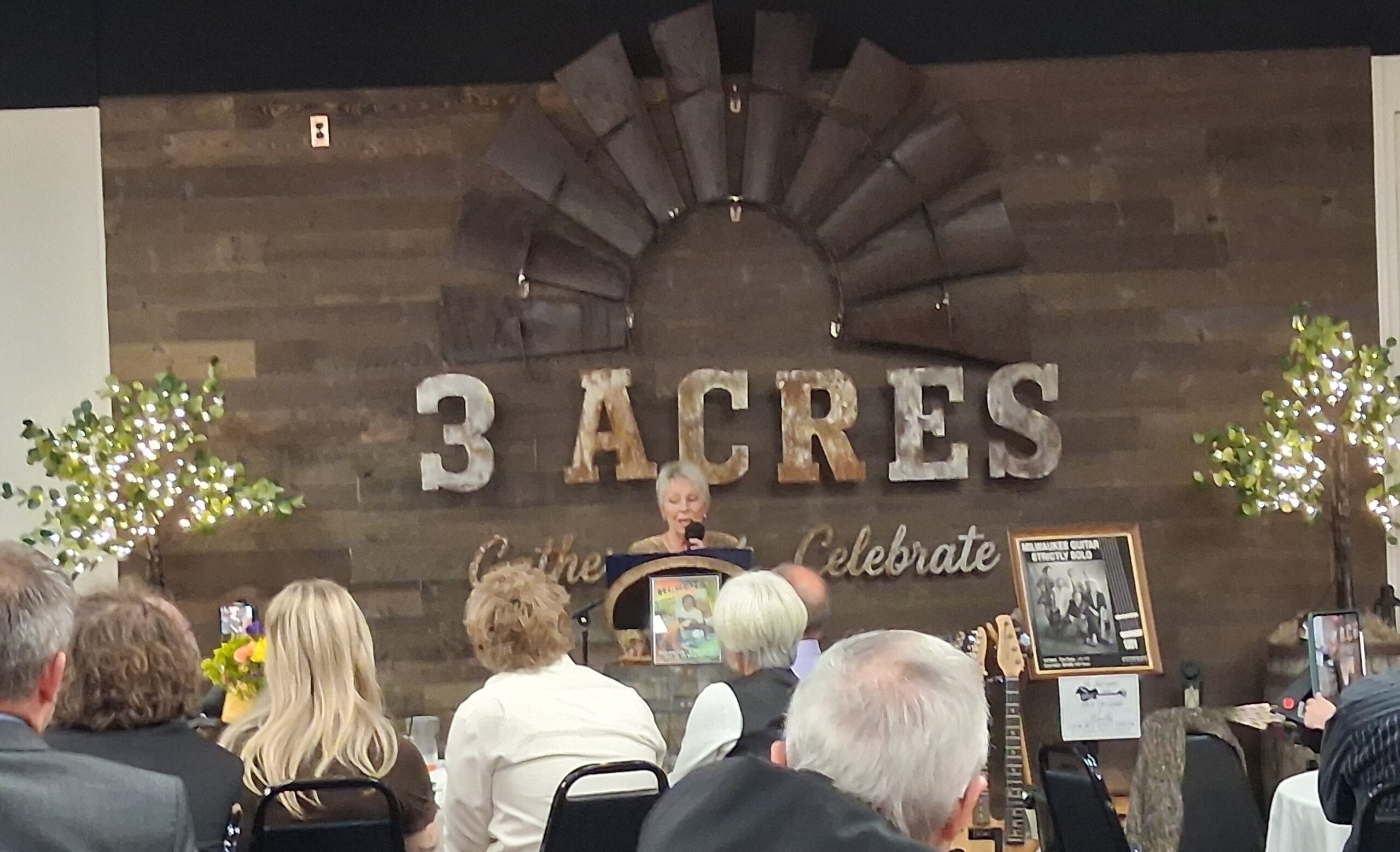
Singer Jill Jensen, the longtime spouse of the late guitarist Jack Grassel, remembers him in eloquent and tender words Sunday at a memorial event. Grassel’s three-necked guitar is on display at right. Photo by Kevin Lynch
Some people rise from the dead in their own unique way. That’s what the late guitarist Jack Grassel did Sunday. Several hundred people were there to witness it. So don’t tell me I’m talking through my hat.
Okay, he didn’t get up and walk among us. But the emotional and spiritual weight of the event held Jack aloft as a quivering presence across the room and in the hearts of these people, even more than the quiet resonance of his recorded guitar music that filtered through the hall as the guests filed in for condolences to Grassel’s wife and artistic partner, singer Jill Jensen, and her daughter Beth.
The potency of the event had to do with the mementoes, including photos and videos of Grassel, that put his presence virtually there, right there.
But more than anything what brought Jack to poignant life was the extraordinarily eloquent and moving extended tribute given to him by Jill Jensen.
She resurrected the brilliance of this kind, sweet and gloriously virtuosic and adventurous musician and educator. For all his musical mastery, Grassel retained an ever-boyish way about him. One can vividly imagine, as Jensen related, toddler Jack reaching up to play piano keys each up to the piano keys to copy the music on the radio, and his mother, quickly realizing his musicality, soon buying and placing an accordion in his arms. The instrument virtually swallowed up the small boy, as a delightful photo on display showed. Jack would go on to become a state champion accordionist.
Jill Jensen commented that their stage name was really “too corny.” But it was also charmed, by the way Jack first wooed her, many years ago. It came about this way. A friend had alerted Jack to her presence and he was immediately smitten. When he first walked up to her, his first words to her were “Hi, I’m Jack and you’re Jill. Let’s go find a hill.”
“What a line,” Jill said to the crowd, still in slightly amazed bemusement after the couple’s 40 years together. Tempering Jack’s bold stroke, you also can picture his slightly shy, crinkly-eyed smile, there in the moment.
Corny or not, Jack and Jill’s duo name was inevitable from that point, and they ultimately lent great musical heft to the nursery rhyme moniker, a musical match of two attractive and gifted people, now assuredly “made in heaven.”
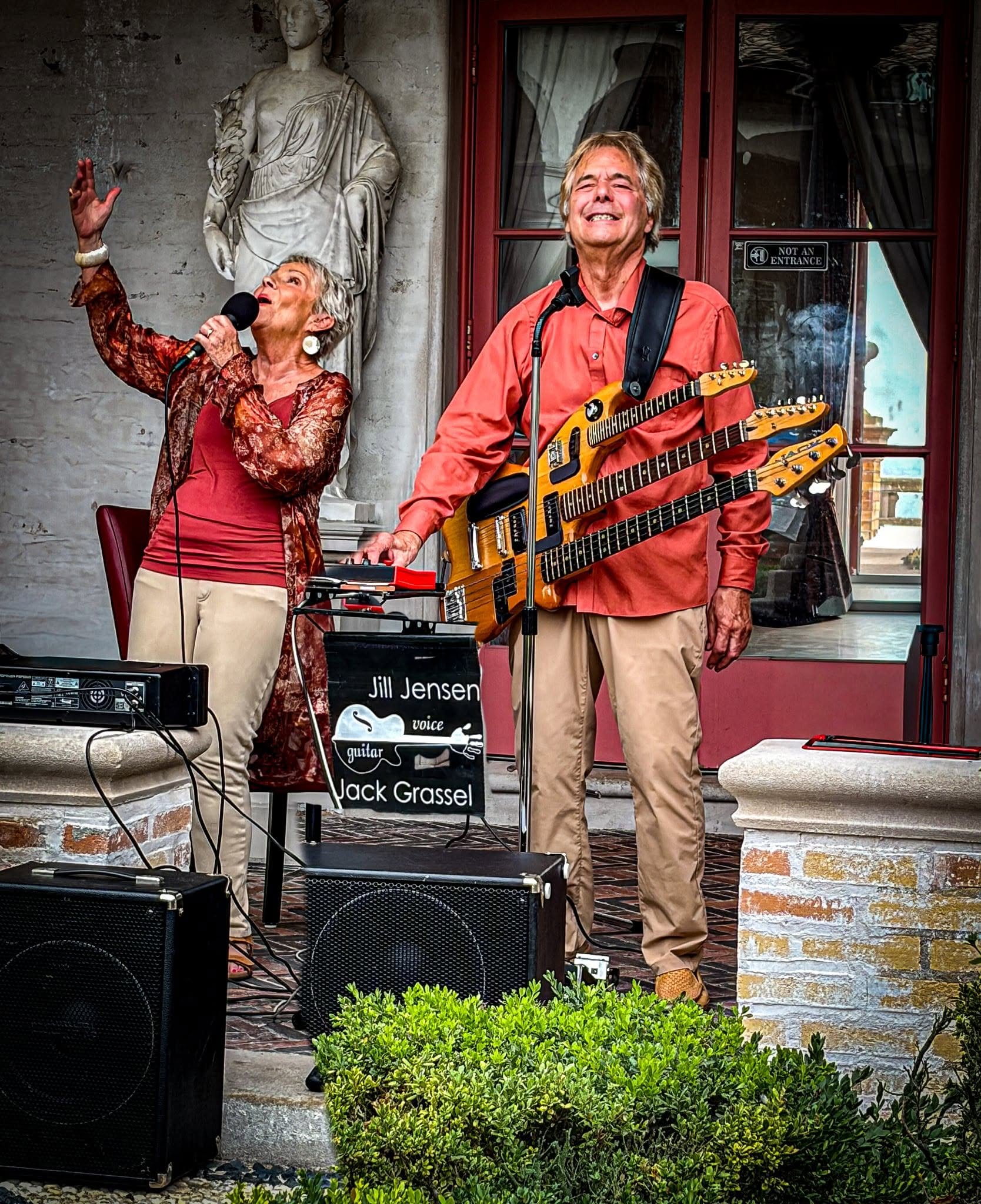
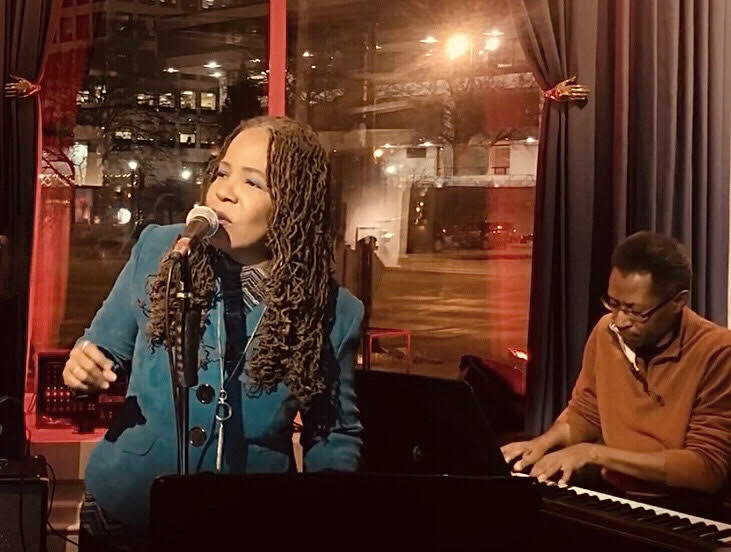
Singer Jill Jensen and guitarist Jack Grassel at their last concert at Villa Terrace 10 days before Grassel’s death. Photo by Stuart Hoffman
They recorded a handful of albums, the last of which, It’s About the Music, was ambitiously realized and featured nearly 30 musicians, including Milwaukee Symphony Orchestra principal players. Grassel, arguably the region’s most accomplished guitarist, had a long-time working relationship with the orchestra, playing in scores that called for a guitar.
From his obit: “His first paid concert was at age 6. His extraordinary musical abilities, especially on guitar, and perfect pitch, enabled him to forge new paths as a genre-bending multi-instrumentalist, mastering seven instruments. In 1983, as Chairman, he designed the Music Occupations Department at Milwaukee Area Technical College (MATC) spawning a legion of successful students through his passion, humor and example. He’s known for his 21 CDs (including a duet album with jazz guitar giant Tal Farlow), 70 compositions, 12 Industry awards, and 23 Instruction books. After 20 years and a major illness in 2004, he retired from MATC but never retired from music.”
Yet, let us not dwell too much on nostalgia, or past glories. It’s worth recalling Jill’s tender announcement of his passing:
“My shining star, light of my life, is extinguished. My beloved husband and partner in music and life, Jack Grassel died on August 26, 2026. His closest family were there to say their loving goodbyes. I held him, stroked his hair, and whispered “I love you Jack” as he took his last breath. My wonderful, strong, daughter Beth was beside me.”
His death still pangs our heavy hearts, and walking into the hall with the photographic “biography” of his musical life, and Jack’s triple-necked, self-invented “Super Axe” bass/ guitar/mandolin on silent display was a deep, long breath, a load to absorb. One sat and waited for the owner to arise and start playing the instrument.
There at Four Acres Restaurant in Racine, the beautifully organized event teemed with celebrants of Jack’s 77-year life. It was the largest gathering for a memorial for a musician that I’ve attended, testifying to the man’s importance to this music community. Among the great musicians gracing the event: Kaye Berigan, Hal Miller and Tom McGirr, Jack’s former bandmates in the sui generis Milwaukee avant-jazz band What On Earth. Other musicians present included Warren Weigratz (of Streetlife, the Milwaukee Bucks band, Sweetbottom, Oceans, VIVO), Curt Hanrahan and Steve Lewandowski (of Opus and The Milwaukee Jazz Orchestra), Kim Zick and Connie Grauer (of Mrs. Fun), Sam Belton, Neal Davis, Jerry Grillo, Steve Nelson-Raney, Rick Ollman, Steve Peplin, Carol Trout, John Zaffiro.
Those were just people I saw or spoke with. My apologies to those unmentioned musicians, honored guests and family, as I didn’t go around taking notes.
The theme and spirit of this event is summed up best by the wondrous quote from Wendell Berry’s poem “The Loved Ones,” which adorns the Jack Grassel remembrance cards:
“The loved ones we call the dead depart from us and for a while are absent. And then as if called back by our love, they come near us again. They enter our dreams. We feel they have been near us when we have not thought of them. They are simply here, simply waiting while we are distracted among our obligations. At last it comes to us: They live now in the permanent world. We are the absent ones.”
“We are the absent ones.” Whew.
_________
I wrote my own memorial article on Jack Grassel for The Shepherd Express and my blog Culture Currents (Vernaculars Speak), here: https://kevernacular.com/?p=17486