Jack Grassel lives again, in our spirits. Just listen to the guitar

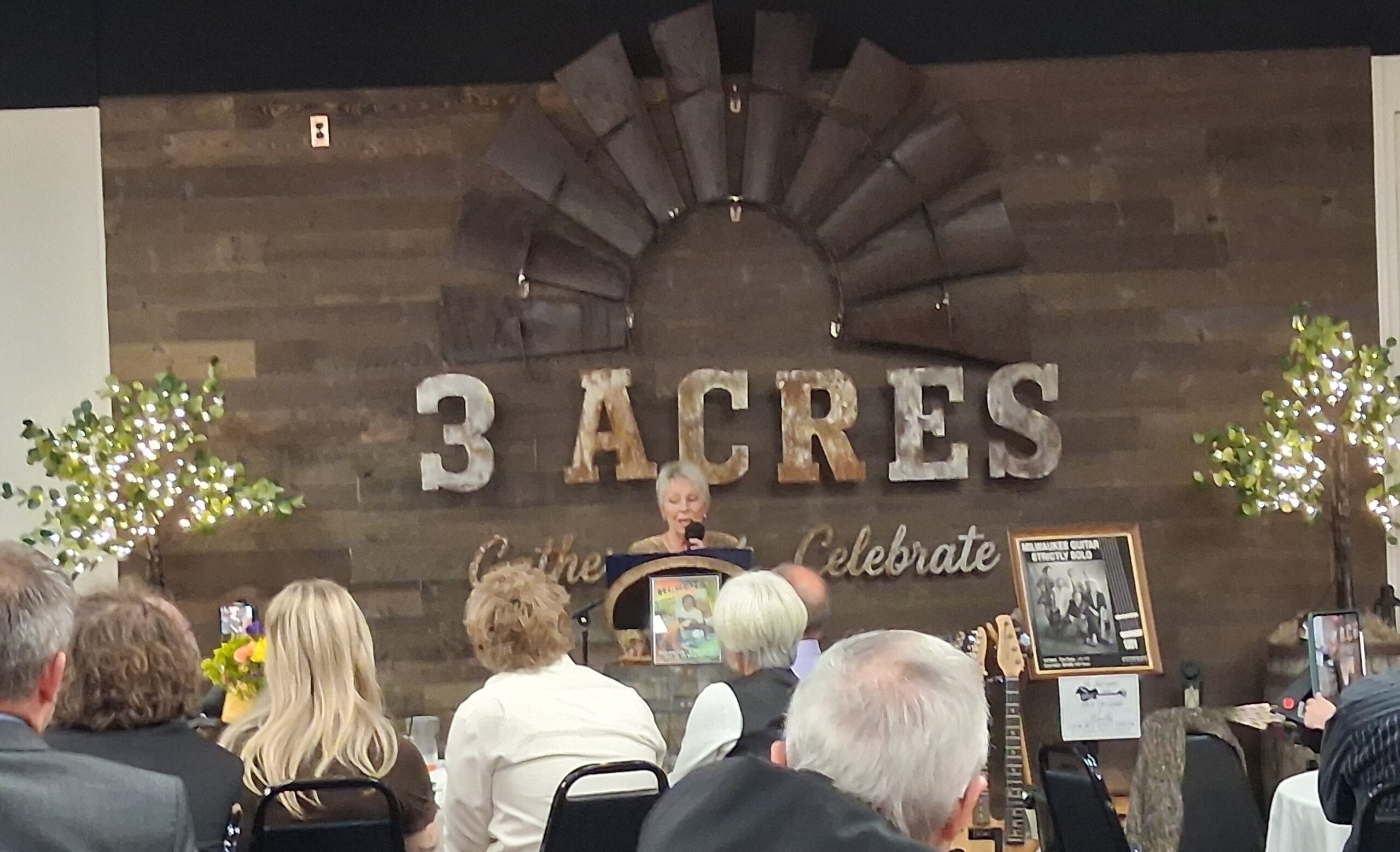
Singer Jill Jensen, the longtime spouse of the late guitarist Jack Grassel, remembers him in eloquent and tender words Sunday at a memorial event. Grassel’s three-necked guitar is on display at right. Photo by Kevin Lynch

Some people rise from the dead in their own unique way. That’s what the late guitarist Jack Grassel did Sunday. Several hundred people were there to witness it. So don’t tell me I’m talking through my hat.

Okay, he didn’t get up and walk among us. But the emotional and spiritual weight of the event held Jack aloft as a quivering presence across the room and in the hearts of these people, even more than the quiet resonance of his recorded guitar music that filtered through the hall as the guests filed in for condolences to Grassel’s wife and artistic partner, singer Jill Jensen, and her daughter Beth.

The potency of the event had to do with the mementoes, including photos and videos of Grassel, that put his presence virtually there, right there.

But more than anything what brought Jack to poignant life was the extraordinarily eloquent and moving extended tribute given to him by Jill Jensen.

She resurrected the brilliance of this kind, sweet and gloriously virtuosic and adventurous musician and educator. For all his musical mastery, Grassel retained an ever-boyish way about him. One can vividly imagine, as Jensen related, toddler Jack reaching up to play piano keys each up to the piano keys to copy the music on the radio, and his mother, quickly realizing his musicality, soon buying and placing an accordion in his arms. The instrument virtually swallowed up the small boy, as a delightful photo on display showed. Jack would go on to become a state champion accordionist.

Jill Jensen commented that their stage name was really “too corny.” But it was also charmed, by the way Jack first wooed her, many years ago. It came about this way.  A friend had alerted Jack to her presence and he was immediately smitten. When he first walked up to her, his first words to her were “Hi, I’m Jack and you’re Jill. Let’s go find a hill.”

“What a line,” Jill said to the crowd, still in slightly amazed bemusement after the couple’s 40 years together. Tempering Jack’s bold stroke, you also can picture his slightly shy, crinkly-eyed smile, there in the moment.

Corny or not, Jack and Jill’s duo name was inevitable from that point, and they ultimately lent great musical heft to the nursery rhyme moniker, a musical match of two attractive and gifted people, now assuredly “made in heaven.”
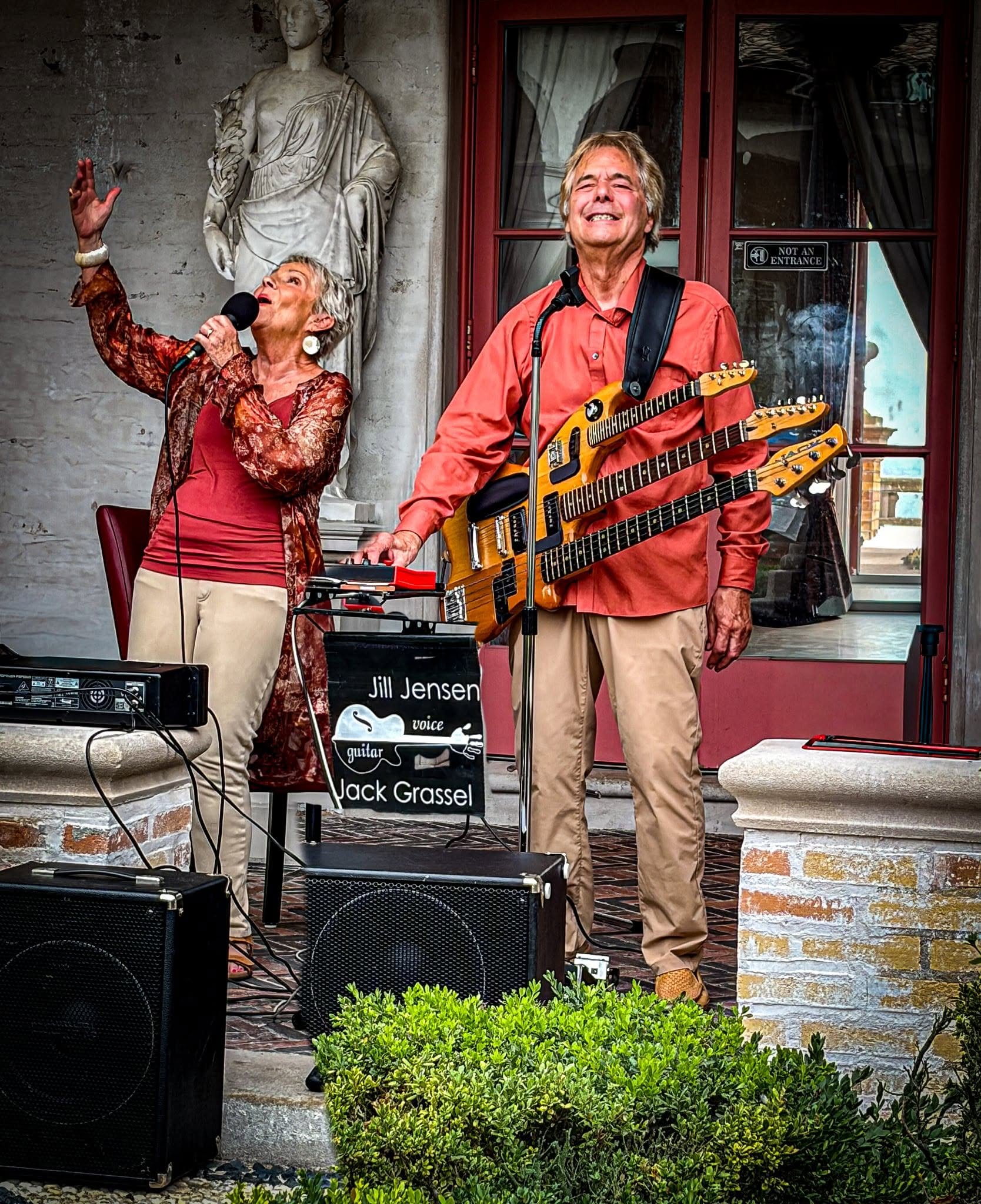
Singer Jill Jensen and guitarist Jack Grassel at their last concert at Villa Terrace 10 days before Grassel’s death. Photo by Stuart Hoffman 

They recorded a handful of albums, the last of which, It’s About the Music, was ambitiously realized and featured nearly 30 musicians, including Milwaukee Symphony Orchestra principal players. Grassel, arguably the region’s most accomplished guitarist, had a long-time working relationship with the orchestra, playing in scores that called for a guitar.

From his obit: “His first paid concert was at age 6. His extraordinary musical abilities, especially on guitar, and perfect pitch, enabled him to forge new paths as a genre-bending multi-instrumentalist, mastering seven instruments. In 1983, as Chairman, he designed the Music Occupations Department at Milwaukee Area Technical College (MATC) spawning a legion of successful students through his passion, humor and example. He’s known for his 21 CDs (including a duet album with jazz guitar giant Tal Farlow), 70 compositions, 12 Industry awards, and 23 Instruction books. After 20 years and a major illness in 2004, he retired from MATC but never retired from music.”

Yet, let us not dwell too much on nostalgia, or past glories. It’s worth recalling Jill’s tender announcement of his passing:

“My shining star, light of my life, is extinguished. My beloved husband and partner in music and life, Jack Grassel died on August 26, 2026. His closest family were there to say their loving goodbyes. I held him, stroked his hair, and whispered “I love you Jack” as he took his last breath. My wonderful, strong, daughter Beth was beside me.”

His death still pangs our heavy hearts, and walking into the hall with the photographic “biography” of his musical life, and Jack’s triple-necked, self-invented “Super Axe” bass/ guitar/mandolin on silent display was a deep, long breath, a load to absorb. One sat and waited for the owner to arise and start playing the instrument.

There at Four Acres Restaurant in Racine, the beautifully organized event teemed with celebrants of Jack’s 77-year life. It was the largest gathering for a memorial for a musician that I’ve attended, testifying to the man’s importance to this music community. Among the great musicians gracing the event: Kaye Berigan, Hal Miller and Tom McGirr, Jack’s former bandmates in the sui generis Milwaukee avant-jazz band What On Earth. Other musicians present included Warren Weigratz (of Streetlife, the Milwaukee Bucks band, Sweetbottom, Oceans, VIVO), Curt Hanrahan and Steve Lewandowski (of Opus and The Milwaukee Jazz Orchestra), Kim Zick and Connie Grauer (of Mrs. Fun), Sam Belton, Neal Davis, Jerry Grillo, Steve Nelson-Raney, Rick Ollman, Steve Peplin, Carol Trout, John Zaffiro.

Those were just people I saw or spoke with. My apologies to those unmentioned musicians, honored guests and family, as I didn’t go around taking notes.

The theme and spirit of this event is summed up best by the wondrous quote from Wendell Berry’s poem “The Loved Ones,” which adorns the Jack Grassel remembrance cards:

“The loved ones we call the dead depart from us and for a while are absent. And then as if called back by our love, they come near us again. They enter our dreams. We feel they have been near us when we have not thought of them. They are simply here, simply waiting while we are distracted among our obligations. At last it comes to us: They live now in the permanent world. We are the absent ones.”

“We are the absent ones.” Whew.

_________

I wrote my own memorial article on Jack Grassel for The Shepherd Express and my blog Culture Currents (Vernaculars Speak), here: https://kevernacular.com/?p=17486

 

Is the now-closed Jazz Estate about to become a “high-end” cocktail bar? The owner is making changes.


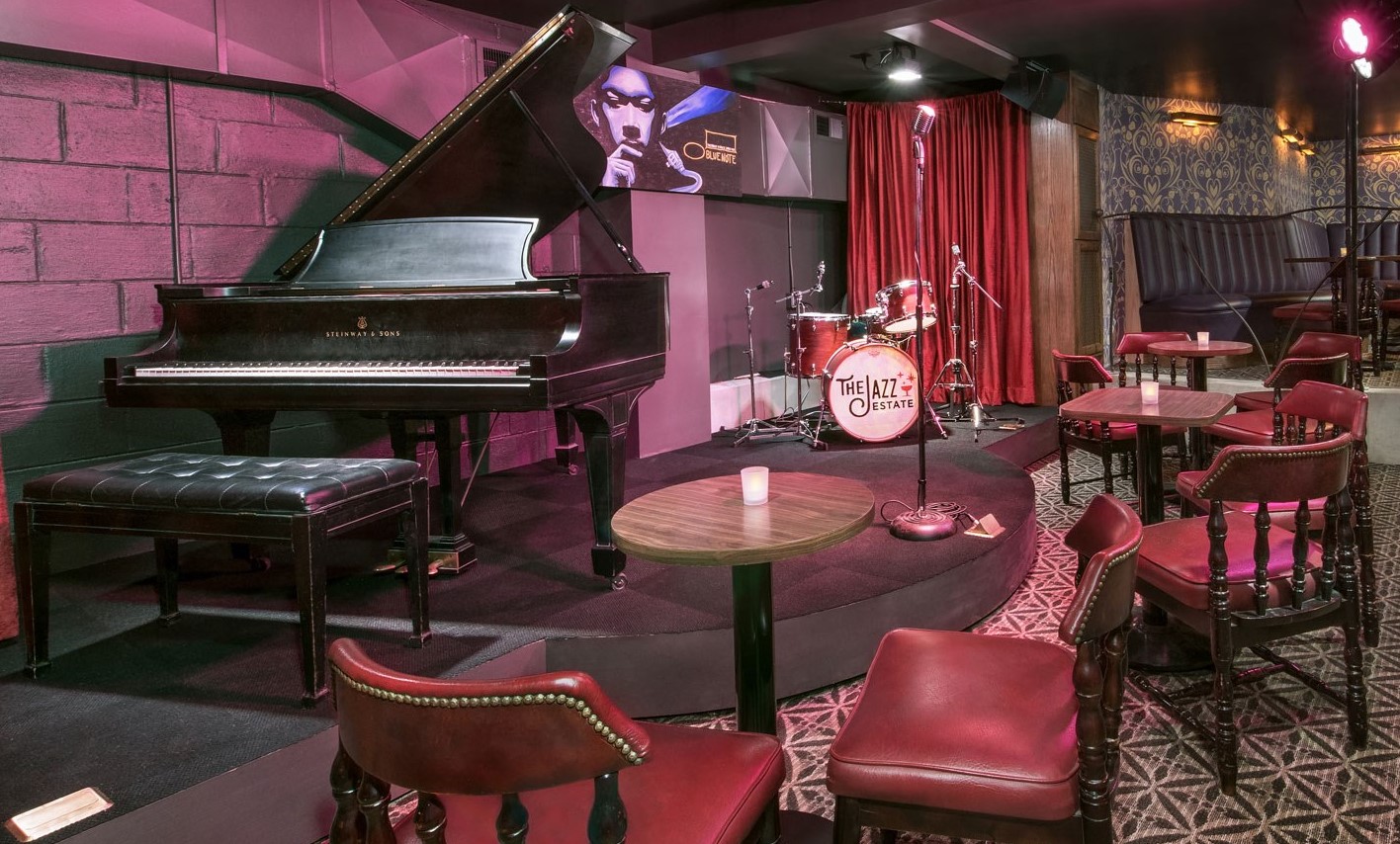
The bandstand at the Jazz Estate is the centerpiece if the club’s unusual layout. Courtesy Milwaukee Visitors Bureau

Jazz can be as intimate as any chamber music, or poetry reading, or any brooding songwriter softly strumming a small acoustic guitar. The performance space itself can make a huge difference.

If you wanted to literally feel a grand piano’s tickling upper registers, sharpest voicings or resounding percussive harmonics, or an upright bass’s straight-up-your-backbone thrum, or a drummer’s sparkle, dash and punchy paradiddle, the Jazz Estate may have rewarded music travelers as well as any jazz venue in America. And being that close, the improvising dynamics of jazz often kept you on the edge of a co-pilot’s seat for the swinging ascent of a combo reaching full flight.

I begin in the past tense because the uniquely famous venue stands in icy limbo, for at least January, to develop a “refreshed and expanded cocktail program that is the jewel of Milwaukee’s East side.”

This is the symbolic image accompanying Jazz Estate owner John Dye’s Facebook announcement that the revered jazz venue would close in Jaqnuary, then reopen wsome time in February as a “high-end” cocktail bar with, at some point, “limited music.” Courtesy Jazz Estate Facebook page

That’s owner John Dye’s Facebook explanation for canceling the six-days-a-week performance calendar, and he’s sticking to it.

Renowned Milwaukee native Lynne Arriale’s trio on November 20th may have provided the last glimmer of international jazz glory the Estate would host.

However, “We definitely aren’t done with live jazz.” Dye says. “We will be bringing limited live music back when the time is right, and it will be with a modified business model that is more sustainable.”

Yet it seems financially counterintuitive when he says, “We want people to feel comfortable coming by any time without the commitment of a reservation or cover charge.”

Isn’t it foremost the music they’re willing to pay for that draws people there, a model that has sustained the place for 40 years? And doesn’t Dye’s desired aesthetic of “high-end” cocktails – vs. Milwaukee’s “beer city” stereotype – cohere implicitly with the soulful sophistication of jazz, more than any other music genre?

Dye replies, “Through four decades and eight owners the space has always been, above all else, a beloved eastside bar.” That seems to minimize the reality that, in 1973, then-owner Sal Monreal made the central space into a jazz bandstand, as the venue’s name indicates. Ever since, it’s been consistently acclaimed by local and national press, especially by Down Beat magazine, as the best jazz club in Milwaukee, a strong, undeniable identity.

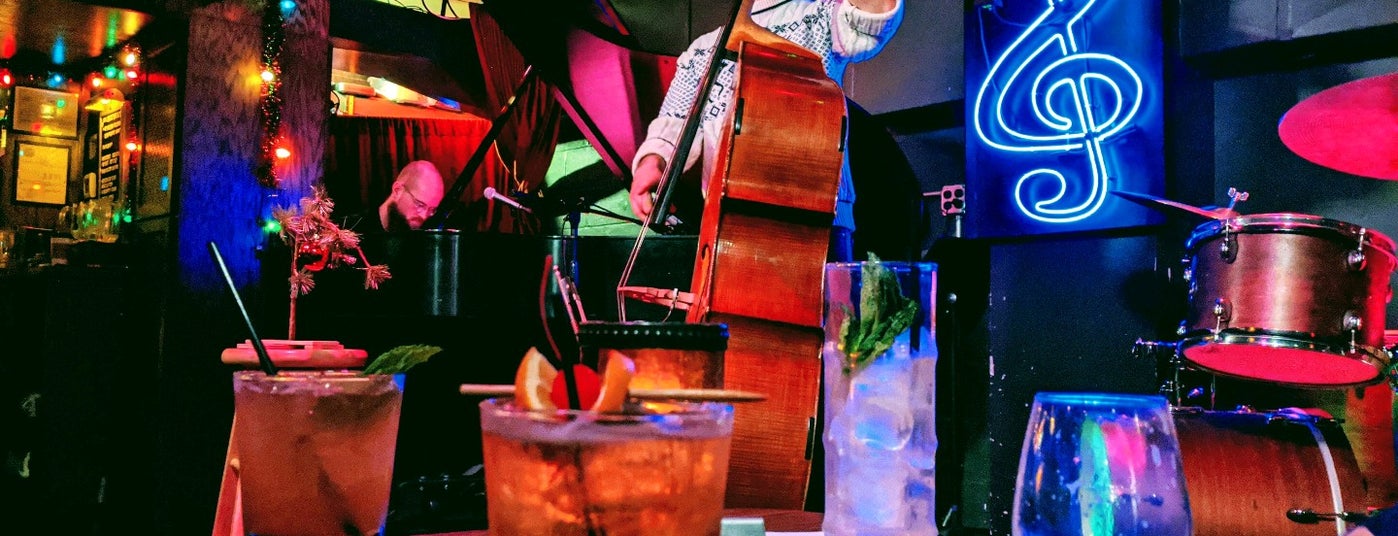
This artistic photograph conveys the Jazz Estate experience: live jazz by the Anthony Deutsch Trio blended with high-quality drinks and atmosphere. Courtesy foursquare.com

As to how reducing six weekly nights of varying cover charge for popular local and touring jazz acts would make for a more financially viable business, Dye says, “Drinks have always paid the bills.” As he sees it, “cover charges and ticket reservations can deter potential customers, so that is why we are moving in a more accessible direction without those added costs and logistics.” Drastically simplifying his business model, perhaps, but that also means losing substantial admission business, from the attraction of live, advertised music, for the uncertainty of casual bar traffic. As for what percentage of the door he divides between himself and musicians, or how much they are paid otherwise, he is vague: “Over the years we have paid musicians with guarantees, door deals and bar percentages. We have used various models.”

So, in the cold darkness of uncertainty, the jazz community now wonders how the Estate’s will spotlight their art form again.

Why has this place been so special? The unusual layout allows those lucky enough to share with the musicians a central small living-room size space with a single front seating row, with only a single standing-room “row” behind that one, with a narrow ledge for drinks on the north wall. The venue’s two long wings – the bar itself and a larger seating area – extend out from this Bird-like breast of a modern-jazz bastion. It’s not a perfect listening space, as the extension of the wings encourages chatter. But that acoustic layout also can help musicians focus on their intimate dynamics.

Bottom line: It’s been the most consistent home for jazz, and related music, in Milwaukee for 40 years. There’s even a Facebook page devoted to “Jazz Estate musicians.” What’s curious is that Dye is moving forward by going backwards or retreating, in effect, which he essentially admits. There’s been three phases of the Estate’s music booking policy over the years. He wants to return to the previous policy of limited music, a few nights a week.

To be sure, on the Jazz Estate website, the booking form for bands remains in place. But the prospect of jazz being seriously cut back spurs the mind to reflect backwards.

What did the late saxophone giant Joe Henderson think of this Bird’s-breast of a room when played it? What about trumpet master Tom Harrell, who struggles to manage his schizophrenia with anti-psychotic drugs but is a supremely attuned musician. What did feel in that space? Legendary bassist Eddie Gomez led a piano trio here, he a veteran of the most sublimely intimate jazz trio ever, that of Bill Evans.

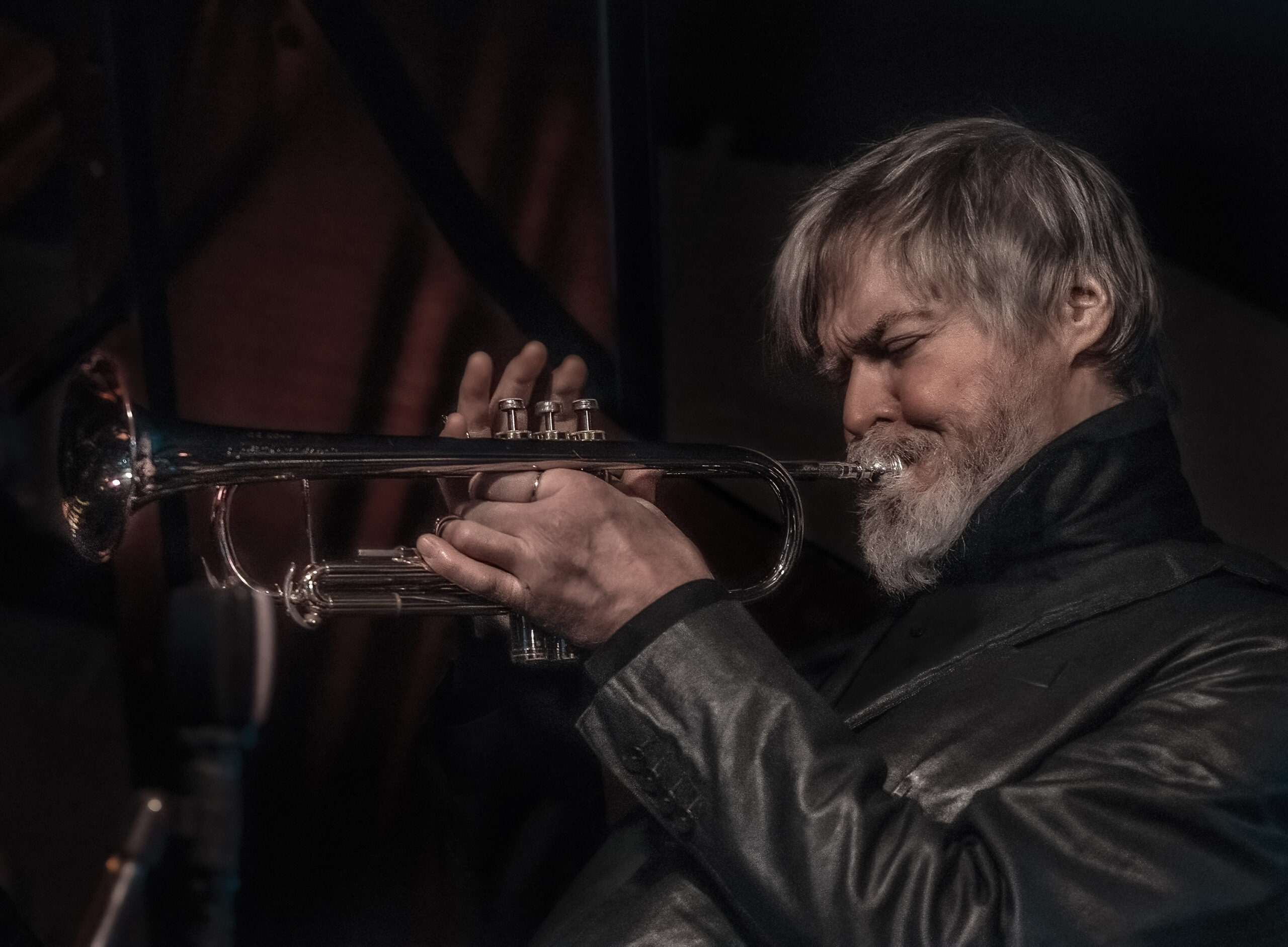
Acclaimed trumpeter Tom Harrell performs at the Jazz Estate in October of 2017. Harrell is Grammy-nominated and has won multiple Trumpeter of the Year awards from Down Beat magazine. Photo by Leiko Napoli

Those are only a few of the big names the Estate hosted though, for the most part, it has served the ebb and flow of Milwaukee’s jazz community. Some musicians now fear for the place’s vaunted jazz tradition. Yet they also retain hope.

Trumpeter Eric Jacobson’s opinion holds extra weight, as he explains: “I was upset to hear about the Jazz Estate not having live music, especially after I had booked music there for four years. I felt like I created some amazing nights at the Jazz Estate with incredible local and national musicians. Having worked with the Jazz Estate, I did see the difficulties to sustain a business. I trust that John Dye is doing this, so he can stay open and hopefully get back to having live music.”

Jazz singer Jerry Grillo, who has performed there numerous times over 30 years and attended hundreds of Estate shows, says, “A jazz club needs special care from a community and its musicians. The cash register needs to ring. Covid is the real culprit. Many clubs and restaurants have had to close, but the doors will not be shuttered this time. Please support The Jazz Estate when it reopens.”

Then there’s the thoughtful guitarist Steve Peplin:

“We came to play, you came to drink and listen. But it isn’t called the Booze Estate. The drinks are great…but people would still show up even if the drinks were unsophisticated. The amount of time a jazz musician has invested in the art is vast. We used to play four-hour gigs for fifty bucks because we could relax into it and do it for the music.

“The Jazz Estate has always been my very favorite jazz club in all the world. I remember when I first sat in eons ago with Berkeley Fudge. I didn’t care about New York, L.A. or Paris. I only wanted to play at the Jazz Estate. It was an intimate, extra-dimensional portal, a testing ground, a laboratory and, later, a sanctuary.

“The place is tiny, but I would not change that. It sounds great. I don’t know how many hundreds of gigs I’ve played there with so many bands and artists, but everyone was about the music. People came to listen, trusting us to fly the spaceship.

I’m not worried about the Estate. The ship is strong and will, no doubt, be back. You can’t sink her.”

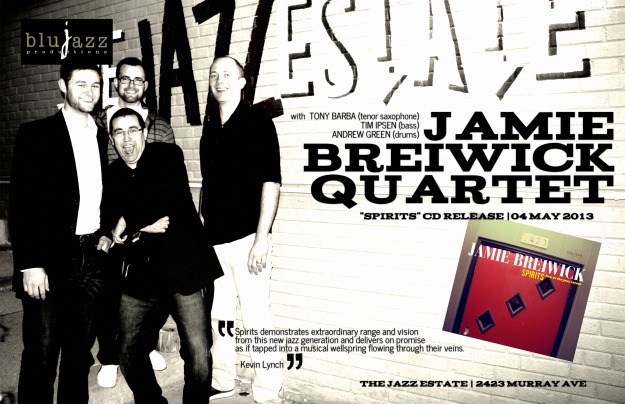
Happier times at The Jazz Estate: a promotional poster for an album recorded live at the jazz club. Courtesy kevernacular.com

Finally, pianist Mark Davis – who now directs the Milwaukee Jazz Institute, a major force as a performance and education operation – says, “I first started playing there in 1985 and, over the years, played a lot of gigs with local legends like Hattush Alexander and Berkeley Fudge and visiting stars like Charles McPherson and Tom Harrell. I also heard performances there by some all-time greats like Cedar Walton and Joe Henderson. But the thing is, the music is bigger than any one place. Jazz will continue in this city even if a venue closes. Other spots will spring up.

“The jazz scene is strong in Milwaukee. We have incredible established players as well as lots of young players just starting to come on the scene. I recently made a list of venues in our area that feature jazz and came up with over 30 clubs. We also have festivals and organizations that feature performances.

“Jazz isn’t going away. The Milwaukee Jazz Institute was formed to preserve this music and pass it along for future generations to develop.”

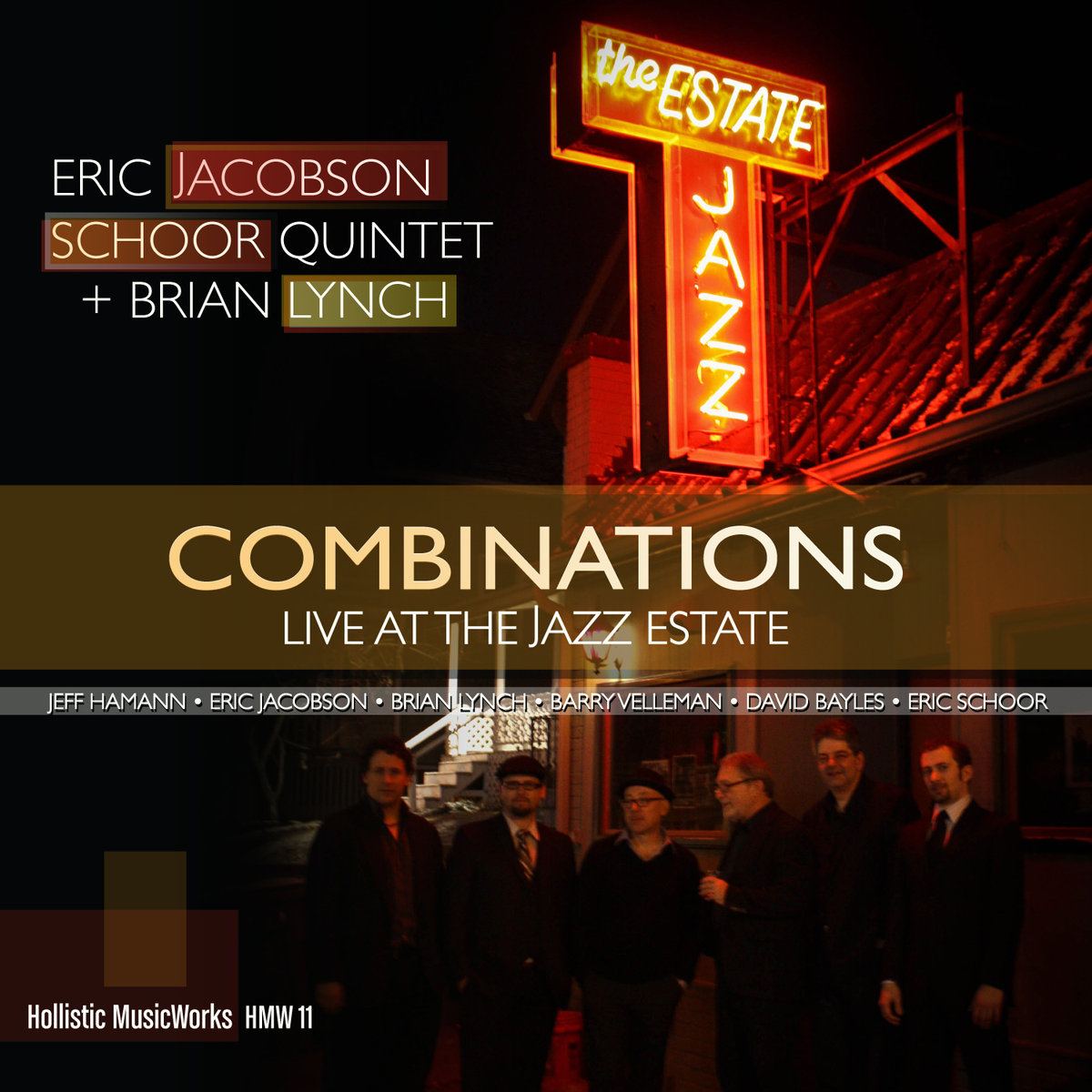
The cover of a notable album recorded live at the Jazz Estate. Courtesy Hollistic Music Works

Several excellent recordings, one by Jacobson and saxophonist Eric Schoor with Grammy-winning Milwaukee-raised trumpeter Brian Lynch, and two by trumpeter Nate Weiss, and a luminous one by the Jamie Breiwick Quartet, will help to preserve the memory and experience of live jazz at the Estate, regardless of what will remain when the doors open again.

_____________________

This article was originally published in The Shepherd Express in a slightly different form: https://shepherdexpress.com/music/local-music/what%E2%80%99s-next-for-the-jazz-estate/

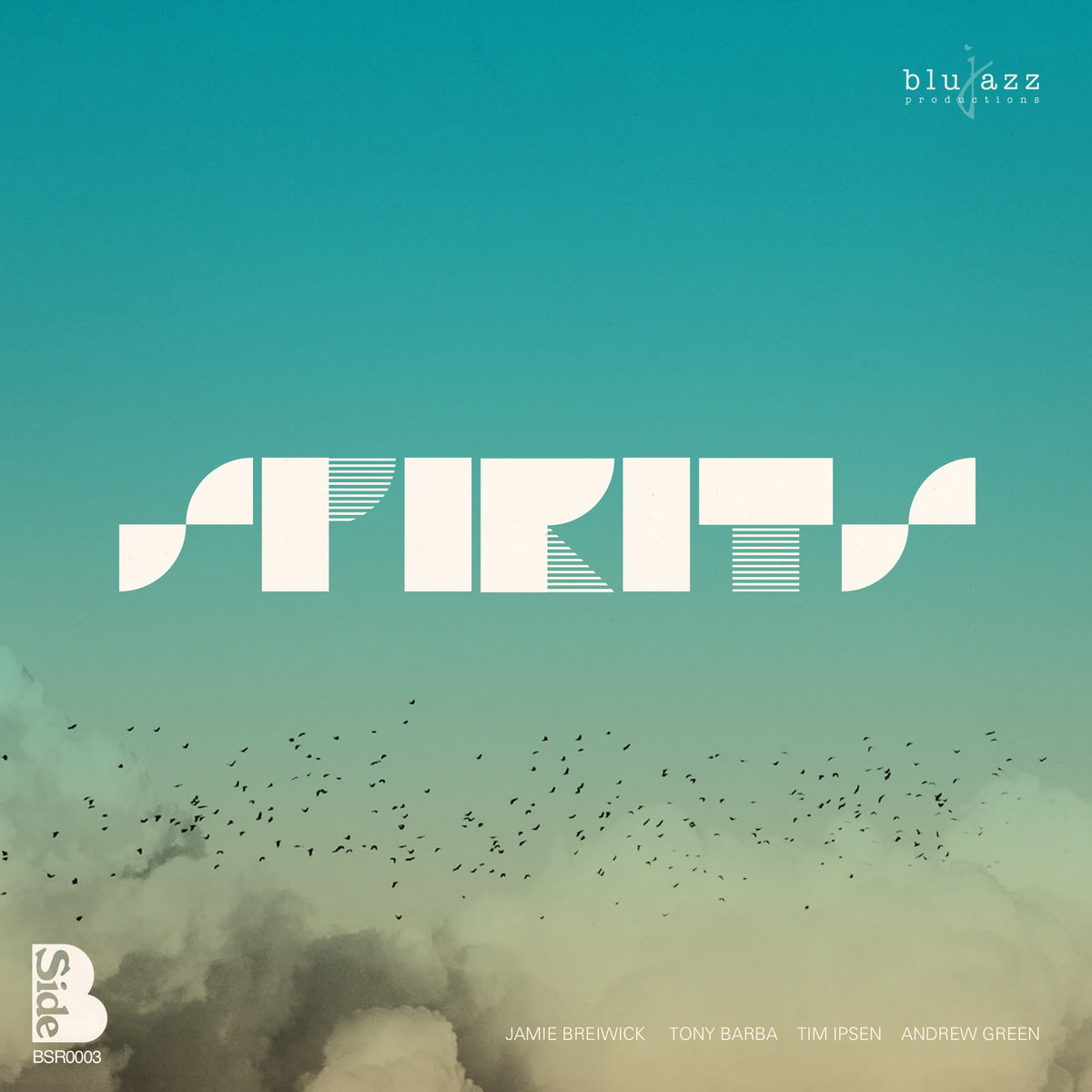
  1. The “live at the Jazz Estate” recording I know best is the marvelous music that the Jamie Breiwick Quartet recorded there. I annotated their 2013 album Spirits: Live at the Jazz Estate. My notes opening lines read:

“Open the door on the album cover and you enter the Jazz Estate, a Milwaukee club that exemplifies a venue that nurtures modern straight-ahead jazz and makes money at it.”

To what degree that last statement remains true, only owner John Dye know for sure.

Image result for Spirits by Jamie Breiwick Quartet

The original cover to “Spirits” depicts the front door of the Jazz Estate. Courtesy allmusicguide.com

Here’s the current cover of “Spirits” as redesigned by Jamie Breiwick of B-Side Graphics. Courtesy B-Side Graphics.