This is the debut of a new monthly column I’ll be writing for The Shepherd Express as the correspondent covering the Riverwest neighborhood, as the newspaper increases its localized coverage. This column spotlights an exciting, world-class recording studio tucked away in the neighborhood, High-Five Studio. I hope you enjoy this.
In their strange ways, dreams often surge, straining aloft, then soar, as if the elements have conspired in transcendent harmony. Of course, the same dreams more often than not hit tough crosscurrents or facing gusts that render the journey near endless and, by morning, nigh impossible.
Pardon my slightly self-conscious ruminations, which allude to my own relative capabilities as a writer. And I offer the typical dream scenario as a humble homage to a man who gazes down from a lofty stratosphere upon most other writers of his sort.
Greil Marcus remains one of the truly stupendous talents in music writing. He is well known for several extraordinary works including Mystery Train: Images of America in Rock ‘n’ Roll Music; The Old, Weird America: The World of Bob Dylan and the Basement Tapes; and the truly epic work of cultural history, A New Literary History of America, a collaborative work that he co-edited. Another marvelous book Marcus co-edited, with the superb historian Sean Wilentz, is the Rose & the Briar: Death, Love and Liberty in the American Ballad which includes a CD collection of ballads..
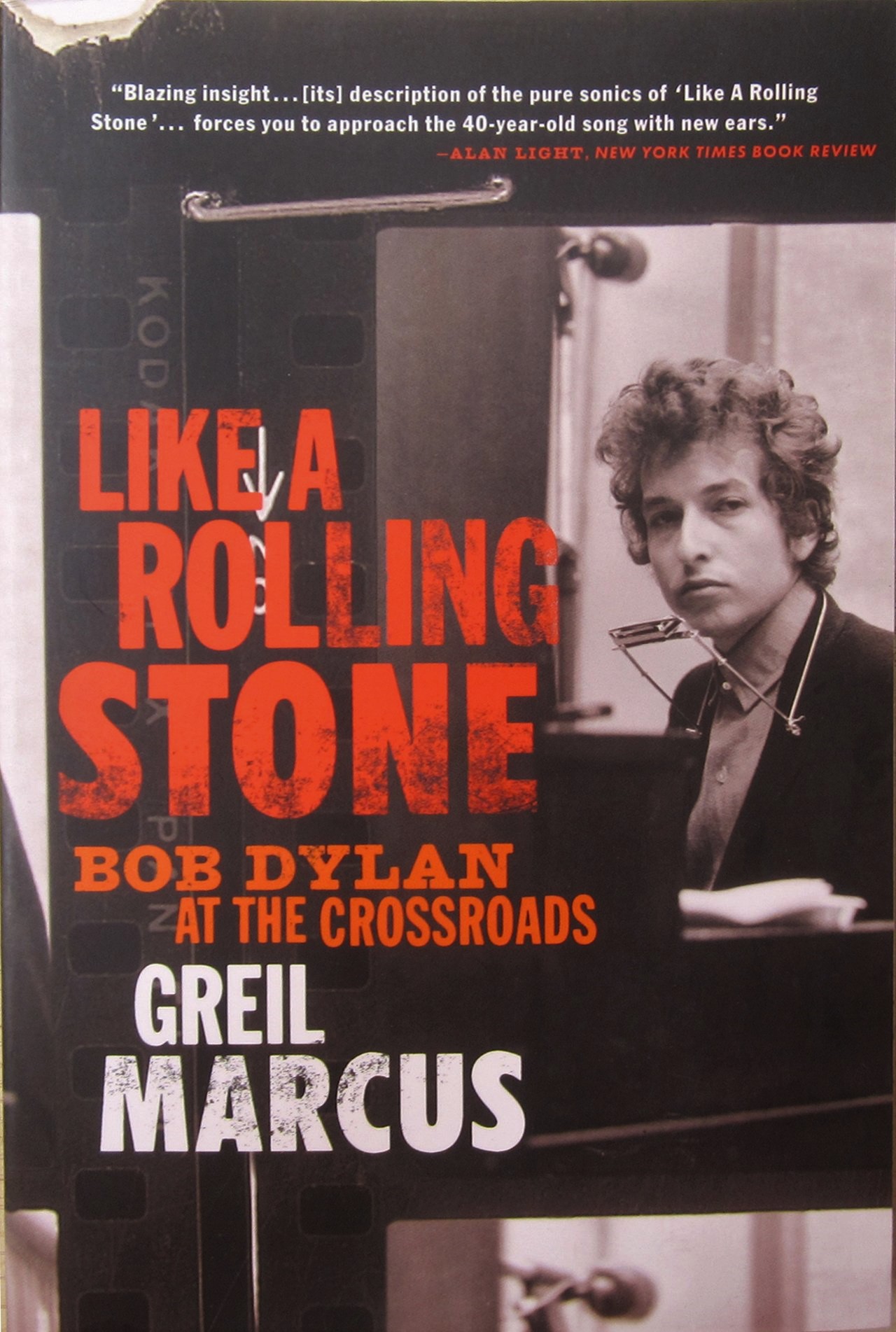
More recently he took on Dylan again with an extraordinary hyper-close reading that is equally expansive — a book length delving into Dylan’s perhaps generation-defining, or challenging, work “Like a Rolling Stone.” The song’s title endows the book, which is subtitled Bob Dylan at the Crossroads.1 The song is seared into my generation’s collective consciousness. Countless among us must face the crossroads with no direction home, and endure the howling wind ravaging our souls, blasting grit in our teeth, hoisting our boot heels in the clamor of chaos.
________
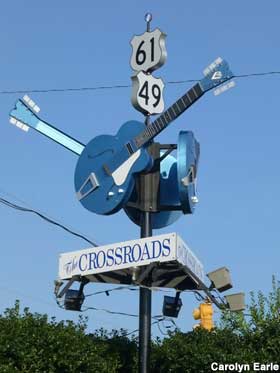
All the while Marcus rides the rolling beast like a master equestrian. His subtitle is cannily framed as Bob Dylan arriving at the mythical crossroads that Robert Johnson met the devil at and sold his soul for his transcendent musical talent, something one can almost imagine Dylan doing as well. The crossroads is real, as he persuasively tells it, nothing less than Highway 61 (as immortalized in his 1965 “Rolling Stone” album Highway 61 Revisited) and Highway 49, in Clarksdale, in the Mississippi Delta.
Photo of Three Blues Crossroads, Hwys 61 and 49. Photo by Carolyn Earle.
I must abject myself, as I often write in the same critical idiom and on similar subjects as Marcus. But his words will do the walking here, and glisten in the glory of the light they project, bejeweled with their innate fire.
It’s worth taking a few deep breaths to try taking in his description of “Like a Rolling Stone” as whole as we can, to feel the weight of his depths and embrace it with our straining mind muscles a bit. It’s also worth pausing to savor and ponder.
So now I stand back, and dictate:
“With “Like a Rolling Stone” too, it’s six minutes – six minutes to break the limits of what could go on the radio, of what kind of story the radio could tell…is the beginning and the end of what the record is about and what it is for. When the record is over, when it disappears into the clamor of its own fade to silence…you feel as if you have traversed the whole of a country that is neither strange nor foreign, because it is self-evidently your own – even if, in the first three minutes, the journey only went as far as your own city limits. The pace is about to pick up.
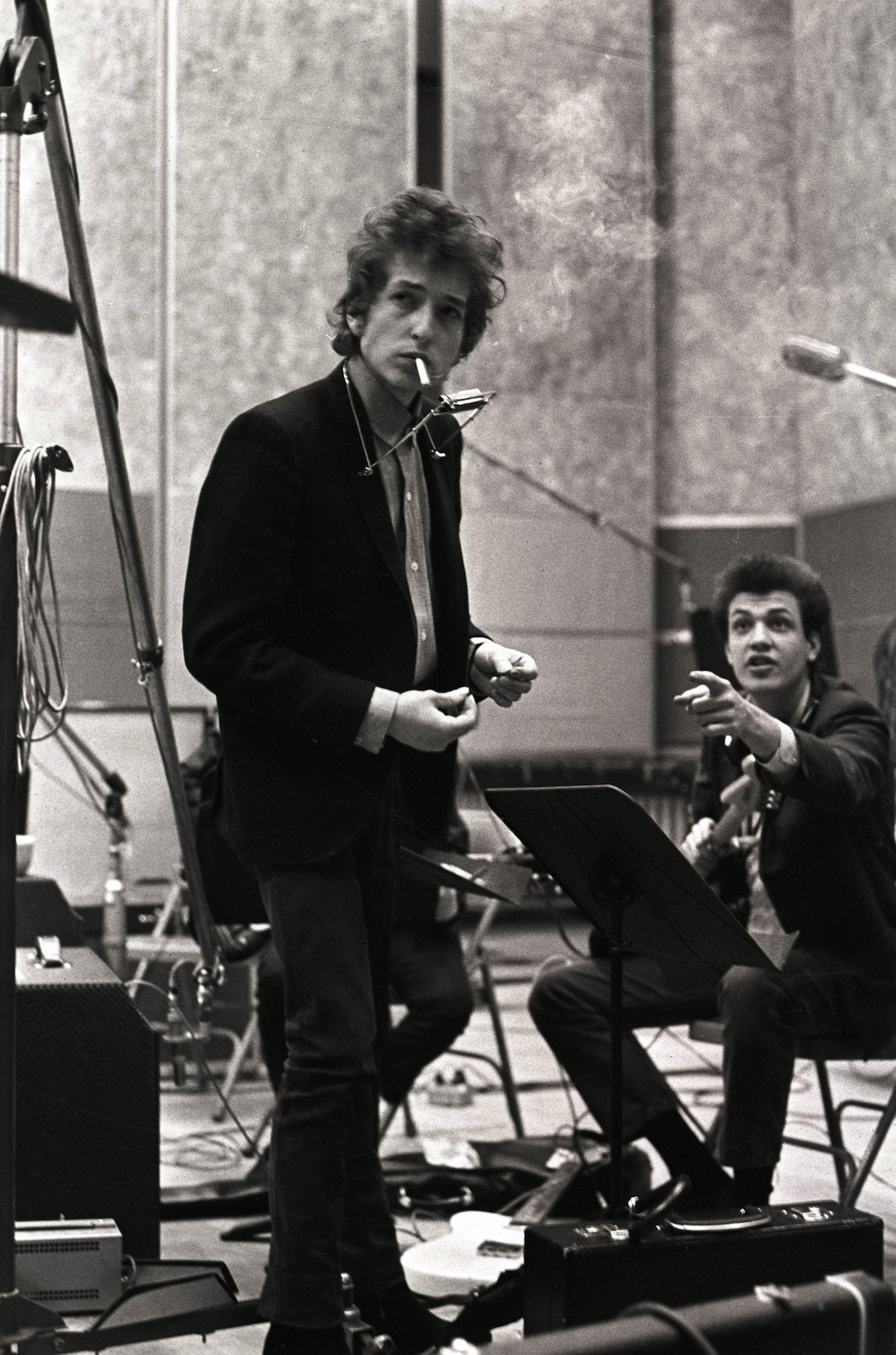
When “like a Rolling Stone” smashes into its third verse everything is changed. The mystery tramp who appeared out of nowhere at the end of the second verse has left his cousins all over this one. Everyone has a strange name, everyone is a riddle, there is nobody you recognize, but everybody seems to know who you are. ” You –” Dylan shouts, riding over the hump of the second chorus and into the third verse; the increase in vehemence caused by something so tiny as the adding of a syllable of frustration to the already accusing “you” is proof of how much pressure has built up. The sound Bloomfield makes is like Daisy’s voice – “the sound of money” – and like Gatsby Bloomfield is reaching for it, but as soon as it is in the air he steps back from it, counting off the beat as if he is just James Gatz, counting his pennies.
Bob Dylan and guitarist Michael Bloomfield at the sessions for “Like a Rolling Stone.” Courtesy WBUR
He is banging the gong of the rhythm as if he is hypnotized by it, each glorious note bending back toward the one before it. As the band seemed to play more slowly as if recognizing the story in the song for the first time – a congress of delegates drawn from all over the land, all speaking at once and all giving a version of the same speech – the singer moves faster, as if he knows what’s coming and has to stop it. He reaches the last line of the verse, holds the last word as long as he can hold his breath, and then as the song tips into the third chorus everything shatters.
The intensity of the first words out of Dylan’s mouth make it seem as if a pause has preceded them, as if he has gathered up every bit of energy in his being and concentrated on a single spot, it is as if you can hear him draw that breath. “How does it feel” doesn’t come out of his mouth; each word explodes in it. And here you understand what Dylan meant when he said, in 1966, speaking of the pages of noise he’d scribbled, “I had never thought of it as a song, until one day I was at the piano, and on the paper it was singing, ‘how does it feel?'” Dylan may sing the verses; the chorus sings him.
With this moment every element in the song doubles in size. It doubles in weight. There is twice as much song as there was before. An avenger the first time, “how does it feel” takes them over here, the second time the line sounds Dylan is despairing, bereft and sorrowful, but by now, moments after he himself has blown the song to pieces, the song has gotten away from him. Kooper’s simple, straight, elegant lines are breaking up, shooting out in all directions, as if Dylan’s first “how does it feel” was the song’s Big Bang and Kooper is determined to catch every fragment of the song as it flies away.
As the chorus begins to climb a mountain that wasn’t in the chorus before, Kooper finds himself in the year before, in the middle of Allan Price’s organ solo in the Animals’ “House of the Rising Sun,” a record that to this day has lost none of its grime and none of its grandeur. Price’s solo was frenzied, its tones thick and dark; it was a deep dive into a whirlpool Price himself had made, and Kooper is playing from inside the vortex, each line rushing up and out, nailing the flag of the song to its mast. 1
Nothing could follow this. In the fourth verse, everyone’s timing is gone. The “Ah” that that swung the first line of the third verse is here a long “Ahhhhh,” that flattens its own first-line. Bobby Gregg, whose drum patterns in the first verse had given the song shape before the musicians found the shape within the song, fumbles as if he has accidentally kicked over his kit. Everyone is fighting to get the song back – and it’s the words that rescue it, that for the first time take the song away from its sound. The words are slogans, but they are arresting, and if “when you ain’t got nothing, you got nothing to lose” sounds like something you might read on a Greenwich Village sampler, a bohemian version of “Home Sweet Home,” “you’re invisible now, you got no secrets to conceal” is not obvious, it is confusing.
Confused – and justified, exultant, free from history with a world to win – is exactly where the song means to leave you. There is the last chorus, like the last verse spinning off of its axis, and then Dylan’s dive for his harmonica, and then a crazy-quilt of high notes that light out for the territory the song itself has opened up.”
****
Marcus leaves us (for now) with a closing image alluding to perhaps the most apt of the great American myth-odysseys for this song, The Adventures of Huckleberry Finn, which follows Dylan’s artistic voice much more closely than does Fitzgerald’s romantic Gatsby or the almost Titanic might of Melville’s grapple with the white whale.
Still we feel somewhat breathless for having rode his words through the churning bile of “Rolling Stone.”
Where do we go from here? Forty years down the road, no one can say for sure, except perhaps the mystery tramp, who’s not selling any alibis. So you’re on your own, the road does seem to go on forever, if it hasn’t for as long as you can remember, since the fateful day in 1966 when you heard the song for the first time, and everything changed.
_______
1 Here Marcus makes two powerful references, in quick succession, building his momentum. However I take issue with one. Kooper’s descending organ riff throughout is majestic and he rides the song’s drive and passion, but he never becomes the unsuspecting protagonist, as does Price in his “House” solo, a man hell-bound for the depravity and fleeting ecstasy of a bordello. But but I concur with the writer’s deft allusion to the closing scene of Melville’s Moby-Dick, (explained shortly in the ensuing text) and the strange, seemingly impossible sight of harpoonist Tashtego nailing a banner to the mast as his hammering hand succumbs to the roiling waves engulfing the entire ship. Certainly the accumulating power of “Rolling Stone” swims in the same turbulent ocean, by now.
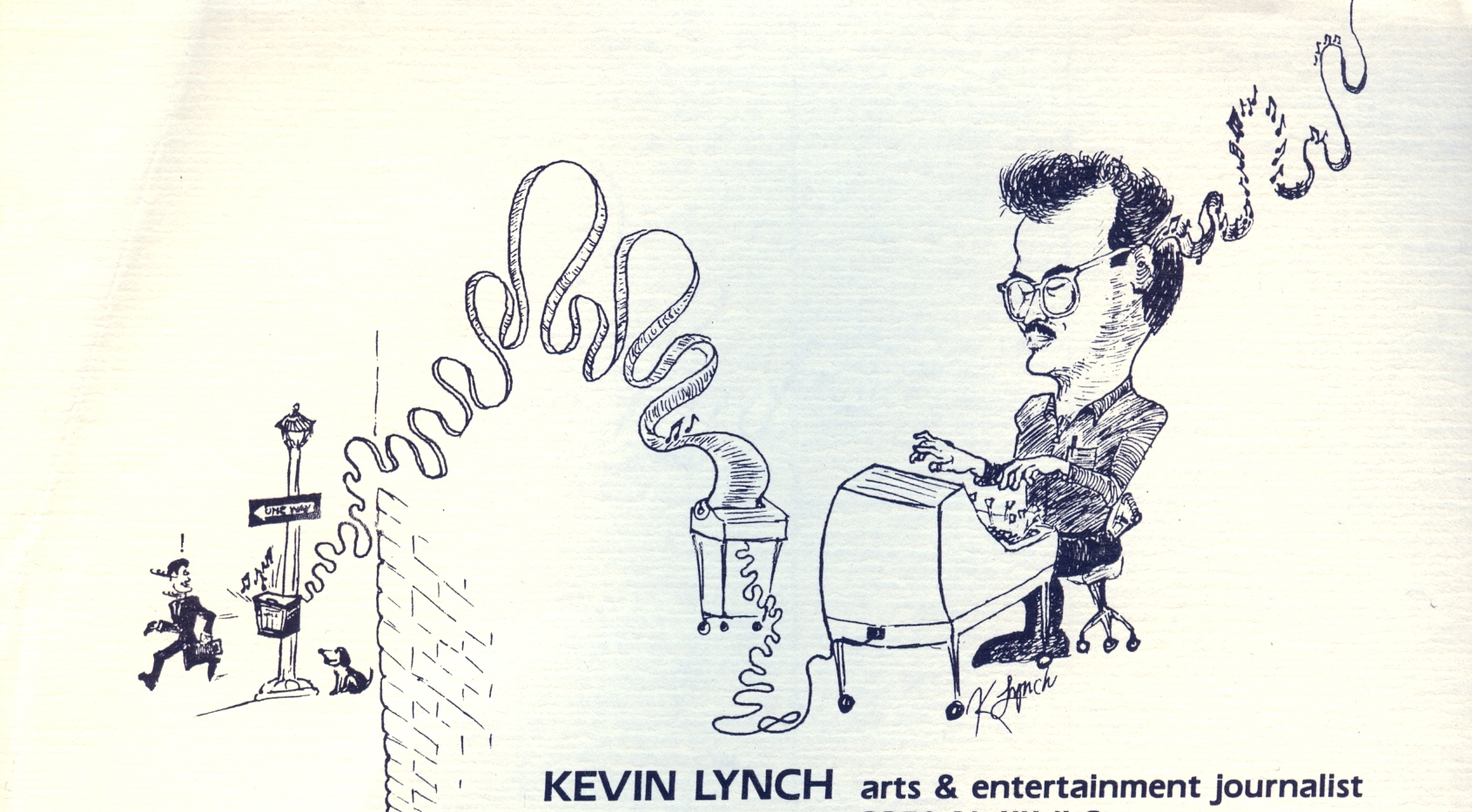
Throwback Thursday. Here’s a caricature I did of myself for the letterhead of job pitches to newspapers, back when I was trying to land a full-time gig in journalism, ca. 1988 or so. I was at the Milwaukee Journal at the time, but had poor prospects for a full-time staff job, suffering from local-boyism.
It helped me to get interviews from The Philadelphia Inquirer, The Chicago Tribune and The Bakersfield Californian, among others, but I don’t think it carried much weight when I finally landed a job at The Capital Times in Madison.
The most interesting interview was at The Bakersfield Californian. They flew me all the way out there on their dime, and then they asked for an audition for concert reviewing. So I went out to a local club with one of the newspapers staff writers who would do the review they would publish. The gig was reviewing Steve Earle in a small nightclub. Steve Earle today is one of the greatest singer-songwriters of our time but then he was known mainly for his powerhouse debut album Guitar Town.
I had seen him live already at a side stage at Summerfest, so I was surprised he was playing this small of a venue. But the music business is a funny creature, and he may have been enduring one of his down periods, where he is struggling with drugs. But he was powerful, raw. honest, and brilliant. We were sitting about 10 feet away from him as he performed solo.
After the gig I went to the newsroom and wrote my review. The interview would take place the next morning. However before the interview I called home to my wife, Kathy Naab, and she was distraught almost the moment she answered. I did not realize she was not up to moving so far away from home, and that’s what had her in tears. This, of course, deflated me quite a bit. When I got to the interview, I was back on my heels, and far from gung ho. So I sort of hit a weak grounder to shortstop, and that was the end of my shot at a California newspaper.
I think I would’ve had a good chance with The Philadelphia Inquirer as the editor seemed impressed by my clips, which included a special section project called “Just Jazz” that was tied to a festival called the Milwaukee Jazz Experience, and I was the lead writer in the educational package that was used extensively in Milwaukee Public schools. The package was also nominated for a Pulitzer Prize.
But the editor pointed out that the Inquirer already had an accomplished jazz writer, Francis Davis, who was becoming one of the nation’s preeminent jazz critics and authors. Today, among other things he conducts the NPR jazz critics poll, which I participate in annually.
So it was no go in Philly. But I loved getting to the city of brotherly love.
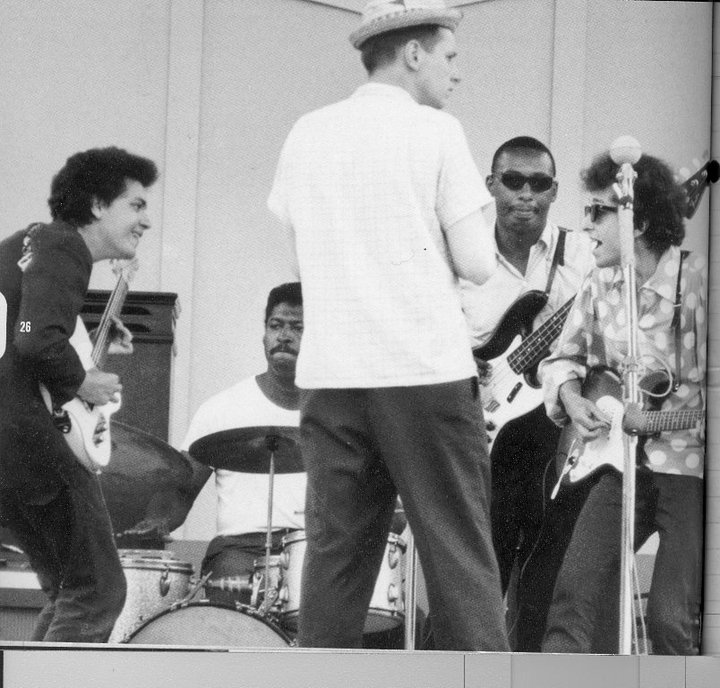
I’m in a reflective mood and just ran across my favorite photograph of the tragic guitar great Michael Bloomfield, a man who’s always spoken to me for various reasons. Well, this photo is a close number one ahead of the famous shot (below) of Bloomfield playing and jivin’ with Bob Dylan when he infamously went electric at The Newport Folk Festival in 1965. Bloomfield and Dylan cranked up the electric venom on “Maggie’s Farm” and, after that shock treatment, folk music was never the same again. A hoary but sometimes beautiful new creature was born: folk-rock.
(Musicians left to right) Michael Bloomfield, Sam Lay, Jerome Arnold, Bob Dylan. Pinterest
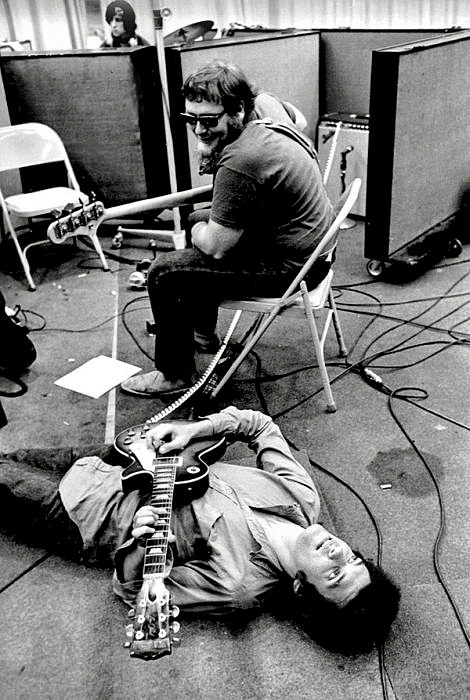
As for the revealing and, for me. rather moving Jim Marshall photo at top, it was taken at the famous Super Session recording with bassist Harvey Brooks affectionately needling Michael.
Bloomfield’s utterly chilled, prone position speaks volumes about the man: enduring extreme, chronic insomnia and drug addiction in the making. It also speaks to the man’s creativity and profound love for the music, especially the blues.
I would think Michael Bloomfield – the Jewish boy from Chicago, as much as any white man – bled blue.
The story continues to unfold: Michael lies amid the maze of wires, with a faraway gaze, a cigarette put out, or simply dropped, in the pool of spilled coffee on the floor. What are his eyes fixed on? What sort of vision hovers, almost taunting him with its distant guitar utopia? It would be fascinating to hear what he was actually playing at that moment, and what those phrases had to say. The man was clearly suffering, but persevering, for the time being, channeling his pain into the music, transforming it into something vibrant and redemptive, the essence of the blues.
Bloomfield played as well as he ever has that day, but could not even complete a whole recording session. Not long after this photo was shot, he informed singer-organist Al Kooper that he couldn’t continue, and Stephen Stills had to be called, finish what would become side two of Super Session.
It’s worth noting why this was to be called Super Session. Kooper, Bloomfield and Brooks had all achieved fame by recording Bob Dylan”s Highway 61 Revisited album, and the song that carved a mountain in the middle of the highway of rock music, called “Like a Rollling Stone.”
Soon afterward, Bloomfield became a freshly-crowned guitar god with the Butterfield Blues Band, which I’ll get to shortly. Although he started with Dylan and Butterfield playing the edgier Fender telecaster guitar (see photo with Dylan) it was with Les Paul’s Gibson guitar that Bloomfield found his true voice, in what he himself termed “sweet blues,” the sound for which you wanted most to be known. A biographical film is titled Sweet Blues: A Film About Michael Bloomfield. Kooper had formed pioneering jazz-rock bands, The Blues Project and Blood, Sweat and Tears, though he left the latter group early on.
The Les Paul guitar’s comparatively clean, singing tone replicated somewhat that of Bloomfield’s idol, B.B. King, who played a different sort of Gibson guitar. Waukeshan Les Paul’s gorgeously-sculpted physical creation allowed for a sonic vividness that captivated most leading rock guitarists at the time, who could all be seen playing the Les Paul shortly after Bloomfield took it up.
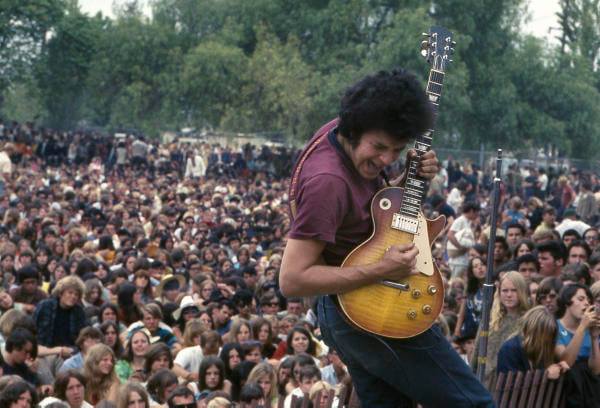
Another favorite Bloomfield shot reveals the man’s brilliant blues passion, at a rock fest with the Electric Flag in Santa Rosa, California.
The superbly produced Super Session is a great example of the guitar’s voice in the extraordinarily simpatico hands of Bloomfield.
How good was Bloomfield? Bob Dylan called him the best guitarist he’d ever hear. Or let’s hear Miles Davis, in his float-like-a-butterfly, sting-like-a-bee bluntness: “You could put Michael Bloomfield with James Brown and he’d be a motherfucker.”
To answer more personally, I now must refer backwards, to what would become his career masterpiece, the long instrumental piece “East-West,” which Bloomfield composed in 1966, as the title tune of the Butterfield Blues Band’s second album.
I have discussed the tune in a previous blog about the anthology box set Michael Bloomfield: From the Heart to the Head to the Hand. But what I wanted to say now, in light of the photograph above, is that he may have realized that “East-West,” composed while he was still in his 20s, was the pinnacle of his career. He would go on to play plenty, including Super Session, and great live follow-up albums for Columbia Records with Kooper, Taj Mahal and others.
He then formed the jazz-rock-R&B band The Electric Flag, but he was poorly suited as a long-term bandleader. So he embarked on a substantial solo career, as a scholarly maven of blues, of virtually all stripes. But because he intuitively fled from the personal spotlight like a heart-of-gold blues vampire (ergo the frequent nocturnal existence?), he remains underappreciated to this day.
But the masterful blend of Ravi Shankar’s Eastern classical music, rock and John Coltrane’s modal music that became “East-West” also reveals something of the man in the photo above. The composition was famously created in a sleepless all-night jam and composing session, and one can imagine Bloomfield, in the wee hours, on the floor with his Les Paul again. Something mysterious arose that night. I believe Elvin Bishop, who brilliantly shares lead guitar duties on the piece, in a much grittier style, has related how the piece welled up out of Michael as well as becoming a courageous labor of stylistic synthesis:
“We listened to Ravi Shankar and Ornette Coleman and John Coltrane. Everything, you know? So yeah, it was cool,” Bishop recalled.
“But I’ll tell you the honest truth: the only person in the band who had any kind of clue about Indian music was Bloomfield, and his knowledge was …you know, you don’t really get into Indian music; it takes years and years. But the groove of the thing was based on a common blues thing in Chicago. A lot of times there would be a little revue happening, with a basic band and two or three different front guys; one of them would have a good name. And there was always what they called a “shake dancer,” a girl doing exotic dancing somewhere in the mix. The groove that starts out ‘East-West’ came from that. They would play an ‘exotic’ groove, something similar to ‘Caravan.” 1
For its diverse and unassuming roots, the piece is superbly realized as an extended composition. At times, it blazes like a house of blues afire, dueling with sun gods. Yet what always gets me is the quiet passages of the piece, which is miked so closely by producer Paul Rothschild that you can almost hear hear Bloomfield breathe, as he’s hunched over his Les Paul, in his typical manner. He played with tenderness, a balance of reverence and abandon, and assurance in the face of his personal abyss, and the sunburst of musical possibilities.
He had unlocked the doors of perception, between two great cultural traditions, and turned vernacular musics into high, revelatory art. “East-West” influenced countless musicians, and the nether blooming directions of creative popular music. Contextualized further, there had been no instrumental works as ambitious as this in American vernacular music in 1966. Few comparable works since have been as artistically successful.
Here it is. I recommend a hearty volume to get the full impact of the music’s wide dynamic range:
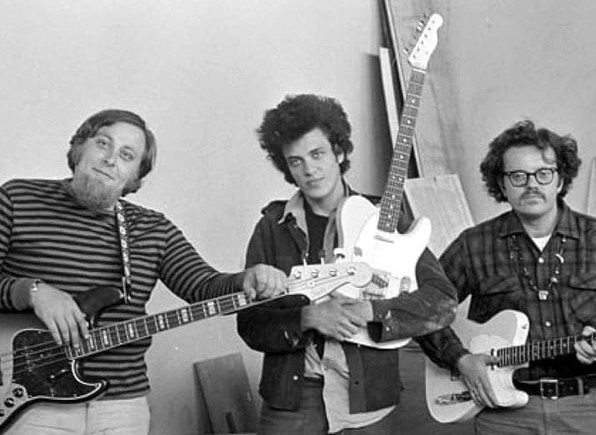
(L-R) Bassist Harvey Brooks, guitarist-singer-bandleader Michael Bloomfield, and singer Nick Gravenites of the newly-formed Electric Flag, probably shortly before they performed at the iconic Monterey Pop Festival in 1966.Facebook: Not Necessarily Stoned, but Beautiful: Hippies of the 60s and Beyond
I also just came across a third photo, which I decided to include because it is perhaps more upbeat, yet still complex. It shows Bloomfield with Brooks and singer-songwriter Nick Gravenites (who is credited with co-composing “East-West.”), about the time they had formed The Electric Flag, following all the music previously discussed. It was a marvelous group, bursting with grimy soul and ingenious jazzy finesse, but all too-short-lived. You can see the weight of life bearing down on Bloomfield, as a still-young man in his 30s. He was far from finished, but perhaps his fate was sealed.
He died in in his car, alone on a San Francisco street, of a drug overdose at age 37.
“Heroin, be the death of me.” — Lou Reed, The Velvet Underground
Milwaukeean Milke Neumeyer continues his pied-piper ability to captivate with his four-mallet mastery of both vibes and marimba which, set up at 90-degree angles around him (above), he controls and merges like a traffic cop turning street commotion into a magical mystery turn.
I subscribe to Neumeyer’s YouTube video output, and this is the fourth time I’ve felt compelled to comment on his work, which reveals a mastery of video techniques to enhance the single performer, typically with multiple and simultaneous screens.
Here, he smartly choses to interpret a masterwork of pop music imagination, John Lennon’s “Norwegian Wood,” from arguably the Beatles’ best album, Rubber Soul, released in December 1965.
What’s impressive and enchanting, is that Neumeyer essays the melody and chords with a fine sensitivity to the implied lyrics and their evocative storyline, of a rustic, one-night romance.
Yet, in the middle, he takes off on a sophisticated jazz improv on the tune, with the effortless abandon of “this bird” who flies at story’s end, yet with wings fully weighted with the smoky romantic nuances of the encounter. Aside from his deft sliding through the chord changes, Neumeyer’s solo seems to open small widows of discovery on the well-known song. It’s worth replaying to absorb the solo again.
Throughout, the sustained sonics of the mallet-struck instruments enhance the glowing aura of fantastical immersion, so the narrative self wonders if he’s even spent the night with the elusive bird, or was it all just a dream?
One might play the original song from Rubber Soul, either before or after this rendition, to refresh your sense of Lennon’s original small stroke of genius (and George Harrison’s exquisite sitar interlude*), all reminded of superbly by Neumeyer’s contrasting yet vivid musical setting. Still, as we revisit, we must sigh again, “this bird has flown.”
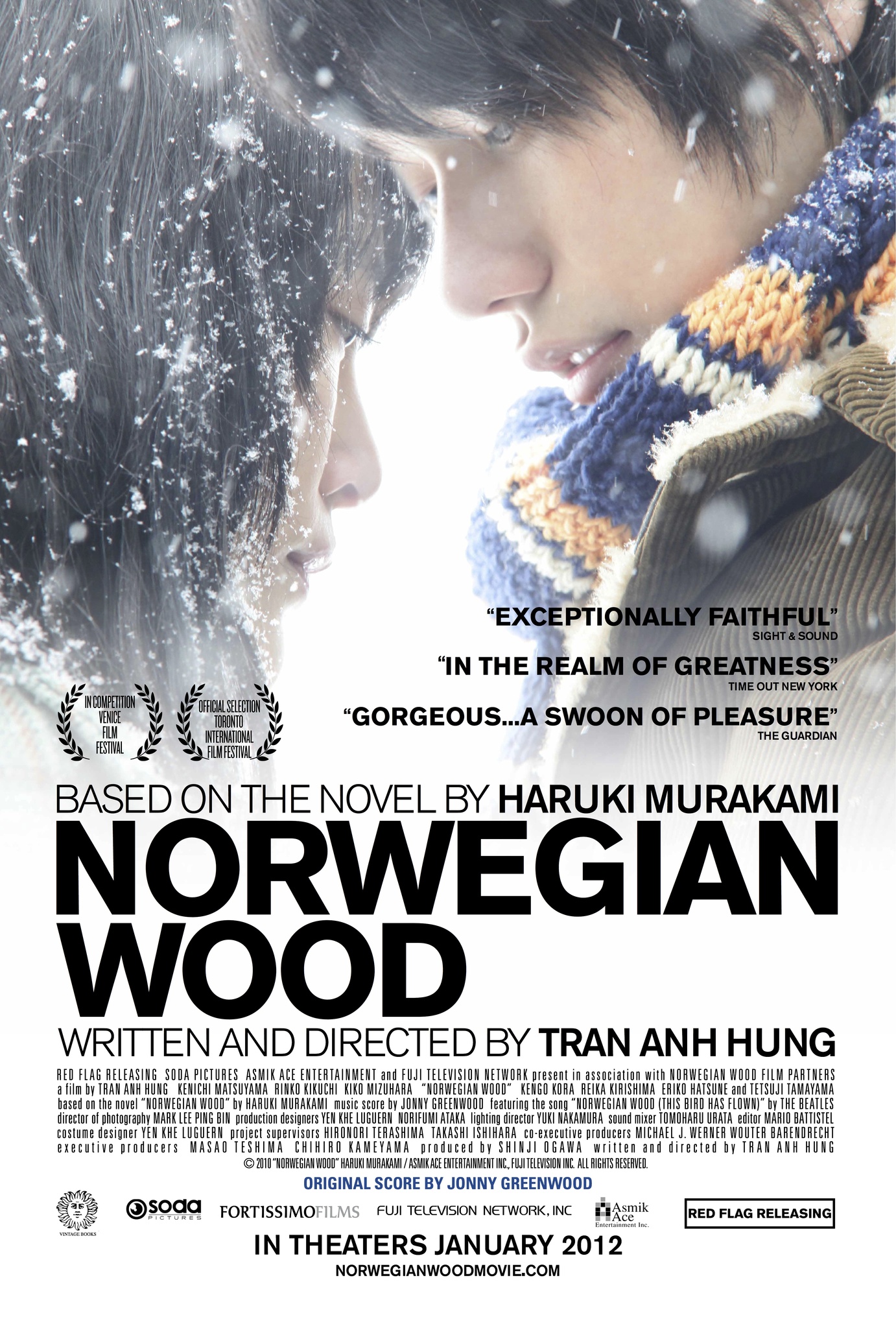
The evocative song has previously inspired a novel by the great Haruki Murakami, which in turn has inspired a film, which I have not seen, but very worthwhile, I’m sure.
IMDb
Here’s a You Tube of the original “Norwegian Wood” (all the more a miracle of miniature tale-telling, at a mere two minutes!):
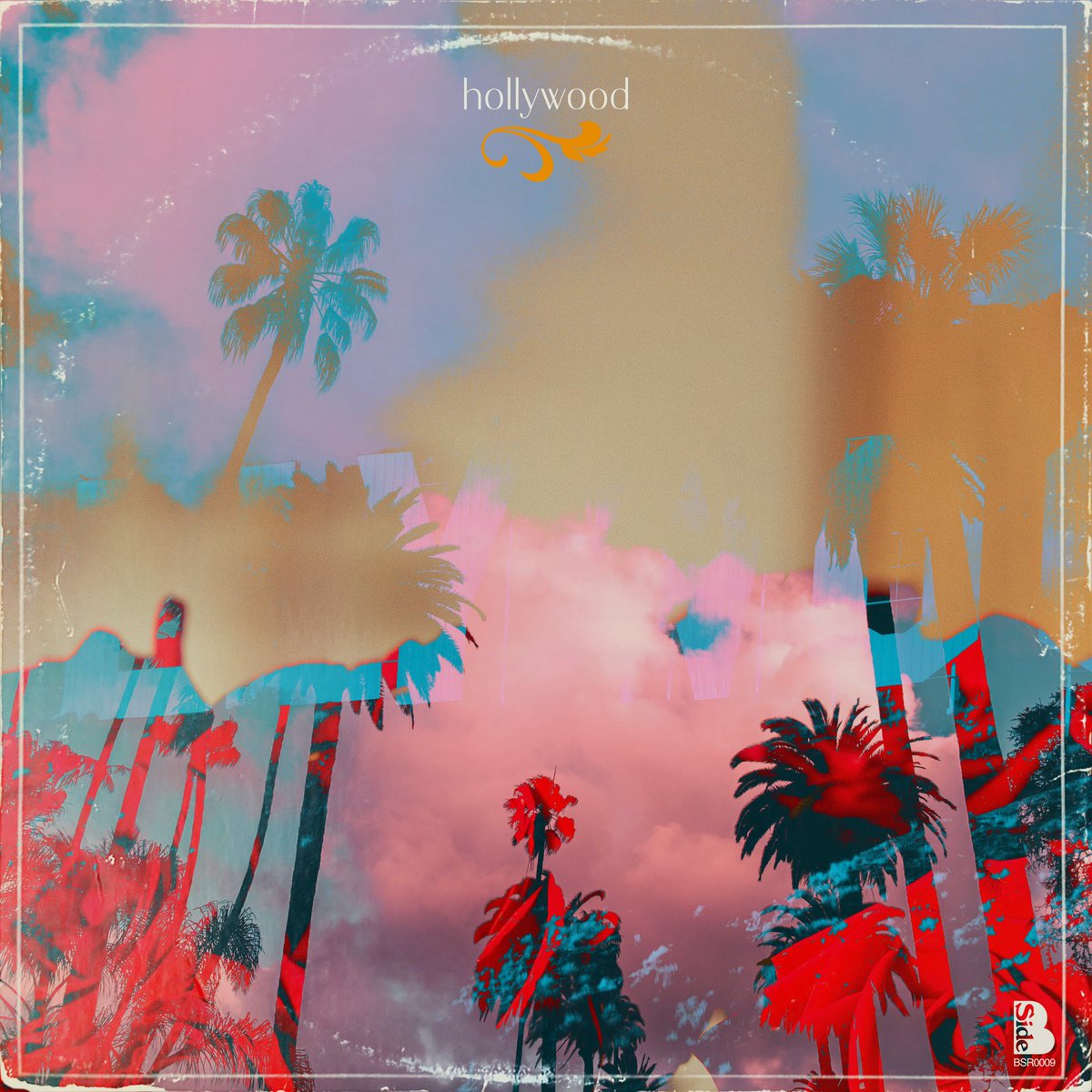
Here’s my review of an extended single “Hollywood,” by trumpeter-composer Jamie Breiwick and synthesizer player Matt Meixner, published in TheShepherd Express:
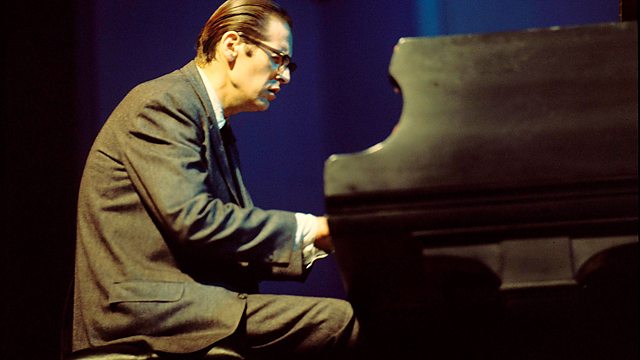
I wanted to share this full concert video of The Bill Evans Trio, from London in 1965. Some may question colorizing a B&W film but the BBC camera work is very good, with striking angles abounding.
Evans was one of the greatest and most influential of modern jazz pianists. He expanded the instrument’s harmonic palette while staying largely within the middle of the keyboard, like a magician pulling marvelous things out of a deep, dark mysterious hat. He forged an extraordinary exploration of internal, inverted and augmented voicings, very ambidextrous, two-handed phrasing, and a rare impressionistic touch, sometimes moody and murky, other times crystalline. Yet he was fully capable of robust, singing swinging.
The bassist is Chuck Israels and the drummer is Larry Bunker.
The host is Humphrey Littleton, a British journalist. He has an excellent quip, after the trio interprets “Summertime.” This trio is a reason why many musicians have come away from hearing it “poised between elation and utter despair.”
The concert opens with a superb Miles Davis composition, “Nardis,” that Evans made his own, and strangely, Miles never recorded.
Plagued with a chronic heroin addictions, Bill Evans died at age 50, making this video all the more rare and precious.
Enjoy, and may Bill Evans live forever, to let our hearts sing. 1
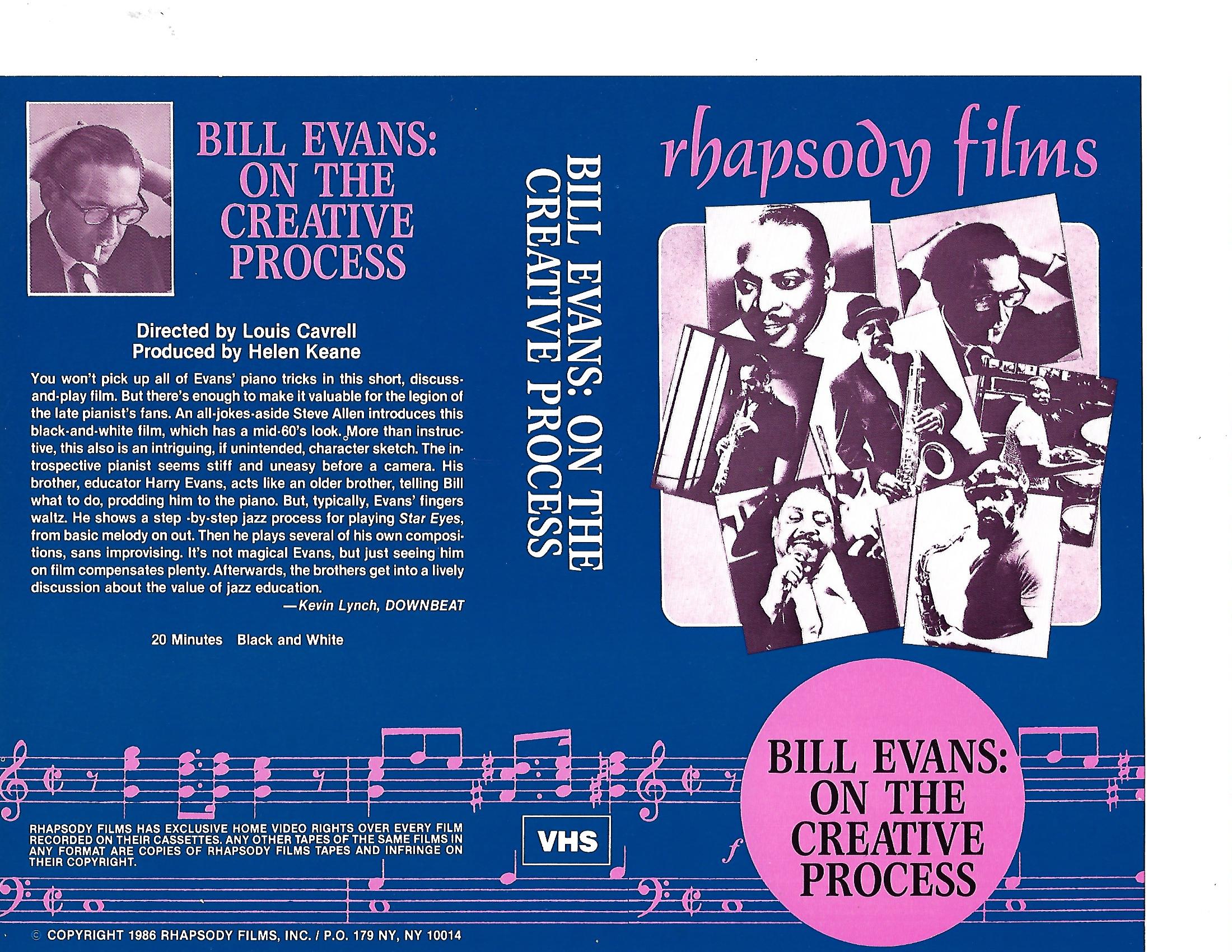
However, this is not the be-all-and-end-all of Bill Evans on video. In 1986, I was fortunate enough to see and review this video, The Universal Mind of Bill Evans: The Creative Process, for Down Beat magazine (note the extended blurb on the video cover from my review for further details). The video was then titled Bill Evans: On the Creative Process.
The video is intelligently and wittily introduced and commented on throughout by comedian-pianist Steve Allen. What follows is a enlightening conversation by Evans and his brother Harry, dominated by the pianist, of course, until his pianist brother skillfully cues up Bill’s illuminating demonstration of the jazz harmonic realm as applied to the standard “Star Eyes.” .
Amid the conversation Bill Evans tosses out some off-handedly dazzling piano segments to illustrate his points.
For all the sophistication that arises, also fascinating is Evans’ introductory comment of valuing the opinion of a “sensitive layman,” perhaps as much as a professional musician, because the pro musician “must fight to preserve the naivete that the layman already possesses.”
__________
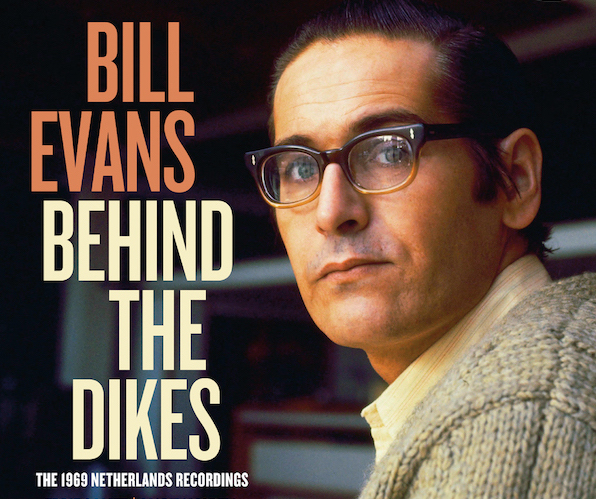
Fortunately there is a wealth of audio recordings of Bill Evans that traverse his career, shortened as it was. One of the most striking and valuable of very recent releases is Bill Evans Behind the Dikes, recorded in the Netherlands in 1969. The two-disc set is superbly produced on the Elemental Music label, and includes Evans performing two classical orchestral pieces, Granados’ Granadas, and Faure’s Pavane, with the Metropole Orkest. Evans trio otherwise includes Eddie Gomez on bass, and Marty Morrell on drums.
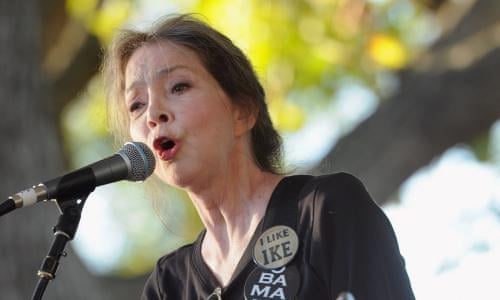
Singer songwriter Nanci Griffith was an activist with plenty of strong stances but, unlike a Texan who became president, this Texan did “do nuance” in politics, as her two campaign buttons here suggest. Courtesy The Guardian
Music moves us, as it does the savage beast. Can it move the savage beast within us? I was accused, long ago, of avoiding cliches in my music writing, when I really try to respond in a creative and vivid way to what I hear from musical artists. That approach can allow the music to carry me where the artist has the power to go, and can lead to plenty of metaphors and similies, in an effort to evoke or describe music in words.
Still, I know some cliches have staying power, or can rise Phoenix-like from the past, so the “savage beast” can cut, or bite, in two ways at least (there I go with the charred simile and painful metaphor, but that’s just how it comes out.).
The savage beast or SB (to not belabor the name of the aging, wizened creature) comes to mind today for two reasons, which bite in opposite directions:
1. The SB (8) (can an “o” be aptly inserted between those two consonants?) is Senate Bill 8, the outrageous new Texas law against a woman’s right to choose an abortion, which that the state legislature just passed. “The Texas law, known as Senate Bill 8, amounts to a nearly complete ban on abortion in Texas because 85 to 90 percent of procedures in the state happen after the sixth week of pregnancy, according to lawyers for several clinics.” 1.
In other words, most women are unaware they are even pregnant at six weeks, so their right to chose is effectively revoked.
The ban allows no exemptions for rape or incest.
Even more bizarrely draconian, the bill gives any Texas citizen a $10,000 motive to sue any person they believe might have “committed” an abortion, or even facilitated one, even a cabbie or Uber driver who takes a woman to a clinic. If the suer wins, they also win $10,000. Has any state law ever been more corrupted by the money motive? (The Supreme Court’s notorious 2010 Citizens United case, may still take the cake nationally for money-corrupting politics, contorting the 14th amendment into a weird concept of “corporate personhood”)
2. The SB within Grammy-winning singer-songwriter Nanci Griffith, a true daughter of Texas who died recently, but has made her view on the political subject quite clear. I think the new law would have the SB within her rising again. She made it musically clear when she composed and recorded her song, “Time of Inconvenience,” which protests pro-life activism against Roe v. Wade, and aims her slightly sideways-yet-pointed irony towards those who feel it’s too “inconvenient” to make their voices heard for justice, especially today, to get out from behind our devices, and expose ourselves perhaps to verbal or even physical abuse.
The song, recorded on Flyer in 1994. has been covered by several other artists. And if you listen to the song now, it is startlingly relevant today, even setting the bigger-picture scene of:
We’re living in a time of inconvenience./ Compassion fails me with this meanness in the air./ Our city streets are filled with violence./ So we close the doors to the anger/ and pretend that it’s not there…
Griffith uses the first person plural throughout the lyric, so she included herself among those guilty of feeling that certain activism is inconvenient. But Griffith was clearly not closing her doors at this point. She was out in the streets…”Here I go again…the evil seems to cling to the soles of my feet…”
Here is the song in a YouTube video
The one time I saw her live, in Madison in 2008, I recall a bracing forthrightness about her, a fearlessness about speaking her mind on anything. By then, she’d survived two cancers and looked older than I expected. But clearly wisdom, weary yet heavy-booted, carried her songs and buttressed her being.
She was indeed an activist with largely liberal voice, and “Inconvenience” includes a kicker line: “And if you ain’t got money / You ain’t got nothin’ in this land.” But she also understood political nuance, unlike fellow Texan George W. Bush, as suggested in the two campaign buttons in the photo at top, one extolling the reasonably moderate Republican administration of Dwight Eisenhower, the other the new breed of Democrat represented by Barack Obama..
And even if in “A Time of Inconvenience” “the right-to-life man has become my enemy,” she’s speaking about more than a woman’s right to choose. She’s singing about “the age of greed and power/ where everyone seems to need someone to shove around./ Our children come to us for answers/ Listening for freedom but they don’t know the sound.”
Part of the freedom she references is the freedom of life denied an innocent man wrongly condemned by the death penalty, which isn’t addressed explicitly in this song and yet in the video you see the brilliantly pointed rejoinder to both Citizens United and the death penalty on a protest sign: “I’ll believe corporations are people the day Texas executes one.“
She does directly address the death penalty in a later song, “Not Innocent Enough,” inspired by a conversation she had in a car with Phillip Workman, who was later executed in Tennessee for allegedly murdering a police officer, based on false witness testimony and evidence that was withheld or manufactured, the county district attorney at the time admitted. The state Supreme Court refused to hear Workman’s final appeal.
Philip Workman in 2002, executed May 9, 2007. Wikipedia.
“I wanted to tell him, ‘You know you didn’t do this, hang in there.'” Griffith recounted in an interview with masslive.com 2 “But I didn’t. It’s overwhelming. I started writing that song not long after that conversation with Phillip, but I didn’t finish it until after he was executed.”
Q. What kind of reaction have you gotten to the song?
A. “Everyone’s amazed that they didn’t know about this case, just like The Lovings Vs. the State of Virginia (which inspired the title song of her 2009 album The Loving Kind). Just as they are amazed with the case in Texas where the guy was executed and then exonerated after the execution. I’m a total abolitionist when it comes to the death penalty but these cases make me feel stronger about that than ever.”
Though she always excelled at vivid, character-driven storytelling songs and those of failed love, she clearly became more activist over the course of her career, with an increasing array of politically-charged songs, including “Cotton’s All We’ve Got,” “It’s a Hard Life,” “The Loving Kind” (about interracial marriage) and “Hell No (I’m Not Alright)”
The latter song became an unexpected anthem in 2012 for protesters during the Occupy Wall Street movement.
That same year she told an interviewer that she was “too radical” for contemporary US politics. “I was angry about something,” she said about “Hell No (I’m Not Alright).”. “Apparently everybody else was angry about the same thing.”
In her book, Nanci Griffith’s Other Voices: A Personal History of Folk Music, She comments about “Time of Inconvenience.”: “It says, ‘I would go to war to protect a woman’s right to choose.’ In other words, I’m saying if you take the law away from me, that gives me the right, in America, to make my own choices, that would be the only thing I would pick up a gun to defend.”
Would Nanci kill in those circumstances?
“I would go to war to defend that law, and if a woman’s right to choose, and to do with her own body what she sees fit, were taken away from me, I would go to war, I definitely would fight for my constitutional right to keep the boys in Washington out of my bedroom. As a say in that song, ‘The right-to-life man has become my enemy.’
“When I do voters for choice shows for Gloria Steinem, there are always people outside with their placards and signs and shaking those rubber fetuses in the air and all that horrible stuff. So I would hope that by writing about these concerns and similar subjects I’m carrying on that great tradition in folk music.” 3.
Those tempted to begin messing with the stance of a woman protecting her right to chose, remember she’s considering lethal protection in self defense. This recent meme addresses the duplicity of being “pro-life”: New Rule: If you ban abortion before you ban military-style assault rifles that massacre children in school, you’ve lost your right to be called “pro-life.”
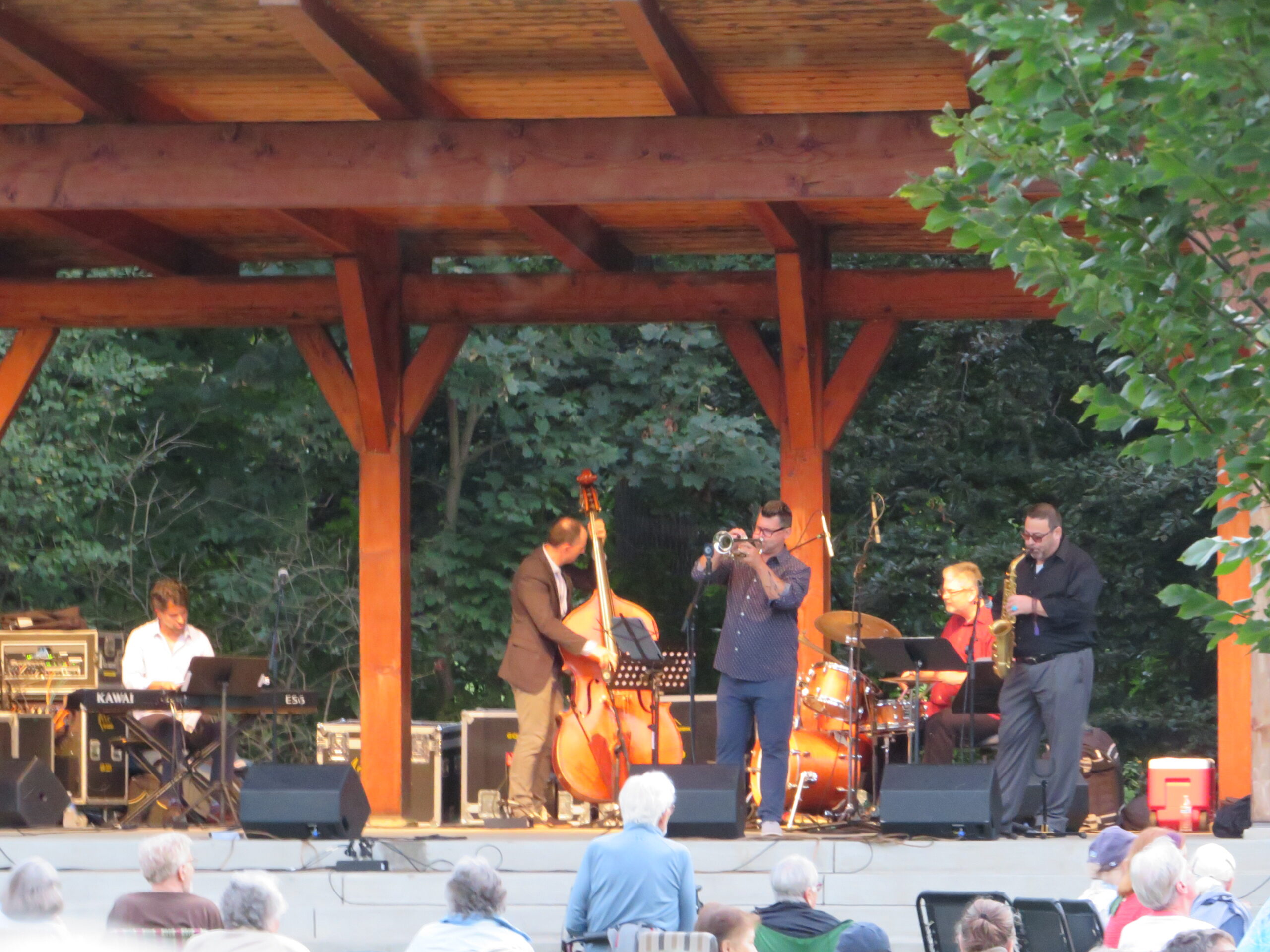
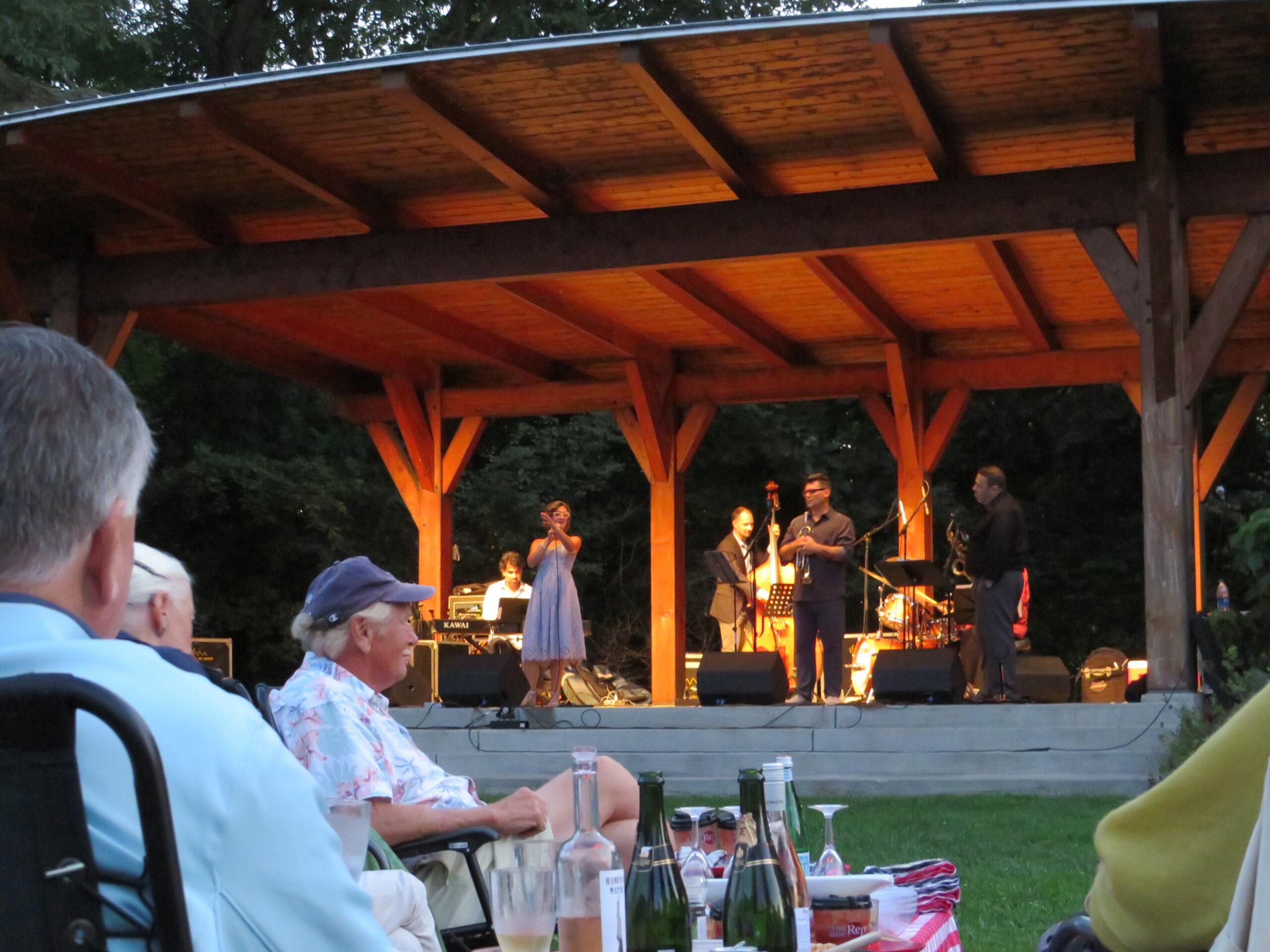
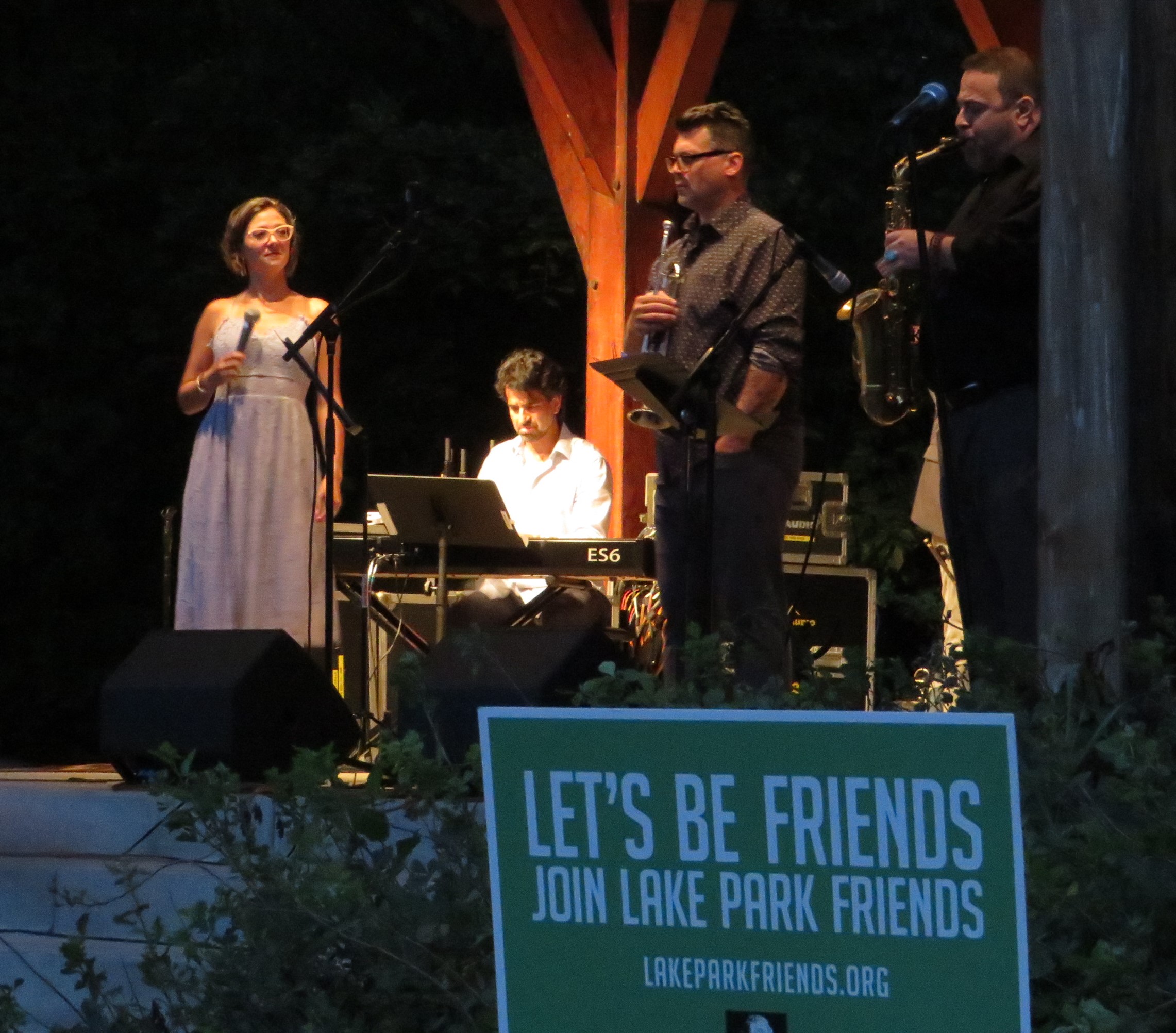
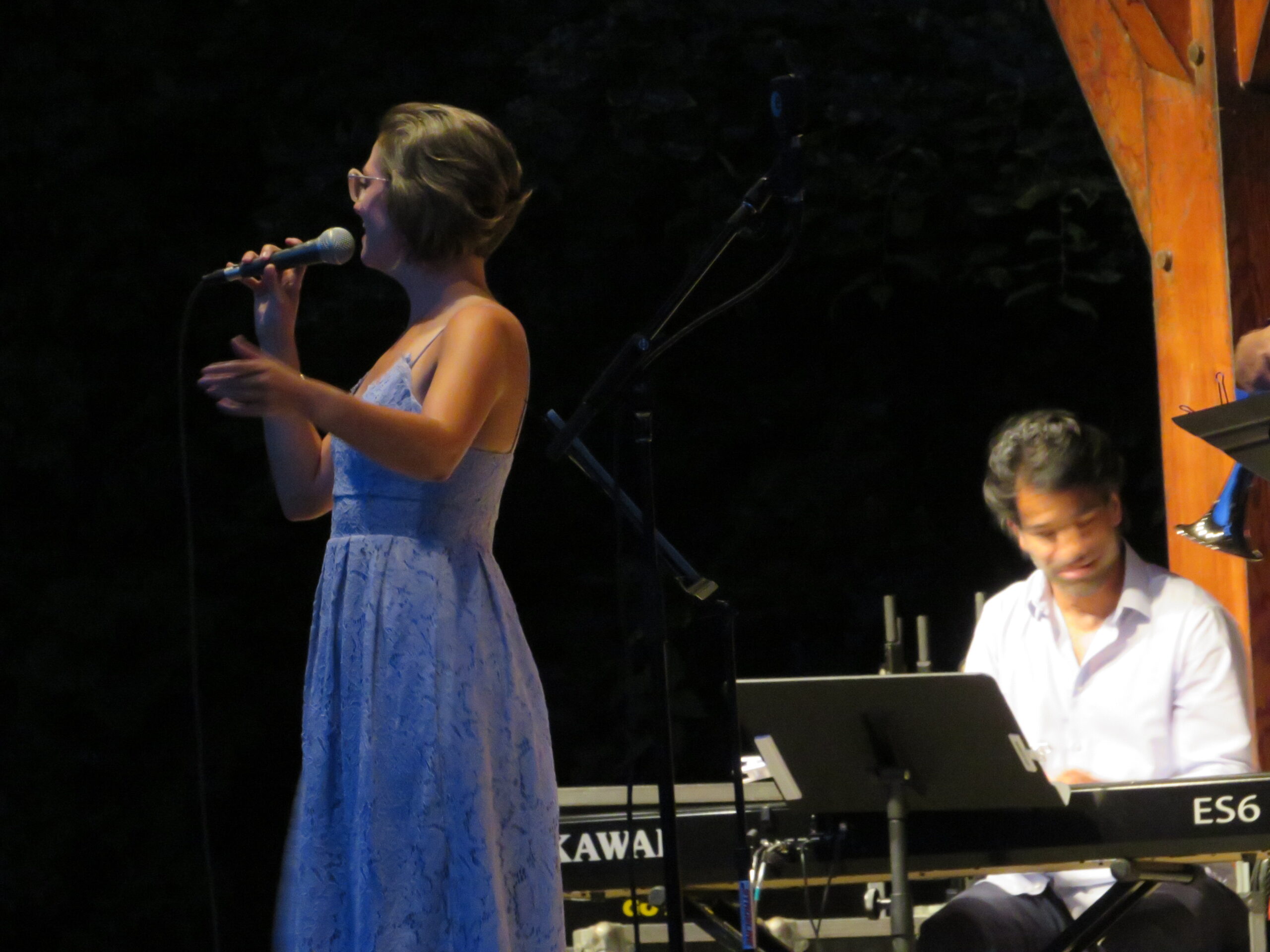
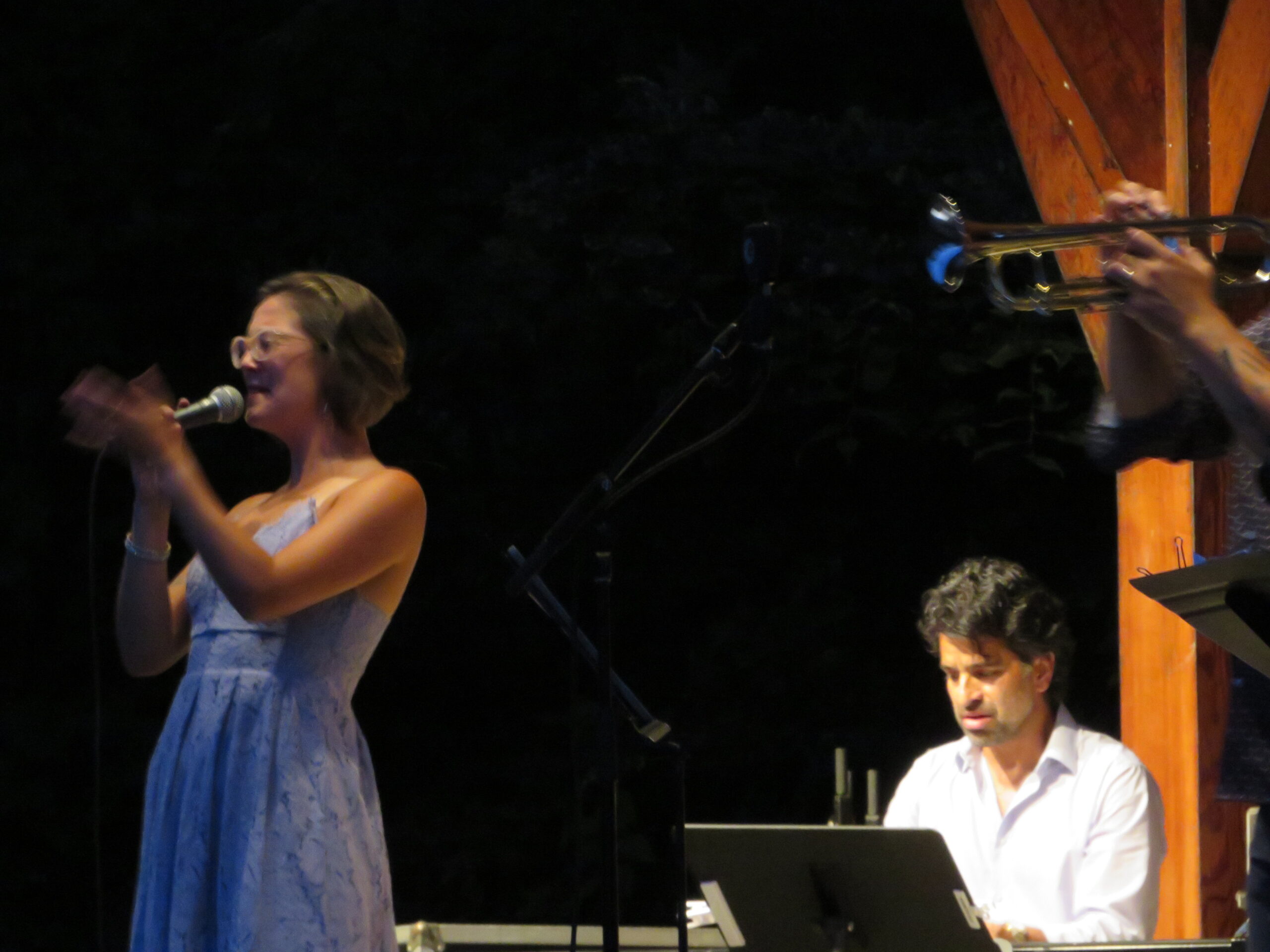
The Eric Jacobson Quintet warms up a large crowd at Lake Park, before accompanying singer Alyssa Allgood in a Cole Porter repertoire, Monday night. All photos by Kevin Lynch
Like many folks, I’m still catching up with the post-pandemic (?) live music just now sprouting up around Milwaukee. This is the first time I’ve attended this Lake Park concert series and, alas, it was the last of the summer.
The Series, at the Lake Park Summer Stage, is called Musical Mondays and is sponsored by WMSE 91.7 FM and The Lake Park Friends.
The Eric Jacobson Quintet and singer Alyssa Allgood made vintage Cole Porter love (and love “gone-wrong,” or even “for sale”) songs fit right into the fertile, ripe late-summer atmosphere.
A large and diverse crowd seemed to soak up the concert’s slightly ces la vie spirit of passing love and passing summer, even as the sunset melted into nightglow, sustained by self-brought wine and foodstuffs, the deeply verdant setting, and insouciantly swinging music. Yet this was no pure August idyllic — mosquitos hovered in small clouds as did hungry bats and nighthawks, chasing after them.
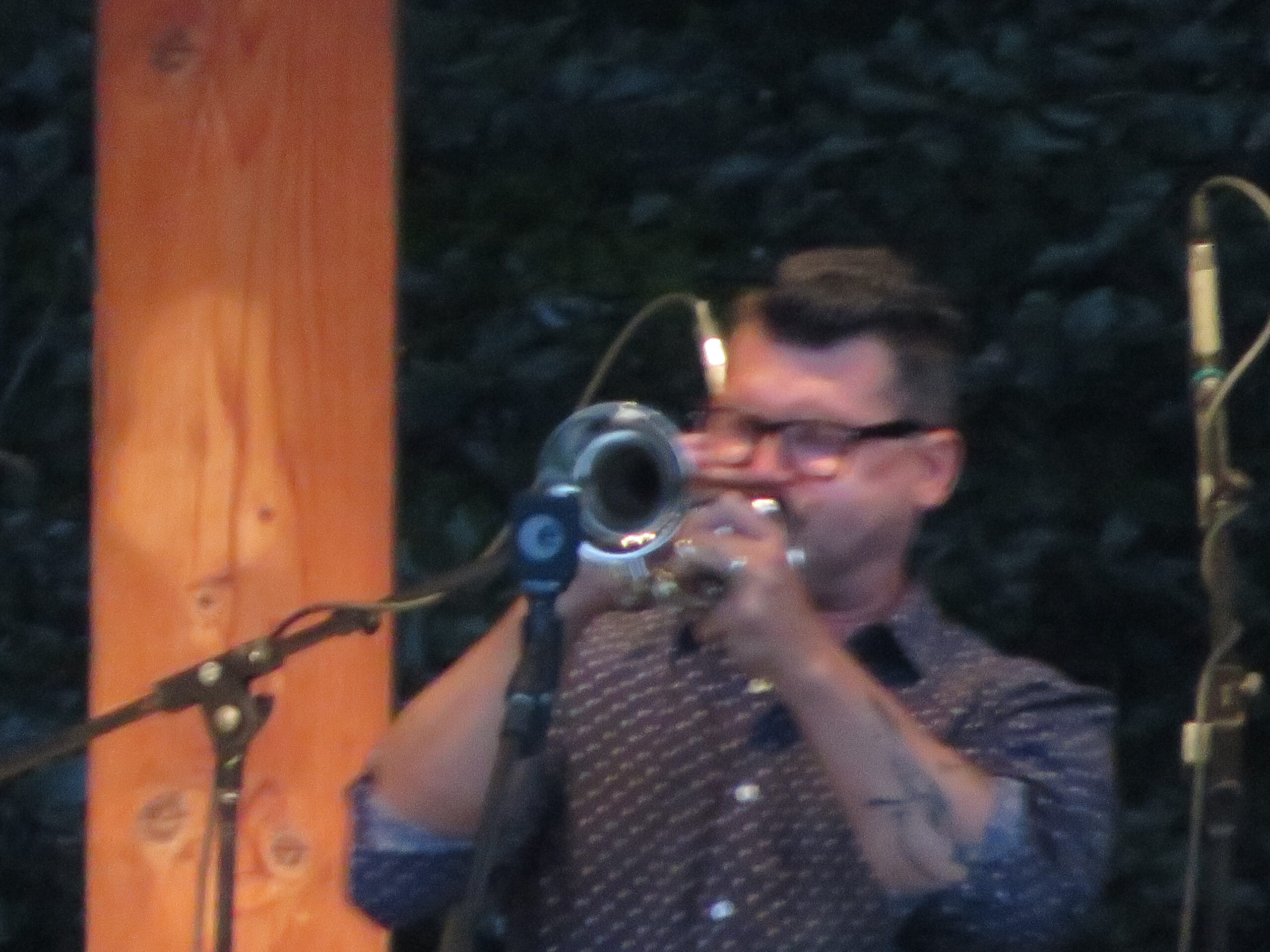
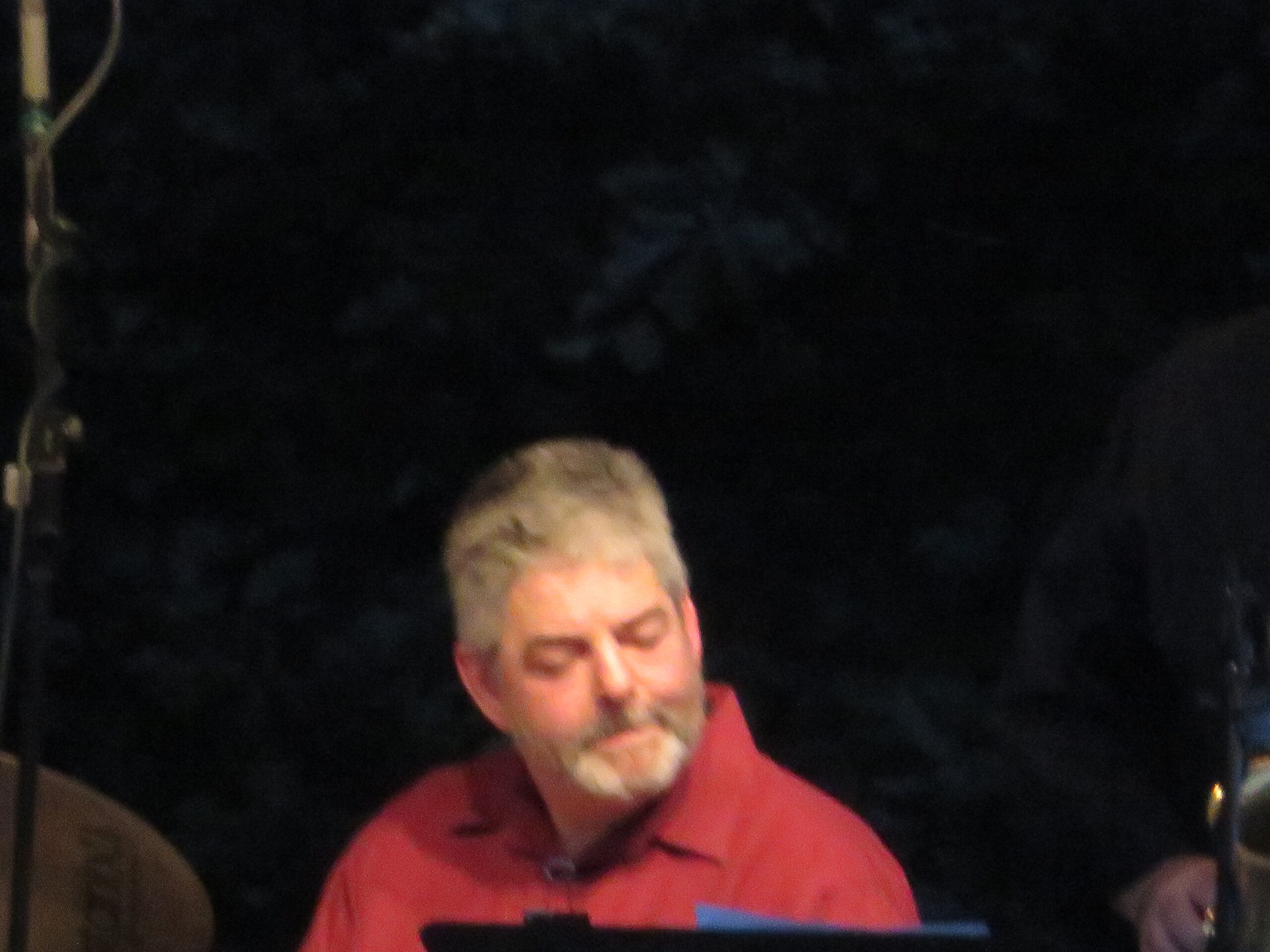
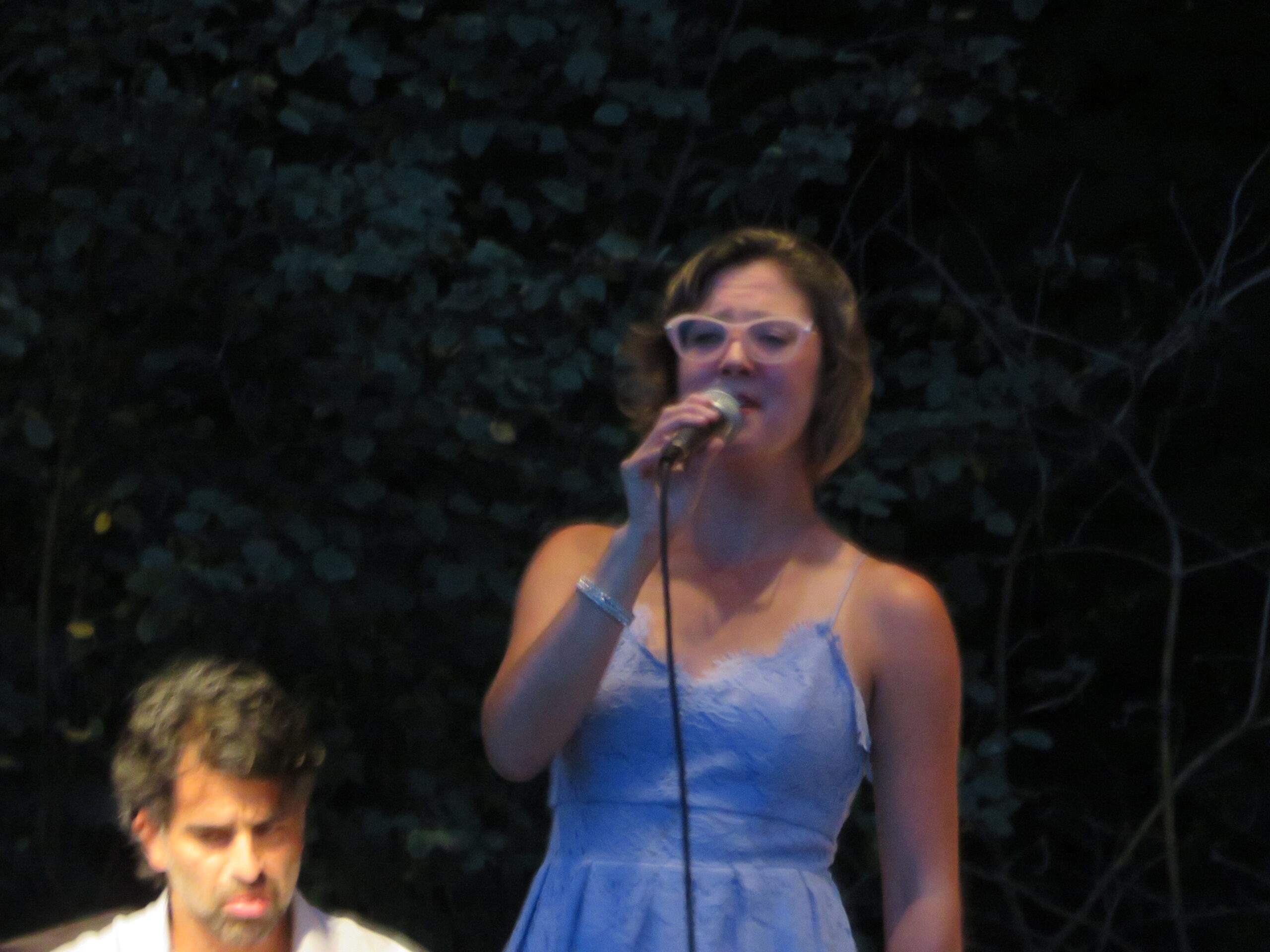
I don’t consider the images below good photojournalism, as I’m more of a writer than a photographer, plus I’m just getting used to a brand new camera. Nevertheless, I thought I’d share some of these, as these musicians are worth remembering and catching up with, as is the concert series, even if you must remember this (not a Porter allusion) until next summer.My “favorite” photo, such as it is, might be the “happy accident,” which is more background leaves than anything.
I arrived late and, with my photo-taking focus, won’t make a critical assessment of the performance, aside from a general thumbs up to the music, and to the weather gods who finally gave us a cool evening break.
The spirited band was led by trumpeter Eric Jacobson, with saxophonist Jesse Montijo, keyboardist Mike Kubicki, bassist Clay Schaub, and drummer Dave Bayles.
Singer Alyssa Allgood may be less known to Milwaukee audiences. The Chicago-based vocalist has earned consistent critical acclaim for her instrumental approach and accomplished scat and vocalese singing. She has gained attention for “her technical control and [the] creative imagination of her work” by critic Howard Reich of The Chicago Tribune.
Allgood was named “Best Jazz Entertainer” in the 2019 Chicago Music Awards and won the first Ella Fitzgerald Jazz Vocal Competition held in Washington D.C. in 2017.
Her performance credits include a residency at the Jazz at Lincoln Center Club in Shanghai, appearances at Birdland Jazz Club in New York City, and headlining appearances at the Green Mill, the Jazz Showcase and Winter’s Jazz Club in Chicago. Allgood has also appeared at the Chicago Jazz Festival, the Dakota, the Jazz Estate and Noce Jazz Club.
Allgood’s debut album, Out of the Blue, was released in Fall 2016 to wide critical acclaim. It received a 4 star review from DownBeat Magazine and was named a “Best Release of 2016” by seven different publications including The Huffington Post and All About Jazz and a “Best Debut Release of 2016” by The New York City Jazz Record.
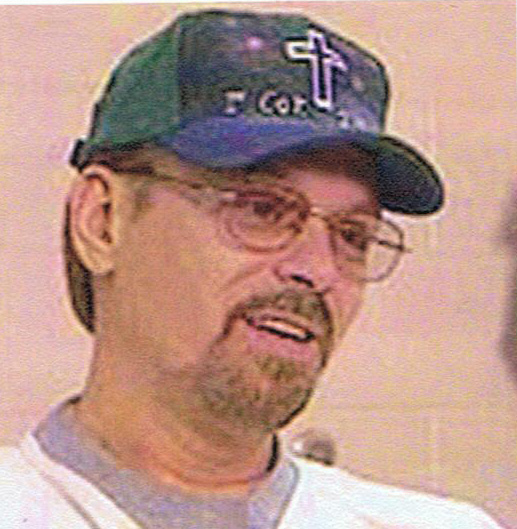
Jack Covert, in 2017, when he retired from his successful career in the book business, after a memorable start as a small Milwaukee record store owner. Courtesy onmilwaukee.com.
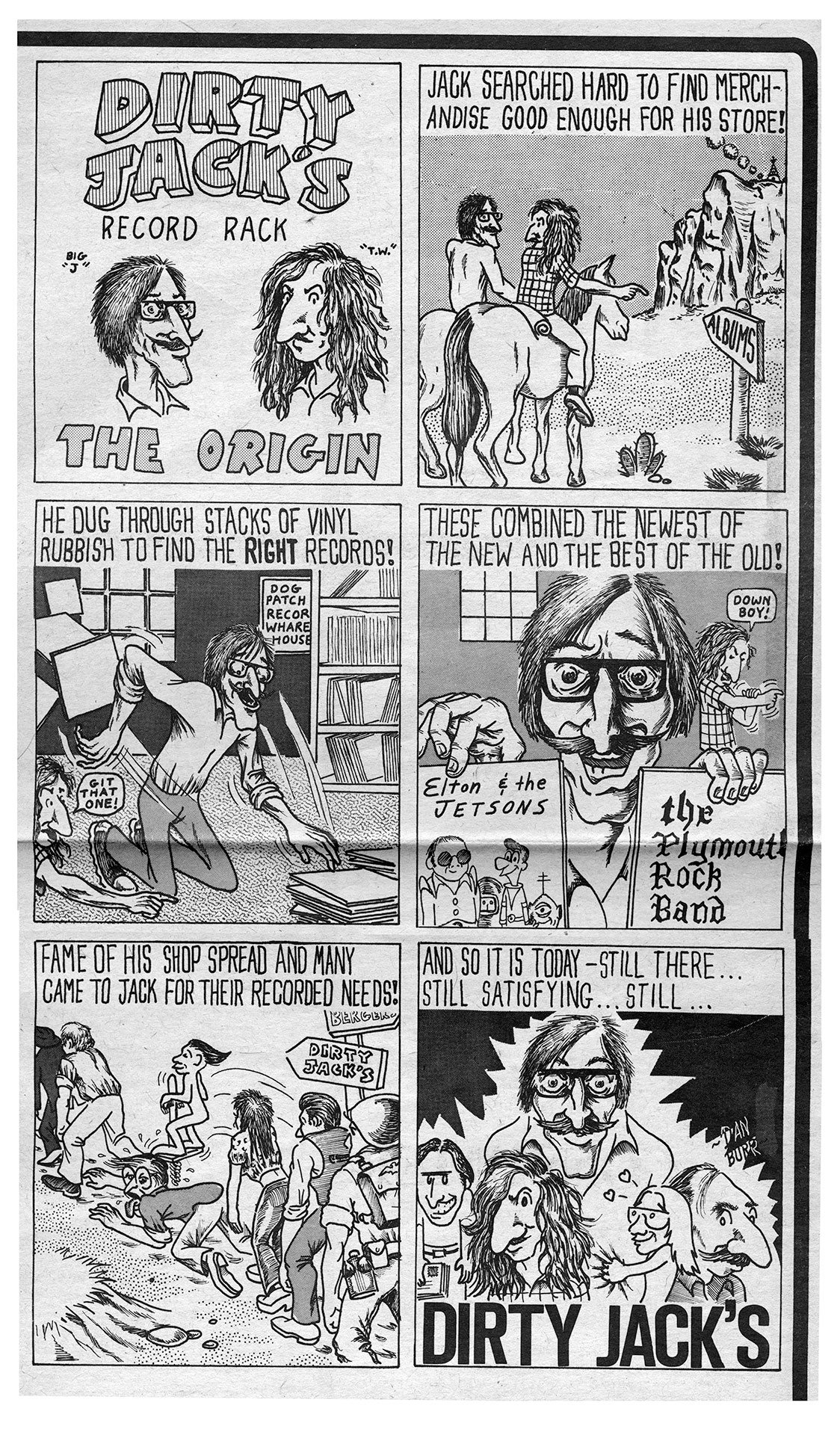
Dirty Jack hit the dirt hard, for the last time. It may be the last time, but I don’t know a music fan who dug deeper into music as a record buyer, and into album warehouses and personal collections, as an eager buyer-seller. Dan Burr’s Crumb-esque cartoon strip (below) illustrates that Jack Covert well, (taken from the linked obit by Dave Luhrssen of The Shepherd Express:)
I’m a bit late in acknowledging Jack, but last week I was distracted by writing about the death of Nanci Griffith, another great person who fit into the popular music world in her own slightly square-peg-in-a-round-hole way.
Dirty Jack’s Record Rack, on Farwell and Irving, was my favorite record store in my youth, even though I ended up becoming an album buyer at Radio Doctor’s Soul Shop and Peaches Records. 1
But in the early ‘70s, Jack’s Rack was closer to my Downer Avenue family home during college at UWM, even during my early years working at Radio Doctors. And Jack’s always had plenty of jazz in stock as well as rock, as Jack’s tastes leaned jazz-wise, as did mine. Plus, his hole-in-the-wall shop was THE PLACE for hole-in-the-corner “cut-out” LPs, a dream for a collection builder’s on a budget. 2.
And Jack knew how to buy and sell. I remember Jack several times almost physically escorting me to the cash register with an album I was unsure about. He also wasn’t shy about letting his crankiness show right in the store and, with that Snidely Whiplash mustache, you shoulda been a bit suspicious of this guy (see the snapshot photo in Dave’s obit piece). Yet I almost always was thankful he sold me.
Dan Burr’s affectionate cartoon history of Dirty Jack’s Record Rack. The store staff members in the last panel, below Jack, are (L-R) Ed Heinzelman,* album buyer Terry Wachsmuth, Mark Schneider and Chris Ballone. Courtesy Dan Burr and Shepherd Express.
Take a look at the smile in the photo at top, taken when he retired. Back in the day, Jack would jump on you, then flash that I’m-your-pal-with-three aces smile, whenever he and you needed it.
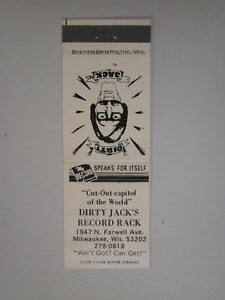
And how many record stores in the 1970s had custom marketing matches, with the owner’s beaming mug on them, proclaiming it “Cut-Out Capital of the World!” ?
Courtesy ebay.com
His second-in-command at the Rack was a slightly-built long-hair named Terry, who had a bit of Jack’s crankiness, in a more skittish way. But Terry really knew his stuff, as did Mark Schneider, the friendliest Jack’s employee, in my memory. Mark wore his erudition gracefully. Today the San Francisco-based Schneider — married to my former Milwaukee Journal colleague, rock critic Divina Infusino – comes to mind when I see Steve Earle’s guitarist Chris Masterson, who’s grown into a killer axe wielder since I last heard him live. Masterson, like Mark, has an affable personality and the same sort of long, ultra-blonde hair, and glasses. 1
I digress partly because I know Jack was a smart businessman who really valued and knew how to use his best employees. I think Mark would agree.
I also admit my comparisons of record store personnel to pop music artists may seem a bit over-the-top. But it’s something that I think Rob Fleming might nod his head to. He’s the slightly grandiose fictional owner of the record store in Nick Hornby’s wonderful novel High Fidelity, a comparison to Dirty Jack’s which Dave Luhrssen also makes aptly. I don’t think Jack or any of his guys floated through the sort of confused romanticism as does Rob (played by John Cusack in the hit film version). They knew how to channel their romantic impulses into music passions.
I had moved to Madison by the time Jack was hired at Schwartz Booksellers so I didn’t see him succeed as founder and president of 800-CEO-READ, a company that steered through the challenge from big box bookstores like Borders and Barnes & Noble and the rise of amazon.com “with ingenuity and a commitment to superior customer service for authors, customers, and the publishing houses themselves,” as the company’s press release on Covert’s death explains.
Jack Covert is also the co-author of 100 Best Business Books of All Time: What They Say, Why They Matter, and How They Can Help You (Link). The 100 Best has been translated into over 10 languages and the hardcover sold over 40,000 copies.
I’m still an “any-day-now-it-shall-be-released” author, but maybe Jack and I connected a bit because he also turned out to be something of a journalist. He wrote more than 600 monthly Jack Covert Selects business book recommendations that run in newspapers and business journals across the country, and has been featured on CNN and NPR, in Inc. magazine, Fortune, the Harvard Business Review, Washington Post, New York Post, BusinessWeek, and more.
That’s dealing in the big time. Not everyone in “big” business is a crooked wheeler-dealer. At this point, I’ll make no more personality comparisons to famous people.
Yes, Jack Covert had the smarts and personality, and always knew how to sell his stuff. I’m sure that mustachioed smile and those crafty ways are serving him well with Saint Pete at The Pearly Gates.
__________
Thanks to Dirty Jack’s staffer Ed Heinzelman for background information.
1 Unlike Mark Schneider, Masterson may actually be albino, like his fellow guitar gunslinger Johnny Winter. But Masterson was tearing up “Hey Joe,” with Steve Earle at an even nastier pitch than on a 2017 video available on YouTube. I saw Earle and Masterson do that great murder ballad as an encore recently at Big Top Chautauqua in Bayfield, Wisconsin.
2. Cut-outs are out-of-print records, typically with a hole punched in the corner of an LP, or a mark obscuring the normal USBN scan bar. I suspect Jack Covert would later know very well how to find and market out-of-print books in a similar fashion.



 IMDb
IMDb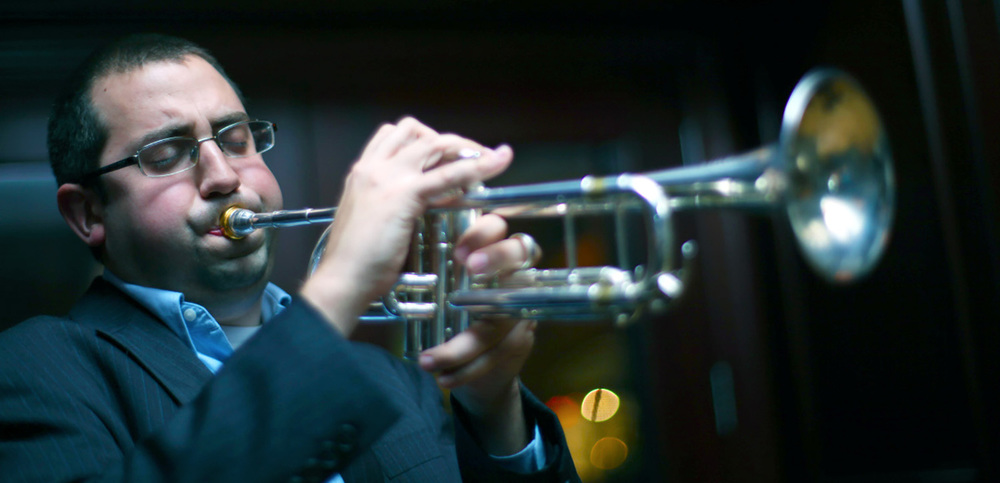



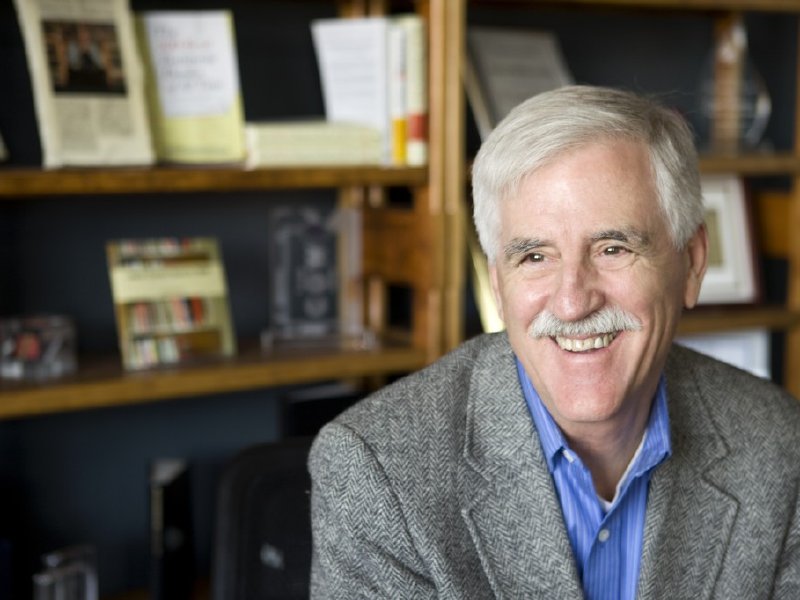 Jack Covert, in 2017, when he retired from his successful career in the book business, after a memorable start as a small Milwaukee record store owner. Courtesy onmilwaukee.com.