
Aaron Rodgers is finally getting a little more subtle with his comedy

Rodgers

Courtesy MTV.com

Okay you doubting culture vultures, I post this post to prove that Aaron Rodgers knows how to play the comedian, even right in the middle of a big game. But he doesn’t have to do it with buffoonish, look-at-me displays of himself (though some TD dances are pretty cool, I’ll admit).

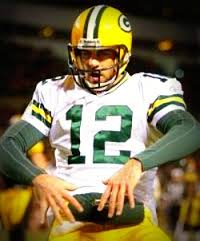
Of course, we know he’s gotten plenty of shit back about his (“Hey Rod-gers, discount double check!!”) champion belt move.

ddcheck“courtesy” freerepublic.com

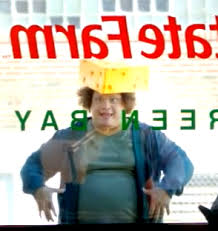
However his “pump up” commercial with “Hans and Franz” is one of the funniest ones on TV right now, ya!: https://www.youtube.com/watch?v=WxjCJxfECD8

commercial

A-Rod “pumping up” for Hanz and Franz with his “puny arms.” Courtesy article. wn. com

Nevertheless, he’s now much more subtle, the sign of a deft comedian.

The first video, from Sunday’s divisional-round win against the Dallas Cowboys, shows Aaron Rodgers’ unsurpassed coolness, even in the middle of a huge, tough game — so he can have fun. Earlier in the season, he slyly mimicked Bears’ QB Jay Cutler puffing a cigarette while lining up for the hike, because cameras have caught Cutler smoking cigs on the sideline during a game. (Caution: Cigarette smoking may be hazardous to your starting position.)

Here, Rodgers pretends to change the play call at the line by shouting out “New York Bozo! New York Bozo!” I’m sure he’s aware that TV mikes now pick up all of these line-of-scrimmage QB check-offs. So he’s being entertaining — he knows he’s got a few seconds to play around with. I laughed out loud when he did it. Of course, the Cowboys didn’t know he’s not changing the play — the true functional beauty of his goofy inspiration.
Afterwards, Rogers said that “obviously (the phrase) didn’t mean anything at all.” He’d be a slick bluffer in a poker game. Actually, you’ll notice Eddie Lacy and John Kuhn switch to new positions when Rodgers says it, so he may be bluffing the public, to not tip off a real signal, methinks.
Sportswriter Jason will be has the best interpretation so far: New York bozo is cravenly political New Jersey Gov. Chris Christie, who was Dallas cowboy owner Jerry Jones’ big-faux good luck charm, up in his luxury box. “New Jersey bozo” was too obvious so Rogers slipped into the ether of incantation. Plus logically New Jersey and New York are the most symbiotic states in America. So to put it in African terms, Christie’s “juju,” turned into a big pile of juju bees, and just added another inch to his rotund waistline. The Cowboys sort of lost the game by an inch when Dez Bryant bobbled the ball. We all know it’s a game of inches.
0105-chris-christie-jerry-jones-cowboys-hug-fox-nfl-4
Chris Christie in red, Jones is the sandwich meat. twz.com
The second video shows Rogers’ actual football artistry at its peak. While rolling to his left on his injured left leg — he rifles a stunningly pinpoint pass between the converging hands of two Cowboy defenders — to Richard Rodgers for the game-winning touchdown. The play kills me every time. (On these highlights, scroll down to “A. Rodgers threads the needle to R. Rodgers.”) http://www.packers.com/news-and-events/article-1/Full-Highlights-Packers-defeat-Cowboys-26-21/d6e6f1a2-bc6d-4ee6-a0e8-b3b8de673384
I doubt he could’ve zipped that pass in there without all of the “pumping up” he did with Hans and Franz. We know about all the tough, strong Germans in Wisconsin, especially in Brewtown.
To me, that pass is comparable to Sam Shields’ amazing recovery interception — after being “beaten” — of Tony Romo last year against the Cowboys, which you might recall.
________
Thanks to my friend Eric Shumacher-Rasmussen for FB posting the video of A-Rod’s “New York bozo” routine.  That lucky bozo was at the game yesterday with, in due time, about 1 million other people.

Up there in the wind, listen for Johnny Cash — his voice, courage and vision

18

Edward Curtis’s remarkably humane portrait of a young Mohave woman named Mosa helped inspire financier J.P. Morgan to underwrite the photographer’s documentation of the plight of Native Americans at the turn of the 20th century. Johnny Cash did similar cultural work in the latter part of the century. Courtesy Museum of Wisconsin Art.

Once the hunters and their tribes and families roamed and thrived through the plains and deep woods of America. Then the white man came, and eventually, after many bloody physical and political battles, would come what Johnny Cash called “bitter tears.”

I gained a graphic sense of this in 2013 when I saw, at the Museum of Wisconsin Art In West Bend, the stunning and heroic work of the great photographer Edward S. Curtis. He documented the demise of America’s native culture from a governmental genocide that led to a tribe reservation system largely segregated from American society.

The powerfully transporting exhibit revealed indigenous peoples all across America still hanging on to their natural habitat and way of life, before it was destroyed and partitioned out by the white man.
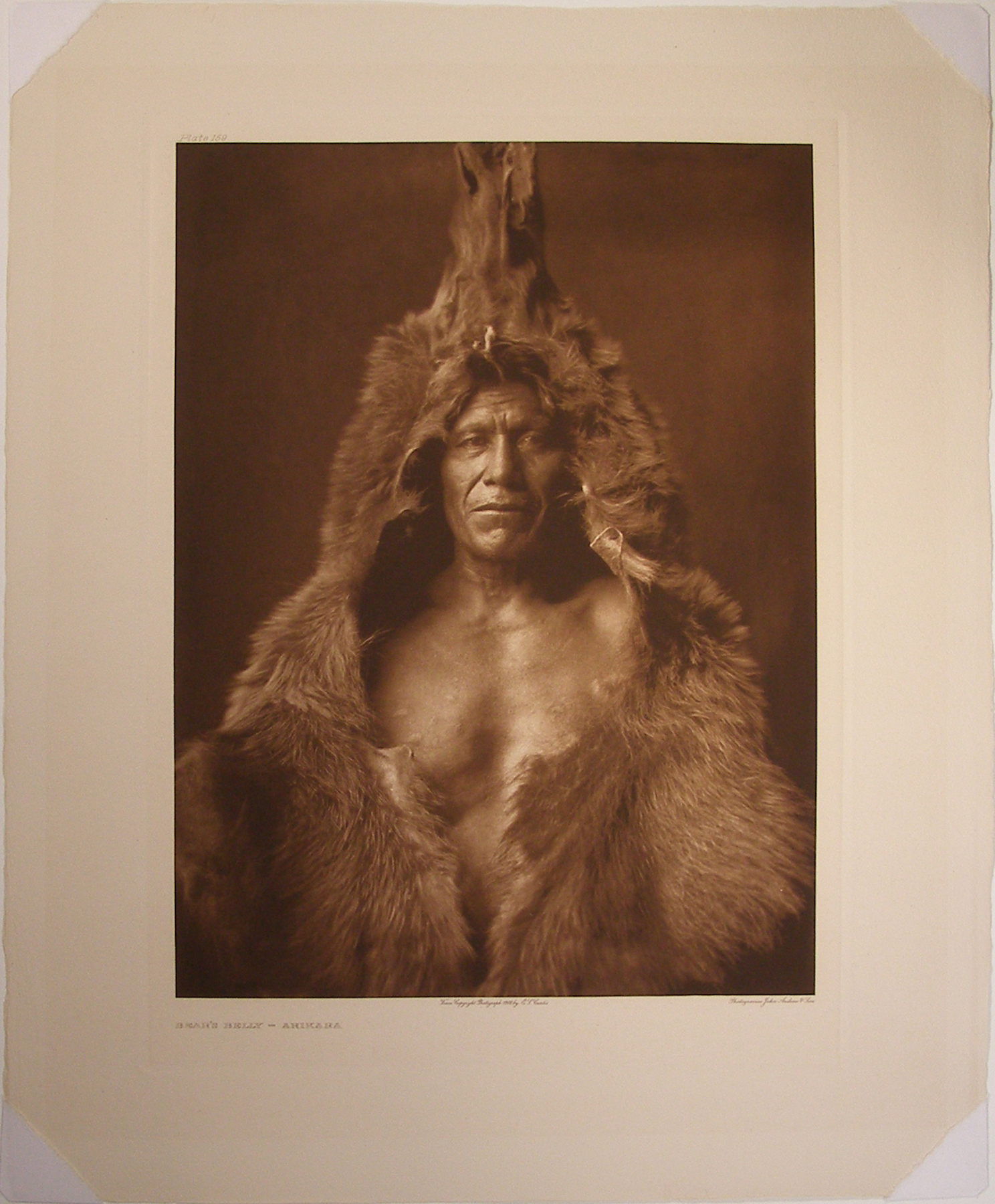
Below is a portrait Curtis took of a warrior named Bear’s Belly or Arikara, wearing a bearskin that served perhaps as camouflage in battle with cowboys and soldiers. Then, in 1908 he re-enacted the Ceremony of the Bear Medicine Fraternity, for Curtis’s camera.OLYMPUS DIGITAL CAMERA

“Bear’s Belly — Arikara” by Edward L. Curtis, Courtesy Museum of Wisconsin Art.

The Curtis photo exhibit prompted me to read Timothy Egan’s fascinating biography of Curtis, Short Nights of the Shadow Catcher. His life story provided great insights into Curtis’s accomplishment and what our Native Americans endured, lost — and sustained as a society and culture — despite all odds. 1

cash tribute

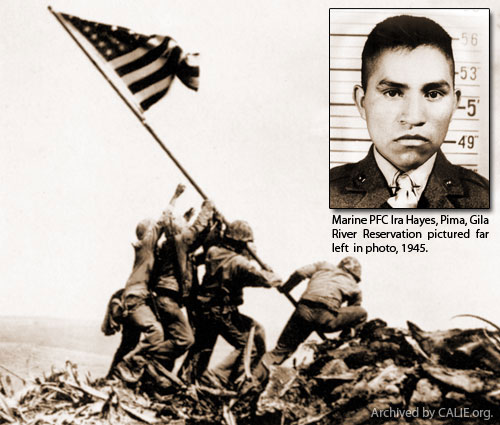
In 2014, I read Robert Hilburn’s powerful and probing biography Johnny Cash: The Life. It told of how Cash became the first major popular music artist of the era to address the ongoing plight of Native Americans, in his pioneering 1964 concept album, Bitter Tears: Ballads of the American Indian. It was partly inspired by Cash meeting songwriter Peter LaFarge, a man with mixed Native American blood, who was writing “The Ballad of Ira Hayes” and other compelling songs. Hayes was the Native American who was among the Marines who hoisted the iconic American flag at Iwo Jima in World War II. Then, after a celebratory return home, Hayes died in tragic circumstances. Ira_Hayes_WW2_Flag Native American Marine Ira Hayes is on the far left in Joe Rosenthal’s famous photograph of the raising of the American flag at Iwo Jima, near the end of World War II. Courtesy californiaindianeducation.org
The album’s cutting-edge emerged almost immediately in the lack of promotion from Columbia Records whom Cash termed “gutless.” In his biography, Robert Hilburn captures Cash’s own bitterness: “They found a lot of resentment from country DJs over the subject matter; they feared their conservative listeners would tune out, so they buried the record, and Columbia just rolled over.” 2.

In a way, Cash was my generation’s Edward S. Curtis, telling the truth in songs with their own images.

Since his death in 2003, many roots musicians have extolled Cash’s vision and artistic power notably in the live album and DVD,. We Walk the Line: A Celebration of the Music of Johnny Cash, a high-spirited, poignant and sometimes magical live concert evocation of the man’s legacy , which was my choice for No. 2 roots music album of the year in 2012, both on this blog and on NoDepression.com. 3.

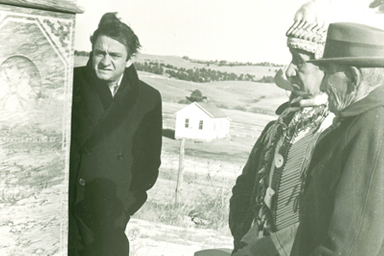
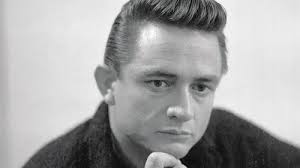
Then last summer, 50 years after the original release, came the deeply moving tribute album, Look Again to the Wind: Johnny Cash’s Bitter Tears Revisited, on Sony Legacy. That label has belatedly redeemed the reticence of Columbia Records when the original album essentially disappeared at its birth, like a small Indian burial mound, standing alone and windswept in a remote prairie. wounded Knee cash b wJohnny Cash (upper) touring the site of the 1890 massacre of Native Americans at Wounded Knee with survivors, in December of 1969.  And Cash (lower) near the time that he recorded “Bitter Tears.” Courtesy (respectively) of salon.com and latimes.com

As it happened, this year I experienced, especially in an October road trip to San Francisco and the world-class SF Jazz Center, a focus on the pan-cultural vitality of America’s original art form, jazz. So I didn’t write about Look to the Wind, in any detail. But I heard its solemn power and stirring pertinence, and chose it as my number seven roots music album of the year, without comment.

So I’m grateful that my former colleague at The Capital Times, John Nichols, and The Nation’s Washington correspondent, assessed the album as succinctly as anyone could in his recent “2014 Progressive Honor Roll” in the January 12/19 issue of The Nation. Here’s what Nichols wrote:

Most Valuable CD:  Look Again to the Wind: Johnny Cash’s Bitter Tears Revisited

There’s an argument to be made that Johnny Cash sang the most adventurous protest songs of the 1960s. Exhibit A: his 1964 concept album Bitter Tears: Ballads of the American Indian. Cash was a top-of-the-charts singer, but radio wouldn’t play it. So he bought a full-page ad in Billboard, decrying a “gutless” music industry for refusing to consider the plight of Native Americans and linking it to broader questions raised by civil-rights campaigners and a then very small antiwar movement. Yes, he declared, his songs were “strong medicine…. So is Rochester, Harlem, Birmingham and Vietnam.” That strong medicine would influence a new generation of singers who jumped at the chance to reintroduce Cash’s Bitter Tears to America. Steve Earle captures the spirit of the project’s demand for a rethinking of history when he sings, “I will tell you, buster, that I ain’t a fan of Custer….” Bill Miller, who heard the original album as a kid growing up on the Stockbridge-Munsee-Mohican reservation in Wisconsin, offers a brilliant take on the project’s title track (written by the late Peter La Farge). And Kris Kristofferson, Gillian Welch and David Rawlings capture the passion of one of the greatest protest songs ever written, “The Ballad of Ira Hayes.” Fine music. Fine politics.


bill miller

Native American flutist Bill Miller, Courtesy billmiller.com

Miller, a guitarist and master of the Native American flute, underscores Nichols praise: “It has a deeper respect for Native Americans than any other project I’ve been involved in,” he says in the album’s promotional video (below). https://www.youtube.com/watch?v=tAEuN_j_cnM

Sony contacted Miller and he left his mother’s deathbed in Shawano, Wisconsin to do this project. “We are people with gifts and blessings and we can still bless this world, something that history and Hollywood has overlooked,” he says.

A tour of artists involved in recording the album is in the works, Miller says.

“It’s meant to happen,” he says.

Earle

Gillian-Welch-Look-again--008

Singer-songwriter-author Steve Earle (upper photo) and singer-songwriter Gillian Welch (lower) are among an all-star group of musicians who reinterpret Johnny Cash’s 1964 “Bitter Tears” album as “Look Again to the Wind.” The lineup also includes Mohican flutist Bill Miller, Emmylou Harris, Kris Kristofferson, Norman Blake, and Carolina Chocolate Drops’ lead singer Rhiannon Giddens and others. 

________

Edward S. Curtis preserved America’s Vanishing Race for Posterity, art exhibit review:https://kevernacular.com/?p=2133

Johnny Cash: The Life, by Robert Hilburn, Little, Brown and Company, 2013, 265. See book review:http://nodepression.com/article/robert-hilburns-johnny-cash-life-reads-definitive-biography

3. We Walk the Line: A Celebration of the Music of Johnny Cash, album/DVD review: https://kevernacular.com/?p=1134 4. Here is John Nichols’ complete article on his “2014 progressive honor roll::http://www.thenation.com/article/193617/zephyr-teachout-hands-united-and-john-oliver-made-our-2014-progressive-honor-roll-who

Scott Walker hears from God, or thinks his job creation makes him really special


Creator-7-21-11-color

Cartoon courtesy blog.seattle.pi.come

I noticed Scott Walker has hired consultant for his presidential run. But he says his real presidential consultant is a guy named God.

“I feel that there’s a reason God put me in a spot to do the things that we’ve done and take on the challenges we’ve done,” he told the Milwaukee Journal Sentinel. ww.jsonline.com/news/statepolitics/scott-walker-hires-consultant-for-possible-presidential-run-b99422075z1-287856481.html

Sounds like the same godly voices in his head another wrongheaded governor heard when he decided it was time to play president. Of course, George W. Bush did have a college degree, unlike Scott Walker. Maybe God conferred an honorary college degree on Walker in one of his whisperings. And seeing as Walker has apparently “done” lots of “challenges” without facing them, we can look forward to more delicate Bush-like turns of phrase, or is it turns of mind?

Or considering how good he was as a “job creator” Wisconsin, maybe Scott does think he is God.

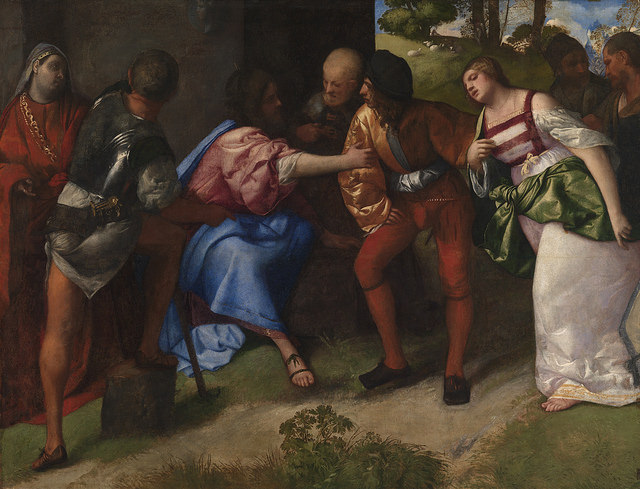
Before he starts waltzing around the country with visions of the White House dancing in his head, maybe Walker should hire some unemployed or underpaid Wisconsin folks to build a big scaffolding, and then hire an artist (or 20, or 200!) to paint a ceiling fresco of him, like the image above.

My point is partly that I have the greatest respect for anybody who works hard on a job and does it honestly, especially people who work with their hands.

We know the guy named Jesus Christ thought God spoke to him, too, and Christ was just a carpenter, without a college degree. And even without a high school degree, Christ was a lot more eloquent about things that mattered, or about the challenges he honestly faced.

He didn’t need a consultant. He died on the cross.

Who would you vote for — Christ or Scott Walker — for president, or for governor?

Also, with all the good news about hiring and job creation around the country, it’s worth noting that in December average employees wages rate went down by five cents.

http://www.latimes.com/business/jobs/la-fi-december-jobs-20150109-story.html

Companies are hiring young people and people desperate for a job. Qualified baby boomers are retiring or often on the outside looking in, at their old jobs.

In fact, December also represented a big drop-off in job creation. http://www.npr.org/2014/01/08/260796385/whats-behind-the-drop-in-unemployment

It might sound like the spirit of Scrooge isn’t dead. But Scrooge was a small business man. And small businesses do need to survive amid increasingly global competition. Who’s really responsible? And who’s ready to answer to the ghost of conscience who haunts them?

We still need a lot of work from people willing to be accountable — among employers, corporate heads, government bureaucrats and politicians — to make his economy fair for both workers and employers.

Unfortunately those underlying statistics show that private-sector workers have very little bargaining power. Scott Walker did plenty to damage bargaining power in Wisconsin for workers.

Give me a candidate who cares about everyone who’s trying to keep their head above really cold water, even if the economy is getting better. Plus, that big-picture growth — and its struggles — has happened under the current president.

What is Walker’s big picture? Is it the mock-Michelangelo one above?


“I Fought the Law, Brother Dead and Gone” (The ghosts of Brown, Garner & Hamilton)

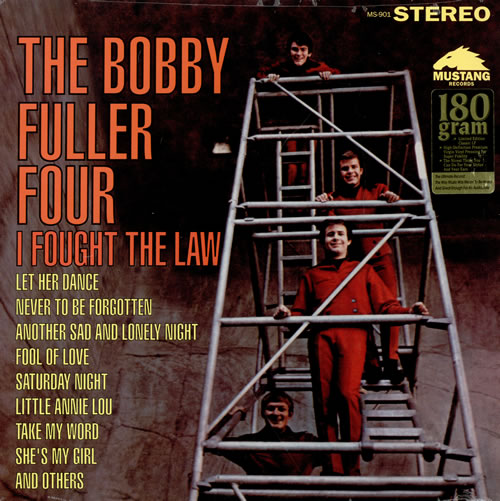
Bobby-Fuller-Four-I-Fought-The-Law-463996

Bobby Fuller Four Courtesy eil.com

Ah, but you who philosophize disgrace and criticize all fears, bury the rag deep in your face, for now is the time for your tears. — Bob Dylan, “The Lonesome Death of Hattie Carroll.”

Some people think it’s foolish and even immoral to “fight the law.” That may be true often enough. But America’s First Amendment is crucially about the freedom to dissent.

Political or social dissent is old, at least as old as Jesus Christ, or Socrates. Both were executed for embodying it. Remember Christ rampaging through The Temple to chase out the sellers and moneylenders (who worked in a temple section deemed legal for commerce)? Christ defied the Roman law and, as we know, the law won — over his corporal, crucified body. But he hastened immeasurably the demise of the corrupt and oppressive Roman Empire, inspired a new world view building on The Golden Rule, and inspired a major religion (which many powerful men over time have too often turned into repressive power).

Fast-forward to 1965: Bobby Fuller records a hit version of Sonny Curtis’ song “I Fought the Law,” which to me was among the most compelling and fascinating songs on the cusp of the ’60s youth revolution. It conveyed a troubling and intriguing ambiguity in its moral stance. Despite the apparent finality and concession of the refrain,” I fought the law, and the law won,” one sensed a strong streak of defiance and sorrow in the song performance and the overall lyric.

As we should know by now, just because a law is legal doesn’t mean it is morally right or just.

In light of Christ’s defiant, zealous act of law-breaking, 1 we might consider the cases of Michael Brown, Eric Garner and Dontre Hamilton. Sure, there was no apparent high-mindedness in their resistance to the police, by contrast to Christ’s trashing the temple market to clean out the filthy lucre. But they all reacted and somewhat resisted. The most law-and-order-minded say, “That’s what you get when you don’t obey to the police.”

But what of civil rights and dissent? Wasn’t their reaction also the fatigue of 200 years of American oppression of its own people of color, which virtually all black persons, no matter their station in life, seem to endure at some point in their life?  The modern fatigue unto death hearkens to, among many others, the killings of Hattie Carroll, Emmett Till and to three young girls in a bombed Alabama church in 1963. The stats on unconstitutional racial-profiling tell the sad story:http://www.civilrights.org/publications/reports/racial-profiling2011/the-reality-of-racial.html As African-American Milwaukee Journal-Sentinel editorial columnist James Causey noted recently: “I’ve been stopped numerous times for DWB (driving while black).”

In other words, you could say Michael Brown was approached for “jaywalking while black.” Garner for allegedly “peddling while black.” Police approached and frisked him about selling loose, untaxed cigarettes. “I’m tired of this,” an agitated Garner says on the video of his killing. “I didn’t do nothin, I didn’t sell nothin, I’m minding my own business. You’re harassing me…Don’t touch me… (and finally) I can’t breathe, I can’t breathe…”

And the depth of pathos: Dontre Hamilton was guilty of “sleeping while black,” in a Milwaukee park.

I understand the element of self-defense in the argument for police response. But in all three cases, the police violence far exceeded “self-defense.” They should’ve disarmed or controlled their victims without killing them, with injuring shots or, better, martial arts techniques. Brown was repeatedly shot after fleeing 150 feet away, then surrendering.

michael-brown

Michael Brown’s body left for hours in the Ferguson street. Courtesy dailykos.com

The New York police officer’s choke hold on Garner was illegal, by the department’s rules. And yet he remains uncharged with any offense.

Yes, Hamilton — startled from his sleep — allegedly got a hold of Officer Christopher Manney’s billy club and hit him once in the neck. 2 But then Manney slaughtered him with 14 close-range shots, half of which the cop emptied into Hamilton’s body after he had fallen.

Nanci Griffith’s 1997 cover of “I Fought the Law” (in which songwriter Curtis arranged and sang harmony), which I first heard this year, got me thinking about the lyric again.

Music City Roots

Nanci Griffith By Collin Peterson, popmatters.com

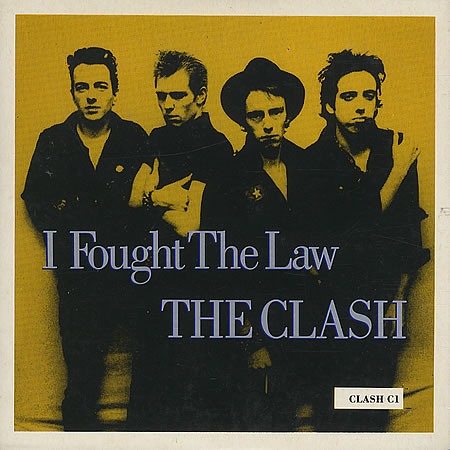
Of course, iconic punk bands — the brilliantly political group The Clash, and Green Day — had covered the song previously. But Griffin showed that the song’s complex sentiment or defiance could be shared by a performer who can’t be accused of copping a lawless macho guy stance. 3

The-Clash-I-Fought-The-Law-23169

The Clash Cortesy musicstack.com

Then, when I read recently about a comedian-songwriter who wrote and performed a racist send-up of Michael Brown’s death, based on the old hit “Bad, Bad Leroy Brown,” I felt even greater pain: Staged laughter in light of Brown’s death and by extension Eric Garner’s and Dontre Hamilton’s, in my hometown of Milwaukee.

Michael_Brown

Michael Brown Courtesy dailymail.com

The comedian-songwriter showed how art can be abused in a way that is at least morally questionable.

So I’m trying to redo the role of lyric writing as topical adaptation. The other morning, while washing the dishes, “I Fought the Law” began running through my mind and I thought of Brown, Garner and Hamilton, who all ” fought the law” to an extent, in defending their civil rights in seemingly unwarranted aggressive police confrontations (for Brown, due to a petty jaywalking infraction). And the “law won.”  The young men lost their lives. (Weirdly enough, singer Bobby Fuller also lost his life at age 23, shortly after recording the song.) 4

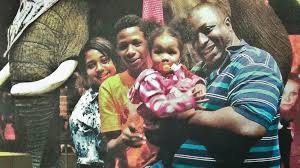
eric garner

Eric Garner and family  Courtesy mediablackoutusa.com

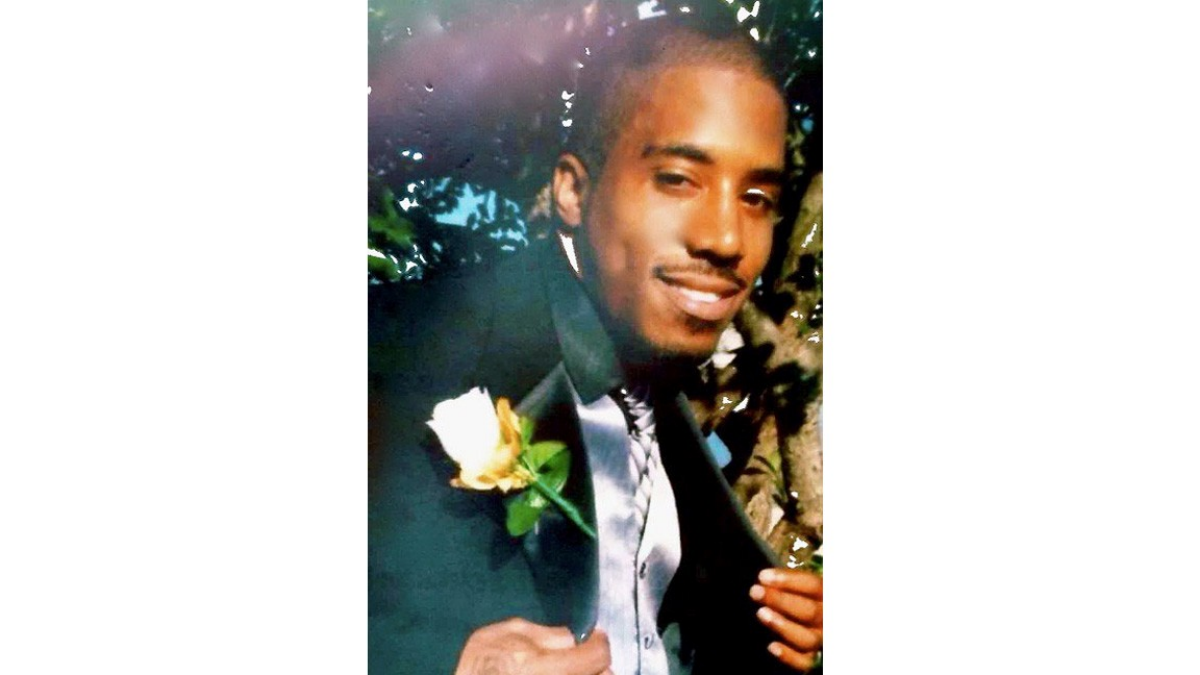
Dontre-Hamilton-16x9

Dontre Hamilton. Courtesy bet.com

But in Curtis’ song, the protagonist ends up only “breaking rocks in the hot sun.” These days, that’s what a black man often ends up doing if he is caught with a few joints of pot, in most states.

More and more, if a black man objects to overly aggressive police profiling or frisking, he ends up riddled with bullets or strangled to death.

What makes Curtis’s song fair-minded as much as morally questioning, is that the refrain repeatedly acknowledges that the prisoner (or victim, in my version) crossed the line of resisting police — regardless of how justified the confrontation — thus opening the door to violent police action.

So the beginning of my new lyric — recasting and updating the song — began filtering through my brain. Before reflexively politically correct readers start twitching, please understand this is all written in the spirit of pure irony. There’s no making light of these deaths here. I carry a deeply heavy heart over profoundly troubling legal decisions — of three possible homicides by police officers on unarmed young black men — that were never allowed to go to trial, after being tightly controlled by prosecuting DAs with compromised positions, as regular representatives for police officers vs. alleged criminals.

The pertinent reminder — of the questioning gadfly Socrates in an established democracy — is the role of dissent by a citizen, by moral stance or ballot box or, of Christ, by protest.

Rev. Martin Luther King Jr. shrewdly toned the protest principle down to non-violence. Entwine this with the principle of “do unto others…” (none of these moral leaders would condone revenge looting, destruction, or killing). Otherwise, oppressive power will dig in its heels, and ride the status quo to maintain control or profit, on their terms.

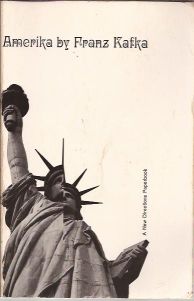
For far too long, this nation has become increasingly like Kafka’s Amerika, where the victims of “official” violence and their families never receive full due process or clarification on their deaths or incarceration. This is not the people’s America, of liberty, civil rights and democracy-inspired due process, which we know and strive to still love.

Amerika

Franz Kafka’s novel Amerika, Courtesy dogeardiary.blogspoy.com

Here’s a new song lyric, to be read or sung, to the melody of Sonny Curtis’ “I Fought the Law”:

“I Fought the Law (Brother Dead and Done)”

Part 1. The Ghost of Michael Brown:

My corpse gushed blood in the hot sun.

I fought the law and the law won

I fought the law and the law won.

I reached for the cop; wasn’t smart I know,

I fought the law and the law won (repeat line)


I left my family and it feels so bad

Guess my life is done.

This was the best life I ever had

I fought the law and the law won (repeat…all ensuing ellipses indicate a line to repeat.)


We walked in the street just for damn fun,

I fought the law and the law won…

I lost my future when I sur-ren-dered.

I fought the law and the law won…


Me and my blood on the hard mean streets

They let-the-red run and run.

What do they care what’s under their feet

I fought the law, brother dead and done

I fought the law, brother dead ‘n gone!


Part 2. The Ghost of Eric Garner:

He choked me to death in the hot sun

I fought the law and the law won…

I needed money cuz I had none

I fought the law and the law won…


I sold a few cigs to feed my brood,

I lost my breath, and he knew.

My life drained out and cops stared and stood

I fought the law and the law won…


Resist a cop and they snuff you out

I fought the law and the law won…

I lost my life, they say what’s done is done.

I fought the law and the law won …


But play that video back,

Strong-armed death, no gun.

Dead father thrown on a rollin’ rack,

I fought the law, brother dead n’ done.

I fought the law, brother dead n’ gone.

“There’s a very decent chance that his life could have been saved if he had just been thought of as a full human being.” — New York Daily News Columnist Harry Seigel (see footnote 5 below)  


 Part 3. The Ghost of Dontre Hamilton:

Dreamin’ of food in the cold park night

I fought the law and the law won…

Deep in sleep, I woke with a fright

I fought the law and the law won …


A cop grabbed me, and it felt so bad

I got his club and swung,

That’s the best life I ever had

I fought the law and the law won…


I’m sick in my head do anyone care?

I fought the law and the law won…

I lost my dream, just the little I dare

I fought the law and the law won…


I done nothin’ the other cops they knew

my corpse with fourteen holes,

The best life I ever could have?

I fought the law,  brother dead and done

I fought the law,  brother dead n’ gone! 6

***

Here’s my song lyric inspiration:

I Fought the Law by Sonny Curtis

Breakin’ rocks in the hot sun
I fought the law and the law won
I needed money ’cause I had none
I fought the law and the law won

I left my baby and it feels so bad
Guess my race is run
She’s the best girl that I ever had
I fought the law and the law won
I fought the law and the

Robbin’ people with a six-gun
I fought the law and the law won
I lost my girl and I lost my fun
I fought the law and the law won

I left my baby and it feels so bad
Guess my race is run
She’s the best girl that I ever had
I fought the law and the law won

I fought the law and the law won
I fought the law and the law won…7

____________
1 Jesus Christ’s zeal for dissent is brilliantly explored in Reza Aslan’s book Zealot: The Life and Times of Jesus of Nazareth, recently published in paperback.

2. The Shepherd Express reports that, according to Hamilton’s family, “Dontre’s DNA — not Manney’s — was found on the short end of the baton, where the handle is located. The state Crime Lab report offers no information about any DNA found on the long end of the baton. “We’re thinking that if Dontre had hit Christopher Manny, his DNA would be on it,” Nate Hamilton said.https://expressmilwaukee.com/article-permalink-24657.html

3. Sonny Curtis, of Buddy Holly’s band The Crickets, first recorded his song “I Fought the Law” with the band in 1958 shortly after Buddy Holly’s death. The Crickets’ original conveys the rawest rock ‘n’ roll edge, though the version by The Clash rivals it more self-consciously, on an EP and on the American version of their eponymous debut album. Beyond the heyday of the punk era, The Clash version has had a long and diverse life, in video games, movies and even used by US military to bolster troop morale.

Nanci Griffith’s freshly-resonant and under-noticed cover of “I Fought the Law,” with composer Curtis, is on her album Blue Roses from the Moons.

That all said, Fuller’s 1965 re-make catches a rollicking dance groove (check out the go-go action), and the band nails the “six-gun” effect. Here, it sounds like Curtis wrote it for Fuller’s anthemic voice. You can hear and feel why it was the biggest hit. https://www.youtube.com/watch?v=OgtQj8O92eI&list=RDOgtQj8O92eI#t=54

4 Just six months after the song made its first appearance on the Billboard Top 100 chart, Bobby Fuller was found dead from asphyxiation in his mother’s car in a parking lot near his Los Angeles, California apartment. The Los Angeles Police Department declared the death an apparent suicide, but others believed him to have been murdered. Fuller was 23 years old. http://en.wikipedia.org/wiki/I_Fought_the_Law

Watch this program on Fuller’s death, officially changed by police from a “suicide” to “accidental” (allowing a big insurance policy to be collected on). The case stinks to high heaven of murder, the mob and L. A. police cover-up: https://www.youtube.com/watch?v=w29I_-1OElQ

5. Watch this video of Eric Garner’s killing from the program “Democracy Now”: https://www.youtube.com/watch?v=g-xHqf1BVE4#t=105

My first thought in watching this was, why didn’t any officer or EMT give Garner CPR? As the prone Garner loses consciousness, you watch the police standing around or holding his hands behind him even though he’s handcuffed. Another officer ineffectually pokes at his side and shoulder. At one point, the officer who choked him waves to the camera. After five minutes, an EMT arrives but only feels Garner’s pulse and determines he’s still alive, but does no more. I wasn’t the only one wondering about CPR. A woman on the video asks the police about CPR. They shoo her away. New York Daily News columnist Harry Siegel addresses the CPR issue in this transcript from Amy Goodman’s “Democracy Now” program. Goodman says that — after the choke-hold take down — watching the police do nothing while Garner’s life ebbs away brought her to tears:

AMY GOODMAN: They were saying, “Why don’t you give him CPR?” That’s what she was saying.

HARRY SIEGEL: Yes. And they’re saying, “Back up. Back up.” You know, they’re controlling the perimeter. “He needs air.” But they’re not doing anything to help this man breathe or determine if he needs that help. They’re just letting him lie there. And he doesn’t die on the ground. They put him in an ambulance, and he has a heart attack there and then dies. Like, after this chokehold, after that whole part of things, there’s a very decent chance that his life could have been saved if he had just been thought of as a full human being. http://www.truth-out.org/news/item/27867-did-the-nypd-let-eric-garner-die-video-shows-police-ignored-pleas-to-help-him-after-chokehold

6. Lyrics to “I Fought the Law, Brother Dead and Gone,”  by Kevin Lynch, c. 2014.                                                                                                                                              

7. http://www.lyricsfreak.com/c/clash/i+fought+the+law_20031691.html

By the way, the Zuus documentary on The Clash which accompanies these lyrics on this website, reveals the band’s urgent and remarkably well-considered political consciousness and activism.


A few words about Jeff Poniewaz, and a poem by him

jeff andJeff Poniewaz (left) is survived by his longtime partner, the poet Antler (center). They are shown here in a meeting with Allen Ginsberg. Courtesy jennifer-turner.com

I recently shared a couple of fine heartfelt poems on Facebook by local poets Harvey Taylor and Sarah Moore that served as tributes to Milwaukee Poet Laureate Jeff Poniewaz, who died recently.  But I quickly realized the obvious, that proper honor to this extraordinarily loving, sweet,  passionate and engaged citizen of the planet would be to post one of his own poems. As a poet, Jeff was an eco-visionary, writing insightful homilies and bracing jeremiads regarding the human poisoning and ravaging of this earth, long before such awareness was fashionable.

I can’t think of anything more apropos at this time than his poem “Tomb of the Unknown Poet.” I’m not sure Jeff will actually have a tomb, because has been cremated, after a long, courageous and heartbreaking battle with cancer. I imagine he would want to have his ashes scattered along one of his favorite natural settings in the Milwaukee area. But that is probably up to his partner, Antler, a former Poet Laureate of Milwaukee.

I have also reproduced Jeff’s biography which, along with the poem, are from the website of Woodland Pattern Book Center.http://www.woodlandpattern.org/poems/jeff_poniewaz01.shtml

Jeff Poniewas taught “Literature of Ecological Vision” via UW-Milwaukee from 1989 to 2009. He also taught a course called “Whitman & Ginsberg: Liberating American Bards.” Ginsberg praised Jeff’s work for its “Whitmanesque/Thoreauvian verve and wit.” His poems have appeared in many periodicals and anthologies. His book Dolphin Leaping in the Milky Way won him a 1987 PEN “Discovery Award.” Lawrence Ferlinghetti called Jeff’s epic “September 11, 2001,” written during the closing months of 2001, “the best poem I’ve seen on 9/11.” Excerpts from it were published in September 11, 2001: American Writers Respond; An Eye for an Eye Makes the Whole World Blind—Poets on 9/11; Van Gogh’s Ear out of Paris, France; and as a chapbook titledSeptember 11, 2001. His other chapbooks include Whales Hover Over the Freeway (2007) and Polish for Because—Meditations of a Former St. Josaphat Altar Boy (2008). A volume of his Selected Poems written since 1965 is on the near horizon. He was chosen Milwaukee Poet Laureate in March 2013. His last name is pronounced POE-nYEAH-vAHsh and is Polish for “because.”

The Tomb of the Unknown Poet

Why no Tomb of the Unknown Poet?
Wasn’t he killed as sure as the Unknown
Soldier?
Didn’t he die running wild after
the wildest beauty the same
as Wilfred Owen?
Didn’t he step on the toes of landmine
minds?
Wasn’t he mowed down by machine-guns
of mechanization?
Didn’t he throw himself on the grenade
of scorn lobbed at Poetry?
Drape a green flag of living grass
over his casket.
Blow his taps on panpipes:
phoenix syrinx!
Unknown Poet launched into the Unknown
like a poem in a manila envelope
addressed to Immortality
Care of the worms who edit scrupulously
but send no rejection slips. 

The Bad Plus go to “the emotional core,” and to ironies and contradictions

bad plus live

The Bad Plus recently performed at The Jazz Estate in Milwaukee, December 19-20. Ethan Iverson, piano, Reid Anderson, bass, Dave King, drums. Photo courtesy of Matt Turner and The Jazz Estate Facebook page 

The Bad Plus @ The Jazz Estate, Milwaukee. Dec. 19, 2014

If the Bad Plus made their reputation as an alt-jazz band bristling with rock attitude, they threw a sucker-punch to open the first of a four-show two-night stand. The opening title, “Pound for Pound,” sounded tough. Yet, on the club’s newly acquired Steinway, pianist Ethan Iverson disarmed the audience with a delicate, stately melody that, as he repeated and developed it, grew questioning and then yearning, quite moving in its taut simplicity. Perhaps it was the intimacy of the club — rare for a group this popular — and perhaps it acknowledged that Menomonie-born Iverson was back among his native state folk. Soft-spoken bassist Reid Anderson, who served as the emcee, later noted that an Iverson-penned tune “Self-Serve,” from their new album, intends to honor the Wisconsinite’s “can-do spirit of self-sufficiency.”

None of this means the set was touchy-feely. The second tune “Wolf Out” leapt with a scampering tempo, drummer Dave King pushing the trio with sharp, skedaddling accents, and Iverson hammering out minimalist, almost punk-like repetitions. Yet, the group plays with accomplished skill, rather than crude rockers mimicking jazz. They relish making the rock attitude interesting, surprising and intelligent.

Iverson is rather original in his pianistic concept and attack, yet the influence of Thelonious Monk dwells in the fragmented phrasing that almost never smooths out to boppish fluency. Still, by contrast, bassist Reid’s compositions, such as “I Hear You,” court true melody, here almost hesitant and yet growing into a slightly querulous chord pattern and almost pained lyrical undercurrent.

You begin to see how this group has a broad audience among both open-minded jazz fans and rock-oriented listeners. “Elect That” seems to thumb its nose at the whole electoral process, with King kicking a sharp, literally metallic attack, hitting with the bottoms of his brushes and then switching back to wire brush heads with little loss of snarky edge. Yet Anderson unfurled a probing, Charlie Haden-esque bass solo, taking deep musical breaths, letting the notes ring and fade, a sense of something lost.

So again, surprise and dynamic contrast reigns. By jazz standards, the tunes never lasted too long, often ending by snuffing what might be a groove vamp.

And BP chooses quirky ways to engage in specifics of the world. King’s “1972 Bronze Medalist,” supposedly commemorates “the triumph of the human spirit,” as Anderson described it, in depicting a Frenchman who won the medal. The pushing, plodding, driving beats did suggest life’s uphill trials and pitfalls, and finally a “triumph,” in resounding piano octaves.

But this seemed presented in quotation marks, a postmodern take on Romanticism. So you might scrutinize, embrace or dismiss the notion. And still, the “emotional core” is what they really care about, Anderson says. The Bad Plus has appropriated and absorbed the ironies and contradictions of the age, as their very name implies.

_______

This review was first published in The Shepherd Express

Pondering Jesus Christ’s birth, death and “immaculate reconception,” via Lawrence Ferlinghetti

christmas_jesus1Image courtesy St. Nicholas Eiscopal Church, Hamilton,GA stnicholashamilton.org

I informally call myself a Unitarian Universalist, though I attend church only occasionally. I was raised Catholic and what still holds up most for me in the Christian tradition is observing and living with Jesus Christ’s historic legacy. It’s something I’m inclined to ponder this time of year. Other writers help me.

My October road trip to San Francisco, highlighted by a visit to Lawrence Ferlinghetti’s legendary City Lights Bookstore, prompted me to go back to my autographed copy of A Coney Island of the Mind, that poet’s most famous book. I bought it years ago at the great Milwaukee bookstore Woodland Pattern, where Ferlinghetti appeared and read and signed copies of his books.

coney1

I hadn’t looked at the book in a while but today (Sunday, December 21) my Woodland Pattern book mark immediately opened it to Ferlinghetti’s poem titled “Christ Climbed Down.”
The poem was published by New Directions Publishing in 1958, first copyright of 1955, and yet it speaks as eloquently and pointedly today about how we’ve lost track of the meaning of Christ’s birthday. I don’t mean to diss anyone’s religious practice, as long that practice doesn’t diss other practices or beliefs.

LFLawrence Ferlinghetti, courtesy elpoetaocasional.blogspot.com

But Ferlinghetti was speaking of how we commercially exploited, desecrated and indulged, to “honor” Christ’s birthday in the 1950s, which continues unabated today and probably in far worse manner.
So I reproduce the poem here for your consideration.

CHRIST CLIMBED DOWN

Christ climbed down
from His bare Tree
this year
and ran away to where
there were no rootless Christmas trees
hung with candycanes and breakable stars

Christ climbed down
from His bare Tree
this year
and ran away to where
there were no gilded Christmas trees
and no tinsel Christmas trees
and no tinfoil Christmas trees
and no pink plastic Christmas trees
and no gold Christmas trees
and no black Christmas trees
and no powderblue Christmas trees
hung with electric candles
and encircled by tin electric trains
and clever cornball relatives

Christ climbed down
from His bare Tree
this year
and ran away to where
no intrepid Bible salesmen
covered the territory
in two-tone cadillacs
and where no Sears Roebuck crèches
complete with plastic babe in manger
arrived by parcel post
the babe by special delivery
and where no televised Wise Men
praised the Lord Calvert Whiskey

Christ climbed down
from His bare Tree
this year
and ran away to where
no fat handshaking stranger
in a red flannel suit
and a fake white beard
went around passing himself off
as some sort of North Pole saint
crossing the desert to Bethlehem
Pennsylvania
in a Volkswagen sled
drawn by rollicking Adirondack reindeer
with German names
and bearing sacks of Humble Gifts
from Saks Fifth Avenue
for everybody’s imagined Christ child

Christ climbed down
from His bare Tree
this year
and ran away to where
no Bing Crosby carolers
groaned of a tight Christmas
and where no Radio City angels
iceskated wingless
thru a winter wonderland
into a jinglebell heaven
daily at 8:30
with Midnight Mass matinees

Christ climbed down
from His bare Tree
this year
and softly stole away into
some anonymous Mary’s womb again
where in the darkest night
of everybody’s anonymous soul
He awaits again
an unimaginable
and impossibly
Immaculate Reconception
the very craziest
of Second Comings

___________

Lawrence Ferlinghetti, “Christ Climbed Down,” from A Coney Island of the Mind, New Directions Paperback, 1958  pp.69-70, or http://www.blogcitylights.com/2012/12/17/a-coney-island-of-the-mind/

B/W New Directions book cover of “Coney Island” courtesy of citylightsblogspots.com.

coney-220x300

50th Anniversary edition image Courtesy blogcitylight.com

Culture Currents Picks: Best Jazz and Roots Music of 2014

miguel

Miguel Zenon. Courtesy blogs.wsj.com 

My literary side continues to pursue the best songwriting I can find, usually in a context of so-called roots music. But this year, jazz impressed me more across the board, signaling that America’s original art form is alive and quite well.

So I went more in depth in my commentary on the best jazz of 2014. My choice for jazz musician of the year is alto saxophonist-composer Miguel Zenon, for his ongoing work as the only-remaining founding member of The SFJAZZ Collective, which won the 2014 NAACP Images Award for best jazz album for 2013’s The Songs of Stevie Wonder. The SFJC’s Tenth Anniversary album topped my list and Zenon also released his brilliant new concept album Identities are Changeable.

mboko

“Mboko” by pianist David Virelles was our choice for jazz album cover of the year — and a top ten jazz album. Courtesy jazzdelapena.com

My list of the top 10 roots music albums follows after the jazz commentary.

I hope you search out and enjoy plenty of this music. First, here’s my top ten (11 actually) 2014 jazz album list, including historical jazz, with commentary following:

1. SFJAZZ Collective — 10th Anniversary: Best of Live at the SFJAZZ Center, October 10-13, 2013 (SFJAZZ Records)

2. Christine Jensen Jazz Orchestra — Habitat (Justin Time)

3. Miguel Zenon — Identities are Changeable (Upcal/Mielmusic)

4. Andy Bey — Pages from an Imaginary Life (High Note)

5. David Virelles– Mboko (ECM)

6. The Bad Plus — The Rite of Spring (Masterworks)

7. Joachim Kuhn Trio Trio with Archie Shepp — Voodoo Sense (ACT)

8. Keith Jarrett/Charlie Haden Last Dance (ECM)

9. Jason Roebke Octet — High Red Center (Delmark)

10. (tie) No Fast Food — In Concert (Corner Store Jazz), Marcin Wasilewski Trio with Joakim Milder — Spark of Life  (ECM) 

Honorable Mention: Chicago Yestet — Just Say Yes, Devin Drobka, Bell Dance Songs, Jackie Allen — My Favorite Color, Tom Harrell — Trip, Fred Hersch Trio — Floating, Jack Bruce — Silver Rails, Pat Metheny Group — Kin, Bill Frisell — Guitar in the Space Age, Hafez Modirazadeh — In Convergence Liberation, Mitch Shiner and the Blooming Tones Big Band — Fly!, Wadada Leo Smith — Great Lakes Suite, Nels Cline and Julian Lage — Room, Tyshawn Sorey — Alloy, Ellen Rowe Quintet — Courage Music, Sara Serpa and Andre Matos — Primavera, Paul Bley — Play Blue: Oslo Concert, Myra Milford — Life Carries Me this Way, Steve Treseler Group — Center Song, Tom Gullion – Time It Is, Russ Johnson — Meeting Point.

BEST WEBSITE QUOTE, Chicago Yestet: “Whenever I become discouraged (which is on alternate Tuesdays, between three and four), I lift my spirits by remembering: The artists are on our side! I mean those poets and painters, singers and musicians, novelists and playwrights who speak to the world in a way that is impervious to assault because they wage the battle for justice in a sphere which is unreachable by the dullness of ordinary political discourse.” – Howard Zinn http://www.chicagoyestet.com/

.

COMMENTS:

1. 10th Anniversary: Best of Live at the SFJAZZ Center, October 10-13, 2013 —  (SFJAZZ) After a decade, this all-star band seems somewhat under-recognized nationally, while maintaining touring, recording and a world-class presence in the superbly-designed center inspired by it, which I visited this fall. This album exemplifies a group whose range and depth draws profoundly from the vast jazz tradition and invigorating inlets from cultural strains its diverse membership represents. No jazz group does this better today.

Partial proof lies in the originals here —  generally stronger than the classics they interpret brilliantly, including vintage Monk, Coltrane, Ornette Coleman, Herbie Hancock and Stevie Wonder’s “Visions,” fired up with an infectious vibraphone-based rhythmic pattern. Ex-collective member Dave Douglas’s “Alcatraz” evokes San Francisco’s infamous prison island by breaking out of jazz impressionism’s pitfalls by flaring to life, like the sun burning into the souls of its spiritually tortured inhabitants. Eric Harland’s “Union” has a warm and vast embracing quality and, in the middle, a dynamic, demonic dance between saxophonists Miguel Zenon and David Sanchez. And Zenon’s own “Lingala” proves further that this altoist is non-pariel today. His inflamed solo floats deftly amid supple textures of marimba and percussion.

2. Christine Jensen Jazz Orchestra — Habitat (Justin Time) Getting antsy for a Maria Schneider jazz fix? Try Jensen, another stunning creative painter with the large jazz orchestra palette. Yes, she’s influenced by Schneider who will bring out a new album in 2015 and who is creating the most beautiful jazz in the world. On Habitat you hear intimations of images, large sonic swatches breathe and vibrate with vivid life, though never overdone. Quebecian Jensen has a somewhat more austere northern sensibility than Minnesotan Schneider and nearly as strong lyrical gifts, for color, rhythm and melody.

The ensemble’s call-and response interplay on “Blue Yonder” is glorious stuff. And yet you might sense large birds soaring through wintry winds beneath snow-covered landscapes. Jensen finds her own specific thematic subject matter such as “tree lines,” or her emotional response to the horrible earthquake that devastated Haiti. “Tumbledown” conveys that tragedy’s angst and loss — building a picture with a static wall of structure — but still ends up sounding beautiful. And both Schneider and Jensen share a great soloist — trumpeter Ingrid Jensen, yes, Christine’s own sister, so the genetic blend has radiant personality.

3. Miguel Zenon — Identities are Changeable (Upcal/Mielmusic) The most ambitious concept jazz album of the year works superbly. Miguel Zenon, a MacArthur fellowship winner, alto saxophonist and composer explores the increasingly bifurcated nature of racial and national identity in America, typified no more strikingly than in our Puerto Rican culture. He Interviewed numerous people in New York City and Puerto Rico and their testimony about fluidity and duality of identity ring fresh and true. “I think more people are realizing that you can be more than one cultural self at the same time,” comments Juan Flores.

This translates into music well, perhaps no better than in the piece “My Home” in which musical lines commingle beautifully — they float, shift and melt together rather than the more typical countrapuntal interplay or harmony of multiple instruments. The mutating complexity suggests the day-to-day, breathing and laughing — living and growing. The power of the ending line has an implicit dual-yet-one tension. Zenon also captures genuine beauty, perhaps love and caring, especially in “The Second Generation Lullaby.” And his well-placed uptempo bebop alto conveys a vibrant human multiplicity, set against the urban sonic backdrops he paints. But for the interviews occasionally distracting from the music, this might have been my top pick of the year.

4. Andy Bey — Pages from an Imaginary Life (High note)

Hearing Andy Bey is a bit like stumbling upon a man alone with his heavy heart, or perhaps praying softly. The sense of intimacy — the stark piano and exquisitely naked voice — might feel too close for some, but it’s their loss. The singer follows his Grammy-nominated album The World According to Andy Bey with a recording conceived as a musical diary of four pages — three to four songs per page. He sounds like he was born to sing a song like “My Foolish Heart” or a lyric like “I could cry salty tears.” His poor heart may get him in trouble and he may shed tears. But, in the moment, he has strength enough to turn pain or complex emotion inside out, so it’s beautiful and moving for you, rather than merely private.

His roomy baritone of many octaves often massages a lyric with a grainy tenderness and sometimes hoists it into an aching yowl. Yet he does so intelligently, with the wisdom of lived life. And his piano self-accompaniment conveys a pungent presence, with piquant chords and ambling phrases that are scenes unto themselves. His self-possession and courage as his own confessor and accompanist suggests how he makes his own way in this world, according to Bey. (SE)

(NOTE: Other reviews marked (SE) at the end were originally published in The Shepherd Express in modified form.) 

5. David Virelles  — Mboko (ECM)  The most refreshing and probing pianist to hit the scene in some years. He works in a shadowy, often dissonant harmonic realm but with a private touch and measured attack. This music emerges, arises and erupts from his keys, often seeming to be conjured or braized. This is an evocative honoring of a “masked dance” Cuban “male initiation society,” which sounds esoteric and mysterious but not forbidding or chauvinistic here, more quietly celebratory, a cultural gesture his gender needs desperately.

6. The Bad Plus — The Rite of Spring (Masterworks) The propulsive “Augurs of Spring” rhythms and the contorted “Ritual of Abduction” must’ve called out to Minneapolis’ muscular alt-jazz trio. They bravely delve into Stravinsky’s transformative epic The Rite of Spring. Yes they boil down the orchestra; yet Ethan Iverson brilliantly funnels Stravinsky’s glittering, dissonant orchestration through his keyboard. Bass and drums stoke the suspense and ecstasy, the thunderous drama, the sense of wonder at life and the planet’s riches, strangeness, madness and beauty.

This amounts to one of the most seamlessly successful jazz fusions of classical material, And that’s partly because the group has a strong rock sensibility, and if The Rite isn’t classical rock music in its essence, I don’t know what is. It may not be metal, but it sure is stone. And a good bad plus, you gotta like Iverson’s tongue-in-cheek unpretentiousness when recently identifying the piece after they had performed the 45-minute work live in Boston. “That was a tune by Igor Stravinsky called The Rite of Spring,” he deadpanned. As a paean to paganism that spurred a riot at its May, 1913 premiere, The Rite still casts naked light on its world, and never grows any older than springtime. (SE)

7. Joachim Kuhn Trio trio with Archie Shepp — Voodoo Sense (ACT) I love hearing Archie Shepp do almost anything. He’s evolved into one of the most satisfyingly mature masters of the tenor sax, bringing Ben Webster well into the 21st century. Pianist Kuhn, still full of unfettered chops, and one of Europe’s finest modernists of Shepp’s generation, makes an inspiring choice for the lead-off and centerpiece of Voodoo Sense. The mid-late-era John Coltrane vehicle “Kulu Se Mama” unfolds as a 20-minute exploration of the Juno Lewis African-esque ritual composition. Majid Bekkas adds the enchanting vocals, the guembri and kalimba (African thumb piano) on the piece. Shepp, for all his inherent balladic warmth, still can still drive his tenor into the deepest sonic wilds, but his phrasing almost always retains a pleasingly discursive and often witty vocal earthiness. The annotator says that Kuhn has “retained his childlike curiosity even at the age of 69,” and that trait takes him and his band into freely burning Afro-Arabic realms too-infrequently heard these days.
The late Charlie Haden and Keith Jarrett recording “Last Dance.” Courtesy fiprado.com

8. Keith Jarrett/Charlie Haden Last Dance (ECM) What did they know when they titled the last recording released before Haden’s death on July 11? That his boyhood polio had returned, fatally as it turned out. Polio long ago robbed his young singing voice. So he became perhaps the most songful of bassists. That instrumental voice captures the nostalgia of “My Old Fame” with the gruff huskiness of a burly romantic , whispering the song in her imagined ear, or dancing in his dreams — an uncertain step or two, then finding his inner Astaire. The rhythmic poise carries a resounding, muscular  tone — Haden dwelled in the bass fiddle’s natural depths, rather than trying to make it zip around like a guitar, as so many contemporary bassists try to.

So he became one of the best duets players ever, going back the quiet revelation of these musicians’ duets on Haden’s 1976 recording Closeness. Nobody listened or responded more closely than Charlie Haden. In this 2007 session, he fleshes out pianist Jarrett’s every lyrical turn of phrase with splendid harmony, or spare counter-melody. Some striking substitute chords make the overplayed Round Midnight beam like a new moon.

Haden’s extended solo on “Where Can I Go Without You?” magnificently extends the melodic contours and the meaning of the song as if the rhetorical question had been deposited directly in the heart of the listener. Yet his epitaph might be another standard, “Everything Happens to Me.” Not as a solipsistic whine, this was a humble man. Rather, he was person who lived a full creative life, embracing all life’s wonders, cruelty and strangeness with his artful gifts and passion for justice, while battling the infidels of his body and spirit, to the end. Haden could also swing and fast-walk the bass buoyantly, as on Bud Powell’s “Dance of the Infidels.” Last Dance’s uninvited infidel was polio,* and by the time it ends — with “Every Time We Say Goodbye” and then “Goodbye” — you know how he and Jarrett hate saying goodbye, and yet can’t stop saying it, and singing it. (SE)

9. Jason Roebke Octet — High Red Center (Delmark) Mingus and Ellington managed this sort of deft blend of deep history and modernist reimagining and expansion. The concept and sound spiral from the depths of sensual jazz harmony grounded with pivot-on-the-heel precision, sashaying looseness and unfettered awareness — that is, being as free while remaining contained in the music of the moment. Perhaps this band is creating the Chicago equivalent of its greatest forebears.

10 (tie, see below) No Fast Food — In Concert (Corner Store Jazz) — This two-CD set is a godsend for the lover of unadulterated modern jazz blowing. There are some fine compositions framing the improv and the liner strives to align them with the trio tradition begun with Bill Evans in the late 50s. It’s about playing, listening, energy and musical telepathy. The bigger names are saxophonist-flutist Dave Liebman, a fiery expressionist, and bassist Drew Gress, nimble, strong and inventive. But often the least-known member, drummer Phil Haynes, steals the show. Partly its due to him having composed all the pieces. But with uncanny skill, Haynes has appropriated Elvin Jones’s triplet-based drumming style. Many have attempted this, but I’ve heard none accomplish it with such loose-limbed, off-kilter deftness, akin to Jones. And yet, like his model, this drummer almost always swings, in his own way.

2400 X

10. (tie) Marcin Wasilewski Trio with Joakim Milder — Spark of Life  (ECM) Speaking of Bill Evans, this piano trio more clearly exemplifies the Evans Trio tradition. They’re best known as the backing group to the great Polish trumpeter Tomasz Stanko. I saw Wasilewski’s trio plat live a few years back — with a rare sense of one-ness that allows them to sing together like a crystalline choir without ever opening their mouths. That almost mystical cohesion continues on Spark of Life with the addition of tenor saxophonist Joakim Milder, whom I was unfamiliar with. He’s clearly an artful veteran with a superb, glowing tone akin to Stan Getz and Jan Garbarek. This creative music is ruminative, but romantic and often quietly cinematic. They cover Sting’s “Message in a Bottle,” Herbie Hancock’s “Actual Proof,” and Krzysztof Komeda’s “Sleep Safe and Warm,” from the late Polish composer’s superb soundtrack to the classic horror film “Rosemary’s Baby.”

HISTORICAL JAZZ

1. John Coltrane – Offering: Live at Temple University (Resonance/Impulse Records) Coltrane album image from Pitchfork.com

Here’s the CULTURE CURRENTS FEATURE REVIEW of “Offering” : https://kevernacular.com/?p=4780

2. John Coltrane — Afro Blue Impressions (Pablo) — Less revelatory and challenging than “Offering,” nevertheless this two-disc set compiles live recordings from late 1963. So the classic Coltrane quartet flies in high telepathy, with McCoy Tyner, Jimmy Garrison and Elvin Jones following Coltrane to nether realms of modal jazz, into deep spiritual yearning and testifying. Yet this set provides the listener comfort factor of familiar fare, including “Naima,” “Chasin’ the Trane,” “My Favorite Things,” “Afro Blue,” Cousin Mary,” “I Want to Talk About You, etc.

***

BEST ROOTS MUSIC ALBUMS of 2014

ros1.   Rosanne Cash — The River and the Thread (Blue Note)  My recent long road trip helped me relate to the perspective of traveling musicians. They roundaboutly get a manageable take on America, and points far beyond. Cash’s POV is among the best, among reflective, poetically inclined singer-songwriters. First, she deftly recast and personalized Norman MacLean’s metaphor of the river: “A feather’s not a bird/The rain is not the sea/A stone is not a mountain/but a river runs through me.”

To me, the road, her history, experience and wanderlust add up to “the thread” tying her fluid consciousness together in time and space. Her quietly dazzling Blue Note label debut often has a blues feel without kowtowing to that form. A song like “The Sunken Lands” evokes her ancestors’ hardscrabble roots in an Arkansas region that sank during the earthquake of 1811. Still, during FDR’s New Deal, her father’s family survived — her grandmother’s the hero of the song. Cash shows some global synchronicity in “Modern Blue,” a lyric that ties a trip to Barcelona to a Memphis experience. Several songs evoke the Civil War, most notably “When The Master Calls the Role,” as Cash has ancestors on both sides of the war. So she draws from “the best tradition of heartbreak, like the old Celtic or Appalachian story ballads,” as she comments in the notes. This mini-epic co-composed with her ex-spouse, the great singer-songwriter Rodney Crowell, and her current husband, multi-instrumentalist-producer John Leventhal (Music can muster complex harmony!).

The the song title’s gospel context also suggest the solid faith Cash retains, in life’s strange unpredictable miracles — her recovering her voice and certain brain functions after devastating illnesses, and finding a mid-life soulmate in the resourceful Rosenthal, who contributes greatly to the music’s beauty and tempered power. As for powers any higher, Cash seems to not presume to know for sure, and yet prayer or, as she says, “Tell Heaven,” is in her ongoing strategy, unsurprising considering the rocky but solidly spiritual life of her late father, Johnny Cash.


2.   Magic Sam — Live at the Avant Garde, June 22, 1968 (Delmark) No Chicago blues star burned brighter, or flamed out faster than Magic Sam Maghett, “The King of West Side Blues.” In 1968, he electrified Milwaukee’s east side Avant Garde, the folkie coffeehouse evolving into a blues, progressive and roots music venue. This powerhouse, well-engineered recording proves that Sam’s gig was meant to be, as the embodiment of blues avant-garde. Nobody had ever heard such hair-raising vocal vibrato and guitar tremolo, a man possessed.

His exuberance infected audiences and these 16 excellent tracks crackle with striking mood-shifts. The pure, percolating boogie “Feelin’ Good” finds Sam wailing “Woooaaahh ah feel so good!”  Then he unfurls a slow, thick-as-a-swamp blues “It’s Still Your Fault Baby,” his vibrato groveling in the pit of suffering self-defense. His primal singing, sometimes in double-edged guitar harmony, simultaneously soared and plunged toward hell. Reactionary locals forced The Avant Garde to close a few months later. In December 1969, Sam died of a heart attack at 32. This Milwaukee milestone remains, a magic beacon, his last great recorded gasp of impassioned genius. (SE)

3. Michael Bloomfield – From His Head to His Heart to his Hands (Sony Legacy) Here’s a Culture Currents feature review of the Bloomfield box set: https://kevernacular.com/?p=3167 (Published in shorter form in Shepherd Express)

4  Richard Thompson — Acoustic Classics

5  Rodney Crowell — Tarpaper Sky

6  John Hiatt – Terms of My Surrender

7  Look Again to the Wind: Johnny Cash’s “Bitter Tears” Revisited — Gillian Welch, Emmylou Harris, Steve Earle, Kris Krisofferson, Bill Miller and others

8  Willie Nelson — Band of Brothers

9. Field Report – Marigolden

10 Sarah Jarosz — Build Me Up from Bones

BEST ROOTS MUSIC CULTURE BOOK: I just got around to reading singer-songwriter-author Steve Earle’s 2011 novel I’ll Never Get Out of this World Alive, but it will stick with me. With a 1963 setting, Earl imagines the doctor who was rumored to have given Hank Williams the morphine shot that killed him, a decade earlier. The doctor himself is an addict who performs abortions and is vividly haunted by the ghost of the great hillbilly singer, and blessed with a living spirit of redemption, Graciela, a young Mexican immigrant. Incorporating the Kennedy assassination feels like genuine human response.

 __________

Andy Bey CD cover courtesy Amazon.com

Marcin Wasilewski Trio CD cover courtesy soksuwalki. eu

Wynton Marsalis makes like St. Nick with his bag of traditional and contemporary goodies

wyntonDespite his international renown, Wynton Marsalis (left, back row of trumpeters) was as generous with his band members as he was with his musical bag of seasonal goodies, for the “Big-Band Holiday” concert at the Marcus Center for the Performing Arts Monday night. Courtesy latimesblogs.com

This season fits polymath Wynton Marsalis like a big white mitten. The artistic director of Jazz at Lincoln Center totes nine Grammy awards, a Pulitzer Prize, a bounty of celebratory musical goodies to share in spirit, as might the most soulful St. Nick.

He opened Milwaukee’s Christmas season with his orchestra of 15 elves who came across as a lot more than Wynton’s helpers. He’s likely the most celebrated living jazz musician but he splintered the spotlight into 15 different fragments, illuminating each member while perched in the back row with the other trumpeters. No ostentatious conducting, yet he’s mastered the jazz orchestra idiom, no doubt.

He also shares an astonishing wellspring of historical knowledge. Some critics consider him culturally retro, questioning how he uses his power to influence music. This night it felt like plumbing the past’s depths and bringing it on home, to now. The African-American bandleader certainly silenced those who once blamed a lack of diversity in the orchestra, with a handful of caucasians and Latino bassist Carlos Henriquez.

And with singer Cecile McLorin Salvant, he offered the newest female jazz vocal sensation going. Her trademark white-framed glasses, gossamer ivory gown and red shoes brimmed with perfect seasonal tonalities. And her mocha-rich voice ran the gamut of colors, octaves, textures, influences and manners — without drowning her identity.

cecileDespite displaying influences and skills reminiscent of Sarah Vaughn and Betty Carter, award winning vocalist Cecile McLorin Salvant retained a personal identity while singing holiday songs with the Lincoln Center Jazz Orchestra. Courtesy allaboutjazz.com

On “Have Yourself a Merry Little Christmas,” Salvant’s voice glided over piquant trumpet harmonies, her tones stretching like taffy. During “It’s Easy to Blame the Weather,” her supple singing slipped behind the beat like an eel, evoking the great Betty Carter.

For one of the band’s most ingenious renderings, “We Three Kings of Orient Are,” horns evoked mewling, mooing animals gathered in a tattered percussive structure, evoking the animals and manger at Christ’s birth. Arranger Ted Nash still retained the song’s shifting sands of middle-eastern minor modality.

On the venerable “White Christmas” a muted trombone swung righteously, garlanded with seasonal trinkets of tinkling piano and chiming bells.

Several tunes Marsalis described as “Negro spirituals” and he noted how we’ve come far since the days when the director of the black Fisk Jubilee Singers was almost arrested for playing a “Negro folk song” like “Go Tell It on the Mountain” at his own university in 1907. Marsalis updated it appropriately, noting the song’s importance to the 1960’s civil rights movement.

fisk-jubilee-singers-gospelconnoisseur

Wynton Marsalis recollected and played music originally popularized by The Fisk Jubilee Singers, a pioneering Negro spiritual group . Courtesy unforgettablechristmasmusic. blogspot.com

There was even something special for Milwaukee homers in Marsalis’ bag. Brew town pianist Dan Nimmer got a highlighted solo and delivered a rippling attack of sculpted, big-band style piano. Past master Marsalis, whose father is also a musician-mentor, made sure Nimmer’s parents in the crowd of 1,300 got a hand, and acknowledged the parental imperative of musicians: “You did not waste your money on these lessons.”

Finally Marsalis’ large group exemplified the democratic principle that jazz is about ideas and feelings coming together, and sharing the wealth of humanity’s hard-won efforts. All band members spoke their piece and everyone shared a peace, wind-blown and bluesy but warm and swinging.

Here’s a video of Cecile McLorin Savant singing the Richard Rogers classic “I Didn’t Know What Time It Was”: https://www.youtube.com/watch?v=G99FfalLFWQ

_________________

This review was originally published in The Shepherd Expresshttps://expressmilwaukee.com/article-24472-jazz-at-lincoln-center-orchestra-with-wynton-marsalis-and-cecile-mclorin-salvant-a-marcus-center.html

Charles Woodson: A Poster Boy for Packer Ageism? — Part 2

chargers-raiders-football

eagles-raiders-football-tracy-porter-charles-woodson_pg_600

Raiders strong safety and NFL Hall of Fame shoo-in Charles Woodson (top) shows his athletic prowess with a pick of Chargers QB Philip Rivers last season, after the Packers determined he was over the hill for their youth-oriented roster. Courtesy news great.org
Woodson, with Tracy Porter (above, in 2014), remains a vocal and action-oriented team leader. Courtesy gallery hip.com

Noting that a posting from last November about football great Charles Woodson is among my most frequently viewed posts lately, I decided to update the piece, for your consideration, in honor of Woodson, one of my four favorite Packers ever.1 My revised post starts with a story about the Packer-Bears game this Thanksgiving.

“We won this game early in the week in practice … with our preparation,” (Bears cornerback Tracy) Porter (above, with 2014 Raiders teammate Charles Woodson) said.

“This one came down to the final minute even after Porter’s interception. The Packers gained possession at their 20 with 2 minutes, 45 seconds remaining and drove to the Bears 8 with 51 seconds left. They called for four straight passes, and four straight times the defense held.

Porter put a gold star on his night on third-and-goal by slapping down a lob to James Jonesin the end zone. On fourth down, Rodgers rolled right to extend the play. He fired for Davante Adams, but rookie Bryce Callahan contested the throw, which sailed through the back of the end zone.” http://www.chicagotribune.com/sports/football/bears/ct-tracy-porter-interception-aaron-rodgers-spt-1127-20151126-story.html

That was Chicago Tribune reporter Rich Campbell’s description of perhaps the most sickening and ignominious second half of any Packer game this season — letting a lead slip away away before half time, then pissing the game away, on Thanksgiving Day. Bear fans everywhere gleefully stuck a fork in the dead Packer turkey’s rump.

I raise this unpleasant but perhaps instructive memory, because Woodson mentored Porter last season when they were teammates in Oakland. That includes instilling the young cornerback with his deeply savvy knowledge of the Packer offense. “Preparation” was the key to the Bears win, Porter said. He seemed to toy with the Packers, including Rogers, and was, in effect, Charles Woodson in a different guise.

Woodson is possibly the most gifted player to ever roam the Packers secondary, which is saying plenty if you think back to Darren Sharper, Leroy Butler, Willie Buchanon, Willie Wood, Herb Adderley and Emlen Tunnell, who played with the Packers late in his storied career. Not to mention Don Hutson, who played defensive back as a two-way player, but who’s an NFL legend as a dominating wide-receiver who opened the door to the NFL realizing the potential of a wide-open passing game.

Tunnell was a comparably great player to Woodson, I think, but he played most of his career with the Giants, and his last three with Green Bay. He ended his career with a NFL record 79 interceptions (since surpassed by Paul Krause), which he returned for 1,282 yards and 4 touchdowns, and 16 fumble recoveries, along with another 3,506 return yards and 6 touchdowns on special teams.[3]He was elected as the first African American in the Pro Football Hall of Fame in 1967.[3]

Woodson’s stats stand as an interesting comparison, which I won’t get into deeply here. But Woodson is sixth all-time with 65 career interceptions and 11 “pick sixes,” which is second all time. And he’s tied with Darren Sharper and Ron Woodson for most career defensive touchdowns, at 13. He has 139 passes defensed, and 20 quarterback sacks, along with 800 career solo tackles and 996 combined tackles.

Maybe one of the last NFL two-way players ever, Woodson started on both sides of the scrimmage at Michigan where he won a rare Heisman Trophy by a defensive player, and led the Wolverines to a national championship in 1997. And remarkably, Woodson also has 253 receptions as an offensive receiver in the NFL.

He was named AP Defensive Player in the Year with the Packers in 1997, and was absolutely crucial to the Packers winning the Super Bowl in 2010. But the longtime shutdown corner back lost a step as all players do over time, and was evolving into a mastermind and skilled safety.

And this is the supreme athlete that Packer GM Ted Thompson decided to toss in the old-man heap, from which Woodson’s first team, the Raiders, gladly snatched him up. In his third season back with Raiders this year, at age 39, he led the NFL in the early part of this season with five interceptions, better than any of the Packers current defensive backs have done all season. Check out the “old man” on this wide-ranging interception with the Raiders: http://www.nfl.com/videos/next-gen-stats/0ap3000000541140/Next-Gen-Stats-Charles-Woodson-s-interception

Had he stayed in Green Bay, he would’ve played safety better than anyone the Packers have installed at that position since he left. A sometimes uncanny playmaker, Woodson forced three fumbles in his first season back with the Raiders.

Even playing with a bad shoulder against the Packers last week, he had a forced fumble and made a terrific tackle behind the line of scrimmage, which unfortunately re-injured his shoulder. Yet he was back in the game shortly afterwards. His skill set and knowledge of the Packer offense allowed the Raiders to play him as a single deep safety so they could crowd the box and effectively shut down the Packer running game, which had trampled the Cowboys the previous week. And Woodson has two more games to add to his career totals.

Getting back to the magnificent Emlen Tunnell, Woodson was far more important to the Packers, helping them to their first Super Bowl in 2010 since the Butler-Brett Favre-Reggie White-led Packers of 1996, an all-around juggernaut who dominated the league all year. That was unlike the 2010 Aaron Rodgers-led Packers, a team that — with a modest 10-6 season record and a sixth seed in the playoffs — heroically put on a late-season charge with a stunning blast through the playoffs to beat the tough-nosed and talented Pittsburgh Steelers in the Super Bowl. As with most Super Bowl champs, a huge part of the story was the defense, led by Woodson. That thieving, opportunistic group had four Pro-Bowlers — Woodson, Clay Matthews, Nick Collins, and Tramon Williams, and also young nose tackle B. J. Raji, in his only great year as a Packer.

When Woodson retires at the end of this season, figure on him being one of the quickest inductees to the NFL Hall of Fame in recent history.

My first blog on the possible Packers ageism was prompted by a friendly debate with a good friend, but I’m not here to play “I told you so,” rather to honor Charles Woodson.

I know Culture Currents doesn’t have lots of sports fan readers. But I still invite anyone to weigh in on Woodson — and the possible Packer ageism topic — which relates to another mature cast-off picked up by the Raiders, receiver James Jones, who — after leading the Raiders and receptions last year — came back with the Pack this season and helped salvage the team’s foundering passing game, after the loss of Jordy Nelson.

Some people say Jones was over the hill two seasons ago, especially with Davante Adams “poised” to take over. How well has that worked out?

Here’s my initial post:

My dear fellow blog readers I invite you to weigh in on this, and I should be able to tabulate the votes given this blog’s meager readership.

I recently began a good-natured debate with my good friend Ed Valent,  a gentleman and an unassuming scholar, who enjoys the verbal joust and, especially, jest. 

After we began our little debate, I sent him the news of 38-year-old Packer cast-off Charles Woodson winning the AFC defensive player of the week award for his nine tackles (two for losses), quarterback sack and one pass defensed in the Raiders’ huge upset of the Chiefs recently.

I just don’t know if Ed knows how much of a loser he is on this issue. I’m talking about a loser like hairy, socially-award Rob Lowe who just has cable for his worldview, or at least for sorry-ass NFL “packaging” in his stinky-pizza man cave.

Put a cheesehead on Ed and he’d be Abert Einstein. For now, he’s Albert the Alleycat.

Sticks and stones aside, and seriously (somewhat, considering the state of the world), what do you think about this issue? It matters to me most pointedly because of the ageist subtext, but also as a green-as-Kermit-the-frog-doing-Irish Whiskey-shots Packer backer who, like Kermit, doesn’t know he’s just as ugly as the Rob Lowe of your choice.

Ah, but like Kermit (and Rob for the ladies) this proverbial Packer Backer is just as lovable as the Packers. 

Here’s the e-mail response which prompted my response (and invitation). And it goes without saying, Ed, you’re invited to defend your position further, if you so chose.

Ed sed: “If it were up to you to you, Favre would still be QB for the Pack.”

I wrote: “Ed, my man, 

You can punt jokes all you want to avoid the specificity of the issue which hurts the team. Here I’m talking about the team’s mistake over Woodson.

(And yet, James Jones still is also a better third receiver than any they have right now.)
Thus, their Super Bowl chances will continue to be hurt by a policy of excess youth — mark my words — though I hope I’m wrong.
Each personnel case should be judged on its own merits — not on a clearly ageist hiring and firing policy. Thompson has a decent personnel track record but it’s still too policy driven — or blindered, not knowing the man’s soul.
And the Pack is consistently well over the salary cap for a variety of reasons that make such indiscretions usually unnecessary.
But then, I admit I’m a fan who’s interested in the team’s truest best interests – to win, not squirrel away money like a  Scrooge.
To paraphrase Waylon Jennings, I don’t think Vince woulda done it this way.
Kevernacular (Bleeds Green like Kermit.)
So what do you think?
Do the Packers err on the side of an ageist, youth policy by not being more savvy about veteran team leaders who can still play, like Charles Woodson and James Jones?
Try not to bring Battered Batman Brett into this — if you can help it.
Please, vote and/or comment below,
1. Yes.
2. No.
3. I’m thinking, I thinking!
4 Better yet, comment, please!
____
My other favorite Packers are cornerback Herb Adderley, wide receiver James Lofton and safety LeRoy Butler.