A very brief photo essay on driving into Appalachia

“A lovely nook of forest scenery, or a grand rock, like a beautiful woman, depends for much of its attractiveness upon the attendant sense of freedom from whatever is low; on the sense of purity and of romance. And it is about as nauseous to find “Bitters” or “Worm Syrup” daubed upon the landscape as it would be upon the lady’s brow.”

— P.T. Barnum, The Humbugs of the World (1866)

Barnum’s romantic analog to womanhood may seem dated, but it also seems to hold up over time, in its essential point.

why-billboards-arent-green

I don’t mean to get uppity but I agree with the author of this well-researched article (link above)

 The humble photos below were all taken from a car traveling at highway speeds. I wasn’t quick enough to capture a number of stunning mountain vistas that suddenly appeared on our flanks as we whizzed by. These Appalachian scenes bring to mind the so-called  “God’s country” of Southwestern Wisconsin, but at a rather magnified scale.

Countryside in the Clinch River Pass seems to have an intimate relationship going on with cloud formations above (Bluegrass legend Ralph Stanley and the Clinch Mountain Boys hail from this region) — photos by Kevin Lynch (courtesy, Sheila Lynch

Roadside signs like these (below) hardly offended like the billboards stuck in the most scenic Appalachian settingsVine-tressed rock on the highways add an enchanting aura to the Kentucky-into Tennessee drive.

Thoreau on newsworthiness/ Environmental writing anthology

“If we read of one man robbed, or murdered, or killed by accident…or one cow run over  on the Western Railroad — we never need read of another. One is enough…. If we respected only what is inevitable and has a right to be, music and poetry would resound along the streets. When we are unhurried and wise, we perceive that only great and worthy things have any permanent and absolute existence…” — Henry David Thoreau, from Walden; or, Life in the Woods (1854)

Having already commented on a killing or two, I hope to abide by Thoreau’s dictum, but I won’t do so slavishly — if murder or mayhem sadly serve to illuminate a cultural point. But I sense that neither serves very often. — KL

By the way, I revisited Thoreau via an excellent anthology I recently purchased at Woodland Pattern Book Center in Milwaukee.

The volume is titled American Earth: Environmental Writing since Thoreau, edited by the indefatigable environmental writer and activist Bill McKibben. It’s a splendid and gorgeous 1,047 page volume published by the redoubtable Library of America, replete with a ribbon bookmark and a stunning wraparound hard-cover reproduction of Sanford Robinson’s superb landscape painting “A Lake Twilight.” In a bookstore, look for the dust cover, with a handsome graphic image of a bald eagle formed by a montage of living flora and fauna (below, jacket design by Roberto de Vicq de Cumptich).

Inside you will find work by John Muir, Frederick Law Olmsted, Theodore Roosevelt Theatre Dreiser, Robinson Jeffers, John Steinbeck, Woody Guthrie, Aldo Leopold Loren Eisley, Justice William O. Douglas, Rachel Carson, Russell Baker, Lyndon Johnson, Edward Abbey, Philip K. Dick, R. Buckminster Fuller, Gary Snyder, Joni Mitchell & Marvin Gaye, Wendell Berry, Annie Dillard, Lewis Thomas, Leslie Marmon Silko, R. Crumb, Jonathan Schell, Alice Walker, Cesar Chavez,  Mary Oliver, Barry Lopez, Scott Russell Sanders, Al Gore, Barbara Kingsolver, Michael Pollan and others.

This admittedly long lists of authors and artists gives you an idea of the samplings of essential environmental advocates, and some unpredictable but compelling names.

For example, Philip K. Dick is best known as a dystopian science fiction writer and anthology offers a brief section from Do Androids Dream of Electric Sheep? his 1968 novel upon which the famous futuristic film Blade Runner was based.

McKibben aptly comments that Dick’s dystopian bent comes from ” the prediction that human scale and human values may not survive their inevitable collision with new technologies — technologies whose demands and dimensions may come to overwhelm our own.”

And here’s a choice passage from “Androids”: “For a long time he stood gazing at the owl, who dozed on its perch. A thousand thoughts came into his mind,  thoughts about the days when owls had fallen from the sky; he remembered how in his childhood it had been discovered that species plant species and become extinct and how all the ‘papes head reported it each day — boxes one morning, badges the next , until people had stopped reading the perpetual animal obits.

He thought, too, about his need for a real animal; within him an actual hatred was more manifested itself toward his electric sheep, which he had to tend, had to care about as if it lived.”

It’s interesting to speculate through time, whether Thoreau would have continued to read news of the extinction of each species, given his statement quoted above.

I suspect he would’ve read on, in profound dismay, because I think Thoreau judged each species “great and worthy things” of “permanent and absolute existence,” despite their existential vulnerability. He understood each species’ role in the ecological whole far better than most of his contemporary Americans, who were ravenous to pillage and exploit America’s natural bounty as much and as fast as possible.

American Earth also includes 80 pages of stunning, storytelling photos and illustrations, including Carleton Watkins’ wonderfully chiaroscuroed black-and-white photo “Trees and Cabin with Yosemite Falls in Background,” taken in 1861. Watkins’ photographs helped persuade Congress to pass legislation in 1864, protecting Yosemite Valley.

Another photo, Robert Glenn Ketchum’s color “The Chainsaws of Summer” depicts, with graphic elegance, the ravages of clear cutting of the Tongass Rainforest in Alaska in the early 1990s.

Among noted artists contributing images are Ansel Adams and Robert Rauschenberg, and you’ll find iconic photographs of John Muir, Rachel Carson, Aldo Leopold, Gary Snyder and Julia Butterfly Hill, among other major environmental figures; several images of Walden Pond including Thoreau’s own manuscript survey; a startling photo of thousands of buffalo skulls piled up at the Michigan Carbon Works, a Detroit charcoal fertilizer factory (c. 1880); and “The Blue Marble,” taken by an Apollo 17 crew member, which was the first clear photograph of an illuminated whole Earth.

American Earth encompasses — and emenates a clear sense of — the deep-rooted, still-growing trunk of environmental writing and art, which have risen higher and more powerful in ensuing years.

It’s a hefty-yet-portable volume that you might be tempted to tuck into your backpak the next time you hike into back country, or enter urban nature refuges. At some points on your hike you must pause, as Thoreau consuls. Then he, and all the rest of these excellent kindred spirits, will be waiting for you.


.

Guy Clark and Darrell Scott: Country Troubadours for Our Times


A Southerly Cultural Travel Journal  Vol. 5

Guy Clark (right) and Verlon Thompson, courtesy Columbus Dispatch. 

A prime motivation for my nearly 800-mile drive from Milwaukee to the Blue Plum Festival in eastern Tennessee was to see the now-venerable Texas singer-songwriter Guy Clark. It was a deeply gratifying experience. Though only 70, Clark is currently walking with a cane (perhaps still suffering from effects of a broken leg in 2008) but when he settled in and warmed up with fellow guitarist and songwriter Verlon Thompson, he quickly offered several fine brand-new songs, proving his creative powers have hardly diminished. “The High Price of Inspiration” addressed how creativity is almost always inextricably entwined with life when he demurrs, “Inspiration without strings, I’d like that once.” Another new one “Coyote” (Spanish for trickster or, as Clark said, “coward”), pointedly conveys the wrenching story of mercenary smugglers who exploit the desperate dreams of illegal aliens along the Mexican-American border: “You took all my money and left me to die in South Texas sun.”

Here you gain a sense of Clark’s distinctive artistry as his dusty, understated singing style assured that the song’s pathos would never be oversold with sentimentality. As always with Clark, the feeling are vivid in his voice but tempered by the sense one is overhearing a man almost singing to himself. He often sounds as if he’s just awoken from a dolorous dream. So hearing him is an utterly human experience.

Lost love, a classic theme of country music, is perfectly recast in his classic “Dublin Blues” — amid a beer-soaked rhythmic sway, the protagonist rues the fading object of his love, across the Atlantic Ocean and half of America:

I wish I was in Austin/ In the Chili Parlor Bar/Drinkin’ Mad Dog Margaritas/
And not carin’ where you are.

The wishful denial expresses the emotional truth, the art of slight indirection.

Although he is also a master craftsman of guitar-making, Clark understands the proper place the material objects have in life. In “Stuff that Works,” he sings about the “kind of stuff you don’t hang on the wall/ the kind of stuff you reach for when you fall.”

His handsome face — weather-worn, craggy and now slightly collapsing – seems a prime candidate for the Great American Roots Singer-songwriter Mount Rushmore.

Just for the sake of argument, I’d also nominate for such a monument Clark’s old compadre, the late Townes Van Zandt (together probably the real-life Pancho and Lefty), Bob Dylan, Willie Nelson, Neil Young and maybe Lucinda Williams, assuming room for five faces. Coincidentally the visages of all these people show the weight of their gifts and burdens, often interchangeable in nature. Calling all cultural chiselers.

Clark’s small wave to the crowd at the set’s end conveyed something, perhaps a slightly amazed humility. He has a reputation as an ornery cuss but you get the feeling that — aside from his loving competition with Van Zandt — he never wanted a whole lot more than a workbench at which he could fashion his guitars and dream up stories of desperados and desolatos to sing. Today Clark’s esteem among his contemporaries is underscored by a recent 2-CD recording of his songs by the likes of Willie Nelson, Emmylou Harris, John Prine, Roseanne Cash and others. “Guy’s songs are literature,” said Lyle Lovett, one of the artists heard on the tribute. “His ability to translate the emotional into the written word is extraordinary.”

Despite all this, I think Darrell Scott deserved the Blue Plum’s closing headliner spot, because he’s a performer in his absolute prime and a songwriter who could arguably crack into the company above. And his style connects more directly with a large crowd.

His voice can take a lyric line and hoist it from an inner feeling to an outer wail with chilling suddenness. And yet he doesn’t lose the sound of intimate probing that gives the feeling emotional honesty. His baritone-tenor range recalls Paul Simon without the tendency to preciousness.

That’s a special singing skill and his lyrics are an easy match in quality. For example, the jazzy-gospel “River Take Me” is about an out-of-work man who wants only “to live within the means of his own two hands.” When Scott sang fervently, “River take me, far from troubled times,” you sensed human desperation in the reach for a mythological metaphor: The troubled imagination must do the work that those under-used hands cannot, while understanding the risk of the dream. “The river can drown you or wash you clean.”

Yet Scott looks beyond one man’s personal situation. One of his most covered songs* is “You’ll Never Leave Harlan Alive,” a majestically mournful melody which commemorates the hard coal miner’s life in Harlan County, Kentucky, where “you spend your life digging coal from the bottom of your grave.” It’s the story of his own grandfather — and of many men whose lives are too proverbially close to “nasty, brutish and short.”

Scott performed with the band comprises of all his blood brothers who he said had performed together as a whole ensemble since they were teenagers. You could sense the deep history circulating among these men complex yet gone with understanding and affection.

* Kathy Mattea’s rendition of “Harlan County” is not to be missed on her album Coal.

1 Here’s Scott’s performance of “Never Leave Harlan Alive” in Bristol TN/VA in 2006 http://www.youtube.com/watch?v=69BwNVtyCKs&feature=related


Plucking Musical Fruit Deep in Appalachia


A Southerly Cultural Journal, Vol. 4

Appalachian Mountains courtesy: http://www.conservapedia.com/Appalachian_Mountains

Having driven to Cincinnati to connect with my sister Sheila, we headed south into Kentucky, destined for the Blue Plum Music and Arts Festival in Johnson City, Tennessee, June 1-3.

The sun rose to greet us, as did the deep valleys and hills leading into the mountains of Appalachia. Cincinnati’s own verdant density had given me a sense of the region’s natural bounty. But once we reached increasingly southern expanses the raw magnificence rose in fullness. The broad-shouldered peaks, serenely exultant in lush greenery, unfolded in marvelously softened geometric variations as our car plunged into the highway depths.

As we descend a paved grade, vast looping angles and loping planes open before us on each side of the highway, revealing massive, undulating forms curving ahead at the fresh curve of each crest.

Turning to follow the blur beside me, I sense how modern pioneers forged roads through such rugged terrain.

The highway is cut into low mountainsides of red rock, which can be as treacherous as it is beautiful. Frequent signs warn of falling rock, and yet but the tremendous compression of fissures, severe angles and gravity create a muscular tapestry of slashed stone — grinding and shifting at the most glacial rates, rippling along in a craggy dance of asymmetric angles, slashed crevices and serrated ridges. Small foliage nestles into many of the cracks and, at times, when the rock angle leans high and back away from the highway, vines take root and cascade down over them.

I felt too emboldened by the speed of our car and the summery joy of our mission to fret over falling rocks, but other signs did dismay me. A motley array of billboards stand not on the highway shoulder — but out on many of the most sumptuous and beautiful vistas along the way. An almost perverse sense of consumer capitalism surely drives advertisers and marketers to climb up these precarious hills hauling equipment and billboards to ruin the most aesthetically pristine spots with loud, brash come-ons.

A more recent product of postmodernity rise more ominously, cell phone towers.  Our society’s compulsive desire to electronically transmit information — while in transit far beyond the actual requirements of necessary communication — has created this aberration. The tripod towers stand with a militia-like sternness of randomly situated sentinels, their vertical receptor panels hovering in all directions, their thick, long cables running their full height and slithering off to power boxes at the side of the fenced-in base.

So there, throughout the rugged beauty of Appalachia — which has long signified a kind of untainted, pre-industrial primitiveness — stood the peculiar paradox of these ugly towers. They are seemingly hidden out in high, lonely hills and yet fully capable of transmitting potentially cancerous radiation into the bodies of wildlife nearby and people far away from them, via the cellphones we compulsively attach to our torsos and heads. 1

Finally arriving in Johnson City somewhat quelled my misgivings about billboard and cell tower blight. The 13th annual Blue Plum Festival proved a sense and sensibility filled delight. The streets of downtown Johnson City are jammed with food and craft vendors who benefited from a weekend of idyllic weather. A popular item was the electrical necklaces and wands that allow fest-goers to express their enjoyment of the experience in psychedelic fashion. My sister, stylish but hardly extravagant in her personal tastes, gave in and bought one of the brightly glimmering neck pieces, with a small electric guitar pendant.

Sheila also went back a second time and took some nice pictures of to the Urban Art Throwdown,  a competition of graffiti artists, working in an outdoor gallery of freestanding panels arranged as folded triptychs.

The winning work included a fanciful highway scene dominated by a painted portrait of the legendary country bluesman Blind Lemon Jefferson, a perfectly apropos subject for a music festival comprising many veteran and young American roots-music musicians.

Prize-winning graffiti art at Blue Plum Festival, courtesy Johnson City Press 

The festival headliners were Darrell Scott, Guy Clark & Verlon Thompson and the Goose Creek Symphony. Other notable talent included Malcolm Holcombe, Sol Driven Train, Dangermuffin and guitarist Eric Sommer. The festival included three other outdoor side stages, including a jazz stage (headlined by saxophonist Keith McKelley and pianist Lenore Raphael), and 12 local clubs offered live music. I’d wager that there are few American towns of this size (pop. 63,000 ) that currently have 12 live music venues. The fest also offered a kids-oriented extreme sports area, a roller derby championship and, most distinctive of all side attractions, an animation festival, with competition from filmmakers from all over the country.

Blue Plum may not be as big or as renowned as legendary Merlefest among Appalachian music festivals, but the featured roots music artists did Johnson City proud. The community is nestled in the foothills of Appalachian Mountains here in the far west corner of Tennessee, near the borders of Virginia and South Carolina. Nearby is Bristol, smack dab on the Tennessee-Virginia border, and “the birthplace of country music.”
In July of 1927, folklorist-promoter Ralph Peer recorded trainman-singer- songwriter-yodeler Jimmie Rodgers, The Carter Family and a group of other old-time musicians in Bristol. 3 The fact that two such great names in American music made seminal recordings at the same time in Bristol earned the city the distinction as country music’s official birthplace.

The Blue Plum main stage was situated at the far end of downtown Johnson City, with Buffalo Mountain standing as a majestic drop, emanating the hoary profile of the great creature for which it is named.

Several groups and performers greatly impressed me for a variety of stylistic and artistic reasons. Sol riven Train was perhaps the biggest surprise of performers unknown to me.

The served up a steaming gumbo of styles with a front line that includes saxophonist Russell Clarke and trombonist guitarist Ward Buckheister. The style is billed as “Southern roots music, New Orleans brass and Afro-Caribbean rhythm,” and it’s surely something I didn’t expect at a festival in Appalachia. But then, that’s a presumption of cultural stereotype because this fest proved remarkably cosmopolitan and eclectic. Sol Driven Train rides a high-spirited yet extremely skilled style, especially with its deft variations on reggae beats especially on an eloquently ardent “Toda la Gente.” Lead singer Joel Timmons has an effortlessly soulful delivery and the group’s exuberance slips into offbeat drollery with songs like “Cat in Half,” a country rock ode about breaking up and dividing up possessions, with the protagonist offering his lover: “We can cut the cat in half,” the type of contemporary song that achieves a disarmingly unsentimental poignancy. The band also had the chutzpah to close their set with five-man percussion jam, with enough rhythmic and theatrical vitality to work in a festival setting.

Goose Creek Symphony remains an excellent progressive bluegrass-country band with strong vocal harmonies. But after having broken up and reformed several times, they seemed a little dated following Sol Driven Train.

I only caught a bit of Eric Sommer’s set, on Saturday afternoon but his searing, deft and incisive guitar playing proved why he’s been such an in-demand session and touring musician for artists as gifted and diverse as Leon Redbone, Chris Smithers, John Hammond, Sarah Watkins (of Nickel Creek), Little Feat and the British new wave band Gang of Four, among others.

The South Carolina trio Dangermuffin followed with more highly accomplished yet unpretentious musicianship. Yes, they do some extended Grateful Deadly jams but rarely succumb to noodling. Not unlike Sol Driven Train, they have a near-perfect feel for the reggae groove, but with more of the Afro-pop guitar flow.

I have coincidentally written recently on my blog about the next artist, another South Carolina talent named Malcolm Holcombe, so I’ll refer you to that: https://kevernacular.com/?p=159

But at this festival, Holcombe made sure that we realized he’s one of the funnier singer-songwriters on tour today with his blend of down-home wise-cracks and eccentric passion, which includes an unnerving head shake that makes you think maybe he didn’t beat the devil, like some of the famous blues musicians his style resembles. One his hellhound-on-my-trail raps is about having “the creeps,” one of the keys to which “is not lettin’ anyone else know you have ‘em.”

“But then, you’re paranoid,” he added, with a slightly fiendish grin.


1 “The original establishment of a cell tower grid was convenient for military purposes, and (now due to the undemocratic federal Telecommunications Act of 1996).  Both state and local government are prohibited from adopting emission standards that would be safer for the public than the very inadequate and dangerous levels set by the Federal Communications Commission (FCC).

http://www.berkeleydailyplanet.com/issue/2010-04-20/article/35079?headline=Cell-Phone-Towers-Should-We-Fear-Them—By-Raymond-Barglow-a-href-mailto-www.berkeleytutors.net-www.berkeleytutors.net-a-

So “telecom companies have carte blanche to do whatever they want without opposition. Although large groups of people are now fighting proposed cell towers all over America, they are not allowed to mention potential health effects to the city planning commissions who must approve these towers, or else the telecom companies threaten to sue the cities. And so all over America large groups of people are opposing cell towers based on any other reason they can find. The scientific evidence from all corners of the world is mounting geometrically regarding the harmful effects of towers.”

http://www.celltowerdangers.org/my-story.html

Despite German and Israeli studies that showed rates of cancer increasing for long time nearby residents, 2 American Cancer Association website currently minimizes concerns about the health risks of cell phone towers themselves. Nevertheless, the towers signify the risk of cancer that still has researchers hard at work regarding cell phones themselves — which are typically used and transported in the closest proximity to human bodies.

3 Bill Malone, Country Music U.S.A. Second Revised Edition, University of Texas Press,

2003, p.65.


Guy Clark and Darrell Scott: Country Troubadours for the Ages

A Southerly Cultural Travel Journal  Vol. 5

A prime motivation for my nearly 800-mile drive from Milwaukee to eastern Tennessee was to see the now-venerable Texas singer-songwriter Guy Clark. It was a deeply gratifying experience. Though only 70, Clark is currently walking with a cane (perhaps still suffering from effects of a broken leg in 2008) but when he settled in and warmed up with fellow guitarist and songwriter Vernon Thompson, he quickly offered several fine brand-new songs, proving his creative powers have hardly diminished. “The High Price of Inspiration” addressed how creativity is almost always inextricably entwined with life when he says he’d like “inspiration without strings I like that once.” Another new one Coyote (Spanish for trickster or, as Clark said, “coward”) pointedly conveys the wrenching story of mercenary smugglers who exploit the desperate dreams of illegal aliens along the Mexican American border: “You took all my money and left me to die in South Texas sun.”

Here you gain a sense of Clark’s distinctive artistry as his dusty, understated singing style assured that the song’s pathos would never be oversold with sentimentality. As always with Clark, the feeling are vivid in his voice but tempered by the sense one is overhearing a man singing to himself. He often sounds as if he’s just awoken from a dolorous dream. So hearing him is an utterly human experience.

Lost love, a classic theme of country music, is perfectly recast in his classic “Dublin Blues,” amid a self-assuringly jaunty beat, the protagonist rues the fading object of his love, across the Atlantic Ocean and half of America:

I wish I was in Austin/ In the Chili Parlor Bar/Drinkin’ Mad Dog Margaritas/
And not carin’ where you are.

The wishful denial expresses the emotional truth, the art of slight indirection.

Although he is also a master craftsman of guitar-making, Clark understands the proper place the material objects have in life. In “Stuff that Works,” he sings about the “kind of stuff you don’t hang on the wall/ the kind of stuff you reach for when you fall.”

His handsome face — weather-worn, craggy and now slightly collapsing – seems a prime candidate for the Great American Roots Singer-songwriter Mount Rushmore.

Just for the sake of argument, I’d also nominate Clark’s old compadre, the late Townes Van Zandt (together probably the real-life Pancho and Lefty), Bob Dylan, Willie Nelson, Neil Young and maybe Lucinda Williams, as an alternate. Coincidentally the visages of all these people show the weight of their gifts and burdens, often interchangeable in nature. Calling all cultural chiselers.

Clark’s small wave to the crowd at the set’s end conveyed something, perhaps a slightly amazed humility. He has a reputation as an ornery cuss but you get the feeling that — aside from his loving competition with Van Zandt — he never wanted a whole lot more than a workbench at which he could fashion his guitars and dream up stories of desperados and desolatos to sing. Today Clark’s esteem among his contemporaries is underscored by a recent 2-CD recording of his songs by the likes of Willie Nelson, Emmylou Harris, John Prine, Roseanne Cash and others. “Guy’s songs are literature,” said Lyle Lovett, one of the artists heard on the tribute. “His ability to translate the emotional into the written word is extraordinary.”

Despite all this, I think Darrell Scott deserved the Blue Plum’s closing headliner spot, because he’s a performer in his absolute prime and a songwriter who could arguably crack into the company above. And his style connects more directly with a large crowd.

His voice can take a lyric line and hoist it from an inner feeling to an outer wail with chilling suddenness. And yet he doesn’t lose the sound of intimate probing that gives the feeling emotional honesty. His baritone-tenor range recalls Paul Simon without the tendency to preciousness.

That’s a special singing skill and his lyrics are an easy match in quality. For example, the jazzy-gospel “River Take Me” is about an out-of-work man who wants only “to live within the means of his own two hands.” When Scott sang fervently, “River take me, far from troubled times,” you sense very human desperation in the reach for a mythological metaphor: The troubled imagination must do the work that those underused hands cannot, while understanding the risk of the dream. “The river can drown you or wash you clean.”

Yet Scott looks beyond one man’s personal situation. One of his most covered songs* is “You’ll Never Leave Harlan Alive,” a majestically mournful melody which commemorates the hard coal miner’s life in Harlan County, Kentucky, where “you spend your life digging coal from the bottom of your grave.” It’s the story of his own grandfather — and of many men whose lives are too proverbially close to “nasty, brutish and short.”

Scott performed with the band comprises of all his blood brothers who he said had performed together as a whole ensemble since they were teenagers. You could sense the deep history circulating among these men complex yet gone with understanding and affection.


* Kathy Mattea’s rendition of “Harlan County” is not to be missed on her album Coal.


A Walmart Cinderella Sweeps Up on Desolation Row

Milwaukee, Wisconsin — I admit it now, I was slipping into a Desperate Househusband mode, even though the only husbanding I do is for Mrs. Maggie, my feline housemate.

Actually it’s desperate consumer mode, an internal creature forged from modern marketing and the perpetual seductive convenience of all types of consumer-catering stores in America, epitomized by the super mall or the super store like Walmart.

Or perhaps I could say I was desperately seeking convenience, a sort of pathetic tautology. If the convenience is almost inevitably available, as it seems to be for most legal practical or hedonistic “needs” — between retail and online sources, the desperate seeking should never really arise.

I’d gone to several hardware stores, then to Home Depot, where a clerk told me that Walmart would have the kind of plastic balls you place in a dryer to help distribute and efficiently dry your clothing.

“I don’t patronize that place,” I said with a tinge of self-righteousness. As soon as my excellent neighbor, Stefanie Maloney, — a laid-off schoolteacher teacher victimized by Gov. Scott Walker’s policies — moved out and took her dryer balls, I realized how effective they were. Without them, I’d recently needed three cycles to dry a modest load of mainly white socks.

Understand, I’ve never patronized Walmart in my life because I am offended deeply by their corporate strategies of moving into retail areas and wiping out local small business competition with their carnivorous “we’ll-sell-you-anything-for-a-bit-cheaper” stores. The second big reason was the well-documented policies of employee exploitation.

But there I was, finally parking in the lot and skulking in with a slightly knotted feeling in my gut. I never did find those dryer balls, but I had a moment of creative redemption standing in the aisle of detergents and softeners. Why not just cut up some pieces of wood and toss them in with the wet laundry? Of course. That will be my solution.

However, the voracious music consumer in me fell prey to Walmart seduction: a big circular bin of CDs, for five bucks apiece. I felt a bit shameless digging through these loose piles of plastic CDs for a cheap deal, as a Walmart Lucifer sneered somewhere nearby at my fallen principles. Yes, I found a re-issued-and-remastered version of Curtis Mayfield’s classic soundtrack music to Superfly. Lash me dear conscience, I couldn’t resist, so I walked up to one of the registers, eager to get out of this place.

And I’ll be damned but my worst suspicions…

The young African-American cash register girl speaking to the woman in front of me mentioned how tired she was.

“I’m workin’ seven to ten.”

“Oh, that’s tough,” the customer said. “I know, especially dealing with people all that time.”

Having overheard this, I couldn’t resist when I stepped up to her.

“Did you say that you work seven AM to ten PM?”

“That’s right.”

“Wow.”

“Yeah, I’ll be working those hours for the rest of the week,” she sighed. It was Monday.

“I sure hope you’re getting paid well to work such long hours,” I said.

“Sorta, kinda,” she answered, with a wry smile.

I realize this is one anecdotal incident. But remember, this is the first (and likely last) time I’d been a Walmart customer. What are the odds that the first-cash register person I would encounter would confirm my negative perception of Walmart employee working policy, in a spontaneous conversation I overheard? I really never would’ve asked her about it if she hadn’t been complaining to the woman right in front of me.

I’m sorry, but the odds of that first-time Walmart incident speaks volumes to me. An eleven-hour work day at a cash register. A 55-hour work week, at least that week.

Sure she apparently had the weekend off but was too gracious to indicate how frequent 55-hour five-day work weeks are.

She seemed like a plucky young woman and did her job quite well. But I’m sure she feels lucky to be employed with no other viable option, so she endures exploitative of hours and poor pay.

Of course there is no union at Walmart, so let’s switch gears to contextualize this sad, little story. In Dan Kaufman’s New York Times Magazine article from last Sunday, May 27, “Land Of Cheese and Rancor: How did Wisconsin get to be the most politically divisive place in America?”, the author explores Scott Walker’s now-infamous divide-and-conquer strategy against Wisconsin’s middle and working class. Kaufman notes that even some Republicans lamented the end of the long bipartisan consensus on labor rights that has stood for half a century in our state, known for its progressive tradition. Walker, with astonishing arrogance, told an AP reporter that the bill was “innovative” and “progressive,” words which must’ve stuck in the craw of anyone who cares about the tradition built by such political firebrands as the Sen. “Fighting” Bob LaFollette. “’Not in 50 years was there ever a partisan vote on those contracts,” notes Wisconsin Sen. Fred Risser, the nation’s longest serving state legislator. “They were almost always unanimously accepted.”

Dick Spanbauer, a former Marine and self-described ‘pro-life and pro-family Christian,’ was one of four Republican assemblymen to vote against the anti-collective-bargaining Act 10. ‘The leadership told me,” Dick, we don’t need unions anymore, “’” he told Kaufman. ‘Really? What’s changed? The company is going to say you don’t need to work 12 hours?”

Not quite at Walmart, which seems P.R.-savvy enough to not force 12 hours because that figure signifies a literal whole day of labor. So they force 11 in their infinite wisdom.

“‘They do not understand anything about the working class,’ Spanbauer said about his Republican colleagues. ‘They thought you could just go crush somebody’s voice and get away with it.’” Spanbauer is retiring this year. But he’s apparently not one of that peculiar brand of tea-party Republican. He retains his common-sense principles, because he knows there are thousands of laboring people in this state, like that checkout girl at Walmart on Capitol Drive and Holton St., working far over normal working hours for poor pay.

Consider that, If Walker wins the recall election on June 5 and Act 10 becomes a nationally conceded conservative policy, as it may well. That’s why Walker has reaped $25 million in out of state fat cat money trying to buy this election for him and their far-right movement.  So much rides in the election, regarding the survival of a fundamental democratic value of fairness.

Human laborers are not plow-horses nor should they be any kind of beast of burden. Yet, unless voters change our leadership June 5, what hopes will someone like that hard-working checkout girl have of getting fair labor representation, as long as she works there, or any comparable working-class job?

Otherwise, that hope seems as flimsy as one of the plastic shopping bags that drift across the Walmart parking lot, like the ectoplasmic ghost of another consumer impulse.

She seems like a Cinderella forgotten by her Prince Charming; no better off than Samuel Beckett’s perpetually waiting, inexorably fading tramps.

Image courtesy: www.sanatlog.com


And someone says “You’re in the wrong place, my friend/you better leave.”/And the only sound that’s left/after the ambulances go/is Cinderella sweeping up/On Desolation Row. — Bob Dylan


Thoughts of a saddened and bemused Bee Gees fan from 1967

Pardon if it feels unseemly to present a slightly dissenting viewpoint when a performer dies. We certainly lost a big talent when Robin Gibb passed recently at 62, and I’m glad that, according to TIME magazine he apparently “never developed the preening persona often associated with pop stardom.”

I enjoyed the Bee Gees’ gleaming harmonies whenever I heard it, for their pure musicality and soulfulness, even though most their music was just too slick and audience-pandering for my tastes.

My question is: If Robin Gibb never developed that “preening persona” he would be the Gibb brother I would’ve asked; Whatever happened to your working-class roots in your music?

The TIME obit (June 4 edition) seems to celebrate how they won their nine Grammys and sold 200 million albums because of their “sweat and toil.”

“We had come from a very working class background, and we worked damn hard,” Gibb told a biographer.

That’s great, it really is, don’t get me wrong. I love that.

I became enchanted by the Bee Gees when they released their second single, “New York Mining Disaster 1941” in 1967. I bought the 45 RPM single immediately. This was wonderfully creative music with a historical and social conscience. It was poignant, powerful, vivid musical storytelling implicitly about the working class person’s resilient spirit and explicitly-yet-gracefully about the consequences of the mercenary inhumanities of the Industrial Revolution.

http://video.search.yahoo.com/video/play?p=new%20york%20mining%20disaster%201941%20youtube&tnr=21&vid=4607040200245371&turl=http%3A%2F%2Fts4.mm.bing.net%2Fvideos%2Fthumbnail.aspx%3Fq%3D4607040200245371%26id%3De38ff04fb814320af1e00a374364e8c2%26bid%3DDHTr6DZdXAl4mA%26bn%3DThumb%26url%3Dhttp%253a%252f%252fwww.youtube.com%252fwatch%253fv%253dKCRqAzCevsY&rurl=http%3A%2F%2Fwww.youtube.com%2Fwatch%3Fv%3DKCRqAzCevsY&sigr=11acq83t6&newfp=1&tit=The+Bee+Gees-+%26%2339%3BNew+York+Mining+Disaster+1941%26%2339%3B

What happened to that social conscience?

It went disco. And made millions. Well, bully for The Bee Gees. Oh, I also admired the early song “Holiday,” an understated love ode and the impressive album Odessa, a blend of progressive rock and country touches. But these few artistic high points in a long career suggested they could have been something like a British version of The Band, another group with utterly distinctive three-part vocal harmony, who also work damn hard to as a rockabilly band for years before Bob Dylan realized their talent, and the rest is history. Or like Los Lobos, by defining and expanding on their roots musiciality in their own ethno-cultural terms.

Does money buy happiness? I doubt it, though one might wonder if The Band’s Richard Manuel had become as rich as a Bee Gee, would he have committed suicide.

But the lure of filthy lure is so powerful (and yes, part of the American Dream that modern young Brits fed off of) and for all I know the Gibbs were following their heart (at least in their minds.) And they figured they could’ve been as big as the working-class Beatles, and they almost were. But they could’ve given a lot more back to the working class culture they came from, rather than the top-down reception of admiration from the people in Chorlton-cum-Hardy, Manchester who remembered the boys back when, even though the locals’ surely enjoyed understandable pride in the Gibbs. The plaque (above, courtest Wikipedia) posted at Maitland Terrace/Strang Road intersection in Union Mills, Isle of Man, attest’s to the region’s pride.


Nevertheless, it seems the boys didn’t have a whole lot to say beyond boilerplate romanticism and disco struts after New York Mining Disaster 1841, despite their remarkable musical gifts. They could have alternated between disco material and more serious projects to help sustain an artistic vision, like many musical and filmmaking professionals do.

Because you have to figure that, a lot of those proud Manchester locals understand the depths of human loss in a working-class tragedy. To me that historic legacy went forgotten after 1967. That’s a small disaster of unrealized cultural potential.

It’s interesting that Gibb turned to classical composition recently, and sad that he was too sick to perform the April 10 premiere of his Requiem for The Titanic.

That work may yet redeem Robin Gibb’s final artistic legacy.

P.S. On Trayvon Martin post. Is Zimmerman a provoker or a victim? (Give us The Watchman!)

A friend of mine pointed out I used the term “murder” twice in my posting about Trayvon Martin when the more precise term should be “alleged murder.” I’ve erred on the side of caution and changed my terminology in that posting to “killing.” (Linked here:)

https://kevernacular.com/?p=214

However the issue of self-defense in this case is as compelling as it is debatable. The photos of a slightly bloodied Zimmerman suggest he was injured in a scuffle when, as he claims, Martin attacked him after Zimmerman confronted him with his gun.

Zimmerman’s back-head injuries the day of the Martin killing. Courtesy Florida state attorney’s office/AP

However the Martin family attorney Benjamin Crump questions whether these wounds were self-inflicted as a self-defense strategy.  He comments: “If he had these injuries, why didn’t they take him to the hospital?” he said to to the Miami Herald.

“This happened at about 7:30. In the police surveillance video taken 30  minutes later, you can see with your own eyes that the fire rescue people didn’t  so much as put a Band-Aid on his head.”

Read more: http://www.nydailynews.com/news/national/trayvon-martin-marijuana-system-night-gunned-article-1.1080182#ixzz1vdcEthPz

Reports that Martin had traces of marijuana in his system the night of his death would, if anything, undercut Zimmerman’s story that the youth attacked. It is common knowledge that marijuana —  unlike alcohol — is an inhibitor to aggressive behavior. There are virtually no cases of murder committed under the exclusive influence of pot. Compare that to the staggering statistics of alcohol-related homicides.

The point of my original post column was that Zimmerman was an overly aggressive and overly suspicious provoker with a sense of moral purpose and justice that was self-delegated as a vigilante neighborhood protector with no legal authority. These circumstances allow an observer to easily imagine that he had anticipated and premeditated such a situation.

The thinking might go something like this: If I kill someone I think is dangerous to someone or myself, how precisely do I defend my actions legally?

Zimmerman is a premeditated actor in this scenario margin, even if Martin did assault him, reacting to the provocation. So for all its possible nuances of circumstance, the case still gets back to the premeditated provoker and his motivations to confront a person whose mere appearance and presence were presumed to justify his motive and subsequent deadly actions.

So What do we make of his judgement of Martin’s appearance and presence? This gets back to the startling act of apparent racial profiling by an Amtrak conductor I witnessed on a train, of a hooded black youth comparable to Martin.

Once a person is accosted in such a prejudicial manner the subject’s rights, and even his very life, are ripe for abuse by a person presuming in some manner of self-generated moral authority.*

So let’s not take our eyes off the ball in this case. Justice is so easily obscured by  prejudice, whether the prejudice lies in the heart and mind of the defendant, the lawyers, the judge, the jury or Joe blow blogger.

That’s why I’ve taken a little more time here to sort through this, using “cool” legalistic language that, I hope, would less likely stir prejudice in my rhetoric and thinking.

Milwaukee Riverwest crimewatch hero The Watchman. Photo by Mike De Sisti/ Milwaukee Journal-Sentinel

*Citizen vigilance is hardly a crime in itself. Consider where I live, in Milwaukee’s racially diverse Riverwest neighborhood. The closest thing to a crime-watching vigilante is an admittedly eccentric guy called The Watchman. The 6-foot, 200-pound, 30-something crime fighter patrols Riverwest in a fire-engine-red-masked superhero costume, with a flashlight and pepper spray on hand – and a black Motorola cell phone as his weapon of choice. He uses no guns, despite the fact that Milwaukee recently passed an ordinance legalizing concealed weapons, which could put The Watchman at increased risk if he confronts a thief or mugger. That’s a hero, in my book.

“It’s about reporting it,” he told The Milwaukee Journal-Sentinel. “Contacting police, or getting an ambulance out here if it’s a medical situation.”

As for super powers? None, he says. “I’m just a guy. I may look a little funny, but I’m just a guy. And I’m out here to let everybody know that they can do their part.”

He’s not the only guy. The Watchman belongs to the Great Lakes Heroes Guild. “We combine resources, work together and share information,” he says.

What do you think about all this?

BTW consider the latest “trending story”: http://news.yahoo.com/blogs/lookout/trayvon-martin-shooting-witnesses-change-stories-ahead-zimmerman-133743219.html?fb_action_ids=4025302879400&fb_action_types=news.reads&fb_ref=type%3Aread%2Cuser%3AUyMrKlzXtsm0wSl5hn1dnOEgjOU&fb_source=other_multiline&code=AQDGedKmiKYi8PtLfS8Xdx_qYD_aCiYiFFgUgNKJUoTdSKAsj_WyYDLVdPlQ5eHk_feuK3jyEvo4J6XAt0CTzn-IwAzCVMCh2SYI_eGq24dPvVkua5XS3alJ0LiYDXgiY1NX3XB4HmFI2YlG721nRFE_WlaEbrDRCZg5tOusKhGBHfP7CM-F-dHnl8AOKuA6wYU#_=_


Happy About a Hanging?

I couldn’t resist commenting on a comment as a mini-post. If you do a blog you quickly become aware of the great amount of spam — or generic complimentary comments — your site receives, from people basically interested in getting traffic to their own sites. The comments reveal the persons have clearly not read the posting.

To date, the height of this sort of disingenuousness occurred recently in “response” to my post “The Day The U.S. Hanged a Woman.” The comment:  “I will get in touch with this post and site as well, giving this kind of post is really happy. looking for someone here. anyway waiting for another post here.”

Besides the extreme cognitive dissonance of tone, there’s the bad grammatical use of a gerund which makes you wonder whether these spam jobs are sent out virtually blind, in a semi-comatose state of blog raiding, to random web sites.

It’s a sad and seemingly pervasive misuse of the medium, nothing to be “happy” about lady, in any sense.

That’s all folks.


Eagle Wings and Byrd Calls, and a Gust of Defiantly Mystical Romanticism


A Southerly Cultural Travel Journal  Vol. 4

Defiance, MO — The sun glinted off of the sporty new Ford Focus I had rented, as it buzzed me toward the sumptuously rolling rural hills and dales I had recalled on my first ever trip through Missouri decades ago.

The outlying splendor proved a tad too intoxicating as I missed my exit for Defiance,  and when I started seeing signs for Kansas City I got off the next exit and, at a convenience store, found some friendly “show me” Missourians. The ladies helped show me what appeared to be the right two-lane highway path, “a shortcut” they assured me.  I began a long meander through precarious wooded semi-loops and runaway-truck death plunges, feeling semi-lost but following the way to an alleged signpost up ahead, to Defiance, or perhaps the Twilight Zone. Yet the town’s name, perhaps born of the Civil War, helped steel my determination to find this increasingly mythical musical destination.

The Chandler Hill Vineyard, somewhere outside of tiny Defiance, was presenting the folk-rock duo Rogers & Neinhaus, performing until  4 p.m. Somehow the Focus guided me there (No GPS, just well-Focused horse sense I reckon, perhaps inherited from the car’s ancestor, The Mustang?) I got there in time for the duo’s last set, which was fine by me, as it turned out. The duo’s website convinced me of their musical accomplishment.* I didn’t quite expect an unforgettably transporting setting .

Fifty miles out in the middle of nowhere (though the town’s residents may defy the  stereotype), the place was packed with wine and food sampling music fans. The vineyard’s proprietors have built a large chalet poised atop a hillside that overlooks magnificently undulating crests and valleys stretching far into the distance. I sat down at a table with a tall African-American man seemingly in his late ‘40’s.


Photos courtesy Chandler Hill Vineyards http://www.chandlerhillvineyards.com/our-winery/photo-gallery

The duo is St. Louis-based but has strong credentials, including having toured as members of a post-Roger McGuinn version of The Byrds, then led by the legendary folk rock group’s drummer Mike Clarke. Their plausibility in that role became quickly evident in their overall musicality and their vocal harmonies, as convincing purveyors of classic California folk rock, as well as their own originals.

Scott Neinhaus especially looks like a throwback. His beard and wind-dancing strawberry-blond locks give him the look of David Crosby, after a crash diet. Shorter-cropped Terry Jones Rogers is a slightly beefier visage of Graham Nash, not to push the comparison too far.

One of the songs Neinhaus chose for his solo segment was Crosby’s ethereal evocation “Guinevere.” The song from the first Crosby, Stills & Nash album remains magical. I asked my table companion if he was aware that Miles Davis had recorded a 20-minute instrumental version of this and he nodded yes knowingly.  So a small cultural journey for one song had come full circle and I happily revisited it. Neinhaus explained that Crosby wrote “Guinevere” in such a strange tuning that it requires a guitar that he carries solely to perform this song. The ode to a mysterious female enchanter dwells in such intimate psychic wonder that some of it was swallowed up in the amiable murmur of the sun-soaked crowd in cabaret tables. But you can imagine why the song’s gently drifting, slightly bitonal corridors of memory appealed to Miles Davis and his voracious, defiantly romantic nature. Yes, this song fit this spot perfectly.

Considering the relaxed unconcert-like setting and audience, the duo’s reliance on covers over originals was understandable.  But their choices were satisfied and not completely predictable.

They did Jackson Browne’s “The Loadout/Stay,” the opening section describing the stresses and joys of a band and road crew on tour, then segues into a cover of Maurice Williams’ infectiously swaying R&B song “Stay.” The whole piece amounts to a dual imploring – the audience to stay and to tribute the whole crew’s dedication and perseverance, and to convey a sense of the hardship and the challenges of a seemingly glamorous existence.

Then Neinhaus pulled out a harmonica rack for the only song he does on the instrument, Neil Young’s “Heart of Gold.” Though an always satisfying song, it seemed the only one slightly pandering for being a bit out of the duo’s comfort range.

The set ended firmly in the pair’s wheelhouse: two vintage Byrd songs. “Turn! Turn! Turn! (To Everything There Is a Season)” is adapted entirely from the Book of Ecclesiastes (with the exception of the last line) and put to music by Pete Seeger in 1959. The Byrds’ version of the song easily holds the record for the number one Billboard hit with the oldest lyrics.

With an almost biblical timelessness, “Turn” still gyrates to the gentle waves of grace born of a song crafted from a passage that bespeaks ideals regarding how life unfolds in seasons for a purpose, including a time for peace, “I swear it’s not too late,” a declamation strong enough to still stir a decaying or newfound dovish instinct in some listeners. The song also worked thanks to the duo’s superbly enfolding vocal harmonies, with perhaps an assist from some contemporary sound-processing effects.

The set’s climax came with a stunning assist from Missouri’s natural majesties.

The Chandler Hill vista

Perhaps it had to be “Eight Miles High” from this vista. Rogers & Neinhaus built the song through its increasingly transcendent crests of expansive sensory experience; yet before we could “touch down” something extraordinary happened. The song is famous for Roger McGuinn’s John Coltrane-influenced guitar solo, a space/time barrier-breaking surge of tight, odd intervals, dominated by seconds and fourths, which jettison diatonic melody for abstract flight. Neinhaus chose a bluesier, somewhat more grounded approach to his solo but the song’s spiritual effect was not to be denied.

About a minute into his ascending solo, something emerged from the verdant hills stretching beyond, behind the bandstand. It was four eagles — unmistakable with their astonishing wingspans — rising, hovering, circling, cresting. One of them broke the loose formation and drifted toward our balcony as the guitarist reached his climax. The great bird tailed off at the last moment, but by then one could readily imagine boarding his mighty wings and traveling, how many miles high?

The duo was unaware of the aerial choreography behind them until I informed them afterward, and Neinhaus, sweat dripping from his beard, shook his head in gratified wonder.

This version of the classic flight trip song wasn’t quite as far out musically as the original but it didn’t need to be, on this easy-going afternoon. The duo worked hard, and at times brilliantly, to help take us where we needed to go. The eagles lifted us to the final mile, and perhaps a little beyond.

“There is a wisdom that is woe; but there is a woe that is madness. And there is a Catskill eagle in some souls that can alike dive down into the blackest gorges, and soar out of them again and become invisible in the sunny spaces. And even if he forever flies within the gorge, that gorge is in the mountains; so that even in his lowest swoop the mountain eagle is still higher than other birds upon the plain, even though they soar.” — Herman Melville, Chapter 96 “The Try-Works,” Moby-Dick or, The Whale.

* http://terryjonesrogers.com/Rogers___Nienhaus.php


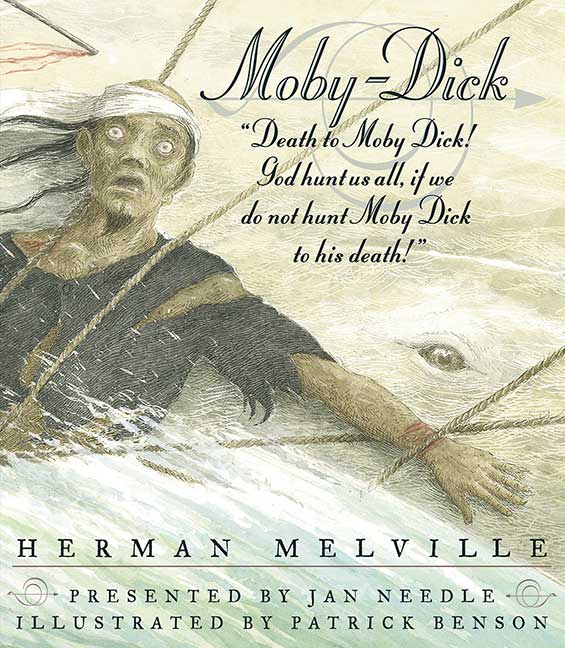
Moby rises again (intact) on match.com

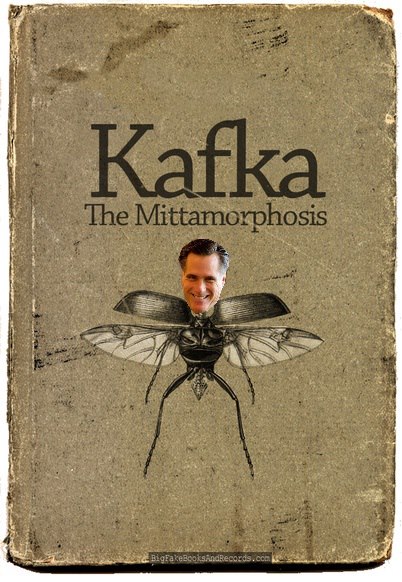
Well, match.com has redeemed itself and hopefully this little literary soap opera is over for now. After my match.com profile was inactivated because I had listed Moby-Dick as one of my “books read,” I did my free speech rant (posted previously) and then relented a bit and renamed the book Moby-Richard on the site.

The profile remained in limbo, so I talked to a second customer service person who proved a little more competent and literate than the first one I’d spoken to. She proceeded to approve “Moby-Dick,” although I had to remove the URL nodepression.com, which is the great roots music e-zine.  Apparently you can’t refer to any website, because redirecting a match.com customer to somewhere else on the Internet might lead them to something they deem offensive or inappropriate.

So where does that leave us? How close are we to Big Brother and “1984” or to the time when people need to memorize all books because they are being burned by a totalitarian government as immoral and subversive, as in Fahrenheit 451, Ray Bradbury’s classic dystopian novel?

Well, you decide. But at least one popular social network is not completely ruled by moralistic  automatons And I’ve often thought that some regulation of the increasingly moral chaos of the Internet is needed. Parents can use filters to protect their children, which is probably a good idea.