“Black Radio” Radiates Across Milwaukee’s Great Divide

The Robert Glasper Experiment’s “Black Radio,” a live amalgam of R&B, hip-hop and jazz taking place at 7:30 p.m. on September 26, may feel like a risky experiment for the South Milwaukee Performing Arts Center.

After all, this is urban music insinuating itself north to south, with much of what that signifies in terms of American and Milwaukee history.

It’s hip-hop attitude and culture traveling across Milwaukee’s Great Divide — the industrial valley — which a peaceful open-housing demonstration march crossed in 1967. Violent retaliation spurred race riots, earning Milwaukee the nickname “The Selma of the North.”

Despite clear progress, how much less racially and culturally polarized is America today? Yes, today we have boho-Bay View, but this traveling show is going into Milwaukee’s deep south. And yet, South Milwaukee is its own distinct community, SMPAC director Chad Piechocki points out. The center staged blues legend John Hammond last season. And the city got a feel for contemporary, historically-informed black music at the end of last season with Ruthie Foster, the gospel-soul-roots folk singer.

She was well-received, but her earthy radiance is fairly feel-good. Yet, in his way, so is keyboardist-composer Glasper. Sure, he’s pushing the cultural edge further. Black Radio reflects a new era for the arts center and its intrepid and imaginative young director, with the concert based on Glasper’s same-titled album.

The center is an impressively renovated space in South Milwaukee High School, (901 15th Ave. South Milwaukee), and operated as part of the city’s recreational department.  Piechocki aims for “eclectic yet accessible” programing. The updating of South Milwaukee culture began with his resourceful predecessor, Brenda Johnston, Piechocki says, so maybe it’s more a matter of rethinking preconceptions and stereot ypes. What can you presuppose about an album like Black Radio, which seamlessly ranges from Erykha is Badu singing Mongo Santamaria’s Afro-Latin Jazz classic “Afro-Blue” to Lalah Hathaway recasting the cool ecstasy of Sade’s “Cherish the Day”?

Add to that “The Consequences of Jealousy” by contemporary crossover jazz bassist Michelle Ndegeocello (who plays on the album), David Bowie’s “Letter to Herione” and Kurt Cobain’s “Smells Like Teen Spirit.” Glasper’s originals, aided by Mos Def, Musiq Soulchild and others, help it all meld. Unlike hard-core hip-hop, brings with melodic and harmonic sophistication more like the hybrids of fellow jazzer Jason Moran.


Robert Glasper (right) with several collaborators on  “Black Radio.” Photo: Mike Schreiber

The album’s deftly wrought diversity recently earned Glasper five awards from Down Beat magazine’s 60th annual critics’ poll. Glasper is trying to challenge presumptions about and of hip-hop, and succeeding, because he’s getting played on urban radio – and during prime daytime slots. On Oct. 9, Blue Note records will release a remixed version of the album, with an unreleased track. And Glasper has been added to the lineup of the iTunes Festival 2002 (which will be downloadable live) in London, on September 23.

The CD delivers not gansta rapology but a kind of immersion in supple R&B groove, chill out   “experimentation for meditation.”

“I hope to see these gangsters acting like teachers,” Lupe Fiasco muses at one point on “Always Shine.”

Or Sade’s lyric: “Cherish the day, I will go astray, I won’t be afraid, you won’t catch me runnin’.” Black Radio flows and eddies to hard-won, high grade-cultural enlightenment, updating Stevie Wonder’s more politically visionary stratospheres.

“For a 17-year-old kid to hear that music, who listens to hip-hop… it’s like, ‘“Hey, what’s that?”’ Glasper commented in Down Beat. His role models are Herbie Hancock and Miles Davis – “jazz musicians who didn’t just play jazz.” Glasper’s first two acoustic Blue Note recordings showed he’s got post-Monk, post-Coltrane modern jazz down cold.

Piechocki himself defies stereotypes: He graduated from West Point where he majored in philosophy, then he began his venture into the arts. He writes poetry and for the theater, and is working on a project which he hopes will successfully set his verse to dance performance.

Aided by a strong and supportive board of directors, Piechocki aims to stay at a high, yet indefinable, bar level. Last season had a sold-out flamenco show and this season boasts the return of the Vienna Boys Choir (Nov. 23). 2013 shows include unclassifiable physical comedian Avner Eisenberg (Jan. 25) on the center’s student series, Davell Crawford interpreting Ray Charles’ pioneering 1962 crossover album Modern Sounds in Country and Western Music (March 14), Frank Ferrante’s Groucho Marx show (April 26) and cutting-edge illusionist Jason Bishop (May 17), among others. For information, visit www.southmilwaukeepac.org, or call 414-766-5049.

This article was originally published in the September 13 issue of Shepherd Express.


On 9/11 Anniversary: How Another City Survived its own Fallen Men (Women and Children)

Oklahoma City has mustered great civic resilience in recovering from this terrorist bombing http://www.truthcontrol.com/pictures/oklahoma-city-bombing-picture

Reflecting on my previous post about call and response at the Democratic convention (and calling out as always to you, dear blog reader!), I was struck by the news analysis of Thom Shaker and Eric Schmitt in the New York Times Sunday Review section, p 6. It clearly demarcated this Tuesday’s 9/11 anniversary by addressing a post-traumatic consciousness that can’t be adequately addressed by the killing of Osama bin Laden. 1

http://www.nytimes.com/2012/09/09/sunday-review/how-resilient-is-post-9-11-america.html?_r=1&pagewanted=all

We like to think — we desperately want to believe — we will never see violent terrorism comparable to the destruction of the World Trade Center. It’s the desperation of The Falling Man in each of us. This is deeply ingrained in the message of hope that President Obama invoked bravely in his convention acceptance speech. Understandably he avoided a direct reference to the tragic day because ridding the world of its mastermind bin Laden is a signature accomplishment of his first term.

But how do we live with the horrible spurts of violence, much of it by domestic terrorists, like that in my own community recently, where a deranged neo-Nazi murdered Sunday service worshipers in Oak Creek? That the killer misidentified — willfully or not — the Sikh worshipers as Islamic shows how sociopathic and Islamophobic American response to the post-9/11 era can still be.

The authors of the Times piece analyze whether America has a sufficient strategy for terrorist “resilience.” This involves ways of addressing matters of internal security in domestic business practices, but must inevitably extend to a collective psychological strength, well-being and, yes, sanity.

The Army now has a Comprehensive Soldier Fitness program to teach soldiers how to be “psychologically strong in the face of adversity, such as combat,” the article said. The training classes are available to family members of troops as well. The University of Pennsylvania helped design the program, which also focuses on “post-traumatic growth” as well as personal and family emotional fitness.

I’ve never been big on the post-9/11 Homeland Security Department, but perhaps it’s beginning to get some things right in his priorities. The article concludes with a telling anecdote about Oklahoma City’s response to Timothy McVeigh’s 1995 bombing of the Alfred P. Murrah Federal Building, which killed 168 people, including 19 children.

The authors point out that this capital of one of the “reddest red states” in the nation, “hardly a bastion of tax-and-spend ideology,” has twice extended its sales tax increase to raise hundreds of millions of dollars to rebuild and improve a town “brutally scarred by the bombing.”

What’s inspiring to me is the cultural enlightenment that grew out of this tragedy. Shanker and Schmitt report that Oklahoma City’s civic healing renovations included a performing arts center, library, a baseball park, public schools, a convention center and a river walk — now home of the United States Olympic rowing team. Having a young playoff-caliber NBA team doesn’t hurt the city either.

The city revitalized and recovered by accepting local and national governmental roles for vital social and cultural infrastructure — in a way that survival-of-the-fittest Ayn-Randian vice-presidential candidate Paul Ryan could not fathom.

“We showed you are not going to destroy this country coming in here and trying to blow us up and terrorize,” said Ronald Norick, the city’s mayor at the time of the bombing. “It’s not going to work. It’s gonna make us come together.”

Norick seemed to invoke The Falling Man and terrorism of all kinds in his sweepingly bullish statement. I will be fascinated to see how Oklahoma City votes in the upcoming presidential election.

1http://www.nytimes.com/2012/09/09/sunday-review/how-resilient-is-post-9-11-america.html?_r=1&pagewanted=all

Political Call and Response and The Falling Man Who Still Haunts

The Falling Man photo by Richard Drew

Pundits generally agree that the Democrats made more hay with their convention than did the Republicans. I agree — Bill Clinton especially picked off GOP allegations against President Obama like so many ducks in a barrel, and Clinton and Michelle Obama, Joe Biden, Elizabeth Warren and a number of other speakers often worked the classic American gospel call-and-response dynamic as if this was a massive Sunday Baptist service.

Actually the best such line came from former presidential candidate John Kerry: “Ask Osama bin Laden if he’s better off today than he was four years ago!” Kerry, of course, is also the Vietnam veteran whose heroic war record was distorted by Republican stooges in the 2004 campaign’s Swift Boat farce, framing him for supposed cowardice.

As for Mitt Romney, the best hard-nosed take on him I’ve read is Matt Taibbai’s in the latest Rolling Stone: “Mitt Romney is one of the greatest and most irresponsible debt creators of all time. In the past few decades, in fact, Romney has piled more debt onto more unsuspecting companies, written more gigantic checks that other people have to cover, than perhaps all but a handful of people on planet Earth.” 1

But for the electorate to understand this opponent, Democrats needed to fire up their base and engage their often fractional culture. Tapping into the call-and-response dynamic was very smart because it may also be a way to allow the coveted undecided voter in — by eliciting a response. At seems to me, undecided voters need to sense that someone speaks to them and values their opinion.

Some of those undecided voters are surely nonreligious. That’s part of the risk of using the call and response, in the context of a nationally televised convention, because it is so associated with religious ritual. I recently had a conversation with an atheist neighbor who has an aversion to any cultural reference with religious association. I mentioned Jesus Christ and the Golden rule as a good fundamental way to live one’s life without any excess trappings of religious dogma. He said “as soon as you say Jesus Christ” you are implicitly approving the religious impulse that feeds into all the extremism we suffer from, the kind that led to 9/11. That’s the stance of New Atheist writer Sam Harris, this man’s new guru.

This seems a needlessly negative stance that disavows all the good that religion has produced through the millennia. Of course, the stance is also very understandable, given the evil, horror, tragedy and trauma that fateful day produced.

The excellent 2006 documentary on 9/11, The Falling Man happened to run on a cable station concurrent to the final night of the Democratic convention, a reminder of the event’s upcoming anniversary. So I switched between the documentary and PBS’s convention coverage. The Falling Man brought home, in harrowing and poetically chilling human terms, the crux of that tragedy. It focuses on the investigation, especially by Esquire writer Tom Junot, into the identity of the man who jumped from an inflamed room in the World Trade Center — in a photograph which has become perhaps the tragedy’s most iconic image.

The photo was taken at 9:41 AM on September 11 by Associated Press photographer Richard Drew. The image also inspired, among other fictional attempts to address this subject, the novels Extremely Loud & Incredibly Close by Jonathan Safron Foer (also a recent film) and Falling Man by Don DeLillo.

It also brought to mind an anecdote at the Democratic convention about another type of man — a  fallen man, of sorts — related by Georgia Rep. John Lewis, himself a minister and a long-time civil rights hero, who walked shoulder-to-shoulder with Rev. Martin Luther King Jr. He delivered one of the most genuinely moving and perfectly understated moments of the whole political season:

A few years ago, a man from Rock Hill, inspired by President Obama’s election, “came to my office in Washington and said, ‘I am one of the people who beat you. I want to apologize. Will you forgive me?’” I said, ‘I accept your apology.’ He started crying. He gave me a hug. I hugged him back, and we both started crying. This man and I don’t want to go back; we want to move forward.”

I see a connection here to The Falling Man as well. He was, by most accounts, a well-liked and hard-working 43-year-old African-American audio technician named Jonathan Briley. Certainly there’s profound irony in that a man whose race is historically the most reviled in America, rises to a job in the tallest building in America and then plunges to his death on the day of America’s greatest contemporary tragedy. Briley’s sister Gwendolyn  saw the picture the day it was published. She knew that Jonathan had asthma, and in the smoke and the heat would have done anything just to breathe. . . .

So Briley became a new archetypal tragic American hero.

His father is coincidentally a preacher who told Junot that he could not address the issue of his son’s death in the photograph because his job is to tell people to go on, in the face of tragedy. That was something he was unable to do at that point.

His sacrificed son can signify the black man who has come so far and his death an acknowledgment of the inhumanity that kept him down for so long.

Here’s where Lewis’ call-and-response line resonated: “Brothers and sisters, do you want to go back? Or do you want to keep America moving forward?”

More broadly, many people who have suffered and died through the last Republican administration signify those who most need just “a fair shot,” as President Obama put it.

The Democrats clearly were willing risk of the call-and-response modality because the inherently inclusive dynamic of the gospel ritual is fundamentally American, and even reclaims some of the religious potency that Republicans and the far right supposedly command.

The falling man who haunts us might even signify the 99% who have all fallen from where they were during the several decades of stagnating wages that led to the proliferation of “the working poor” and subprime mortgage loans and corrupt business and Wall Street practices that led to the recession.

I see the call and response as a reminder of the bottom-line political power of voting. As Obama said repeatedly in his speech, “You did this,” which seemed a deft counter to Republican manipulation of an out-of-context Obama quote, “You didn’t build this.”

(For the record, he was talking in the latter quote about infrastructure, which government pays for most typically. He wasn’t talking about small businesses.)

And as Lewis said, “Your vote is precious, almost sacred. It is the most powerful nonviolent tool we have to create a more perfect union.”

So perhaps we can look back at The Falling Man in terms of a stark beauty begetting spiritual truth. A blog comment by Marnie Watson O’Brien on The Falling Man documentary, put it this way:

“I think the controversial photograph of the falling man is beautiful. He knew he was going to die, and the picture itself is so composed and calm compared to the chaos of that day.  It’s quite a stunning and beautiful picture, taken at face value. But if (Briley) could see the picture…I don’t think he would mind terribly that if with his death someone happened to take a picture and it was a beautiful picture. At least one tiny, tiny good thing came out of his death and made people think. We can’t hope for more than that.”2

How tiny that abject figure must’ve felt, as he plummeted from the tallest building in the world. It also seems that in the ensuing decade that “tiny good thing” has grown into a large and potentially powerful good thing.

At the end of Foer’s novel, the book includes a sequence of photographs of another of the twin tower’s falling men. Yet as your thumb slips forward through these pages they become an old-fashioned flip-action device. But Foer arranged it so, in this action, the falling man ascends.

This may seem like facile symbolism, but it’s also a device that would likely appeal to Oskar Schell, the novel’s pacifist nine-year-old protagonist. And it’s another way of looking at an indelible moment. Art, and even political stagecraft, may carry tragic life to new possibility. Otherwise we’re still left with a hole in our heart, as big as Ground Zero. Call and response becomes a collective healing process. Just maybe we can hope for more than what Mamie O’Brien suggests.

1 http://www.rollingstone.com/politics/news/greed-and-debt-the-true-story-of-mitt-romney-and-bain-capital-20120829#ixzz25p0Jo6X8

2http://topdocumentaryfilms.com/911-falling-man/


The Magician Behind Miles: Reviving the American Individualism of Gil Evans

“Gil had the distinct ability to stay out of the way of the musical interaction and inspire the players with amazing orchestration .” — saxophonist Bob Mintzer. *

Gil Evans conducting, and letting in happen, in the early ’60s.

Ryan Truesdell /Gil Evans Project – Centennial : Newly Discovered Works of Gil Evans (artistShare)

In America there is individualism that begins selfishly, of necessity, but then stays selfish, feeding hubris and often greed. Then there is individualism that nurtures its own creativity and, when the time is right, shares it — feeds it into simpatico compatriots, who help make it great American culture, begetting wealth to be shared by generations.

The late Gil Evans was the godfather-Svengali of modern jazz arranging, the bridge between Debussy and Ellington to Vince Mendoza, Darcy James Argue and Maria Schneider, who helped realize this project. Evans’ brooding tapestries engulfed the stunning silhouettes of Miles Davis’ exquisite solos on Sketches of Spain and Porgy and Bess.

Evans’ exploratory affinities stretched to Hendrixian textures. Now, Ryan Truesdell (who studied with another great modern arranger, Bob Brookmeyer) has dug up early ‘60s scores from the Evans family archives. Centennial: Newly Discovered Works of Gil Evans almost brings Gil back to life in unheard material and re-casting of Evans classics, from the tabla-tinged “Punjab” to the world-weary “Smoking My Sad Cigarette” and Weill/Brecht’s “The Barbara Song,” whose sonic mysteries rise more full-throated than the original. Luxuriate in this.

As he studied these scores, Truesdell discovered “fascinating musical references and techniques that illuminated dimensions of Gil’s personality and gave me more insight into him as a person,” the arranger and conductor writes in the liner notes. So this music — with superb vocals by Kate McGarry and Luciana Souza and solos from pianist Frank Kimbrough, vibraphonist Joe Locke, and tenor saxophonist Donny McCaslin, among others — feels mighty damned true to Evans.

And yet, as thrilling as Centennial  is to hear in all of its high-tech digital detail, there is something missing. That must be Evans himself — in the studio or on the bandstand. There’s an uncanniness to his own recordings that isn’t contained in the scores, I suspect. It was the jazz element — that of the leader with his players, hearing the voices in his head then subtly re-shaping and re-blending the colors to the strengths and even the moods of his musicians. The best Evans sounds like alchemy.

And here’s where the Duke Ellington connection comes in. Ellington knew precisely what to get out of the unique talents of each of his players. And they became greater players for that contextual opportunity. For example, the great saxophonist-composer Wayne Shorter probably learned a lot about dynamics and nuance in a large setting as a soloist in the original “The Barbara Song” on The Individualism of Gil Evans.

Here’s where Evans’ phantom Svengali -like sensitivity to the musical moment comes in, as Bob Mintzer notes above.  And Like Ellington and Basie, he also played some of the greatest less-is-more orchestra leader jazz piano, his dense voicings and breathless grace notes infusing the players with evanescent Evans magic.

Or as Jim McNeely has said: “Some people consider me a pretty good composer/arranger. When I start to believe them, I put on ‘Barbara Song.’ To this day I am reduced to tears. It’s a humbling experience.”

Evans probably learned a large measure of those wizardly skills from studying The Duke.  And from Claude Thornhill, when he began arranging in Thornhill’s ground-breaking orchestra. Here’s where you start hearing what Gunther Schuller described as the “subdued pastel-shaded backgrounds and low-register counter melodies” that would become part of his mature style. With a chamber music writer’s deftness, Evans would score striking contrasts of, say, bright clarinets against the darker-hued brass, horns and tuba, creating an odd intervallic spaciousness filling with billowing tonalities. 1

Evans, though hardly Ellington’s equal as a composer, clearly had his own genius, expanding Ellington’s vast sphere of influence into his own sonic galaxy. On “Individualism” alone, consider the strange range from winsomeness to debauchery evoked in “Flute Song/Hotel Me,” or the pensive Catalan clouds and piercing brass light shafts of the brief tone sketch “El Toreador.” And yet he could dig down and distill 90-proof essence of the blues, as in “Spoonful.”

And no one will ever retell the soulful, quintessentially American saga of Porgy and Bess in pure, worldless music as vividly is Evans and Davis did. Schneider, today’s most acclaimed jazz orchestra arranger/ composer, calls “P & G” her “favorite music on earth.”

Gil Evans and Miles Davis (on flugelhorn, right) making alchemy in the studio. Courtesy allaboutjazz.com 

Slightly less lovable perhaps is the more psychologically reflective Sketches of Spain. By turns stoic and heartbreaking in its eloquence, it touches on tragedy, so penetrating is its beauty.

The point is to start with Centennial — an exciting, revelatory addition to Evans’ legacy. But then, go back to the magnificent analog collaborations with Miles (including Miles Ahead and the pioneering Birth Of The Cool ), and to Evans’ own great albums, “Individualism”, Out of the Cool, Where Flamingos Fly, Svengali, Plays the Music of Jimi Hendrix, 75th Birthday Concert…

Evans is the sort of quietly humble, pay-it-forward genius that individualist America needs today, as it always has.

________________________________

This article grew out of a review of a CD, Gil Evans Project, Centennial, originally published in the August 30 issue of tThe Shepherd Express in Milwaukee.


*Down Beat magazine, from “My Favorite Big-Band Album: 25 Essential Recordings” by Frank John Handley, April 2010. Mintzer’s quote is also from the same article. The Schneider quote is from Down Beat, “Gimme Five,” October 2000.

1. The Swing Era: The Development of Jazz, 1930-1945, Gunther Schuller, Oxford University Press, 1989 p. 756

Milwaukee’s Revived Jazz Gallery: A Beacon for Creative Freedom Burns Again

The Marquis Hill Blacktet playing recently at The Jazz Gallery Center for the Arts in Milwaukee’s Riverwest neighborhood. 

The original Milwaukee Jazz Gallery transmitted a far-reaching beacon, a creative-freedom vibe even the Statue of Liberty might’ve caught, and tapped her toe to. America’s art of improvised musical expression thrived in arguably the greatest jazz club in Milwaukee history, with a reputation that radiated throughout the nation’s jazz-musician community.

Today the same address, 932 E. Center St., houses The Jazz Gallery Center for the Arts, a venue for performances and jam sessions and art exhibits. This honors and reinvents the tradition of the original.

After the club’s glorious but difficult run, from September 1978 to the fall of 1984, founder and owner Chuck LaPaglia moved on — to propose and then book live jazz at Yoshi’s in Oakland, today one of the premier jazz clubs in the world. “But many musicians still talk about how special the Milwaukee Jazz Gallery was,” LaPaglia recalls.

Here’s a review of the piano titan McCoy Tyner, at the height of his powers at the Jazz Gallery on June 12, 1981: “As he unleashes a solo, his left hand rears high above the keyboard delivering lightning bolts of bass. His right wrist appears to be pouring fingers all over the keyboard.

What you hear is music that swings, soars and erupts, often at once. In the intimacy of the Gallery Friday, you could feel it as well, such is the power of Tyner’s quintet… with ascending plateaus and sweeping arcs…”*

McCoy Tyner in 1996, still playing with the power and fire he displayed at the Jazz Gallery in 1981. 

And today?

“A whole generation of Americans has no idea what serious jazz is,” laments Mark Lawson, president of the Riverwest Artists Association, which owns the facility.

The original Jazz Gallery also staged Dizzy Gillespie, Betty Carter, Freddie Hubbard, Stan Getz, Dexter Gordon, Dave Holland, Wynton and Branford Marsalis, Art Blakey and the Jazz Messengers and many more, a living jazz history.

You could catch world-class blues acts like Koko Taylor and Albert Collins, and local theater groups like Theater X — as it built a national reputation. The Jazz Gallery also nurtured local musicians who now have national stature, including Brian Lynch, David Hazeltine and Lynn Arriale, and even notable non-jazzers like the Violent Femmes and Paul Cebar.

Among other top-flight local musicians the venue staged were Melvin Rhyne, Manty Ellis, Berkeley Fudge, and What On Earth? and its lyrical brand of avant-garde. Renowned pianist-vibist Buddy Montgomery, then residing in Milwaukee, used the space for meetings of The Milwaukee Jazz Alliance, helping to define LaPaglia’s vision for it as a community resource.

The Brian Lynch Quartet (l-r, Lynch, Sam Belton, Manty Ellis and Jeff Hamman) at the Jazz Gallery Center for the Arts.

That legacy drives Lawson. “We are passionate about the mission to combat the commercialism that has swallowed up America’s original art form,” he says, noting the music’s paltry presence on local radio and in press coverage. African World Festival’s jazz is mostly the smooth variety. Even the huge umbrella of Summerfest has long since forsaken jazz, although several local groups made inroads on the Potawatomi stage this summer.

The new Jazz Gallery presents local and a few touring groups, including the Brooklyn-based trio Chives on Friday, Aug. 31. The Jazz Gallery CFA’s  managing partner is Milwaukee Jazz Vision, a musician-run organization that stages concerts and promotes the whole Milwaukee jazz scene with an impressive, cutting edge-quality website.For example, an MJV stage will debut  at Center Street Days on September 8 with the Milwaukee Jazz Vision Quintet  and other groups playing from 4 to 8 p.m.In May, the Jazz Gallery CFA participated in a national network event, involving   venues in various cities, The Undead Festival — Night of the DIY, with   top local bands including the Extra Crispy Brass Band, a rollicking and   popular neo-New Orleans-style ensemble.The new gallery presents visual   art just as resourcefully.Recent art exhibits have ranged from handmade Navajo   rugs to a vibrantly varied group show from the Milwaukee Institute of Art and   Design, where Lawson has curated exhibits for several decades.An art opening at the Jazz Gallery Center for the Arts

Another Jazz Gallery CFA partner   is the Milwaukee Youth Symphony Orchestra.“This collaboration is in its   infancy in finding ways to work with kids across disciplines,” says Jeno Somlai,   jazz studies director at MYSO. “I do see a renaissance beginning, and hopefully   a groundswell of activity will bring recognition to Milwaukee culture.”The opportunity to pursue   one’s creativity “changes a person’s life, whether it’s jazz, poetry, art or dance,” Lawson says.

Such intimate, informal venues remain the lifeblood of   the improviser’s art. The gallery hopes for more partners. MJV and MYSO have   given the grassroots facility citywide outreach and worldwide presence.

For information on Jazz   Gallery events and hours, visit www.jazzgallerymke.com . The   MJV site is www.milwaukeejazzvision.org.

*LaPaglia’s collection of the   Tyner review and numerous articles about the club are documented in Milwaukee Jazz Gallery, an  8 x 11″ ring-bound anthology ($20), available   at the Jazz Gallery Center for the Arts.

This post was first published in an edited version in the Aug. 30th issue of The Shepherd Express.  


Ishmael and Queequeg: the Original Pan-Cultural Odd Couple?

Ishamel, the narrator of Moby-Dick, and The Pequod’s first harpoonist Queequeg may be literature’s original odd couple. Illustration by Mark Summers from Moby-Dick (facing p 78) Barnes & Noble Books.

Readers of this blog will be aware of my Melville enthusiasms.  (Ahoy, another white whale sighting dead ahead!)

I recently responded to a discussion of Moby-Dick on the Goodreads website, and then decided to share my thoughts here, slightly enhanced.

Julia,
I am very happy you’re giving Moby-Dick another chance. Each time I read the book I gain a fresh and amazing experience. I wonder why Ruth gave up after 50 pages – what she mainly read was the budding friendship between Ishmael and Queequeg. Is she put off by that? I find it the most humanly engaging relationship in the book, a rare and fascinating 19th-century example of a pan-cultural brotherhood, and what Leslie Fielder once called one of the great American love stories.

Ishmael reflects: “I began to be sensible of strange feelings. I felt a melting in me. No more my splintered heart and maddened hand were turned against the wolfish world. So the soothing savage had redeemed it. There he sat, his very indifference speaking a nature in which there lurked no civilized hypocrisies and bland deceits.”1

Admirably homosocial dynamics aside, I see an almost mystical love hidden in Queequeg’s request for his coffin to be built.  He recovers from his fatalistic gloom, but he has intuited the demise of the ship. After all their bonding, Queequeg has also intuitively created the richly symbolic means for his best friend to survive. In the novel’s famous last scene, the wooden coffin pops up out of the water as the ship sinks and Ishmael grabs hold of it for dear life. That “orphan” survives alone, to tell the grand tale. We all have plenty to thank Queequeg for.

I recently read Uncle Tom’s Cabin and — as much as that book offers commendably provocative (but rhetorically heavy-handed, for a storyteller) portrayals of slavery’s evil — by comparison Melville’s handling of race is far more interesting and nuanced, and insightful about the complexities of multicultural relations.

Those examples range as broadly as the comic byplay of Stubb and Fleece the black cook over the hunger-crazed sharks (CH 64),* to the classic racial confrontation and masterful pan-cultural interplay of “Forecastle — Midnight” (Ch. 40), to the devastatingly cruel treatment of Pip followed by the stunningly unexpected paternal adopting of him by Ahab, even as the black cabin boy has become psychologically disabled by his trauma at the hands of his mates and the unfathomably indifferent ocean.
And of course, there’s the delightfully odd couple, Ishmael and Queequeg (who walked away from a cushy life as Polynesian royalty to adapt to Western culture while retaining his own traditions), and Ishmael’s visit to the black church service.

Nor does Melville shy from strong storytelling by avoiding possibly stereotyping characterization, with the mysterious and ominous Asian harpooner Fedallah. But Ahab’s covert hiring of him and his gang clearly reflects the captain’s deranged monomania. We all know today thugs come in all colors.

All this is amazing for a mid-19th century author, and set a cosmopolitan standard to this day and sociologically explains part of the book’s greatness.

Further, the novella Benito Cereno brilliantly demonstrates how Melville dramatizes the tragedy of slavery while demonstrating that no race is above savagery. One question he asks here is, to what ends savagery is used and when is it ever justified? Time has shown that perhaps no author of any color or gender did better on these topics and I’m not sure if any have since.

Another thing I love about Moby-Dick is Melville’s clear and complex fascination with (and love for?)  whales, which permeates most of his writing about them (e.g. “The Grand Armada”Ch. 87, or “Does the Whale Diminish?” Ch. 105 and “The Dying Whale” Ch. 116), even aside from the purely cetological material and his one chapter of defending the “glory and honor of whaling,” which seems almost obligatory and understandably a bit defensive. Thus, the powerful and moving vividness of the Man and/vs. Nature theme.

To venture into deeper waters implicit in this theme, Melville may have chosen a white sperm whale as a symbol of what Edmund Burke called “the dynamic sublime,” and “in Ahab, Ishmael and others we see different human reactions to it,”  according to a Harper’s magazine essay written after the BP oil spill, which treatened and may have harmed, among many other creatures, the endangered sperm whale, according to the National Oceanic and Atmospheric Administration.

“Modern man of power fears the whale, feels threatened by it, and is obsessed with his destruction. Modern man is driven by the desire to dominate his environment and chafes at those aspects of the world cannot control…The vision of Melville’s narration,  however, appreciates the beauty and majesty of the forces of nature even as he reckons with their power and unpredictability.” 2

Unlike Ahab, Ishmael and Queequeg especially appreciate these forces because their daunting task to kill these gigantic, magnificent creatures, for the sake of the precious oil that lights lamps and street lights. This is part of what Ishmael, a fledgling whaler as the story begins, learns from Queequeg.

Only a master harpoonist like Queequeg knows truly what a great creature he is grappling with. In one extraordinary scene ( which no filmmaker has ever managed to stage) he literally dives into the water and crawls inside a fresh whale carcass to pull out a crew member who has accidentally fallen into a cavity cut into the whale. So he’s also a sort of Jonah turned hero.

All I can say is, dive in someday yourself– say, during a damp, drizzly November in your soul or a sun-blessed August afternoon on your shoulders.

(For those who feel the need to get their feet wet first, or for a wonderful young person’s illustrated condensation of the book, I recommend Moby-Dick presented by Jan Needle and illustrated by Patrick Benson, Candlewick Press 2006. The book offers marvelously evocative artwork and a reasonably good condensation [down to 33 chapters] with explanatory chapter intros by Needle, who has been shortlisted for the Carnegie Medal and the Guardian children’s fiction prize. See book cover below)

 In the novel, it is Fedallah, not Ahab, who gets accidentally entangled in the harpoon lines on Moby Dick.


Notes

1 Chapter 10 – “A Bosom Friend” Moby-Dick  or, The Whale, Herman Melville,  A Longman Critical Edition, Ed. John Bryant and Haskell Springer, Pearson Longman 2007, 62

*a good discussion of Fleece’s black dialect is in the”revision narrative” footnote (p 265) to the Longman Critical Edition, mentioned in my footnote above.

2  Melville — What the Whale Teaches Us —  http://harpers.org/archive/2010/05/hbc-90006992

You Doubt Ryan Thinks of Humans as Mathematical Digits?

Paul Ryan practices his squeeze-the-money-out handshake with a Republican in a Chicago fund-raising event. Courtesy Publius Forum 

Below is a little exchange for those who think my first post about Paul Ryan was simplistically reductive by characterizing him as a right-wing ideologue budget geek who sees humanity in terms of mathematical digits https://kevernacular.com/?p=676

Take a look at this You tube chat with Bill Clinton. The ex-president somewhat disingenuously says he hopes the Democratic win in New York won’t be “an excuse to do nothing ” about Medicare. He’s surely well aware of the The Simpson-Bowles deficit reduction plan.

Ryan paints himself as the hero rising to save America from the morass of political paralysis, then adds: “We know the math, but we had to put ourselves out there,” pumping Clinton’s hand. “It’s all about the math. The ex-prez may have met his match as a political schmoozer, with this blue-eyed, iron-pumping bizarrely friendly, Ayn Rand-reading Catholic family man.

The Simpson-Bowles plan has as accurate and effective mathematics as anything proposed, but it doesn’t drain the blood of the middle and lower class and the sick and disabled, so that the superrich 1% can gorge themselves into utter grotesqueness. The Ryan Republicans have cravenly fought the proposal into paralysis, at every turn. Even reflexively moderate met Mitt Romney told Sean Hannity recently “My plan is very similar to the Simpson-Bowles plan.” It won’t be when his VP-candidate gets his mitts on it.

As Joe Klein of Time rhetorically asks, should Pres. Obama make a make a strong case for the Simpson-Bowles plan, perhaps in his convention speech?

“Absolutely. It’s called leadership.”

Otherwise we may be doomed to the horrors of “Mittamorphosis” (see previous posting), a president transformed into right-wing, bloodsucking creepy crawly that Kafka never quite dreamed of.

http://www.youtube.com/watch?v=i_vDQCuHFOU


As Mittor Romsa awoke one morning from uneasy dreams…

The literary geek in me couldn’t resist this posting — a devilishly ingenious mockup from the Pragmatic Progressive Facebook page.

And to go to the source of the inspiration I offer this:

“What about sleeping a little longer and forgetting all this nonsense, he thought, but it could not be done, for he was accustomed to sleeping on his right side and in his present condition he could not turn himself over…”

Now, poor Mittor had Paul Ryan lying on top of him. He could no longer even budge!

“…His numerous legs, which were pitifully thin compared with the rest of his bulk, waved helplessly before his eyes.” (from The METAMORPHOSIS — Franz Kafka)

http://www.facebook.com/#!/PragProgPage

Franz Kafka “The Metamorphosis” from Franz Kafka: The Complete Stories, 1883-1924  Schocken Classics  p. 89


Paul Ryan: The Story of the Peanut Butter-munching Automaton and his Granny

The Wisconsin recall election was really “all about courage.” – Rep. Paul Ryan.Ready for another heaping helping of courage? It’s truly bizarre, this new species of corn-fed Republican extremist being grown in progressive Wisconsin, home of Fighting Bob La Follette. Presumptive Republican Vice President-nominee Paul Ryan (right, above) and Gov. Scott Walker seem to earn half their votes with their disingenuous boyish charm.

It’s partly because they’ve never really grown up. Life is still a game of Monopoly, for them. Both strategize by masterfully manipulating numbers — dollars and statistics — as if abstract numbers are all that count in the world any more. What strikes me most about Paul Ryan is that this self-described geek (who, gee whiz, loves his peanut butter and honey sandwiches) is a pure numbers man, a weird sort of breathing automaton.

Yes, we need to do something about the deficit, but virtually every effective administration has functioned with a deficit. And this most extreme shortfall is courtesy, of course, of the last Republican administration, which went hog-wild with defense spending, and then dawdled while New Orleans drowned.

Of course, unlike even many mainstream Republicans today, hawk-boy Ryan still thinks if we keep throwing incalculable numbers of young Americans into harms way on the other side of the world, we can solve all the problems of ancient societies and cultures which we understand poorly, and have no right to to attack, unless they have attacked us. It’s a demonstrably outmoded mega-military mentality.

Now comes Ryan, posturing as if the deficit is all President Obama’s fault, and threatening to gut or eliminate Medicare, Social Security, food stamps and virtually all the social safety nets of our civil society.

The problem is, as a budget geek legislator, all he seems to know and understand is numbers. People are merely big, cumbersome numbers to him — to be jiggered around and preferably away, because they complicate his brilliant computations with their unpredictable (and predictable) human needs to survive. He is the essence of the contemporary technocrat geek, divorced from human reality.

Well, surprise, Rep. Ryan, any way you slice or dice these numbers, most of them represent vital support for living human beings — who work (or try to), procreate (like pro-life Republicans insist they should), bleed suddenly or suffer slowly, grow old, or die before their time.

Meet America, Congressman.

So Ryan keeps smiling and arguing about numbers, as if his god, Math-is Maximus, will solve all our problems.

Oh, we now know he’s a workout fanatic because his father and grandfather both died before age 55 from heart attacks.

But what if his heart genetically fails him at age 52 — disabling him? Well, he can probably afford his own private health care. But most other 52-year-olds in the same situation – or a myriad of disastrous other ones — who end up losing their jobs couldn’t afford care under his plan, because they will have no disability safety net.

Just take a voucher, he’d say, and good luck. But you should’ve worked out even harder!

Survival of the Fittest, the Luckiest and the Richest, who pay nothing extra to cut the deficit — that’s Ryan’s plan.

Rep. Chris Van Hollen, the top ranking Democrat on the House budget committee, says Ryan still refuses any compromise. We want to improve the quality of programs not cut the quantity, Van Hollen says.

Ryan wants a neat, streamlined, mathematical, cold-blooded policy. Pure genius, Congressman.

I can imagine what he’d do if his own grandmother’s wheelchair failed and she rolled screaming down a hill.

How convenient. He’d scratch his head for a moment, and continue tabulating and subtracting. And now, smiling for the cameras.

That takes real “courage.” I can think of other words for it.

Is She Safe Because Buddha is on the Smart Phone?

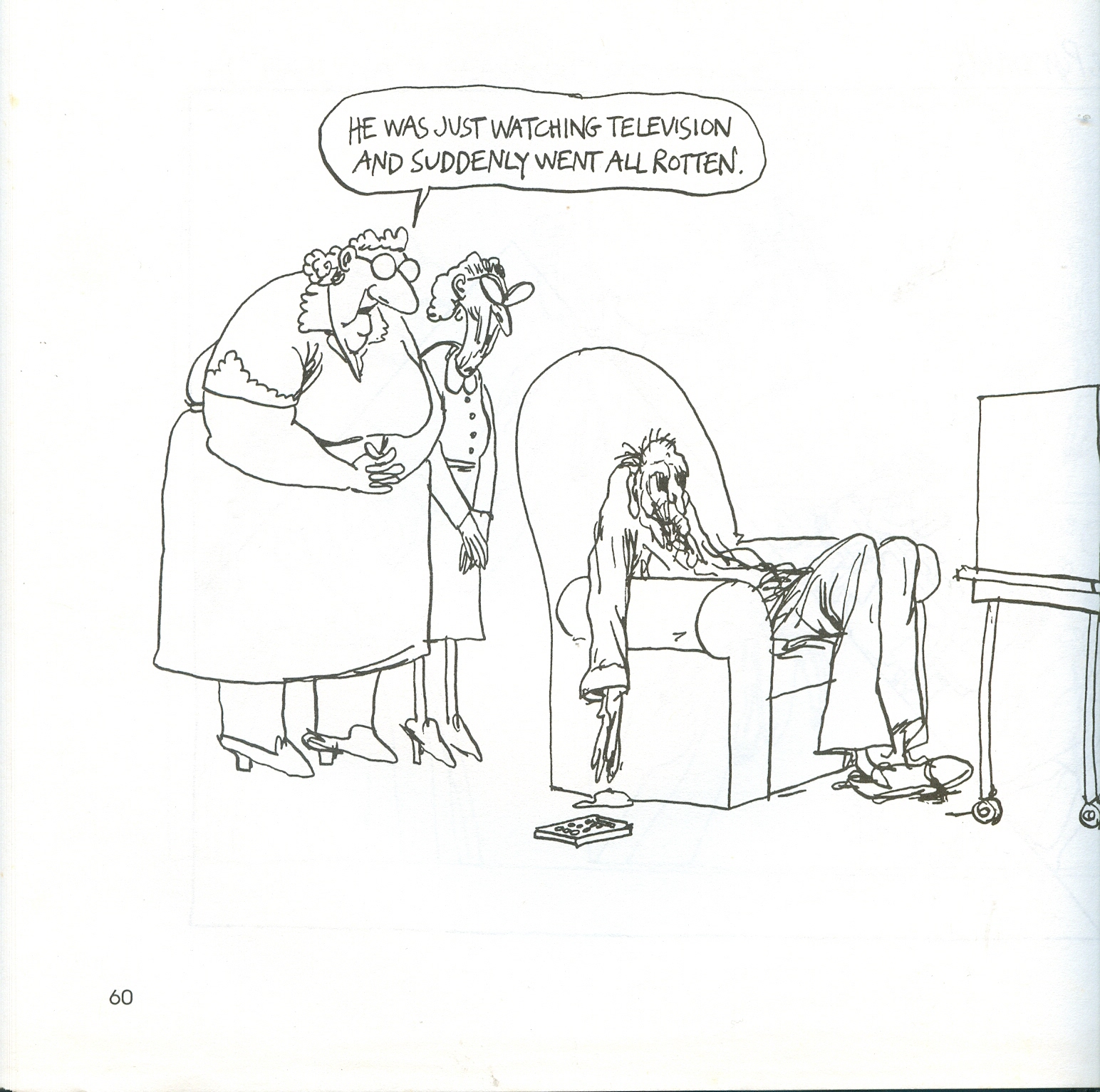
A test of “total recall.” Do you recall this scene from “Night of the Living Dead”?

A Sunday op-ed page essay and a blog post got me thinking a bit more about my recent “smart phone zombie” post, because I’d been debating with myself whether I was too much of a scold — even given the very scary car-death statistics and the troubling societal research. https://kevernacular.com/?p=557

The smartly serene Buddha sightings by the blogger Myth Girl in her review of the remake of Total Recall http://mythgirl.org/2012/08/06/total-recall-a-message-for-our-times/

got me pondering about how that great Buddhist wisdom of being “in the moment” is more pressing the more we accumulate memories over time. Not to devalue history, which I hunger to know and understand with every passing day, as humanity seems to not heed its lessons. I argued that such healthy mindfulness of the moment seems compromised these days by an over-involvement with personal electronic devices while out in society and in nature. The Buddha may have known we’d consequently endanger ourselves while operating lethal weapons– like cars. So her foot is perpetually off the pedal while doing what she does best — meditate and transmit wisdom.

Certainly there’s plenty of wisdom to be found on the Internet but I fear all too often that people are gleaning information at best on their mini porta-brains. Not that there’s anything wrong with that, as the Seinfeld gang might say.

But it begs the question of how much these things are really helping our intelligence, and guiding us into a future of unlimited human potential. Naysayers have been telling us for a while that “Google may be making us stupid.” That’s debatable. Harvard professor of psychology Daniel Wegner gravitates to a reassuring standpoint in his New York Times Sunday Review column of August 5.http://www.nytimes.com/2012/08/05/opinion/sunday/memory-and-the-cybermind.html?_r=1

The illustration accompanying his column shows smart phone users walking around with their heads in one big shared cloud.

That alludes of course to the “cloud” of “linked people and specialized information field devices” that makes Internet sharing so intoxicatingly empowering, as we seem to be drawing from intelligence of virtually anyone and anything online.

. Of course the head-in-the-clouds metaphor can drift a different way, with an older meaning, depending on how the person is actually using their smart phone.

Wegner points out that the more forward-looking view is to accept the role of the Web as a mind expander and “wonder not at the bad but at the good it can do us.”

You know how full of a glass he’s drinking on this subject. He says that each time we learn who knows something or where (his italics) we can find information we are expanding our mental reach. This is the basic idea behind so-called transactive memory, he explains, a psychological theory that provides a way to understand “the group mind.”

That term makes me nervous in itself, of course, recalling Orwellian  “group think.” But  to illustrate the value of the “group mind,” the professor tells us of sharing “domestic memory duties” with his wife. I did that when I was married and certainly as a bookish single person I draw from many books and other sources I have not committed to memory, partly through my personal but hardly unique method of page-numbered note taking in the backs of books I read, and my messy files of underlined article clippings ( and yes, my seemingly bursting electronic “Favorites” file).

So I hope I can happily be among those who stay “plugged in,” rather than fall behind with what he terms the cowering “neo-Luddites.”

Nevertheless Dr. Wegner’s column fails to address all the people killing themselves and others while texting in cars and seemingly becoming socially atrophied by their self-involvement with their computers, whether at home or in public. I love the idea of social media, or I wouldn’t be Facebooking, friending and blogging (and trying, though not very successfully, to get people to respond to my posts:)).

But might we wonder how much all our digital social interaction is truly present “in the moment” rather than virtual, as the Buddha might say. After all, we never really know — except on Skype — whether there is a genuinely Buddha-like smile on the face of an electronic respondent, or whether it is a more calculated expression, that reflects our vulnerability to online manipulation.  When we’re all basically doing Skype online this concern may seem silly neo-Luddite hand wringing, so I’ll end (almost) with that hopeful “when and if.”

But I still want smarter-than-me smart-phone embracers to address those troubling issues not related to mind expanding.

After all, to aid your partial recall of my original posting, as a baby boomer, I’ve been a proponent of mind expansion for decades (and here I should insert a slightly stoned smiley face, although these days I would only use herb for pain management.)

So what you think? Is there little to worry about in the smart phone cloud?

Will we learn how to use our rampant, amazing technology for all the power and promise it seems to offer? Or will this morph into the manufactured Godzilla from Night of the Living Dead (see photo) that finally does turn and devour us because we are helpless to resist, as individuals, as a society and a culture?