Illustration by Ricardo Santos; photographs by T.J. Kirkpatrick, Jordan Gale, Demetrius Freeman, and Allison Farrand for The New York Times.
Want some political meat to chew on, as you decide what Democratic candidate is most palatable and digestible in November?
Here are three articles that address why one Democratic candidate remains in the lead pack, but needs more spotlighting of her quality and viability as a winning candidate, and as a the best president for America, right now. Yes, I’m talking about Elizabeth Warren, who has really taken fewer arrows than any other candidate in the current Democratic infighting. Partly that’s because she’s not the targeted front-runner. But it’s also because few have much of substance to complain about her as a flawed candidate. She’s clearly the best equipped, almost comparable to Hillary Clinton in terms of serious credentials and leadership chops. But she’s a better candidate than Clinton to ride out the long test. Warren is behind Bernie but still capable of catching the same big wave he rides without the baggage, real or perceived, that sank Clinton in the final inside maneuvering of the Electoral College.
Note that Goldberg addresses how Warren has the most compelling personal success story of any presidential candidate, one which should speak to ordinary Americans struggling to get by. People need to pay attention to her, to realize what an inspiring candidate she could be in the general election..
This leads me to the other two articles, by political scientist Melanye Price. The first, from January, address the perceived “electability” factor which has assumed out-sized focus in this crucial election. The first article shows how Warren foiled Bernie Sanders on the alleged “woman can’t be elected president” trope. Sadly there’s substance to the reality of American sexism, especially in presidential politics. But If Warren can continue to fend off that notion smartly, as she did in the January debate, she can alter perceptions in the various corners of the worrying electorate who are afraid to support her. Here’s that piece: https://www.nytimes.com/2020/01/15/opinion/warren-sanders-debate.htmlhttp://
The other article by Price, from November, 2019, took a larger view of the current electorate, and still seems to still hold up as an analysis of the dominant dynamic in this race, and a projection of how things could play out. Her big-picture argument about the youth vote clearly buoys Bernie Sanders at this point. But is he really more electable than Warren in a general election? Wait till Trump starts piling on the easy “socialist radical” albatross which may be signified, in effect, by Bernie’s shoulder hunch. Ram-rod erect Warren has much of the same vision, but less ideologically and more pragmatically, with her cleansing-and-reinventing capitalism depth of planning and credibility. And she’s long been a superb debater, who recently demonstrated how she can deliver combination punches and body blows in debate, while having a natural affinity for the high road, and thus coming out looking good.
Is this enough to break the stubborn-but-clearly-aging “glass ceiling” of American misogyny?
Price makes it quite plausible. And here’s where both her recent “electability” article and her bigger-picture take can read as one whole scenario. Warren has plenty of work to do to become the nominee, but she still holds strong potential. Price’s combined arguments help explain why Warren remains the relatively unscathed Dem candidate “waiting in the wings.”
To my pleasant surprise, her persuasive analysis from last November ends up seizing on the two presidential candidates at the time, whom I think would be the best Democratic ticket for coalescing a strong, broad, diverse coalition: Warren (as president in my book) and Julian Castro (my choice for her running mate). That team is already in the cards as Castro, since dropping out of the presidential race, has become a primary surrogate for Warren and an obvious bridge builder to the growing Latinx and minority electorate. These Seven Million Young People Can Beat Trump
Because Warren clearly needs help these are also reasons why now’s the time for those who do and can believe in all she brings to the table need to step up as citizens in the election and actively supporting her. That’s what I’m doing.
The primary race might feel like Bernie’s to lose right now, but could he lose? I mean really lose? I think he’s a much more viable November candidate than a similar lefty — and doomed — darling, George McGovern, was in 1972. Times have changed in plenty of ways since then, but history always holds echoes for us to perk an ear to, and reconsider in the light of the present.
These are reasons why my mantra, left over from the 2016 campaign, now takes on new meaning: “Run, Liz, run!”
W.E.B. DuBois (February 23, 1869-August 27, 1963) Courtesy Poetry Foundation
Among the most vexing fears of some people on the right feeds into a visceral racism — their perception of miscegenation, the largely pejorative term for the mixing of racial bloods.
This fear stood on display perhaps no more nakedly than at the white supremacist march in Charlottesville in August 2017, where, among the chants was “blood and soil.” This is a Nazi slogan which asserted that ethnicity is based solely on blood descent and the territory one maintains.
The clash of two rally groups ended in a white supremacist killing an anti-Confederacy monument protester and seriously wounding 19 others, by driving a car into a crowd of protesters.
President Trump infamously declared that there were “good people on both sides,” clearly willing to cast his lot with the white supremacists who support him. White male working-class economic anxiety over potential competition from variously colored “others” seems to feed into this blood bias, which demagogue Trump regularly preys upon.
Today, February 23, the birthday of W.E.B. DuBois – the pioneering sociologist, civil rights leader, thinker and writer – offers time for historical reflection on this still-divisive issue of degrees of racial purity, because DuBois himself addressed it in an essay titled, with bold directness, “Miscegenation,” written in 1934.
At the time, the term was still the operative word for blood mixing through coupling of differing races. Du Bois wrote the essay for an Encyclopedia Sexualis, assembled by Victor Robinson, MD, of Atlanta University. Robinson requested the essay from DuBois, who sent it to him on January 10, 1934.
For reasons unknown, it went unpublished. It was finally published in 1985, in the collection of Du Bois work, Against Racism: Unpublished Essays, Papers, Addresses, 1887–1961.
DuBois’s “Against Racism” collection. Courtesy Amazon/ University of Massachusetts Press
DuBois’s “Miscegenation” is copiously researched, citing the work of many anthropologists and social scientists of the time. And urgency was rising to tackle the issue of mixed-blood society. In a few years, Hitler and the Nazis would begin their genocidal extermination of Jews, and their blitzkrieg of continental war. Many, except the most isolationist Americans, realized the Nazis posed a grave threat to freedom and democracy here and in Europe, but especially to any persons not deemed sufficiently pure-blooded Aryan by the Third Reich. This was a race war.
But what that purity instinct really meant vs. reality — its ignorance of a non-white’s humanity and radical rationalization against Jews — was little known to the general public, though DuBois was gathering fairly extensive ongoing research that would’ve reached a larger public in the encyclopedia.
Might the essay, if published, have spurred a spirited international debate and raised consciousness on the issue — affected public response to Fascism in Germany itself, and beyond?
Even now, the Against Racism collectionisn’t very well known.
DuBois, a light-skinned black man clearly of mixed blood (his father was French-American and his mother Dutch, African and English), had natural interest in the subject. But he also earned two bachelor’s degrees, the second in history from Harvard and in 1895 became the first African-American to receive a PhD from Harvard. He became a controversial figure over his career for taking progressive political positions, including socialism, and especially in opposition to Booker T. Washington’s philosophy of black compliance to white privilege.
Courtesy Boston Review
Like many brilliant men, DuBois was just ahead of his time. His value system appraising African-American blood stood on the foundation previously laid in his 1924 book The Gift of Black Folk: The Negro in the Making of America, stating that the black folks’ gift to the world was “uniquely more moral and spiritual than that exemplified by any other of the groups. It was the gift of soul. Black folk had an unfailing faith in the world, ‘an unfaltering hope for betterment and a wide patience and tolerance for opposition and hatred.’ DuBois contended that it was black people who…made emancipation inevitable and made the modern world at least consider, if not only wholly accept, the idea of a democracy including men of all races and colors,” as David Levering Lewis explains in his biography W.E.B. DuBois: The Fight for Equality in the American Century, 1819-1963. 1.
Yet the black people’s “gift of soul” was somewhat known and felt, especially in their music by then, if too-infrequently articulated or acknowledged.
So, hard facts of life might be more to the point. In DuBois’ early masterpiece The Souls of Black Folk — which I taught to a fairly receptive cultural journalism class at Edgewood College in the late 2000s — he propounded his idea of black people’s every-waking-moment “double-consciousness” of their “otherness.”
In The Souls he also sums up from many specific examples, and understands how “people easily are misled from facts.” Note, in the extended quote here, DuBois’ striving for objectivity, despite his passion, even acknowledging the black folks “crimes,” while striving further to explain their meaning:
“We seldom study the condition of the Negro today honestly and carefully. It is so much easier to assume that we know it all. Or perhaps, having already reached conclusions in our own minds, we are loath to have them disturbed by facts. And yet how little we really know of these millions,— of their daily lives and longings, of their homely joys and sorrows, of their real shortcomings and the meaning of their crimes! All this we can only learn by intimate contact with the masses, and not by wholesale arguments covering millions separate in time and space, and differing widely in training and culture. Today, then, my reader, let us turn our faces to the Black Belt of Georgia and seek simply to know the condition of the black farm–laborers of one county there.” 2
Are their failings, and their triumphs, a matter of blood?
Now, think of our current environment of pervasive disinformation and “post-truth” conditions.
In DuBois’s 1934 essay “Miscegenation,” we learn of the latest research on the blood flowing to the brains and hearts of such descendants of slaves. He quotes from a book on mulattoes:
“…Ever since the existing human species diverged into its four or five existing varieties or sub-species, there has been been a constant opposite movement to unify the type. Whites have returned southward and mingled with Australoid, Australoid have united with, and produced Melanesians, and Papuans; and these, again, have mixed with proto-Caucasians, or with Mongols to form the Polynesian.The earliest types of white man have mingled with the primitive Mongol, or directly with the primitive Negro.”
There’s evidence of ancient Negroid strains, “in the features of mixed descendants at the present day, the fact is attested by skulls, skeletons and works of art of more or less great antiquity in France, Italy, etc…’ 3
DuBois’s essay is full of such citations with a modicum of his own comment or rhetoric. But he does anticipate the Nazi counter-narrative, which drew from E. H. Hankins, who “almost alone among current anthropologists tries to prove that physical differences mean mental differences.” That counter-intuitive theory never stood up under critical scrutiny.
“…race mixture among the Romans was more frequent in earlier history than later…The decline of Rome was certainly social and economic, rather than racial. Indeed, it is a tenable thesis to declare with Schneider, that at least some race mixture is a prerequisite to the German cultural development. Egypt, Babylon, and Western Asia show great race mixture.”
(Felix) Von Luscan says: “We all know that a certain mixture of blood has always been of great advantage to a nation. England France and Germany are equally distinguished for the variety of their racial elements.” 4
DuBois eventually gets to the deeply unsettled nation of Germany of 1934:
“If the great gift made by Jews to German culture (including Einstein, Mahler, and Kafka — whose novel The Trial presaged Fascism coming in the 1920s — though the latter two were born in Austria, like Hitler) there is absolutely no dispute. 5 On the other hand, it was also indisputable that present economic rivalry and racial jealousy give Hitler and his followers a whip today to drive the German people in clannish and cruel opposition to their Jewish fellow citizens.” 6
Franz Kafka’s “The Trial” as audiobook. Courtesy https://audiobookstore.com/
DuBois soon brings the argument around to the United States:
“The greater our ignorance of the facts, the more intense has been the dogmatism of the discussion. . indeed, the question of the extent to which whites and blacks in the United States have mingled their blood, and the results of this intermingling, past, present and future, is in many respects the crux of the so-called Negro problem in the United States. …most thinking Americans do not hate Negroes, or wish to retards their advance. They are glad slavery has disappeared; but their hesitation now is to how far complete social freedom and fill economic opportunity for the Negro is going to result in such racial amalgamation as to make America octoroon in blood. It is the real fear of this result and inherited resentment at its very possibility that keeps the race problem in America so terribly alive.” 7
Note my italics above, and then reflect. DuBois wrote in 1934.
Twenty years later, the seemingly irrational anxiety over American identity was analyzed by Richard Hofstadter in his influential essay “The Pseudo-Conservative Revolt — 1954”:
“What other country finds it so necessary to to create institutional rituals for the sole purpose of guaranteeing our nationality? Does the Frenchman or the Englishman or the Italian find it necessary to speak of himself as “one-hundred-percent” English, French or Italian?…When they disagree with one another over national policies, do they find it necessary to call one another un-English, un-French, un-Italian?” 8
Today, America’s always evolving and commingling nation of immigrants is inevitably much the closer to a predominantly octoroon society. And yet we still deal with the last stand of the angry, fearful white man, as embodied by the pseudo-Conservative white man in the White House.
______________
David Levering Lewis, E.B. DuBois: The Fight for Equality in the American Century, 1819-1963. Henry Holt, 96
E.B. Du Bois, The Souls of Black Folk, Dover Thrift Editions, Ch. 8, 84
DuBois, Against Racism: Unpublished Essays, Papers, Addresses, 1887–1961, ed. Herbert Aptheker, University of Massachusetts Press, 91
DuBois, ibid, 93
The kangaroo court trial of Josef K. in The Trial brings to mind the willfully dysfunctional, undemocratic Senate impeachment “trial” of Donald Trump (sans evidence or witnesses) but with reverse outcome. Trump is “acquitted.” Josef K. is killed “like a dog.” The “justice” of the powerful vs. the powerless. Franz Kafka earned a law degree, but worked most of his life for an insurance company. In The Trial, there are “unaccountable functionaries, no juries, no hints of democratic government, not even a trial as the common law world thinks of it.”as Darryl Brown notes in “What Can The Trial Tell Us about the American Criminal System?” http://texaslawreview.org/wp-content/uploads/2015/08/Brown-93-2.pdf
DuBois, Against Racism, 95
DuBois, ibid, 96
Richard Hofstadter, The Paranoid Style in American Politics, Vintage, 59
A poster and an advertisement for the Midwest Rock Festival at Wisconsin State Fair Park, which preceded Woodstock by three weeks.in 1969. Courtesy onmilwaukee.com
Part 2
Everything was changing, once again. San Francisco’s Grateful Dead, Jefferson Airplane, Big Brother and the Holding Company with Janis Joplin, and Quicksilver Messenger Service intoxicated the new audiences, as did the British Second Invasion bands, like the Eric Clapton spear-headed British power blues-rock trio Cream, Led Zeppelin, and Traffic, with Stevie Winwood, and progressive-rock groups like Pink Floyd, Genesis and Yes. Meanwhile, Milwaukee DJ Bob Reitman, on his free-form programs, “also educated, with his ‘Dear Doctor’ segment with a local physician addressing the drug scene in Milwaukee (and its risks).”
The West Coast musical tsunami rose, and hit Milwaukee with uncommon force, following the wildly successful 1967 Monterey International Pop Festival, with its breakout performances by Hendrix, Joplin, Otis Redding and Indian sitar virtuoso Ravi Shankar.
Perhaps the most accomplished Milwaukee band to embrace the psychedelic style and modern jazz was The Corporation, which recorded a self-titled 1969 debut album for Capitol, with a 19-minute take on Coltrane’s “India,” riding an “East-West”-like bass vamp, trippy Blues Project-like flute, and Larry Young-influenced organ. The Milwaukee power trio Ox (see photo below) took off on Cream’s blues-jamming style, with singer-bassist Jon Paris, who followed with a national solo career, which included recording with Johnny Winter and Bob Dylan. Another early local psychedelic band was Bloomsbury People, formed by multi-instrumentalist Sigmund Snopek III, which incorporated classical music and literary influences.
The real explosion occurred at the Midwest Rock Festival at State Fair Park on July 25, 26 and 27, 1969. The ambitious event preceded Woodstock by about one month. I attended all three days and recall birdlike fliers floating around, airily trumpeting something called “Three Days of Peace, Love & Music” in Woodstock, New York. Such glowing idealism filled the air those days. The Milwaukee festival had no sprawling countryside to luxuriate in funky au naturale digs. No “breakfast in bed for 300,000.”
But the lineup of talent on a flatbed truck on the State Fair racetrack proved extraordinary, and perhaps unprecedented in this city. The biggest name acts didn’t disappoint, including the sexy, blues-drenched Led Zeppelin (with brilliantly imaginative, and resourceful raga-like explorations by guitarist Jimmy Page), and the more exalted supergroup experiment Blind Faith, with former Cream members Eric Clapton and drummer Ginger Baker, and singer-keyboardist Stevie Winwood from Traffic, striving for some spiritual uplift “In the Presence of the Lord.”
Here’s a partial recording of Led Zeppelin’s set at the Midwest Rock Fest in 1969. Courtesy Misty Mountain Bootlegs
Yet Johnny Winter stuck to hard-driving blues as a new six-string gunslinger trying to cut the British guitar titans present, Clapton, Page and Jeff Beck, as did upstart Irish guitarist-singer-songwriter Rory Gallagher, of Taste, who hardly anyone had heard of. Was Gallagher’s star born in Milwaukee? He swiftly became a mighty Gaelic wind, and was soon universally respected by peers. Clapton credited Gallagher with “getting me back into the blues,” The Rolling Stones tried to get him to replace Mick Taylor.
Amid several more famous guitarists, Irish guitarist-singer-songwriter Rory Gallagher (pictured in a 1971 concert) was a surprise hit with his band Taste, at the Milwaukee Rock Fest in 1969. Photo courtesy Rory Gallagher website.
Then, The First Edition with future superstar Kenny Rogers, “Just Dropped In” the fest with their hit song. Some of the most bracing music arrived from Detroit: the still-young and rocking Bob Seger System and the deliciously outrageous proto-punk band MC5.
The Milwaukee rock fest also had breathing space for soulful, folk-oriented music, like Buffy Sainte-Marie and the gospel-inflected Delaney and Bonnie, who so impressed Clapton that he hired them in his historic next venture, with guitarist Duane Allman, the album Layla, arguably Clapton’s career pinnacle. Alas, “blind faith” didn’t prevent Mother Nature from carping on Sunday, about what? All the unholy noise? Rain hit this festival hard, presaging water-logged Woodstock, and forcing cancellation of guitar-whiz Beck and Jethro Tull, with flute-toodling showman Ian Anderson.
“They tried to cover the stage with clear plastic sheeting to protect the performers,” recalled Mark Mueller of Sunday in the new book. “It did to a point, Joe Cocker came on and was outstanding, but the water build-up burst right over his head.” And in a one-fell splat! began the not so “dry run” for Cocker’s shaggy-dog, singin’ in the rain style, which he’d make truly famous the next month, amid Woodstock’s downpours.
Naylor recounts how the idea of a communal outdoor experience continued with the “Alternate Site,” first at Water Tower Park, on Lake and North Avenue. But clashes with police in 1970 led Ald. Vel Phillips and Mayor Henry Maier to find an alternative location, west of Lincoln Memorial Drive across from McKinley Beach. “It’s a gas to play for these people,” said Sam Friedman of the Hound Dog Band, at the time. “And it’s good exposure. We got nothing else to do on Sunday and we get a wider group of people here, not like playing in a club.” Sunday concerts averaged about 5,000 people during the early 1970s. But the volatile relationship between crowds and police forced another site relocation and eventually crowds dwindled, but the alt-concerts did continue into the 1990s.
Milwaukee power rock trio Ox (Jon Paris, vocals & bass; Brad Seip, drums; and Bob Metzger, guitar) put plenty of Cream in their coffee at the Alternate Site, across from McKinley Beach on Lincoln Memorial Drive in 1972. Photo by Rich Zimmerman www.richzimmermann.com
Night clubs remained a place to always hear live music, and the city that made beer famous had a strong tradition for this, especially local crime boss Frank Balistrieri, who “had a passion for managing bar-side entertainment in many of his theater district establishments,” writes Rob Lewis. “Frank used out-of-town connection, and his experience in booking” to turn the first floor of now-razed Hotel Antlers into the city’s first world-class showcase nightclub for rock-oriented music, called The Scene, in 1965.
With an encircling balcony, it offered an intimate concert experience. Along with top local bands, it hosted Chuck Berry and Ray Charles (each for five nights), Stevie Wonder, Smokey Robinson, Cream, Jimi Hendrix, Frank Zappa, Paul Butterfield, Miles Davis, and the original Allman Brothers, in September 1970, shortly before Duane Allman and bassist Berry Oakley died. I witnessed that soulfully-virtuosic show, marking the rise of Southern rock.
The folksy-cozy east-side Avant Garde offered local and touring folk-rock, blues and experimental music, and poetry readings, a legacy perhaps best documented by great Chicago blues man Magic Sam’s sweaty, searing album Live at the Avant Garde, a 1968 performance released by Delmark Record in 2013. (See review in Shepherd Express.) The club helped cultivate the emergence of mighty Milwaukee harmonica player Jim Liban, who teamed up with another bandleader, Junior Brantley and guitarist-singer Sam McCue for a powerhouse band called Knu Bluze. After McCue left, they went to San Francisco, with ace Milwaukee organist Howard Wales. Renamed as A.B. Skhy, they recorded two fiery, swinging albums for MGM. Jimi Hendrix facilitated that record contract after hearing and jamming with them. This band evolved into Short Stuff, a name ironically carrying long staying power.
Milwaukee’s Short Stuff — a blues/R&B/rock band led by Junior Brantley (left), and Jim Liban (right) — stole the show opening for Big Brother and the Holding Company in 1972.
It’s a measure of this ensemble’s potency to consider a concert the book only acknowledges with a photo and caption (above). At the Whitefish Bay High School auditorium in 1972, Short Stuff opened for Big Brother and the Holding Company, admittedly weakened by the loss of grit-to-the-core singer Janis Joplin. Short Stuff’s wiry Jim Liban channeled his inner Mick Jagger, prowling up and down a stage runway, blowing rhythmic, wailing harp sorties, whipping the crowd into a lather. By the time he and the funky band ceased, the ensuing Big Brother stood reduced to little brother. It was close to the best opening act I’ve ever seen, certainly by a local band. 4
Local fan Jim Pendergast claims he overheard, at Humpin’ Hanna’s nightclub, harmonica titan Paul Butterfield tell Liban: “James, you are the second best blues harmonica player in the world.”
Speaking of legendary performances, Milwaukee preempted rock history again by a few weeks in October 1975, an extraordinary event surprisingly overlooked in this book. Bruce Springsteen changed everything in rock again, almost by himself. And he stood on the cusp of superstardom on an electrifying night in Milwaukee rock history. A phoned-in bomb scare forced emcee Bob Reitman to ask the packed house to leave the Uptown Theater, shortly into Springsteen’s set, at least until midnight. Bruce vowed to finish when the coast was clear. At midnight, it appeared almost all 1,800 of us concertgoers had returned, with Springsteen and the E-Street Band, and with a vengeance.
Time had stood still, for fate. Springsteen and his band had hung out at the Pfister Hotel bar, “drinking our skulls out,” he told the crowd. His sweat and soul flew across the jubilant crowd until 2 a.m., one of the earliest of The Boss’s legend-making performances. 5 Later that month, TIME and Newsweek plastered him simultaneously on their covers. Here’s a link to a recording of the Springsteen Uptown concert with Piet Levy’s 2015 Journal-Sentinel article about it.
I’ve focused largely on the late ‘60s and early ‘70s because they were crucial years for rock’s transformative cultural and political roles and, regarding live music, perhaps no more significantly than the popularization of large outdoor festivals. 6 But the book impressively forges on to 2000. An in-depth chapter on Milwaukee blues is authored by Sonia Khatchadourian (also a popular “Blues Drive” DJ on WMSE radio). She covers, among others, the careers of Liban, Brantley, Jeff Dagenhardt, Steve Cohen, Jon Paris, Kenny Arnold and James Solberg, of Dynamite Duck fame recordings on Motown and Alligator records), and whose James Solberg Band won two W.C. Handy Awards for best blues band in 1996 and 1997.
The Dynamite Duck blues band at Ma Fischer’s on Milwaukee’s east side. (l-r) Jon Paris, James Solberg, Mark Lillis, Danny Shmitt. Photo by Tom Hayes
Rose Trupiano relates the emergence of Milwaukee rock women, starting with the groundbreaking GTOs (or “Girls Take Over”) formed in 1960.
One artist’s account is quite notable, the extraordinary and tragic story of Milwaukee’s first hard-rock female sex symbol. 1969 marked the local arrival of Constance Mierzwiak, an Ohio-born, high-school drop-out. She dubbed herself Ruby Jones and the Ruby Jones Band’s 1971 debut album included an attention-grabbing single covering The Young Rascals’ “You Better Run,” and Curtis Mayfield’s “Stone Junkie.” In 1972, Jim “Dandy” Magrum, lead singer of Black Oak Arkansas, heard Ruby sing and convinced her to join his band as a back-up singer. Her breakout as a lead singer came on an acclaimed West Coast stint with the Florida band Blackfoot.
Singer Ruby Starr at Humpin’ Hannah’s nightclub in 1975. Photo by Rich Zimmermann
Now dubbed Ruby Starr, and sporting a flaming mountain of red hair, she began touring with the Wisconsin band Grey Ghost. By 1976, her second solo LP covered Paul McCartney’s “Maybe I’m Amazed,” which the band performed on the national TV show Midnight Special. Her next band incarnation, Grey-Star, delivered the 1983 album Telephone Sex, pulsing with savvy covers and originals. The act began winning Wisconsin Area Music Industry awards and toured, opening for Van Halen, The Allman Brothers and Cheap Trick, which led to opening for The Who in the celebrated British quartet’s local debut at the Milwaukee Arena, which included Starr’s power-packed cover of Joplin’s “Piece of my Heart.”
That palpable heartbreak song, performed on December 7, 1982, the “day of infamy,” was perhaps a harbinger of doom. Ruby pushed her hard-driving career until severe headaches struck her down. Her old friend Mudslide took her to a doctor who diagnosed her with lung cancer and a brain tumor – and six months to live. Ruby died a year later, at 45. In 1995, she became the first woman inducted into the WAMI Hall of Fame.
Lead singer Jill Kossoris (center) and the Shivvers perform their power pop/punk music in the 1970s. Courtesy Jill Kossoris.
Another notable woman-fronted Milwaukee band, the Shivvers with Jill Kossoris, was characterized by local critic Bobby Tanzilo as “part Blondie, part Raspberries,” power-pop plus. They missed out on a national record contract despite considerable support from Raspberries front man Eric Carmen. Trupiano sums them up: “Although it took decades for the Shivvers’ songs to be released, their music and lyrics are timeless and just as original and captivating today…”
Also highlighted among women rockers are Julie Brandenburg, Ronnie Nyles, Michelle Anthony, and the powerhouse blues-rocking singer-songwriter and guitarist, Sue DaBaco.
Dave Luhrssen and Evan Rytlewski cover Milwaukee punk and post-punk era with masterful authority, which I can’t do justice to here without this review running on. However, Mark “Black Dog” Shurilla’s The Black Holes was perhaps the quintessential Milwaukee punk/new wave band, especially with “Warren Spahn,” their 1979 local chart best-seller. “The band lip-synched their record before 20,000 baseball fans in County Stadium as Spahn (arguably baseball’s greatest left-handed pitcher) circled the field, waving to the stands.” Shurilla was another young-at-heart Milwaukee rocker who died before his time. But he’s not forgotten. Here’s a video of
The Black Holes singing “Warren Spahn” at Milwaukee County Stadium, in 1979, with Spahn throwing pitches to catcher Bob Uecker.
In this chapter we also learn the fabled story of the folk-punk Violent Femmes’ improbable rise from street-corner busking to becoming the city’s most famous rock band, and Jerry Harrison’s with the Talking Heads, of The BoDeans, Die Kreuzen, The Haskels, Oil Tasters and many more.
Because there are multiple authors, there’s no attempt to build an overarching Milwaukee rock culture theme, which may be yet to be told. But the book does invite us to connect some of its many resonant dots. Sam “The Fountainhead” McCue might provide a mythic story arc for “the gathering place by the waters,” as the Native American word “Milwaukee” translates. Perhaps, were this a warm weather city, the outdoor events might’ve mushroomed further, year-round. The big music fest idealism suffered a blow with the tragic killing of an audience member right beneath the stage at the Altamont Free Concert during a Rolling Stones performance, in December 1969.
Nevertheless, important large and smaller outdoor concerts do continue here (eg. “the world’s largest” music event, Summerfest, the 25th Farm Aid at Miller Park in 2010, among many neighborhood events, Bay View’s exemplary “Chill on the Hill,” and numerous ethnic fests). So the communal value lives on variously. Local bands and artists really struggled through the disco era, and now compete with many home and personal entertainment alternatives.
Before such abstracting devices fully transform us into walking cocoons, the many values of live music – from the powerful to the nuanced, and to the stimulus of regional economy – ought to be discussed, argued and advanced through private and municipal resources, proportionate to scale, as much as Chicago does with its music festivals. The nightclub experience remains a lifeline to rock vernaculars, to human vitality, fellowship and creative wellsprings.
Further still, the large outdoor gatherings, amid the elements, may be the only cultural activity that rivals big sports events for fortifying community spirit and helping to counter the tribalism plaguing us today.
“Milwaukee Rock and Roll” co-editor Phillip Naylor interviews Paul Cebar, a remarkably voracious absorber and synthesizer of musical styles, from American to world musics, “a sonic explorer.” Photo by Dan Johnson. Courtesy MU Press.
Milwaukee Rock and Roll ends with an ingenious twist, a chapter on three “Milwaukee Sonic Explorers,” who often strayed far beyond rock conventions. Gary Huckleberry, Sigmund Snopek III, and Paul Cebar sound nothing at all like each other. All are ingenious and intelligent receptacles of many influences – comparable to the first local-scene “fountainhead” Sam McCue – who give so much back, in their own hybrid vernacular voices. They reveal how a Midwest city can become its own sort of crossroads for music. Too often, among cultural arbiters, everybody pass us by, to paraphrase blues legend Robert Johnson. With this book, that may begin to change.
___________
The photo of Rory Gallagher and the links to the Led Zeppelin live recording and The Black Holes video are not from Milwaukee Rock and Roll. All other photos in this part of the review are from the book.
NOTES
1 Les Paul is put in his historical context in the impressive recent book by Ian S. Port, The Birth of Loud: Leo Fender, Les Paul, and the Guitar-Pioneering Rivalry That Shaped Rock ‘n’ Roll
2 I detail the extraordinary on-air radio station experience of announcing Marvin Gaye’s death to a “contemporary urban music” audience in my forthcoming book Voices in the River: The Jazz Message to Democracy. I also co-hosted (rotating weeks with Paul Cebar and Steve Cohen) an eclectic music program on WMSE in the late-1980s.
3 In a comment not in the book, Clapton critiqued the Led Zeppelin set, led by his fellow former Yardbirds guitarist Jimmy Page. “They were very loud,” Clapton later remembers. “I thought it was unnecessarily loud. I liked some of it; I really did like some of it. But a lot of it was just too much. They overemphasized whatever point they were making, I thought.” Reliquary http://yup-yup-mark.blogspot.com/
4 Steve Cohen is perhaps the only other Milwaukee harmonica player comparable to Liban. A deeply knowledgeable past-master also of chromatic harmonica, a singer and guitarist, Cohen is best known as co-leader of Leroy Airmaster, with guitarist Bill Stone, with whom he’s played with since high school. Cohen has also recorded and worked with the city’s greatest rock guitar virtuoso, Greg Koch. Cohen also maintains a excellent country-blues duo with Peter Roller.
5 The police “tore the theater apart,” security chief Terry Cullen told the Journal-Sentinel 40 years later. No bomb was found.
6. After having attend two concerts at Red Rocks Amphitheater in Morrison, Colorado, I would concur with much popular opinion that it’s the best outdoor venue for a large rock or pop concert in America. Even going to the physical site, high in the mountains, is a bit of a pilgrimage, suggesting the sharing of something significant with a huge “faithful,” lovers of rock and other vernacular musics, not to mention classical. Note in the Rolling Stone survey here, historic Alpine Valley Music Theater in East Troy, WI — a mecca for jam band fans (of The Grateful Dead, Phish etc.) — is ranked the 6th best venue:
Photo courtesy urbanmilwaukee.com /Marquette University Press
Review: Milwaukee Rock and Roll 1950-2000: A Reflective History Edited by Bruce Cole, David Luhrssen, and Phillip Naylor. Marquette University Press. $29.95 hardcover
(Full disclosure: Kevernacular [Kevin Lynch] contributed a short chapter on Milwaukee jazz-rock fusion to this book, but was unpaid and will receive no profit from book sales)
Part 1
Imagine you have a time machine for Milwaukee rock ‘n’ roll – you can travel back to 1950, then forward to the turn of the 21st century. Imagine all the people telling this story, musicians who rocked your life, crazy and sage-like dee-jays, angel-devil club-owners, critics on the scene, and other experts. You can’t literally hear all the music, but the more you imagine you begin to hear it, certainly that which you experienced, and that music best described and evoked. The Time Machine is no big contraption, but a sleek, handsome book, a multi-colored gem.
Milwaukee Rock and Roll 1950-2000: A Reflective History is, as the subtitle suggests, not intended as a comprehensive, scholarly treatise on the subject. However, it brims with primary sources, and works well to rev imaginations and long-term memories, even of aging boomers. And it does tell a resonant, chronological story. Marquette University Press produced and organized it with rigorous care. I first wrote my short chapter on the city’s jazz-rock fusion scene three or four years ago. My text was revised with editorial oversight by MU history professor and musician Philip Naylor, who teaches a class on rock ‘n’ roll.
Naylor conceived of the idea many years ago, while visiting the Rock ‘n’ Roll Hall of Fame in Cleveland. “I saw an exhibit about rock in Ohio/Cleveland and thought that a similar exposition could be made regarding Milwaukee rock,” he recalls. Add in vernacular musics beyond this book’s considerable scope, and the truth emerges that this archetypal heartland city has its own distinctive musical identity. The other two book editors are Shepherd Express editor David Luhrssen, who covered the local music scene for decades, and Bruce Cole, a musician who played with many bands throughout those fifty years.
Cole, like Jimi Hendrix, might ask: Have you ever been experienced? Yes, Milwaukee, I have. So I’ll incorporate my own Cream City experience in contextualizing my review.
This one of the most enjoyably informative, evocative and just-plain-fun books I’ve ever read from a university press, and I have read plenty of those. A large part of the vibrancy derives from Marquette University’s treasure trove of historic visuals and documents on the subject, The Jean Cuje Milwaukee Music Collection, which Cole curates, with his “elephantine memory.”
So the book bubbles with images: a photo shot from behind the Beatles performing in Milwaukee in 1964, with female fans, crying and swooning, deep into the background; the rather gymnastic Mojo Men forming a human pyramid onstage; a photo of R&B radio station WAWA staff, with star DJ “Doctor Bop” in full medical regalia; radio station Top 40 lists; The GTOs, an all-female rock band sporting hot pants; a funny album cover for the Jim Liban Blues Combo’s Blues for Shut-ins; a comically bizarre poster for The Violent Femmes playing at the Milwaukee Jazz Gallery, and much more.
Milwaukee rock ’n’ roll is virtually as old as the art form itself, as this book makes abundantly clear, fertilizing the rootsy story with insightful chapters and brief essays.
Elm Grove rockabilly singer Bob Berendt began trying to break into the music business as a singer and songwriter shortly after the release of Elvis Presley’s first 45 rpm single on July 20, 1954. In 1961 he cut a record at the celebrated Cuca Studios (which produced The Fendermen’s “Muleskinner Blues” in 1960) in Sauk City, but he failed to chart. Berendt traveled to Nashville, but to no real breakthrough. Back home, he joined and contributed songs to The Royal Lancers, who the year before scored a regional hit with a cover of “I Fought the Law” (penned by Sonny Curtis of the Crickets) and later a national hit for Bobby Fuller in 1966.
The song’s success reveals that the subculture’s anti-establishment spirit clearly rose in Milwaukee by the early 1960s. City bands began incorporating R&R into their polka and C&W repertoires. The Noblemen likely made the city’s first recorded rock song “Thunder Wagon.” But Larry Lynne asserts that his band, the Bonnevilles, was probably Milwaukee’s first purely rock ’n’ roll band in 1958.
And talk about rock roots: “Wizard of Waukesha” Les Paul – a book unto himself – “invented” the solid-body electric guitar in 1934, a prototype for his iconic Gibson Les Paul guitar, arguably the most beautifully-designed electric guitar ever. 1
Milwaukee’s premiere rock-blues guitar virtuoso, Greg Koch, plays the famous Gibson guitar designed by Waukesha’s Les Paul at the Les Paul 100th Commemorative Anniversary concert in Waukesha. Photo by Jeff Dobbs, courtesy MU Press.
“Because of its aesthetics, guitarists can feel the resonance through the contoured top hugging the instrument to the body,” writes Luhrssen and the late Martin Jack Rosenblum. “The humbucking pickups give the Les Paul Gibson a deeper, wider, warmer sound than the trebly, piercing Fender Stratocaster…” For Les Paul, a guitar wasn’t a phallic symbol. It should be “your psychiatrist, mistress, housewife, and bartender.”
By the late ‘60s, the Les Paul was THE new guitar-of-choice for most guitar gods: Clapton, Page, Bloomfield, Beck, Allman, etc. However, Hendrix didn’t use it, being a lefty who held the lighter Stratocaster upside down, and flung it around like a matador’s banderilla.
A great Milwaukee star emerged very early, guitarist Sam McCue, or “The Fountainhead,” as Naylor grandly dubs him, founder of the first great Milwaukee rock band, The Legends. This brilliantly eclectic stylist incorporated Latin, Western swing, R&B, and rockabilly, not to mention Slovenian polka. McCue was later hired by The Everly Brothers and toured worldwide with them from 1964 to 1970, He also played with Chuck Berry and Johnny Cash and important local bands, New Blues and A.B. Skhy.
A culturally crucial early band was Little Artie and the Pharaohs, who first brought rhythm and blues style to crossover audiences, including working-class and suburban whites, blacks and Latinos.
Little Artie (on vocals, here) and the Pharaohs performing in the 1960s. Photo by Jim Lombard, courtesy MU Press
We also learn that Milwaukee played a role in the mid-’60s folk revival, with big thanks to the promoter Nick Topping, who first brought Bob Dylan to town, even if technical difficulties truncated the concert. Topping also developed a close relationship with Folkways Records founder Mo Asch.
Milwaukee had its own Dylan in Larry Penn, who musician Lil’ Rev recalled as a “labor activist” and folk musician “who is the voice of a hard day’s work…” Like Dylan, Penn’s primary influence was Woody Guthrie, along with country blues giants Leadbelly and Mississippi John Hurt. Pete Seeger once declared: “Larry’s songs are as good as Woody’s.”
Pete Seeger called Milwaukeean Larry Penn’s songs “as good as Woody’s.” Courtesy Sharon Penn and the Larry Penn Archive/MU Press
Accordingly, Milwaukee developed other distinctive folk-rock talents like Jim Spencer,Barry Ollman, Bill Camplin and Willie Porter, the latter three still performing as “consummate artists,” as Johnny Carson used to say (Ollman still records, mainly online).
In Milwaukee and elsewhere in America, everything changed with the British Invasion. The Paul Revere of Milwaukee music was disc jockey Bob Barry, who first played the Beatles, Rolling Stones and the Dave Clark Five on WOKY 920 AM radio. He also hosted the 30-minute Beatles concert at the Arena in 1964, the stuff of legend. Milwaukee Journal prose stylist Gerald Kloss reported that “George would swing a lissome hip, or Paul would flash a sudden smile, and the roar from the crowd fractured the mortar between the bricks.” “BEATLES CONQUER THE CITY!” the morning Sentinel banner headline screamed. With all the photos and memorabilia reproduced here, including a ticket to the concert, you can pretend you were one of the thousands in the arena of insanity.
Of course, the British bands gradually helped young Americans to value their nation’s own indigenous rock sources: the blues, doo-wop, rockabilly, and country-western.
And local disc jockeys played a vital role, as pied pipers for anyone with a car radio or the new, affordable, fits-in-your-fist transistor radio (the precursor of Walkman and iPod). Beyond Barry, Milwaukee got hip to rhythm and blues when WAWA radio hit the air in the spring of 1960. The enlightened station played a variety of ethnic musics, connecting Milwaukeeans to their immigrant roots. WAWA’s smart, charismatic disk jockeys included program director O.C. White, and the irrepressible “famous Dr. Bop.” He would bellow into the mic, “I’m the cat with the fine-brown frame! I’m 42 across the chest, a stone-cold lover and an ex-Gold Glover. Bop be my name and music is my game! Doctor Bop powers on from the Soul Empire!”, as Jamie Lee Rake recounts.
(Top) The staff of Milwaukee R&B radio station pioneer WAWA, in early 1966, including, front left, Dr. Bop (Hoyt Locke), and program director O.C. White, front right. Courtesy Mike Muskovitz of Mean Mountain Music. (Above) A Top 50 R&B chart for 45 rpm singles, from WAWA in 1967. Courtesy Stephen K. Hauser.
Dr. Bop captured the “say it loud” spirit of the new “black power,” but with the disarming comical flair of a Cassius Clay. And WAWA laid out the R&B like bloody ribs on a grill – hot, steaming and crackling with fire. WAWA, like the AM rock stations, also published their top singles lists, giving fans a reference for the happening jams to hear, and buy.
The inner city even got its own major record store, Radio Doctors “Soul Shop” on 3rd and North Avenue, where I worked after college, and where Dr. Bop would often promenade in, to pick up the latest hot 45s, and meet adoring fans. Radio Doctors owner Stu Glassman helped WAWA accurately compile their top sales charts as his two stores (the other at 3rd and State St.) sold by far the most R&B records in the state, as a “one stop” wholesaler and retailer. Green Bay Packer legend Willie Davis realized WAWA needed greater audience penetration, so his All-Pro Broadcasting eventually bought rights to the weak-signal station and turned it into a much more powerful FM station, WLUM.
I felt city folk’s growing connection to radio as a cultural lifeline, especially being a WLUM disk-jockey on the air the night news broke of Marvin Gaye’s death in 1977. I was the station’s second Sunday night jazz programmer, after jazz radio legend Ron Cuzner established an audience there for black and white listeners. “Contemporary urban music” had arrived in Milwaukee. 2
Such radio support helped buoy the city’s rhythm and blues soul, which began evolving into what would soon become the exponentially popular rap lyric-and-rhythm art of hip-hop by the mid-late ‘70s. The city’s first really notable rhythm and blues/soul group was the Esquires, which arose from harmonizing high school siblings, a la Chicago’s famous Impressions. The Esquires took a decade to seize on a song that blitzkrieged national charts, the exhilarating “Get On Up” in 1967, followed by a worthy sequel “And Get Away.” The first local talent to stand time’s test was Harvey Scales, who found a stylistic balance between Sam Cooke and James Brown, and cemented his legacy by penning “Disco Lady,” Johnny Taylor’s double platinum-selling hit and popular on the black TV show Soultrain. A deeply influential producer/musical polymath, Scales the performer never quite made it nationally, a distinction among local-born African-Americans that waited for Al Jarreau, who grew up on Reservoir St. overlooking the city he’d always love. When Radio Doctors “Soul Shop” got the first shipment of his autobiographical Warner Bros. debut album We Got By, we all knew this dude would do much more than get by. He deftly juggled jazz, pop and R&B styles to six Grammy awards.
Al Jarreau. Courtesy Al Jarreau Facebook Page.
Rake insightfully surveys local R&B development, from Black Earth Plus to the improbable undercurrents of white singer-songwriter Jim Spencer’s “Wrap Myself Up in Your Love,” a 12-inch single and a seductive production synthesis of disco, R&B and Tin Pan Alley, which “marked the shifts to urban music that reverberate to the present day,” Rake writes. Spencer’s recording employed white harp player Jim Liban and black drummer Kenny Baldwin, of already national-labeled Colour Radio, and owner of an important nightclub, The Starship, which facilitated the live-music transition to punk and early hip-hop.
Despite the city’s sadly still-deserved reputation for segregation, music has always provided cultural and social bridges among the races here, which politicians and other powers-that-be too-rarely heed or exploit. I delve into this in my own chapter, on the social and cultural impact of jazz-rock fusion. Like Jarreau’s long success, fusion’s peculiar synthesis of multi-racial genres had a more sophisticated yet high-energy style that you could groove to mentally, or often dance to. La Chazz brilliantly fused rock, jazz and salsa Afro-Cuban style, to connect Latinos to the scene. “As reed wizard Warren Wiegratz – who led Street Life, the long-time house band for the Milwaukee Bucks – explains of fusion, “The power of rock, with the freedom and the intelligence of jazz. What’s not like?”
Meanwhile, FM radio’s growing potential for wider, clearer and more creative communicative potential had evolved into the development of so-called free-form or “underground” FM programming. In Milwaukee, free-form’s avatar was Bob Reitman, which he remains today, on public radio WUWM, the same college station he first began expanding minds with, in long segments of uninterrupted music. Reitman first turned me and countless other listeners onto whole, literary programs of pure Bob Dylan; Reitman himself is an accomplished poet. Through Reitman we first heard long jam pieces, first from Chicago’s Butterfield Blues Band, the 1966 masterpiece “East-West,” a dynamically unfolding amalgam of blues, rock, Indian raga and John Coltrane jazz. Audiences were stunned by that band’s heightened creativity and musicianship, as were new San Francisco bands especially, which began experimenting with longer forms and sensibility, both introspective and expansive, influenced by mind-altering marijuana and LSD, a long, strange confluence across the youth culture landscape, especially in San Francisco’s 1967 “Summer of Love.”
Milwaukee rock radio avatar Bob Reitman. Courtesy onmilwaukee.com
End of Part 1 of a two-part review (The second part is the next posted article on this blog site.)
_________________________
The photos of the book cover, Al Jarreau and Bob Reitman are not from Milwaukee Rock and Roll. All other photos in this part of the review are from the book.
Toni Morrison was born today, February 18, in 1931 Lorain, Ohio. This morning I was reading from her most recent book, published posthumously, and now out in paperback: TheSource Self-Regard: Selected Essays, Speeches, and Meditations.
I read the short essay below, and was so stunned by it prescience and relevance to our moment, that I looked to see when it was written. It turns out the essay was published in The Nation on May 29, 1995. It was an excerpt from a Charter Day Speech, “The First Solution,” delivered at Howard University, in Washington DC on March 3, 1995.
I offer it here as a reminder of her voice’s power, of her mind’s incisive insight and ability to articulate courageous truths that dangerously fester today.
I do not intend to suggest that she is speaking about any specific person or people in our current times. I will let you readers decide that for yourself, as citizens, kind of like being a voter alone in a voting booth.
Rather, notice that Morrison, as an an African-American, includes in her referencing, it seems to me, people of her own racial background, with this chilling sentence: “And in infecting these changes (fascism) produces the perfect capitalist, one who is willing to kill a human being for a product (a pair of sneakers, jacket, car) or kill generations for control of product (oil, drugs, fruit, gold.)”
To underscore the point that people of any color or persuasion could be duped into a perfect capitalist mindset, yesterday several TV pundits were warning of some of the behaviors Morrison describes as clear and present dangers to our democracy right now. A black woman, a conservative radio host, responded lamely, “But this isn’t a democracy, its a representative republic.”
Well, speaking of those representatives, especially in or Senate…
Yes, too many years we have been advancing and acquiescing to an economic and political system to cultivate some close to “the perfect capitalist” in each of us, at the very least almost reflexive consumers. That is a big reason why we are in the situation are in today. It’s also why I support Elizabeth Warren who admits to being a capitalist, and yet she knows how much we have perverted the system of American capitalism. Her agenda is about making that system work more fairly for everyone. And she makes perfect common sense each time she opens her mouth.
So please, read Toni Morrison on her birthday, remember, think and then act. Do something, for the sake of our increasingly ravaged democracy, for the sake of ourselves and our children. At the very least, read up on candidates and the issues, and vote.
(This essay is copyrighted by Toni Morrison 2019, through Vintage Books, a division of Penguin Random House LLC.)
Poet Lawrence Ferlinghetti in front of City Lights Book Store, which he founded in San Francisco long ago. Ferlinghetti, who turned 100 in 2019, remains pertinent today. Courtesy The Nation
Can we feel pity for our own nation? Our own people? Hear those questions arise in the poem “Pity the Nation” by Lawrence Ferlinghetti. Milwaukee poet singer-songwriter Harvey Taylor recently used his considerable gifts of recitation to revive the powerful ideas of Ferlinghetti, The 100-year-old beat-era bard, who first wrote “Pity” in 2007, during the Bush-Cheney administration.
The poem feels as pointed as ever today. Taylor also employs the darkly expressive banjo and harmonica of Jeff Hinich on “Pity,” and the second poem offered here, “Immigrants,” penned by the Taylor himself. Both are offered “to motivate creative resistance to corruption and criminality in ‘high places’,” he says.
Taylor’s own verse addresses the idea that most Americans are immigrants or descendants thereof and, in that sense, related to today’s often-desperate and courageous migrants, risking their lives and families to escape violence by coming to America’s borders.
A desperate migrant family retreats from tear gas at the Southern U.S. border in 2018. Are they illegal? Should we muster pity for their plight? For our own nation and people? Harvey Taylor ponders such matters in poetry. Courtesy ABC News.
Heavy, dark matters simmer within these verses, yet both remain extremely palatable, given Taylor’s deft and mellifluous recitations.
And he magnanimously offers wise respite to burdened or resistant spirits, with a third poem “How Happy They Must Be.” This he wrote inspired by a splendid realm of wildflowers encountered while driving through a bucolic countryside.
This poem is brightly colored by Taylor’s own warmly buoyant trumpet playing, double tracked, with and without mute. After the previous brooding poems, this feels like taking a deep breath of fresh, pastoral air.
The three brief recordings add up to a three-part tonic, the kind only poetry recited with doses of graceful verve and insight can provide.
Taylor plans to collaborate with a talented video artist, Susan Ruggles, for a new incarnation of these readings. Culture Currents will keep you posted when these videos appear.
Here’s the Link to Taylor’s own website recordings: harveytaylor.net
____________
These readings originally aired on “The Grass is Greener,” a program hosted by Babbette Grunow and Gary Grass, on Riverwest Radio, WXRW-LP 104.1 FM.
Pianist-composer-bandleader Guillermo Klein (seated fifth from left), and his star-riddled band Los Guachos, produced the year’s best album “Cristal,” in the opinion of Culture Currents’ Kevin Lynch Courtesy WBGO
After a few years’ hiatus, I re-joined Francis Davis’ longtime culling of jazz critics in a poll that began at The Village Voice in 2006, and has morphed into a National Public Radio-sponsored survey, now the largest annual poll of jazz critics. So, if you’d like to refer to the best critical consensus on what to listen to or buy in jazz, here’s a great guide.
If you have a favorite critic among participants, you can find his or her list, including mine, in the link to all the critics, in the opening essay (or here: all participating critics.) Davis’ two short essays provide fine overviews of the year and of critical preferences. He notes a surprise top consensus winner, DiatomRibbons, by the fairly unknown Canadian pianist-composer Kris Davis (see photo below.)
My top choice, Cristal, by Guillermo Klein and his brilliant medium-sized ensemble Los Guachos (The Orphans), bolstered my sense that Latin Jazz is moving close to the center of the jazz fulcrum of artistic power and influence.
Guillermo Klein y Los Guachos released “Cristal,” my choice for the best jazz album of 2019. Courtesy google.com
This year, Puerto Rican-born alto saxophonist Miguel Zenon, who is also in Klein’s band of “orphans,” (he’s seated to Klein’s left in the photo, at top) gave us an album that just missed my top ten, Sonero: TheMusicofIsmaelRivera. The NPR critics group similarly ranked Sonero number 12 in their consensus voting.
Zenon is also an original member of the SFJAZZ Ensemble, which scored in my top 10 with The Music of Antonio Carlos Jobim and Original Compositions. Jobim, of course, is the father of Brazilian bossa nova.
These albums follow trumpeter former-Milwaukeean Brian Lynch’s dazzling Madera Latino, a 2-CD 2018 Latin-style take on the music of trumpet icon Woody Shaw, one of my picks for best of that year.
Otherwise, I was deeply impressed by Forward, the debut album (and a live performance I saw) by The Paul Dietrich Ensemble, a Madison-based orchestra. Maria Schneider Orchestra drummer Clarence Penn is the album’s co-billed artist. Schneider’s style and sensibility deeply inform Dietrich’s music. Among the band’s featured soloists was Chicago alto saxophonist Greg Ward, whose own album, Stomping Off From Greenwood, also made my top 10 list.
I reviewed the album here and for The Shepherd Express:
Pianist composer Kris Davis (center, in blue) and her very diverse ensemble delivered the best album of 2019, according to a poll of 140 jazz critics. Mimi Chakarova/Courtesy of the artist
Here’s a link to the whole 2019 NPR jazz critics poll:
“Watching Americans Watch Parades.” Lebanon, Kentucky, September 24, 2016. Photo courtesy theatlantic.com Photo by George Georgiou
The times, they are a changin’ yet, and what goes around comes around, treading over the blood and tears on the tracks, the ravaged hearts struggling on.
The Atlantic remains required reading for anyone with an open and inquiring mind about culture, politics and the world, regardless of your persuasion. The November/December issue How to Stop a Civil War might’ve been transported to the publication’s earliest years as an abolitionist publication. What might’ve happened? You unlock this door with the key of imagination, as Rod Serling would say. Times are more complicated but the conflicting dynamics, especially on race and “the Other,” is not much different.
Since then the magazine has evolved into a sometimes exquisitely-balanced — sometimes walking a tightrope — but morally inquisitive and rigorous publication without such a clear agenda.
The November 1857 Atlantic Monthly (left), a voice born in a time of crisis on the verge of The Civil War, and the current magazine and app. Courtesy the atlantic.com. Cover art of December 2019 issue by Sam Kaplan, Brian Byrne and Atlantic creative and art directors.
Look at the December issue’s cover, beside the debut 1857 issue. A pejorative adjective comes to mind with this bleeding image. On second thought, in such times this cover speaks powerfully to painfully melodramatic times. That’s the adjective. But the cover with the new bold but elegant but assertive “A” logo reflects courage and resolve in our time of crisis, as is the sum part of the issue’s theme articles. The mag’s art and creative directors see the startling hand image as a metaphor for a “body divided against itself,” deftly echoing Lincoln.
Introducing the edition, editor-in-chief Jeffrey Goldberg delineates some connections and distinctions with great urgency in the opening salvo for peace if not necessarily civility (more on that later) “A Nation Coming Apart,” by referencing the magazine’s debut issue.
But it showed how measured and penetrating the publication can be in its range of reporting.
How far do they cover the stormy waterfront?
The first of three thematic sections of the main body of the issue is titled “How to Stop a Civil War.” They set a provocative edge in one of the first pieces, an interview-feature on Daniel Miller, leader of the Texas secessionist movement on among the most mot intellectually stimulating right-wingers around. Union stalwart-angel Abe Lincoln would shudder, of course. I loved a brief, delightfully insightful photo essay (more a diptych mural, really) by George Georgiou Watching Americans Watch Parades. (See top photo)
Yoni Appelbaum’s edge-of-dystopia piece “How America Ends” follows his recent cover story which helped spur the intellectual charge to impeach Trump.
His historical perspective reaching into the Civil War legacy brought to mind a great novel a read and reviewed, Cloudsplitter the extraordinarily personal-yet-big-picture story of radical abolitionist John Brown, narrated by his son, and written by the gifted and inspired Russell Banks.
Yet the issue is also very to-the-media-and-cultural moment. Don’t miss “Why it Feels Like Everything is Going Haywire,” a social-media “conversation-essay” by Jonathan Haidt and Tobias Rose-Stockwell, with a powerful big-picture perspective.
Then there “Too Much Democracy is Bad for Democracy” by Jonathan Rauch and Ray La Raja (illustrated above by Ilya Milstein), which indicts our democracy primary election system but doesn’t rail against the Electoral College, which seemed an oversight. They argue for returning to a system of relying more on knowledgeable party experts, in the proverbial back rooms. Elsewhere, conservative columnist David Frum does address the Electoral College dilemma by asserting that a second Trump term, with a Republican Senate majority involves a deliberative body that’s “less democratically representative than the Electoral College,” in “When Trump Goes.”
Part 2 of the issue is titled “Appeals to our Better Nature”
The very meaty and challenging section is anchored by “The Road to Serfdom: How Americans can Become Citizens Again,” by Danielle Allen. “Can This Marriage be Saved?” examines an effort at applying couples-counseling technique to red and blue state group participants.
Part 3 is titled “Reconciliation and its Alternatives”
In “The Enemy Within: What Principles of Democracy Must Citizens Live By?” recent Secretary of Defense James Mattis boldly declares: “Cynicism is cowardice. And cynicism is corrosive when in it saturates society, as it has saturated much of ours.”
As thought-provoking as any piece is “Against Reconciliation,’ by Adam Serwer, which argues the dangers of a political middle acceding to those who would exploit America only further. He says the gravest danger to American democracy isn’t an excess of vitriol—it’s the false compromise of civility. Serwer likens the current state of American politics to the Reconstruction era, “when the comforts of comity were privileged over the work of building a multiracial democracy.” He argues that the illusion of peace and civility is often purchased at the expense of true progress. “The danger of our own political moment is not that Americans will again descend into a bloody conflagration. It is that the fundamental rights of marginalized people will again become bargaining chips political leaders trade for an empty reconciliation.”
Finally don’t miss “What Art Can Do: The Power of Stories that are Unshakably True,” by Lin-Manuel-Miranda, creator of the Broadway masterwork, Hamilton.
Buttressing the Americana photo diptych is an essay on the great American gritty verite photographer Gary Winogrand, “A Street Full of Splendid Strangers.”
You begin to sense how brilliantly and carefully this issue was conceived and realized.
For what it’s worth, I’ve done nominating for the Pulitzer Prize a few times (in music) and was leader writer of a Pulitzer-nominated group project, and this issue is surely a powerful candidate for the coveted prize, in some group-project category.
That’s not even counting the culture review and feature pieces, which only strengthen the issue. See reviews of Margaret Atwood’s sequel of sorts to A Handmaid’s Tale, and of Martin Scorcese’s autumnal new American gangster film, The Irishman. A Q & A with first-time director Director Melina Matsoukas on her Queen & Slim, a “black Bonnie & Clyde film” starring Daniel Kaluuya, (Black Panther, Get Out) and Jodie-Turner Smith. “I wanted to showcase black love, and unity, not just romantic love. Black unity is the greatest power against oppression, Matsoukas says.
David Blight also offers a mediation titled “The Possibility of America: Frederick Douglass’s Most Sanguine Vision of a Pluralist National Rebirth,” drawing from his 2018 Pulitzer Prize-winning biography Frederick Douglass: Prophet of Freedom.” The black social and civil rights pioneer was also original a prophet of struggle fomenting progress.
Which leads me back to Banks’ 1998 novel Cloudsplitter, (a finalist for the Pulitzer and PEN/Faulkner Awards) and all we might gain from reflecting on the extreme socio-political dynamic that inspired Brown to such drastic measures as murder, for the sake of finally freeing black slaves.
Radical abolitionist John Brown on the verge of splitting clouds, and America, with his zealous lightning strikes. Print by John Steuart Curry.
He remains a controversial figure. When I mentioned I was reviewing this book to John Patrick Hunter, a progressive political icon at The Capital Times, Hunter immediately declared, “He was a hero!” His spouse Merry, standing beside him, softly shook her head. “Killing people, I have problems with that,” she said.
Lincoln, of course, saw the ensuing conflagration as the crucible to preserve the Union, just as much as slave liberation. To me, the book’s story feels unshakeably true, and burning a brand of passion into our times. Cloudsplitter is a long but rewarding and psychologically fascinating novel. So read my review and do consider reading the book, as a profound message to the groaning pain of our changin’ times:
THE CAPITAL TIMES
Friday, May 1, 1998
Edition: All Section: Editorial Page: 13A Source: By Kevin Lynch Type: Review Memo: Kevin Lynch was an arts writer for The Capital Times.
ABOLITIONIST’S STORY IS AS DANGEROUS AS AMERICA
Russell Banks’ majestically sad and impassioned novel about the abolitionist John Brown is a great and inspiring book. It is also dangerous, in the way that America is perilous and contradictory in its ever-shifting bedrock of independence for all people, rife with subtle and vile abuses.
The danger factor has been glossed over or ignored by critics who have been tossing deservedly glowing literary laurels at the feet of Banks.
I suspect the author would kick those politely aside, to search out responses from ordinary, deep-rooted Americans, descendants of slaves or of Civil War fighters, or any lovers of freedom and equality.
When he finished his last novel, “Rule of the Bone” about a teenage runaway, Banks did more than tour the tony bookstore circuit. He went to urban high schools to discuss its implications with students.
That, too, was a somewhat dangerous book, if one saw it as simply glorifying Bone’s rambling, delinquent lifestyle.
Now “Cloudsplitter” might be seized as an argument and excuse for terrorism. While copiously researched, it creatively humanizes the radical whose acts of carnage in the name of God and freedom brought this nation to the brink of the Civil War.
But John Brown’s vision of freedom still burns at the core of America’s best ideals, even if his Bible-based philosophizing and fiery charisma suggest cultism. The story’s narrator, Brown’s son Owen, convincingly recounts how, in growing to manhood, he fell increasingly in thrall to his father.
Early on, Brown’s family is stunned into clarity when he reads aloud scores of shameless “missing property” notices: “Runaway, a negro man named Henry, his left eye out, some scars from a dirk on and under his left arm, and much scarred with the whip” . . . “I burnt her with a hot iron on the left side of her face; I tried to make the letter M.”
As the voices of father and son alternate, the unthinkable need for their radical violence seems a matter of historic necessity.
The new western territories of the 1850s appear to be on the verge of becoming slavery states. The balance of power is clearly tipping toward the South’s political position. The reactionary Fugitive Slave Act has enabled the whim of any Northern white to deliver escaped slaves — or any freedman — back to Southern plantations. The president is Franklin Pierce, an unspoken sympathizer with slavery.
Banks’ storytelling builds a rumbling suspense, like a slowly rising earthquake, opening the cracks of the nation’s horrid moral crisis.
John Brown is an inept businessman, but he has a strangely burning brilliance as a radical abolitionist. His strategies grow from analyzing military battles and maxims in the Bible and by traveling to Waterloo to understand Napoleon’s mistakes. When the violent, racist hordes called the Border Ruffians appear to take control of Kansas, Brown and his rag-tag bunch of sons and followers respond with their shocking guerrilla counterattack, in Pottawatamie, Kan. Would it be enough to spur action from the seemingly passive Northern abolitionists?
Unlike the rhetoric of many right-wing militia types, this story is not about craven self-interest masquerading as patriotism. It is not about people lusting to possess AK-47s, to assert the “right” to act out their worst bigotry and paranoia.
John Brown’s life mission to deliver America’s blacks from slavery reveals him as the most fearless liberal of all, priming for “the revolution we should have fought back in ’76!” as he tells Frederick Douglass, the great black abolitionist.
Douglass ironically notes that the British “have outlawed slavery for close to a quarter of a century now.”
Many reasonable people understandably see a madman in John Steuart Curry’s famous portrait of Brown. He was grandiose, flawed and deluded about what he could accomplish. But this preacher’s religious fervor did not harbor political ambition — only the affirmation that the nation’s soul would be saved by the death of slavery.
As Banks tells it, no other American had Brown’s boldness of vision, not even Douglass, who tried to discourage Brown from his ill-fated raid on the federal armory at Harpers Ferry, Va., in 1859.
This novel moves with the emotional restlessness of a family and a nation just awakening to the need, finally, for a bloodletting, and a long, harsh, self-defining victory over its demons.
Among a spate of strong secondary characters, two are unforgettable — Brown’s freed-slave compatriot Lyman Epps and Owen’s simple, pure younger brother Fred — whose fates spur the story’s motion as clearly as any political act. They give the novel gut-wrenching human dimensions that Banks has now mastered over his 12 works of fiction. (Filmmakers are finally grappling with his dramatic potential, with “The Sweet Hereafter” and the upcoming “Affliction.”)
As with “Affliction,” Banks fearlessly looks at the violent instincts coursing through blood ties.
“Cloudsplitter” is the name of an Adirondack peak that symbolizes his father for Owen. This novel stands just as massive, shadowed and unshakable. That is why it transcends terrorist cant. It is rigorous moral fiction, examining its lead characters’ motives and actions from all possible angles, finding epic heroism and life-haunting fault, especially in Owen himself.
This John Brown is a caring father and husband and “regardless of their race or station, he pointedly treats women as equal to himself,” Owen writes.
His father only lords over others about slavery, the son explains. “To Father, white and black Americans alike were bound by slavery: the physical condition of the enslaved, he insisted, was the moral condition of the free.”
It is Owen who dwells in the blood-lusting darkness of the Brown family’s worst impulses. He long ago lost his faith, which remains the fundamental difference between him and his father.
Now, many years after the debacle of Harpers Ferry, he agonizes that his spiritual void contains a root of his violence, betrayal and cowardice.
He was the sole survivor.
This feels like the masterpiece of a writer who matters like few others today. “Cloudsplitter” conveys the sweep of a mighty land and the historic weight of Owen’s burdens. It reads as a private confession with an inexorable, gravitational pull.
One arrives at the end as if waking from a long dream of America, risen from the nation’s subconscious. Owen and John Brown are archetypal men one may grow to love and perhaps fear, as does a son for a great, dominant father.
As one grows to love and perhaps fear America itself, with its astonishing freedoms, its shifting moral ground and its devastating power.
Yeah, I could stomp on the Packers when they’re down, like most are now. But an old die-hard fan/friend requested “words of solace” from me, so here’s how I responded:
John,
First a big sigh. Letting the dark winds of disappointment and pain escape a bit more. Whew!
I liked the Packers’ apparent poise under duress (see 2nd half rebound) but they should’ve acted more aggressively sooner — on the first drive which ended 3 & out. I would’ve thrown a play-action deep post, on the first play.
So by the end-of-the-half pick, it was a duck in a shooting barrel.
OK. I have faith in Gutenkunst, but more in his free agent dealing, so he might find a fast, quick inside LB, maybe another TE.
The draft class is loaded with wide receiver talent, so someone should stick and help this time, preferably a guy who does 4.4 40 or less.
Here’s a thought nobody’s addressed. Despite his dopey bounce-off-the-face mask muff, I think Tyler Ervin has comparable potential to Niners’ Raheem Mostert, who was mainly a kick returner till coming to SF, and took a long time to bloom. But Ervin I think has even more previous experience as a RB. Check this from Wiki:
“In his redshirt senior season of 2015, Ervin rushed for a single-game school record 300 yards against Fresno State (Davante’s school) and for 263 yards against New Mexico.[7][8] In the 2015 Cure Bowl, his final collegiate game, Ervin got his longest career punt return touchdown, for 85 yards in the Spartans’ 27–16 win over Georgia State.[9] He finished his senior year with 1,601 rushing yards on 294 carries with 13 touchdowns and 45 receptions for 334 yards with two touchdowns.[1] Along with first-team All-Mountain West Conference, Ervin earned multiple national honors, the Athlon Sports All-American second team and his second straight Sports Illustrated honorable mention All-American title.[1]”
The Packers remain a step behind San Fran in scheming as well as team speed. I think they’ll prioritize those gaps in the off-season. They have at least one extra sixth-round pick from the trade to Oakland of KR Trevor Davis. I think the Packers have more room for improvement than SF, and will be better & deeper next year, though maybe not as lucky injury-wise.
A-Rod sounds quite optimistic, even after a nasty loss. Eliminate the turnovers next time, get a few yourself (they should’ve stripped Mostert at least once — I know they have to touch him first (ha), but with all those carries!) and it’s another ballgame. The desperation bomb throw Sherman picked at the end hardly counts, it was incomplete anyway.
Restrap you’re cheesehead helmet, and buck up. Me too!
The grass is always greener, and golden, on the other side.
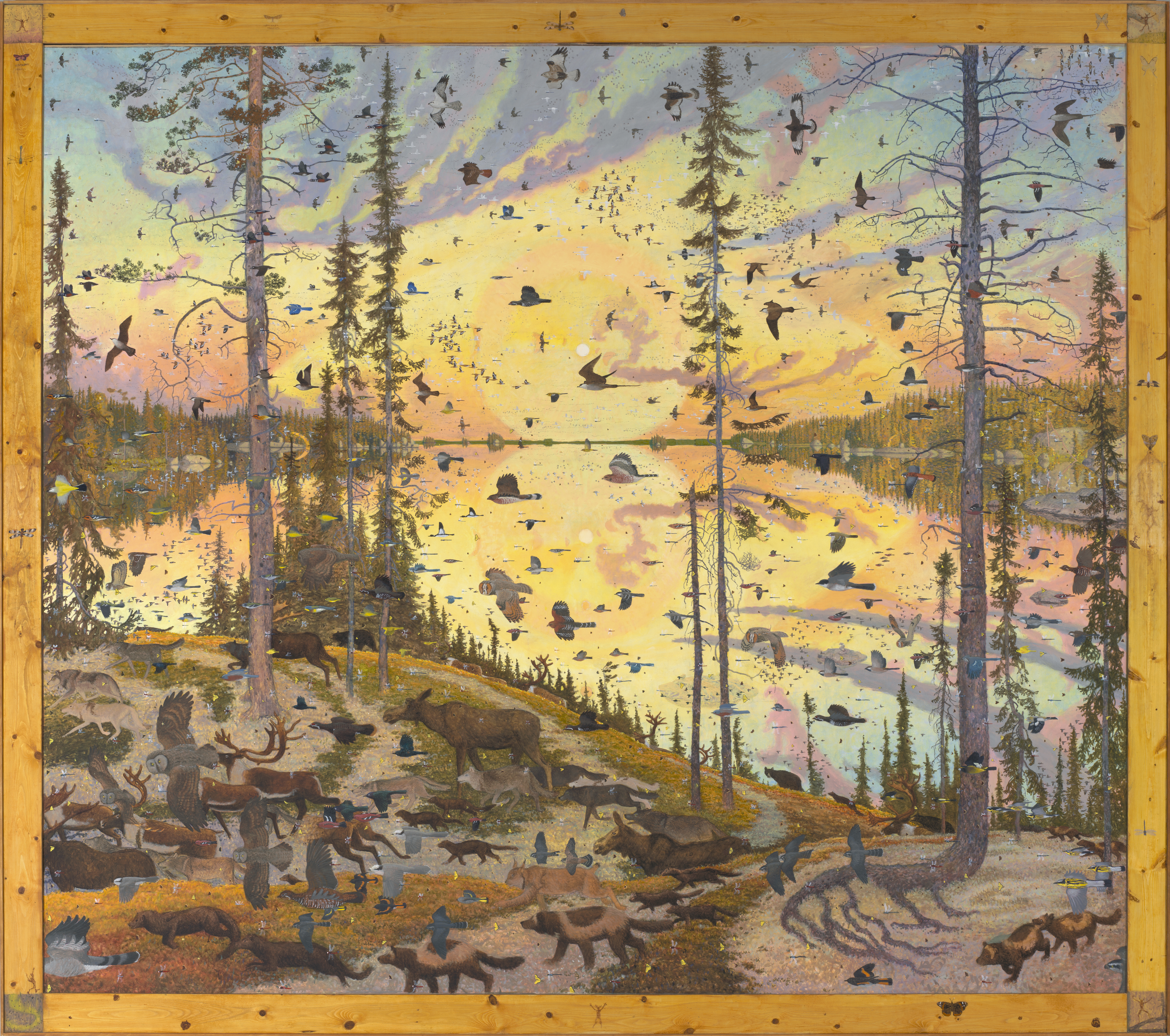
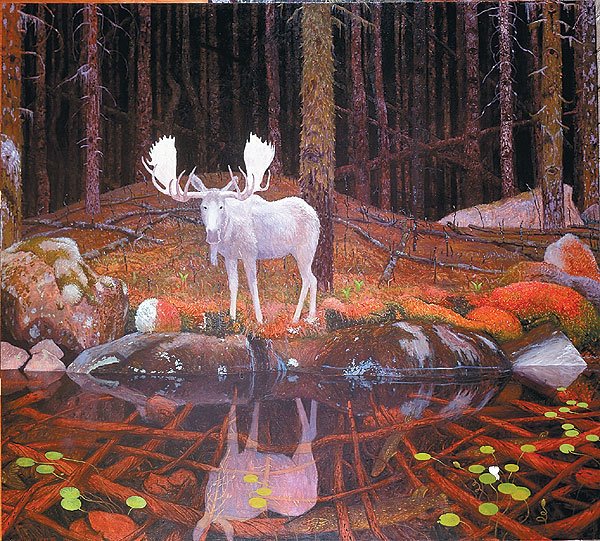
Nin Gassinsibingwe (I Wipe My Tears),2019. The size, 84 1/8 inches x 95 7/8 inches, is typical of the large scale the artist works in.
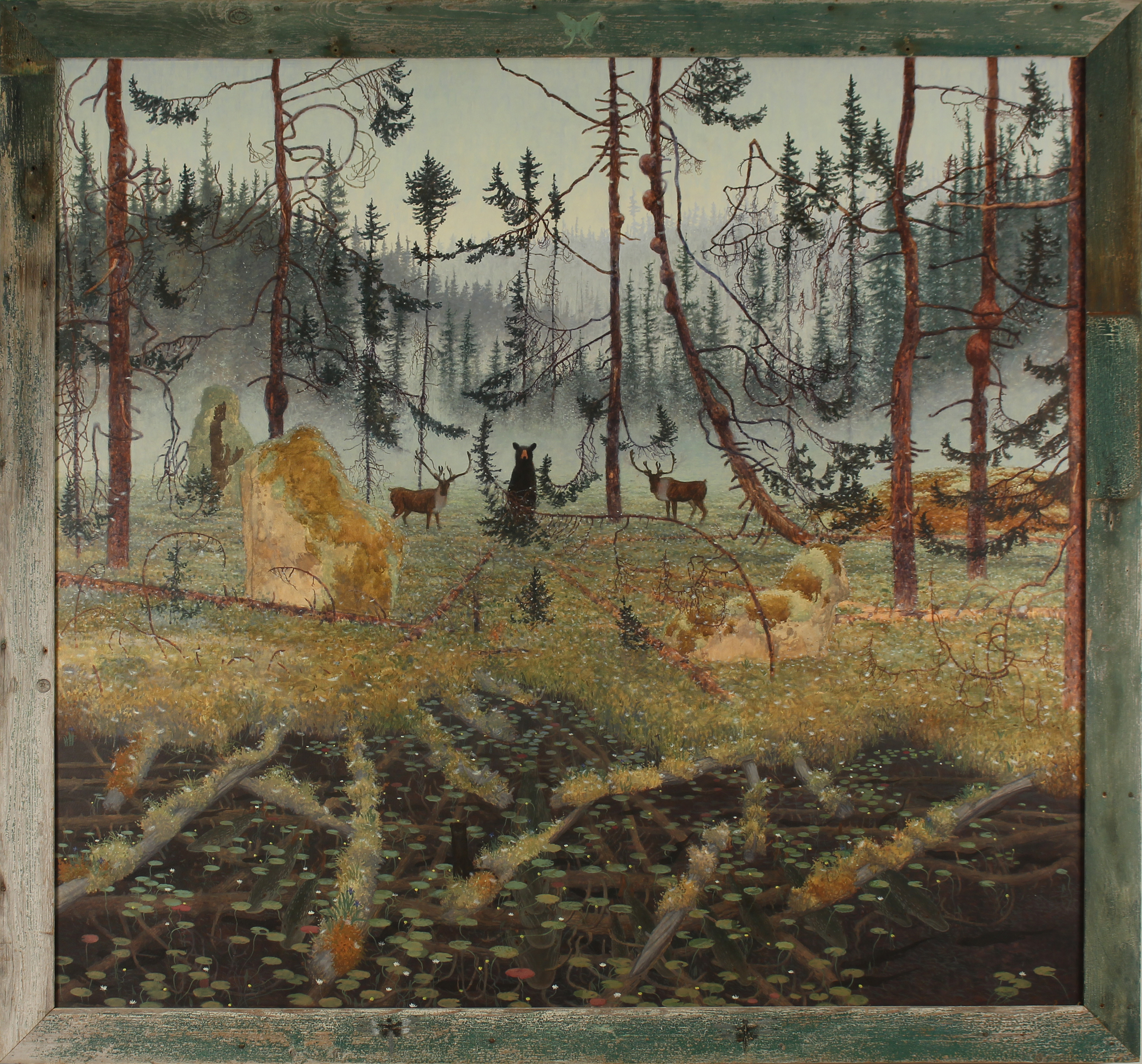
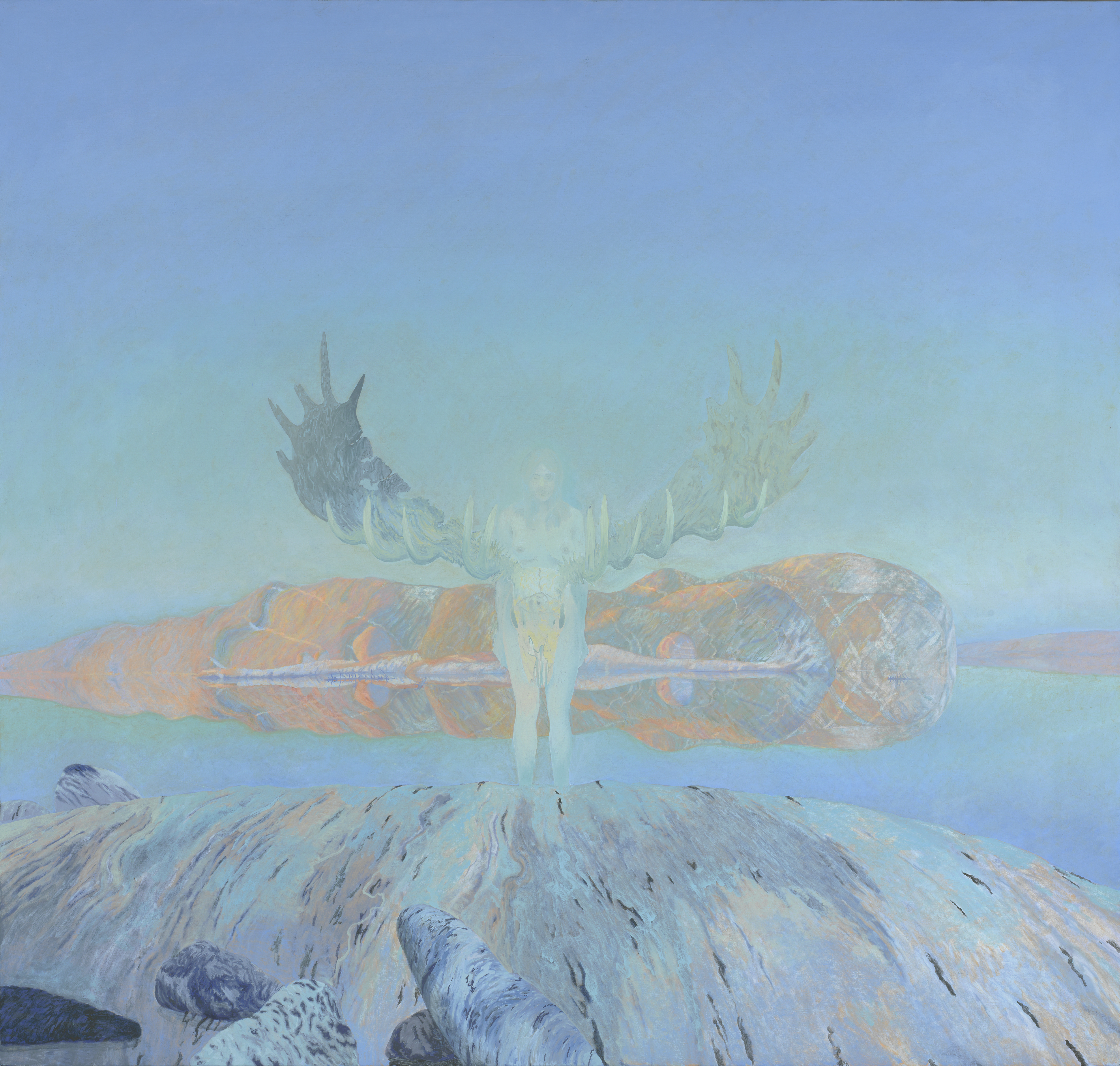
Tom Uttech, Into the Woods, The Museum of Wisconsin Art, 205 Veterans Avenue, West Bend, through January 12. wisconsinart.org 262-334-9638.
Time honors those who honor time, especially gifted cultural misfits, those who follow their vision, even to the most remote, forbidding or mystical realms, to the most precarious peak, who then muster the spiritual courage to take the deepest plunge that fate’s cavernous voice demands.
That seems like Tom Uttech’s artistic odyssey.
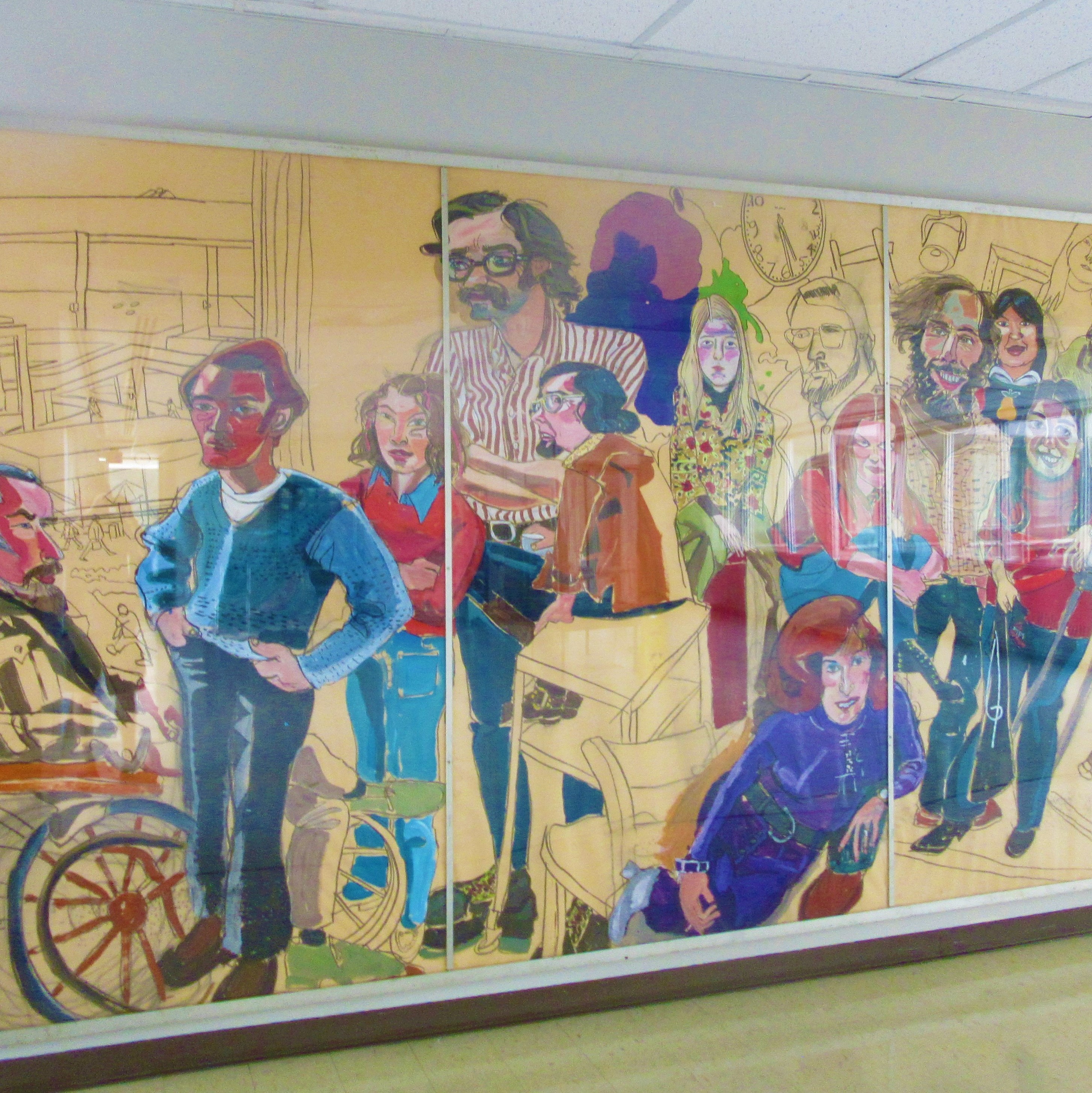
First, let me reach back, nearly a half a century, into the early stages of his saga, from my own nearby perspective. As a sculpture-concentration art major at UW-Milwaukee in the early 1970s, I had very little direct contact with painting professor Tom Uttech.
We sculptor-types hunkered and toiled in the blasted heat of the bronze-melting furnace, amid the grime and dust of the sculpture department in the fine arts building’s basement. Uttech, and his fellow painting faculty and students, dwelt in the comparatively exalted strata of the building’s top floor, blessed by generous shafts of illumination, only skylights separating them from the heavens.
There was a political aspect to this. The painters possessed a sheen of superiority, far above the sweaty, purgatorial Neanderthals pounding hammers and chisels, grunting to hoist crude masses of stone and wood, or be-goggled to wield flashing welding torches or hellish crucibles of molten metal. Sure, in our dreams, artistic glory lay, a la Michelangelo, entombed in those recalcitrant, flinty hunks, and Rodin-esque eloquence within the laboriously-assembled casting molds.
But, yeah, we knew our bottom-rung place in the realpolitick scheme of our art department. Yet, that doesn’t mean that, at some psychic level, I wasn’t intensely aware of Uttech’s quietly gathering power, as a somewhat mythic artistic presence in the building.
I’d occasionally see him floating through the department’s mid-level floors, where I took life drawing and other required 2-D media courses for art majors, and which he occasionally stooped to teach. The verb has multiple aptness, as Uttech’s looming presence had partly to do with his physical stature as surely the tallest person in the art department, during those years. His lanky body seemed to meander slowly to airy realms. Like many tall, gifted persons, he had a slightly aloof bearing about him.
This mural, created by Red Grooms, is in the UW-Milwaukee art department commons, and depicts art faculty and students from the early 1970s, with painting professor Tom Uttech towering over the others. Photo by Kevin Lynch *
His stature and aura befit him as the undisputed North Star of the art department faculty. This had to do with the peculiar gravitational pull of his genius, something which this sculpture major felt, but only came to understand in time, perhaps begrudgingly. Maybe, like the many towering trees he painted, he often felt the wind whistling though his high-perched ears and eyes, singing siren songs of the north country. He doggedly trod a pathway to his visual and thematic sources across the region between Wisconsin and the Quentico Provincial Park in Ontario, Canada.
Bud Lake, from a 1974 photo print Uttech dubbed “Onimik Sagaigan,” was an area of Ontario that inspired the painter’s imagination.
So, time has decidedly honored Tom Uttech, as he’s done more than his reciprocal part for career destiny, and the grand strangeness of nature. This is abundantly clear by the magnificent and transporting retrospective of his work, Into the Woods, at The Museum of Wisconsin Art. It will close Sunday, January 12.
So heed my warning: Do not missed this exhibit encompassing, as nothing ever has, the grandiloquent accomplishment of one of the greatest artists Wisconsin has ever claimed her own, a man who’s mapped out a vast landscape of singular fashioning, as a true American original and visionary.
More than most artists, Uttech possesses the powers of a sorcerer wielding paintbrushes – if he swirled them just so they’d open a swirling vortex into a realm of nature as otherworldly yet vivid as one is a likely into encounter in one’s lifetime.
And yet that uncanny effect feeds on quietude, deriving from the extraordinary scale and imaginative leaps he takes consistently in his canvases. One senses a contemplative, even Zen-like authority in his artistic travels, as exotic as they appear, something deeply moving the more you open yourself to this work. Here, Nature gives birth to a thousand nights and lives, to myriad snorts, cries, growls and howls – emitting from the weirdly eloquent creatures that haunt the twilight of this man’s fertile imagination.
Of course, this art is soundless, but it seeps into the viewer as if all five senses quiver under exquisite siege. In some canvases, peculiar dramas stand poised to play out: Flora and fauna seem like they might just die even as they radiate strange, regenerative power. They might become another version of themselves, reincarnate.
“Makwa Pindig Wabashkiki” 2011
For example: The painting “Makwa Pindig Wabashkiki” centers on a tall, standing black bear peering out towards the viewer. Two great-antlered elks flank the bear, also looking towards the viewer in alert sentinel posture. All wait from a safe, wary distance. These two species, natural enemies, here seem allies; atmospheric mist shrouds the forest. All around them, highly animated tree branches and other flora perk up, as if anticipating something. Is the presence they sense a blessing or a curse, harbinger of tragedy, or transformation?
One may be inclined to stand before such a canvas, as with others in this show, and wait for something to happen. Such pregnant ambiguity typifies the aura of mystery that Uttech masterfully trades in, painting after majestic painting.
But how did Uttech get to such a certainly unfashionable artistic place? As a university professor in the 1970s and ’80s, he was intensely aware of trends in contemporary art, fading abstract Expressionism, pop art, minimalism, conceptual art, etc., all of which left him uneasy, and ultimately an outlier. But a fearless one who knew where he needed to go, to a realm more personal than an art movement, and perhaps more far-reaching. He arrived at a sort of Zen maximalism, if that makes any sense. Early modernist surrealists certainly took their imaginations to extremes, often tuning them inside out, as does Uttech. Yet, he’s worked in a private yet generous a realm derived from traditional nature painting. His titles mostly employ language of the native American Ojibwa tribe, who inhabited the region before European colonization.
Further, his work seems that of a much older and more literary soul than the surrealists, perhaps one borne of the 19th century and its transcendentalists, notably Emerson, but with a hoary helping of Thoreau, and deep inlets to the haunted black forest dwellers of Hawthorne.
Yet to see this art, one senses a man who evolved into a sort of contemporary mystic, as well as an obsessive virtuoso. A key work illustrating the former trait is “Painting for Buckingham Lake,” a luminous early painting from 1973. Unlike most of these color-saturated works, this one appears to have given up the ghost, a central specter-like figure bathes in pale blue and white light. The silhouette appears human but a mighty rack of elk antlers seems to emit from his head, recalling The Magus, the titular half-man, half-horned mammal god-like creature inhabiting a mysterious island in a magical post-modern novel by John Fowles.This is something the painter only could’ve encountered in the deepest forest of his dreams.
Painting for Buckingham Lake, 1973
More typical here are large, stunning scenes teeming with birds and furry mammals, often all rushing together off the canvas view, drawn by some obscure force beyond. These are rendered in breath-taking detail and into almost infinitely deep perspective — an artistic style and vision I have never quite seen elsewhere in 35 years of writing about art. (see Nin Gassinsibingwe (I Wipe My Tears) 2019, at top) The paintings persistently evoke the questions: What larger spirit-force holds these scenes in the hollow of its hand? To what end? And what does it feel like to sense such questions?
Uttech today, now an avuncular 77, may have once, deep on his quests, mutated into an unfettered shaman, with craggy roots sprouting from his orifices. He does remain a bit of a spell-casting oracle, speaking today of a “secret” as the key to not only his art but also to our species’ troubled relationship to nature.
Uttech offers quiet empowerment, a sense of belonging, affirmation and adventure in a comment on a website marketing his artwork: “Since these pictures are about nature and our role in it, the knowledge gained might grow into love of nature, and thus into concern for its well-being,” he says. “This concern could lead to action to protect nature and, therefore, ourselves. The best response to my paintings would be for you to go straight to the wildest place of land you can find and sit down to let it wash over you and tell you secrets.”
Tom Uttech’s art creaks wide a vast doorway, luring all viewers to enter with open imagination and heart, to travel the right way back, into our whole humanity on earth. Perhaps the secret has something to do with survival.
_____________________
Uttech art images courtesy Museum of Wisconsin Art.
The Red Grooms mural is also the new theme image for my Culture Currents blog, at the very top.



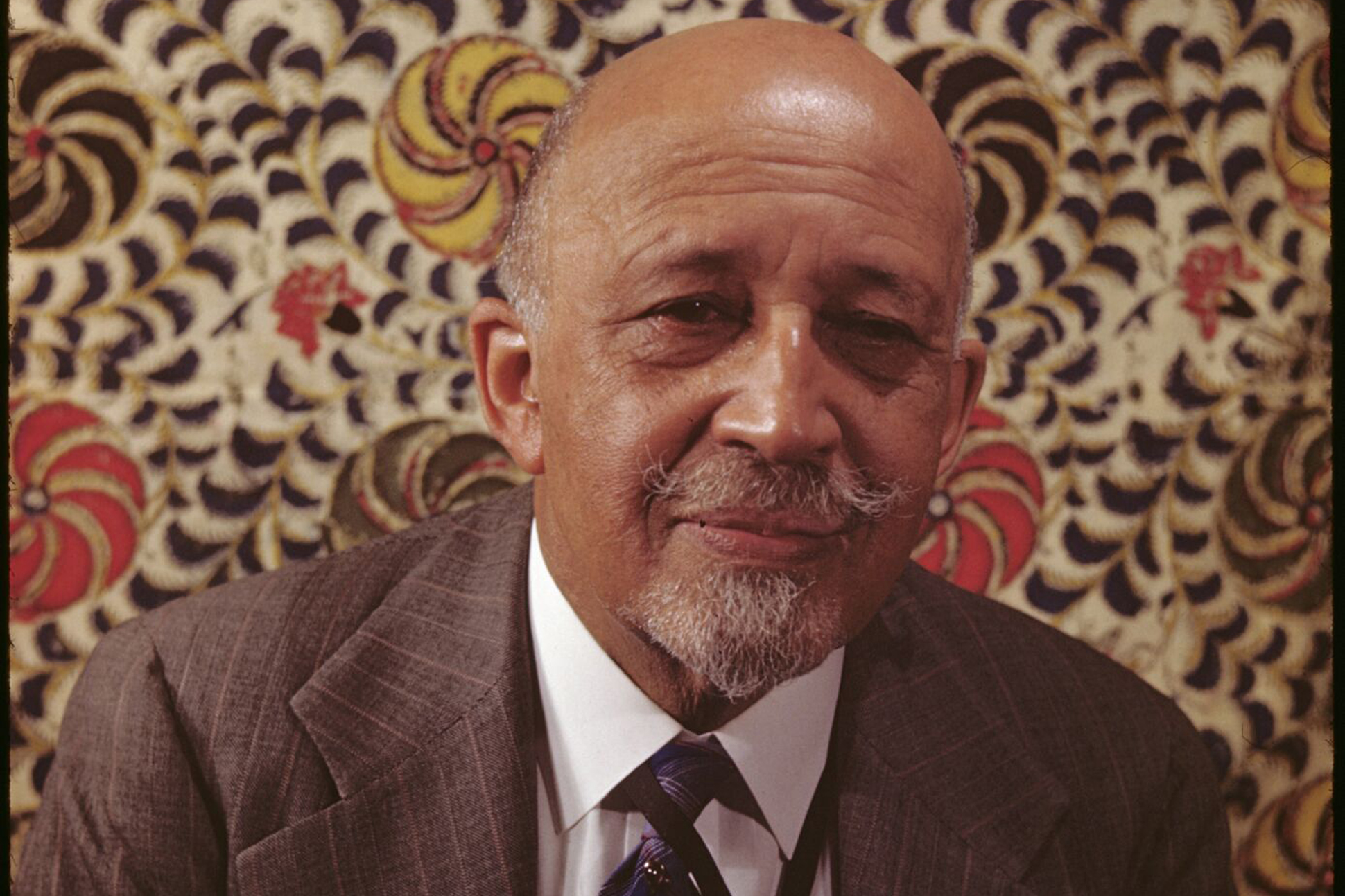
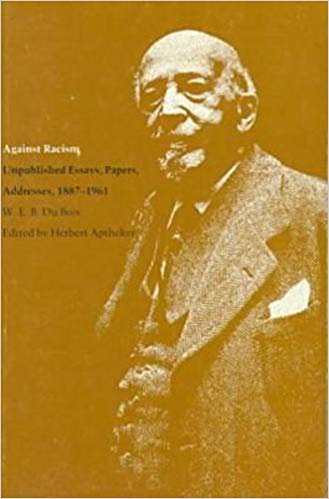
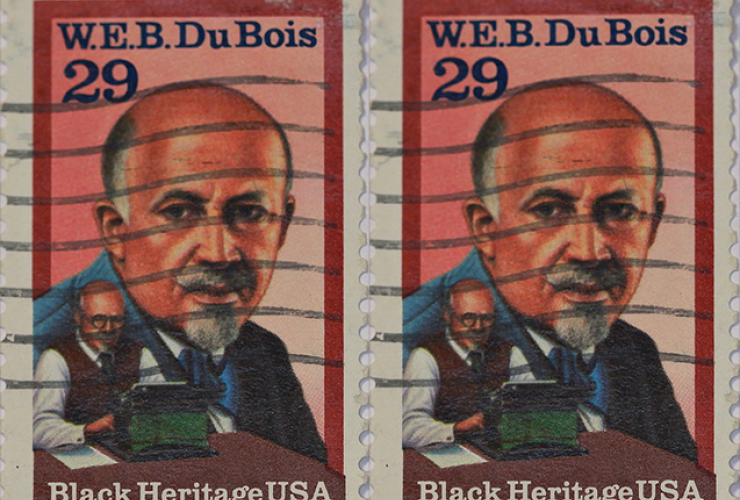
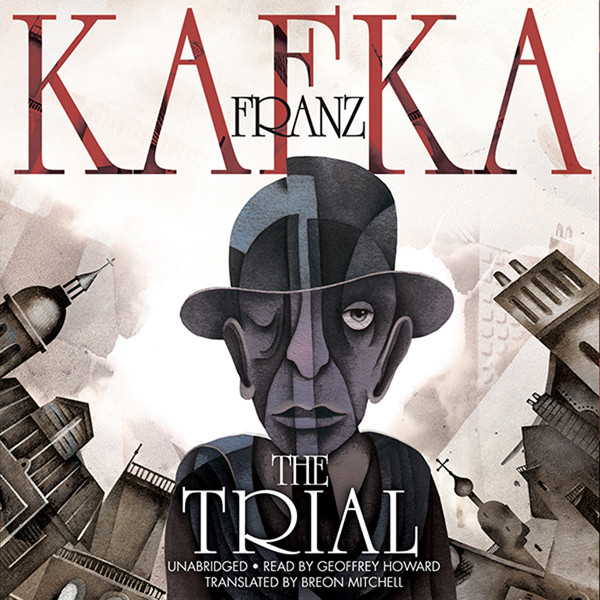
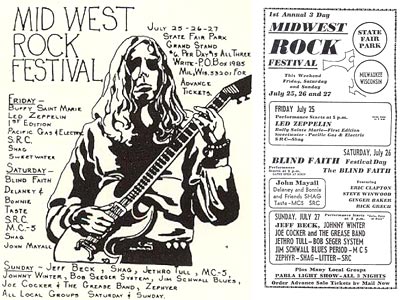
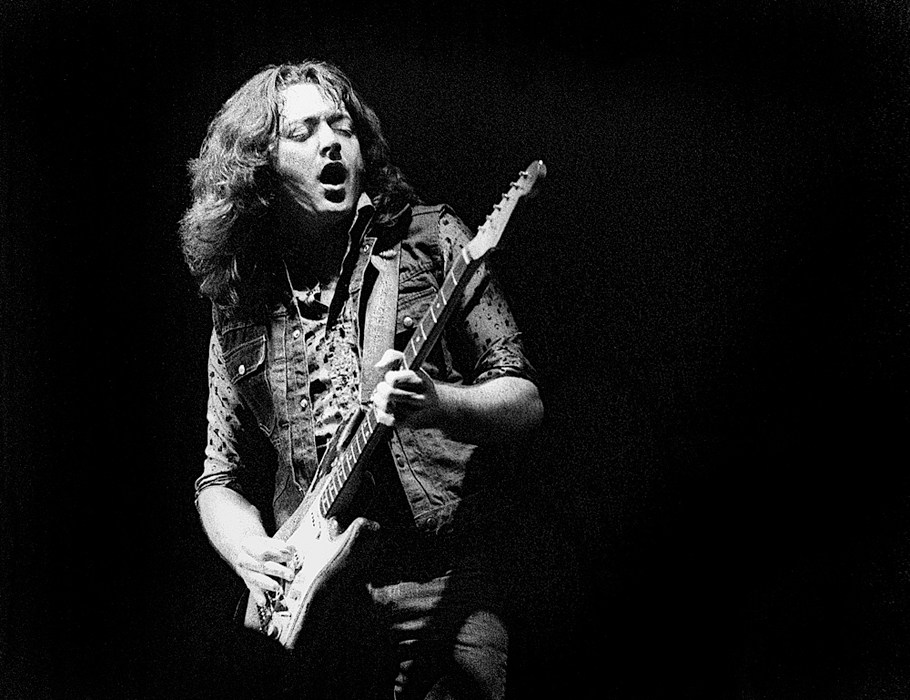
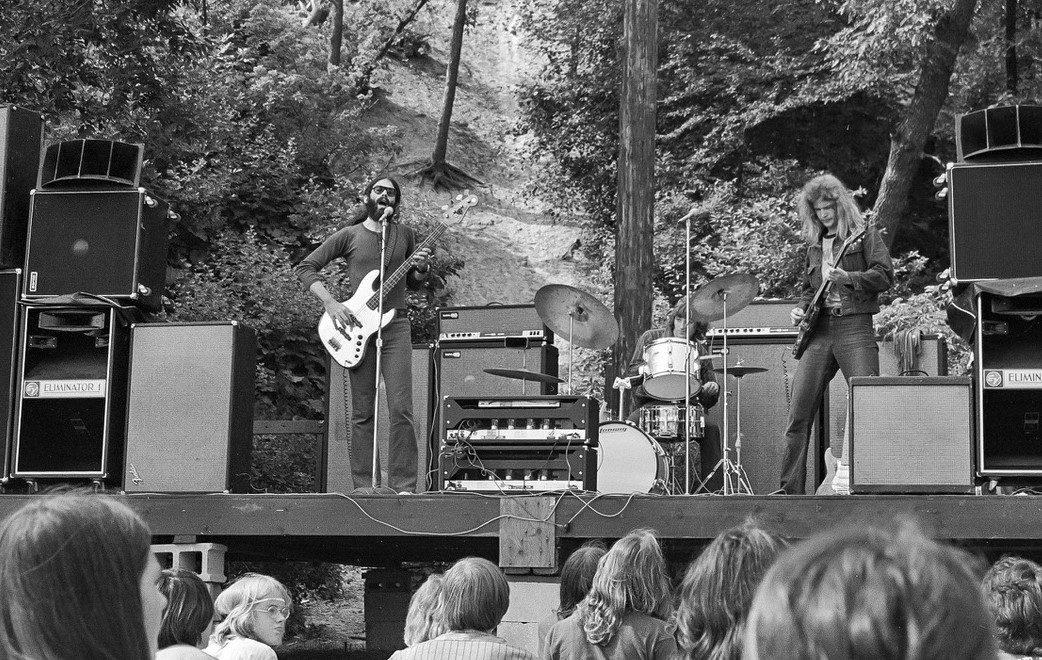
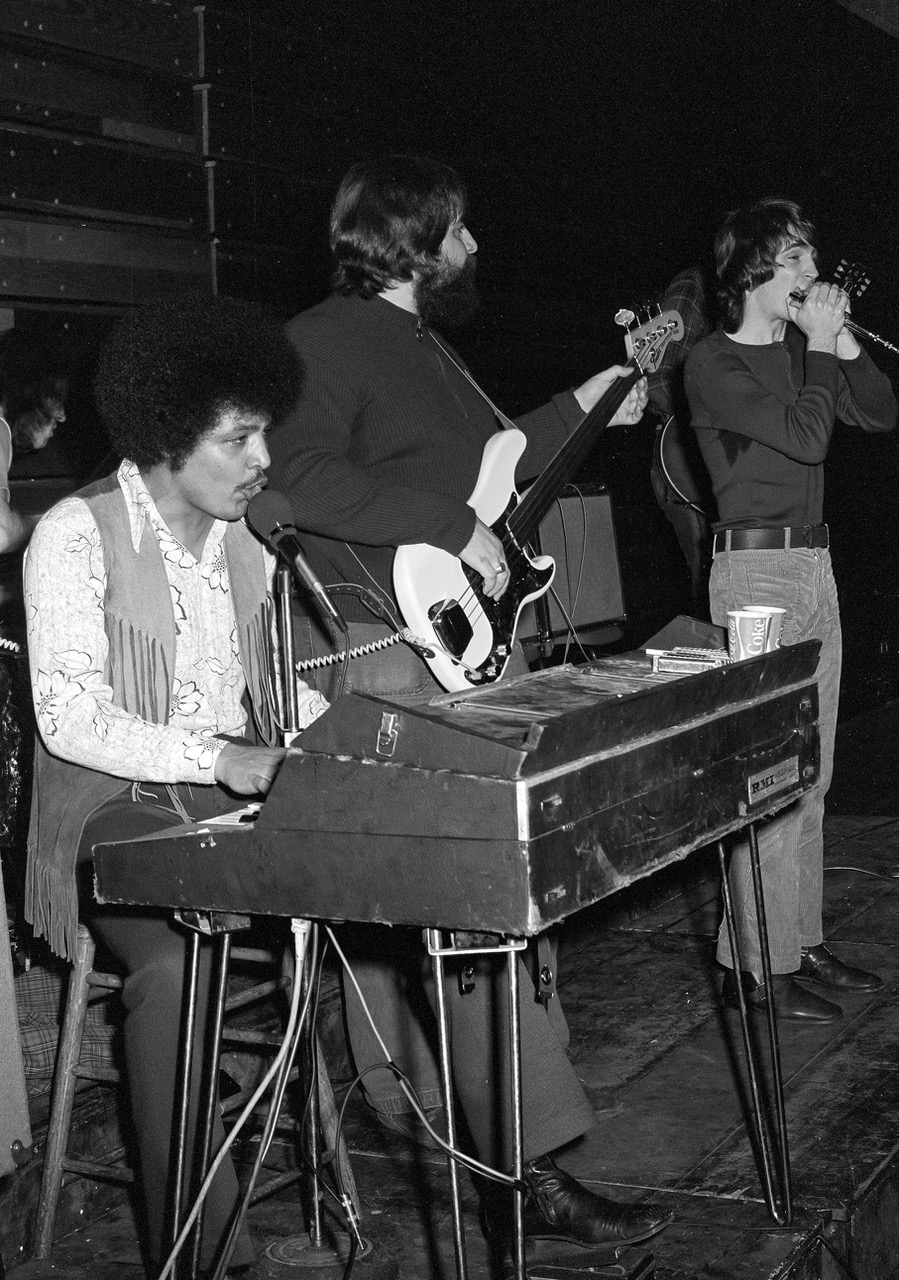
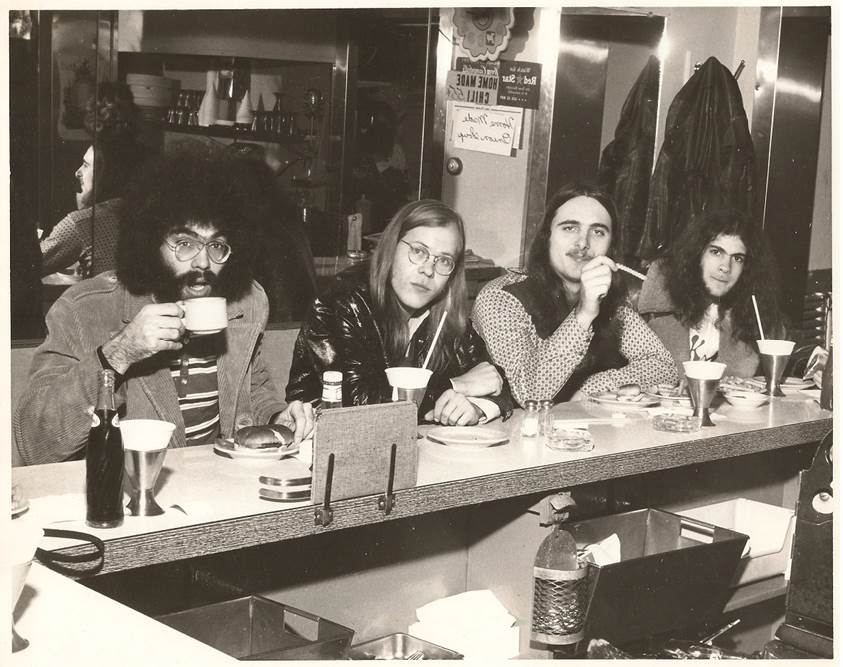
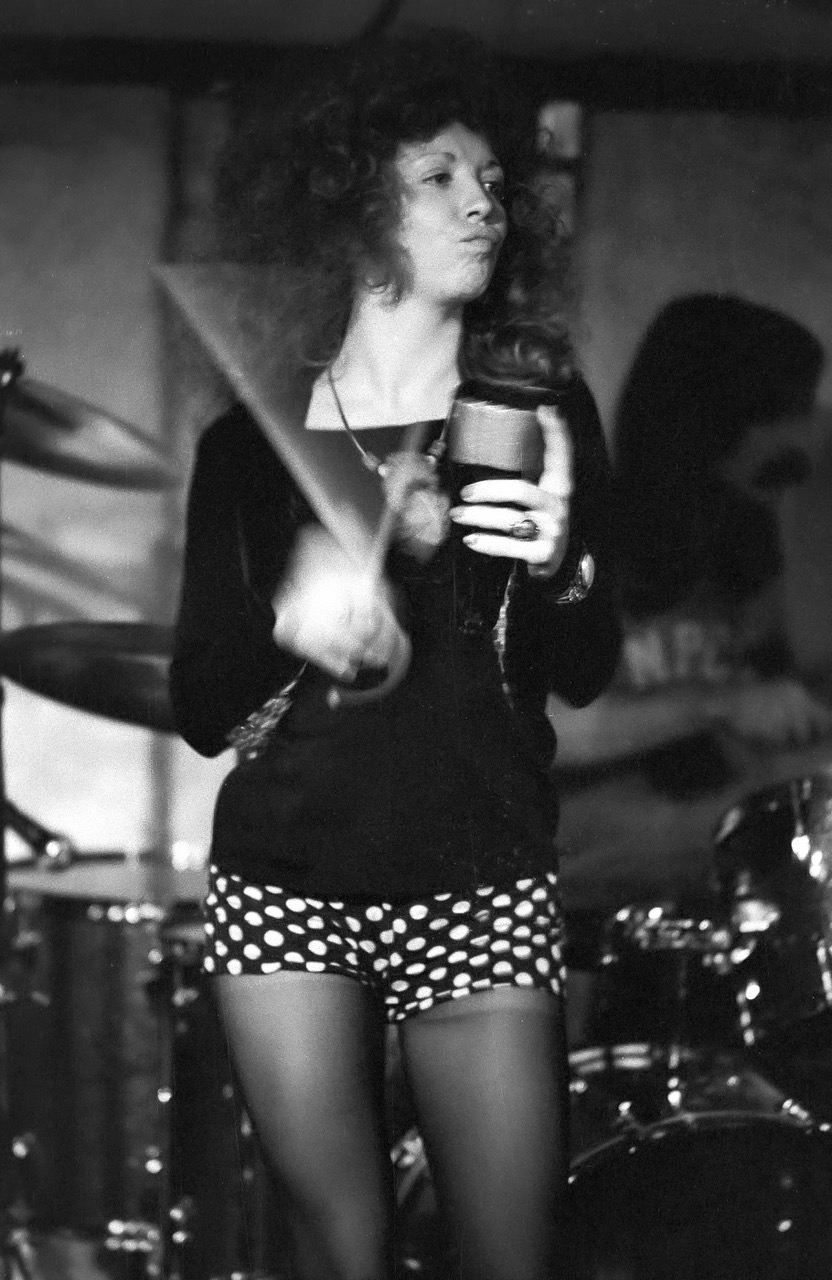
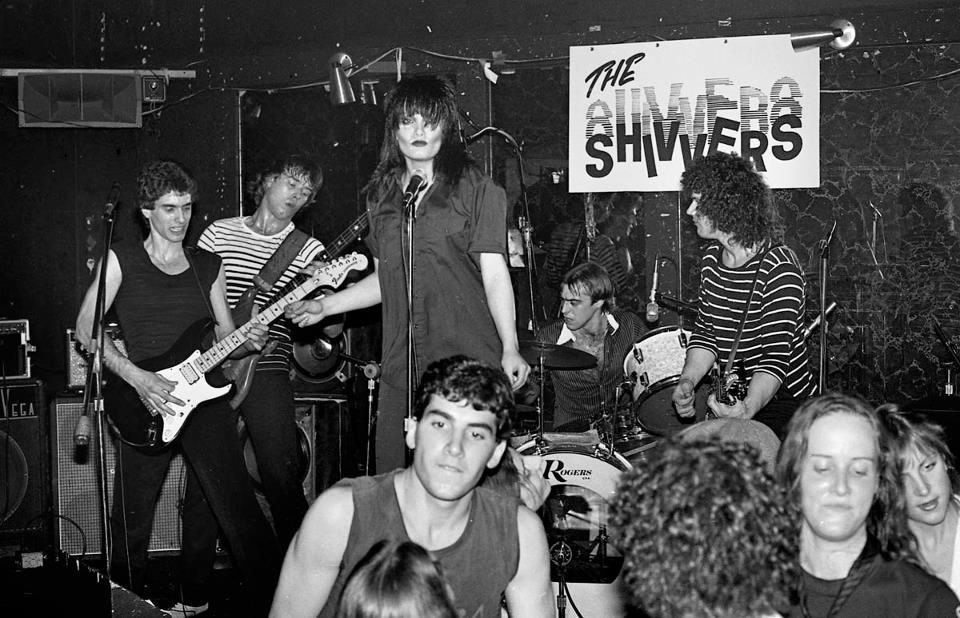

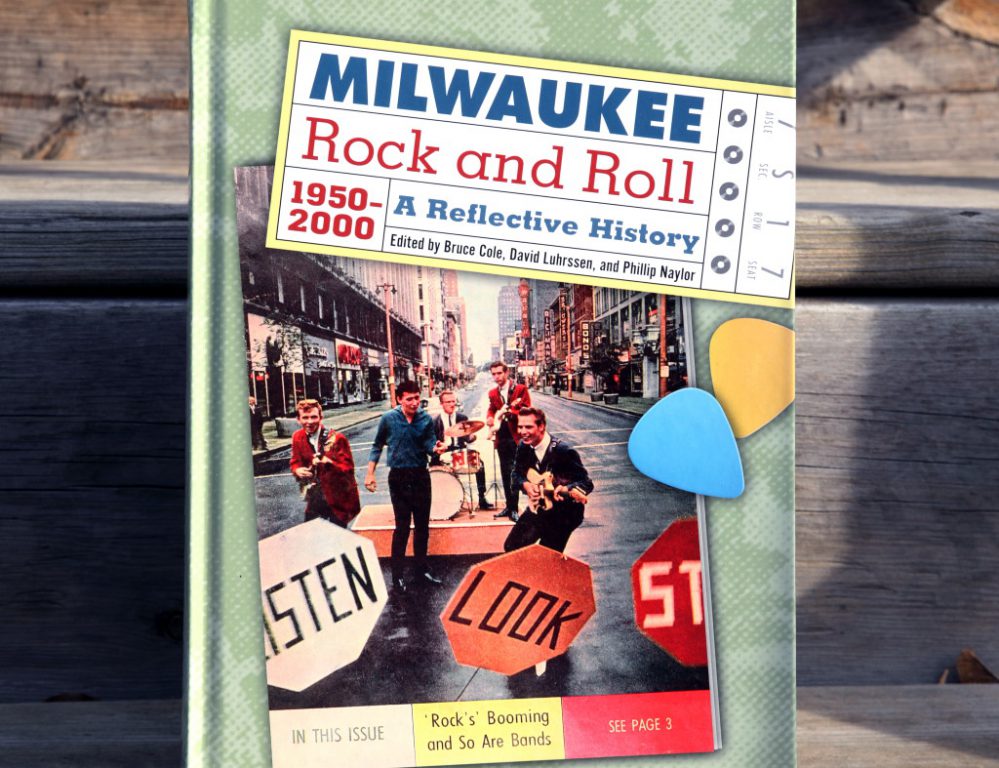
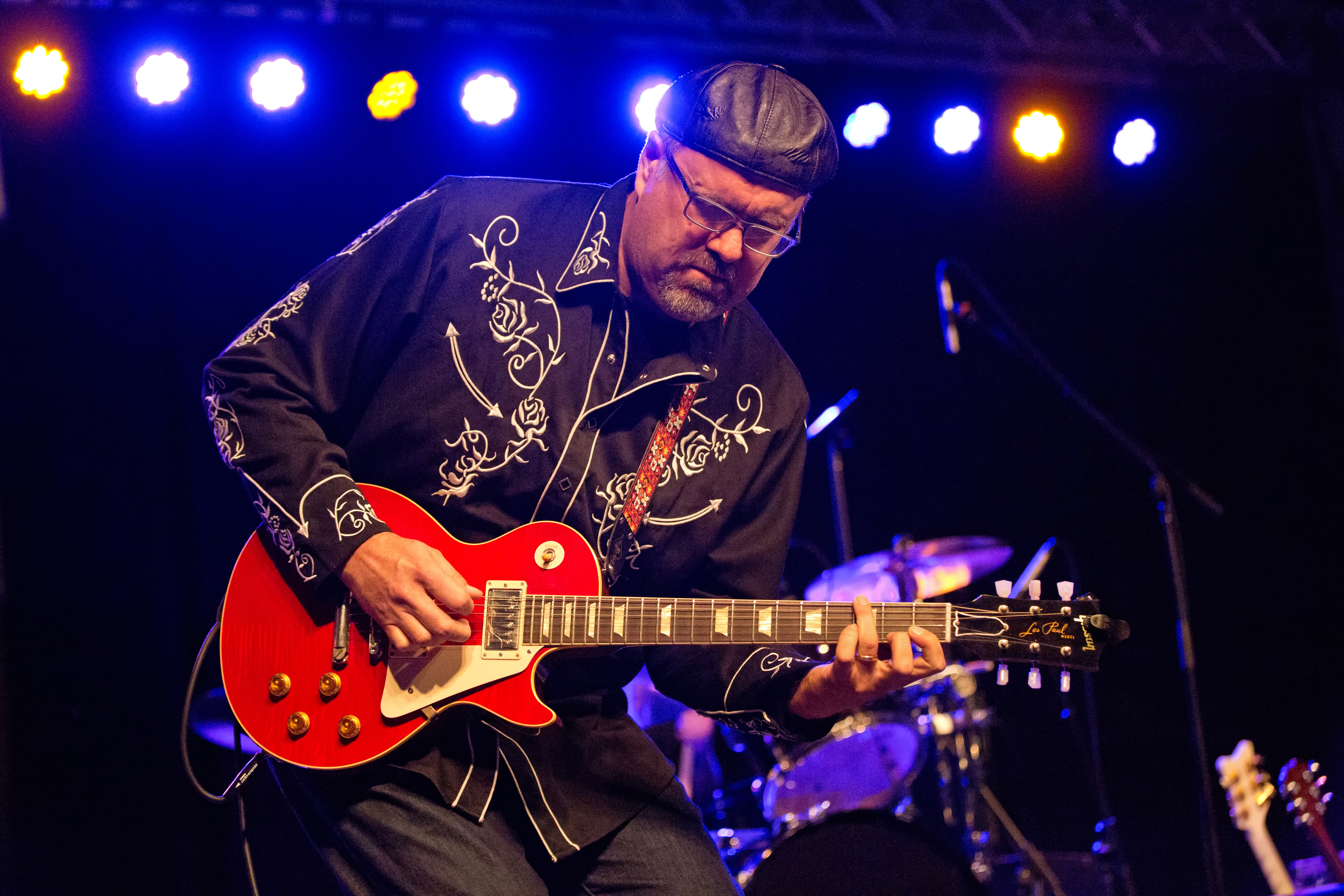
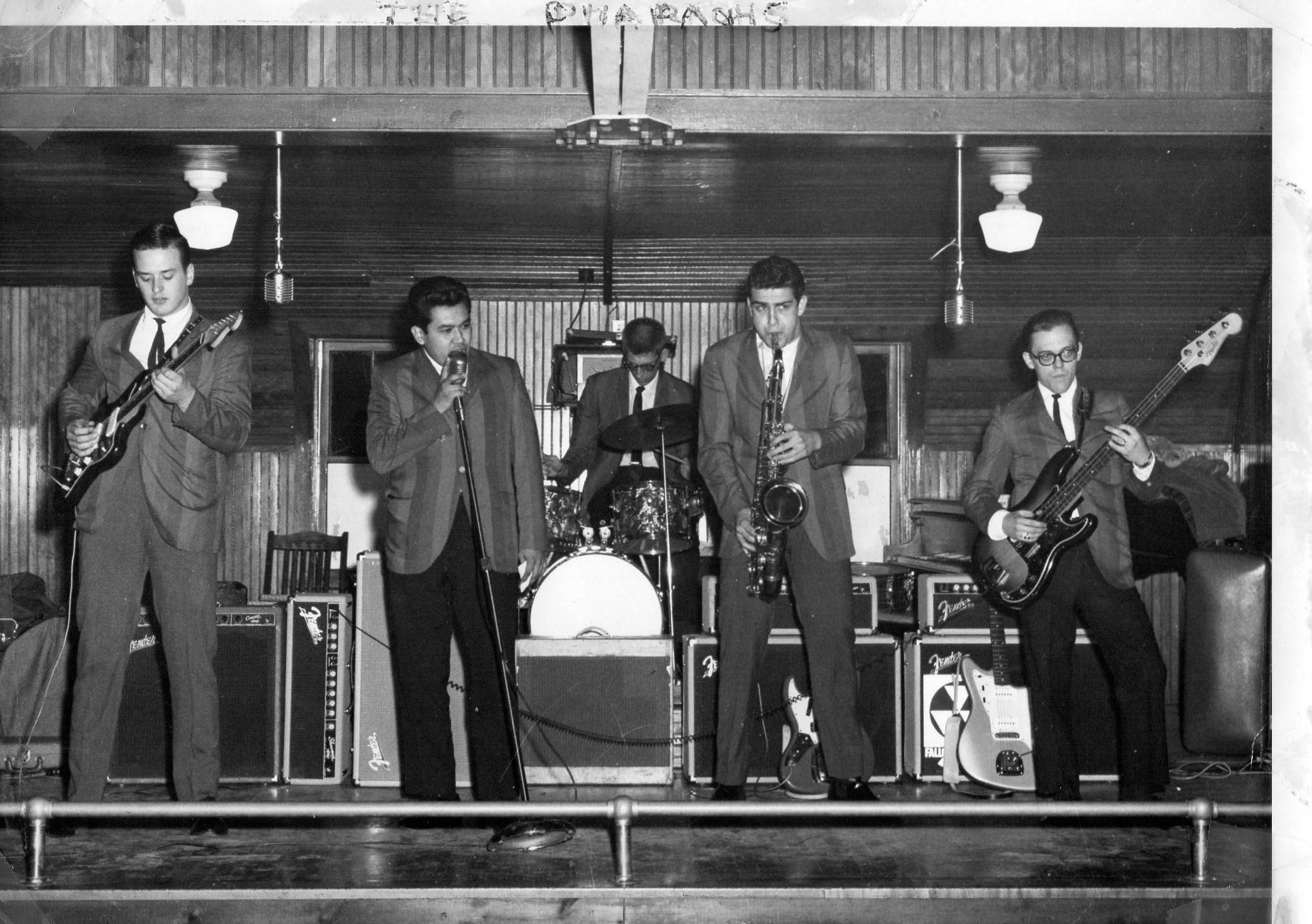
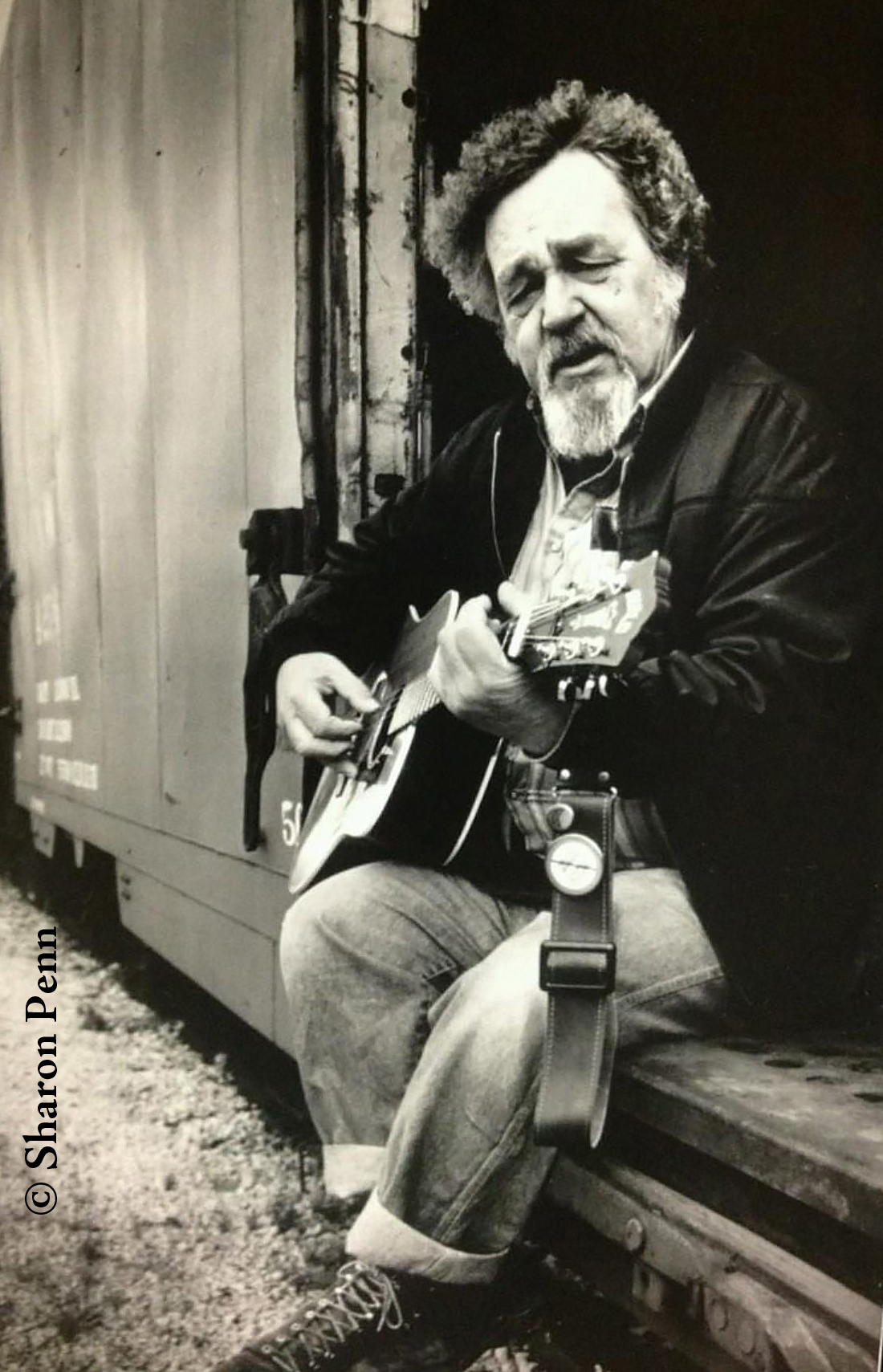
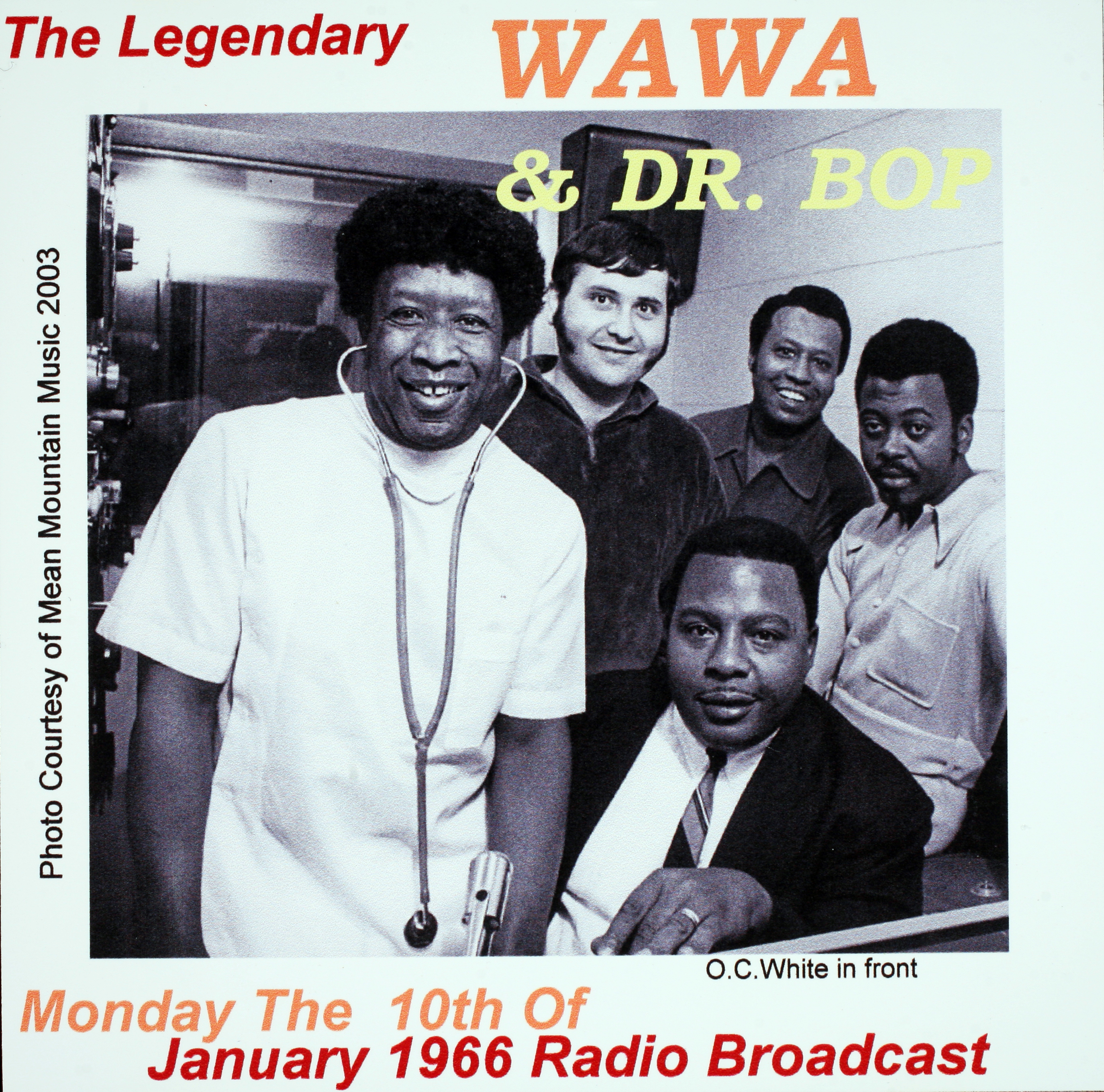
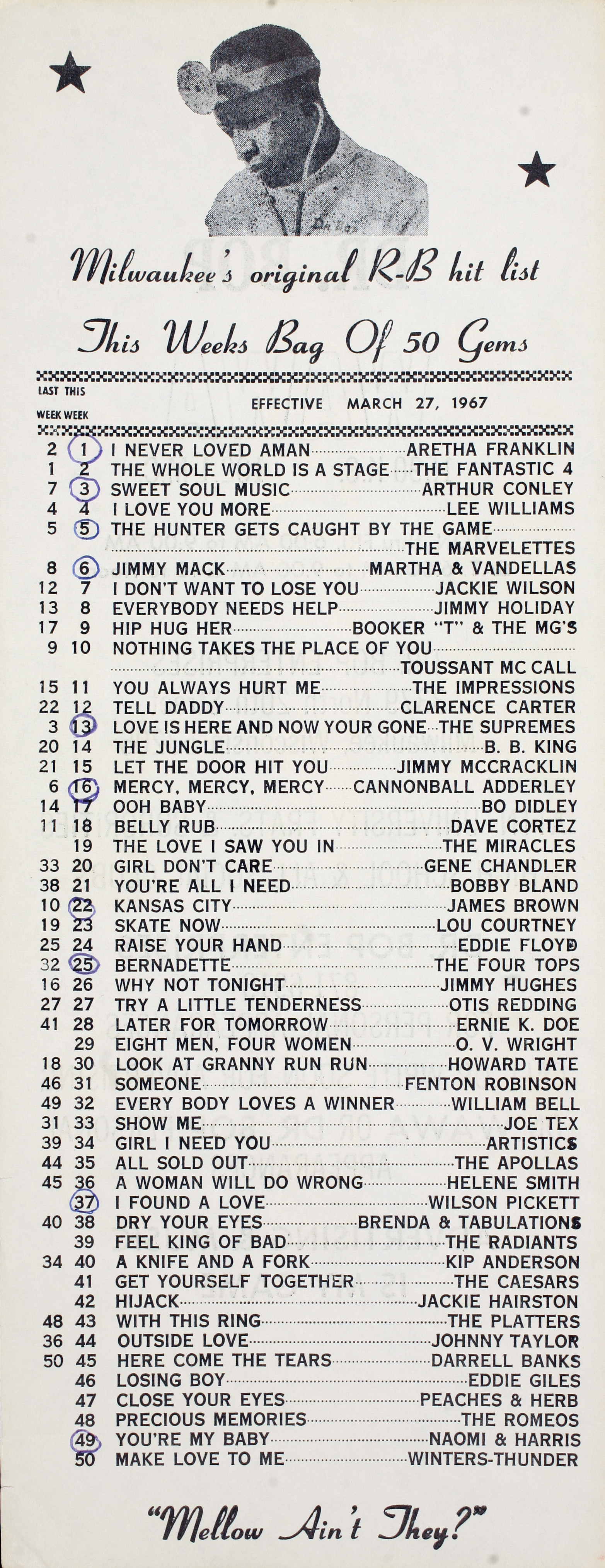 (Top) The staff of Milwaukee R&B radio station pioneer WAWA, in early 1966, including, front left, Dr. Bop (Hoyt Locke), and program director O.C. White, front right. Courtesy Mike Muskovitz of Mean Mountain Music. (Above) A Top 50 R&B chart for 45 rpm singles, from WAWA in 1967. Courtesy Stephen K. Hauser.
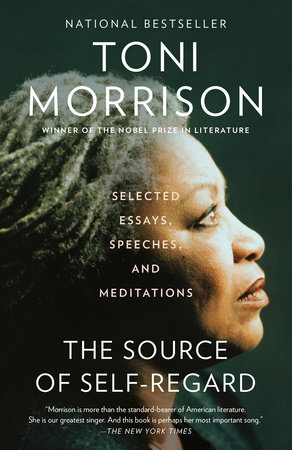

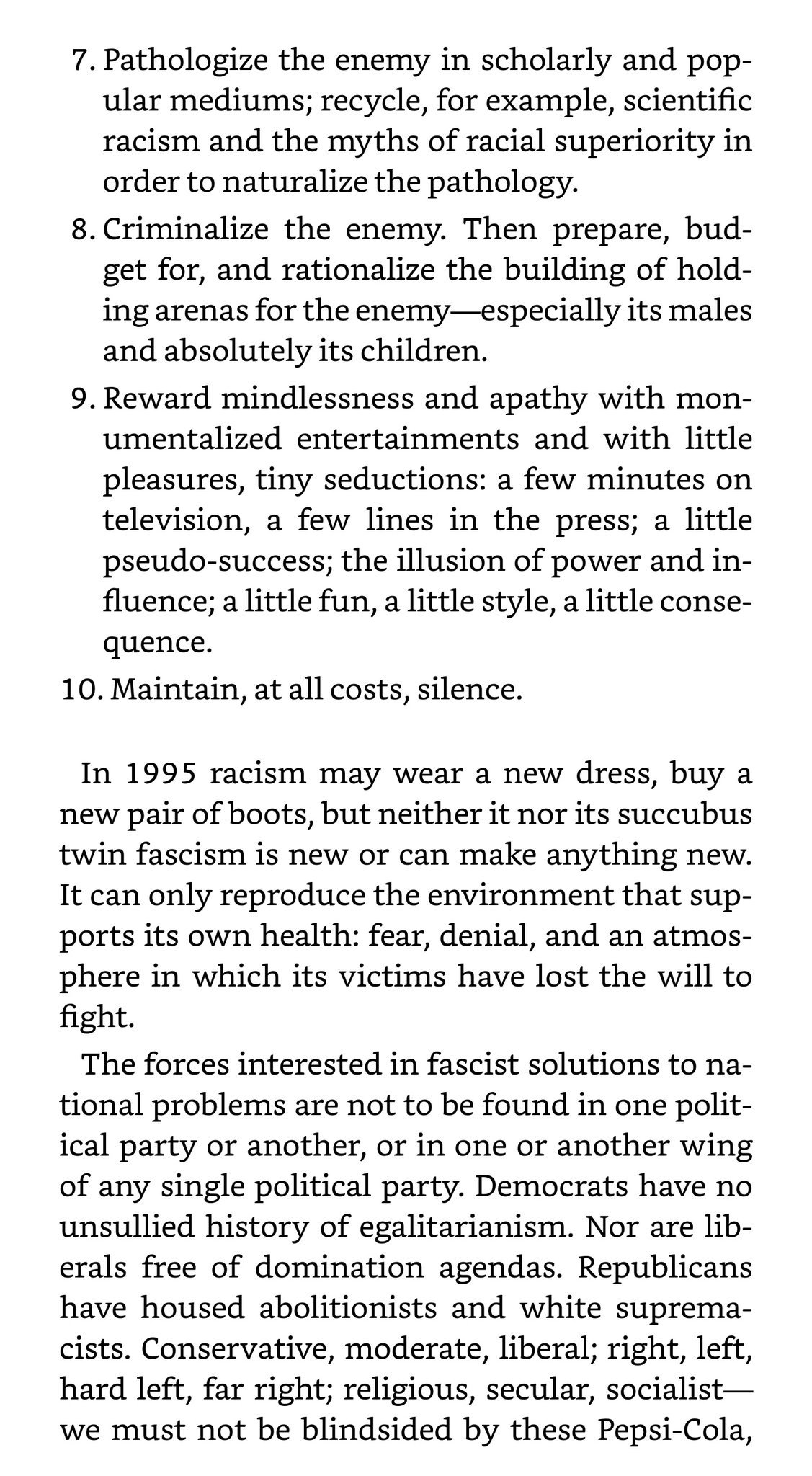
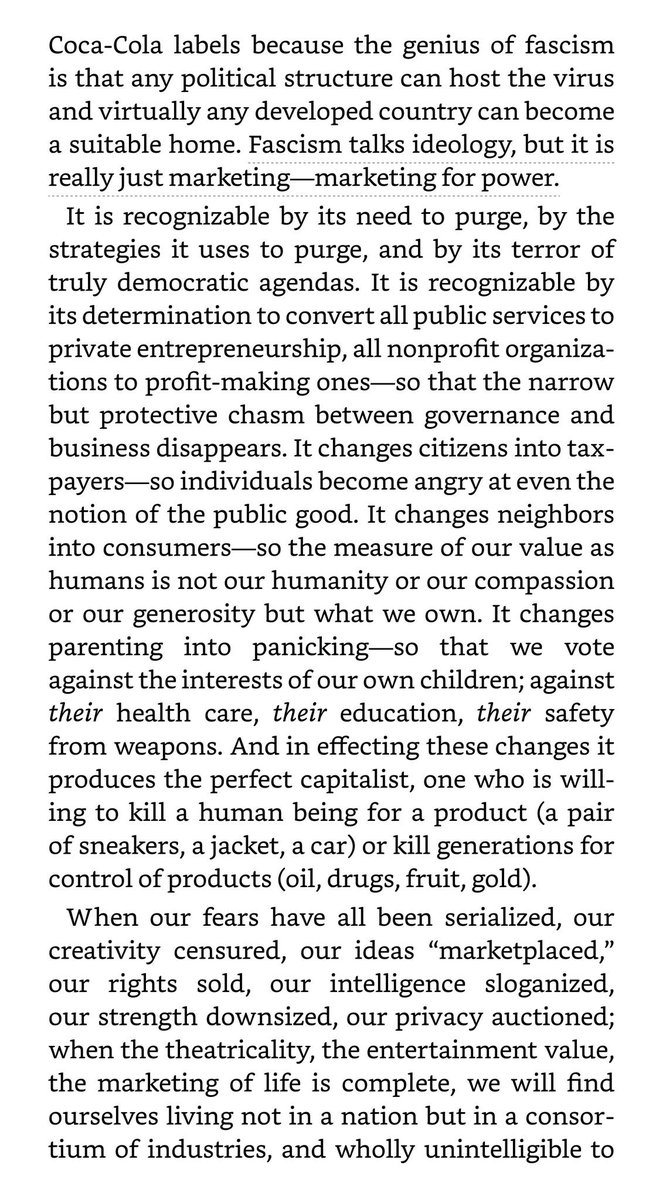

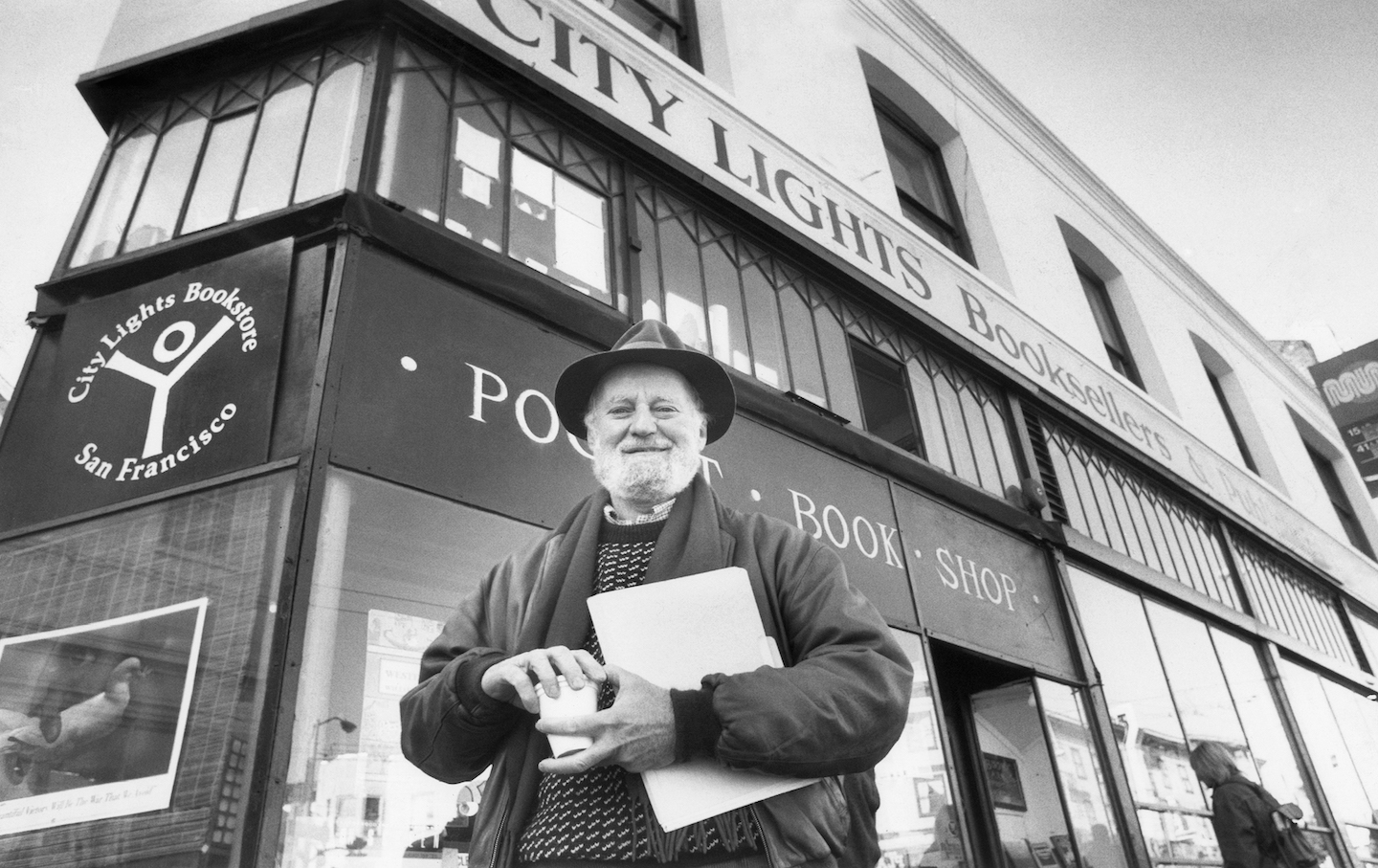

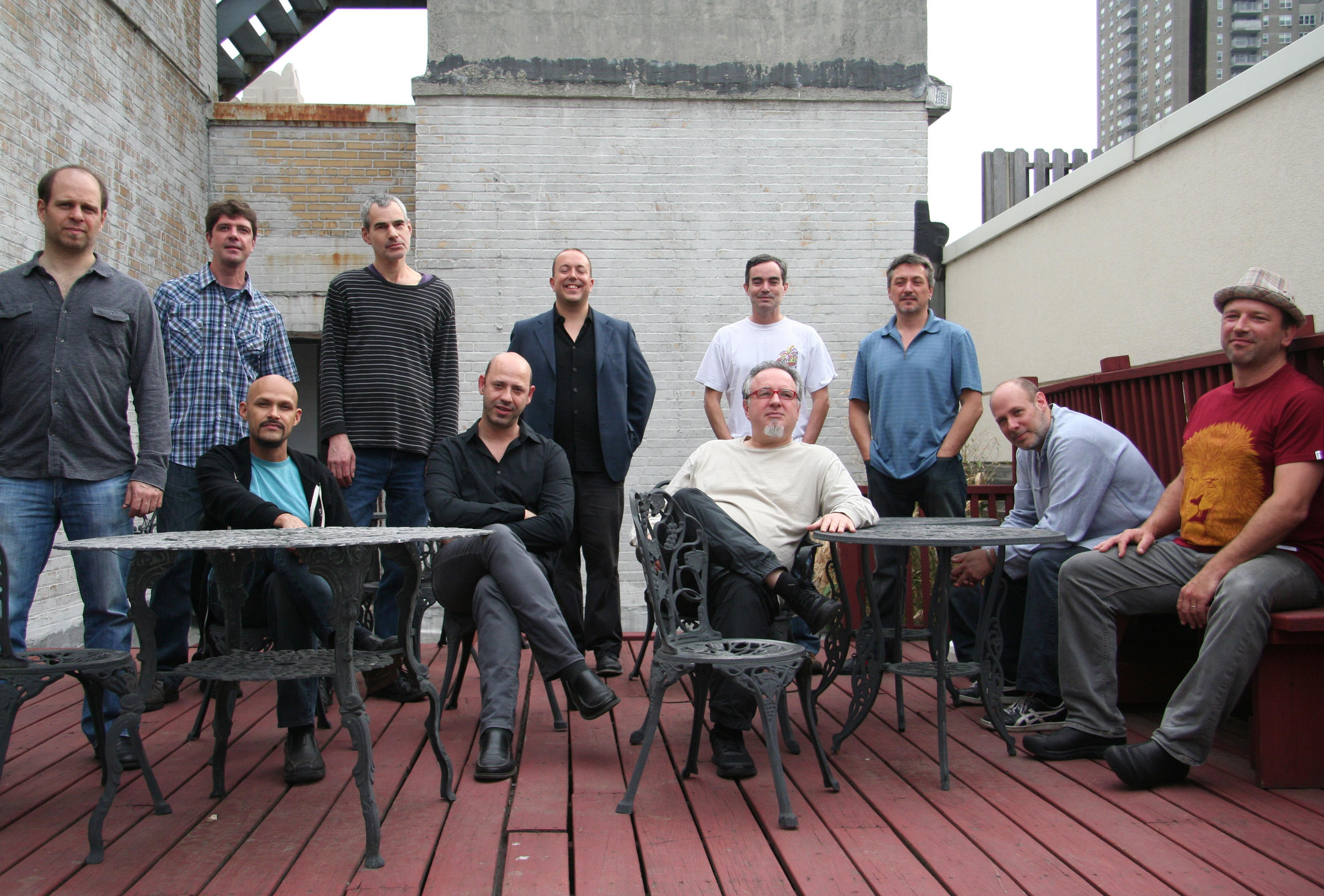
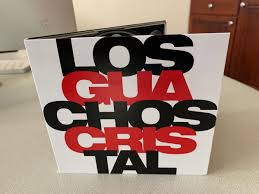

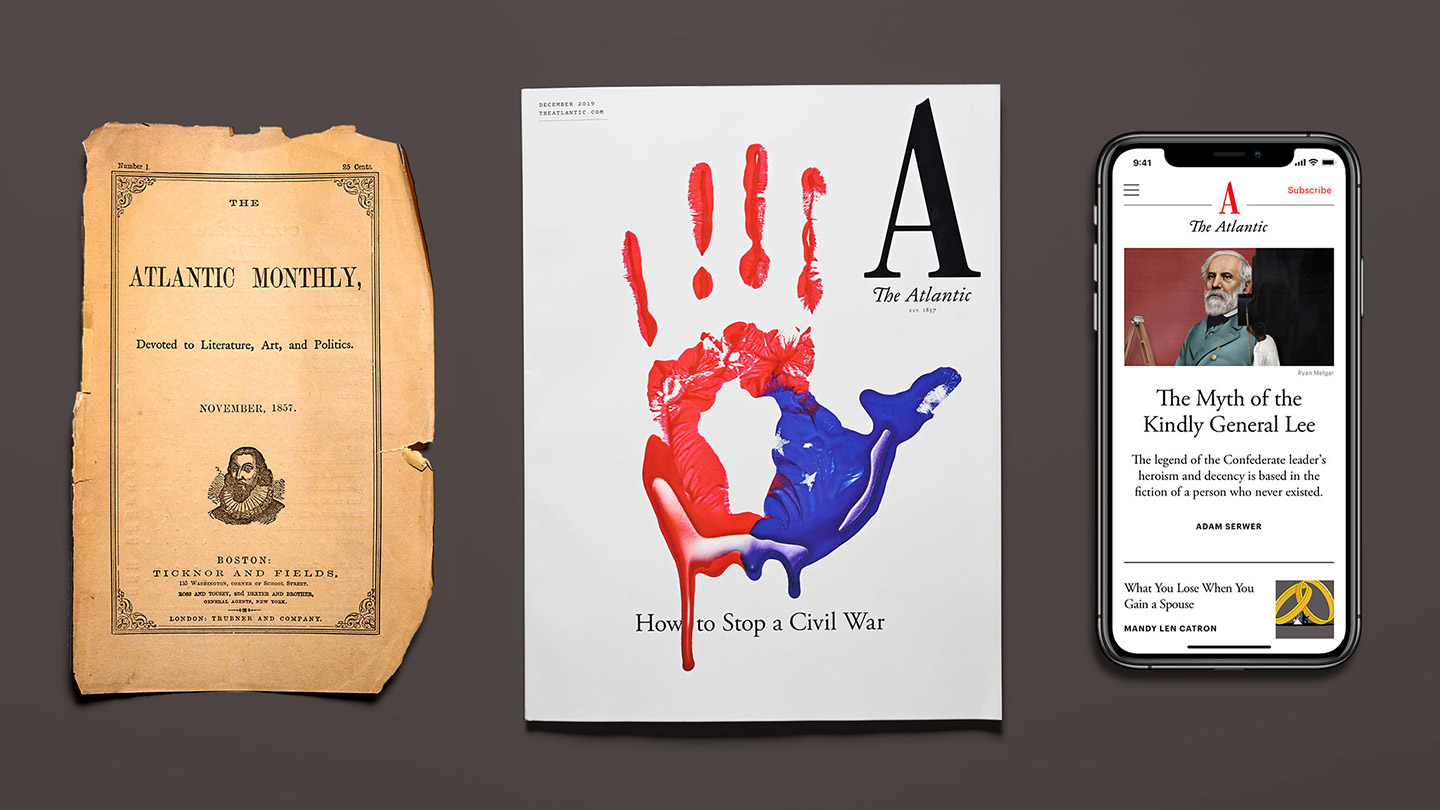
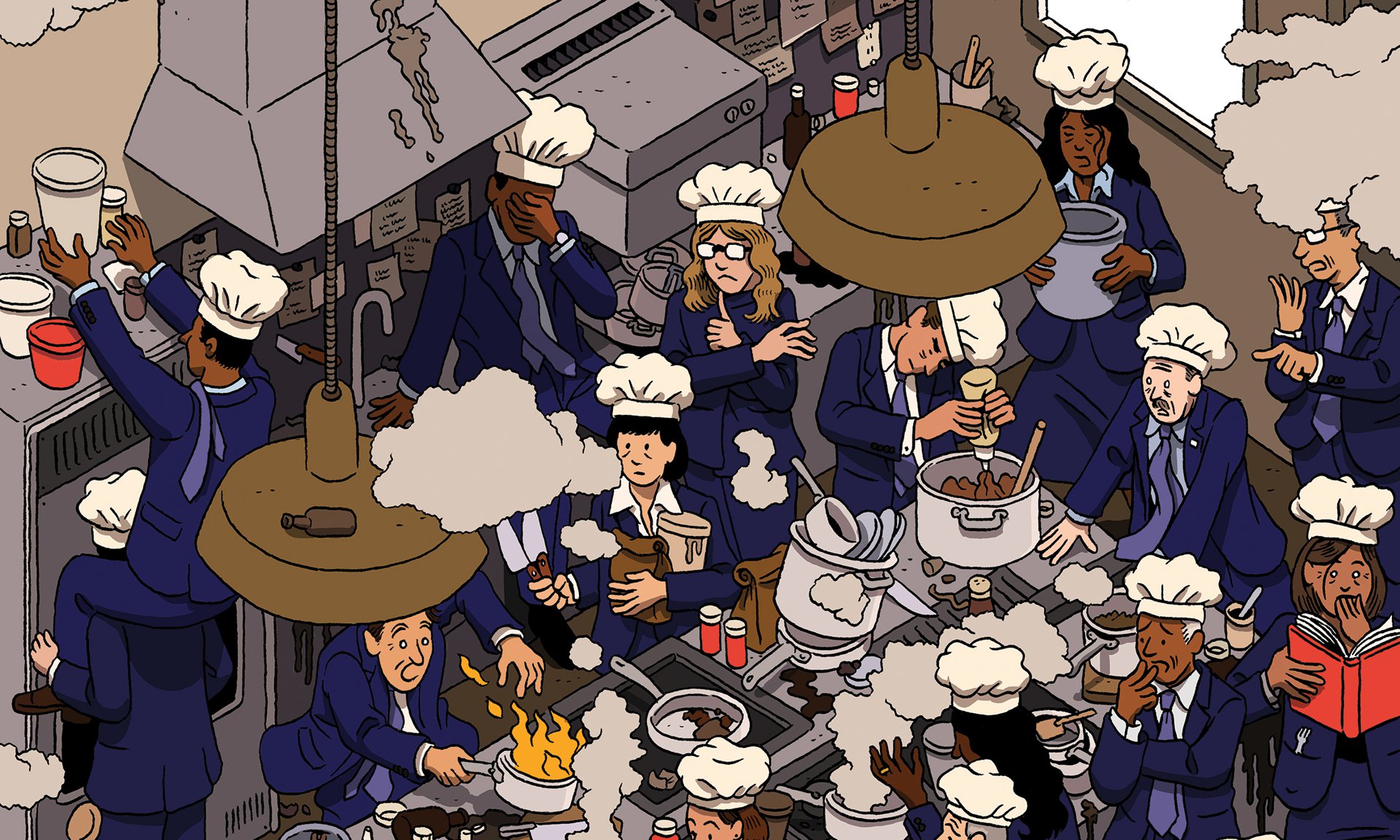
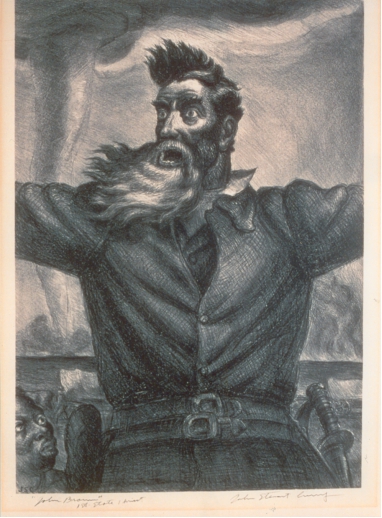
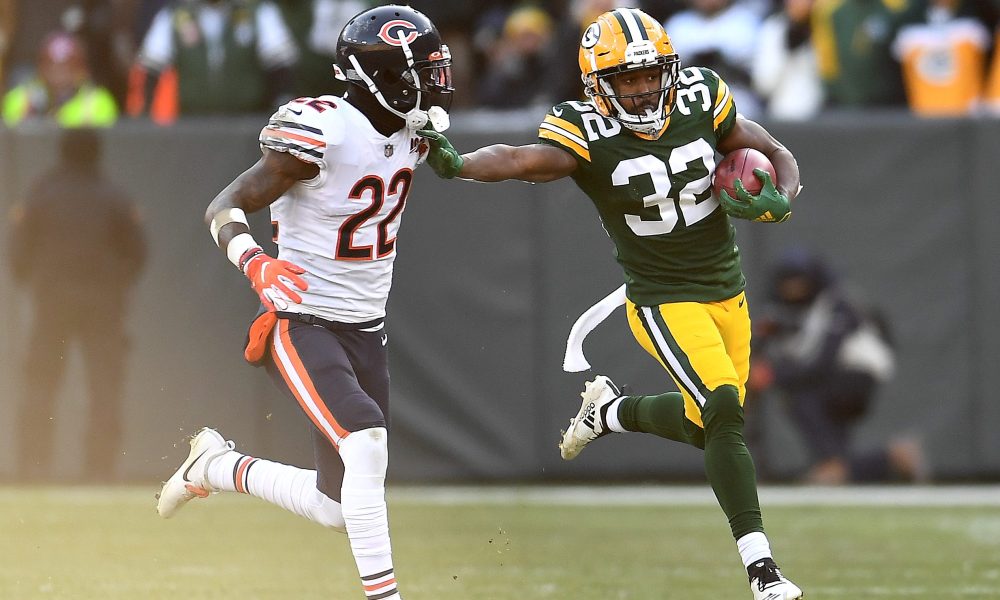 Packer kick returner-runner-receiver Tyler Ervin. courtesy Getty Images