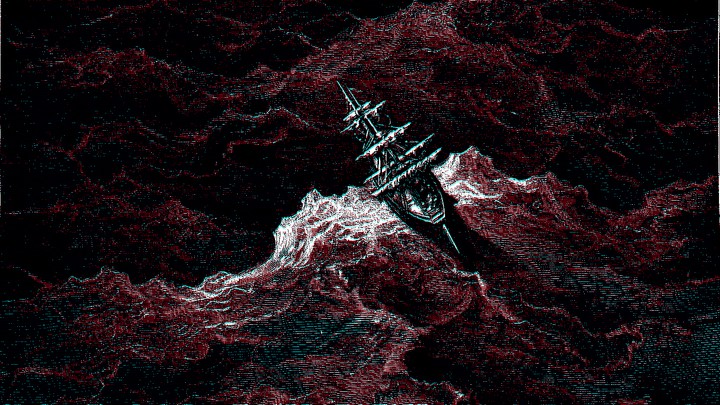
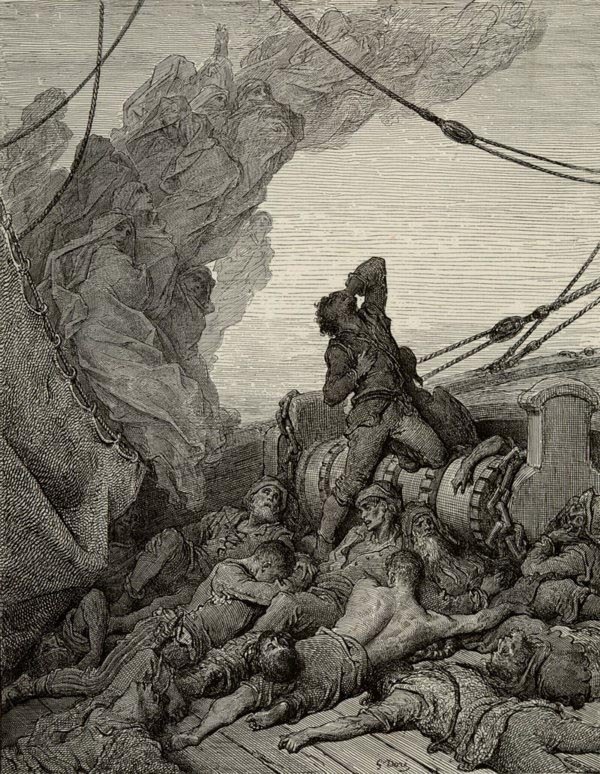
“The Rime of the Ancient Mariner,” here including contemporary illustrations of the poem
As things stand, no part of the world reflects our current unsteady and dangerous situation more than the vast, rolling inexorable expanses of the sea. Atlantic writer James Parker makes that argument in recommending for right now in 2020 Samuel Taylor Coleridge’s immortal poem “The Rime of the Ancient Mariner.”
Though published in 1798, the verse demonstrates, especially in the seas incessantly transporting waves, how what goes around comes. And with the arrival the coronavirus, Coleridge’s poem has returned to speak to us, here in the voices of variety talented and notable reciters: actors Jeremy Irons, Willem Dafoe and Tilda Swinton; novelist Hillary Mantel; poet Simon Armitahe; and singers Marianne Faithfull and Iggy Pop, and others. Each reading is illustrated by a notable recent visual artist
A scene from “The Ancient Mariner.” Courtesy 4umi.com
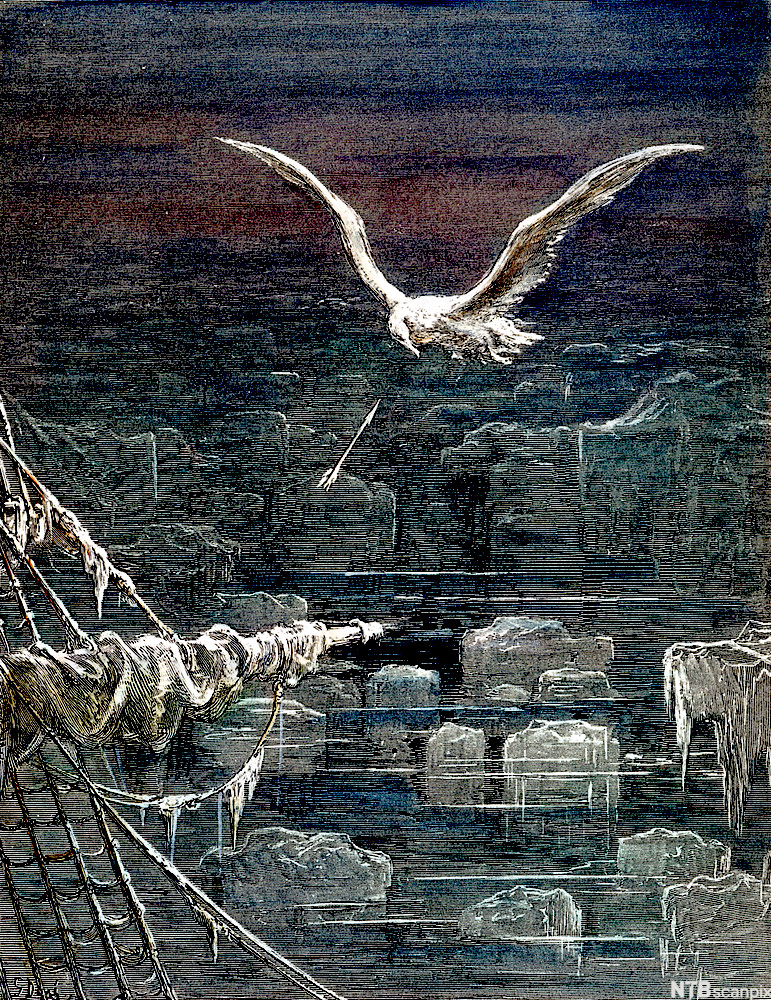
Now is the the time when not only any symbolic traveler but all members of the world, feel a bit lost at sea, thus the poems universality for the moment. It also powerfully addresses weaknesses and failings of the protagonist in facing the dilemma, in the symbolic form of the fateful shooting of the albatross.
COLERIDGE: ANCIENT MARINER. The mariner shoots the albatross. Wood engraving after Gustave Doré (1832-1883) for Samuel Taylor Coleridge’s ‘Rime of the Ancient Mariner’, 1798.
Courtesy Tiffany Francis-Baker
And the poem certainly befits the sea-ike motif implicit in this blog, Culture Currents (Vernaculars Speak). This vernacular is ancient, but rich and powerful and resonant. Give these recorded samples a try and see if you don’t agree. There’s also a link (in the article’s fourth paragraph) to “Ancient Mariner” Big Read, the full composite perfomance by the array gifted participants. Here’s Parker’s piece:
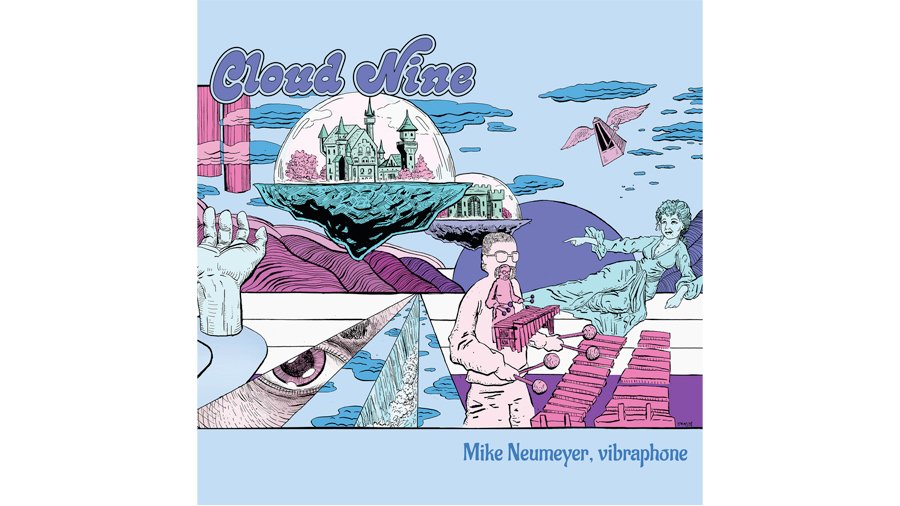
For all its musical riches, America remains sadly unrepresented by one of the most distinctive instruments of all, the vibraphone. No instrument lives more vibrantly (sorry) in the realm of its own overtones and harmonics. The most recent stars of the vibes, Gary Burton and Bobby Hutcherson, have long since passed their prominence. So gratitude is in order for Milwaukee vibraphonist Neumeyer’s latest album. It’s solo, so the weight and focus is on his instrument. We soon discover the solo vibes’ ability to bloom, ripple and radiate in a way unmatched by any other instrument. This resonating presence informs all the tunes here, mostly short pieces that understand the ethereal nature of this voice.
For example, the melody of “Ethereal Vibe” forms by each struck note following the wide, peacock-like tail of previously played ones. Neumeyer uses four mallets, so full chords ring richly, translucent yet layered. Yet other times, as on the title tune, he’s down to two mallets, which allows the notes to breathe more.
If this is a meant as a jazz recording, the pieces are surprisingly short, with little improv development. However, the tune “A Vibe of Innocence” has an enchanting melody that flutters around your ear like a flirtatious butterfly, and Neumeyer stretches out just enough on this.
He also employs an electronically-produced, scrim-like backdrop of textural sonority to offset the gleaming purity of the vibes sound. His mastery of sonic effect is all the more impressive considering it’s a live concert recording.
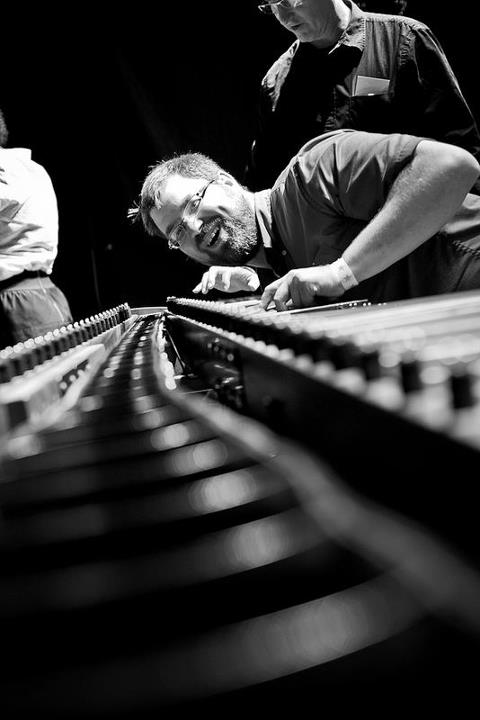
Mike Neumeyer experimenting with a mallet-less, piano-like attack on marimba.
Still, at some point, all the bright vibrations might feel a bit much, given he’s solo here. I’d love to hear Neumeyer with an offsetting sonic instrument like saxophone, though piano can work, too, as the Modern Jazz Quartet proved for decades.
For a more contrasting vibes style, search out recordings or YouTubes of the under-appreciated Walt Dickerson, with a more muted sound and linear playing, a two-mallet player of a different sort of virtuosity and concept.
But for right now, Cloud Nine may transport you to a special stratosphere of heavenly sonority.
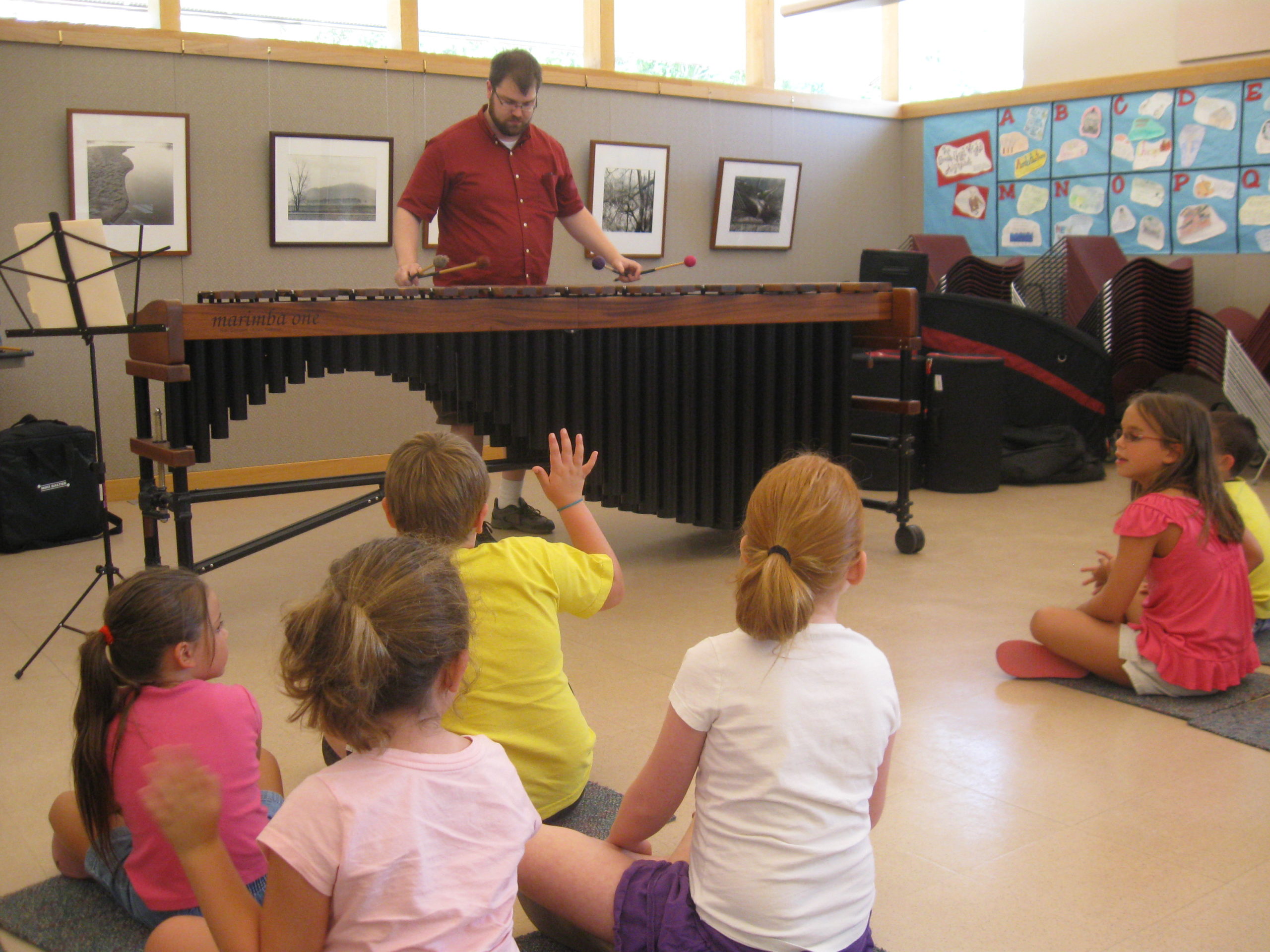
Mike Neumeyer gives a presentation on marimba to a youthful audience in a Spring Green Library. Photos courtesy mikeneumeyer.com
For more on Neumeyer, who’s also a master of the marimba, and to obtain his recordings, visit his website:
I sent out a group e-mail to friends today, Easter Sunday, about how I was trying to cope with the social distancing and cleanliness in these trying and tragic times.
The more this day has progressed, the more blessed I feel, even cooped up at home, because several friends responded beautifully to my perhaps-oversharing email.*
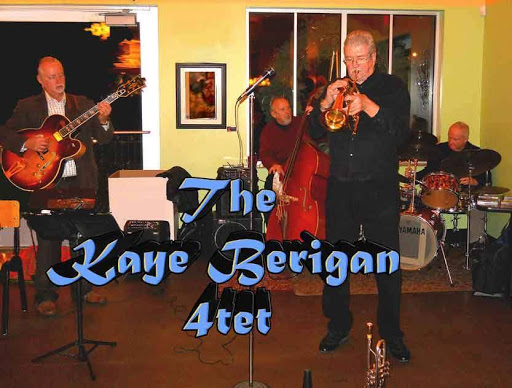
One message, linked below, literally shouted out to me from my good old friend, the superb Milwaukee jazz trumpeter Kaye Berigan. Kaye leads a quartet that has played for a number of years at Ally’s Bistro on the far northwest side of Milwaukee, with a great bunch of musicians, Jack Carr on drums, Steve Lewandowski on guitar and George Welland on bass (pictured above). Do go see them when this madness subsides.
To be clear, his message wasn’t self-serving, as Kaye is not among these brass players in the YouTube video.
But in my morning email I had mentioned a curiosity occurring as I wrote the message. As I am manually disabled, I try to use voice dictation as best and often as I can. Today in the email, as I referred to the Coronavirus crisis, something striking and almost mysterious, happened.
I repeated the word “crisis” several times (the system usually corrects itself) but each time I clearly articulated “crisis” something else, um, arose. The name “Christ.” This was no joke.
I also struggled for a while at home, today. But since eating a late lunch, I’ve received my friends responses and it feels like shafts of light streaming down through full-chested cumulus clouds. And I’m hearing these inspired brass musicians, making brilliant use of their quarantine. If any instruments shout, it is brass ones, and here gorgeously.
I know in many quarters these days it’s not hip to use words like “blessing,” or to invoke or find solace in the meaning of Easter. But this is simply what has happened to me in the last couple hours. Life is far from easy for me now, as it is for many people everywhere. So we ought to be bleeding empathy for each other. I wish our leaders empathized pro-actively, much more, though some are doing very well for us.
And yet…I have sometimes described myself fashionably as “spiritual but not religious.” But that rings a bit false to me. I take pleasure and sometimes a slight sense of wonder in odd occurrences that feel like signifiers –like that slightly mysterious voice dictation this morning.
I’d also been watching a fine Sunday morning film noir movie, Fritz Lang’s Beyond a Reasonable Doubt on Turner Classic Movies. Odd fare for the holiday? Yet suddenly that title radiates, newly signifying.
No matter what you believe, or don’t, you gotta get your spiritual power from somewhere. So check out this brass fanfare. And maybe let me know how you feel.
(I’m at kelynchmi@gmail.com. My blog response is not working)
As for Kaye Berigan, he simply wrote, “Regards, Kaye.”
Thanks, my friend.
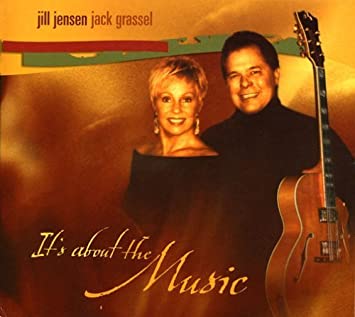
ps. Here’s another sort of “inspiration,” more down to earth. The message writer calls it “The Ultimate Pleasure Jail” : Guitarist Jack Grassel told me how he and his spouse, singer Jill Jensen, are actually making the most of our very tough virus situation. He let me quote him at length:
“Hi Kev, It’s weird times. Ayna? Jill and I were talking about this whole thing before we went to sleep last night. This situation reminds me of my time at a catholic high school my parents sent me to. Occasionally we would go on “retreats” and live in silence for a few days. I did that a few times at a monastery after I grew up, just to get away from the noise of everything. I would not talk to or see anyone for a week. I’d play and listen to music, read books and exercise in my little room.
That’s what I’m doing now. This virus thing causes all of us to go on a retreat. I actually like it. No cars, trucks or motorcycles are making noise going by our house. We are getting food delivered through INSTACART. We order on line and it comes to our house. I don’t have to go to a supermarket and hear MUZAK which usually takes hours to get that out of my head. I’m having fun playing music FOR ME, not for money (although I miss the money), not for an audience (who is talking and playing with their phones) not for a club owner (who puts background music on during our breaks which isn’t jazz and louder than we were playing).
I just played exactly what I wanted to play for 2 hours and then listened to Steve Swallow’s CD REAL BOOK. Jill made pancakes for breakfast and we listened to old jazz vocal records.
I still have the same full tank of gas in my car from the last week in December. I’ll probably go for a walk with Jill later and watch a movie on TCM tonight. This really isn’t so bad. I call my friends and talk on the phone for a long time or have conversations such as this on the internet. This is like being in the ultimate pleasure JAIL. It’s nice as always to hear from you. Please be careful. You are important to me.
Jack”
After Jack and I commiserated a bit about the TCM movie channel, he responded:
“Yeah, We watched Paper Moon last night, before that What’s Up Doc? with Barbara Streisand, before that Treasure of Sierra Madre with Humphery Bogart, before that Robin Hood with Basil Rathbone while eating lots of ice cream and popcorn on the couch or on the floor. We were real bums yesterday. Great fun.
It was a TCM 4 movies day and Robert Osbourne lives. It’s great being grown up. We can do whatever we want do to Ha Ha.”
Album cover courtesy Jack Grassel and Jill Jensen/amazon.com
At Culture Currents we promise to explore the “common and the uncommon” of our culture. Today, we pause to appreciate something uncommon, and even a little highbrow, or as high as a cow’s brow can raise. This is for both lovers of Eric Satie’s fairly sublime piano pieces “Trios Gympnopedes” (which were a staple of classical radio in Milwaukee, at least on the former WFMR.)…Pregnant pause. You noticed the “both” in the last sentence…and for, um, animal lovers. And here the twains shall meet, ready or not.
The performance below is not for classical music purists, however it certainly attracted my calico cat Chloe who hopped up on the desk see what all the luv-ly harmonizing was about.
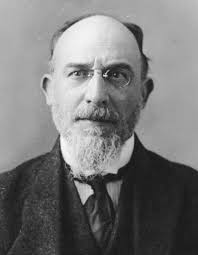
The choir group is called “Cats & friends Choir.” What would Erik Satie (1866-1925) have thought of this? Like Chloe the cat did, this question leaps to mind. Well, Satie was a bit eccentric, animal-wise, and otherwise.
The composer reportedly once walked a lobster in Paris. There’s an image for you to savor, with perhaps the long shadow of the Eiffel Tower falling across the crustacean’s path. Because of Satie’s apparent special regard for critters, I suspect that he’d somehow appreciate this moooving rendition of his pieces. Yes, there are cows, who supply the bass notes, but throughout it is felines who star in this chorus. Naturally, as cats are the smartest (and most self-important) of domestic pets.
Composer Erik Satie. Wikipedia
Amazingly, you hear pretty much all the piece’s harmonies and striking modulations. It’s not really dumbed down. When somebody organizes, or “conducts” these miscellaneous species, hear what happens! This performance was shared by my friend Frank Stemper, an accomplished “serious” 1 composer in his own right, and a jazz pianist of note, based in Milwaukee.
The piece was originally posted by a musical mischief-maker named Florent Gyse, who is a bassist and composer and videographer, though perhaps he had help in the latter department, including producer Doug Perkins. Thanks Florent! His channel is available here https://www.youtube.com/channel/UCwfw6NcrTgFTLJiZGpKq3VQ
This “Cats & friends” version is followed by a superb straight rendering of the Satie pieces, performed by the pianist Olga Scheps (directly linked at top), who plays the first two pieces in a video performance. There’s another noteworthy straight interpretation of the pieces online, by Anne Queffélec (sound recording only) of all three pieces. That YouTube performance illustrated (see below the animal choir) by a painting titled “Moonlight on the Sound” by the great American Impressionist Frederick Childe Hassam.
With these pianists you hear why these three pieces are sublime, in their apparently almost artless simplicity. But they’re more than they appear to be, though ultimately it’s their spare and slightly astringent beauty that stands the test of time.
The furry choir members certainly would agree, and they weren’t born yesterday! But they’re not that old either. I rest my case, with them. However, for more insight on Satie and “Trios Gympnopedes,” proceed below the YouTube link here…
“jessiemelodyworld K,” an online YouTube video channel host, posted the following extended comments with Queffélec’s piano rendition of Satie’s three famous pieces: (Jeez, all these fancy-dancy video-showoffs make a mere wordsmith like me feel like I’m puttering along in the slow lane. Oh, well. I’ll work on my pizzazz. At least I can gussy my words up with some visual borrowings.)
Watch Olga play the first two, right after the “choir,” (or watch Olga first) but here’s a direct link to that second recording by Queffélec, along with jessie’s comments below:
“* The Gymnopédies, published in Paris starting in 1888, are three piano compositions written by French composer and pianist Erik Satie. These short, atmospheric pieces are written in 3/4 time, with each sharing a common theme and structure.
“Collectively, the Gymnopédies are regarded as an important precursor to modern ambient music — gentle yet somewhat eccentric pieces which, when composed, defied the classical tradition.[citation needed] For instance, the first few bars of Gymnopédie No. 1 consist of an alternating progression of two major seventh chords, the first on the subdominant, G, and the second on the tonic, D.
“The melodies of the pieces use deliberate, but mild, dissonances against the harmony, producing a piquant, melancholy effect that matches the performance instructions, which are to play each piece “painfully”, “sadly” or “gravely”.
“From the second half of the 20th century on, the Gymnopédies were often erroneously described as part of Satie’s body of furniture music, perhaps because of John Cage’s interpretation of them. * Éric Alfred Leslie Satie (pronounced: [eʁik sati]) (signed his name Erik Satie after 1884) (17 May 1866, Honfleur — 1 July 1925, Paris) was a French composer and pianist. Satie was a colourful figure in the early 20th century Parisian avant-garde.
“His work was a precursor to later artistic movements such as minimalism, repetitive music, and the Theatre of the Absurd. An eccentric, Satie was introduced as a “gymnopedist” in 1887, shortly before writing his most famous compositions, the Gymnopédies. Later, he also referred to himself as a “phonometrician” (meaning “someone who measures sounds”) preferring this designation to that of a “musician”, after having been called “a clumsy but subtle technician” in a book on contemporary French composers published in 1911.
“In addition to his body of music, Satie also left a remarkable set of writings, having contributed work for a range of publications, from the dadaist 391 to the American culture chronicle Vanity Fair. Although in later life he prided himself on always publishing his work under his own name, in the late nineteenth century he appears to have used pseudonyms such as Virginie Lebeau and François de Paule in some of his published writings.”
_____________
1 All seriousness aside, that “serious” adjective seems in serious jeopardy, Professor Stemper.
Ghosts can drag on our psychic heels interminably – that’s why they’re called haunting. Damn hard to shake. So Bob Dylan was utterly apt in titling his new 17-minute opus “Murder Most Foul.” He’s quoting perhaps the most famous haunter in literature, Hamlet’s father — murdered by Hamlet’s uncle, who then marries the prince’s mother and gains the Danish crown. At one point, the ghostly father whispers, “Murder most foul, as in the best it is; But this most foul, strange and unnatural.”
The ghost of Hamlet’s murdered father in the Kenneth Branaugh film adaptation of “Hamlet.” Courtesy Kristlinglistics
Dylan was apparently among the countless of both the so-called “greatest generation” and the baby-boomers who could never quite let go of the assassination of John F. Kennedy. And have we really, as a nation? Ever since that fateful day in Dallas, America has indulged a weakness for conspiracy theories. It’s hard to not argue that Kennedy assassination isn’t the primary impetus for a collective national neurosis — the Warren Report be damned. I have an intelligent friend with a license plate that reads simply: “JFK,” and who eagerly unfurls intriguing conspiracy tentacles on the subject. I’ll admit I wrote one of the first poems of my young life, and then read a whole book, about the assassination back in the day. 1
So, we struggled mightily with the tragedy of it, the insanity of it, the mystery, skulduggery and intrigue. It brought this barrel-chested nation crashing to its knees and wringing its hands, after Kennedy had lifted us up with a noble challenge, the dream of the moon, and hope for a greater America – not in xenophobic isolation like our current president – but through the Peace Corps, and diplomacy, in service to the world. Even in largely outmaneuvering The Soviets in the Cold War, though that almost went awry.
What a different world ours might be had Kennedy (and M. L. King and RFK) lived to fulfill their promise and vision. Instead, we soon got the “Reagan Revolution,” neo-liberalism, and now, Donald Trump and his white-nationalist primary policy-maker, our currents state of affairs.
Rolling Stone is straightforward in striving for the song’s currency, certainly at an emotional level: “All across the country at this very moment, people are lost, scared, and grieving. The coronavirus crisis has transformed American life with shocking speed — and Bob Dylan wants you to know that he feels your pain,” asserts Simon Vozick- Levinson. 2
For sure, by transporting us with such skilled empathy, Dylan transfers our neurological focus away from our pain, in a similar way that certain tried-and-true medications, such as medical marijuana, work for countless people suffering chronic physical pain.
Dylan releasing this now also might help explain why, after becoming the unofficial protest spokesman of the ‘60s generation, he abdicated the role increasingly in the few years after Kennedy’s death in November 1963. He clearly cares that people hear it now, as if finally unburdening himself. 2
The summer of 1964 brought Another Side of Bob Dylan which stepped back from the heavy protest of The Times They Are a’ Changin’, with the exception of the magnificent “Chimes of Freedom,” a sort of farewell hosanna to justice. And by 1965’s rootsier, more personal and romantic Bringing It All Back Home, Dylan’s also beginning to plug in, and he chain-anchors the album with the long, searingly bleak “It’s All Right Ma (I’m only Bleeding)” which remains it’s very own surreal rough beast slouching toward Bethlehem. Yet, in retrospect, it’s chant-like manner and lyrics might also resonate as a conceptual trial run for “Murder Most Foul.” Consider the earlier song’s: “Disillusioned words like bullets bark/ As human gods aim for their mark/ made everything from toy guns that spark/ to flesh-colored Christs that glow in the dark/ It’s easy to see without looking too far/ that not much is really sacred.
While preachers preach of evil fates/ teachers teach that knowledge waits/ can lead to hundred-dollar plates/ Goodness hides behind its gates/ but even the President of the United States/ sometimes must have to stand naked.”
This new piece won’t be everyone’s cup of tea; Dylan doesn’t even sing a single melody. It’s more like a minister’s funeral sermon. Yet, his voice is richly nuanced, by turns, ironic, quizzical, tender and garrulous. At the very least, let’s agree his bard’s technique remains peerless, including his uncannily effortlessness at rhyming couplets, which keep our mind almost helplessly hooked at his words’ rhythmic resonance.
Dylan contemplates what we lost by paraphrasing Kennedy’s most famous aphorism: “Don’t ask what your country can do for you…” and soon follows by yoking bluesman Robert Johnson with Shakespeare, ”I’m going down to the crossroads try to flag a ride/ the place where faith, hope and charity die…“What is the truth, where did it go? Ask Oswald and Ruby they oughta know. Business is business and it’s a murder most foul.”
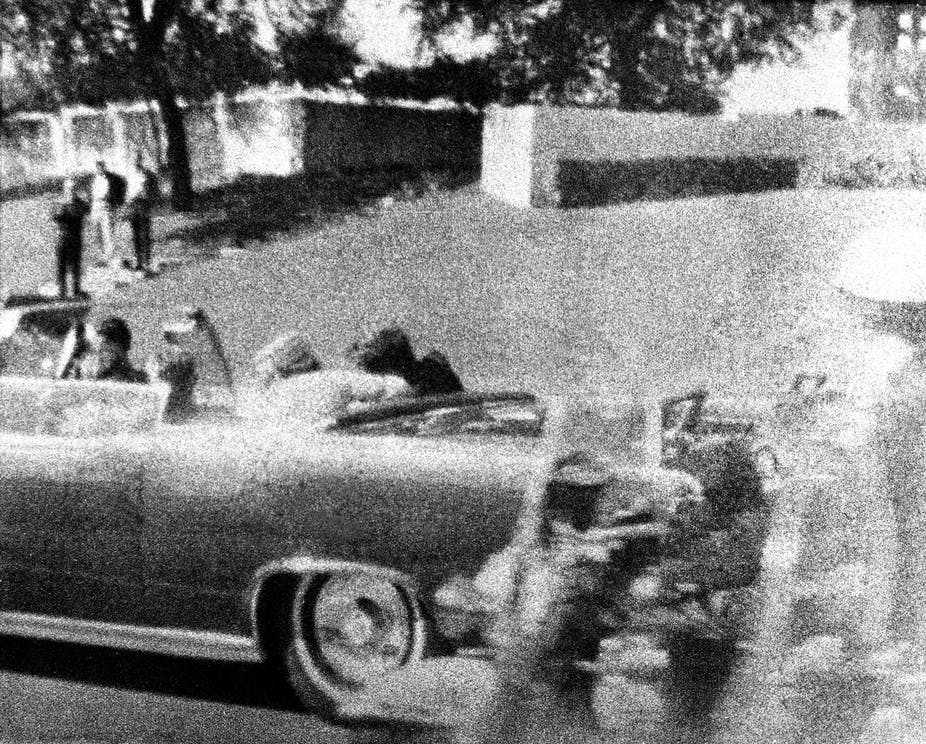
Jackie Kennedy reacts to her husband being shot. Courtesy The Conversation
Arriving at the decisive moment, Dylan pulls a masterful trick by inhabiting JFK:
Riding in the backseat next to my wife Heading straight on into the afterlife I’m leaning to the left; got my head in her lap Hold on, I’ve been led into some kind of a trap.
The songwriter, creator of many unforgettable characters who’d be nobodies if not for him, learned long ago the power of rhetorical illusionism. Of the assassination itself he comments, “The greatest magic trick under the sun/ perfectly executed, skillfully done.”
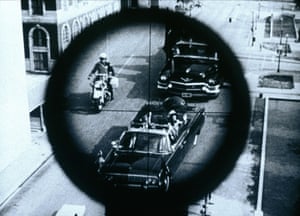
A simulation of the gun sight of JFK’s assassin. Courtesy The Guardian
The Abraham Zapruder film, now replayed in slow motion, remains shockingly violent:
It’s a strangely compelling phenomenon – hearing the man who refused to speak for his generation doing what he can’t help but doing. Speaking for perhaps all generations, then and since, who cherish gifted, inspiring leaders. We feel we, too, must stand naked when they’re torn from us, as Martin Luther King Jr. and Kennedy’s brother Robert soon would be too. No wonder Dylan thought it was all too much for even him, or perhaps anyone, to fully grapple with then. Even now, he drolly disavows any special role: “I’m just a patsy like Patsy Cline.”
Nevertheless, his insight arises in several ways, including by changing points of view, so we look at life with a prismatic perspective. And it’s perhaps most powerful as emotional insight, well-honed empathy, a way of understanding the old rawness that remains, like heavy, rotting branches from our heart. Time heals, but somewhere beneath our psychic scars, many of us still carry a cross for our martyr, who carried an almost Christ-like aura, even if we knew his human weaknesses. Dylan curtly references the famous temptress who allegedly led two Kennedy brothers astray.
The instrumental accompaniment is also inspired, in its welling empathy and its softly buoyant restraint — from the most eloquent of instruments, the cello, and bowed bass, and piano. Lightly struck cymbals.
Yes, this feels like Dylan delivering the ghost of a beloved and blood-spattered leader into the existential consciousness of generations (Though Hamlet’s maker did as well, would that the poor prince been so successful):
“We’re right down the street, from the street where you live.
They mutilated his body/ they took out his brain
what more could they do?/ They piled on the pain.
But his soul is not there where it was supposed to be at
For the last 50 years they’ve been searching for that
Freedom, oh freedom, freedom from me
I hate to tell you mister, but only dead men are free…
Note the deftly swift switching of points-of-view here, as the author refuses to let us forget the horrid, cold-blooded nature of the deed:
Throw the gun in the gutter and walk on by…
Got blood in my eye, got blood in my ear
I’m never gonna make it to the new frontier.
The Zapruder film I’ve seen the night before.
Seen it thirty-three times maybe more.
Its foul and deceitful and vile and mean/ ugliest thing that you ever have seen
They killed him once, they killed him twice/, killed him like a human sacrifice.”
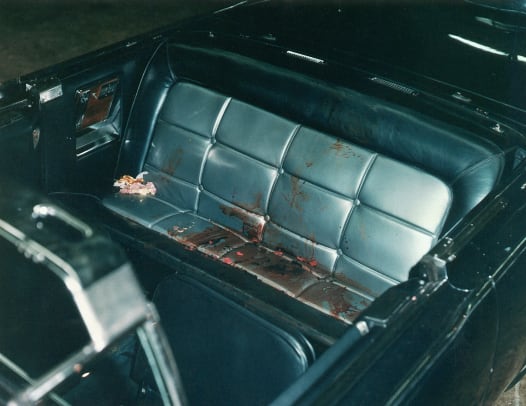
(Incredibly, Secret Service agent Clint Hill, on the Kennedy car’s trunk by then, reports that Jackie Kennedy climbed onto the hood not to flee, but to retrieve parts of her husband’s skull and brain matter.) 3
The Kennedy limousine in Dallas. Photo courtesy Getty Gallery
Dylan’s consolation is intermittent, almost as if only the innocent have earned it, by default: ”Hush little children you’ll understand/ the Beatles are coming, they’ll hold your hand.”
This nifty pop cultural reference preludes Dylan’s most inspired leap, an extended petitioning for grace even non-believers can understand. He invokes the period’s colorful, big-talking disc jockey Wolfman Jack, who hardly carries the gravitas of a Walter Cronkite. But Jack lets us down easier, we hope, in music’s healing waters. So hear Dylan, himself a disk jockey of note, riding his imploring waves, for the ghost’s sake and ours:
Wolfman Jack he’s speaking in tongues
He’s going on and on at the top of his lungs
Play me a song Mister Wolfman Jack
play it for my long Cadillac
play it that only the good die young,
take us to the place where Tom Dooley was hung…
Play it for me and for Marilyn Monroe.
Play please don’t let me be misunderstood
play it for the First Lady she ain’t feeling so good…
Play “Mystery Train” for Mister Mystery
for the man who fell down like a rootless tree…
Play Oscar Peterson, play Stan Getz, play “Blue Sky” play Dickey Betts.
Play Art Pepper, Thelonious Monk
play Charlie Parker and all that junk.
All that junk and all that jazz
play something for the Birdman of Alcatraz.
play Buster Keaton play Harold Loyd
play Bugsy Seigel play Pretty Boy Floyd…
play Nat King Cole play Nature Boy”
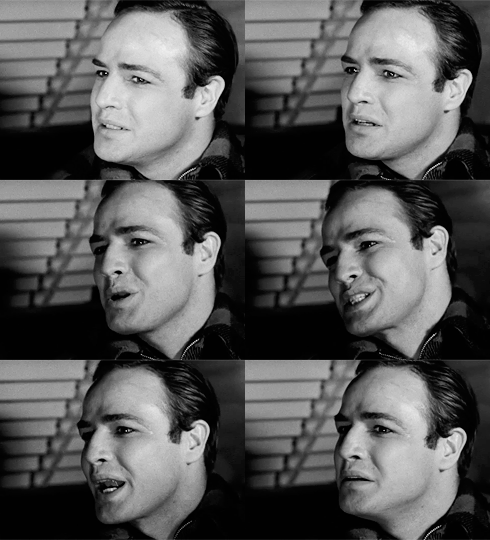
Play “Down in the Boondocks” for Terry Malloy…
Don’t worry Mister President help’s on the way
your brothers are coming
there’ll be hell to pay.
Brothers? What brothers? What’s this about hell?…
Was a hard act to follow second to none
They’ll killed him on the altar of the rising sun…”
Marlon Brando as dock laborer Terry Malloy in Elia Kazan’s classic film “On the Waterfront.” Courtesy MarlonBrando.com
The riffing’s cumulative effect is stunning, deeply gratifying, as the songwriter/poet/disc jockey neatly ties it together at the end, like a spiritual tourniquet, that increasingly eases the pain built up over half a century.
Yet Dylan challenges us to reconsider, give this tragedy its full due, once more. How can we, as a nation and people, do better? At times, like now, our leaders need to lead. And yet, “Ask not what your country can do for you…” John F. Kennedy’s ghost might quote John Lennon: “Come together, right now, over me.”
But this work also feels healing, the work of a kind of doctor, a pop culture witch doctor perhaps, or a shaman, posing as a mere patsy.
We all know how Patsy Cline went to pieces. By doing so, she began to help us pick up our pieces.
And so, this patsy-priest helps us to walk, with that ghost, away from the altar, to our own rising sun.
_________________
My “JFK” friend, a deeply involved aficionado of the assassination subculture, comments about official explanations: “An elaborate disinformation campaign by the CIA has led people astray at a Freudian level.”
Here’s a Twitter message Dylan posted with the song’s release:
Greetings to my fans and followers with gratitude for all your support and loyalty across the years. This is an unreleased song we recorded a while back that you might find interesting. Stay safe, stay observant and may God be with you. — Bob Dylan
The Lynne Arriale Trio will perform live at The Jazz Showcase in Chicago, on April 29, and at The Dunsmore Room, May 1, in Minneapolis.
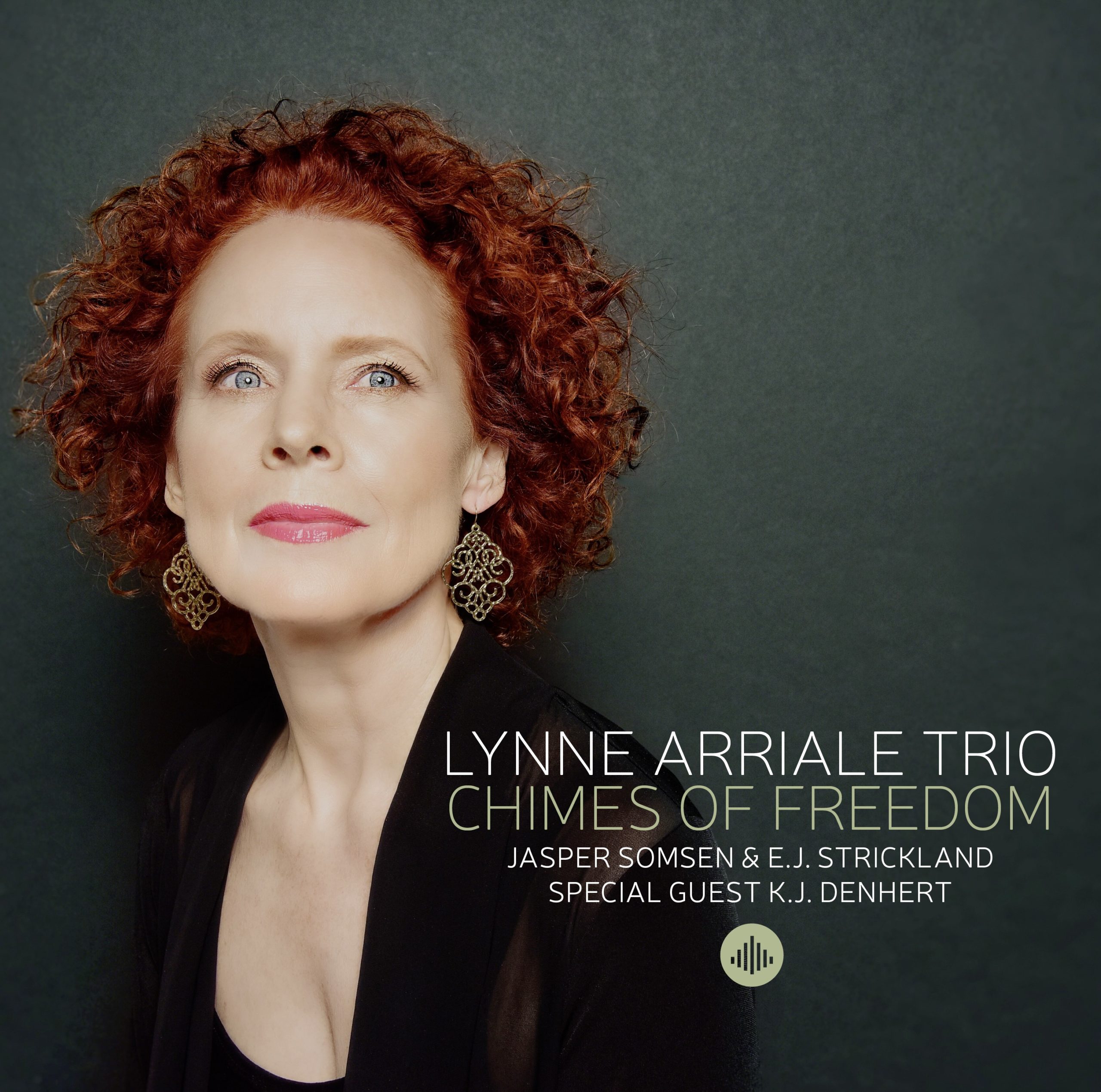
Review: Lynne Arriale Trio Chimes of Freedom (Challenge)
Milwaukee-born pianist-composer Lynne Arriale’s career roughly parallels her fellow Wisconsin Conservatory of Music graduate and recent Grammy-winner Brian Lynch’s. Yet, while internationally acclaimed, her profile remains lower than Lynch’s. Her 15th album demonstrates she’s as accomplished, in her way, as the trumpeter. Arriale has dedicated herself to the jazz piano trio form, and hers draws comparisons to preeminent trios led by Bill Evans and Keith Jarrett. Yet I hear her primary piano influence is McCoy Tyner, especially in her resounding lyricism and deep-register comping for dramatic effect.
And artful drama abounds in this eloquent concept album that declares its seriousness right from the plangent opening minor chord of the classic gospel song “Sometimes I Feel Like a Motherless Child.” Then, Arriale’s original “The Dreamers” urgently evokes the uncertain longing of millions of young American Latinx in political limbo.
Similarly, “Three Million Steps” radiates the resolution of thousands of Southerly refugees fleeing for hopes of freedom at our border. Arriale’s ballad “Lady Liberty” traces the mythical French patriot’s footsteps as freedom’s fighter and messenger, perhaps right to the White House.
By contrast, “Reunion” bubbles with buoyant Caribbean-style celebration, of separated family members together again. Here we feel the propulsive punch of drummer E.J Strickland, a disciple of Tyner’s famous John Coltrane band mate Elvin Jones. Yet Strickland speaks in his own jubilant voice here.
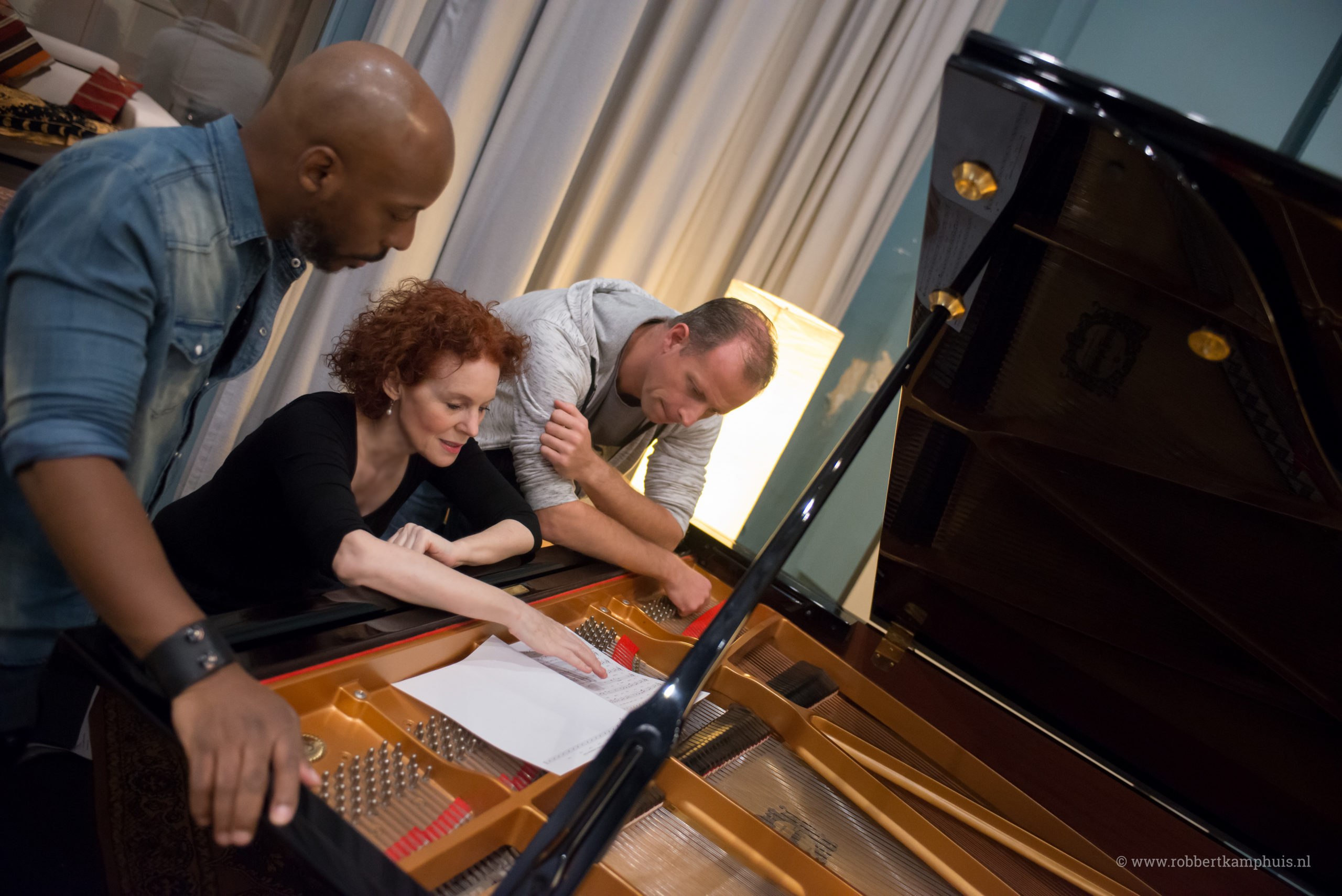
The Lynne Arriale Trio (L-R)” E.J. Strickland, drums; Arriale; Jasper Somsen, bass, producer. All photos courtesy Challenge Records
As Lynch did with “best large ensemble jazz album,” The Omni-American Book Club, Arriale has unleashed her full social-consciousness in her art. Duos aside, the piano trio is ostensibly the quietest of classic jazz trio combos. Nevertheless, Chimes of Freedom might be a trojan horse in the shadows, poised to storm the gates of Grammy at year’s end.
The title song, by Bob Dylan, and Paul Simon’s “American Song,” both sung by K.J. Denhert, tenderly render portraits of humanity – Dylan’s magnificent, gritty story-song, tolling “for each unharmful, gentle soul misplaced inside a jail”… and for “every hung-up person in the whole wide universe/ and we gazed upon the chimes of freedom flashing.”
_______________
This review was first published in slightly shorter form in The Shepherd Express.
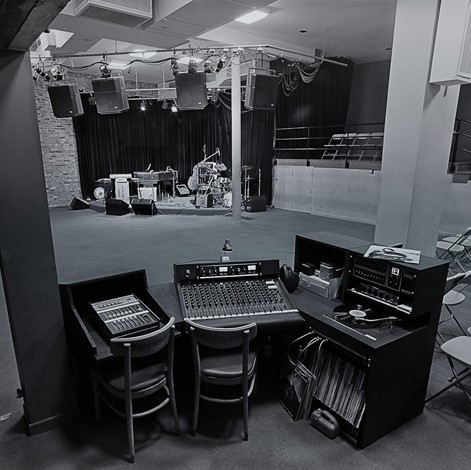
The interior of the Amazingrace nightclub in Evanston Il. during the 1980s. Photo by Charles Seton
Editor’s note: In response to my blog about celebrated pianist McCoy Tyner’s recent passing, I received from guitarist Jack Grassel this remembrance of an extraordinary experience we had when we attended a Tyner concert in the mid-1970s. Here is Jack’s remembrance, slightly edited.– Kevernacular
When I heard that McCoy Tyner was going to play at Amazingrace in Evanston, I called my friend Kevin Lynch to go with me. I said “I’m going to play with McCoy Tyner tonight. Kevin just said. “OK”. Rather than leave the guitar in the car, I had it in a gig bag on my back. When we paid the cover charge at the door, the grouchy bouncer said, “why do have the guitar?”
I replied, “I’m going to play with McCoy Tyner tonight.” He laughed sarcastically. We went in and sat in the front row in front of the piano. All the instruments were onstage.
Kevin said, “Jack, why don’t you write a note of introduction and have it sent back to him?” I did exactly that. Then we went down to the cafeteria to get a bite to eat and McCoy was sitting at a table eating ice cream next to some empty chairs. I introduced myself and said “I’m the guy who sent the note.” McCoy said, “have a seat.” We sat down and had a great, long conversation about music. Then his manager came to tell him it was time to play. I said, “May I play with you tonight?” He replied, “Get your amp and put it near the front of the stage, we’ll play a tune and if everything is cool, I’ll motion for you to come onstage”. So I got my amp and set it on the floor next to the stage. The band had drummer Eric Gravatt, three horn players and a bassist. The big grand piano was pushed up next to the wall on its left side. The band started to play and it was burnin’. When they started the second tune, McCoy motioned for me to come onstage and play.
The McCoy Tyner Quartet with drummer Eric Gravatt, saxophonist Gary Bartz, and bassist Gerald Cannon.Jack Grassel played with a Tyner-led sexet that included Gravatt and tenor saxophonist George Adams. Youtube.com
zThere wasn’t much room onstage. so I had to squeeze between the horn players to put my amp behind them next to the piano. I couldn’t find an outlet to plug the amp into, so I got down on hands and knees to crawl under the piano to get to the outlet on the wall. That was amazing to be under the piano with McCoy pounding violently on it. Thinking everything was cool after plugging in my amp, I crawled out from under the piano to locate my guitar.
Three big, strong bouncers including the grouchy guy at the door lifted me up into the air and carried me off stage and held me against a wall with my feet off the ground. I looked down at the bouncer in front of me demanding what I was up to. I said, “he said I could play with him”. Then I pleaded to the stage hand to get these guys to let me down. He got McCoy’s attention and pointed to me. McCoy motioned for them to let go.
I walked out onstage and Kevin had gotten my guitar out of the case and handed it up to me. All this time, I had not listened to the song they were playing. All three horn players had already soloed while this battle with the stage hands had been going on. So I wasn’t prepared when I had just turned the amp on, plugged in the guitar when McCoy yelled out, “take it Jack!”
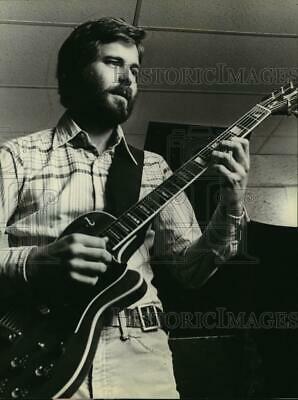
Guitarist Jack Grassel in 1979. a few years after playing with McCoy Tyner. Courtesy Pickclick.com
I started to play, using my perfect pitch to identify each chord McCoy dealt me. After a few choruses I had figured out the song form, all this while I was soloing. I played the best I could and when the song was over. McCoy didn’t tell me to leave the stage. I finished the set with them giving me solos. When the set was over, everyone went back to the dressing room. McCoy had the money and paid each guy a hundred dollars. Everyone complimented me on my playing. Mr. Tyner told me to send him a cassette of my playing. I thanked them for letting me play. I walked out onstage to pack up my guitar. I had my back to the audience and a crowd had formed behind me. When I turned around people were saying things like “Who are you? Got any records out? are you in the band?” I felt like a star for a moment. Kevin and I went out to the car and drove home having had our minds blown by this adventure.
This happened at a time when I was trying to find my own voice on the instrument and before I recorded my first record Magic Cereal. I never had any recording that I felt was good enough to send him. And then a year later he came out with a record where he played duets with a bunch of guitar players. I also realized that perhaps I didn’t play the right instrument to pierce the dense wall of sound that Tyner was creating. I also didn’t feel like going on the road. I like being at home, getting a good night sleep, exercising and eating what I want to eat and practicing all day which are things that are not possible being on the road with a band.
A few years after this event, I was talking to pianist Buddy Montgomery who was playing at a little corner bar in the ghetto of Milwaukee, playing to three people besides me. I said, “Buddy what are you doing playing in this dump for four people?” He replied,”It’s about the music. Did you hear what we just played? That was some great music. I’m very happy.” So these were among the many lessons I’ve learned, that it’s about the music, not the money, not the adulation, not the fame. It’s about the music.
I recently posted an obit tribute to the recently departed piano giant McCoy Tyner but with no live links. Today, I came across this extended performance of his quartet doing “Walk Spirit, Talk Spirit,” first documented on the live album Enlightenment.
Buckle up. It’s a major performance and worth your while to get a sense of Tyner in his astonishing prime. Tyner on piano, Azar Lawrence on saxophone, Juney Booth on bass and Alphonse Mouzon on drums. Recorded at the 1973 Montreux Jazz Festival. Courtesy the Jazz Video Guy.
As the theme of “Walk Spirit, Talk Spirit” took over my backdrop today, having played this whole video through a handful of times, something registered with me. Tyner, in such work, doesn’t abide by the bebop or Tin Pan Alley requisites of chord changes per a certain amount of bars, despite the theme’s very slight modal modulations. This aesthetic eschews a melody’s urge to engage a more harmonic story. He’s doing his thought-diving into deep and even primal waters. He’s striving, in his theme’s repetition,for the power of the incantatory, something very old, profound and timeless in music, as deeply explored by Ted Gioia in his extraordinary new book, Music, A Subversive History.
I hope to offer more on that book in the near future. Meanwhile, keep McCoy in your thoughts and speakers and earbuds. You might be surprised how much he can dofor your tattered spirit.
“We few, we proud, we band of brothers.” — Shakespeare, Henry V
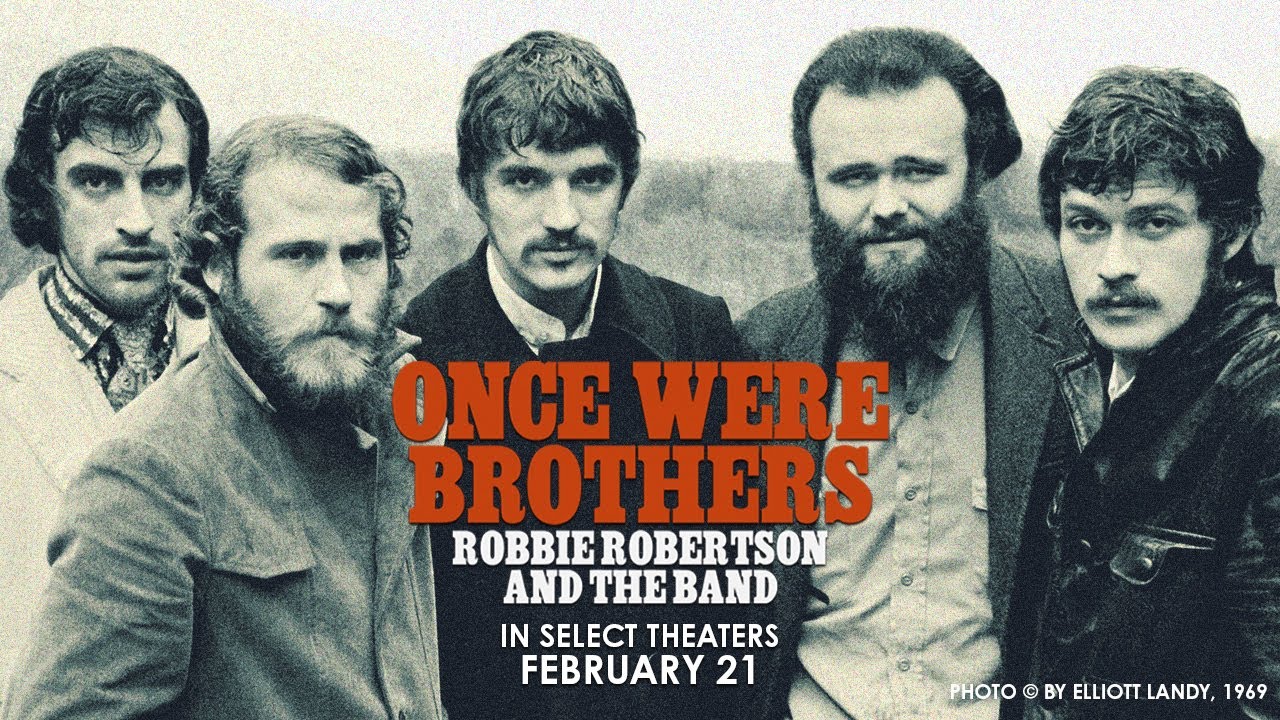
Once Were Brothers: Robbie Robertson and The Band, a documentary film by Daniel Roher, plays at 4:15 p.m. Wednesday and Thursday, at the Oriental Theater, 2230 N. Farwell Ave, Milwaukee, WI 53202 (414) 276-5140
__________
This story needed to be told again, on Robbie Robertson’s terms, even as it needs telling from all five. Three are gone, so Robbie the wordsmith stands best to speak here, anew and anon. And The Band started with him; it’s roots arose when he converged with Levon Helm and Ronnie Hawkins and the Hawks. But this needed to be told because the Band lasted too short a time for the America it embraced and re-imagined, the nation that needed a band like this, to remind us who and what America was, and is, and might be.
For perhaps no other American vernacular band compressed more talent into one entity, like pages of a tattered book filled with dried and pressed leaves, shadows and light, and music of American spheres. It was a great North American band, comprising four Canadians and one Arkansan, who embodied “Canadian driftwood, gypsy tailwind,” as they regaled us on one of their late, great saga-songs.
We need this story because, well, as the venerable roots purveyor Taj Mahal asserts here, they are the closest we have to the American Beatles. Daniel Roher’s film provides classic and never-published photos and film footage of their life in Woodstock. N.Y. and at the house called Big Pink, on the road, and reflections from most band members, but mainly Robertson’s and those of his wife Dominique, their road manager and some celebrated others.
But Mahal’s claim begs examination, because the band’s peak years lasted less than the Beatles. Both bands emerged from, and remained rooted in, rhythm and blues, and rockabilly, blues, and country. Like their counterparts, the North Americans drew from British Isle folk sources as well. Stylistically where they diverged was when the Beatles embraced psychedelia. The Band arrived right about that time, but driven by older forces, and enamored of the rustic weirdness, oily charm, verve, wit and tragedy that would come to be called Americana, a genre they forged as much as anyone. As Robertson points out, “The rock generation revolted against their parents but we loved our parents.” They had a sprawling family portrait taken during the Basement Tapes sessions.
And yet their extraordinary quintet synergy also made for some of the bitterness that would ultimately arise, perhaps justified (more on that later).
“It was such a beautiful thing. It was so beautiful that it went up in flames,” Robertson reflects.
More on the Beatles comparison. Both had magnificent and glorious songwriting, though the Beatles were more diverse with three gifted writers, which may be their greatest claim, aside from the phenomenal impact they had on our culture. The Band had primarily Robertson writing songs, but they had that three-part harmony, probably the most fulsome and profoundly textured of any popular group, because these were also “three of the greatest white rhythm-and-blues singers in the world at the time,” as Eric Clapton comments.
“They have voices that you’d never heard before, and yet they sound like they’ve always been there,” rhapsodizes Bruce Springsteen.
Here, The Band has a leg up on the more famous British band, whose third and fourth singers were only serviceable, though George and Ringo had their moments.
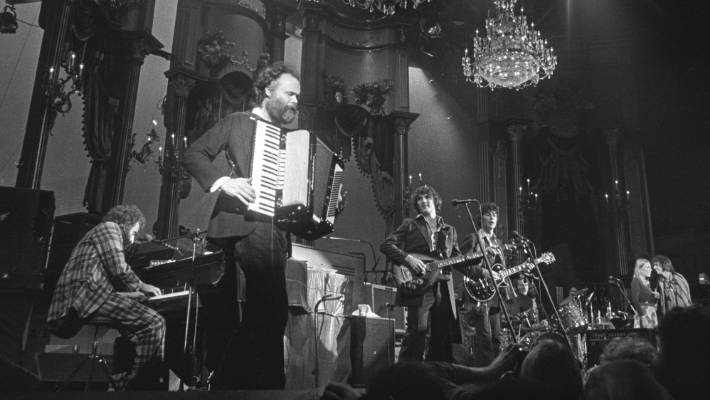
The Band was also instrumentally superior, again, to almost almost any rock ’n’ roll band, especially in ensemble, given their kaleidoscopic versatility. Bassist-singer Rick Danko was capable with several horns and string instruments. Classically-trained Garth Hudson played organ, synthesizer, accordion, saxophones, brass, and piccolo. Drummer-singer Hudson also played mandolin.
Guitarist Robertson developed a style that startled and even intimidated many guitarists, even if he wasn’t the typical virtuoso pealing off chorus after dazzling chorus. Few pickers had a sharper rhythmic flair, or could make a guitar bite, sear, and jump for joy, almost at once. Richard Manuel played piano, clavinet and drums, and sang with the most soul-haunting voice of any of them. I’m probably forgetting a few axes. Clapton was so moved — “they changed my life” — that he forsook his two fellows of the psychedelic-blues-rock trio Cream at its peak, in hopes he could join The Band. “Maybe they’d need a rhythm guitar,” he says.
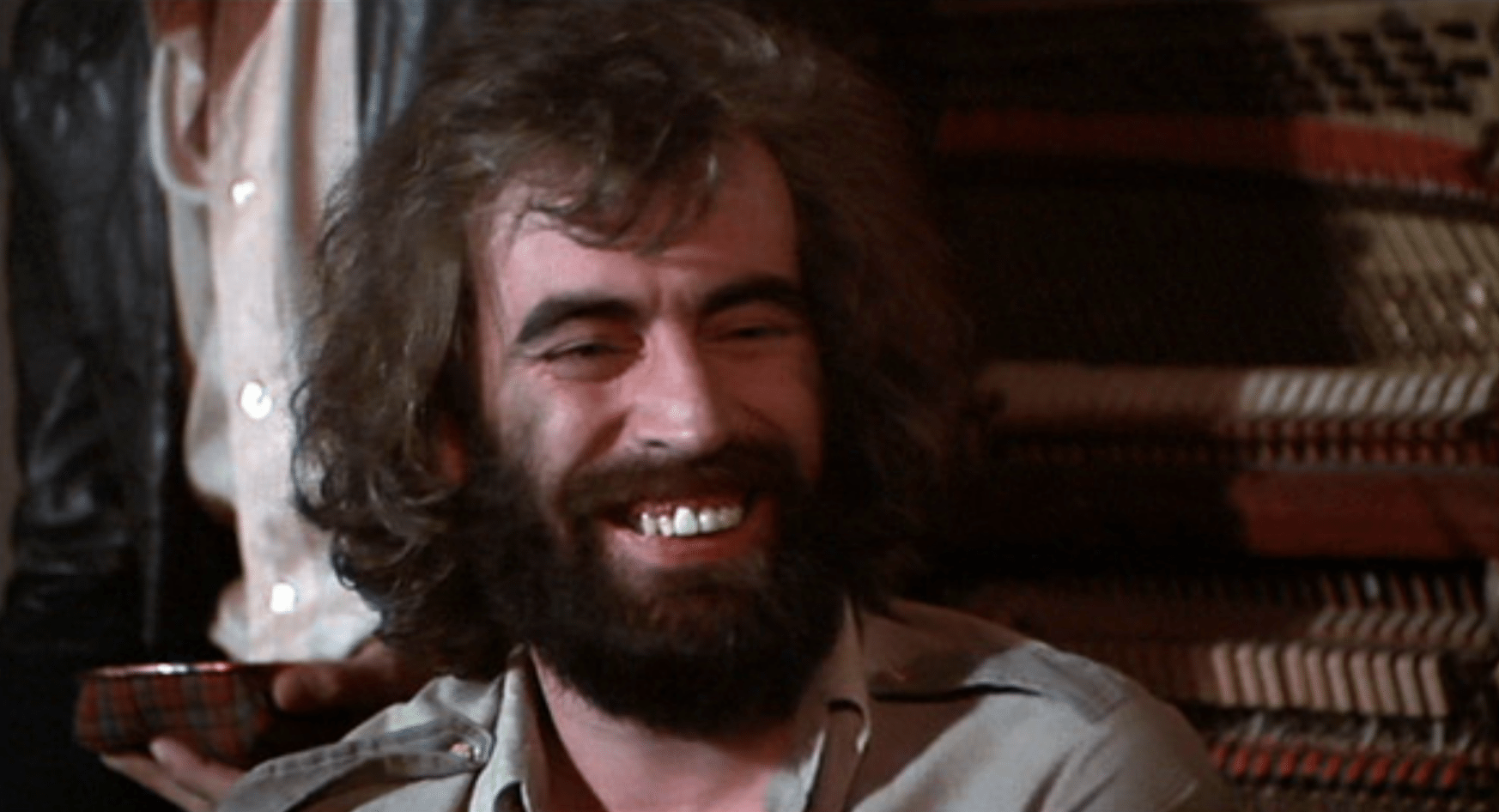
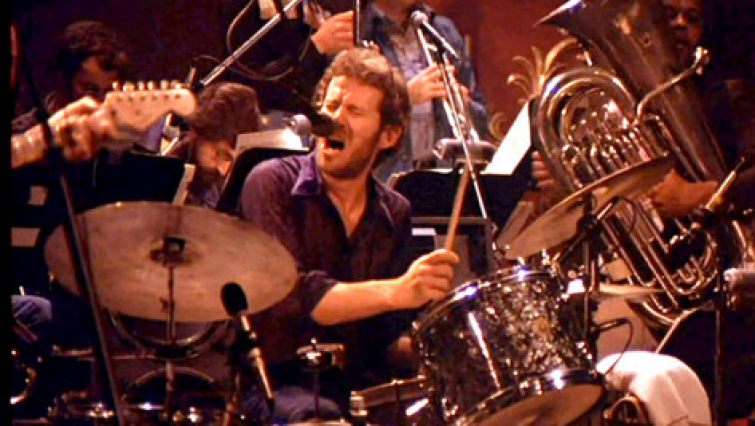
The band performs in the concert film “The Last Waltz.” (Left to right) Richard Manuel, piano and vocals; Garth Hudson, accordion, keyboards and saxes; Rick Danko, bass and vocals; Robbie Robertson, guitar; Levon Helm, drums; Joni Mitchell and Neil Young, vocals.
As for style, their playing and singing blended looseness and precision, defiant resolve and abandon, high humor and pooling sadness. They fully inhabited the characters dwelling in Robertson’s songs of American archetypes — dirt farmers, varmints, vagabonds, drunkards, Dixie fighters. “Virgil Cain is my name and I worked on the Danville train,” Helm sings on the forlorn, feisty epic “The Night They Drove Old Dixie Down.” “They reminded me of 19th century American literature, of Melville’s stories of searchers,” film director Martin Scorsese ponders.
Barney Hoskyns, biographer of The Band, has a similar reflection, by way of quoting the great American critic Greil Marcus: “…their music gave us a sure sense that the country was richer than we had guessed.’” Hoskyns adds: “If there was any band that could get to the heart of the mystery that pervaded rural life in America, then The Band was it. Nathaniel Hawthorne may have been right when he wrote of Americans that ‘we have so much country that we have really no country at all’,’ but The Band managed to create a sense of its adopted land that was at once precise and mythical.” 1
Courtesy Nebraska Furniture Mart
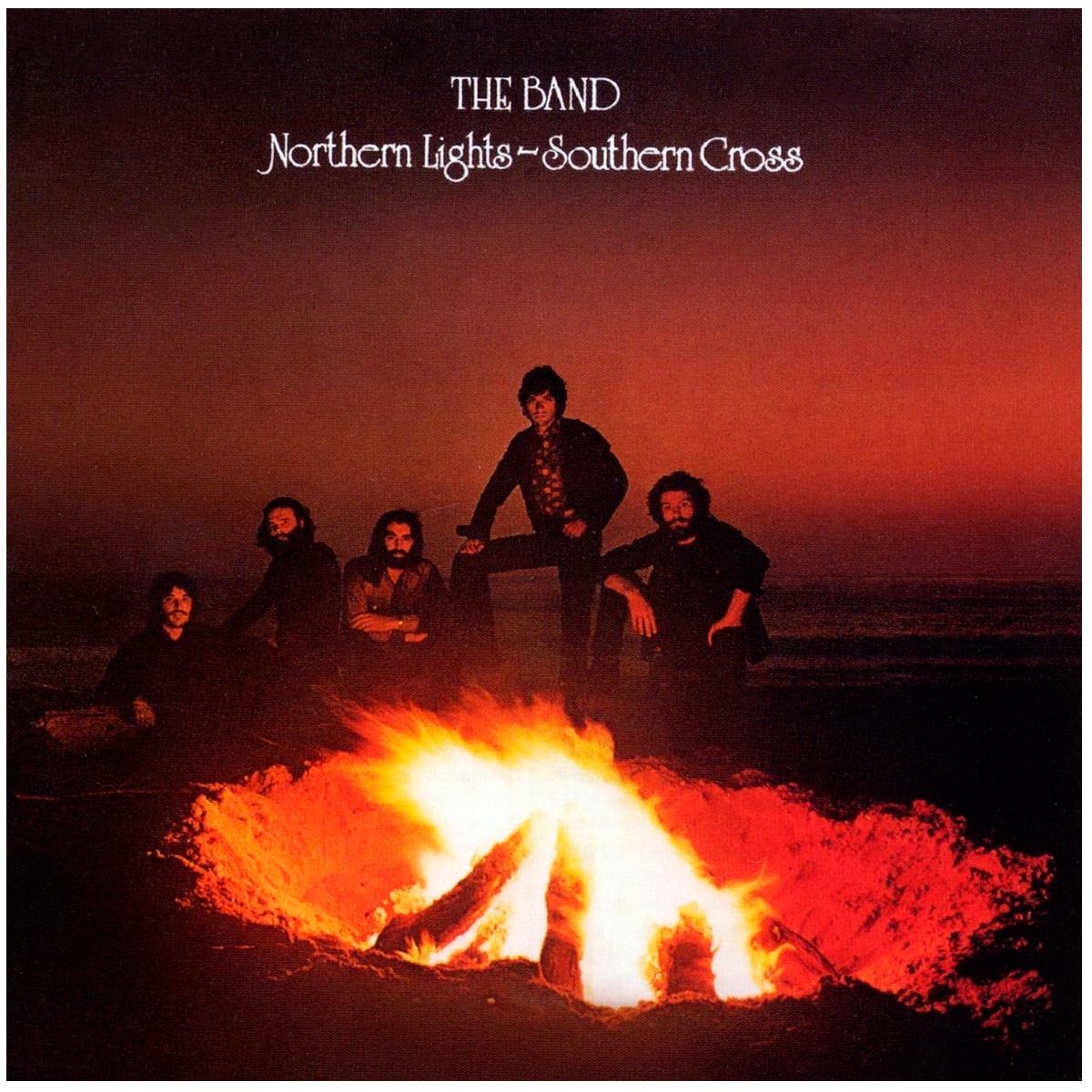
The Band’s first two albums, Music from Big Pink and The Band, as well as Northern Lights-Southern Cross compare well to any Beatles album, as does, in its rough, eccentric ways The Basement Tapes with Bob Dylan. Stage Fright and Cahoots are right in the ballpark. Rock of Ages is a masterful live recording achievement, and Scorsese’s The Last Waltz remains arguably the finest concert documentary ever made, studded with stars, and The Band’s last-ever live performance at Winterland in San Francisco, in its original incarnation, here sweaty and transcendent.
I saw them once, at Summerfest, on their last 1974 tour, and the power and glory remained, though the poisons that killed it all festered beneath the surface.
Robertson recounts his prodigious rise when, at 15, he wrote two songs recorded by Canadian rock ‘n’ roll star Ronnie Hawkins and the Hawks. “That band was my own personal Big Bang,” Robertson says. He soon joined the Hawks, and they reformed as Levon Helm and the Hawks.
Aside from his musical and literary genius, Bob Dylan is an astute aficionado and observer of American musical talent. When he heard The Band he knew they had to be his. He approached them and they invited to their basement studios in their communal Woodstock home “Big Pink.” Dylan was dubious at first of recording there, as they only had a small reel-to-reel, but once they got down to it, things began flowing. Dylan clacked away song lyrics on his typewriter and they rehearsed.
The Basement Tapes is among the most mythical informal recordings in pop music history, largely Dylan songs, immensely enhanced by The Band. Before long they were touring, yet this was early in Dylan’s plugged-in phase. His still-faithful-to-folk-roots fans consistently booed the electric music, for all its quality. This rejection eventually wore on Helm, who was beginning to sink into drugs and alcohol, as were several others, especially Manuel, a sensitive soul, who struggled with depression, and would soon self-destruct. In time, disillusioned Helm quit the group to become an oil rigger in the Gulf of Mexico.
Robertson soldiered on with the group though somewhat devastated by the loss of his soul brother and best friend. He addresses the nature of creativity, saying it’s often a matter of “trying to surprise yourself. For example, if you look inside the sounding hole of a Martin guitar you see imprinted” made in Nazareth, PA.” One day I saw that and thought, ‘I pulled into Nazareth, was a feeling about half-past dead.’ Then I heard these voices, ‘Take a load off Fanny,’” and “The Weight” was born.
The Band performs “The Weight” with The Staple Singers, in “The Last Waltz.” YouTube
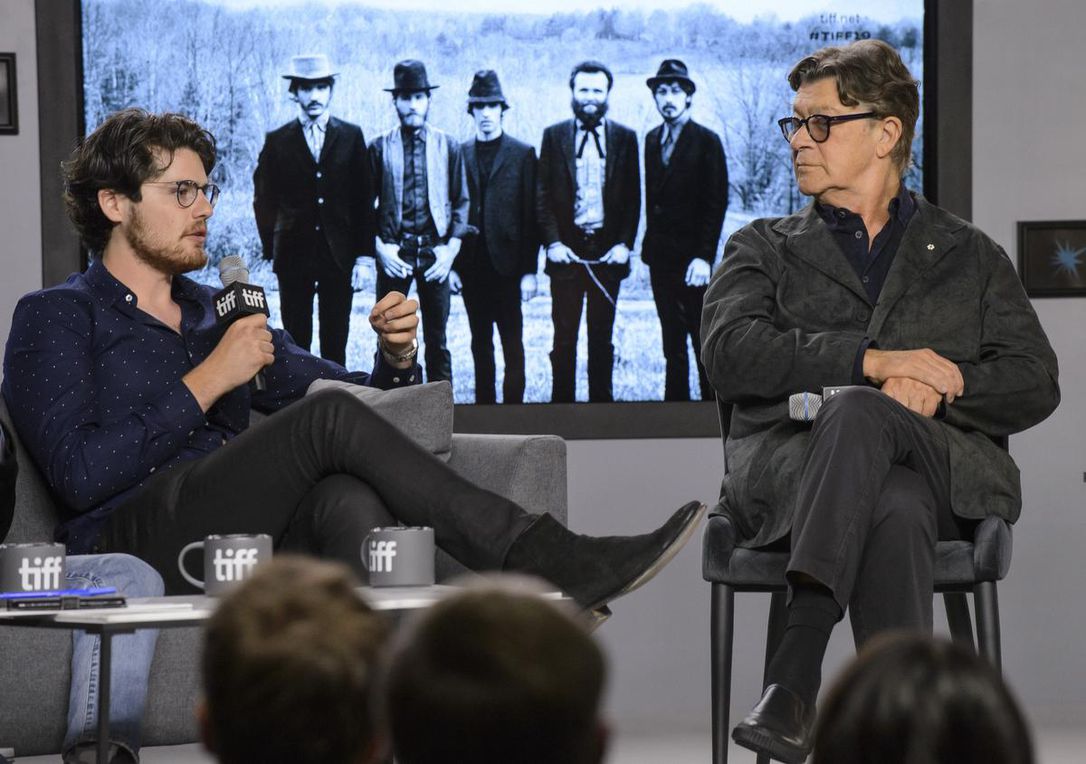
The Band’s Robbie Robertson (right) is interviewed about the new film “Once Were Brothers.” Courtesy The Toronto Star.
Enter producer entrepreneur extraordinaire David Geffen. He convinced Robertson to move to Malibu, CA, and a oceanfront property, and before long he’d lured the band members out there which replenished them. The result was the 1976 album Northern Lights-Southern Cross considered by many their best album since their second. It included three classic new songs “Acadian Driftwood,” “It Makes No Difference,” and “Ophelia” and no clunkers.
Robertson treads too lightly on the feud that developed between him and Helm. “Bitterness was setting in with Levon.” he muses. It had to do with the band members beginning to indulge in heroin. Robertson fortunately did not have an addictive makeup and was not chemically affected. But he does gloss Helms point of view which deeply resented all the royalties that Robertson received for their original music. Although Robertson wrote the majority of the songs, few bands could better fit the adage: The sum is greater than their parts. So there was a strong argument for all members sharing in some royalties.
Nor does Robertson address Richard Manuel’s devastating suicide in the film. So, it’s worth referring to Barney Hoskyns book Across the Great Divide: The Band in America, to give the subject some due. “The band had played capacity crowds for two shows which went well, despite the fact that Rick had complained to Richard about his drink. ‘We played a good show for good intelligent people,’ Rick said. ‘Talk was of the next show. That’s what we were all living for.’
After leaving the club, Richard headed back to the nearby Quality Inn and stopped by Levon’s room en route to his own. To Levon, he did not seem especially depressed. “I don’t know what got crosswise in his mind between leaving the foot of my bed and going into his bathroom.” Once in the room Richard finished off a bottle of Grand Marnier and his last scrapings of coke. Sometime between 3 and 3:30 AM on Tuesday 4, March, he went into the bathroom…
Richard Manuel. Courtesy Live for Live Music
Rick Danko was in shock, and denial. “I cannot believe in a million years that wasn’t a goddamn silly accident,” he said
“It seems much more likely that loneliness and a profound sense of failure combined to convince him of the futility of life,” Hoskyns writes.
The opening words of his prologue also address the fated artist. “Richard Manuel’s is the first voice you hear in the the first Band album Music from Big Pink (1968)…His aching baritone launches into the first reproachful line of “Tears of Rage.” As it arches over ‘arms,’ you can’t help thinking of Ray Charles, the singer who more than any other shaped this unlikely white soul voice from Stratford, Ontario… A month shy of his 43rd birthday, he could see nothing ahead but these depressing one-nighters, rehashing ‘the old magic’ in a continuing, fruitless struggle to moderate his intake of alcohol and cocaine.”
On that Tuesday morning in 1986, “he tied one end of a plain black belt around her neck, the other end around the shower curtain and hanged himself. The distance between ‘Tears of Rage’ and Richard Manuel’s lonely death at the Winter Park Quality Inn was the journey The Band traveled in their rise and fall as one of the greatest rock bands in America.” 2
Levon Helm drums and sings, “The Night They Drove Old Dixie Down” in “The Last Waltz.”
Once Were Brothers — an engrossing, touching and well-crafted film — understandably climaxes with two generous clips from The Last Waltz. The Band’s radiant final hurrah was on Thanksgiving Day, 1976, and includes Dylan, Clapton, Muddy Waters, Joni Mitchell, Van Morrison, Neil Young, Dr. John, The Staple Singers, Emmylou Harris, Ringo Starr, Paul Butterfield, Neil Diamond, Ronnie Hawkins, and a brass ensemble.
“Time is the most mysterious word of all,” Norman Mailer once wrote. The Band somehow traversed and encapsulated the mysteries of our time, Because “Life is a Carnival.” and because of “The Night They Drove Old Dixie Down.”
____________
1 Barney Hoskyns, Across the Great Divide: The Band in America, Hyperion, 1993 Quote of Greil Marcus from his book Mystery Train, 3-4 .
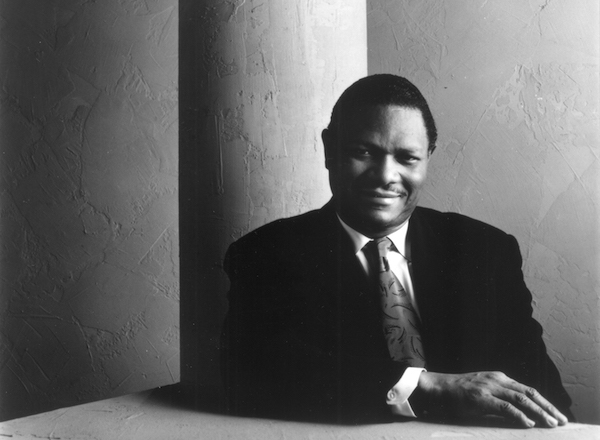
McCoy Tyner (1938-2020) Photo by Marc Norberg DownBeat
McCoy Tyner’s Quartet performs an extended piece first documented on the live recording “Enlightenment,” with Tyner on piano, Azar Lawrence on saxophone, Juney Booth on bass and Alphonse Mouzon on drums. Courtesy the Jazz Video Guy.
Autumn comes sooner every year, and old man winter howls right ’round the corner. But no, I’m talking now more about the chill down my back and the shudder of a kind of love lost. I’m talking about feeling distraught because I’ve lost more than just a kind of friend. We also lost a god. As well as I knew this artist, I could never touch him, even if I once shook his hand. I’m talking about the titantic pianist McCoy Tyner, who passed away Friday, March 6 at the age of 81.
On the other hand, I recall vividly being a Chicago nightclub, where he kindly autographed an album of mine, Sahara, one of the very few times in my journalistic career when I succumbed to the need for some idolizing. I also recall him letting the Milwaukee guitarist Jack Grassel sit in with his band at another Chicago club, from his generous sense that earnest Jack could really play, which he really could, even if McCoy had never heard him.
I call him a friend not because it was mutual, only because I knew him like the back of my hand.
I call him a god because I dearly recall him playing the piano with his uncanny authority and beauty. I always return to one night, when I first heard McCoy break through nocturne into thundering infinity.
I was in college, still living at home, and cocooned in my third-floor bedroom, listening to “The Dark Side,” the all-night radio program of legendary Milwaukee jazz disk jockey Ron Cuzner. Laying on my bed, I felt something in my chest and heart, a swelling that felt the closest I knew to levitation. My small table radio seemed magnified as well. The music was Tyner’s “Ebony Queen,” from his extraordinary new 1972 album Sahara. A stirring, declamatory rhythmic melody rang forth from his piano, and explosive chords erupted from the depths, as his right hand showered sinuous lines of cascading energy, urgency and passion. Soprano saxophonist Sonny Fortune echoed it and added his own bracing solo.
I had never heard anything like this from a piano, such vaulting power and sternly gorgeous soaring, the stuff of eagles on the high seas of atmosphere. Drummer Alphonze Mouzon drove a highly athletic style that fit perfectly, as did bassist Calvin Hill.
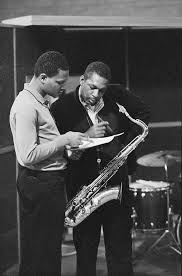
McCoy Tyner and John Coltrane Facebook.com
And I was all the more astonished because I knew Tyner well, from his years with the classic John Coltrane Quartet. He’d been brilliant before, but not dueling with titans on their own turf. Of course, Coltrane was a titan but you always knew he was The One. Now his intensely humble pianist was, as well. He had also been an innovator in his adoption of the eastern modal style but also built on his use of the interval of fourth, all of which set him apart, and had pianists copping him like mad.
“A Prayer for My Family” revealed his long affinity for majestic lyricism. And “Valley of Life” showed him an Eastern searcher, by playing the koto, a Japanese folk string instrument, along with Fortune’s lovely flute.
Sahara‘s centerpiece is the 23-minute title tune — more expansive, eloquent and dynamically ranging, with more head-spinning piano pyrotechnics, a monstrously thunderous left hand, a broad impression of the vast African desert, a world unto itself. Not only had Tyner clearly wood-shedded like a fiend, he now seem endowed with near superhuman powers, extending to his compositions.
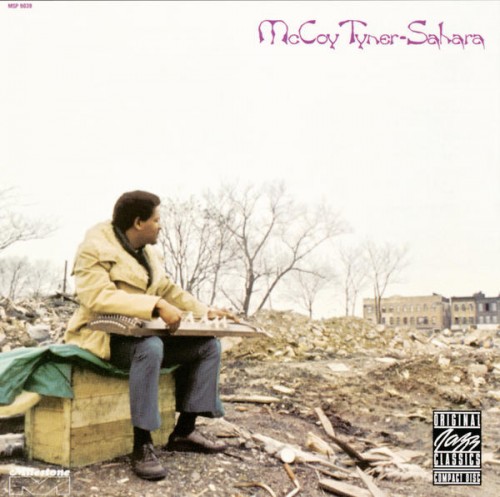
When I bought Sahara, my respect for Tyner increased further, because of the understated beauty of the cover. He sat on a wooden box in the middle of a junkyard with an overcast cityscape, holding the Japanese koto in his lap.
Critical praise followed, a Grammy nomination and five stars from Down Beat magazine. There, Michael Bourne raved, “An awesome and visionary artist…’Sahara’ is brilliant… (and Tyner is) one of the most-deserving-to-be-experienced creators in America.”
Yes he’d changed the cultural landscape, and many triumphs would follow, the similar glories of Sama Layuca, and Song for My Lady, the jazz orchestra album Song for the New World, and the muscular exhilaration of the double album Enlightenment, which captured a live quartet concert with imposing power.
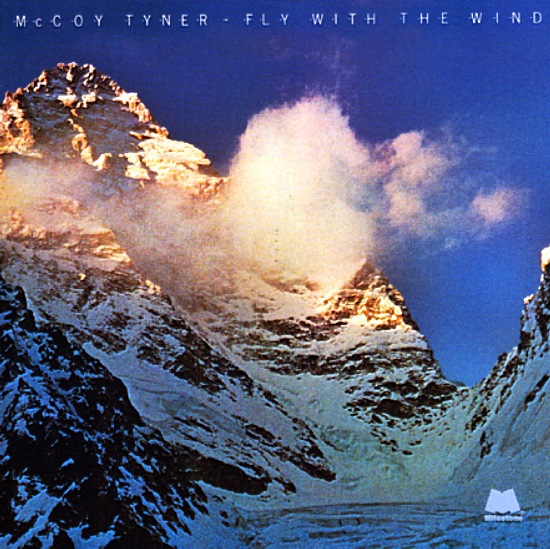
He even managed commercial success with the title tune of an album with sap-free string arrangements, Fly with the Wind. Big band and Latin albums would follow and impressive small-combo albums, like the 2-CD all-star Supertrios, and a variety of bands with many artists where he often demonstrated his ability to swing like a mother.
Tyner’s “with-strings” album “Fly With the Wind,” a commercial success. Courtesy dusty groove.
I saw Tyner variously, the early Chicago nightclub dates, and at The Milwaukee Jazz Gallery, where I was so impressed I penned these words in my introduction to the anthology of press coverage for that important Midwestern jazz venue:
“It felt like an intelligent life-force carrying meaningful form, beauty, drama, wit, and mystery. At times the effect challenged my mind and emotions; other times the music exhilarated me.”
I also added that, in a June 1981 interview before his first Milwaukee club date since the 1960s, he told me, “It’s a good feeling to know you contributed something to the world. I’ve had guys back from Vietnam come up to me and say, ‘you helped me through the war.’ Others say,’ you helped me make it through college.’ ” That had to do with the musical and spiritual power of McCoy’s music, and of many who played at the Gallery.
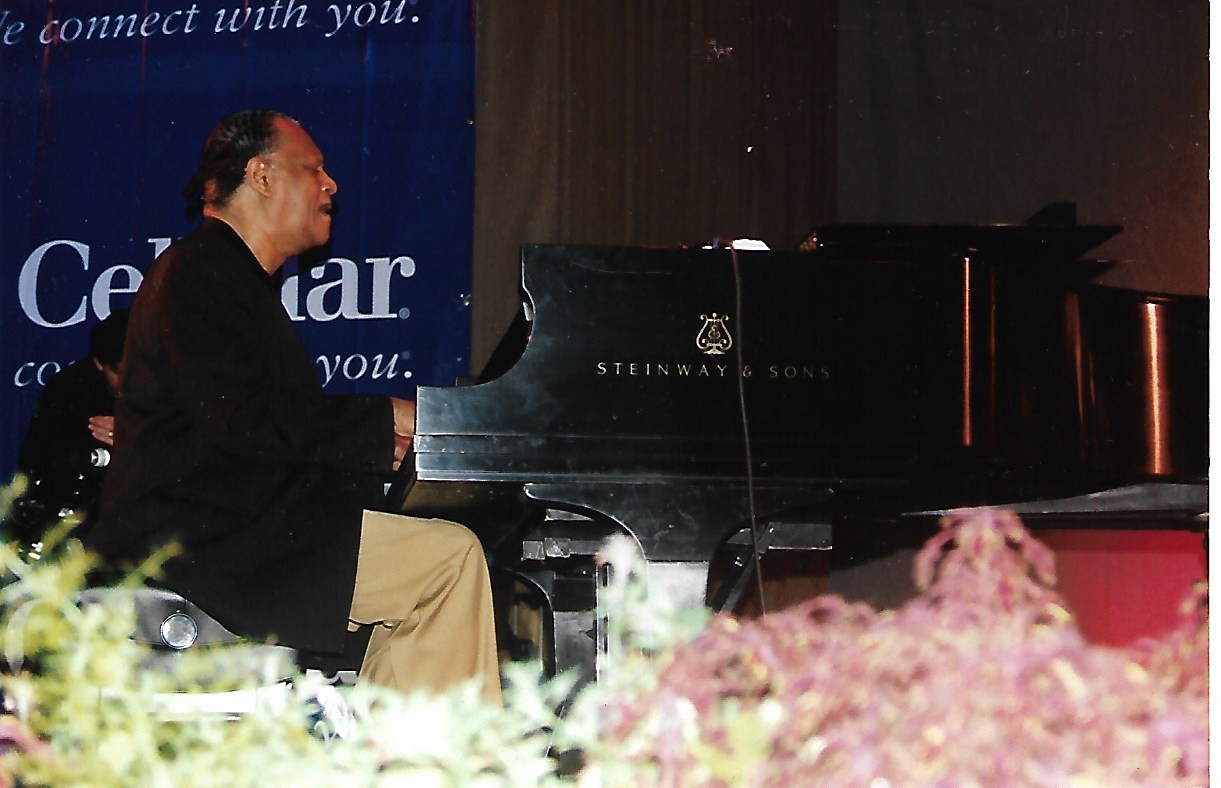
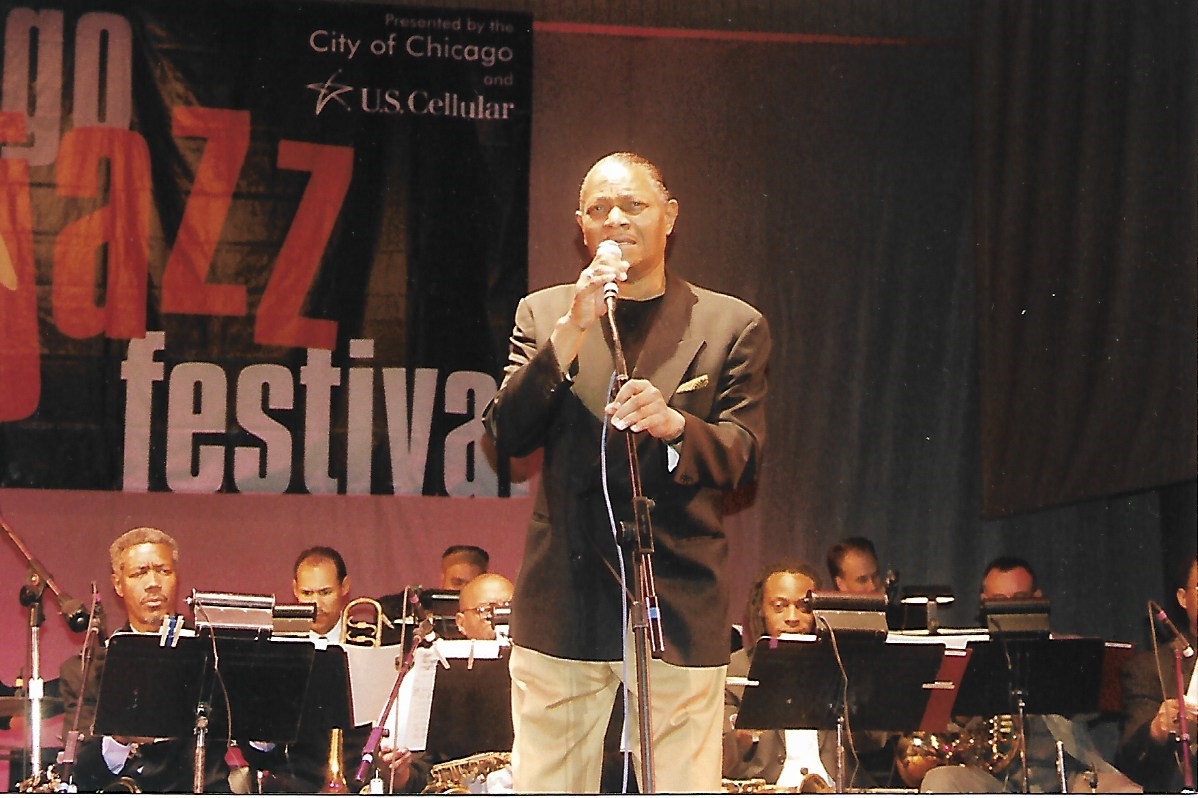
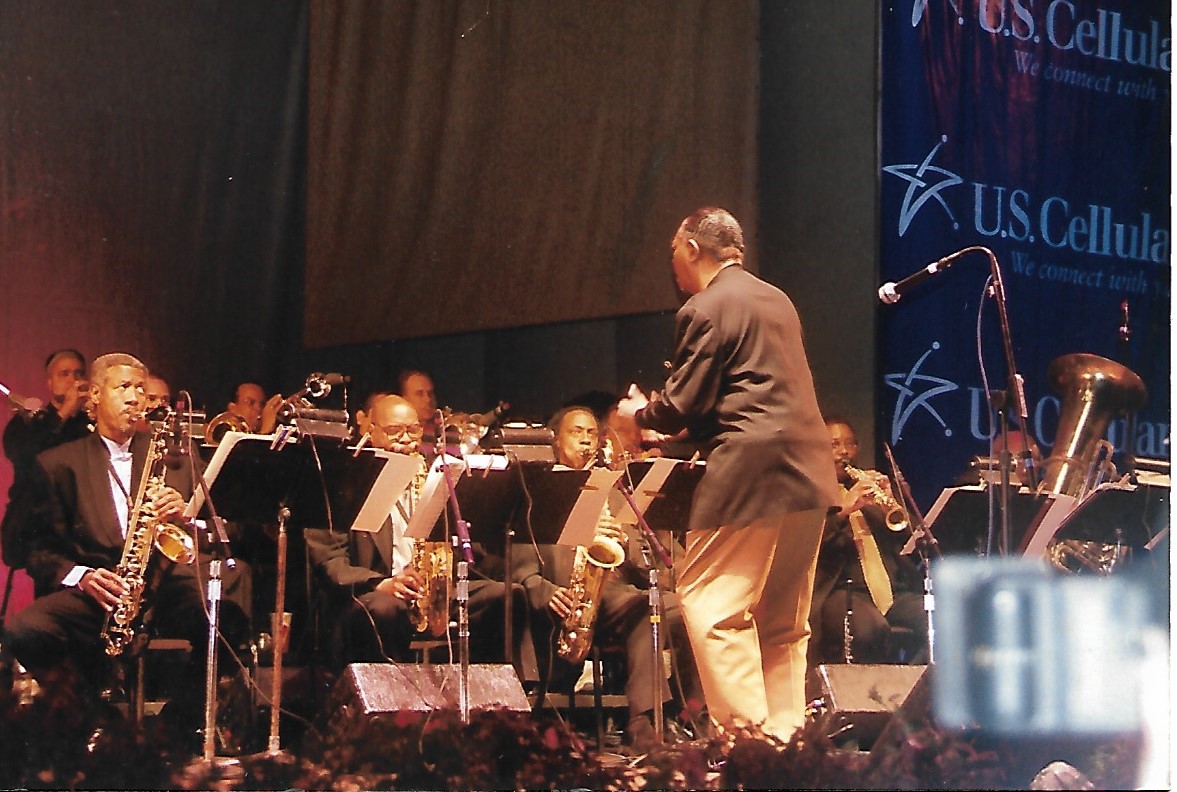
I’ll also cherish a quintet concert in Madison, and a memorable Tyner big band concert at the Chicago Jazz Festival. Here I had a chance to photograph him, and captured visually some of his passion and quiet geniality, (see accompanying photos)
McCoy Tyner at the 2003 Chicago Jazz Festival, leading and conducting his big band which included, in the bottom photo, lead tenor saxophonist Billy Harper, (far left). All fest photos by Kevin Lynch
It was a great period for modern, straight-head jazz, even though the art form struggled during the disco era and always with the commercial dominance of rock. But it retains its artistic power and cultural authenticity with artists like Tyner, and deeply influenced many musical forms, including rock, and became more than ever an international world music.
Yet we also witnessed Tyner’s inevitable physical decline, which revealed his humanity all the more.
So this news was hardly a shock, though powerfully saddening. Of course, we’ll always have the music. What a blessing and inspiration.
It’s also a splendid feeling, how much easier it is to imagine McCoy Tyner flying with the wind.