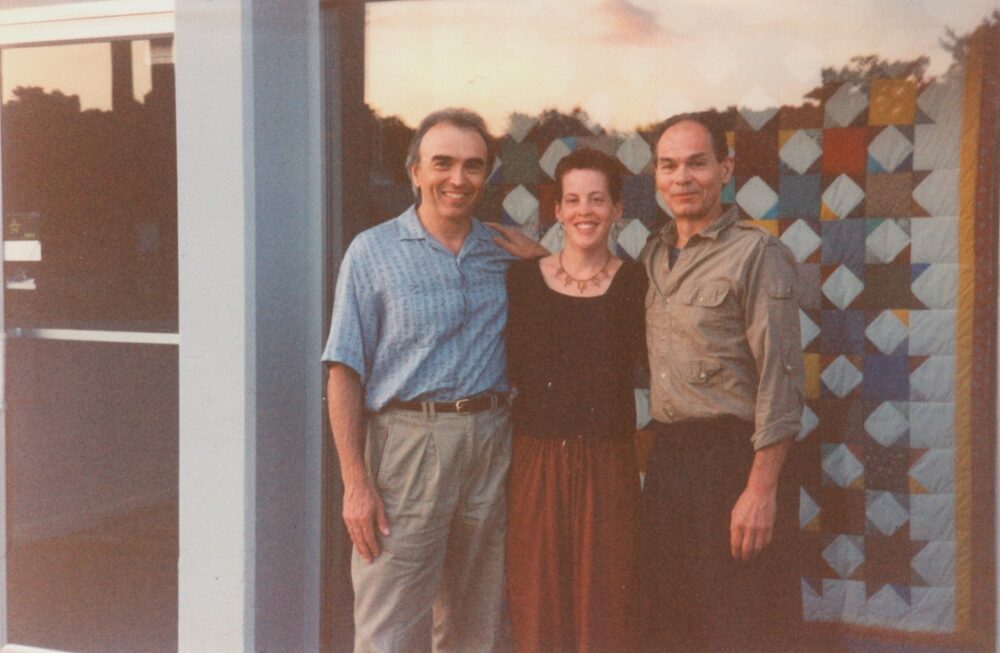

A grand dame of jazz presents a celebration of “Dexter Gordon @ 90.”

Check this out: In her first of four days of programs celebrating the life and legacy of the late great jazz saxophonist Dexter Gordon, Maxine Gordon — Dexter’s wife, long-time manager and biographer — joins forces with UW Jazz Studies Professor Johannes Wallmann’s student ensemble (Blue Note Ensemble) in a concert of Dexter’s music interspersed with interview segments conducted by WORT jazz hosts Steve Braunginn and Jane Reynolds and a Q&A with the audience. Presented by the Greater Madison Jazz Consortium. For the complete schedule of Maxine Gordon’s four-day Madison residency, visit www.greatermadisonjazzconsortium.org.

What makes this special for me is my last vivid memory of Dexter Gordon. I saw him live several times, and he was never less than fabulous, with his patented art of sashaying behind the beat, and his witty melodiousness. But I’ll never forget the first time I saw Bertrand Tavernier’s Round Midnight.


There’s not many films I can say that about, but this one was filled with exquisite, swinging and joyous jazz music. Yet I walked away from the theater feeling quite sad and reflective, which I think was director’s intended effect.

It’s a deeply moving film with great performances from all of the mighty musicians involved. And jazz musician Dexter Gordon’s acting performance in the lead role is astonishing. He was already dying at the time and, of course, hardly a trained actor. But then, he always had uncommon grace and eloquence in front of a concert or club crowd, so it shouldn’t surprise. Best jazz movie ever? Among scripted dramas, I’d say yes.

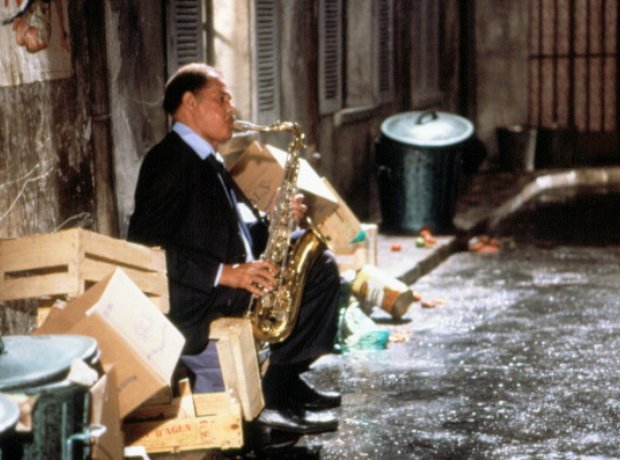
round-midnight-1361292975-view-0

Dexter Gordon in a scene from “Round Midnight.”

If you’re in the Madison area you can see the Dexter @ 90 event at the Chazen Museum on Tuesday night and then again Wednesday at the Madison Urban league. But you can rent the movie any time, and I don’t think you’ll be disappointed.

Gordon plays a fictional jazz musician in Paris, loosely based on the last days of the great bebop jazz pioneer Bud Powell. Tavernier himself plays a jazz fan who befriends the magisterial and coolly magnanimous saxophone idol.

There’s not a lot of plot to it. Rather you get more of a forlorn meditation on the jazz life. The film’s very existence underscores one of the profound ironies of that life. These purveyors of an original American art form remain the proverbial prophets without honor in their own land. The jazz musicians are comfortable enough by now in their expatriate living places that you see the great vibist Bobby Hutcherson cooking away almost contentedly on his single-burner stove in a tiny Paris apartment.

Yet somehow the heavy sway in Dale Turner’s long stride stride conveys the dejection of decades of comparative rejection in one’s own homeland. I’m speaking here of the demeanor of the musician/actor  – Dexter Gordon. In real life, Gordon was welcomed back to clubs and concerts when he came to visit the States.

But he could not make an honorable living in his own country so he lived in Europe through most of his career. And he was among the music’s three or four greatest living tenor saxophonist  during his lifetime.

I sure hope the UW orchestra doing Gordon’s music in Madison plays “Chan’s Song” from Round Midnight. In the film, Gordon plays it uncharacteristically on soprano saxophone. I believe it was written and performed for his daughter Chan. Here you hear the depths and tenderness of the man in a superbly lyrical melody and performance. It’s my most immediate single memory of Dexter, along with the movie’s image of him sitting on a stone fence along the Seine River, slumping over…

An Elegy to a Symphonic Musician — Bill Bennett

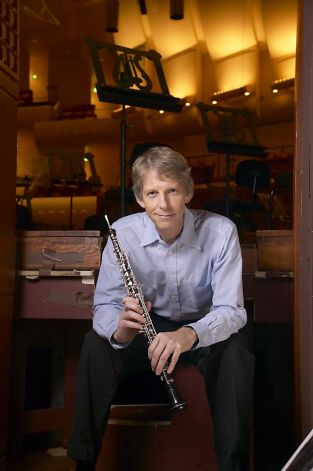
Bill-Bennett

The late Bill Bennett, principal oboist of the San Francisco Symphony 

How do you account for the snuffing of such a brilliant flame as Bill Bennett?

I can hardly imagine the heart-lacing travesty of seeing Bennett, the principal oboist of the San Francisco Symphony, collapse with a brain hemorrhage during his performance of the Strauss Oboe Concerto with the orchestra at Davies Symphony Hall on Saturday Feb. 23. He never recovered and died, on Feb. 28. He was 56.

What will haunt me is that I never met Bill, and I should have. After all, he was married to my cousin Peggy Lynch. And it’s been decades since I’d been out to the West Coast to visit my California relatives. My dad’s two brothers, Jim and Peggy’s father Jack, died on the coast during that time.

But Bill’s death is the shocker. Damn.

“I am heartbroken by the tragic death of Bill Bennett, which has left a terrible, sad emptiness in the hearts of the whole San Francisco Symphony family,” Music Director Michael Tilson Thomas said in a statement in Berkeleyside  newspaper.

“Bill was a great artist, an original thinker, and a wonderful man. He was very generous with his attention and affection for his friends, colleagues, students, and audience members. We all experienced his sunny enthusiasm for music and life. I am saddened to have lost such a true friend.”

Bill was truly the artistic star of the extended Lynch-Bennett family. What’s more, he was a man after my own heart, being a cartoonist and caricaturist, a slightly devilish skill I share with him. He reportedly amused orchestra members with his creations during long road trips.

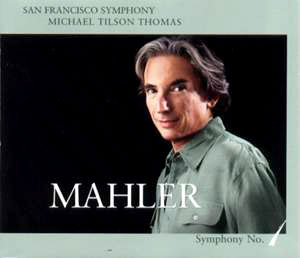
Perhaps worse, I never heard him perform, at least life. I have heard him play on record, several Mahler recordings, and treasure my recording of him (inherited from my late parents) with the SF Symphony doing Mahler’s First Symphony. Oddly enough, I alluded to Bill (for the first time) and that recording in a recent blog about the Grammys.

mahler-1-300-01


For those who aren’t classical music fans, the principal oboist is the prince of the orchestra. He or she usually provides the concert-opening pitch for the string players to tune their instruments to. And orchestral works tend to revolve around the oboe as the one wind instrument that most crucially emerges with its penetrating poignancy and almost seductive fluency from the veils of strings.

As I write, I happen to be listening to one of the most sublime recordings of recent years, Lorraine Hunt Lieberson’s career-defining recording of J. S. Bach’s Arias BWV 82 and 199 (Nonesuch). The chamber orchestra’s oboist is sinuously twining around the mezzo-soprano’s tragically limpid voice as I type — pure serendipity.

I say tragically because Lorraine died way too young as well, of breast cancer at 52, riding a Grammy-winning career breakout.

The San Francisco Symphony has six Grammy awards, including a 2012 Grammy (for a record of John Adams music), one Emmy award (for Sweeney Todd), and presented the world premiere of Henry Brant’s composition Ice Field which would win a Pulitzer Prize, among many other distinctions, which puts them squarely in the discussion of which is America’s best orchestra.

Oddly enough, I alluded to Bill (for the first time) and that Adams recording in a recent blog about the Grammies.

We always struggle to take something away from such senseless loss. It’s like mercury running through our fingers. There’s no crazed gunslinger to blame. Only the ever-looming vulnerability of life, whose corporal presence is always endowed with fatal uncertainty — and inevitability — as much with blinding brilliance, or heroic humanity.

And I still cringe when a plant dies.

I just noticed that, some time ago, I wrote a brief comment next to the translation of the third Aria of Bach’s BWV 82 cantata, which deals with accepting death. The note reads: “How childlike we become.”

The passage, by an anonymous librettist drawing from the Gospel of Luke, reads:

slumber now, you weary eyes,

close softly and pleasantly!

World, I will not remain here any longer

I own no part of you

that could matter to my soul.

Is any of this a comfort at this time? It’s hard to imagine a man of such gifted vitality feeling such weariness and resignation. The text’s turning away, with a temporally unbound soul, rankles sharply, to me as well.

Yet life’s ongoing fugue of passages constantly sends us into degrees of darkness and light and sometimes mysteriously discernible textures. Those deeper auras can allure to where we want to melt right into them, just for the experience.

Sometimes people do take a plunge, perhaps even unwittingly, and sometimes they never return, at least not our way, again. Certainly this can happen in the depths of artistic revelation and outpouring, as artists and writers have testified to for millennia.

Bill Bennett was right out there, in the spotlight producing beautiful art, when the darkness struck. And yet, the light kept rising.

Risking a platitude, I know, it was a fine way for him to depart, if tragic in its premature timing. As my 12-year-old nephew Dillon Lynch mused, “At least he died doing something he loved.”

Now I have Bill’s Mahler One playing, his oboe is rising momentarily, mysteriously, in the ravishingly slow unfolding of the first movement’s central section. The oboe’s call actually slinks up on you as you hear it.

And the powerful thumps and crashes, and the swirling clarion anthem that ensue. Sky piercing! Reincarnation as a free-spirit lightning bolt?

Recall, the human state of creative or artistic fire. It’s electrically mainlined to youth’s unfettered creative core. And if we become, in some way, childlike at our end, doesn’t that spiritual condition bode well for a new childhood and a new life, which always remains unknowable to the earthbound?

What else would a setting soul’s return to innocence mean?

The last time I was with Uncle Jack and Aunt Barbara’s family I was a young man. I spent too much of the visit to their beach house trying to body surf the Pacific waves, with Jimi Hendrix music blaring from the bluff above. It was my first-ever plunge into the ocean, one of those deep-texture experiences. I was down there with two traveling mates from Milwaukee and Cousin John Lynch.

Peggy was young and maybe peered at us with a squint of disdain as we pranced around in her bathing suits.

Most of the best, as well as the worst, memories are of youth revisited.

And that exhilarating, liberating surf is some of what I hear in Bill Bennett’s music now, in the final passage of Mahler’s First — ascending, proudly triumphal, proclaiming life and quite far beyond as his domain, his last, or next, passage. The final thunder unleashes the human lightning bolt, in all his power and glory.

________________

check out this eyewitness report on Bill’s fateful concert:

http://www.artsjournal.com/slippeddisc/2013/02/eyewitness-account-of-soloists-mid-concerto-collapse.html


“Big Miracle”: A video movie gem hidden below an icy Alaskan surface

Was this all just a frigid Alaskan fairy tale, an old Eskimo myth, a Big Foot Figment of the Imagination?

That’s what the 2012 movie Big Miracle seemed as it began, an increasingly astounding  international attempt to save a family of three gray whales trapped under miles and miles of ice off the far western Alaskan coast, with one rapidly freezing-over breathing hole keeping them alive.

Sure, that’s a compelling premise to someone like me, who — if I had long-enough arms — could be pegged a whale hugger. But even I expected an earnest little documentary when I clicked “Add” for my Netflix queue, and then popped it in my DVD player. For some reason I completely missed the story when it actually happened in 1988, even though it turned into a huge news event.

This actually is a superbly paced, strongly acted and suspenseful dramatization. The event was notable for the pathos of the whales’ predicament. But it’s remarkable for the human response which, regarding whales, is more normally a somewhat remote fascination and ambivalence. That goes back at least to the tepid original public response to the textual and symbolic complexities of Moby-Dick, in which the white whale is often interpreted as evil, or at least inscrutable nature.

So “why all the hullabaloo about these whales?” That question was the actual headline of an article by Howard Weaver in the Anchorage Daily News, published October 23, 1988. Weaver’s commentary frames the story’s improbability:

”Oil companies decided to spend uncounted thousands as much as a half million dollars, by some estimates on a rescue effort. National Guard pilots risked their lives on an untested bargetowing operation. A couple of Minnesotans flew up uninvited, at their own expense, because they figured they knew how to keep the ice open. (They did.)

The president called.

But why? It defies explanation for one very simple reason: it really doesn’t make sense. 1

No one had a lot to gain; conventional human interest sooner or later comes down to filthy lucre, when large forces come together to effect some sort of change or outcome.

What actually happened seemed almost too humane and altruistic. At first, an oil drilling executive sees his involvement as a publicity stunt, to burnish his image with environmentalists while he plans on plundering the Alaskan wildlife reserve with his oil-thirsty drills. But the CEO, played by Ted Danson, ends up with something akin to a heroic commitment to saving the whales.

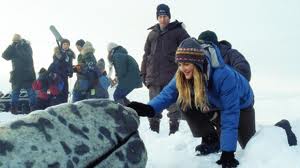
But this movie actually revolves around a zealous Greenpeace activist (Drew Barrymore), who triggers the rescue effort. She’s also the ex-girlfriend of the TV reporter (John Krasinski) who discovers the trapped grays and breaks the story. That additional plot line juices up a movie which becomes quite phenomenal and deeply affecting, at least for anyone with whale-hugging tendencies or an environmental consciousness.

Dermot Mulroney plays a National Guard colonel who mans the ice-breaking barge hauled by helicopters nearly 300 miles over frozen north Alaska to Point Barrow, to hopefully break up the ice path closest to the open sea.

Yet Barrymore steadily dives to the movie’s heart and steals the show. She’s grown substantially as an actress and as a critical thinker, as evident from her commentary with Robert Osborne every Saturday night on Turner Classic Movies The Essentials series.

big miracle 1

Rachel Kramer (Drew Barrymore) and one of the trapped whales. Courtesy filmofilia.com

Here, she voices each pointed environmental concern in the face of Danson’s initial exploitative bravado, and ends up changing him.

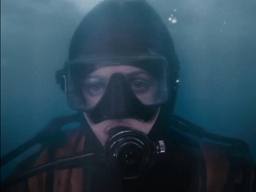
She also forges a fast emotional bond with the three whales, including a fearless dive into the icy water to investigate their situation more closely, and then frees the weakening baby whale from a fishing net caught in its fluke.

bm 2Rachel dives to investigate the whales’ situation. Courtesy rottentomatoes.com  

The indigenous Eskimos also change from simply hunting whales to doing their part to keep the whole from freezing over — and then ingeniously cutting a series of breathing holes in the ice leading toward the closest open sea five miles away.

But will any of this effort work before the magnificent mammals exhaust themselves and drown, or the hole freezes over in minus-50 degree conditions?

Barrymore (as the tough, disarmingly charismatic Rachel Kramer) intensifies her powerful connection to the whales as intelligent living beings in a desperate situation. So the viewer’s involvement deepens through the force of Rachel’s passion, intelligence and indominability. Gradually the whales — somewhat cutely named Fred, Wilma and Bam-Bam — become real live characters. Rachel’s emotions also simmer over her complicated, unresolved relationship with her ex, Adam, whose head has been turned by a porcelain-pretty TV reporter. I’d rate Barrymore’s performance as one of the strongest and most under-acclaimed of 2012.

I’m not sure why Big Miracle flopped at the box office (Rotten Tomatoes‘ critics meter rates it a respectable 74). Does the historic story seem distant, a blip in time? It’s a family movie with not enough sex, drugs or violence to attract the base teenage movie audience.

But seeing the movie makes the Reagan-era experience (“The Gipper” is actually a character in the movie) powerfully immediate and resonant. It demonstrates how the self-absorbed human world can surprisingly respond at a deep level that even transcends political enemies, as a Russian ice-breaking ship finally rushes to the rescue effort.

bm 3

The trapped whale family in “Big Miracle.” Courtesy the lifestylereport.ca

The general public today would seem to appreciate such an existential crisis of survival all the more. As the movie intensifies, one can almost imagine being a desperate whale, incessantly swimming up to that hole for air. Humanity’s interdependence with the natural world becomes palpable — the heart pulses as the body begins to freeze.


The loss of Milwaukee’s black talk radio stirs memories of Marvin Gaye

News of WMCS-AM (1290) suffering the soul-gutting of a dreaded “format change” stirred one of the most indelible memories of my many years of working in Wisconsin media, which I’ll get to shortly.

In a city that still suffers from some of the worst segregation in the nation, WMCS provided a categorically transcendent voice for the African-American viewpoint that radiated enlightenment on urban life and reality to most corners of the Milwaukee area (given the limits of its AM power/penetration).

Now, one of the oldest black-owned radio stations in the country has its talk-show format snuffed out, under the explanation it had been losing money for a decade.

So maybe it was inevitable in a bottom-line world. But mindful culture can defy the bottom-line mentality, so let’s consider what we’re losing.  Silencing community dialogue it speaks to the perspectives of Milwaukee’s black minority is chilling in the face of pervasiveness of hard right talk radio The tough news was well covered in The Milwaukee Journal Sentinel Wednesday by TV and radio reporter Duane Dudek and editorial columnist James Causey (JSonline.com). State Sen. Lena Taylor and Ald. Willie Wade also bemoaned the loss, and the station’s morning talk show host Eric Von noted that the impact on Milwaukee’s black listenership is compounded by the effect on “the more progressive community. By and large, we were it in terms of progressive conversations.”

WMCS, formerly known as WAWA, 92.1 has been long sustained by the partnership of Green Bay Packer great Willie Davis , is the talk show branch of the Milwaukee Radio Alliance which also owns WL DB-FM  (93.3) and WLUM FM (102.1).

In an age of iPods, Napster and online song-sharing and other personalized listening modes, some say broadcast radio is dead but I don’t buy it. Milwaukee broadcast culture  thrives with great music from the likes of WMSE (91.7), WY MS (88.9) in WUWM (89.7), our Public radio outlet. I listen to all three and although I once DJ’d on WLUM it and LDB are a notch below the others ( I also DJ’d on MSE), partly because LUM is no longer an urban music-oriented station, having joined the crowded field of pop-rock-indie stations. Of course, “urban” format translates loosely to African-American-oriented broadcasting.

Which brings me to my vivid memory of one Sunday night years ago when I was doing my jazz and blues program on WLUM. I documented this in my hopefully forthcoming book Voices In The River: The Jazz Message To Democracy. This passage is from Chapter 4, titled “What’s Going On? – Milwaukee Starts to Hear Voices.”:

One night changed my understanding of what was happening in the somewhat mysterious realm of radio airwaves, inhabited at the other end by invisible people, attuned to your transmissions like creatures hidden in the hills.

Half way through my show, the AP teletype machine clacked out dire news: “Marvin Gaye has been shot dead. His father is held suspect.” I cut in to read the report and within seconds the phone lines were jammed with wailing women, and men.

“Man you gotta play ‘What’s Goin’ On!’” they all said. I hadn’t brought that record because I didn’t play much R&B on that slot. Being Sunday night, the station library was closed. I riffled frantically through the few hundred records in the current rotation bins.

No Marvin Gaye. “You gotta find a way to bring some lovin’ here today…” How could this happen? Not tonight on my show… “Father father”… I looked under the M’s and the G’s four times each… Brother Brother, there’s far too many of you dying… finally, I found it, dog-eared and precious. Rain-drenched Marvin. I sighed and pulled it out of the sleeve and slipped the small teardrop hole onto the platter. Ohhh, what’s goin’ on, what’s goin’ on?

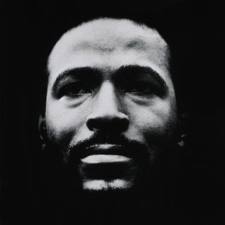
Marvin Gayeimages

Marvin Gaye. Courtesy www.businessinsider.com

The red phone buttons glowed like fireflies in heat, and my finger clicked up listeners also sighing, in gratitude mingled with grief.

What I realized was that many of these people had been listening to my jazz program, most of them black folks, who supposedly had been lost as a jazz “demographic” (even though the term wasn’t used then). But when I read the news bulletin they knew the night now belonged to Marvin’s “inner city blues.” The emotional receptors had switched to a slightly different frequency, to one that “makes me wanna holler.” I loved being able to make that switch for them.

The music was all one, just colored in many shades of soul and intellect.

Has music changed today? It seems to have, in the way it is so tightly controlled, produced and marketed. Music down loading seems to be a public revolt against that control, as are the vast alt-rock, independent label and roots music movements. I refuse to belief contemporary music has changed in essence. It seemed to make such a difference in society and culture 20 years ago, because musicians reflected and responded to the times. It still can, to the degree that music can free itself from corporate media systems of control and marketing manipulation and co-opting.

Gaye was shot twice following a physical altercation with his father, Marvin Gaye Sr., after the singer-songwriter intervened in an argument between his father and his mother Alberta. The father killed Gaye with the .38 pistol his son had bought him. Fate sometimes has the darkest wit:  Gaye died on April Fool’s Day, 1984.

Marvin-Gaye-In-State soulwalking.co.uk

Marvin Gaye in state. Courtesy www.soulwalking. co.uk

The bigger relevant point underlying this tragic event is, of course, gun violence. Despite all the profoundly justified current concern and pending legislation regarding mass murders with assault weapons, it’s easy to forget that the vast majority of homicides in America are one-on-one killings with handguns, like Marvin Gaye’s death. His murder by his father was one of the most shockingly dramatic in modern American history because of Gaye’s fame, genius and his pointedly eloquent message.

Craig Werner, UW-Madison Professor of Afro-American Studies, wrote “part of what makes What’s Going On an unquestioned masterpiece is Gaye’s concentration on the social crosscurrents sweeping to the inner cities and the country as a whole.” 1. Werner resonates with station host Eric Von’s point about the “larger progressive community.”

This blog Culture Currents humbly strives to sustain a kind of socio-cultural concentration for current times, part of the reason why Gaye sticks in my consciousness like a beautiful scar.

WLUM’s AM sister station WMCS fought against what Gaye called inner city blues and will leave a void that one only hopes will not be filled with more echoes of gunfire, and insufficient community dialogue and action response.

I left Milwaukee in 1989 to take a job covering the arts for The Capital Times in Madison. When I returned to my hometown a few years ago and started tuning in to local radio, what I found most missing on the local airwaves was something I akin to Madison’s The Mic 92.1. Madison’s progressive talk radio station offers south-central Wisconsin the nationally syndicated voices of Ed Schultz, Thom Hartmann, Stephanie Miller, and, on Sundays,  Robert Kennedy Jr. and Mike Papontonio (co-hosting “Ring of Fire”) and Rev. Jessie Jackson, among others. (Check it out online at http://www.themic921.com/main.html)>

Now that the progressive-oriented talk forum of WMCS is silenced, more than ever Milwaukee needs a station like The Mic which conscientiously covers our social and political crosscurrents.

_______________________________

  1. Craig Werner, Higher Ground: Stevie Wonder, Aretha Franklin, Curtis Mayfield, and the Rise and Fall of American Soul, Three Rivers Press, 2004, 163


Did I see yo mammy steal somebody’s Grammy? Kudos and Komplaints

Here’s my two cents worth (and spare change) on the 2012 Grammy Awards. Nope I didn’t hear all the music nominated. How many people did?

But I heard enough to assert my bloggistic opinion, he replied. Here’s an eccentrically broad, personal and biased commentary.

I am glad that the Robert Glasper Experiment won for Best R&B Album. This man showed great creativity, daring, and smart taste. I wrote an article on him for Shepherd Express and as a blog post. The interesting angle was that he played in South Milwaukee, which would’ve been unthinkable for a black artist, borderline suicidal, before the civil rights era.

music_phases51

Here’s that whole story FYI: https://kevernacular.com/?p=844

What’d I liked about Glasper’s album “Black Radio”? The CD delivers not gangsta rapology, but rather a kind of immersion in supple R&B-groove, chill-out “experimentation for meditation.”

It challenged preconceptions. What can you presuppose about an album that seamlessly combines Erykah Badu singing Mongo Santamaria’s Afro-Latin jazz classic “Afro-Blue,” and  Lalah Hathaway recasting the cool ecstasy of Sade’s “Cherish the Day”? Add to that “The Consequences of Jealousy” by crossover jazz bassist Meshell Ndegeocello (who plays on the album), David Bowie’s “Letter to Hermione” and Kurt Cobain’s “Smells Like Teen Spirit.” Glasper’s originals, aided by Mos Def, Musiq Soulchild and others, help it all meld. Unlike hardcore hip-hop, Black Radio brims with melodic and harmonic sophistication, more like the hybrids of fellow jazzer Jason Moran.

As for Album of the Year, The Black Keys’ El Camino is strong, scratch-your-grunge-itch stuff but a notch below their previous album Brothers. Frank Ocean’s Channel Orange was right there, but he’ll probably get his, in time (He deservedly won Best Contemporary Urban Album). So I’m not shocked that Mumford and Sons nabbed best album, and happy their Americana category won. It’s a breakthrough vernacular win, like jazzman Herbie Hancock’s best album win with River: The Joni Letters was a few years ago.

However, very good as M&S are, they still strike me as derivative of various American roots-rock bands. Could a bunch of Brits be outdoing all American groups at their own genre? Betraying a tinge of Americanism here, I think not, and might’ve awarded Old Crow Medicine Show’s Carry Me Back or The Avett Brothers’ The Carpenter instead. Or say, Chuck Prophet’s un-nominated Temple Beautiful, an unsentimental and lovingly loosey-goosey roots-rock ode to the seemingly perpetual cultural prism called San Francisco.

I’d love to hear from a Brit reader, or two (and Yanks always). I know, Britain has its own profound roots of traditional and eccentric folk music which contributed to America’s. And the Brits got the deepest grip on American blues in what became the Blues Revival of the ‘60s, though the integrated, Chicago-based Paul Butterfield Blues Band led the way.

However, today Americans are much more aware, appreciative of, and creatively responsive to, their cultural roots.

For example, my actual choice for album of the Year would be This One’s for Him: A Tribute to Guy Clark, a nominee for Best Folk Album. It’s co-produced by Shawn Camp and Tamara Saviano, a Milwaukee native who previously blessed us with the Grammy-nominated Stephen Foster tribute album Beautiful Dreamer.*

clark

Clark’s esteemed peers performed and helped reveal how his song writing has quietly carved a broad swath of insight, peculiarity, tragedy and comedy that epitomizes an essential strain of the American experience. He may be the dean of Texas songwriters, a sun-parched musical bard category that may outshine all others in America. “Desperadoes Waiting for a Train,” “Dublin Blues,” “Hemingway’s Whiskey,” “Stuff that Works,”” The Last Gunfighter Ballad,” “Randall Knife” are among many superb Clark songs still underexposed, yet hidden right in the heart of America.  Listen here, to Lyle Lovett, John Prine, Emmylou Harris, Roseanne Cash, Rodney Crowell, Steve Earle, Kris Kristofferson, Willie Nelson, Jerry Jeff Walker, James McMurtry and others.

Along similar lines of preference and argument, the best country album should’ve been Jamey Johnson’s Living for a Song: A Tribute to Hank Cochran, rather than Zac Brown’s Uncaged. Sure Brown’s doing mostly original stuff but he’s got a bit too much rock in his country. My bias is toward traditional or new-trad or alt-country, the latter which Brown is somewhat, but now mainstream country loves him, it seems, the way it now gluts on heavy guitar riffs. Johnson’s curatorial project shed light on one of the most incisively truth-telling songwriters in country history and, like the Clark tribute, had heavyweight acknowledging that with their interpretations, including Nelson, Kristofferson, E. Harris, Merle Haggard, Elvis Costello, Ray Price, Bobby Bare, Allison Krause, George Strait, and Lee Ann Womack etc.

That reminds me of another album, which probably wasn’t nominated because it was released as a combo DVD video as well. That’s We Walked the Line: A Celebration of the Music of Johnny Cash. I won’t list the all-star lineup but do check it out. It climaxed with, for this listener, perhaps the most moving performance of the year: “Highwayman” with Jamey Johnson singing the final verse — which the late Cash sang in the version of the song which The Highwaymen (Cash, Nelson, Kristofferson and Waylon Jennings) recorded in 1985. It’s one of Jimmy Webb’s most poetic, timeless, transcendent and rootsy songs.

Johnson first really got to me with his brief but powerful solo set at the 25th Farm Aid in Milwaukee in October of 2010. He’s a slightly acquired taste, as is Guy Clark. But Johnson’s foghorn-of-the-soul voice and brave commitment to a tradition is as authentic as they come in country these days, among relatively new performers.

OK, radically shifting directions — Country to Classics — but you should never try to pin down Culture Currents. I like messing with your heads a bit. And vernaculars do speak, in many tongues.

Although I haven’t yet heard Michael Tilson Thomas’s recording of John Adams’ Harmonielehre and Short Ride In A Fast Machine, kudos to the Academy for honoring a living composer, if the most obvious one, for Best Classical Orchestral Recording. The former piece achieves the improbable: merging minimalism with its antithesis, Arnold Schoenberg, thus opening a deep throbbing vein that pulses with dark duende and humanity intensely magnified.

Yet the San Francisco Symphony program seems slight compared to Simon Rattle’s 1994 recording of these works, which also includes “The Chairman Dances” and other Adams pieces (full disclosure: a relative of mine is in the SF orchestra, so I’m avoiding favoritism here.).

And Thomas beat out a strong reading of Mahler’s First Symphony by Ivan Fischer and the Budapest Radio Orchestra. Hearing this ever-mighty Mahler – as he echoes through the vast and haunted crevasse between Romanticism and modernism — reminds one of how minimalism, liberating as it can be, so often is too much of not enough.

I say, Mahler! by a nose, famously aquiline. (Look for a brand-new recording of Mahler’s First by Milwaukee Symphony Orchestra music director Edo du Waart in the 2013 Grammy running, albeit with his other band, The Royal Flemish Philharmonic.)

In Best Opera Recording, James Levine and his Wagnerian horde predictably rolled over the competition with his Der Ring cycle, like the Third Reich steamrolling Poland (a strange role for Levine). But smashed in that blitzkrieg was Alban Berg’s Lulu, an unforgettably entrancing Lulu of a high-modernist opera, bravely led by Michael Boder, and Vladimir Jurowski’s take on Stravinsky’s The Rake’s Progress.

Best Jazz Vocal Album went to Esperanza Spalding’s Radio Music Society. I still think Ms. Spalding is a better musician and conceptualizer than a singer. She should not have beaten out Kurt Elling’s 619 Broadway: The Brills Building Project (tributing the Gershwins, Kerns, Porters, et al) or Luciana Souza’s The Book of Chet (as in Baker). But Spalding is ambitious and definitely the jazz flavor (dare I say sweetheart?) of the year. And she’s got game and I do love her world-class ‘fro.

I’d also say that Arturo Sandoval’s admirable For Diz: Every Day I Think of You won Best Large Jazz Ensemble Album with more flash than my choice. The Gil Evans Project proved that nothing can replace modern jazz’s greatest arranger, but leader Ryan Truesdell’s magnificent effort on Centennial: Newly Discovered Works of Gil Evans, unearthed glittering new treasures from the late Evans’ legacy. And although The Evans Project album’s How About You achieves a splendid swing, it hardly should’ve won Best Instrumental Arrangement over the same album’s endlessly beguiling Barbara Song or the transporting Pubjab, neither of which was nominated. A very retro — borderline moldy fig — choice for arrangement. I blogged on this album, too. https://kevernacular.com/?p=702

case

I also would have put vibes player Joe Locke and tenor saxophonist Donny McCaslin right in the running for Best Improvised Jazz Solo on Centennial‘s “Waltz/Variation on the Misery/So Long.” Locke delivers gleaming substance on several of the album’s major pieces. Chick Corea and Gary Burton, who have closets full of awards and accolades, won for Hot House, vintage bebop updated. That’s perpetually hip, but also comparatively retro.

Somebody please swivel around the Academy jazz voters, so they face forward. Do you question that assertion, given my promoting of various tribute albums of, say, trad country?

“Do I contradict myself? Very well then, I contradict myself. I am large, I contain multitudes.” Well, Walt Whitman did. Culture Currents tries to. You go where the best music takes you.

Speaking of philosophical assertions, for a broad-brush but insightful commentary on the Grammys, I recommend NoDepression.com editor Kim Reuhl’s recent ruminations. Noting the Grammies are a sort of Music Industry/Recording Marketing love fest, she says that, even if they have no vote, the worldwide community of listeners is ultimately what counts. Listeners and the role music plays in life:

“Here’s the thing. Music is so important. Next to painting, storytelling, and dance, it’s one of the best vehicles we have for destroying fear, for confronting our best and worst selves, for letting love blow us wide open. At its best, music is where we interact with the most vulnerable bits of our humanity. It’s where we admit everything to each other, to strangers, to ourselves, in a way that is safe and embracing, and promising, and full of hope. At the end of a song, we can close the figurative container and go back to Life, renewed.”

Rave on, Kim Reuhl, rave on.
Here’s the URL to her whole piece:http://www.nodepression.com/profiles/blogs/art-the-artists-freedom-and-the-grammys

A graphic version of T. Monk (but not Bud Powell) getting unfairly busted by racist cops…

jazzmonkdizzy1

Bud P. may have unwittingly framed Monk (in a moment of fear) but at least Diz still loved him… image courtesy indulgy.com

http://boingboing.net/2013/02/01/john-wilcock-thelonious-monk.html

This great FB posting by the superb jazz historian and critic Ted Gioia (The Imperfect Art, The History of Jazz, etc.) gassed me enough to do a quickie post.

You’ll find on the link a sardonic, truth-telling cartoon strip detailing the infamous arrest of Thelonious Monk which led to his unjust imprisonment at Riker’s Island and loss of his New York cabaret card… A serious dent in his career at the time.

It’s apparently something conceived/written by the late John Wilcock and illustrated by artists Ethan Persoff and Scott Marshall.

The strip is in full color, to massage your eyeballs. I also love that the two artists collaborate with Persoff living in Austin, Texas and Marshall in New York.

Wilcock recounts seeing Monk perform at The Five Spot in New York for the first time after the reinstatement of his cabaret card. He describes how Monk almost magically appears without announcement on the stage, sits down and plays and, when he’s done, gets up and disappears again.

Now I think I know how Monk influenced the phenomenal pianist-composer Cecil Taylor in one way. Taylor, also a swiftly athletic dancer, does a similar sort of phantom-like appearance, perform-and-disappear routine, as a sort of performance-art aspect of his concerts. At least he did the last couple of times I last saw him live, a number of years ago (too long!).

This ‘toon about Monk is a serious piece of American cultural history, and will help you discover a cool, offbeat and politically aware website/ blog site Boing-Boing…

Apparently these co-blogger-artists enjoy watching the crazily bouncing repercussions of cultural events, great and small, bounding their sometimes predictable but as-often unpredictable ways.

As Milwaukee philosopher/saxophonist/sports-geek-homer Art Kumbalek sez, what a world, ain’a?

Thanks to Ted G, for the connection and turn on,

Kevernacular

btw, read about the sorry incident in greater detail (and everything you wanted to know about Monk’s amazing life and music) in Robin DG Kelley’s magnum opus biography Thelonious Monk: the Life and Times of an American Original.


http://boingboing.net/2013/02/01/john-wilcock-thelonious-monk.html

Does Marion Cotillard forge an anti-Ahab heroine for our time in “Rust and Bone”?

Rust-and-Bone---whalejpg

Marion Cotillard has proven her acting mettle many times over, and sounds like she’s still  forging a distinct destiny as one of the great actors of her generation, with this new performance. Just maybe she’s creating a new sort of anti-Ahab heroine. I look forward to this movie and maybe even to the rare occasion to applaud at the end. Genuine human courage has been forsaken too often in our times. Lance, are you listening?

Thanks for the critical tip-off from my former colleague at the Cap Times, Rob Thomas.

article_5b11cfe2-6033-11e2-87fd-001a4bcf887a.html

Santana, Trucks and Tedeschi feelin’ good

http://www.youtube.com/watch?v=DN0yy3iokJ4&feature=share

I just added this to my Facebook page and then I thought, what the hell, this is too damn good not to share with everyone. So go on, dig Carlos Santana, Derek Trucks and Susan Tedeschi… Have a happy new year and make somebody happy, make somebody strong.

Does rhetoric like this cut through any more? I hope so.


Rembrandt: Last Chances To See a Life-Changing Work of Art


self-portrait-1665-1“Portrait of the Artist” by Rembrandt ca. 1665. Image courtesy wikipaintings.org. 

Admission to the Milwaukee Art Museum is free today, January 3, as it is each first Thursday of the month. The museum is open until 8 PM today . but normally 10 AM to 5 PM, Tuesday through Sunday. Single admission is $15 for adults, $12 for students, seniors (65 and over), and military (with ID), and free to members and children 12 and under. Memberships for the MAM are available at the museum or by phone from the Membership Hotline,414-224-3284, or online at www.mammembership.org.

(This is the partial first draft of a blog review I will finish and post soon. I am posting it partially due to the urgency of this show’s closing date, of January 13.)


It is a face for the ages, humanity writ larger and deeper than is otherwise imaginable, painted by perhaps the one artist capable of such.

Because visual art is experienced in a single fell-swoop intake of the senses, mind and heart, “Portrait of the Artist” by Rembrandt van Rijn, currently at the Milwaukee Art Museum through January 13, represents an extraordinarily concentrated and rare opportunity for immediate cultural enrichment. Seeing it ought to be a New Year’s resolution.

Because the painting is by common critical consensus “the definitive self-portrait by any artist,” the viewer stands to gain the uncommon insight into humanity that only the best artists can provide.

Perhaps you’ve procrastinated in seeing this truly phenomenal work of art at, not uncoincidentally one of the great contemporary architectural cultural facilities in the world today, designed by Santiago Calatrava.

Having just seen the Rembrandt portrait myself, I offer a fresh testimony to persuade any reader to make every attempt to see the painting, and the accompanying exhibit Rembrandt, VanDyke, Gainsborough: the Treasures of Kenwood house, London, before it leaves Milwaukee.

Perhaps your tastes are modernist and you resist much of this show’s Baroque-era artwork, wherein artists often depict the upper-class in deferential, indulgent manner as matter of practical employability.

But there’s more of strong interest to the exhibit than that, and even if there weren’t, the opportunity to see this great portrait in the flesh of its timeless oils makes it a worthy pilgrimage.

Seeing the late-life Rembrandt self-portrait in person can make all the difference, given that I have known it as a reproduction since I was a young man studying as an art major.

It is the only work in the exhibit behind glass and the only one with its own alcove and security guard, standing beside it during exhibition hours.

But here it is why it is worthy such special treatment. You see as precisely and as ambiguously what the man can embody — as a genius’s image of himself. The exhibit includes a small handout pamphlet which depicts all of Rembrandt’s painted self-portraits through his life, which allows you to see the man age and grow over his life — and thus visually contextualize this remarkable work.

Though the exhibit includes none of these seven reproduced renderings but the penultimate one, you can see immediately in the first one from 1629, a raffish bohemian with an unruly, tumbling mane. But there we see the artist’s already poised genius at using shadow to counter-intuitively infiltrate human character.

Nevertheless, not seeing the other works in person is hardly another excuse to not see the single work that virtually bespeaks that whole life.

Painted around 1665, this is not quite the artist as an old man but as an aging one probably around 58, who has yet to accept or shed many of life’s trials, burdens and illuminations.

Despite the unusual glass over oil, Rembrandt’s impasto highlights tenderly the offsetting mutations of chiaroscuro, or shading of shadows.

If one sees a certain wise serenity in his expression, there’s much more upon further in-person inspection.

One quickly senses that part of the genius lies in the looseness of brushstrokes that capture or interpret the details of a physical countenance. You sense the history of his life, in the face’s miniature valleys, peaks, pools and crevices — sculpted by 58 years, secrets of the soul that are partially and tantalizingly visible.

This is why you can’t look away immediately without sensing you’ve lost a precious thread to the inner self whom Rembrandt offered first to himself — the most crucial viewer — and then to posterity. It’s something to be cherished.

See the horizontal scar over his left brow, surely a story unto itself. Yet the slightly pursed lips demarcate measured and studied concentration and, yes, self-judgement. A somewhat pugnacious nose is marred on the left side with a creamy highlight which pushed the snout into an asymmetry that this self-defining classic modernist could appreciate, as self honesty. He had to go deeper than his contemporaries; he had no one to answer to but himself in this work unlike, say his famous group portrait of “Dutch Masters” which is actually titled “The Syndics of the Draper’s Guild,” from 1662.

Here his eyes appear as dark blotches, but their shadowed setting tells all: drooping eyelids, especially heavy under the left eye and their somewhat contained artistic focus, yet also his life burdens and, to me, a deep-seated insecurity, which many people of high accomplishment hide, yet face with. The brow casts his magical shadow on the eyes so this earthy-pigment sensuality and creamy highlights add dimension to the dark orifices of vision that seem bottomless even as they remain somewhat obscure.

For sure, precise technical delineation of eyeballs is hardly his concern. And so you can walk as close as the security guard will allow you — perhaps a couple of feet — and appreciate Rembrandt’s brushwork in its abstract luster, suppleness and sensitivity, and then step slowly back and allow the man to emerge with the weary history of a personal presence that may haunt you, like the mysterious yet beloved late uncle who never really went away.

His hair remains somewhat unruly though greatly grayed since the 1629 portrait. His contemporary academic observers must’ve shuddered at the jaunty carelessness of his hat’s tilt, and the slapdash depiction of it, the paint still seems to be drying, as an afterthought applied just five minutes ago.

If so transported, you might even whirl around to look for him at this moment, standing behind you.

The fact that the hat is barely rendered suggests Rembrandt’s lack of narcissistic regard for his own ornamentation (or scorn for such, for many its preening commission subjects) and a point of focus he doubtlessly observed to death in his  portrait-painting contemporaries.

There was far more important work to be done here, and a higher master to answer to than his physical self.

As he once said, in a statement balancing humility and highest ambition, “Choose only one master… Nature.”

So the murky earthen palette marks his fundamental yet complex relationship to Nature, just as it does evidently and most all humans captured by his palette. As he holds his actual palette and brushes, the famously sepia array of tones engulf his strong left artist’s fist with his financial and personal difficulties of the time, and profound nuances of a great artist’s still vital presence.

One can almost hear a heavy, faintly wheezing sigh seeping from his broad chest.

“Hope Springs” Bubbles Below the Oscar Radar

I feel like going out on a limb from which I might fall into a sea of rolling eyeballs among the perpetually hip.

But it’s interesting how Hope Springs has bubbled below the radar of most people’s year-end assessments of best movies. And with such superb but ponderously Oscar-seeking “masterpieces” like Lincoln and Argo, it’s no wonder that so many presume slightness to such an autumnal romance drama, even with the heavyweight star power of Meryl Streep and Tommy Lee Jones.

The discriminating yet populist-measuring Rotten Tomatoes critical review site complied a a comparatively grudging 73 per centile ranking among critics for the flick, and only 61 per cent among its viewers. I sense RT readers may not want to be caught in a less-than-serious posture in a social-media arena where everyone’s a critic.

I think the movie suffers from typical critical biases against comedy-dramas geared toward domestic and relationship issues. And despite the trend to a “new sincerity,” the ironic viewpoints that have dominated cultural discourse since the post-WWII existentialists may prompt many to reflexively dismiss a video title like Hope Springs. I did too, until I need a pick-me-up movie after a stressful full week.

I watched the movie last night and felt plenty in my gut and my brain as I laughed through superbly nuanced moments of situation comedy and brilliant acting. And today it feels like something of substance, filled with delectable and uneasy moments that ring as true as an iron gavel pounded in the court of public consciousness, if not opinion.

Rolling Stone’s Peter Travers — the most nominally “hip” among high-profile critics and, yes, a Rex Reed-ish blurb machine — notes that the movie “has all the earmarks of a mawkish Lifetime movie.” And yet Travers concludes, “Hope Springs knows happy endings are provisional.’’ That’s a succinct measure of the story’s spectrum of expectation and realization.

Strung between these two storyline poles is a surprisingly tough-minded movie about hetero relationships and marriages. And yet, in a comic twist, the couple gets sex tips from a gay author’s book.

Both main characters wear spectacles throughout, signifying the self-imposed perceptual and psychic walls they’ve built up over 30-plus years. Yet Kay (Streep) yearns to rekindle the love and sexuality they once enjoyed. So she virtually blackmails hubby Arnold into a plane trip to see a renowned marriage counseling specialist.

As much as Streep sparkles and plucks heartstrings like a wounded angel, we can thank Jones for that the movie’s sinewy strength, because his repressed, stick-in-the-mud Arnold has a sharp mind and with pointed, if flawed, repostes to marriage counselor Steve Carrell’s probings. It’s true that Arnold and Kay’s characters don’t develop much but beyond typically wronged wife and insensitive husband. Within those limits these two give us as much laughs and gut twistings as one might hope for. Playing it completely straight, Carrell convinces as the therapist partly because of his usual persona’s tension of between goofy romanticism and mocking cynicism.

So his foil to Streep and Jones’ comic turns works with surprisingly consistent emotional plausibility and at times tense gravity. After all, Jones is essentially a dramatic actor and there a few craggy faces and manners that undercut creeping sentiment as well the man who tracked down the fiendish mass murderer in No Country for Old Men, among his many other gritty dramatic roles.

Full disclosure: Part of my response to the film derives from my personal experience with marriage counseling. Sadly my spouse and I were “fired” by the counselor who felt we weren’t on-task enough.

But that guy, a therapist with a somewhat successful book, was a little too self-servingly careerist to bother with our unsure missteps to the core of our issues (I never mustered Jones’ screw tightenings on the therapist’s presumptions, but I was in overwhelming  pain at the time.)

Yet Carrell’s counselor remains nonplussed with his eye calmly on the ball, and he cheerleads after the couple fails in their first full sexual re-encounter: “You guys fumbled the ball on the one-yard line and a few days ago you weren’t even in the stadium!”

Scenes from Hope Springs courtesy www.google,com

Hope Springs reaches way down in the flinty depths of Arnold’s long-dry well. A series of such determined probings by Kay and the therapist are painful and sometimes hilarious.

The couple experiences mortifying and heart-wringing setbacks in the series of “intimacy exercises” the counselor assigns them. AndArnold proves the most vulnerable, with unsurprising performance issues for a man who can’t remember the last time he had sex with his wife.

Their two actors’ largely physical comedy in an “exercise” in a movie theater at a French movie is as visually effective and touching as anything Chaplin could’ve mustered.

They finally open up directly to each other in one therapy session: “Watching the boring golf shows with you is like being married to ESPN,” Kay says, which leads to a classic male-female dichotomy:

“I didn’t complain because Kay didn’t want sex,” Arnold says.

“Love, that’s what I wanted,” she responds. “I wanted you.”

One of the film’s most powerful and poignant scenes occurs when the counselor cajoles from Arnold his best sex memory – – getting Kay on the kitchen floor when she was deeply pregnant, with surprising tenderness. “She had a little bitty apron that was getting too small because her round belly…”

So his sexual attraction seems also for the fecundity of motherhood and the incalculably powerful promise of a new family.

Yet this plays as strictly an empty empty-nesters story with their children, Brad and Molly, virtually invisible in the background, a large issue the movie probably should’ve addressed.

Nevertheless, this is a PG-13 yet “uncool” movie that parents might encourage their teens to see, to gain insight into relationship challenges that undo many marriages and send offspring into a wrenching tailspins. (Imagine inserting into this story a vividly depicted teen on such a precipice, like the gifted Morgan Saylor as brooding Dana Brody in the brilliant Showtime series Homeland.)

Baby boomers with empty-nest struggles are accumulating like cast offs in a massive junkyard of the lovelorn, so this movie does feel like a kind of Zeitgeist touchstone.

And within its genre limits, the steady counterpoint among the film’s three central characters sustains an emotional suspense that heightens the tension-releasing comedy.

Such storytelling quality in the hands of such masterful actors is something worth acknowledging and considering for the substantial relationship content this movie trafficks in.

There ought to be an Academy Award for Best Comic Dramas, or even for Best Romantic Comedy, instead of movies like this butting up against the granite long-shadow Lincolns of the world.

(Spoiler alert:)  The innate chemistry between these two tough-hearted spouses makes the final inevitable “feel good” payoff plausible and gratifying. Kay vows to watch more golf programs with him and Arnold vows to watch fewer. Between them, you sense they can aim at a par, with the steadying confidence of shared hope.

______________

http://www.rollingstone.com/movies/reviews/hope-springs-20120809#ixzz2GMh7sjfV
Follow us: @rollingstone on Twitter | RollingStone on Facebook