Why Gore Vidal (1925-2012) Still Matters

Gore Vidal: Patriotism is the last refuge of the scoundrel.

Gore Vidal: John Lennon was a born enemy of those who control the United States, which I always say was admirable. Lennon came to represent life, while Mr. Nixon… and Mr. Bush… represent death.

The first quote by Vidal is one of the most famous by a person who was still living this week. It’s just fame derives from its pithy characterization of how deviously politicians, preachers and other influence-peddlers can rhetorically wrap themselves up in the Stars & Stripes, and become Teflon disparagers and demonizers of anyone who expresses political dissent, especially regarding the policies and institutions of United States.

I have a great love of America in the great, broad sense of the name, which implicitly includes the whole New World — North, Central and South America. I have a far more uneasy emotional and intellectual relationship with the United States, per se. I understand and love America especially for its indigenous culture and the way that  culture has inherently informed and shaped our society and our democratic politics, although this is a still-underexplored relationship, which I have attempted to deal with in my hopefully forthcoming book Voices in the River: The Jazz Message to Democracy.

But today I commemorate Gore Vidal, who died Tuesday, August 2, 2012, and who may have been the greatest living essayist in America, as his definitive collection United States: Essays 1952 to 1992 will demonstrate to anyone who dips into it. This monumental anthology ought to be instructive to anyone today who strives to communicate articulately through writing, especially in the no-holds-barred electronic media. So yes, I’m talking about bloggers, like myself. Vidal’s writing helps to give me pause, to reflect how much craft went into his essay writing. Whereas one must wonder how much care, deliberation and craft goes into blogging these days, when the pressure is always to churn out something new and maybe flashy, provocative or trendy that Internet browsers might just latch onto.

That’s not all bad, of course. Vidal was a brilliant provocateur. Note that Vidal’s comments about John Lennon suggest that the most outspoken of the Beatles implicitly criticized the United States for using its then-supreme post-Cold War political and military power as a warring empire. Lennon, by contrast came to represent life, as epitomized in this great song of societal idealism “Imagine.”

So I choose to commemorate Vidal for the critical thinking that permeates the magnificent volume of essays. Thus, he titled it United States rather than America — had it been titled the latter, I suspect it would’ve been a more celebratory collection.

Rather in the volume’s “State of the Union” section, various essays critique the political nation-state that elided or institutionalized oppression at home and whose main international presence has been its military muscle — and the emotional and quasi-intellectual trait that most often buttresses and informs it: patriotism.

Accordingly, I quote from his essay “Patriotism,” written originally for The Nation July 15 – 22, 1991.

Vidal — though he could sometimes adopt a patrician tone of superiority — began in self-deprecating style, recounting when he attended a Gore family reunion in Mississippi, as former Vice President Al Gore is a cousin of his:

“I knew no one at the gathering but I was at home. Who would not be when confronted with 200 variations of one’s own nose and elephantine ears? These clan reunions that are taking place all over the country are not a WASP phenomenon. Blacks have been searching out their roots for some time, while the original “Americans” never ceased to honor their tribal ghosts, just about all that we have left of them. Hispanics now live in blithe unassimilated enclaves in what Mexicans still refer to as the occupied lands seized by us from Mexico. Meanwhile, American Jews gaze raptly upon the recently exhumed ‘homeland’ half a world away from North America, and though most of them sensibly refused to go there to live, they allow the rest of us to finance (officially at a cost thus far of over $50 billion [as of 1991]) this land other Jews have occupied.

“Is it any wonder that, in the absence of an agreed-upon nation, our many tribes are unfurling their standards and casting even wider the webs of kinship for mutual support and defense against the state that no one loves? If the Vice President and Secretary of Defense chose not to fight for their country in Vietnam,* why should anyone fight for their country?

“Suddenly all our turkeys are coming home to roost; and the skies are dark with their unlovely wings while the noise of their gobbling makes hideous Sunday television… We can do nothing at all. Jefferson foresaw the eventual degradation or her system and he suggested that we hold a constitutional convention once a generation. But neither our rulers nor their hapless critics will allow such a thing (“You see, they will take away the Bill of Rights”); plainly it is more seemly to allow the Supreme Court to take it away…

“In due course, the idea of the nation-state may become as obsolete as the nation-state, in fact, already is…In any case, it will be the collapse of the world’s already skewed economy that will make for great change, not the firing of a patriot’s gun at some national security fort.”2

You begin to see how uncannily prescient Vidal was — commenting on the transformational disaster of the world economy collapse, 17 years after he predicted it. And he certainly is provocative in questioning why anyone should fight for their country. This would seem to devalue the heroic efforts of veterans, but they, as individual soldiers, should be valorized and supported, even if most of America’s 20 and 21st century military exploits for which they were used (save World War II) remain eminently worthy of criticism. That is Vidal’s point, how the nation-state asserts its will and righteousness militarily, and now preemptively — often in the name of democracy.

And as a gay man, he surely spoke from first-hand experience as a member of an oppressed minority group driven to self-protective identity tribalism. He helped open the door to mainstream discourse for other gays — a testament to his creative powers, shrewdness and rhetorical skills — and perhaps his privileged background. But Vidal is not all gloom and doom. He ends the essay hopefully and yet with a characteristic provocation that shows you could never pin him down politically:

“From the one many. That could be our happy fate in a single, interdependent world, with no flags to burn, no guns to be shot in anger, no—dare I propose so dangerous proposition? — Taxation without representation? In short a new world disorder. Freedom, justice for all. CNN too. In hoc signo… (“in this sign you will conquer”.)

I would not have been so struck by Vidal’s early ’90s insights and critical acumen if I had not just read an essay by Nathaniel Berman in the Summer 2012 issue of Tikkun, the excellent and courageous magazine of “politics spirituality and culture.”

Berman’s article is Statism and Anti-statism: Reflections on Israel’s Legitimacy Crisis. And it delineates the complicated array of small groups, movements and sentiments that question the legitimacy of the state of Israel, which has increasingly used its U.S. – supported nation-states militia power in an oppressive and belligerent manner. Berman quotes provocatively lines “certain to shock American Zionists in the year 2012 “: ‘…For we preach anarchism. That is, we do not want a state, but rather a free society… We as Jews know enough of the dreadful idolatry of the state.. To pray to it and to offer our children as a willing sacrifice to its unquenchable greed and lust for power. We Jews are not Staatsvolk.’”  The quote is from the young Gershom Scholem in 1915, a passionate Zionist who Berman asserts “would become (though without retaining his youthful political radicalism) arguably the most important Jewish scholar past hundred years.”

Like the elder Scholem, I hardly see myself as a radical, but these ideas — commingling among Vidal, Berman and Scholem — make eminent sense in the chaotic world we live in today. The way we learn to co-exist in ”a single interdependent world, with no flags to burn, no guns to be shot in anger,” as Vidal put it, may be key to avoiding Armageddon, or the survival of the planet, if it does not fall to uninhabitable ruin from environmental abuse.

I would hardly advocate dismantling of our government — especially for all the domestic social good for the sick and needy, and the business empowerment it historically has provided. But perhaps a constitutional convention, as Vidal and Jefferson suggested, would help us remove such archaic albatrosses as the Electoral College, for example. (Talk about disproportionate taxation without representation!).

And note that Vidal also predicted in 1991 how the Supreme Court has become a political entity far more than a true judiciary one. One could argue our Bill of Rights has been undermined by the Supreme Court’s Citizens United decision. In deeming that a corporation is an individual with the right to spend unlimited money on political influence, the court fabricated, out of sheer judicial hubris, a gargantuan mock American citizen. What corporation has ever, or will ever cast a vote in an election? How many persons of a corporation truly represent “citizens united,” apart from the one CEOs and shareholders  at the top one per cent? And yet, with that Supreme ruling, we now watch many millions of dollars influence a presidential election (and in my own state of Wisconsin, a gubernatorial recall election) far, far more than any individual citizen’s vote ever will. So our right to cast a vote as a citizen has been profoundly undermined.

So I do begin to see why a Vidal was worthy of the National Book Award for his collection of astonishingly trenchant critical writing about literature, culture and The United States. The deeply erudite Vidal was also a penetrating historical novelist, as he proved in such books as Burr and Lincoln (virtually definitive on their subjects) among others, and a brilliant social satirist, as in Myra Breckenridge.

Gore Vidal was not a patriot in the conventional sense because, as he notes in the beginning of the essay, that term is etymologically patriarchal and contributed to devaluing the role of women in shaping America, and thus devaluing their power and rights. Yet, Vidal was a great American in the best sense, capable of insightful dissent and constructive and, against bleak odds, hopeful criticism, inspired by all that he understood America has become and might still be.

May his writing, and the high standard it forged, live on for all who strive to essay in any medium.


*Vidal was referring — to under George HW Bush — Dan Quayle and Dick Cheney, who despite getting five draft deferments to avoid serving in Vietnam, became perhaps the most war-mongering administration member in modern American history, both as Secretary of Defense and then as Vice President under George W. Bush. As Melville wrote:

youth must its ignorant impulse lend —

Age finds place in the rear.

all wars are boyish, and are fought by boys

the champions and enthusiasts of the state.

— from “The March to Virginia” in Battle Pieces

 ——

1 http://www.imdb.com/title/tt0478049/quotes

2 Gore Vidal, United States: Essays 1952 – 1992 Broadway Books 1993, p. 1046-47

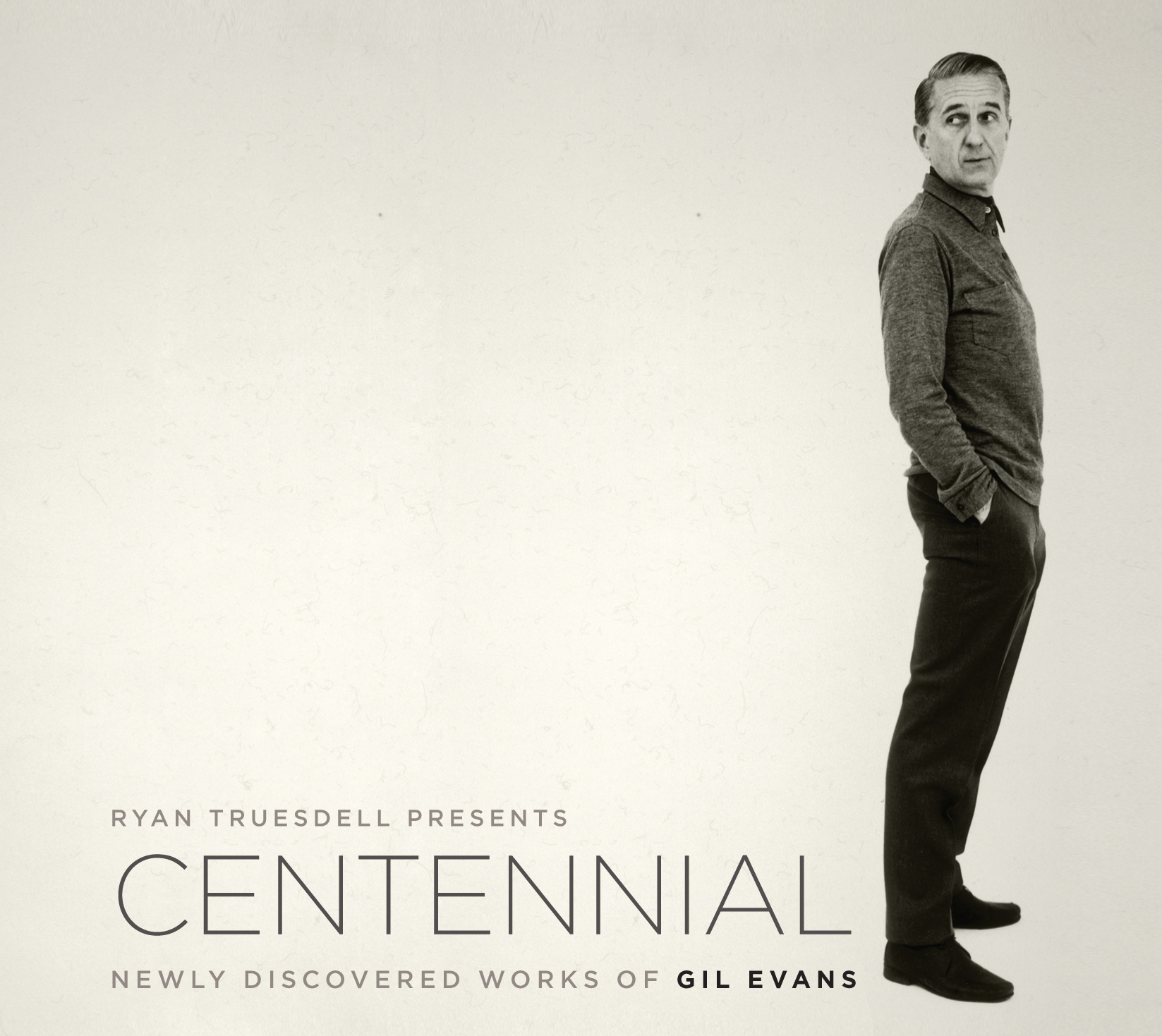
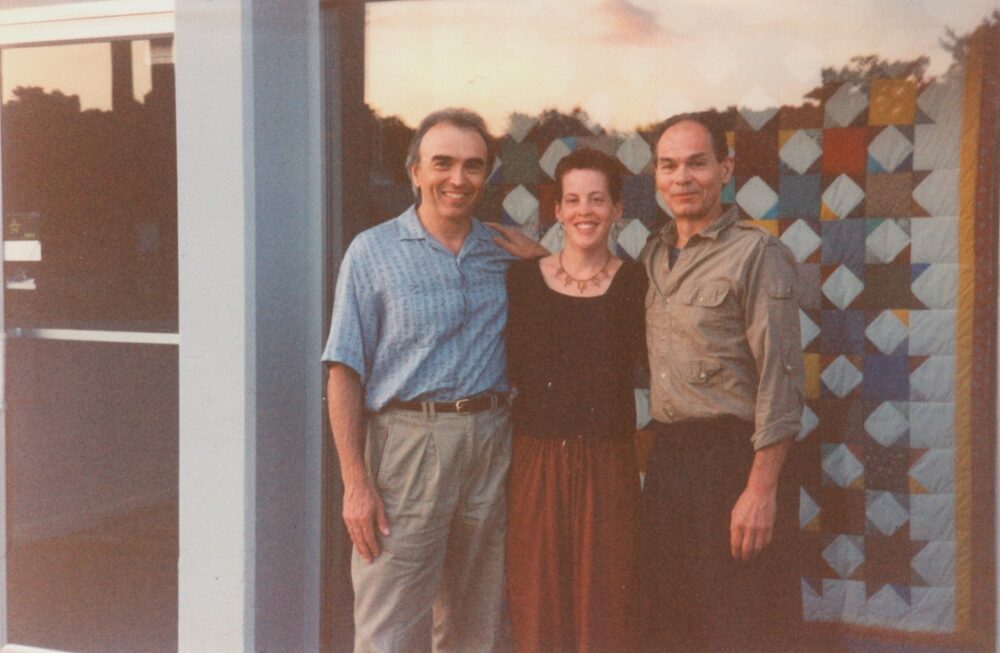
First Photo of Gore Vidal, courtesy of Two Roads Diverged: Gay Men and Women Who’ve Made a Difference. http://www.tworoadsdiverged.com/Famous_Gays.html

Second Vidal photo courtesy of blog at http://www.beppegrillo.it/


Rediscovering a Cezanne Chateau in my Basement

In celebration of the new home and PBS documentary of the extraordinary Barnes art collection (see below) I offer my humble rendering of a Cézanne painting, which he did in oil on canvas c. 1898, and I drew in pencil (and charcoal) originally in 2003. This is actually a detail — the actual drawing is several inches taller and wider than my scanner screen.

I rediscovered this drawing a few days ago, tucked away in an old sketchbook in my basement and dragged it upstairs. After enduring several of my residence moves and incalculable jostlings of the sketchbook (which spent quite a while in the trunk of my car), the drawing had become somewhat smudged, and I realized it needed stronger dynamic contrasts. I had originally done the whole thing in pencil. So now I pulled out and sharpened a charcoal pencil and began to dig into the drawing with it. I also added significant pencil detail to what I had done in 2003 and provided contrast highlights through erasures.

The original painting is titled In the Park at Château Noir and it is in the Louvre in Paris. You can see a reproduction of it on page 253, plate 49 in the catalog Cézanne: The Late Work published by the Museum of Modern Art.

So I had suddenly rekindled my interest and passion for Cézanne. I had gone to New York to see the exhibit Cézanne: The Late Work in 1977. There I also saw the jazz guitarist John Abercrombie wandering wide-eyed through the crowd with a female companion, which seemed entirely apropos, given his highly textural and oddly lyrical impressionist playing style, extensively documented on ECM Records.

I began reworking my drawing ”after Cezanne,” one day before discovering the news about the Barnes collection, which is to be housed in a brand-new museum in Philadelphia and will be subject of a PBS documentary telecast for the first time tonight August 3, 2012.

Among its other distinctions, the Barnes collection claims to have more works by Cézanne than does the Louvre. But it’s a wide ranging collection of both impressionist and post-impressionist painters and artists.

Like many others, I consider Cézanne the father of modern art in that he opened the door to abstraction while delving as deeply into physical reality in a “deconstructive” mode as one could possibly imagine. One can easily see how this work led to Cubism but what truly impressed and moved me was the struggle contained within his art, which many people have commented on. It was an internal dialectic of visual tension what Hans Hoffman called the “push pull.” It was like Cézanne was trying to break the physical world down into its atomic parts and reassemble it again.

But his technology was merely the timeless oils and canvas done en plein air in the rough-hewn hills and valleys and peaks of France, especially his obsession, Mount St. Victoire.

His work always captured that rough-and-tumble quality of the rural French landscape; and because of that some people questioned his technical abilities, as they often did another modern art genius, jazzman Thelonious Monk. Actually a Cézanne painting would fit perfectly as the cover art for a Monk album, with the painter’s highly charged, asymmetric brushstrokes, echoing Monk’s inimitable attack of the keyboard and wonderfully woozy and ragged-jagged melodies. Both Cézanne and Monk were absolute originals and visionaries who transformed their art forms and thus will be remembered long after countless artistic and musical technicians are forgotten.


Discovering a Famous Seafaring Scene in Calatrava’s Pavilion

Calatrava’s Quadracci Pavilion from the South. Photo by davehearse’s photostream

“He rises!” — Gregory Peck, as Captain Ahab in John Huston’s Moby-Dick*

MILWAUKEE — There are very few buildings in the world to which Ahab’s phrase could be applied, after a building “rises” as a construction project. But the fateful utterance befits Santiago Calatrava’s Quadracci Pavilion for the Milwaukee Art Museum almost every noon, when the extraordinary building’s signature brise soleil  sunscreen wings rise and open, to perpetual wonder.

I have seen the structure close-up frequently on bike trips to the building this summer, and I realized that the season is a perfect time for fresh appreciation of an architectural masterpiece for our times.

After all, in summer the public travels past, through and underneath the amazingly dynamic structure, as sunlight and lake water highlight its glories of profile, depth and presence. Thousands of visitors also come to the lakefront festival grounds just south of the museum, for the world’s largest music festival Summerfest, and Milwaukee’s array of ethnic festivals.

Calatrava’s design “evolved into a very challenging building, full of curves requiring painstaking custom work and features that had never before been made for building,” writes Cheryl Kent in her book Santiago Calatrava: Milwaukee Art Museum Quadracci Pavilion. It is an audacious balance of sculpture and architecture, engineering and symbolic power.

Because, as Kent suggests, the pavilion transcends the conventional category of a mere building, it invites the perceptual imagination to take a voyage with it — part of the reason why it is such a perfect building to house creative art. This building seems to breathe with life, to a degree matched only to designs by Frank Gehry, perhaps the only other contemporary architect to rival Calatrava now with superstar status among the general public.

But what spurred my blog posting was the sight of the Calatrava from the Southerly perspective, as I turn my bike around to head back north toward my home in Riverwest. I saw something in the building I hadn’t noticed before, a relationship between the facets of its major features that sprang to life in a work already rich in symbolic resonance.

This vantage point allowed the tallest part of the structure to make metaphorical sense. Behind the pavilion’s main structure stands the great diagonally pitched pole, which secures long suspension cables for the pedestrian bridge, from the downtown to the pavilion entrance. As I look, the severely leaning pole evokes the main mast of a sinking ship. Accordingly the lower white sides of the main structure resemble the hull of a ship with flaring stern and bow.

Kent has termed the very front of the pavilion facing the lake, as “a cantilevered ‘prow’ that draws visitors inexorably with the sensational view of Lake Michigan.”

But what famously sinking ship do we think of? The Pequod, of course, captained by the monomaniacal Ahab, who led his entire crew, save one, to doom. And the ship is sinking, of course, because of the explosive monster that surges up triumphantly just ahead of the tottering mast, after having rammed it.

The more you look at this building, in this sense, the more whale-like it becomes, especially the area beneath the long horizontal “ship deck” railing. This lower configuration is a widely flaring section with buttresses supporting a balcony that shades large lower windows. The whole darker form resembles the horizontal shape of a captured whale — to almost exact scale and proportion – hooked up alongside a whaler to be stripped to its skeleton for its blubber, and the prized spermaceti, in the case of Moby Dick’s sperm whale species (see photo at top).

So, upwards we go to the climactic moment, where the brise soleil calls for a slight imaginative leap to extend the whale metaphor. But as the rising wings move skyward one can envision the long, white wing-like fins of the humpback whale, captured in a time-lapse sequence on film. Just below the wings, the brise soleil’s impossibly long blue-green windows fall from the central backbone like the sea itself, cascading off the body of the breaching whale.

If one still questions the aptness of this creaturely metaphor, consider the most obvious alternative. The wing-like brise soleil is often compared to a giant bird, but no bird of this scale ever existed, whereas the building’s proportions do come close to those of a whale, or no other creature.

And the unconvinced should step inside the building where its cetological qualities expand like a giant inhaling ribcage. The bone-white flying buttresses that curve over the long hallways extending along outside the east and west lengths of the Quadracci Pavilion’s galleries and gift shop resemble the ribs of only one creature, that of a whale.

One of the long butressed hallways outside the galleries of the pavilion. This photo and the one below are by Mary Ann Sullivan c 2002

So in these hallways and in the main foyer, one gets a Jonah-like sense of being inside of a whale. Standing in the cavernous 90-foot-high Windhover Hall and peering up, one seems to witness — from within — a mighty whale breaching skyward.

Windhover Hall, the pavilion’s foyer.

As Kent notes, descriptive nomenclature sprang up among those working on the construction project to identify pieces in the building: they need certain parts of the ‘wishbone,’ the  ‘fishbowl,’ and the ‘hammerhead…’” So allusions to organic aquatic forms arose even during the construction. One can easily imagine the architect playing with aquatic symbols as he designed his masterpiece to overlook one of the Great   Lakes. Calatrava appears to have extended this creation into the vast and profound legacy of what many consider the Great American Novel, and a great allegorical story of America.

Given all this, a good idea for an art exhibit here would be a gathering of the profusion of visual art that has been inspired by Moby-Dick. In fact, the catalog already exists: Elizabeth A. Schultz’s masterful Unpainted to the Last: Moby-Dick and Twentieth-century American Art.

The coffee-table sized book delineates illustrations for notable editions of Moby-Dick, including those of Rockwell Kent, Boardman Robinson and Barry Moser; the surprising array of abstract expressionist paintings and sculptures including work of Jackson Pollock, Sam Francis, Theodore Stamos, Paul Jenkins, and Frank Stella; narrative and realistic representations of Moby-Dick by artists including Jean-Michel Basquiat, Robert del Tredici, Maurice Sendak and Robert Indiana; various political cartoonists and arguably today’s most prominent and controversial sculptor, Richard Serra, who created in 1986 a whale-shaped and sized steel work titled Call Me Ishmael.

Given the often-long lead time for curating and scheduling major exhibits, a good target date for such an exhibit might be 2019, which would be the 160th anniversary of Melville’s visit to Milwaukee, when he delivered a lecture on life in the South Seas on Feb 25, 1859, based on his adventurers as a whaler.

Which leads us back to the actual ocean of Melville’s imagination. Recall this blog’s epigraph. The phrase “he rises” does not appear in the original Moby-Dick text during the climax of the long-awaited confrontation with White Whale. It was written for the 1957 screenplay version, by director John Huston and writer Ray Bradbury. In Melville’s book, the boat crew together beats Ahab to the call:

“’There she breaches! there she breaches!’ was the cry, as in his immeasurable bravados the White Whale tossed himself salmon-like to Heaven.”

Santiago Calatrava’s architectural bravado seems worthy of Melville’s description.

______________________________

http://www.flickr.com/photos/overbythere/5614303727/sizes/o/in/pool-1779525@N22/

The Deadly Attack of the Smart Phone Zombies


I ended my last posting with a heartfelt paean to the newest generation of American citizens in their 20s. Even if this may seem like a critique of that same generation, I write with the greatest respect for their potential and intelligence. But I’m compelled by a deep concern about a technological force that seems to have this generation in its grip.

I call it The Deadly Attack of the Smart Phone Zombies.

Trying hard to be cool urban hipsters? Or are they devolving into smart-phone zombies? You decide. Courtesy: Shutterstock.

You may recall the classic zombie B movie Night of the Living Dead, where all the decomposed humans who’ve come back to life wander around looking for human flesh. But they are pathetic monsters, in fact — easily eluded or out-run, and whatever intelligence they may have once possessed is shrunk down to their one fixation. But because of that fixation they are relentless — their only power — to kill and feast on human flesh.

In this case, the obvious intoxicating fixation is a darkly gleaming toy in the left hand.  The statistics are horrifying and seemingly improbable regarding its physical dangers(see below), not to mention the social problems. These seemingly innocuous zombies do kill. The notion that someone would be typing a message to someone while driving a car in traffic is so absurd as to be instantly thrown out of a screenwriting brainstorm for The Twilight Zone.

It’s because the people in The Twilight Zone are usually hyper-aware and all too sensitive to the strange goings-on and impossible situations that are closing in on them.

Not these people. And most of them are in their 20s and that’s what troubles and saddens me because it’s clearly a matter of cultural conformity and peer pressure. If you’re not texting or tweeting or adding Facebook friends, you’re just not with it.

Well, the reason you’re not might because you’re dead, if not a real zombie well on its way back to the grave.

Here are three incidents I witnessed today:

1. I went out biking and as I turned onto the pathway that leads to the main East side Milwaukee bike trail to the lakefront I approached a young mother with a toddler. She noticed me and instinctively shooed her youngster over to the right side. I always admire good maternal instinct. Imagine my shock when as soon as her son was safe she began meandering diagonally right into my bike’s pathway, her head down and re-engrossed in the zombie box. I had to break and she finally came to, and almost looked up.

2. I arrived at the aesthetic destination of each of my three times a week bikerides — the splendor of the Milwaukee harbor skyline highlighted by Santiago Calatrava’s addition to the Milwaukee art museum, a wondrously expansive work of sculptural-architectural engineering (more on that next time). A lovely 19th century style schooner drifted across the the bay and of course the birds delight — singing, swooping and skimming, and fanny-flashing ducks diving comically for fish, the surf lapping against the rocks, the elegant expanse of the Hoan Bridge and the humble yet amiably striking Milwaukee skyline. It all beckons the senses.

And yet, at the very moment where this whole scene unfolds before a pausing biker’s eyes, a young woman biker had stopped and instead of beholding the beauty, she had her head down in her zombie box pose. Apparently this was her reward for her exercise. Hel-lo??

3. On my way back, I’m on the very same pathway where I encountered the zombie mother, I now approached a young couple strolling ahead. I slowed down and coasted toward them until the man turns and sees me and steps aside. The zombie smart phone woman is oblivious. I’m forced to come to a complete stop.

I think the guy said excuse me. The woman was walking with the man totally engrossed in her zombie box. This was obviously not a romantic couple. Still, if I were him I would be insulted. I would say, “Roommate, if you walk out into the traffic on Locust and kill yourself, don’t blame me.”

These three instances all happened on one bike ride today, July 24, 2012. Don’t get me wrong. I’m not truly a Luddite. I have my own cell phone and I like to check my e-mail and add friends to my Facebook page — at home. I don’t have a problem with people walking down the street talking on the basic cell phone – much. I’ve even mixed my bike rides a few times with listening to Playaway’s utra-portable books on digital, but I’m not visually distraced. And Skype is mighty cool – at home or at Starbuck’s.

Part of the problem is that many in our society may be becoming addicted to virtual reality. We think we’re really connected but there’s a metaphysical disjunct between true reality and really always being virtually connected. And it seems clear it is a psychological addiction. I’m no doctor, but the best practical definition of addiction still comes from good old AA, and I learned about this because I was a member of Al-Anon, the offshoot support group for affected family members of alcoholics and drug addicts. I was once the husband of a bi-polar alcoholic — who is now dead. An addiction is a compulsive behavior which forces a person to lose control of their life — to where “our lives become unmanageable.”

If your awareness of your moment in the present shrinks to where you are risking lives and safety, your life is becoming unmanageable. You’re moving into zombieland. You are missing out on life, the proverbial flowers in front of your nose.

According to a June 2012 Mobile Mindset Study that extrapolates its results to the entire country, about 60% of us (particularly those 18-34) can’t go for more than one hour without checking our phones for messages, getting online, or whatnot. Addicts are classically in denial so they don’t realize how insidious the force is, especially because the addiction initially seems a great empowerment, and here’s where the devil lies in the weeds or more precisely, in the details.

This is an addiction to minute detail, to all the tiny bells and whistles crammed into that little electronic palm Oz — the games, gizmos, the blue horses, old Friends episodes, ads up the wazoo, and endless fleeting conversations and gossiping going on between fellow zombies hither and yon.

They think they’re smart, cool and connected. Perhaps they are connected and importantly so at times. And there’s no denying the value of cell phones in emergencies. But they do look and behave like social zombies. Or perhaps like lemmings who lost their herd wriggling heedlessly to death in the sea. Or they resemble a ponderous beast of burden, who walk around with their heads down, trying to blot out the dullness, misery and pain of their existence. Those are inherently sad creatures but for very different reasons than the behavior I’m discussing.

And yet, could it be that we humans are trying to compensate for the dullness, misery and pain of our existence? That life might indeed feel as constricted as a beast of burden — if I am addicted to my tiny little talking toy in my fist. We all grow bored with the same toy, no matter how engrossing, after a while and yet if we are addicted, it may lead us into a kind of living hell that we cannot admit because after all we’re cool.

We might keep on doing it until we might eventually crash into each other in our cars while texting each other. The police officer pulls the phone from my death grip and reads on the tiny screen: “Hey dude, want to go see ‘Waiting for God–.’ ”

Okay, I’ve pushed this thing to a dramatic absurdity, a scenario I hope Samuel Beckett would appreciate. But here are the statistics. The National Safety Council estimates at least 28% of all traffic crashes – or at least 1.6 million crashes each year – involve drivers using cell phones and texting. NSC estimates that 1.4 million crashes each year involve drivers using cell phones and a minimum of 200,000 additional crashes each year involve drivers who are texting. The announcement came on the one-year anniversary of NSC’s call for a ban on all cell phone use and texting while driving.

“We now know that at least 1.6 million crashes involve drivers using cell phones and texting,” said Janet Froetscher, president & CEO of the National Safety Council. “We know that cell phone use is a very risky distraction and texting is even higher risk. We now know that cell phone use is a factor in many more crashes than texting. The main reason is that millions more drivers use cell phones than text,” she said. “That is why we need to address both texting and cell phone use on our roads.” 1

So this is not just my rant. “For the smart-phone users, they’re totally, constantly engaged with the private sphere, and it’s reducing the basic roles of public space,” Tali Hatuka, who heads the Laboratory for Contemporary Urban Design at Tel Aviv University, lamented to The Atlantic magazine. She sees technology’s darker side, as did Norman Mailer, who once pronounced unequivocably that technology is the devil’s playground.

“This is not a good thing,” Hatuka continues. “The public sphere plays an important role in our communities: it’s where we observe and learn to interact with people who are different from us, or, as academics put it, it’s where we come to know ‘the other.’”

In their surveys, Hatuka and colleague Eran Toch also asked questions about what people remembered of the public spaces they’d visited just 10 minutes earlier: what did those places and the people there look like? Smart-phone users couldn’t remember much at all; in effect, they weren’t paying attention in the first place. This suggests, Hatuka says, that the ubiquitous smart phone may even degrade the way we recognize, memorize and move through cities. We will lose many of these benefits when we’re one day all walking around thumbing our Twitter feeds, The Atlantic reporter wrote.

Okay I’m a baby boomer and I know people still mock us for being potheads. But if we diminish our brains in any manner by smoking pot we also expand other parts of our minds with the stuff and potentially, for millions of others needlessly suffering, herb helps with chronic pain. And most cannabis smokers do it privately in our home threatening no one, except perhaps themselves, only if they abuse the drug.

I mean, we boomers came up with Cheech and Chong movies, man! We know we’re goofs when we’re high and giddy out in public. But the pot joke is ours — on us — man, and by now as old as dirt.

How old is it?

“That’s so 20 seconds ago.”

Yep, that’s the historical sense “smart phone” manufacturers are providing in their sales pitches: “That’s so 20 seconds ago!” — the ultimate in smart phone-chic inanity.

Laugh track cue?

Sigh.

Don’t get me wrong, please. I’m not trying to play a generation gap card here because again — I have the highest regard for the 20s generation, probably because they remind me of my generation, of our idealism and our seemingly limitless change-the-world potential, much of which we squandered, or fell prey to cultural backlash. We are still trying to right our wrongs and all the rest of those perpetrated by corrupted Western civilization, in our small — or ambitious — and hopefully wiser ways.

But that’s why I don’t want to see the young citizens I teach make mistakes like we made, because I love these young people, I really do. If they make mistakes that means I may very well be mistaken in my own teaching — especially if I don’t speak up like this. But they’re aware of the problem, to some degree.

Last year, one of my Marquette University freshman English composition and rhetoric students did an eloquent presentation on this very subject, telling of a popular, charismatic high school friend who was gruesomely killed because someone was texting while driving, an extremely powerful testament. The student, a tall, striking blonde, finished on the edge of tears. The classroom was deathly still and then broke into a warm applause. Full of pride, I really wanted to hug her, but I probably would’ve gotten arrested.

As Milwaukee’s renowned comic writer, secret saxophonist and philosopher Art Kumbalek says, “Man oh manischewitz what a world, ain’a?”


1 “We now know that at least 1.6 million crashes involve drivers using cell phones and texting,” said Janet Froetscher, president & CEO of the National Safety Council. “We know that cell phone use is a very risky distraction and texting is even higher risk. We now know that cell phone use is a factor in many more crashes than texting. The main reason is that millions more drivers use cell phones than text,” she said. “That is why we need to address both texting and cell phone use on our roads.”

http://www.nsc.org/Pages/NSCestimates16millioncrashescausedbydriversusingcellphonesandtexting.aspx

http://www.theatlanticcities.com/technology/2012/05/how-smart-phones-are-turning-our-public-places-private-ones/2017/#

http://article.wn.com/view/2012/06/26/Smartphone_Addiction_Is_Sweeping_America_Report/


Kenneth Lonergan’s “Margaret” endures a modern-day “Shock Corridor.”

Anna Paquin as Lisa Cohen confronts a bus driver (Mark Ruffalo) about his role in a woman’s death.

Anna Paquin blisters the screen in Margaret in one of the most amazing roles by an actress in a recent memory. She’s a 17-year-old named Lisa Cohen, of deeply questioning intelligence trapped in a vice between forsaken justice and don’t-make-waves conventions. Is it any wonder she’s driven to a virtual primal-scream state? What fuels her internal cauldron is a philosophical question: Can the pure but troubled heart of a teenage girl provide a cue for humanity to reconstruct its legal system so that justice rather than money are served?

That question lurks close to the core of screenwriter-director Kenneth Lonergan’s stunningly ambitious character drama. It has such a compressed emotional and intellectual fervor that I ended up with a slight headache, and yet I wanted to wrap my head around it for so many reasons.

My entryway came surprisingly the next day when I happened to watch film maverick Sam Fuller’s daring 1963 film of social commentary Shock Corridor on TCM.

I doubt Lonergan had this connection in mind but bear with me as we travel into the anguished interiors of Lisa’s mind. She’s a heroine and rightfully and righteously so. Both Paquin’s Lisa and Constance Towers, as Cathy, the female lead in Shock Corridor, appear to be each filmmaker’s voice for social justice, crying in in the wilderness of cynical greed and compromised justice that society has engulfed itself in.

And in both characters, the voice is embodied in a peculiarly sexualized persona which lends deeply Freudian or at least psychological tension to their messages to themselves as well.

In Fuller’s film, Cathy is the stripper girlfriend of Johnny Barrett, the scheming reporter trying to fake his way into a mental ward so that he can write an exposé story and win a Pulitzer Prize. Cathy’s a literate wit who despises Johnny effort to “earn a journalistic halo on the cover of LIFE magazine.” She continues: “Dickens didn’t put Oliver Twist on the couch because he was hungry…Hamlet was made for Freud, not you!”’ She’s personally afraid the “whole Jeckyll-and-Hyde business will backfire and make a psycho out of me.”

In Lonergan’s film, smart Lisa has a little bit of an on-the-edge Hamlet in her, which makes her such a fascinating and loaded character.

She witnesses a horrible death when a pedestrian, played by Allison Janney, grotesquely loses a leg under a bus and bleeds to death in her arms. Lisa feels partly responsible because she distracted the bus driver by selfishly trying to ask him — through the closed bus door — where he got his cowboy hat, as the bus accelerates from a stop.

She first tells police the pedestrian tried to cross against the red light, thus exonerating the bus driver from any guilt. But she can’t live with herself and goes to the police later to change her testimony. Lying hidden in the bloody gutter is a larger case against him and the New York public transit system.

But Lisa’s pressurized, lonely struggle for justice and to safeguard the public spurs her to extreme behavior. She lashes out excessively in a classroom discussion over what was worse — the 9/11 attackers or America’s warring response to it. And her sexuality seems in the grip of her crisis. She rashly calls an unsuspecting friend and asks him to come over and deflower her virginity. Later, with her desperation over the case intensifying, she seduces her exceedingly understanding math teacher (she’s a lousy math student) played by Matt Damon, a confused mixture of fraternal rectitude and mealy-mouthed obsequiousness.

Matt Damon, a sympathetic high school math teacher, meets with his troubled student Lisa Cohen in this scene from Margaret. photos courtesy: foxsearchlight.com/margaret/

He’s fascinated by this intelligent and torn young woman, whose sexuality throughout is encased in a quivering need for love and understanding — and for a sense of her place in an adult world that goes by rules and conventions that chill her soul. She senses that the math teacher is sensitive enough to understand her.

Lonergan — whose superb but comparatively modest You Can Count on Me revealed his gift for character portrayal, convincingly quirky dialog and a staunch faith in family — shows how deep he can delve in Margaret. Two stars from the earlier film return: Mark Ruffalo cowers and cringes soulfully as the bus driver and Matthew Broderick, Lisa’s  English teacher, reads her class a Gerard Manley Hopkins poem (below) that mirror’s Lisa’s experience. Lonergan read the poem on a recent Fresh Air radio show and named his film after the poem’s character Margaret (but didn’t name his lead character after Margaret, a confusing decision.)

And the director relieves the psychological intensity with cinematic interludes of New York cityscape, including an astonishing shot of a car-choked Manhattan street seen from high above at night. The endless caravan of lights seems to penetrate to the unfathomable depths of Lisa’s darkened soul. The light down there can’t be fully extinguished.

After considerable anguish and doubt she does the right thing — reporting the facts of the incident correctly, but unlike Hamlet she does not have the lethal power for an avenging justice.

I’m not suggesting Lisa is a candidate for a mental institution like the one graphically depicted in Fuller’s film. But the film suggests how close she, and perhaps any one of us may come to a kind of madness — especially if we face harsh systemic realities honestly in a world feeding on delusion and denial.

Her behavior continues unpredictably right to the end of film, but her persistence burns eloquently. And her need for love stretches desperately across the gulf between her and her mother, an off-Broadway stage actress absorbed in her career.

This much exposition seems necessary for this complex film, yet if we pull back and reflect, Lisa’s footsteps lead her into an inner version of the shock corridor of the Fuller film. Here’s where the two films’ fearless exploration of sexuality, complicity and various types of guilt intersect.

After the reporter in Corridor gains admission to the asylum his seductive girlfriend haunts his dreams and conscience. I won’t do justice to Fuller’s tersely incisive and frightening film about how tricky mental delusion can be in anyone. My real subject is Lisa’s tight-rope walk over insanity or deliverance — over the pit where the light of love and justice seems never to reach.

Margaret also gets you thinking about the anonymous, secret millions of dollars that are now turning our democratic election process into a stealth game of attack ads and other byproducts of a corrupted system. Or about Penn State football coach Joe Paterno milking the university for millions in a secret exit deal — exploiting the intense pressure of the Jerry Sandusky sex abuse scandal. Say it ain’t so, Joe, even from your grave.

This remarkable young character also made me think of my recent freshman English composition students at Marquette University. They consistently stunned me with the zeal and passion of their involvement in selected social issues, virtually to a person. These were sensitive, smart and engaged young citizens hardly any older than Margaret. Is it too much to say they may be our damaged democracy’s only hope? I think we must heed and treasure them when they burn brightly as precious jewels of moral brilliance, lighting our way through the darkness of the present.

p.s. after viewing Margaret again in November 2017, I could add a number of comments about this rich work of art.  But I’ll only note how brilliantly real Lonergan’s dialog is. It never sounds written, rather the deep, impulsive utterances of uncertain souls often stumbling against each other verbally, exposing their insecurities and pain. Finally, the borderline verbal chaos melts into a deep, primal hug between Lisa (Margaret) and her heretofore-disconnected actor-mother. This whole tale is pretty operatic. So Lonergan declares art as the spiritual bridge — a simpatico scene mother and daughter are watching from Offenbach’s opera The Tales of Hoffmann.

After reading the Hopkins poem below, see this blog link for an interactive survey of connections between the poem and the Lonergan film: Interactive blog for Hopkins poem from “Margaret.”

Spring and Fall   By Gerard Manley Hopkins (1844–89).

MÁRGARÉT, áre you gríeving
Over Goldengrove   unleaving?
Leáves, líke the   things of man, you
With your fresh   thoughts care for, can you?
Áh! ás the heart   grows older
It will come to such   sights colder
By and by, nor spare   a sigh
Though worlds of   wanwood leafmeal lie;
And yet you wíll   weep and know why.
Now no matter,   child, the name:
Sórrow’s spríngs áre   the same.
Nor mouth had, no   nor mind, expressed
What heart heard of,   ghost guessed:
It ís the blight man   was born for,
It is Margaret you   mourn for.

A Gust of Cooling Emily Dickinson


My early morning felt graced with my feline’s Egyptian profile at my right hand and Emily’s gurgling verse in my left, and — could it be? — a cool breeze o’er all.

So this:

These Fevered Days — to take them to the Forest

 Where Waters cool around the mosses crawl —

And shade is all that devastates the stillness

Seems it sometimes this would be all —  

— Emily Dickinson c. 1878


Will the Wolf Survive — or Attack? Examining “The Grey” Controversy

Dermot Mulrony (glasses) and Liam Neeson (to his right) are two of the oil-riggers trying to survive Alaskan wilderness and a pack of wolves after a plane crash in The Grey.  Courtesy Rotten Tomatoes staff

Against tough odds, Joe Carnahan’s film The Grey infiltrates the titular haze of its frigid, blizzard-ridden environment to penetrate the human heart. The title also alludes to the grey wolf, a beautiful creature that is also the world’s most notorious predator canine, justifiably or not.

I don’t normally search out number-one box office hits, especially violent ones, but this one impressed me deeply, so my reference to the director is also a nod to Andrew Sarris, the recently deceased critic whose auteur theory helped moviegoers understand films as the creation of a director-as-artist. And at a time when the current top-grossing movie is about a foul-mouthed teddy bear, we might gain better bearings with a film  exquisitely photographed and superbly acted under often-ruthless conditions in British Columbia.

Perhaps I needed a wintry film to psychically cool me amid this sultry summer. Man, this did the trick. I felt sympathetic frostbite, even in our 90-ish° weather. But I was also very curious about how the film would depict wolves — its nominal heavies. It turns out more rabid wolf lovers than me* object to this movie. There’s an organized protest against the film, including a Boycott-The Grey Facebook page.

The page cites the seemingly compelling statistic that only one human has been killed by a wolf since 1888. The page goes on to say that the film’s “completely fictional” depiction of wolf behavior encourages “ignorant people to think it’s a good thing to kill all the wild wolves” because of the depiction here of wolves whose behavior is largely computer-generated.

So what happens in the movie? Well, Liam Neeson as John Ottway and a plane full of fellow oil riggers crash into the Alaskan wilderness. As Ottway — who knows wolves as a poacher — explains, they have accidentally ended up very close to the wolves’ den. These wolves will aggressively, and it turns out relentlessly, defend their den.

“We are interlopers,” Ottway says.

The film does not encourage the killing of wolves that I can see. “I don’t think the film will make people fear wolves, but I’d like to make them respect wolves and, by extension, nature itself more,” writer/director Carnahan told the Greenspace blog at the Los Angeles Times. “I’d like the movie to remind people that we’re just visitors here.”

I question his former point, but agree with the latter two. Neeson the poacher does shoot one wolf in the beginning, but we see him walking up to the creature, crouching and placing a tender hand on it as it dies. He is clearly conflicted about his poaching and is actually suicidal — his wife has left him and his self-esteem is now stuck on the bottom of his boots.

Yet he knows how dangerous a wolf can be — when protecting its territory. Wolves usually give up chases after 1–2 km (0.62–1.3 mi), though one wolf was recorded to chase a deer for 21 km (13 mi). But their territorial protection is very real. So the chase by the wolves in the film is plausible.

Yet, Daniel MacNulty, a wildlife-ecology professor at Utah State University asserts in a National Geographic interview that Ottway’s assertion that wolves will attack anything that comes near their den, and “are the only animal that will seek revenge.” is “nonsense.”

Whales clearly have seeked revenge against whalers. These men are facing a serious wolf pack, and MacNulty’s “nonsense” comment unintentionally evokes Melville’s comment on another animal well capable of killing men: “I tell you, the sperm whale will stand no nonsense.”

So do wolves attack humans or not?

Valerius Geist, Professor Emeritus of Environmental Science, The University of Calgary, in a recent paper wrote:Wolves attack people. These initial attacks are clumsy, as the wolves have not yet learned how to take down efficiently the new prey…Persons attacked can often escape… But mature, courageous man may beat off or strangulate an attacking wolf. However, against a wolf pack there is no defense and even two able and armed men may be killed. Wolves as pack hunters are so capable a predator that they may take down black bears, even grizzly bears.”

Today, “territorial threats and starvation are likely the two chief reasons for wolf attacks,” but some researchers posit that wild wolves can, in fact, begin to explore humans as prey under certain other conditions, Geist writes.

And despite the claims of Facebook’s The Grey-boycott page, Geist writes of 21 reported fatal wolf attacks since 2000. Most have been in rural Russia, but recent attacks also include one wolf-related death in Saskatchewan, Canada, and one in Alaska — the 2010 mauling death of teacher Candice Berner, who was out jogging near Chignik Lake, Alaska. Thousands of Europeans were killed by wolves between the 1500s and 1800s, when rabies was far more prevalent.

Historically, North American settlers’ guns have made wolves wary of humans.

The men in this film are without any guns, Ottway’s rifle having been ruined in the crash (He fails to think of bringing it anyway as a visual threat or a club, a small plot flaw). Meanwhile, the core territory of a grey wolf pack is on average 14 square miles, so you begin to sense the dilemma of these men. Do you stick by the downed airplane with its partial shelter and likely radar location of search parties, or do you flee from the wolf territory?

[What ensued was the best wilderness survival film I’ve seen in many years. The Grey cuts to the human experience on the icy edge of existence with brutal force, and stunning and telling detail. Note one scene’s blood icicles from above – the plane crashed and capsized… It gradually and persistently won me over. And the wolf attacks scenes, though shocking in their suddenness, did not seem gratuitously graphic, given how raw and immediate such attacks often apparently are. It’s a well-earned but, I think, an honest R-rated film.

And the portrayal of wolves has complexity. In Earth Island Journal, James William Gibson comments that the opening scenes “portray the oil company town as a modern hell, the men as brawling drunks and assorted losers (‘men unfit for mankind’ in Ottway’s voice over narration) and the attacking wolves as possibly morally superior…On another occasion, one of the survivors kills a wolf and the group roasts and eats it. In a fit, he then cuts the wolf’s head off and throws it into the woods, declaring, ‘You’re not the animals. We’re the animals.’ No one openly disputes him.”

That character is John Diaz, a bristly ex-con played by Frank Grillo, who resists Neeson’s characteristically gruff, self-righteous bossiness. It’s almost a satirical commentary on Neeson’s typical alpha-male style, which is tempered here by the actor’s distinct intelligence and sensitivity.

At one point, Ottway recalls a poem written by Irish father: “Once more into the fray. / Into the last good fight I’ll ever see./ Live or die on this day./Live or die on this day.”

This is ultimately a story of men enduring hardship together and becoming more human for it, especially as they struggle to survive their fear, and often horribly forbidding weather, not to mention the wolves.

The director says he tried to convey the wolves not as monsters but “as a fact of, and therefore a force of, nature.” They attack with uncannily swiftness and in one scene appear as a group of electric eyes hovering in the darkness.

Ottway speaks of human ego and hubris and says, “Nature will always impose its nature on us.”

And consider it from the wolves’ point of view. I huge flying metal monster crashes and explodes near their den – a “territorial threat.”  About seven humans emerge from it, some injured and bleeding. The wolves smell this, and come after the men, in instinctively aggressive self-defense.

I buy this, even though I believe also that wolf attacks are very rare. So the real problem is not a film like this, if you watch it all the way through and acknowledge its philosophical aspects and its human story. The problem is reactionary politicians trying to undermine a long-sought re-population of wolves. For the first time ever, Congress may legislatively remove protections for an endangered species under the Endangered Species Act, reports the Center for Biological Diversity. Several bills have been introduced removing protections for wolves.

Wolves have seen tremendous recovery in the northern Rocky Mountains and Great Lakes. But the job of recovery is not yet complete. With removal of protections, Wyoming would allow wolves to be shot on sight across most of the state and both Montana and Idaho would dramatically reduce wolf numbers.

This threat brings me back to another aspect of The Grey, the wolf howls. Their cries are uncannily powerful, strangely musical and poignant. And they are an acoustic force of nature. Wolf howls can under certain conditions be heard from distances of up to 50 square miles.

The soul-bracing wolf cry can penetrate the grey shield of human indifference. It would be a travesty to begin a regressive killing of such intelligent, highly social creatures with their wondrously profound call of the wild.

* I am a strong nature advocate, a Defenders of Wildlife member, the kind who’s truly touched by a recent birthday gift of a tree being planted in my honor in a National Forest. Thanks, Ann and Richard.

[

http://en.wikipedia.org/wiki/Gray_Wolf

http://newswatch.nationalgeographic.com/2012/02/03/would-real-wolves-act-like-the-wolves-of-the-grey/

Click to access Geist_when-do-wolves-become-dangerous-to-humans.pdf

http://www.earthisland.org/journal/index.php/elist/eListRead/wolf_advocates_rage_against_the_grey_might_be_misdirected/

http://www.csmonitor.com/USA/2012/0128/The-Grey-Is-film-s-portrayal-of-wolves-as-man-killers-too-dramatic

http://www.freewebs.com/alphawolfsabrina/


Culture Currents moves to the Grand Tetons

Readers may have noticed the change in the theme image of Culture Currents, to a photograph of the Grand Tetons, taken on March 11, 2012 by Michael Melford of National Geographic. I feel it adds a bit more dimension to my thematics even though the concept of “currents” is here a bit more subtle. However, the full, uncropped photo above includes much more of the Snake River undulating into the foreground. Here it is for your delectation. Of course, the wind is a primary source of aquatic currents, so the wind that helps shape the waves also moves the clouds that engulfed the mighty peaks this day.

This scene recalls my very first experience in the Tetons when, with my friend Frank Stemper, I began a climb of Teewinot Mountain with no experience or equipment,  back in my foolhardy youth. (Teewinot  is the broad-faced snowy mountain above the last bend in the river in the background. The Grand Teton, situated on Teewinot’s left, is invisible in cloud cover here. But I chose Melford’s National Georgraphic photo for its obvious beauty and complexity.)

Below are photos of the day we climbed in late August in the early 70s.

Frank Stemper eyes the summit of Teewinot Mountain before our climb — Photo by Kevin Lynch

Frank and I climbed a ways above Teewinot’s tree line on the left face, and then retreated. But a dense cloud descended on the mountain, and we could hardly see a few feet in front of us — when we reached the edge of a steep cliff. We had no choice but to stop and plop down and wait for the clouds to clear. But night was falling and it began raining and the temperature hovered cruelly just above freezing. So we crawled into our cloth sleeping bags and lay shivering on the edge of the cliff, with our knees up in the air to try to keep our crotches dry. Frank offered me a cigarette for a bit of warmth, or one might say, cold comfort. I appreciated the puffs but it is the last cigarette I’ve ever smoked.

Frank fell asleep at one point and dreamed of our third friend, John Kurzawa, driving up the mountain in my mother’s Ford station wagon, and saving us.

It was only a dream and I don’t recall fallen asleep at all. The clouds finally abated sometime in the morning and were able to traverse along the cliff and find a path to descend. But that experience has certainly shaped my sense of the power of natural currents, thus wind and clouds serve as metaphoric symbols of my blog “Culture Currents” as much as water does.

By the way, I became a fairly enthusiastic climber and returned to the Tetons a number of times, and reached a handful of summits, including the Grand Teton. The Tetons taught me deep humilty, especially after I fell twice on one climb. I also began to sense how nature provides artistic form and texture, and dynamic challenges of energy, which feed perpetually into the human sense of creative possibility. Thus, landscape and seascape are timelessly fecund artistic forms for me.

Kevin Lynch on Teewinot begins to sense how nature provides artistic form and texture and dynamic challenges of energy… Photo by Frank Stemper and Kevin Lynch (double exposure)

Meanwhile, Frank, though a very creative person as a composer, seems to have sworn off heights since then, although he remains a courageous marathoner into middle age.

“And we are enabled to apprehend at all what is sublime and noble only by the perpetual instilling and drenching of the reality which surrounds us. The universe constantly, and obediently answers to our conceptions; whether we travel fast or slow, the track is laid for us. Let us spend our lives in conceiving that. The poet or artist never yet had so fair and noble a design but some of his posterity at least could accomplish it.”

— Henry David Thoreau, Walden; or, Life in the Woods (1854)

The human-centric transcendentalist notion that the universe “obediently answers to our conceptions” seems dubious today. However, we can certainly interpret the universe through our creative and scientific conceptions, although never truly possess it. Thoreau seems to acknowledge that, while bullishly articulating an inlet to nature-reality through creative consciousness.


Heyyy watermelon man, the whole world hears you playin’ that jazz!

Summer travels have delayed me from commenting on a very important cultural event, the First International Jazz Day, held on April 30 in the General Assembly of the UN in New York City. Despite the event’s extraordinary demonstration of the creative and pan-cultural range that the language of jazz possesses today, this first-of-a-kind event was undercovered by the mainstream press. Even Down Beat caught up with the event in its July issue. One man on the actual beat was Howard Mandel, perhaps the dean of my generation of baby boomer jazz critics.

I’ll refer Culture Currents readers to Mandel’s blog page (below), Jazz Beyond Jazz, with its direct link to his vivid, in-the-pocket review of the huge event with a mind-tripping the lineup of artists.

Herbie Hancock at the first International Jazz Day (courtesy of City Arts, New York’s Review of Culture) 

Herbie Hancock, who has become the Louis Armstrong of his generation as a jazz ambassador to the world, was responsible for pulling this together as an actual event, attracting artists from many nations and musical vernaculars, and orchestrating  a true phenomenon: The simulcast event actually reached 195 nations and improbably had musicians in locations around the world playing together Hancock’s famous jazz boogaloo “Watermelon Man” in tandem with his performance of it at a sunrise concert In Congo Square, New Orleans. What a trip that moment must’ve been.

To repeat: a famous jazz theme played together throughout the world at sunrise at Congo Square, New Orleans. Wrap your head around that — because it resonates like music of the spheres, music of our sphere, I should say. And the symbolism of the italicized phrase is how this all reverberates.

Internationally telecast or film distributed concert films my reach global audiences. But how often do so many musicians around the world played together — as one?

Is there any performance event comparable in this sense? What does it say about how we (the global we) communicate, or fail to? How could any communicative medium transcend the myriad of political, cultural and linguistic barriers that have always stymied other discourse from accomplishing something comparable. Perhaps I can imagine the art of dance doing it, free as it is, in essence, from linguistics. But dance has never attained a common language that has grown as universally as jazz as a global tree-like phenomena, defined by its increasingly diverse sonic vocabulary.

And this development, from its American genesis, has led to instances where the influences that shaped and constantly reshaped it, incorporating elements of many traditions — African, European, Afro-Cuban, Brazilian and Spanish just to name a few.

So there is something truly global about the music we call jazz, because it doesn’t depend on a spoken language. Quiet as it’s kept, it long ago became a universal musical language while remaining the quintessentially American music — in its democratic ways of doing things. That’s a great part of its attraction and it’s profundity, at its best.

It is simultaneously the art of musical motion in the moment, as in improvised swing and the myriad ways that jazz musicians redefine,  personalize, exoticize and essentialize    that ineffable yet always palpable thing called swing. I sure ain’t trying to define swing  in words. We can all just circle around it, feed off of its power, like a living, breathing body pulse that dances in the air among us. You just know when you hear it and feel it.

More on that, when I do a survey of Milwaukee’s impressive new generation of jazz musicians.

But for now, let’s hope that this International Jazz Day — which dignitaries from the UN eloquently celebrated — is an annual event and that it helps the world to understand what playing and working together creatively can mean.

I’ve written a whole book on that subject, titled Voices in the River: The Jazz Message to Democracy, which I hope to publish soon. So I won’t belabor the issue further now.

Do youself a favor. Go out an find some live jazz and hear and feel what the global we is talking about. What all those great musicians were talkin’ about: “Heyyyyy, watermel-on man! (Watermelon, watermelon!)”.

 Zre on thatSernational-jazz-day-concert-review-few-elsewhere.html

Another trip, with abundant comic relief from politics and other ugly human doings

the-trip-clip

I couldn’t get enough of the 2010 film The Trip, primarily because of the almost compulsive profusion of comic impressions by the two central characters, British actors Steve Coogan and Rob Brydon, who play versions of themselves in the lovably eccentric (and often lovely) film by Michael Winterbottom. I’m delighted to learn that it’s a distillation of a six-part British TV series and Winterbottom fans will remember these two performers from that director’s Tristam Shandy.

I’ll admit to a somewhat sophomoric glee in watching these two accomplished, mid-40s men competing with each other as if nothing had changed since junior year at the old academy. Those who have long suffered the foolishness of would-be impressionists bear with me; there is much more to the film than mimicking.

Nevertheless, the most overt and constant pleasure is these skilled and bickering hams going at it with repertoires you sense they have been building and honing since they first discovered their common interest and talent decades ago — to the delight, befuddlement and occasional irritation of anyone within earshot.

Brydon — here the unflappable tag-along buddy of Coogan, as a food critic on assignment — appears to be the more versatile impressionist of the two, and utterly compulsive. Between the two of them, they spend probably 70 per cent of the film’s dialogue in impressionist mode, and I’m not talking about Monet (but I will shortly!). For Brydon that probably rises to 85 per cent. I wonder if these percentages are not all-time highs for a feature film that is not simply a concert document of a comic impressionist.

 Rob Brydon (left) and Steve Coogan in Michael Winterbottom’s “The Trip” (ECT films)

Here’s a partial list of the notables these two cut-ups mimic: Michael Caine, Hugh Grant, Woody Allen, Sean Connery, Anthony Hopkins, Liam Neeson, and Robert De Niro and Al Pacino in their similar star-turn-in-a-restaurant in Michael Mann’s Heat, one of my favorite films. Then there’s Coogan’s minimalist mastery of the sound of a  submarine sonor.

Among all these, the supreme impression for both comics is Michael Caine. Their first scene of fencing Caines is just the two of them at a restaurant, and funny enough.

But they reprise their Caine impressions with a vengeance to impress two women. The women of course don’t have a clue whom they are doing, even though both impersonations are brilliantly spot-on, in their own ways. Brydon’s Caine is more manic, and bursting with choice and evocative lines from the impersonated actor’s films. But Coogan’s version, as he asserts, is more accurate and nuanced, especially as he ventures into Caine’s aging persona and the deeper realms of the actor’s emotional recesses (“She was only sixteen years old. She was awn-lee sixteen years old…”). This Caine can sometimes feel like the only volcano in the British Isles, long dormant and forgotten. Now his large, bleary eyes glimmer and shine, his ruddy face blushes deeper, and the voice sounds like both ancient, cracking rock and lava, rising from a subterranean anguish. I almost hurt myself watching this scene.

Brydon’s Hugh Grant is also devastating, and rises uncontrollably every time he talks to his wife back home, requesting a bit of phone sex, with Grant’s mushy blend of  aristocratic charm and abject awkwardness. It gets Brydon into moderate trouble with his loving but erotically temperate spouse. One begins to sense why he also carries a Woody Allen barb close to the surface: “A man was recently charged with sexually molesting my wife. Knowing her, I’m sure it wasn’t a moving violation.”

Now all this somewhat adolescent indulging in what Coogan calls “silly voices” clearly won’t be some viewers’ cup of tea. But much of the rest of the film’s appeal is actually rather highbrow and aesthetic. In this sense, the combination of broad humor and discerning cultural acumen recalls Alexander Payne’s Sideways. However, that film’s comedy was mainly situational, where here it seems to center on what appears to be largely improvised character muggings by the two main actors. In this sense,  The Trip feels like a somewhat restrained Robert Altman film.

Yet Winterbottom is much more of a traditional aesthete than Altman. And here is where the film slides surprisingly into the art-house category. Coogan carries the more sophisticated sensibility. He’s been hired by the Observer to review six upscale restaurants throughout England. His girlfriend is on the verge of dumping him, so he asks his old chum to accompany him.

The emotional and psychological weight of the film channels mainly through Coogan’s character, and perhaps reflects much of the actor’s own professional longings and frustrations —  still striving for major leading man roles, and striking out romantically as a seemingly compulsive Don Juan, or what he’d prefer to think of as a British Don Quixote.

So Brydon is clearly his Sancho Panza in this slyly literary film. They also recite British poets and the otherwise cynical Coogan falls into a near-religious spell when the pair visits an old inn where Samuel Taylor Coleridge and his brilliant contemporaries spent exalted time together.

And then there’s the English countryside, filmed with Kubrickian care by Winterbottom, and yet this director’s attunement to British mists and moors also suggests an appreciation of Monet, and JMW Turner, as Coogan notes.

And oh, the food!  The two men are indulged at every table by the most exquisite concoctions and presentations that perspiring master chefs can muster.

The amateur appreciator Brydon actually has the more insightful and apt critical comments, another subtle comic undercurrent. Meanwhile foodie Coogan, sniffing and condescending throughout, always seems slightly distracted by his somewhat floundering career and romantic life.

So the film has an undercurrent of deep sadness, again akin to Sideways, which resonates as a brooding backdrop to all the famous characters who rise like uncredited ghosts, with a psychic power and persistence that almost feels Shakespearean.

That makes this also one of my all-time favorite haunted-house stories, and surely the most improbable. Because the house is in the mind of Coogan — the suffering, sensitive narcissist, whom you feel for somewhat, as you acknowledge the justice of his frequent comeuppances.