The Jefferson Airplane back in the day. (L-R) Marty Balin, Jorma Kaukonen, Paul Kantner ( (with glasses), Spencer Dryden, Grace Slick and Jack Casady. Courtesy unifrance.org.
Noted jazz critic, author and Jazz Journalists Association President Howard Mandel recently felt that the death of Paul Kantner, guiding light of the Jefferson Airplane and Jefferson Starship, didn’t receive enough notice, especially in light of the deaths of David Bowie and The Eagles’ Glenn Frey. Kantner died at 74 on Jan. 28.
Mandel’s tribute to Kantner, on his ArtsJournal blog Jazz Beyond Jazz, struck me because of his focus on the third Jefferson Airplane album After Bathing at Baxter’s. That slightly kooky out-of-left-field title provided a clue to the album’s originality. Though it yielded no hit songs (the band’s preceding Surrealistic Pillow had included “White Rabbit,” “Somebody to Love” and “Today”) Mandel’s point about Baxter’s was its extraordinary experience as a total album statement.
The album cover to “After Bathing at Baxter’s.” The eccentric “Jefferson airplane” has a big banner attached behind it bearing the album’s title, on the wrap-around back of the album. The cover art was by Ron Cobb. Courtesy all music.com.
Of Baxter’s, Mandel wrote: “Upon release in ’67 it was unprecedented, attaining heights of incisiveness, conceptual sophistication and successfully experimental pop music comparable only to the Beatles’ Sgt Pepper, released five months earlier. And today it still sounds hard, fresh, at moments profound.”
In responding to Mandel, I took up his challenge of asserting Baxter’s as a supreme American rock group album, when he ticked of a list of other great American rock groups of the era.
Howard, Thanks for writing about Kantner and giving him some due, which I considered doing but deadlines were in the way till now. I myself, like others, probably never appreciated him enough, per se, but he was clearly the main man with the Airplane/Starship vision. And he was an archetypal 60’s rock political artist/agitator/visionary/idealist.
I’m glad that you spoil for an argument by staking a claim for Baxter’s against all those other heavy bands/artists. Among those, I might throw “up against the wall” to see if they stick are The Band’s second album, but that’s so brilliantly & profoundly retro-roots whereas Kantner and the Airplane were so in-our-moment-and-our-future-out-there, but with a blues-rock-jazz take-off and landing strip.
Maybe the Doors’ first album, with it’s searing, pre-punk, poetic “”darkness of blackness” which Melville thought so quintessential to America and modernity. “The End” is a masterpiece but the jamming is more daring on “Baxters.” than say “Light My Fire.”
Or Butterfield/Bloomfield’s East-West, though that is not so cohesive in a tripped-out Rorschach test manner than Baxter’s. However, E/W has a superb dynamic flow and several indelible pieces, “I Got a Mind to Give Up Living” & “Work Song,” and it meant more to me, personally, especially the title tune, which bent and expanded the mind/spirit of countless people and musicians. I wore out at least one vinyl copy of East-West but also one of Baxter’s.
So, as the kind of statement you’re claiming for — among ’60s band albums — I still love to “bathe in Baxter’s” as much as any album from the era. For all the brain-blasting groove jams, trips and edginess, there are the pungently gorgeous vocal harmonies and the inviting challenge of “Wild Thyme” and “Won’t You Try/Saturday Afternoon.”
Other candidates are Live/Dead which I also soaked up despite its sprawl, all three original Hendrix Experience albums (Axis, Bold as Love is under-appreciated) of course, and maybe a few Mothers albums, maybe Uncle Meat, though I rarely really listened to all of it.
_______
1 Mandel toned down his umbrage when others pointed out considerable coverage of Kantner, but his argument on Baxters, etc. is still a fine Kantner tribute.
Music journalist Marc Eisen, a former editor at Isthmus newspaper, released his wonderfully idiosyncratic list of the best concerts in Southern Wisconsin.
Marc Eisen keeps on truckin’, wearing out his car tires to cover the Southern Wisconsin musical “waterfront,” which typically extends across the bone-dry 85 miles between Madison and Milwaukee. He ought to be riding a high-speed public rail system the state received federal funding for, until Governor Scott Walker nakedly rejected it in a fit of anti-Obama, anti-public politicking that would be petty tyranny if it weren’t so damaging.
But Eisen keeps rolling down the highways, and the neighborhood byways, to some relatively obscure venues like Kiki’s House of Righteous Music in Madison or The West Side Conservatory in Milwaukee. So I look forward to Eisen’s yearly assessments of our region’s best concerts. He’s a self-described “obsessive” who denies being a critic, for lacking formal musical education. But Marc’s got a ravenous and intelligent passion for music in many of its weird permutations, and a great nose for who’s holding down sanity’s fort while many voters wave white flags at the brute power-mongerers masquerading as empowerers.* Such targets are what many formal music critics swing at, and miss.
The notion of our Zeitgeist’s masqueraders brought to mind the closing paragraph of Herman Melville’s The Confidence Man: His Masquerade, abrilliant fictional spoof of The Gilded Age of America in the 1800s:
“The next moment, the waning light expired, and with it, the waning flames of the horned altar and the waning halo round the robed man’s brow; while in the darkness which ensued, the cosmopolitan kindly led the old man away. Something further may follow of this Masquerade.”
The Gilded Age is back with a vengeance. And as contemporary analogues, the Republican masqueraders in the presidential primary come to mind, as does Russian President Vladimir Putin, Israeli President Benjamin Netanyahu, Syrian President Bashar al-Assad, NRA President Wayne LaPierre, Michigan Governor Rick “Love-That-Dirty-Water” Snyder and more than a few others.
Eisen also included some good, tough reporting. I was disheartened to read his report on the incident where a state government lackey accosted Madison’s brilliantly trenchant jazz pianist, singer-songwriter and truth-teller Ben Sidran — because he had the temerity to exercise his free-speech rights by publicly critiquing Wisconsin’s Governor Scott Walker, another great masquerader of our times.
Ben Sidran, who has performed annually at Madison’s popular free concert series Jazz at Five, incurred the wrath of Gov. Walker’s political operatives this summer. Courtesy youtube.com
Sadly the threat compelled Sidran to cancel his future performances at the free Jazz at Five concert series he’s played at for 15 years on the Capitol Square. Sidran noted sadly, “It was a watershed moment for me. The moment when I discovered jazz [in Madison] no longer belonged to the people but was a vanity project by the monied class.”
The scourge of Scott Walker continues to plague my economically-ravaged and battered home state. But artists and reporters like these give us hope and courage to continue the struggle.
“If there is no struggle there is no progress” — Frederick Douglass
Jim DeVita (right) and his new murder-mystery novel, “A Winsome Murder.” Courtesy uwpress.wisc.edu
James DeVita knows both sides of homicide, having played both Hamlet and, years later, Claudius, who killed the prince’s father and stole his queen. DeVita now traffics through that insight as a writer. DeVita’s Italian-Irish passion and intelligence have burned through numerous Shakespeare and modern roles, from murderous to lady-killer, primarily with American Players Theatre.
Jim DeVita as Trigorin and Tracy Michelle Arnold as Irina in Chekov’s “The Seagull” at American Players Theatre. Courtesy milwaukeemag.com
This acclaimed and popular stage actor has since adapted — from Shakespeare and Sir Ian McKellan — a five-year-touring one-man show In Acting Shakespeare, which traversed the U.S. and Ireland. No less than author (Duke: A Life of Duke Ellington), playwright and Wall Street Journal critic Terry Teachout has written: “America has no finer classical actor than Jim DeVita, a 21-year veteran of Wisconsin’s American Players Theatre. In recent seasons he’s starred there in Antony and Cleopatra, The Critic, Long Day’s Journey Into Night, Macbeth and The Seagull, and the disciplined intensity of his performances in those widely varied roles has never failed to impress.” 1
Jim DeVita in his one-man play “In Acting Shakespeare.” Photo credit: Carissa Dixon photo.
Perhaps a working-class background put a chip on his shoulder as big as Richard III’s ominous hump. He’s polymathed into a playwright, author, award-winning children’s book author – and emergency medical technician. Now comes his first adult literary mayhem-mystery, A Winsome Murder. DeVita hoists a “cheap crime paperback novel” formula into a Shakespeare-haunted blood-adorned whodunit as effortlessly as his tough Chicago gumshoe might clean-jerk a cigarette to his curled lip.
Where and how did the idea for a literary murder-mystery come to you?
I didn’t set out to do that. I read that F. Scott Fitzgerald wrote to a blocked writer. Fitzgerald said, “Throw a body in there. It always livens things up.” So I just did that, I started with a body in a field and had no idea what was going to happen. The story started to grow around that. This line from Shakespeare’s Titus Andronicus came to me — when the detective looked at the body – because something was wrong with the body, dismemberment. So I thought, that’s weird. But the lines kept coming to me. I wondered, OK, could Shakespeare be helping this guy with his crimes, with this little quirk? I started to like it. It got fun — I’ve got a lot of information in my brain to do that. I’m not quitting my day job. I want to enjoy what I’m doing.
Who are your primary influences among murder-mystery/ police procedurals, and why?
Funny thing is, I wasn’t a mystery reader. Right now, I have Forensics for Dummies on my desk. So when I was writing it, I had the character Jillian McClay, who wants to write a mystery, doing that research. Most of my research was literal police procedurals. I wanted it to play out like most cheap crime paperback novels, and sneak this literature in. I kinda based Det. Mangan on some of my Irish uncles, some of the funniest men I know — dry, witty and quick. My two uncles were detectives.
The first victim is involved with setting up a meth lab. Did Breaking Bad inspire you at all?
No. Behind that was my work as an emergency medical technician, which I’ve done as a volunteer in Spring Green for 15 years. Meth is a problem here in the country. We take people into the hospital for it. We did training with the police because you get called to these things and it’s very dangerous. When you cook meth, it smells like sh-t so they do it out in these fields and woods.
Det. Mangan breaks a stereotype of narrow-minded cops. How did you arrive at a Shakespeare and Melville-haunted detective?
I find the tough-guy cop’s humor funny, the way he interrogates. I wanted him to be witty, kinda based on some of my Irish uncles, some of the funniest men I know, so dry, witty and quick. My two uncles were detectives. I kind of love that paradox street tough guy from Chicago who loves Shakespeare and Melville.
Literary critic Harold Bloom has claimed grandly that Shakespeare “invented the human.” In the sense that we never knew what a human being was, or that it had been articulated well until Shakespeare started creating all these amazing characters and settings and exposed the human condition. Is there something to that?
Having been an immersive Homer the last three years I’d say Homer did a pretty damn good job (regarding humanity). Shakespeare was a genius. They come along rarely like Mozart or Beethoven. It’s a quantum leap in something, but “invented”? I think he described the human condition better than most anyone. Like in my (In Acting Shakespeare) I say I don’t think Shakespeare felt or thought any differently than anyone else because I like to keep him human. But he did describe it better than anybody and you hear that as an audience or as a reader. You say, oh my God, that’s me, or I know people like that. Or like Beethoven, just the sound of it makes us weep.
In A Winsome Murder, you delve into psychology with great deftness and conciseness. Have you learned from Shakespeare?
Yes, Shakespeare was writing psychology before there was even a word for it. Now we called motives or whatever Freud has given us as motives.
How does your experience as a Shakespearean actor play into your writing of this novel?
Mostly in images from being around great theater for so long. But I have a lot of fun with dialogue. Most of my stuff I read out loud, different voices in my room. I sound a little crazy up here. I think my dialogue has been strong. I’m improving on my narrative and prose.
The shifting points of view in A Winsome Murder is a classic suspense device. One book I remember it from very vividly is William Goldman’s Marathon Man. What do you like about it?
Partly it’s challenging myself. My first book was all one point of view. An author helping me said, stick to one point of view because I was doing it, changing and not doing well. And now with the third one it’s kind of challenging, as you know it can be tricky. I’m still learning how to do it properly. I was really inspired by Atonement by Ian McEwan, an amazing book I love that he will have an event from one point of view and then write the same event from another point of view and the event seems completely different.
Why did Melville come into play as a second source? Does drawing from Melville helps to Americanize the literary experience somewhat and expand some of its implications, especially for the obsessive mentality, or “worse than mad, Melvillian mad”?
Partly because he and Shakespeare are my two favorite authors, and as I started to let the literature in, the Shakespeare stuff is more immediate to me. But it’s odd how they kind of live for me because I feel Melville’s profound, beautiful, unfathomable questions, as he called it, the “deep diving.” They’re kind of an answerable those things. And his talking to Hawthorne about huge stuff: God, Why are we here? It’s wonderful but doesn’t give me any answers because there are no answers. So it’s harder to get my hands around it, so I have some fun when the detective starts to think of Melville, he drives him crazy.
But I love Melville, and the sea, and I’d like to do a one-man show on him. I’m waiting for the conceit to come.
A parakeet plays a surprising role, though you don’t push credibility with a talking one that might solve the case. Do you have a thing for them?
I’ve nothing for parakeets. it’s a bird that a female character (a murdered prostitute) has in her apartment. So it’s kind of a classic tough guy who doesn’t like birds or animals but he’s not gonna let the damn thing die. He has a good heart and I’m gonna bring her back in the next book, Phoebe the parakeet and Mangan.
Titus Adronicus seems to be the most-quoted play. Is that because of its revenge thematics or is it also an underappreciated play?
The reason it came up the most was because of the condition of the first body when it was found. In Titus, a girl is raped and both her hands are found cut off.
The cover of the first edition of No Depression’s revived print publication in 2015.
Like many, I feared for the fate of No Depression: The Roots Music Authority when, financially strapped, it folded as a print magazine operation in 2008, and became a sprawling online site. The publication had exposed a vast movement of simultaneously backward-and-forward-looking musical art and craft, mining most of the indigenous genres that have shaped the history of American music.
So the irony rang darkly that ND had forsaken the traditional print media form in which it had, despite its fascination with music traditions, bucked conventionality and even easy category — note the previous subtitle: The Bi-monthy Journal of Alt.Country Movement (Whatever that is) — for the fashionable and engulfing virtual presence of e-media.
A cover of the print edition of No Depression magazine, established in 1995, here in its print-edition heyday.
And today, as The Carter Family once sang and as the 1980s alt-country band Uncle Tupelo revived the sentiment: “There’s no depression in heaven,” and plenty less in the roots-music realms of battered, tattered planet Earth.
The results of NoDepression.com have proved mainly rich expansion and even improvement in successive stages. The online edition soon became a strong international community of music lovers, as the editors allowed broad lee-way for anyone in the community to contribute, in a quite democratic manner. As a long-time music/arts journalist, I joined the community quickly and enjoyed the sense of connection, dialogue and debate among engaged, passionate people throughout Cyberscape.
Puttering along on modest funds, the website finally gained invaluable financial influx when purchased by FreshGrass LLC in 2014. The new dual leadership instigated a largely successful redesign and streamlining of the site, with a return to a strong accent on professional journalism without betraying the music community that gives site its unique vitality. Then, NoDepression.com bucked most trends of mass media by returning to a print edition in September 2015, which publishes articles written exclusively for the print edition.
They also began to again commission long online cover stories from journalists in the community, with very competitive pay, to which I gladly contributed with a major profile of the great Chicano roots-rock band Los Lobos, upon release of their superb 2015 album Gates of Gold. Shortly after, the still-under-recognized 40-year-old group finally earned a nomination for The Rock ‘n Roll Hall of Fame, boosted by a fascinating new band biography Los Lobos: Dream in Blue by Chris Morris.
So a hearty Culture Currents congratulations to No Depression, ably headed by vibrant and industrious editor Kim Reuhl, for a remarkable year of revival and reinvention.
Besides regular contributions, including jazz postings that I hope expanded the purview of the site, I’ve also contributed to NoDepression.com‘s annual critics’ top 10, which complements the readers’ best of the year list of 50 favorite albums.
Interestingly this year, my choices harmonized more with the larger community than with the other critics, as none of my top 10 choices concurred with the critics aggregate top 10. There’s no second-guessing on my choices although — with roots music’s remarkable breadth and depth — a goodly handful of surely-worthy albums eluded me by my poll deadline. Nevertheless here is my top 10 for the year followed by (on the link) the NoDepression.com community top 50 albums of 2015. And finally the composite of the NoDepression critics best albums of 2015.
Here for Culture Currents (Vernaculars Speak) is my NoDepression.comcritics poll top 10 albums of 2015 chosen by kevernacular.com, with links to CC/ND coverage I gave certain albums. As I wrote to editor Kim Reuhl in submitting this list, “I really struggled with the top two, which are a virtual a tie for best of the year, in my book. But as great as Gates is as a group statement, and though richer musically, McMurtry’s Complicated Game represents him in his prime and, even encompassing relationships, sticks in my brain and heart as a single artist’s vision of America.”
Kevin Lynch — NoDepression.com Top 10 roots music recordings of 2015
“It’s Trump the Stump!”, graphite and pastel, 2015. By Kevin Lynch 1
Drum-roll please. Brassy bugle fanfare.
The conservative online news site World Net Daily, whose columnists include scourge-of-the-right-wing Ann Coulter and and ex-metal-rocker-pundit Ted Nugent, has declared Donald Trump “Man of the Year”!
Trump, who needs no introduction, has perservered till now against all Republican presidential candidates and beyond virtually everyone’s expectations of his seemingly Charmin-thick bloviation as a politician of substance, a potential statesman.
We all know he’s a master performer, for an adoring 35 per cent of the angry, mostly white-male Republican base. Their anger at stultifyingly obstructionist politics-as-usual, after the Great Recession, is understandable. Trump understands them too, like a snake oil salesman understands a vulnerable family whose house he’s slithered into and scoped out fully.
Far worse is most of the press fawning over “The Donald,” forced by the pressures of ever-changing e-media ratings and poll-numbers — virtually Trump’s whole game. In the most recent and self-important fawning, WND characterized his rise and 2015 man-of-the-year “triumph” thusly:
“At the start, Trump was savagely attacked by leftist activist groups and journalists after referring to some illegal immigrants as ‘rapists’ during his presidential announcement speech.
A couple of Trump’s business partners, notably NBC and Macy’s, cut ties with the candidate. It appeared Trump’s campaign was over before it even began.
But while most other politicians would have apologized, Trump responded with what has become his characteristic tactic – doubling down. Trump reframed the debate on immigration to focus on crimes committed by illegals. The arrest of a previously deported illegal immigrant for the murder of Kate Steinle in the sanctuary city of San Francisco gave Trump’s charges new weight.” 2`
And that seems the essence of Trump’s substance, and sleazy appeal to the lowest common denominator in the American psyche.
In a nation where everyone is constitutionally innocent until proven guilty, the arrest of a single previously-reported illegal immigrant and alleged murderer, is the new wobbly top-stone of his “gravitas,” the the WND editors judge. Time and again, Trump sows xenophobia, irrational fear and racism in the public consciousness, with Trumped-up rhetoric and demagoguery.
Yet, we now know that statistically twice as many Americans have been killed by domestic terrorist attacks by right-wing zealots than by jihadists since 9/11, according to the New America Foundation, a non-partisan think tank based in Washington and in New York.
According to TIME Magazine’s National Security blog site: “In their June study, the foundation decided to examine groups ‘engaged in violent extremist activity’ and found that white extremists were by far the most dangerous. They pointed to the recent Emanuel AME Church shooting in Charleston, S.C., and the 2012 attack on a Sikh temple in Wisconsin, as well as many lesser-known attacks on Jewish institutions and on police. They found that 48 people were killed by white terrorists, while 26 were killed by radical Islamists, since Sept. 11.”
The study also found that the criminal justice system judged jihadists more harshly than their non-Muslim counterparts, indicting them more frequently than non-jihadists and handing down longer sentences.” 3
Yet facts, and illustrative, rationally meaningful statistics — which Democratic candidate Bernie Sanders shows a surpassing command of — mean virtually nothing for Donald in Wonderland.
So he is it given credit for a certain intelligence, in manipulating the public and the press, but beyond that really, what is there? Where’s the policy meat, beyond the thick layers of baloney? These questions prompted the image that I created recently.
It is not a purely illustrative drawing, because I’ve spent my career as a print journalist although my background is as an artist. So — as Trump is mainly his rhetoric — it also incorporates quotes from him, and a couple of comments from the peanut gallery of Nature, which surely observes Trump with the great curiosity and perhaps to dread. He seems sanguine at best about global warming and the need to address it, like virtually all the Republican candidates. (Enlarge the image slightly to read the quotes better).
After the drum-roll and the bugle fanfare die down, what do we have? As Shakespeare wrote, in Macbeth:
Life’s but a walking shadow, a poor player, That struts and frets his hour upon the stage, And then is heard no more. It is a tale told by an idiot, full of sound and fury, Signifying nothing.
Perhaps “the walking (and talking and talking) shadow” behind Trump does signify, well, Trump, a blend of 19th-century carnival barker and confidence man, 20th-century billionaire skyscraper builder/fantasy show-and-beauty pageant producer, and quintessential 21st-century media narcissist, obsessively referring to himself in third person, with almost salacious admiration.
Trump’s no idiot. It’s just so often he talks and behaves like one, and almost nobody calls him on it directly. Otherwise, he’ll strike back with a low-as-he-can-reach savagery, which the WNT does not comment on.
One hopes that the vast fictional paranoia fantasy Trump is orchestrating does not end as tragically for America as Macbeth’s. Will he be heard no more, after his very distended and bloated hour upon the stage?
Upon these questions, I offer you this drawing titled “It’s Trump the Stump!”
____________
1 The original Trump drawing is currently on display at The Jazz Gallery Center for the Arts, 932 E. Center St., Milwaukee. Thanks to Mark Lawson.
Here’s a view of the front section of the new Bradley Family Gallery, with some of Sam Francis’s white compositional prints (see below), and a photo of the artist at work in his studio. Courtesy Milwaukee Art Museum
Here lies the pulsing heart of the new addition to the now-sprawling interiors of the Milwaukee Art Museum. The exhibit Sam Francis: Master Printmaker, running through March 20, 2016, is located atop the lakefront side of the addition. And considering that blue was the hue that meant the most to Francis – a genius colorist — the locale overlooking deep blue-green Lake Michigan is apt.
However, the new Bradley Family Gallery is rather far-flung from the main entrance. Thankfully a new east entrance, right on the lakefront, offers a more direct way to most of the new gallery spaces — and to the Francis show. From that entrance, proceed to the long-established elevators or staircase and go to Level 2. Turn left from the elevator (or north from the staircase), and then take the next right. This will lead you to the north-side entrance to the Sam Francis exhibit.
The superlative show cherry picks about 50 prints from the 2009 Sam Francis Foundation gift to MAM of more than 500 prints, now the world’s largest museum repository of the artist’s works on paper.
Entering, you encounter Francis, in a blow-up photograph, in his studio, making a long gesture across a large lithograph stone. This act symbolizes how far Francis journeyed beyond the conventional parameters of graphic art. His printmaking also set him apart among the first generation of abstract expressionists. Most of them simply, if often brilliantly, applied paint directly to a canvas, and that was it.
Francis, by contrast, first studied medicine before straying into an art career. His mastery of printmaking may reflect his more scientific and methodical side. And yet, he blew off the doors of printmaking media, liberating it in the process.
Right from his first prints in 1950, he’s using the graphic inks as fluent and dynamic means, whether hearty brush swatches or the drips, drops and drabs that expanded on his canvas paint vocabulary. Jackson Pollock pioneered this seemingly haphazard technique, yet no artist used it with greater lyrical flair, sensitivity and refinement than Francis. Also, he deeply understood and acknowledged the nature of this way of artistic being. In a variation on Miles Davis’ explanation of jazz, Francis didn’t call his radical rule-breaking of print etiquette “mistakes.” “He called them surprises,” said master etcher Jacob Samuel, who worked with Francis during part of his career.
Francis embraced those surprises, he danced with them, gave them purpose and life, evocative presence and often eye-gorging beauty.
“First Stone” (1950, upper image) is one of the first lithographs that Sam Francis produced. “Chinese Planet” (above) is another early print. Both show the artist’s imaginative sense of form and virtuosic use of the famous drip painting technique pioneered by Jackson Pollock. Courtesy Milwaukee Art Museum
He soon found various motifs that lent breath to his color like the floating orb-like forms in “Chinese Planet.” In “Her Wet White Nothing” a delicious array of squibs and arabesques begin to envelop an empty middle open space, a sensual evocation with a balancing austerity that reveals and obscures, like a fogged, feverish dream.
But time after time, Francis dove deep into the white. The works here that use open, almost alabaster space as a central compositional focus typically work ink from the edges on inward. They contemplate the mystery of seeming colorlessness akin to “The Whiteness of the Whale,” the title of one of his renowned paintings, drawn from the same-named, mind-bending chapter in Melville’s Moby-Dick. 1
“Her Wet White Nothing” (1971) Sam Francis lithograph. Courtesy mutualart.com
Francis also plumbed the heady challenges implicit in the abstract expressionist enterprise and Zen Buddhism. “White Deeps” (1972) delves into the deep space that critic Clement Greenberg famously celebrated; here densely latticed framing leads the eye to the a cathedral-like inner space, conveyed in a receding scale of spots. The framing color hums with profound tones of blue. “Blue is the color speculation,” Francis said. “It is full of shadow. There is darkness in it. The resident quality of blue is darkness.”
There’s a spiritual aspect to the speculation. He seemed on a quest to discover an alternate yet nearby universe within the realm of stone, ink, and his expansive imagination.
The show also includes one of his actual studio lithography stones. On the stone you see a few splashes of tusche, the oily inking liquid he used with jubilant and knowing freedom. Francis’ color-fueled spirit search leads to some heroic-sized prints that grow tonally deeper and deeper. “Dark Mountain Gates” and “Green Buddha” commingle extraordinary depths of gray, blue and black, and here he imposes a large grid on the image. These armatures “caught little essences of the infinity that go floating by,” Francis mused, with his Zen monk-like aura.
Francis’ color-fueled spirit search leads to some heroic-sized prints. The most beautiful of these, “Golden Rain (Piogga Do’re)” from 1988, employs a ravishing orange-gold grid superstructure and delightful small gestural variations, in each of its segments.
This view of the final room in the “Sam Francis: Master Printmaker” show includes, on the back wall, the large print “Golden Rain (Piogga Do’re)” Courtesy Milwaukee Art Museum
Having long absorbed his native California’s craggy textures, sunlight and surf, this artist explored form, and foremost color, as a life force and as a path to what Buddhists call The Middle Way. An imperfect Zen practitioner, his feel for The Way invariably strayed toward the sensual.
During the last year of his life, while suffering from prostate cancer he grew unable to paint with his right hand after a fall. Then, a final burst of energy he used his left hand to complete a dazzling series of about 150 small paintings before he died at 71 on Nov. 4 1994 in Santa Monica.
Now he lives again though his capacious prints, in the Milwaukee Art Museum. Come and meet them. They will greet you with a song in your eye, and perhaps your heart.
Entrance to the Milwaukee Art Museum’s new Bradley Family Gallery. Courtesy MAM.
__________
1 In this excerpt from the film The Painter Sam Francis, several commentators address the implications and challenges of this artist’s use of white space as a central focus and perhaps subject of some of his strongest work. http://blogs.getty.edu/pacificstandardtime/explore-the-era/archives/v46/
NFL Hall of Fame shoo-in Charles Woodson (top) broke up a sure touchdown pass to Steelers speedster Mike Wallace in the 2011 Super Bowl, breaking his collarbone on the play. The Packers decided he was over the hill for their youth-oriented roster in Feb. 2013. Now a Raider, Woodson, with Tracy Porter (above, in 2014), remains a vocal and action-oriented team leader. Top photo courtesy magazz.com, lower courtesy gallery hip.com
I’ll not comment on Sunday’s Packer debacle in Arizona.
However, noting that a posting from last November about football great Charles Woodson is among my most frequently viewed posts lately, I decided to update the piece, for your consideration, in honor of Woodson, one of my four favorite Packers ever.1 My revised post starts with a story about the Packer-Bears game this Thanksgiving.
“We won this game early in the week in practice … with our preparation,” (Bears cornerback Tracy) Porter (above, with 2014 Raiders teammate Charles Woodson) said.
“This one came down to the final minute even after Porter’s interception. The Packers gained possession at their 20 with 2 minutes, 45 seconds remaining and drove to the Bears 8 with 51 seconds left. They called for four straight passes, and four straight times the defense held.
That was Chicago Tribune reporter Rich Campbell’s description of perhaps the most sickening and ignominious second half of any Packer game this season — letting a lead slip away away before half time, then pissing the game away, on Thanksgiving Day. Bear fans everywhere gleefully stuck a fork in the dead Packer turkey’s rump.
I raise this unpleasant but perhaps instructive memory, because Woodson mentored Porter last season when they were teammates in Oakland. That includes instilling the young cornerback with his deeply savvy knowledge of the Packer offense. “Preparation” was the key to the Bears win, Porter said. He seemed to toy with the Packers, including Rogers, and was, in effect, Charles Woodson in a different guise.
Woodson is possibly the most gifted player to ever roam the Packers secondary, which is saying plenty if you think back to Darren Sharper, Leroy Butler, Willie Buchanon, Willie Wood, Herb Adderley and Emlen Tunnell, who played with the Packers late in his storied career. Not to mention Don Hutson, who played defensive back as a two-way player, but who’s an NFL legend as a dominating wide-receiver who opened the door to the NFL realizing the potential of a wide-open passing game.
Tunnell was a comparably great player to Woodson, I think, but he played most of his career with the Giants, and his last three with Green Bay. He ended his career with a NFL record 79 interceptions (since surpassed by Paul Krause), which he returned for 1,282 yards and 4 touchdowns, and 16 fumble recoveries, along with another 3,506 return yards and 6 touchdowns on special teams.[3]He was elected as the first African American in the Pro Football Hall of Fame in 1967.[3]
Woodson’s stats stand as an interesting comparison, which I won’t get into deeply here. But Woodson is sixth all-time with 65 career interceptions and 11 “pick sixes,” which is second all time. And he’s tied with Darren Sharper and Ron Woodson for most career defensive touchdowns, at 13. He has 139 passes defensed, and 20 quarterback sacks, along with 800 career solo tackles and 996 combined tackles.
Maybe one of the last NFL two-way players ever, Woodson started on both sides of the scrimmage at Michigan where he won a rare Heisman Trophy by a defensive player, and led the Wolverines to a national championship in 1997. And remarkably, Woodson also has 253 receptions as an offensive receiver in the NFL.
He was named AP Defensive Player in the Year with the Packers in 1997, and was absolutely crucial to the Packers winning the Super Bowl in 2011. But the longtime shutdown corner back lost a step as all players do over time, and was evolving into a mastermind and skilled safety.
And this is the supreme athlete that Packer GM Ted Thompson decided to toss in the old-man heap, from which Woodson’s first team, the Raiders, gladly snatched him up. In his third season back with Raiders this year, at age 39, he led the NFL in the early part of this season with five interceptions, better than any of the Packers current defensive backs have done all season. Check out the “old man” on this wide-ranging interception with the Raiders: http://www.nfl.com/videos/next-gen-stats/0ap3000000541140/Next-Gen-Stats-Charles-Woodson-s-interception
Had he stayed in Green Bay, he would’ve played safety better than anyone the Packers have installed at that position since he left. The immortal M.D. Jennings replaced him in the starting lineup. A sometimes uncanny playmaker, Woodson forced three fumbles in his first season back with the Raiders.
Even playing with a bad shoulder against the Packers two weeks ago, he had a forced fumble and made a terrific tackle behind the line of scrimmage, which unfortunately re-injured his shoulder. Yet he was back in the game shortly afterwards. His skill set and knowledge of the Packer offense allowed the Raiders to play him as a single deep safety so they could crowd the box and effectively shut down the Packer running game, which had trampled the Cowboys the previous week. And Woodson has two more games to add to his career totals.
Getting back to the magnificent Emlen Tunnell, Woodson was far more important to the Packers, helping them to their first Super Bowl in 2010 since the Butler-Brett Favre-Reggie White-led Packers of 1996, an all-around juggernaut who dominated the league all year. That was unlike the 2010 Aaron Rodgers-led Packers, a team that — with a modest 10-6 season record and a sixth seed in the playoffs — heroically put on a late-season charge with a stunning blast through the playoffs to beat the tough-nosed and talented Pittsburgh Steelers in the Super Bowl. As with most Super Bowl champs, a huge part of the story was the defense, led by Woodson. That thieving, opportunistic group had four Pro-Bowlers — Woodson, Clay Matthews, Nick Collins, and Tramon Williams, and also young nose tackle B. J. Raji, in his only great year as a Packer.
When Woodson retires at the end of this season, figure on him being one of the quickest inductees to the NFL Hall of Fame in recent history.
My first blog on the possible Packers ageism was prompted by a friendly debate with a good friend, but I’m not here to play “I told you so,” rather to honor Charles Woodson.
I know Culture Currents doesn’t have lots of sports fan readers. But I still invite anyone to weigh in on Woodson — and the possible Packer ageism topic — which relates to another mature cast-off picked up by the Raiders, receiver James Jones, who — after leading the Raiders and receptions last year — came back with the Pack this season and helped salvage the team’s foundering passing game, after the loss of Jordy Nelson.
Some people say Jones was over the hill two seasons ago, especially with Davante Adams “poised” to take over. How well has that worked out?
Here’s my initial post:
My dear fellow blog readers I invite you to weigh in on this, and I should be able to tabulate the votes given this blog’s meager readership.
I recently began a good-natured debate with my good friend Ed Valent, a gentleman and an unassuming scholar, who enjoys the verbal joust and, especially, jest.
After we began our little debate, I sent him the news of 38-year-old Packer cast-off Charles Woodson winning the AFC defensive player of the week award for his nine tackles (two for losses), quarterback sack and one pass defensed in the Raiders’ huge upset of the Chiefs recently.
I just don’t know if Ed knows how much of a loser he is on this issue. I’m talking about a loser like hairy, socially-award Rob Lowe who just has cable for his worldview, or at least for sorry-ass NFL “packaging” in his stinky-pizza man cave.
Put a cheesehead on Ed and he’d be Abert Einstein. For now, he’s Albert the Alleycat.
Sticks and stones aside, and seriously (somewhat, considering the state of the world), what do you think about this issue? It matters to me most pointedly because of the ageist subtext, but also as a green-as-Kermit-the-frog-doing-Irish Whiskey-shots Packer backer who, like Kermit, doesn’t know he’s just as ugly as the Rob Lowe of your choice.
Ah, but like Kermit (and Rob for the ladies) this proverbial Packer Backer is just as lovable as the Packers.
Here’s the e-mail response which prompted my response (and invitation). And it goes without saying, Ed, you’re invited to defend your position further, if you so chose.
Ed sed: “If it were up to you to you, Favre would still be QB for the Pack.”
I wrote: “Ed, my man,
You can punt jokes all you want to avoid the specificity of the issue which hurts the team. Here I’m talking about the team’s mistake over Woodson.
(And yet, James Jones still is also a better third receiver than any they have right now.)
Thus, their Super Bowl chances will continue to be hurt by a policy of excess youth — mark my words — though I hope I’m wrong.
Each personnel case should be judged on its own merits — not on a clearly ageist hiring and firing policy. Thompson has a decent personnel track record but it’s still too policy driven — or blindered, not knowing the man’s soul.
And the Pack is consistently well over the salary cap for a variety of reasons that make such indiscretions usually unnecessary.
But then, I admit I’m a fan who’s interested in the team’s truest best interests – to win, not squirrel away money like a Scrooge.
To paraphrase Waylon Jennings, I don’t think Vince woulda done it this way.
Kevernacular (Bleeds Green like Kermit.)
So what do you think?
Do the Packers err on the side of an ageist, youth policy by not being more savvy about veteran team leaders who can still play, like Charles Woodson and James Jones?
Try not to bring Battered Batman Brett into this — if you can help it.
Please, vote and/or comment below,
1. Yes.
2. No.
3. I’m thinking, I thinking!
4 Better yet, comment, please!
____
My other favorite Packers are cornerback Herb Adderley, wide receiver James Lofton and safety LeRoy Butler.
Maria Schneider revisited the windswept and pastoral fields from her Minnesota childhood which inspired “The Thompson Fields.” Photos by Briene Lermitte
BEST JAZZ ALBUMS etc. 2015
Another very impressive year for jazz, especially as artists get increasingly ambitious — with DIY resources and will to realize their visions. That increasingly extends beyond the typical combo format, as the jazz orchestra and chamber ensemble recordings indicate (Maria Schneider, Ryan Truesdell, Tom Harrell, Henry Threadgill, Chris Potter). Which isn’t to say jazz is getting “stuffed shirt” or striving for classical decorum. This expansive yet experimental development was epitomized by Kamasi Washington’s astonishing, inspiring and soulful debut, the often-lyrical ’60s-to-the-present avant-jazz/hip-hop/R&B 3-CD album, aptly titled The Epic.
Best album winner Maria Schneider took another step forward in her impressionist mastery of an increasingly personal orchestral language (she won a Grammy for a classical music effort Winter Morning Walks a few years ago). The album package for The Thompson Fields is as gorgeous as the music.
The Thompson Fields, for its sonic richness, is also thoroughly Thoreau-esque. Schneider’s vivid awareness of small creatures, especially birds, and natural cycles suggests she knows her Aldo Leopold, as well. The album lets us engage in nature by evoking its experience existentially, personally and aesthetically. Go out and take the long, winding walk, it says in its siren songs, get lost in the teeming ecosystem luring you along. Schneider and her band mates implicity implore us to celebrate, and care enough about the besieged and poisoned environment to do something creative.
That means do what a person might do best to act and fight for change and replenishment of life, and for a sane balance between functional profit and respect for the natural splendor and resource that America is still envied for, which makes true, humane freedom worth fighting for. That includes the freedom to make great art and Schneider is a pioneer of musician-driven recording, organized funding and distribution, at the ArtistShare label. 1
Minnesotan Schneider also reminds us how much the Midwest has helped to reshape jazz and roots musics, since the blues revival of the ’60s when Chicago (along with Chicago blues-loving Brits) helped shape modern blues, and since the 1970s when Chicago’s Association for the Advancement of Creative Musicians redefined the parameters of exploratory jazz. Pianist Adegoke Steve Colson, innovative composer-reed player Threadgill and the three guest stars of Chicago-born drum master Jack DeJohnette’s Made in Chicago album (Threadgill, Roscoe Mitchell, and Muhal Richard Abrams) came from that important organization, which has worldwide influence today. Note that polymath saxophonist Jon Irabagon — on Dave Douglas’s album and a brilliant young leader and member of many hot jazz groups, including Mostly Other People Do the Killing — is from Gurnee, Ill. 2 Ryan Truesdell is from Verona, WI. Trumpeter David Cooper is from Madison. Longtime Carbondale, Ill.-based classical composer Frank Stemper recently re-located to his hometown of Milwaukee and reveals his jazz roots throughout his latest piano piece, “Blue 13,” the title of pianist Jungwha Lee’s album of Stemper’s piano music.
Readers may note my Midwestern bias. And I’ll admit ambitious jazz players often need to go to the East Coast at some point in their careers. But jazz also increasingly comes from roots that spring from all over the globe. Members of the extraordinary SFJAZZ Collective — a brilliant model for creative composition, arrangement and ingenious jazz repertory — includes two Puerto Rican-born members, an Israeli, a Venezuelan and a Miami-native of Haitian descent, along with several other Americans. 3 Vijay Iyer is the son of Indian Tamil immigrants.
Yet, despite the larger and internationally informed ensemble expansions, it doesn’t take a village of musicians to do something great. Under-recognized pianist Colson made a big, historically resonant yet unpretentious statement on his two-CD solo piano Tones for… Similarly,David Torn’s Only Sky leaped far beyond the parameters of solo guitar. And the classic jazz piano trio remains vibrant and healthy, with the CDs of Vijay Iyer and Joey Calderazzo, among other recordings.
Alas, I didn’t have time to comment on all the recordings, so I expanded the list to 15 and post this in time for last-minute holiday gift Ideas. The links are to reviews or articles on Culture Currents postings which dealt with the specific recording, to some degree.
Buy recordings, support live music when you can, and enjoy.
SFJAZZ Collective, Live @ SFJAZZ Center: The Music of Joe Henderson & Original (SFJAZZ) Feature/Review of concert recorded:https://kevernacular.com/?p=5106
Midwest readers note that saxophonist Jon Irabagon will perform in Milwaukee at 8:45 Tuesday, December 29 at The West End Conservatory, 5500 W. Vliet St. The Russ Johnson-Jon Irabagon Quintet with special guest tenor saxophonist Ohad Talmor, will include Chicagoans Matt Ullery on bass and Jon Deitemyer on drums. For information:https://www.facebook.com/events/1651837508388380/
The SFJAZZ Collective, and the many touring jazz and jazz-oriented artists it hosts in a long season, benefit from San Francisco’s enlightened SFJAZZ Center, built and sustained expressly for the jazz art form. Culture Currents visited and reported on the Center and reviewed the concerts that would become the Collective’s live 2-CD set Music of Joe Henderson and Original Compositions album. Here’s the post, FYI: https://kevernacular.com/?p=5106
Maria Schneider album cover courtesy londonjazznews.com. Photo of Schneider courtesy hereandnow.wbur.com
Henry Threadgill Zooid album cover courtesy pirecordings.com
Carter/Bradford album cover courtesy acerecords.co.uk
The late jazz vocalist Mark Murphy singing at the 1997 Chicago Jazz Festival, a performance he shared with Grammy-winning singer Kurt Elling, who was greatly influenced by Murphy. All photos by Kevin Lynch, except as noted.
Call me crazy but I see a little of Crazy Horse in Mark Murphy, the magnificent and fearless jazz singer who died October 22 at 83, of complications of pneumonia. More specifically, I see Murphy in the somewhat quixotic Crazy Horse Memorial sculpture, which I was reminded of while searching for news about Murphy in The New York Times. This was May of last year, but I had inklings about Murphy’s death, as he’d been seriously ill.
At the time, I stumbled on an obit for 87-year-old Ruth Ziolkowski, who carried on her sculptor husband Korczak Ziolokowski’s dream. He had worked for years on his massive likeness of the great Lakota warrior Crazy Horse carved into the Black Hills of South Dakota.
In a sense, Ruth succeeded, because The Crazy Horse Memorial draws more than a million visitors a year, as is. And yet, her husband ultimately hoped to carve a full figure of Crazy Horse on his horse, out of the rock, and to date all that is visible is the famous Lakota’s 90-foot-tall head, impressive as that is. 1
With Murphy what counted was mainly his leonine head — what came out of his mouth from his brain, and his huge heart and soul.
And yet so much of him, like the full Crazy Horse figure, remained underground — his proper role as a highly influential innovator, and arguably the greatest male jazz singer of his generation (and right there with the greatest females). I’ve found that his historical recognition appears under-served in light of his somewhat controversial life, talent, dedication and courage. Of course, there’s controversy with the Lakota warrior because he defeated Gen. George Custer at the Battle of Little Big Horn. Crazy Horse fought against the US government’s removal — and effective permanent internment — of Native American tribes to reservations. The issue hangs on your opinion of who the bad guys were in that battle.
And part of the craziness in Mark Murphy’s life was how far he stuck his neck out in the winds of derision — his artistic and personal risks. He isn’t unappreciated in the music business — he earned six Grammy nominations for Best Jazz Vocal Performance. But he never won the award.
As noted jazz singer Jackie Allen, a student of the art form, told me, “Murphy was being groomed to be the next Sinatra, but he was just too far out. And I’m sure his being gay didn’t help him.”
So, part of being far out was coming out, as a gay man, very early in his career, which probably doomed his prospects as the next Sinatra, especially as old blue eyes had perpetuated the retro-straight-tough guy persona.
So Murphy fought for gay male jazz singers and performers from being culturally exiled.
Although things have improved, jazz remains straight male-dominated and the same is true of jazz critics and historians. And I have to wonder if Murphy’s neglect among major jazz critics and historians has anything to do with his genetic persuasion (as research has shown about gayness). Another of Murphy’s gay contemporaries, the exquisite singer-pianist Andy Bey, had a terrible time dealing with his sexual orientation in his chosen career, something illuminated in a compelling PBS documentary film on him.
With Murphy, the inside story remains comparatively clouded. He may epitomize the cognitive dissonance that exists between jazz singers and jazz musicians, as symbiotic as their relationship is. Singers often get their band mates their most consistent and best-paying gigs. Yet too often musicians (I risk a stereotype, I admit) complain of gigs with a “chick singer.” The implication is the singer’s presumed inability to convincingly negotiate complicated chord changes or to sing in an improvisational manner or to scat sing, or her burdening musicians with renditions of hoary and sentimental standards.
Because male jazz singers are much rarer than female singers (an essay subject unto itself) this problematic relationship is less clearly articulated and understood, but it’s safe to think that a somewhat similar bandstand bias exists against the male singer (Murphy also played piano and sometimes did his own horn arrangements). What is striking and empirically evident is the lack of acknowledgment that Mark Murphy gets among jazz historians and critics who are assumed to be authoritative (see sidebar below, following footnotes). Today, with society’s fast acceptance of gayness, Murphy’s under-acknowledged pioneer’s suffering again recalls forsaken Crazy Horse’s.
But let’s reference a jazz singer’s opinion. Jackie Allen, once musically obsessed with Murphy, recorded a duet version of a signature Murphy song: “The Bad and the Beautiful” with the late singer’s number one artistic acolyte, Grammy-winning singer Kurt Elling, on her 2003 album The Men in My Life.
“I’d never heard anyone else sing it – or anyone else who could sing it, because it spans a couple of octaves,” Allen wrote in her liner notes. “So it was something I always wanted to do.”
So Murphy was “bad” as in problematic in some folks minds. But man, was he bad — and beautiful (as an artist and as a man, coming from this straight journalist’s judgement.)!
Some people complained that Murphy sometimes over-dramatized. If this criticism derived at all from the homophobic bias against “drama queens,” it’s good to remember that singing is always partly music-making and partly acting. A happily married heterosexual friend of mine, Bill Camplin, who’s a brilliant jazz-inflected folk singer, calls himself a “drama queen.” And I’m glad, because a sense of drama is essential to his art, as it was to Murphy’s and any jazz singer’s.
Murphy could go from deeply simmering dulcet tones to a soaring trumpet-strong cry with all too much ease for some, but he often carried a song to uncharted heights in the process.
I think it’s a confusion or perhaps anti-gay bias that denies the artistic necessity to be honesty vulnerable and expressive with a man’s self. Perhaps symptomatic of this is a comment that the highly estimable critic-historian Francis Davis made: “I thought it was amusing that Mark Murphy, a singer fans adore him for his alleged spontaneity, but whom I find unbearably ‘jazzy,’ did his numbers same way every time (during a 6-hour dress rehearsal).” 2
I would suggest that, on this occasion, Murphy was playing it straight for the sake of the continuity of a rehearsal, which is about getting things down and together that performers deem necessary, before they take the risks of performance for an audience.
For my money, Mark Murphy was more courageously improvisational than most jazz instrumentalists I’ve heard in a lifetime of listening and 35 years as a professional jazz journalist. Instrumentalists — in the protective perceptual bubble of pure music’s relative abstraction — are comparatively free of a singer’s risk of an audience rejecting a daring interpretation of a lyric and melody, especially familiar ones.
I only saw Murphy perform live once, but unforgettably in 1997, at a side stage of the Chicago Jazz Festival with Kurt Elling and his trio in, I believe, the two singers’ first ever performance together. I suspect Murphy’s appearance came at the behest of Elling, the popular Grammy-winning Chicago singer who’s primary vocal influence is Murphy. The simpatico artistic and emotional bond between the two singers was astonishing, at times dazzling, and moving. 3
As I hope the photos of that gig here show, Mark and Kurt (who’s married and straight) spent much of the set physically close to each other, glowing in mutual warmth, creativity and joy.Yet amidall their electric energy, Murphy wore a black Miles Davis T-shirt, and he embodied a sort of Prince of Darkness reincarnated, replete with world-weary eloquence and forsaken romanticism.
Internationally acclaimed jazz singer Kurt Elling (in blue shirt, both photos) shared a remarkably simpatico experience onstage with Mark Murphy, his greatest influence, at the 1997 Chicago Jazz Fest.
Listen to Murphy’s live 1999 Vienna performance on the album Bop for Miles, which is often outrageous in its improv derring-do. Yet he sustains a superb voice and technical mastery of it, to make virtually all of this performance work beautifully. As the album’s annotator Bill Milkowski writes, on the evidence of this live performance, Murphy is “a grand high exalted mystic ruler of improvisation,” a gilded designation few instrumentalists get. I couldn’t agree more with Milkowski.
Yes, I’ve heard Murphy with a mouthful of ham at times, and stumble in a few of his madcap scat sorties. But I think good jazz singers ought to be guilty of both of those things at times, or they are probably not pushing the improvisational edge, with all the risk and significance that act might convey, not doing what we value them for doing.
(Here Murphy sings the modern standard “Speak Low” in 1992. Notice his elastic sense of time, how he fully re-imagines the song, yet even his scatting is deep in the rhythmic pocket:)
And the trademark grain in his low-to-mid range would gently plead, even as it understood loss and felt suffering.
An apparently straight jazz singer Gregory Porter helps illustrate these virtues by way of his own extending of Murphy’s legacy through Kurt Elling. “He opened some doors for me which I’m thankful for,” Porter said of Elling. “When I first started singing, I’d sing: ‘Skylark, do you have anything to say to me?’ And the way I was saying it wasn’t how it was originally recorded. I wanted to feel it, so I put the soul and gospel influence into my jazz. People would tell me, “you can’t sing it like that.” But that’s the way Kurt sings. I’d hear him insert a soulful expression into a standard. And now he’s made it acceptable.” 4
And that’s the way Mark sang, as well, on his own terms, always, his own man. Elling has also pointed out the literary contributions that Murphy made as a beat era-bred artist, sometimes setting poetry to music. The Murphy albums Bop for Kerouac and Kerouac Then and Now provide eloquent music musical testament to a great American writer who also remains undervalued, perhaps because of the seemingly haphazard way Kerouac wrote and lived out his most famous book, On the Road. Murphy also wrote and recorded resonant lyrics to a number of jazz instrumentals, notably Oliver Nelson’s “Stolen Moments” and Freddie Hubbard’s “(On the) Red Clay.” *
Among the better brief appreciations is from All-Music Guide’s Murphy biographer John Bush: “Mark Murphy often seemed to be the only true jazz singer of his generation. A young, hip post-bop vocalist, Murphy spent most of his career sticking to the standards — and often presented radically reworked versions of those standards while many submitted to the lure of the lounge singer — during the artistically fallow period of the 1970s and ’80s. Marketed as a teen idol by Capitol during the mid-’50s, Murphy deserted the stolid world of commercial pop for a series of exciting dates on independent labels that featured the singer investigating his wide interests: Jack Kerouac, Brazilian music, songbook recordings, vocalese, and hard bop, among others.” 5
This startlingly candid photo of Murphy, for the cover of a 2005 album, reveals the weight of the challenges he endured as an “out” gay artist long before that stance was as accepted as it is today. Courtesy Verve Records.
A comment Murphy made several decades ago about jazz seems to sum up his own life and career: He compared the art of jazz to basketball, recounts Down Beat magazine’s Michael Bourne: “You can imagine all the moves ahead ‘but it all changes, completely, bar to bar to bar. It’s really like dribbling in rhythm on a basketball court’ you can head for the basket, ‘but other players bump you, knock you around.'” 6
I’ll let Kurt Elling have the penultimate word. I interviewed him in 2007 and posed this question: You’re taking some daring leaps with the jazz singing tradition that extends through Eddie Jefferson, Jon Hendricks, Joe Williams and Mark Murphy. What do you value most in that vocal tradition? 7
“It’s tough to single out a thing,” Elling said. “The sound of it. The intelligence of it. The hip factor. The spirit of it. And also the camaraderie of it. I feel like those are my guys. I never met Joe, but I would hope that when we meet in heaven or something, they’ll say, “Right on, kid.” I do get that from Mark and Jon Hendricks. It makes me feel I’m doing what I’m supposed to be doing.
“All jazz people take their music very personally. We’re protective of the music because the world continues to not pay much attention to it. It’s something really profound and has so much to give, so I’m more hopeful than anything else.”
The profundity, spirit and hipness of Mark Murphy remain, and offer hope that his day in the sun will come.
____________
This late-career performance of “(On the) Red Clay” by an obviously less-than-healthy 80-year-old Mark Murphy — with some gutsy, funky and delightful scat singing — shows Murphy’s courage and gifts, even in decline.
1 As envisioned, the memorial, when completed, would show Crazy Horse astride a horse and pointing east to the plains in a carving that would be 641 feet long and 563 feet high. Its height would be nearly twice that of the Statue of Liberty.
2 Francis Davis, Jazz and its Discontents, 2004, DaCapo, 100
3 In 2002, Elling produced the vocal summit “Four Brothers” at Chicago’s Park West Theater, which featured Elling, Mark Murphy, Kevin Mahogany, and Jon Hendricks. A cross-generational tribute to the art of singing jazz, “Four Brothers” toured Europe and the U.S. in 2003-04 to much acclaim. A final blowout performance in the summer of 2005 occurred in Chicago’s Millennium Park—a concert which featured Sheila Jordan in the fourth spot and was aptly named “Three Brotha’s and a Motha.’”
4 Down Beat magazine,Gregory Porter Blindfold Test, by Dan Oulette Nov., 2014, p. 106
7 Kurt Elling interview, Kevin Lynch, The Capital Times, January 19,
************************
SIDEBAR: Mark Murphy is largely neglected in many book-length critical jazz anthologies and histories.
I did an informal survey and determined that there are no indexed references to this important and influential jazz singer in the following books, all published during the prime arc of Mark Murphy’s career from the mid-1950s to the present (with each book’s amount of pages after the title). Among anthologies of highly respected jazz journalists, Gary Giddins’ two large volumes of seemingly definitive anthologies are Visions of Jazz: The First Century (690 pages), Weatherbird: Jazz at the Dawn of its Second Century (632). (Giddins is also the author of a biography of singer Bing Crosby). Nor is there any mention in celebrated critic Whitney Balliett’s anthology Collected Works of Jazz 1954-2000 (873), largely from The New Yorker.
Among relatively recent and notable formal histories of jazz, there is nothing on Murphy in James Lincoln Collier’s The Making of Jazz: A Comprehensive History (543). More surprisingly, Murphy appears unacknowledged in both the massive and arguably definitive A New History of Jazz by Alan Shipton (965) and in perhaps the best and certainly most concise history, Ted Gioia’s A History of Jazz (444), the Second Edition of which was published in 2011. Murphy also gets no mention in Henry Pleasants’ eclectic 1974 The Great American Popular Singers: Their Lives, Careers & Art (384.)
By my arithmetic, the aforementioned titles add up to, in effect, Murphy singing his hip heart out while wandering through a 4,530-page desert of critical neglect.
Murphy fares somewhat better in the leading jazz recording guides although Jazz: The Rough Guide to Essential Recordings’ The 1995 edition includes a listing of only one album, 1991’s What a Way to Go and British critic (and Charles Mingus biographer) Brian Priestly comments, “Stylistically very consistent, he frequently uses jazz associated material for his own melodic improvisation scat singing and sounds infallibly ‘hip.'” Also British is the even more authoritative and comprehensive The Penguin Guide to Jazz. The Ninth Edition includes 13 Murphy titles including seven 3 1/2 star reviews on a four-star scale.
Interestingly the guide, written by British critics, provides some of the best and most insightful summations of the American’s career, suggesting the proverbial prophet without honor in his own land. — KL
These blog articles were also published at NoDepression.com.
A celebration of Ihab Hassan’s life and a memorial will be held at 3:30 p.m. on Nov. 19 at the Zelazo Center, 2419 E. Kenwood Blvd, at the UW-Milwaukee, as part of a symposium that Hassan helped organize. It is free and open to the public.
By Kevin Lynch, UWM BFA ’73, MA English ’87
In these instant-gratification times, literature may seem a hoary, aging hero, a seeker with a backpack of musty books, plodding along the shore, risking being swept away by a tidal wave of technology.
I, for one, keep plodding, partly because my passion for literature was rekindled right when I was ready for it. A leave-of-absence from The Milwaukee Journal in the late 1980s helped me open another door. I began a Master’s degree program in English and encountered the most remarkable teacher of my life, Ihab Hassan. The University of Wisconsin-Milwaukee English professor emeritus died of a heart attack at 89 in Milwaukee on September 10th.
He is “arguably the most famous professor in the history of UWM,” Dave Clark, the school’s associate dean of humanities, told Journal-Sentinel obituary writer Meg Jones. “Now this is coming from the humanities dean, of course. But he’s an incredibly well-known international figure, widely credited with coining the current contemporary use of the term postmodernism.” 1
Indeed, the term – Hassan’s prescient insight into a tectonic shift in contemporary culture — was precise and resonant because it acknowledged the epic cultural force that modernism had on the way we live, think and understand each other, person-to-person, nation to nation. In retrospect, “postmodernism” might seem an unimaginative term because so many observers have aped its clear distinguishing function. Now we have “post-this-that-and-the-other-thing.” That showed Hassan’s influence, and his defining of the term helped clarify all the confusing reactions to the monumental anti-conventions of modernism, which was co-opted by absorptions of power, as Hassan understood quickly. Yet the rather inelegant term “post-modernism” was not characteristic Hassan, who was a lapidary wordsmith, among the most gifted and sometimes mandarin literary stylists I have ever read. His sumptuous vocabulary often challenged mine. “He just loved words. He gloried in them,” said Liam Callanan, a UWM associate professor of English. “He was absolutely the youngest octogenarian I ever met. He would have been young at any age, for his language. It was like watching a talented woodworker or sculptor at his craft.”
Beyond being a great literary critic, Hassan excelled as a teacher. He ingeniously demarcated the differences between modernism and post-modernism by creating a chart which listed terms of modernism with another column for the terms of postmodernism, which correlated most meaningfully to each modernist term. For example, Modernism: art object/finished work. Postmodernism: process/performance/happening. Have your dictionary ready for this list, but it clarifies the era’s often-confounding transition of thought and ideology as concisely as anything. 2
At a personal level, he possessed a certain Olympian air that inspired a tinge of awe, so it wasn’t necessarily easy to approach him. This Egyptian émigré was lean and handsome, with wavy silver hair, an impeccable dresser. He had a way with female students though he seemed devoted to his longtime wife and sometime-co-author Sally Hassan.
And yet, in literature’s often ambiguous and relative realm of judgment and interpretation, he loved to tease out insights from students. In our graduate seminar “Backgrounds to Modernism,” I was extremely gratified when I would answer a question he posed and he’d say, “Precisely!” with satisfied delight. In this class I read such modern classics as Thomas Mann’s Death in Venice, Virginia Woolf’s To the Lighthouse, Samuel Beckett’s Endgame, Freud’s Civilization and its Discontents, T.S. Eliot’s The Wasteland, Georg Lukac’s History and Class Consciousness, and Kafka’s The Trial. Heavy tomes, but Hassan made them compelling and important to us and our civilization.
Unforgettably, almost mysteriously, his affinity for Martin Heidegger in his abstract but beautiful book Language is the House of Being made me love a part of Heidegger’s capacious mind that seemed to utterly transcend his apparent Aryan racism. Remember, Hassan was an Egyptian, whom the Nazis probably would’ve ostracized if not exterminated. I did my term paper on Kafka and, with deft written comments he told me I had a “special feeling” for Kafka. Me? I felt like a knighted everyman who would later deeply connect with a Kafka precursor, Melville’s seemingly hapless scrivener Bartleby.
Hassan’s constructive critique also helped me to better guide a reader through my written thoughts with more signposts, to emphasize structural clarity. It wasn’t until years later, when I encountered a few lesser professors at Marquette University, that I realized how luminously Hassan had genuinely helped this student to succeed, and to become a better teacher.
And I’ll never forget one of his most offhanded, intimate seminar moments. As several of us chatted with him after one class, he summed up the groping conversation by saying, “Now, we are all pluralists.” The comment gently lifted us up to his windswept vista of broader, deeper understanding. At that point in time, pluralism — a non-confrontational, more inclusive term for the burgeoning multi-culturalism and globalism movements — signaled a cultural shift just beginning to groan into place, after postmodernism. 3 His observation in 1986 foretold the still-nascent Internet’s collective dynamics and ways of being, as Heidegger put it. Hassan didn’t hang on to one great accomplishment as time passed. He noted that predecessors used the term “postmodernism” before him, but he “stuck with the term and tried to clarify it.” 4 Humble and wise, he sidestepped his own renown and kept reading the zeitgeist. He decried the self-referential, insular specializing that began reducing so much “post-modernist” theory to academic or esoteric play.
As a professor of such cosmopolitan range and brilliance, Hassan gained international renown. He was a visiting professor in Sweden, Japan, Germany, France and Austria as well as schools in the United States. He won two Guggenheim Fellowships, in 1958 and 1962, and three Senior Fulbright Lectureships in 1966, 1974 and 1975.
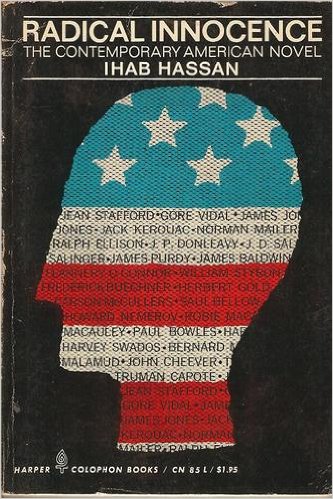
Hassan’s “Radical Innocence” which reached mass-paperback audiences, is a classic examination of the contemporary American novel of the 1960s. Courtesy amazon.com.
So it was a huge coup for UW-Milwaukee — the little brother of the magnificent UW system’s jewel in Madison – to snag him in 1970. By then, Hassan sought a deeper sense of the peculiarly American mindset and genius, perhaps buried in the heartland somewhere. This Middle Eastern Americanist with his deep “background in modernism” had found a new concept for apprehending our native literature in his pioneering book Radical Innocence: The Contemporary American Novel published in 1961. He laid out important early templates for understanding Gore Vidal, James Baldwin, William Styron, Jack Kerouac, Ralph Ellison, Flannery O’Connor, Norman Mailer, John Cheever, Truman Capote, Saul Bellow, Carson McCullers, JD Salinger, Bernard Malamud and others – yes, a head-spinning literary hodgepodge that he made coherent. And the best short introduction to American literature I know of is Hassan’s 194-page Contemporary American Literature 1945-1972: An Introduction.
For me, and doubtless many others, the fact that he came from a Middle East culture as ancient as Egypt’s helped endow him, I believe, with an almost oracular perspective that I’ve never experienced with any other professor. Consider his small book Out of Egypt: Scenes and Arguments of an Autobiography in 1986. When she gifted the book to me at Christmas in 1986, my wife at the time, Kathy Naab, inscribed: “Follow a wise man out of Egypt and into the nether reaches of ‘reason, dream and love.’” Those three words gave you a sense of the range of his thinking, yes, even encompassing the intellectually derided ideas of “love” and “dream.”
In the autobiography, Hassan observed: “A Marxist, Zionist, or feminist may prove no more rational than some ‘mystics,’ yet no stigma attaches itself to their commitment. Is it because men forgive attachments to factions, fractions — my side, your side — but never to the whole? The threat of mysticism: not vagueness or unreason, but a loyalty wider than most of us can bear. In short, Eros diffused, the Self dispersed, the end of paideia.” 5
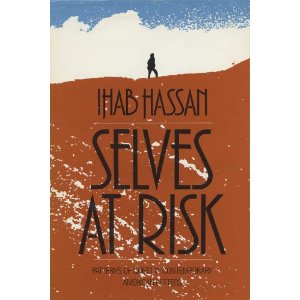
An exemplary book of Hassan’s mature period as a critic is “Selves at Risk: Patterns of Quest in Contemporary American Letters.” Courtesy amazon.com.
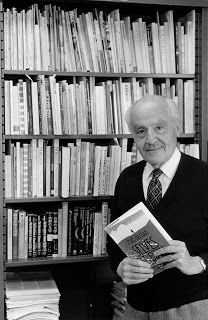
Courtesy yoyoseimo.blogspot.com.
And yet, despite his fame and glamor, he was the only teacher I’ve ever known who invited his students to his home for a seminar. On the last class of the semester, we came to the professor’s spacious residence on Terrace Avenue, overlooking Lake Michigan. Along the length of the connected living room and dining room stood one long wall of floor-to-ceiling bookshelves, jammed full, the most books I have ever seen in any home. Our gracious host then made a discussion of Samuel Beckett’s Endgame far less dire and bleak than it might have seemed otherwise.
My esteem for Hassan only grew in the years after his seminar, as I became an enthusiastic Americanist, in music, literature and art especially but particularly when I took the deep dive with Melville. I wrote a hopefully-forthcoming book called Voices in the River: The Jazz Message to Democracy, which explores the relationship between jazz, creative writing and the democratic process. I quote Hassan in it, and at one point was inspired to called him up from Madison, out of the blue, a student he’d had for one seminar 15 years earlier. He said he remembered me, and then I began babbling about my book, until Hassan deftly interrupted me. He chuckled and said, “You really don’t have to tell me your whole book. But it sounds like you have an excellent subject. Good luck with it.”
His words were golden to me. I imagine numerous UWM graduates have comparable memories of Ihab Hassan. After he retired, he continued to write, publish and stay active at UWM, and was helping organize a symposium Beyond Crisis: The Humanities in Renewal on November 19 at the Zelazo Center.
That date will now include a memorial event for Hassan, open to the public.
One of his major mature works was Selves at Risk: Patterns of Quest in Contemporary American Letters. At one point in the book, he stands on the shoulders of no less than Ralph Waldo Emerson and, indeed, sees further, regarding the human drive to quest:
“In the end, some Emersonian Whim is at the bottom of all quest, I think. But something else, too, that Emerson neglects: a wound. For the adventure/seeker is mainly a Westerner, scion of the rich of the earth, drawn to the wretched by a need, a dis-ease, they may find ludicrous. Though he may be neither soldier nor colonizer, domination no less than quest is the motive of his history and its deep wound. But this is also the wound from which history flows, sometimes suppurates. His flight from modernity cannot avail, nor his search for lost innocence, nor his nostalgia for otherness. His yearnings for desolation, of sand and snow, in Arabia or Antarctica, lead him to an abandoned Coke bottle more than (Wallace) Stevens’ jar ever ruled the hills of Tennessee. 6 Yet his will, malaise, disequilibrium, some radical whim or will or asymmetry in his being, has made our world knowable, made the world we know. Edging cultures, hedging histories, acting briskly, most often alone, the seeker — man or woman — gives us an indestructible perception that, from our best selves, speaks to all.”
His last published essay, in the current Antioch Review, is among his finest and most plain-spoken, a searing defense of the humanities that ranged from the humanist’s mightiest archetype Prometheus to Nietzsche, William James and crucially Steve Jobs. He titled it The Educated Heart: The Humanities in the Age of Marketing and Technology. He full understood the humanities’ limits, but finally he writes “Who, besides artists and writers — yes, and humanists — will speak to us of truths that we cannot prove but know in our marrows bones?” Hassan helps us know the nature and quality of those truths, as well as anyone. 7
In the end, his educated heart gave out, but never his intellect, passion or spirit. Ihab Hassan, born in Cairo, quested far around the globe many times. He was the best of questers, even in the worst of times. And he spoke indestructibly to all, to our best selves, our better angels.
3. In Spring of 1986, Hassan explained this issue in a major essay “Pluralism in Postmodern Perspective,” in Critical Inquiry 12, 503, published later in his essay collection The Postmodern Turn: Essays in Postmodern Theory and Culture. Ohio State University Press, 167
5.Ihab Hassan, Out of Egypt: Scenes and Arguments of an Autobiography 1986, Southern Illinois University Press, 79. With that last word of the quote, you see what I mean about Hassan’s vocabulary, and his philosophical perspective: Paideia:Ancient Greek Hist. Education, upbringing; spec. an Athenian system of instruction designed to give pupils a rounded cultural education, esp. with a view to public life. Hence: the sum of physical and intellectual achievement to which an individual or (collectively) a society can aspire; a society’s culture. From the Oxford English dictionary online http://www.oed.com/view/Entry/135951?redirectedFrom=paideia#eid
6. Hassan alludes to Wallace Stevens’ well-known poem “Anecdote of the Jar,” which explores the question of the superiority between art and nature.

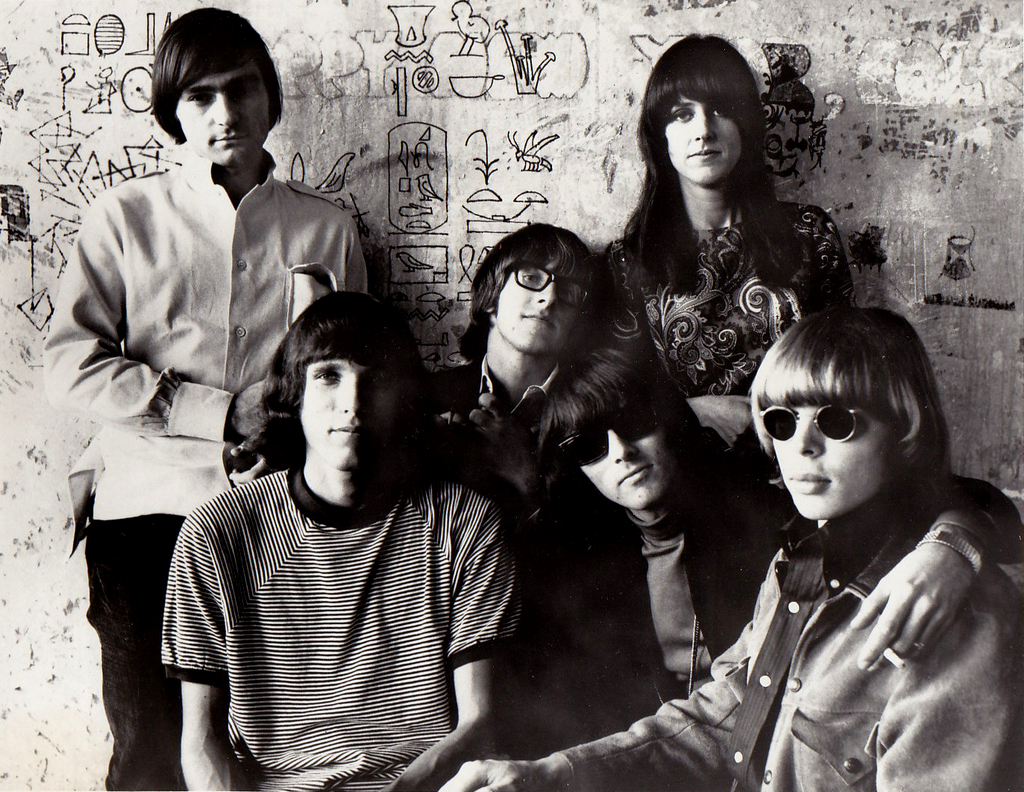

 Music journalist Marc Eisen, a former editor at Isthmus newspaper, released his wonderfully idiosyncratic list of the best concerts in Southern Wisconsin.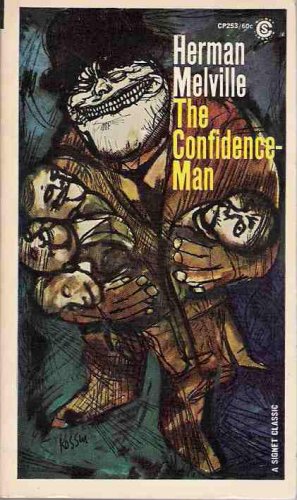

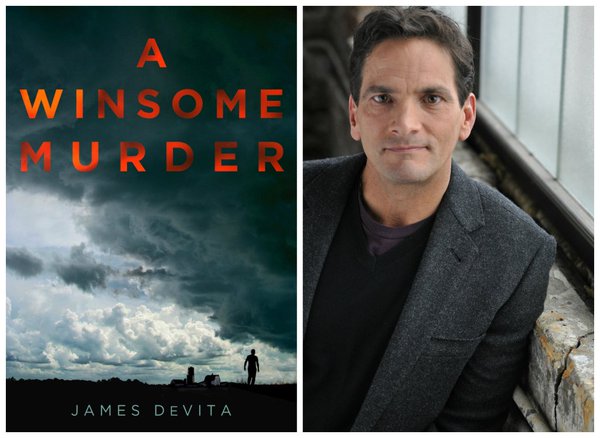


 The cover of the first edition of No Depression’s revived print publication in 2015.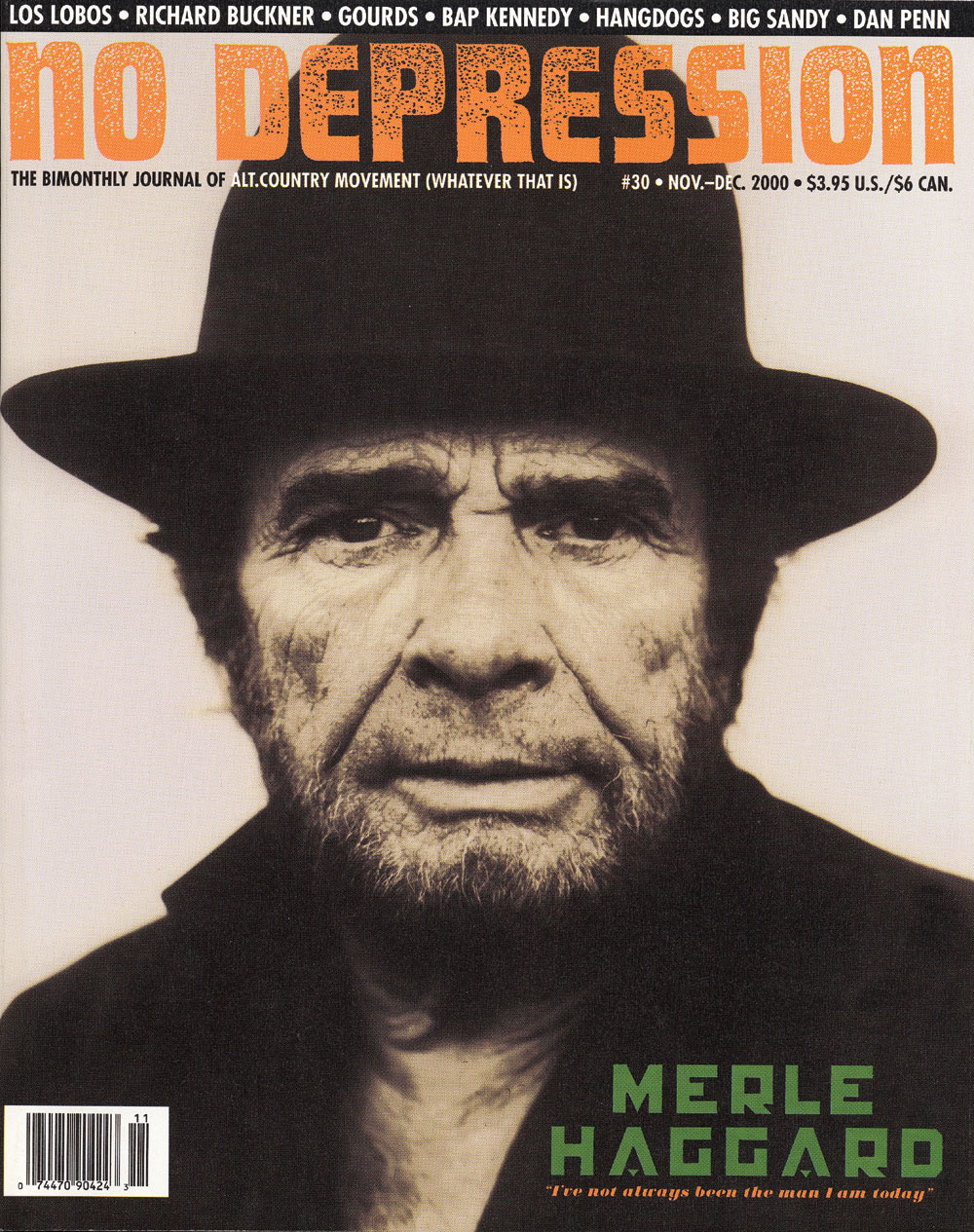
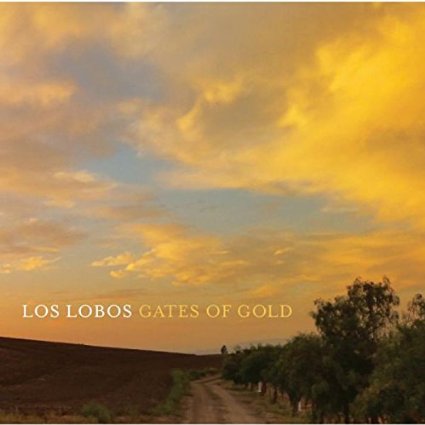
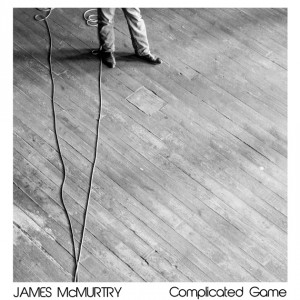

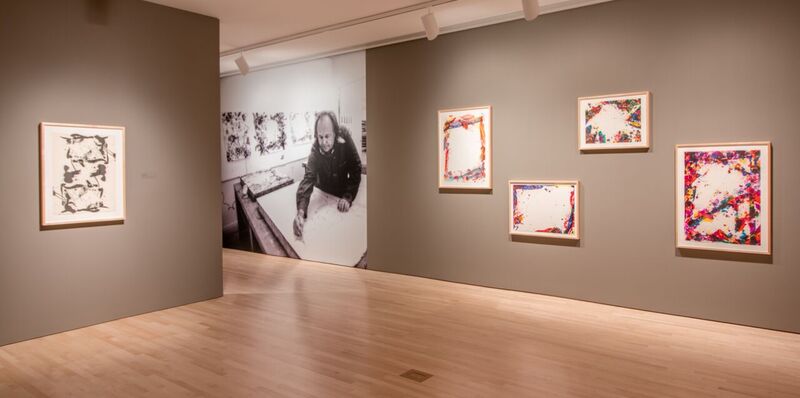
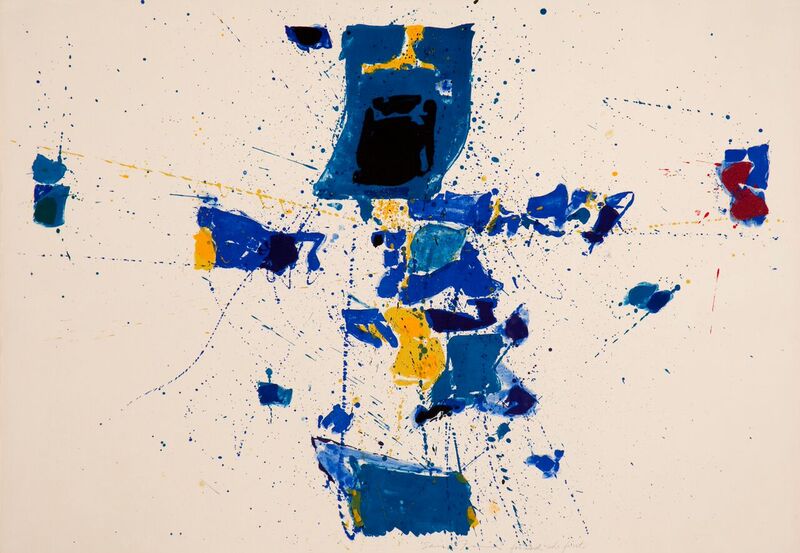
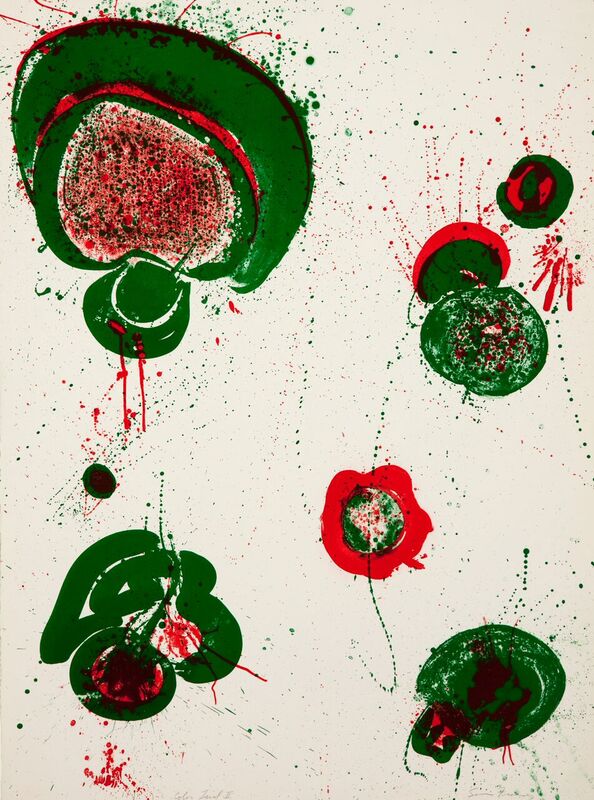
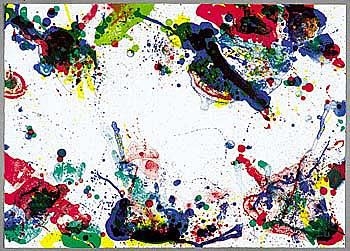



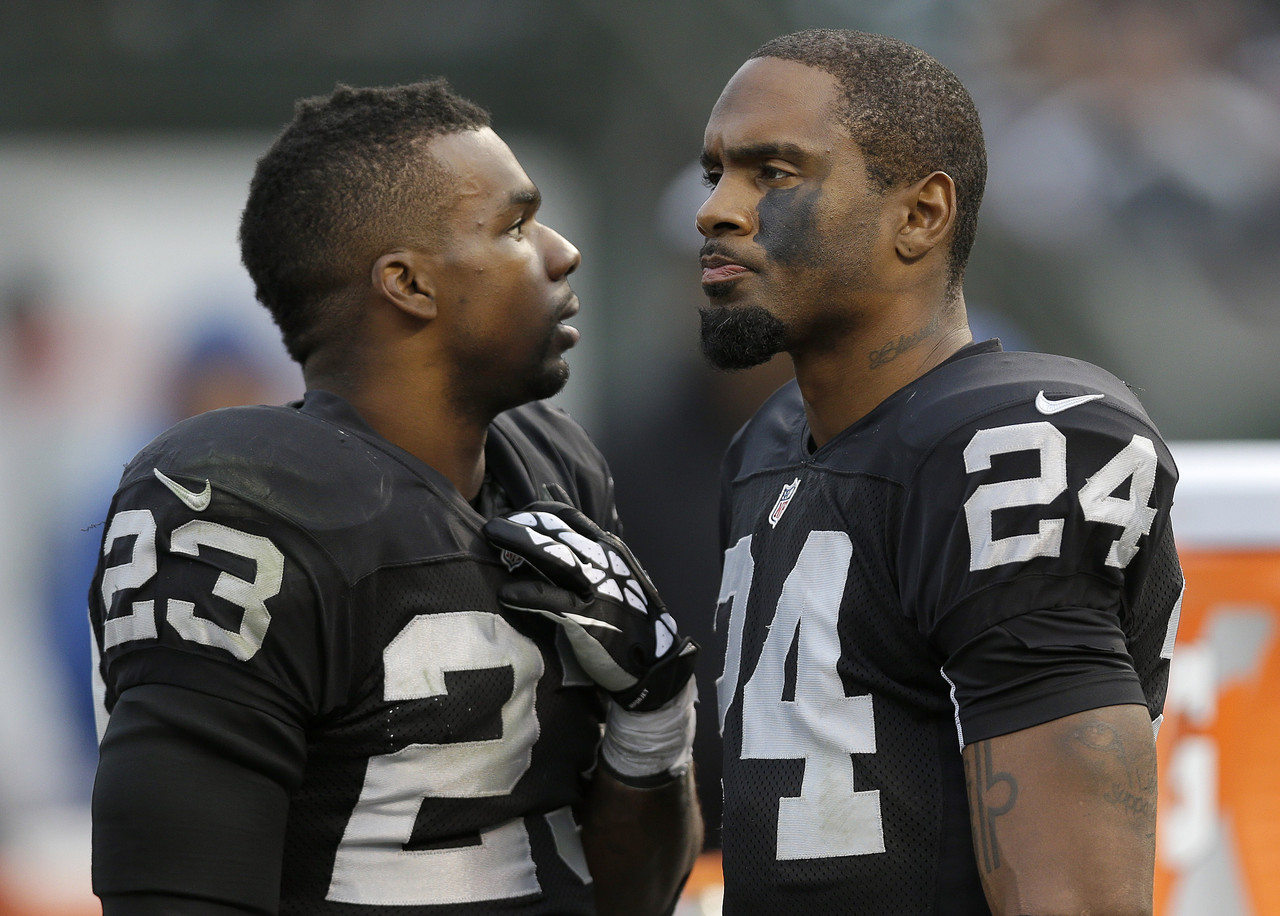
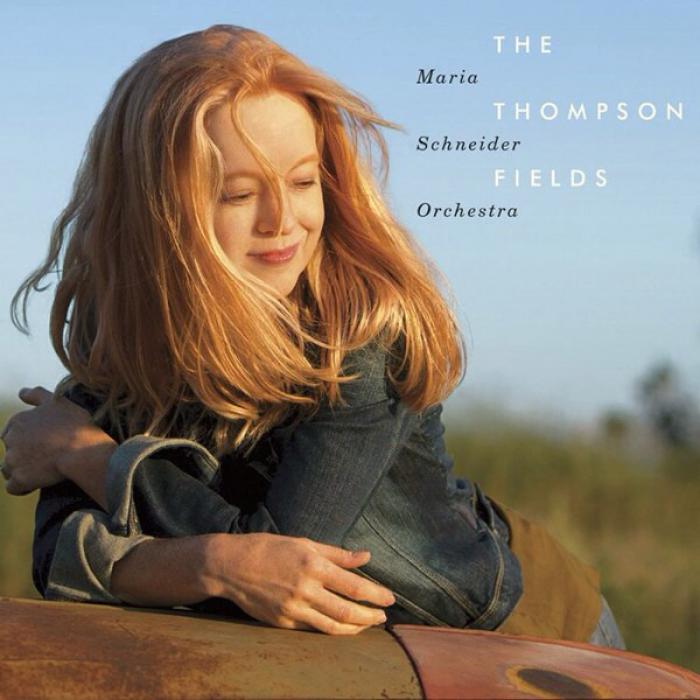

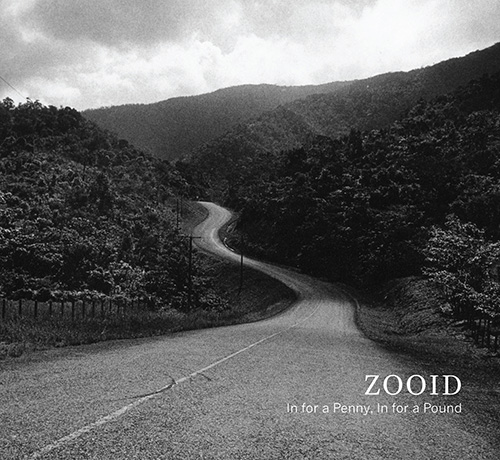
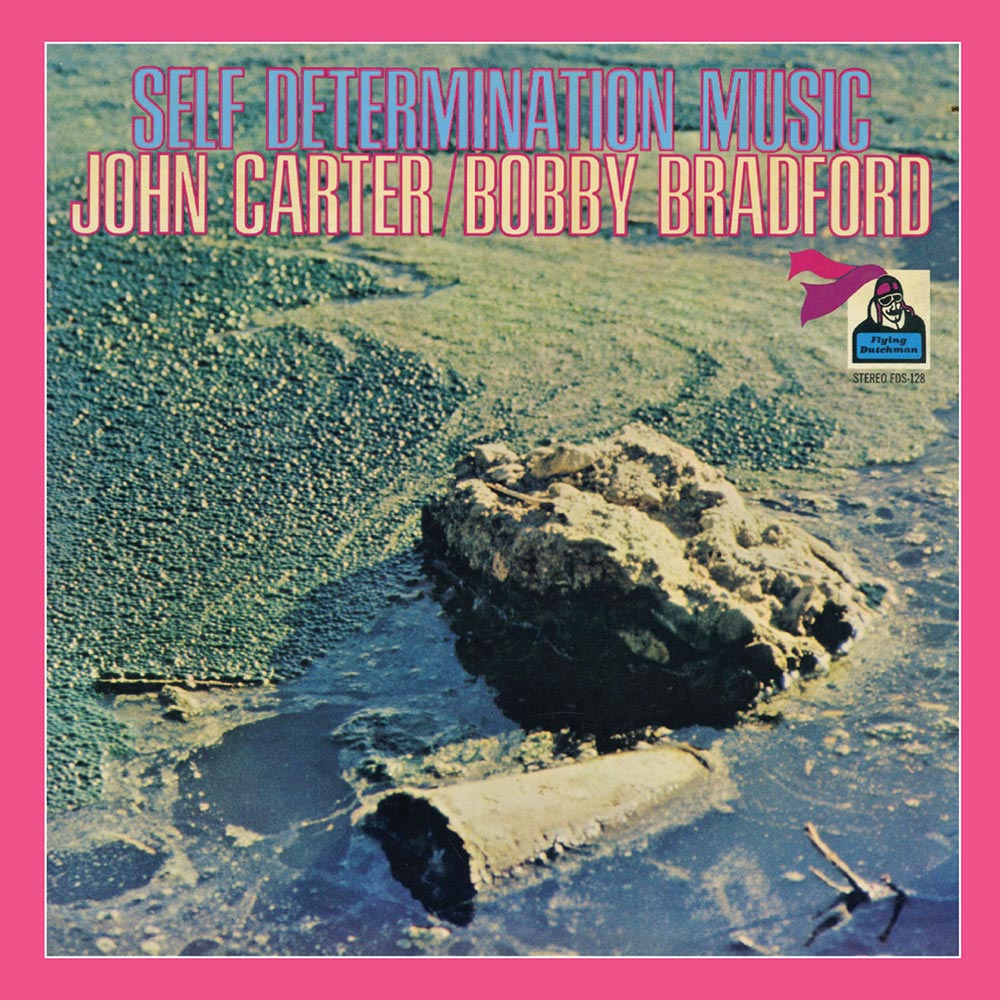
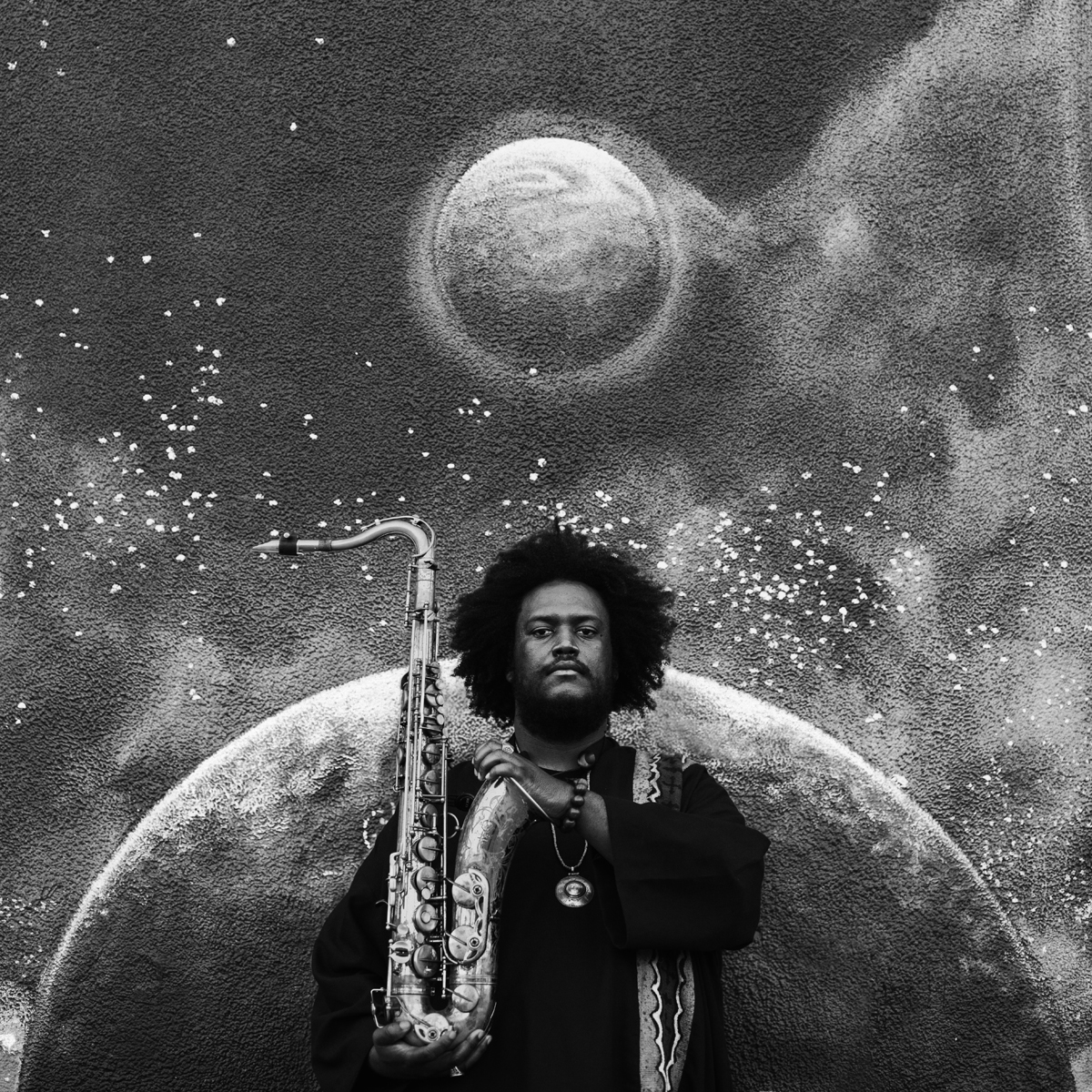
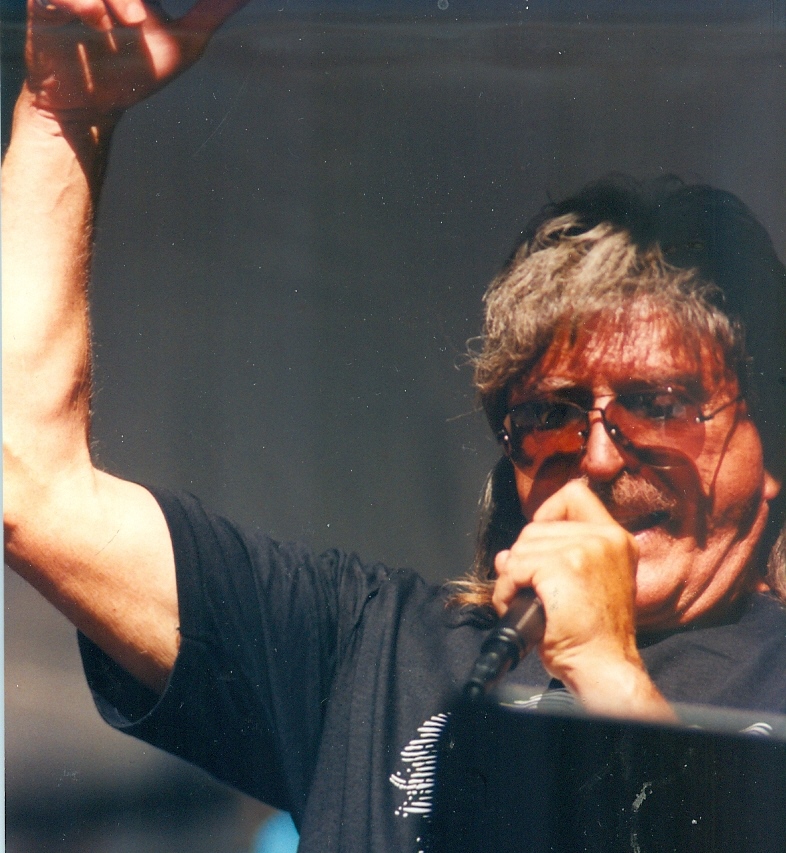
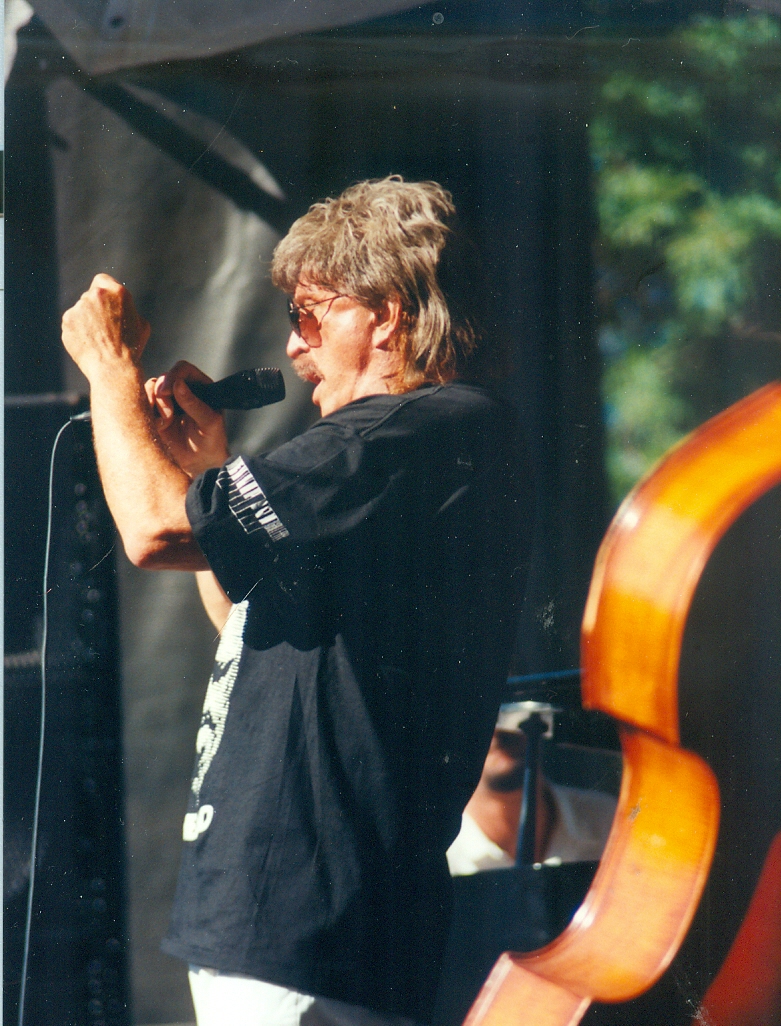
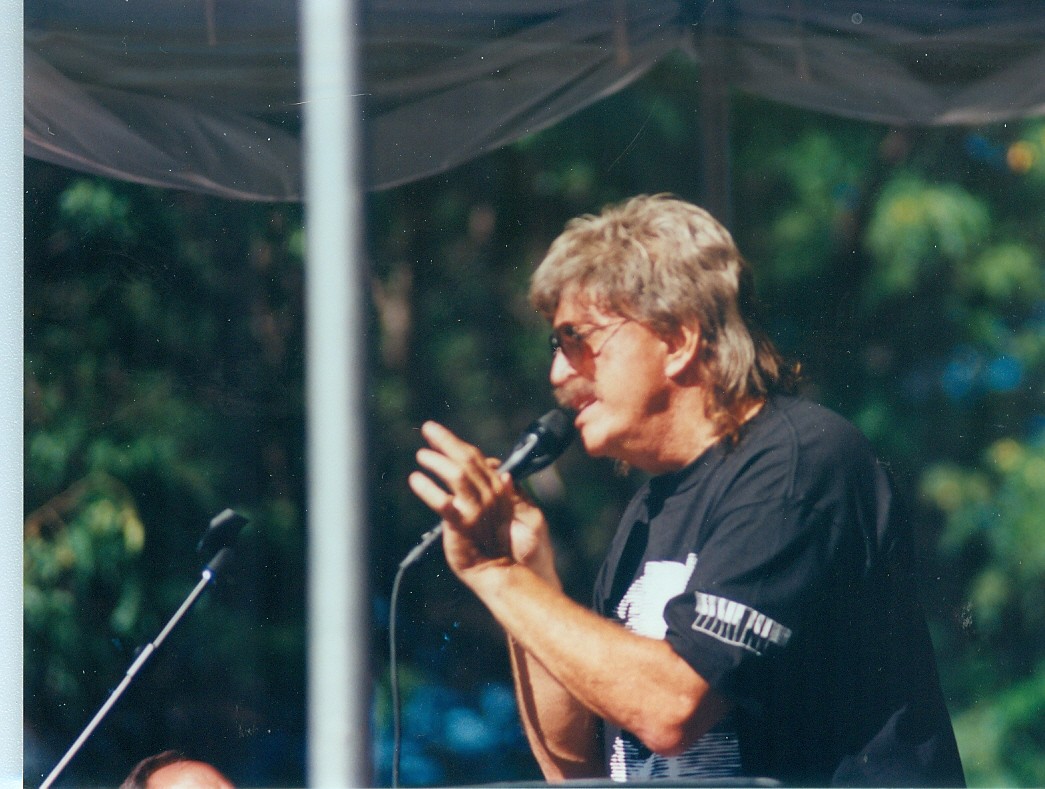
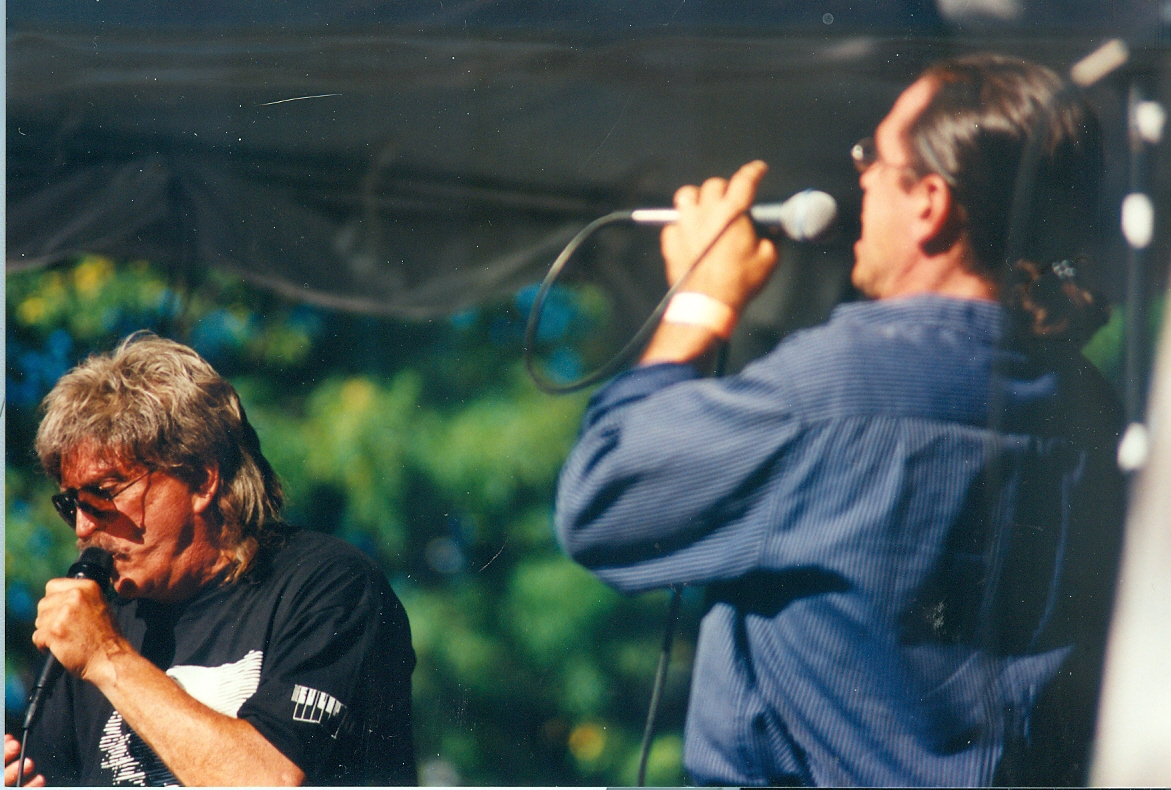
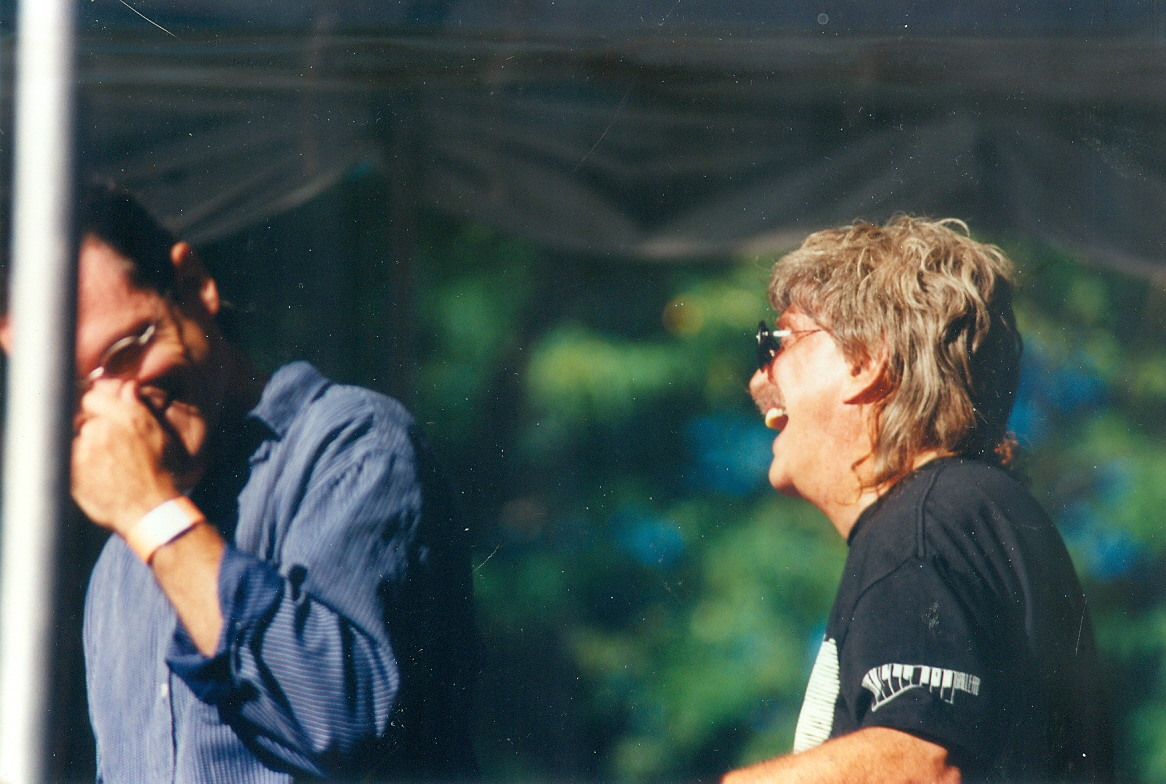
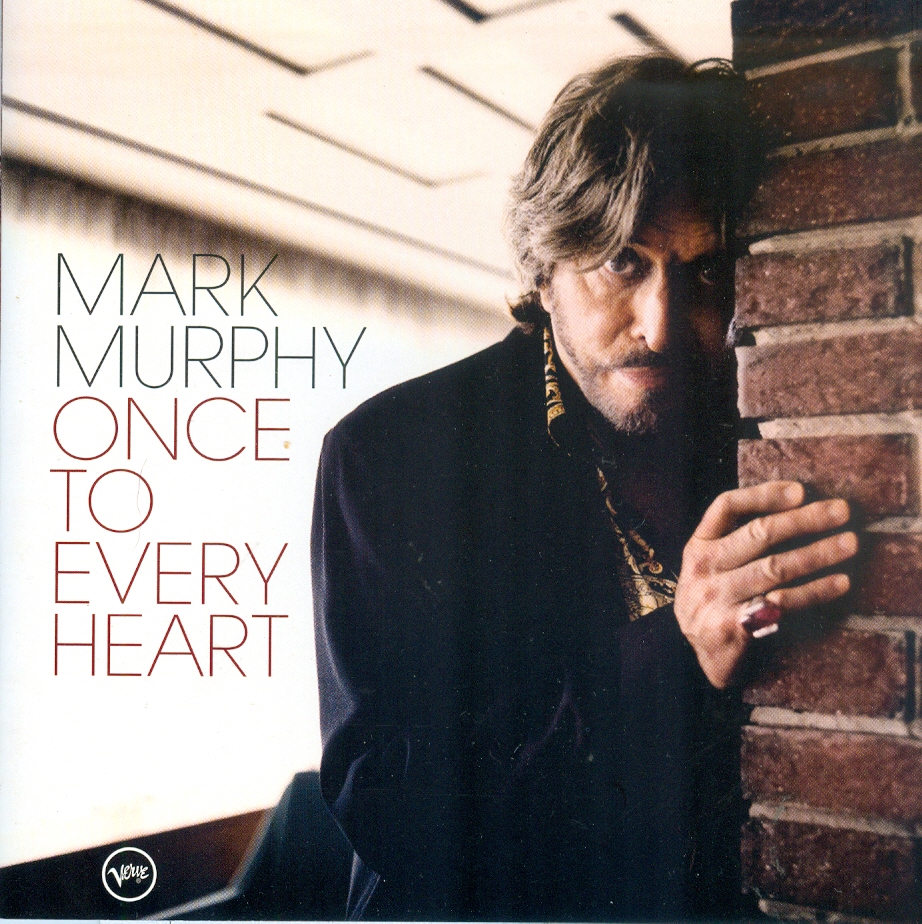
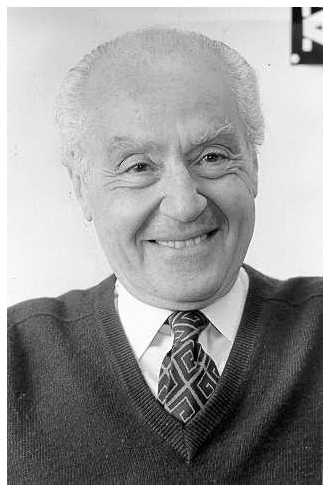 b
b