About Kevin Lynch

Kevernacular (Kevin Lynch) is a veteran, award-winning arts journalist, educator and visual artist. He is the author of "Voices in the River: The Jazz Message to Democracy." He won his sixth Milwaukee Press Club award in 2023, a silver award for “Best Critical Review of the Arts” for the Culture Currents blog “Miguel Zenon Builds a Bridge from his Puerto Rican Soul to the World." Lynch was a long-time staff arts writer for The Capital Times in Madison and The Milwaukee Journal, where he was lead writer of a Pulitzer-nominated Newspapers in Education project called “That’s Jazz,” which was used in Milwaukee Public Schools and The Milwaukee Jazz Experience. Among other publications, he’s written for Down Beat, No Depression Quarterly of Roots Music, and NoDepression.com, The Village Voice, The Chicago Tribune, New Art Examiner, Rain Taxi, American Record Guide, CODA (The Canadian jazz magazine), Wisconsin Natural Resources Magazine, Graven Images: A Journal of Culture, Law and the Sacred; The Shepherd Express, OnMilwaukee.com. Lynch has taught cultural journalism, English rhetoric and composition (while earning half of the credits for a PhD. in American Literature), and film studies. He’s been a music program host for WLUM-FM and WMSE-FM in Milwaukee. Lynch is working on a novel, "Melville’s Trace or, The Jackal." He’s also a visual artist and studied jazz piano and theory at the Wisconsin Conservatory of Music. He lives in Milwaukee.

The loss of Milwaukee’s black talk radio stirs memories of Marvin Gaye

News of WMCS-AM (1290) suffering the soul-gutting of a dreaded “format change” stirred one of the most indelible memories of my many years of working in Wisconsin media, which I’ll get to shortly.

In a city that still suffers from some of the worst segregation in the nation, WMCS provided a categorically transcendent voice for the African-American viewpoint that radiated enlightenment on urban life and reality to most corners of the Milwaukee area (given the limits of its AM power/penetration).

Now, one of the oldest black-owned radio stations in the country has its talk-show format snuffed out, under the explanation it had been losing money for a decade.

So maybe it was inevitable in a bottom-line world. But mindful culture can defy the bottom-line mentality, so let’s consider what we’re losing.  Silencing community dialogue it speaks to the perspectives of Milwaukee’s black minority is chilling in the face of pervasiveness of hard right talk radio The tough news was well covered in The Milwaukee Journal Sentinel Wednesday by TV and radio reporter Duane Dudek and editorial columnist James Causey (JSonline.com). State Sen. Lena Taylor and Ald. Willie Wade also bemoaned the loss, and the station’s morning talk show host Eric Von noted that the impact on Milwaukee’s black listenership is compounded by the effect on “the more progressive community. By and large, we were it in terms of progressive conversations.”

WMCS, formerly known as WAWA, 92.1 has been long sustained by the partnership of Green Bay Packer great Willie Davis , is the talk show branch of the Milwaukee Radio Alliance which also owns WL DB-FM  (93.3) and WLUM FM (102.1).

In an age of iPods, Napster and online song-sharing and other personalized listening modes, some say broadcast radio is dead but I don’t buy it. Milwaukee broadcast culture  thrives with great music from the likes of WMSE (91.7), WY MS (88.9) in WUWM (89.7), our Public radio outlet. I listen to all three and although I once DJ’d on WLUM it and LDB are a notch below the others ( I also DJ’d on MSE), partly because LUM is no longer an urban music-oriented station, having joined the crowded field of pop-rock-indie stations. Of course, “urban” format translates loosely to African-American-oriented broadcasting.

Which brings me to my vivid memory of one Sunday night years ago when I was doing my jazz and blues program on WLUM. I documented this in my hopefully forthcoming book Voices In The River: The Jazz Message To Democracy. This passage is from Chapter 4, titled “What’s Going On? – Milwaukee Starts to Hear Voices.”:

One night changed my understanding of what was happening in the somewhat mysterious realm of radio airwaves, inhabited at the other end by invisible people, attuned to your transmissions like creatures hidden in the hills.

Half way through my show, the AP teletype machine clacked out dire news: “Marvin Gaye has been shot dead. His father is held suspect.” I cut in to read the report and within seconds the phone lines were jammed with wailing women, and men.

“Man you gotta play ‘What’s Goin’ On!’” they all said. I hadn’t brought that record because I didn’t play much R&B on that slot. Being Sunday night, the station library was closed. I riffled frantically through the few hundred records in the current rotation bins.

No Marvin Gaye. “You gotta find a way to bring some lovin’ here today…” How could this happen? Not tonight on my show… “Father father”… I looked under the M’s and the G’s four times each… Brother Brother, there’s far too many of you dying… finally, I found it, dog-eared and precious. Rain-drenched Marvin. I sighed and pulled it out of the sleeve and slipped the small teardrop hole onto the platter. Ohhh, what’s goin’ on, what’s goin’ on?
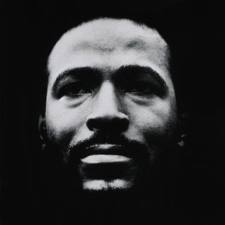
Marvin Gayeimages

Marvin Gaye. Courtesy www.businessinsider.com

The red phone buttons glowed like fireflies in heat, and my finger clicked up listeners also sighing, in gratitude mingled with grief.

What I realized was that many of these people had been listening to my jazz program, most of them black folks, who supposedly had been lost as a jazz “demographic” (even though the term wasn’t used then). But when I read the news bulletin they knew the night now belonged to Marvin’s “inner city blues.” The emotional receptors had switched to a slightly different frequency, to one that “makes me wanna holler.” I loved being able to make that switch for them.

The music was all one, just colored in many shades of soul and intellect.

Has music changed today? It seems to have, in the way it is so tightly controlled, produced and marketed. Music down loading seems to be a public revolt against that control, as are the vast alt-rock, independent label and roots music movements. I refuse to belief contemporary music has changed in essence. It seemed to make such a difference in society and culture 20 years ago, because musicians reflected and responded to the times. It still can, to the degree that music can free itself from corporate media systems of control and marketing manipulation and co-opting.

Gaye was shot twice following a physical altercation with his father, Marvin Gaye Sr., after the singer-songwriter intervened in an argument between his father and his mother Alberta. The father killed Gaye with the .38 pistol his son had bought him. Fate sometimes has the darkest wit:  Gaye died on April Fool’s Day, 1984.
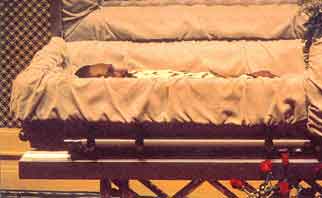
Marvin-Gaye-In-State soulwalking.co.uk

Marvin Gaye in state. Courtesy www.soulwalking. co.uk

The bigger relevant point underlying this tragic event is, of course, gun violence. Despite all the profoundly justified current concern and pending legislation regarding mass murders with assault weapons, it’s easy to forget that the vast majority of homicides in America are one-on-one killings with handguns, like Marvin Gaye’s death. His murder by his father was one of the most shockingly dramatic in modern American history because of Gaye’s fame, genius and his pointedly eloquent message.

Craig Werner, UW-Madison Professor of Afro-American Studies, wrote “part of what makes What’s Going On an unquestioned masterpiece is Gaye’s concentration on the social crosscurrents sweeping to the inner cities and the country as a whole.” 1. Werner resonates with station host Eric Von’s point about the “larger progressive community.”

This blog Culture Currents humbly strives to sustain a kind of socio-cultural concentration for current times, part of the reason why Gaye sticks in my consciousness like a beautiful scar.

WLUM’s AM sister station WMCS fought against what Gaye called inner city blues and will leave a void that one only hopes will not be filled with more echoes of gunfire, and insufficient community dialogue and action response.

I left Milwaukee in 1989 to take a job covering the arts for The Capital Times in Madison. When I returned to my hometown a few years ago and started tuning in to local radio, what I found most missing on the local airwaves was something I akin to Madison’s The Mic 92.1. Madison’s progressive talk radio station offers south-central Wisconsin the nationally syndicated voices of Ed Schultz, Thom Hartmann, Stephanie Miller, and, on Sundays,  Robert Kennedy Jr. and Mike Papontonio (co-hosting “Ring of Fire”) and Rev. Jessie Jackson, among others. (Check it out online at http://www.themic921.com/main.html)>

Now that the progressive-oriented talk forum of WMCS is silenced, more than ever Milwaukee needs a station like The Mic which conscientiously covers our social and political crosscurrents.

_______________________________

  1. Craig Werner, Higher Ground: Stevie Wonder, Aretha Franklin, Curtis Mayfield, and the Rise and Fall of American Soul, Three Rivers Press, 2004, 163
 

Did I see yo mammy steal somebody’s Grammy? Kudos and Komplaints

Here’s my two cents worth (and spare change) on the 2012 Grammy Awards. Nope I didn’t hear all the music nominated. How many people did?

But I heard enough to assert my bloggistic opinion, he replied. Here’s an eccentrically broad, personal and biased commentary.

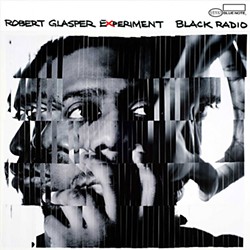
I am glad that the Robert Glasper Experiment won for Best R&B Album. This man showed great creativity, daring, and smart taste. I wrote an article on him for Shepherd Express and as a blog post. The interesting angle was that he played in South Milwaukee, which would’ve been unthinkable for a black artist, borderline suicidal, before the civil rights era.

music_phases51

Here’s that whole story FYI: https://kevernacular.com/?p=844

What’d I liked about Glasper’s album “Black Radio”? The CD delivers not gangsta rapology, but rather a kind of immersion in supple R&B-groove, chill-out “experimentation for meditation.”

It challenged preconceptions. What can you presuppose about an album that seamlessly combines Erykah Badu singing Mongo Santamaria’s Afro-Latin jazz classic “Afro-Blue,” and  Lalah Hathaway recasting the cool ecstasy of Sade’s “Cherish the Day”? Add to that “The Consequences of Jealousy” by crossover jazz bassist Meshell Ndegeocello (who plays on the album), David Bowie’s “Letter to Hermione” and Kurt Cobain’s “Smells Like Teen Spirit.” Glasper’s originals, aided by Mos Def, Musiq Soulchild and others, help it all meld. Unlike hardcore hip-hop, Black Radio brims with melodic and harmonic sophistication, more like the hybrids of fellow jazzer Jason Moran.

As for Album of the Year, The Black Keys’ El Camino is strong, scratch-your-grunge-itch stuff but a notch below their previous album Brothers. Frank Ocean’s Channel Orange was right there, but he’ll probably get his, in time (He deservedly won Best Contemporary Urban Album). So I’m not shocked that Mumford and Sons nabbed best album, and happy their Americana category won. It’s a breakthrough vernacular win, like jazzman Herbie Hancock’s best album win with River: The Joni Letters was a few years ago.

However, very good as M&S are, they still strike me as derivative of various American roots-rock bands. Could a bunch of Brits be outdoing all American groups at their own genre? Betraying a tinge of Americanism here, I think not, and might’ve awarded Old Crow Medicine Show’s Carry Me Back or The Avett Brothers’ The Carpenter instead. Or say, Chuck Prophet’s un-nominated Temple Beautiful, an unsentimental and lovingly loosey-goosey roots-rock ode to the seemingly perpetual cultural prism called San Francisco.

I’d love to hear from a Brit reader, or two (and Yanks always). I know, Britain has its own profound roots of traditional and eccentric folk music which contributed to America’s. And the Brits got the deepest grip on American blues in what became the Blues Revival of the ‘60s, though the integrated, Chicago-based Paul Butterfield Blues Band led the way.

However, today Americans are much more aware, appreciative of, and creatively responsive to, their cultural roots.

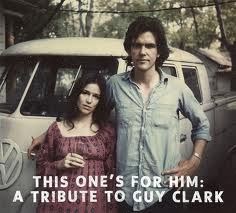
For example, my actual choice for album of the Year would be This One’s for Him: A Tribute to Guy Clark, a nominee for Best Folk Album. It’s co-produced by Shawn Camp and Tamara Saviano, a Milwaukee native who previously blessed us with the Grammy-nominated Stephen Foster tribute album Beautiful Dreamer.*

clark

Clark’s esteemed peers performed and helped reveal how his song writing has quietly carved a broad swath of insight, peculiarity, tragedy and comedy that epitomizes an essential strain of the American experience. He may be the dean of Texas songwriters, a sun-parched musical bard category that may outshine all others in America. “Desperadoes Waiting for a Train,” “Dublin Blues,” “Hemingway’s Whiskey,” “Stuff that Works,”” The Last Gunfighter Ballad,” “Randall Knife” are among many superb Clark songs still underexposed, yet hidden right in the heart of America.  Listen here, to Lyle Lovett, John Prine, Emmylou Harris, Roseanne Cash, Rodney Crowell, Steve Earle, Kris Kristofferson, Willie Nelson, Jerry Jeff Walker, James McMurtry and others.

Along similar lines of preference and argument, the best country album should’ve been Jamey Johnson’s Living for a Song: A Tribute to Hank Cochran, rather than Zac Brown’s Uncaged. Sure Brown’s doing mostly original stuff but he’s got a bit too much rock in his country. My bias is toward traditional or new-trad or alt-country, the latter which Brown is somewhat, but now mainstream country loves him, it seems, the way it now gluts on heavy guitar riffs. Johnson’s curatorial project shed light on one of the most incisively truth-telling songwriters in country history and, like the Clark tribute, had heavyweight acknowledging that with their interpretations, including Nelson, Kristofferson, E. Harris, Merle Haggard, Elvis Costello, Ray Price, Bobby Bare, Allison Krause, George Strait, and Lee Ann Womack etc.

That reminds me of another album, which probably wasn’t nominated because it was released as a combo DVD video as well. That’s We Walked the Line: A Celebration of the Music of Johnny Cash. I won’t list the all-star lineup but do check it out. It climaxed with, for this listener, perhaps the most moving performance of the year: “Highwayman” with Jamey Johnson singing the final verse — which the late Cash sang in the version of the song which The Highwaymen (Cash, Nelson, Kristofferson and Waylon Jennings) recorded in 1985. It’s one of Jimmy Webb’s most poetic, timeless, transcendent and rootsy songs.

Johnson first really got to me with his brief but powerful solo set at the 25th Farm Aid in Milwaukee in October of 2010. He’s a slightly acquired taste, as is Guy Clark. But Johnson’s foghorn-of-the-soul voice and brave commitment to a tradition is as authentic as they come in country these days, among relatively new performers.

OK, radically shifting directions — Country to Classics — but you should never try to pin down Culture Currents. I like messing with your heads a bit. And vernaculars do speak, in many tongues.

Although I haven’t yet heard Michael Tilson Thomas’s recording of John Adams’ Harmonielehre and Short Ride In A Fast Machine, kudos to the Academy for honoring a living composer, if the most obvious one, for Best Classical Orchestral Recording. The former piece achieves the improbable: merging minimalism with its antithesis, Arnold Schoenberg, thus opening a deep throbbing vein that pulses with dark duende and humanity intensely magnified.

Yet the San Francisco Symphony program seems slight compared to Simon Rattle’s 1994 recording of these works, which also includes “The Chairman Dances” and other Adams pieces (full disclosure: a relative of mine is in the SF orchestra, so I’m avoiding favoritism here.).

And Thomas beat out a strong reading of Mahler’s First Symphony by Ivan Fischer and the Budapest Radio Orchestra. Hearing this ever-mighty Mahler – as he echoes through the vast and haunted crevasse between Romanticism and modernism — reminds one of how minimalism, liberating as it can be, so often is too much of not enough.

I say, Mahler! by a nose, famously aquiline. (Look for a brand-new recording of Mahler’s First by Milwaukee Symphony Orchestra music director Edo du Waart in the 2013 Grammy running, albeit with his other band, The Royal Flemish Philharmonic.)

In Best Opera Recording, James Levine and his Wagnerian horde predictably rolled over the competition with his Der Ring cycle, like the Third Reich steamrolling Poland (a strange role for Levine). But smashed in that blitzkrieg was Alban Berg’s Lulu, an unforgettably entrancing Lulu of a high-modernist opera, bravely led by Michael Boder, and Vladimir Jurowski’s take on Stravinsky’s The Rake’s Progress.

Best Jazz Vocal Album went to Esperanza Spalding’s Radio Music Society. I still think Ms. Spalding is a better musician and conceptualizer than a singer. She should not have beaten out Kurt Elling’s 619 Broadway: The Brills Building Project (tributing the Gershwins, Kerns, Porters, et al) or Luciana Souza’s The Book of Chet (as in Baker). But Spalding is ambitious and definitely the jazz flavor (dare I say sweetheart?) of the year. And she’s got game and I do love her world-class ‘fro.

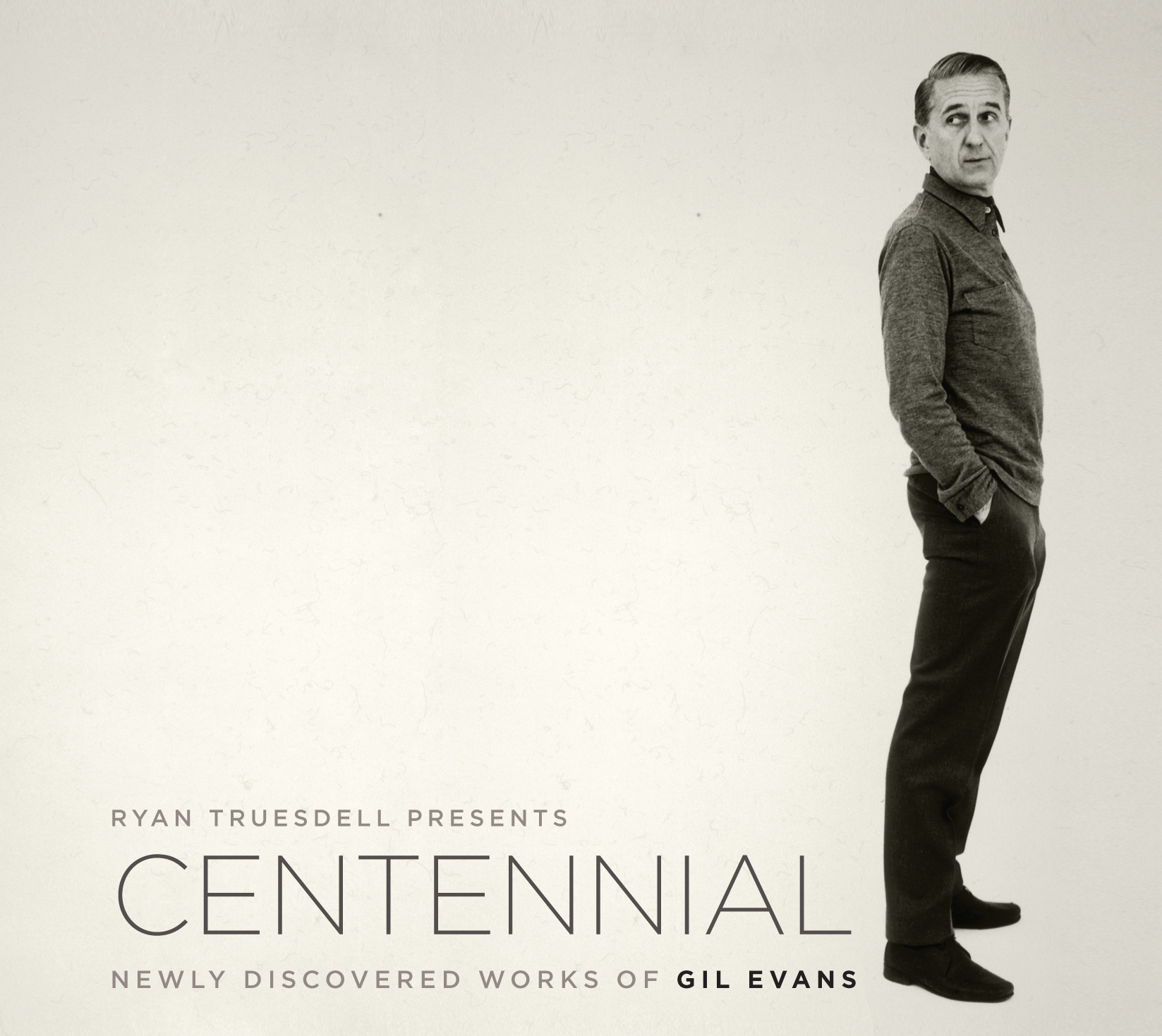
I’d also say that Arturo Sandoval’s admirable For Diz: Every Day I Think of You won Best Large Jazz Ensemble Album with more flash than my choice. The Gil Evans Project proved that nothing can replace modern jazz’s greatest arranger, but leader Ryan Truesdell’s magnificent effort on Centennial: Newly Discovered Works of Gil Evans, unearthed glittering new treasures from the late Evans’ legacy. And although The Evans Project album’s How About You achieves a splendid swing, it hardly should’ve won Best Instrumental Arrangement over the same album’s endlessly beguiling Barbara Song or the transporting Pubjab, neither of which was nominated. A very retro — borderline moldy fig — choice for arrangement. I blogged on this album, too. https://kevernacular.com/?p=702

case

I also would have put vibes player Joe Locke and tenor saxophonist Donny McCaslin right in the running for Best Improvised Jazz Solo on Centennial‘s “Waltz/Variation on the Misery/So Long.” Locke delivers gleaming substance on several of the album’s major pieces. Chick Corea and Gary Burton, who have closets full of awards and accolades, won for Hot House, vintage bebop updated. That’s perpetually hip, but also comparatively retro.

Somebody please swivel around the Academy jazz voters, so they face forward. Do you question that assertion, given my promoting of various tribute albums of, say, trad country?

“Do I contradict myself? Very well then, I contradict myself. I am large, I contain multitudes.” Well, Walt Whitman did. Culture Currents tries to. You go where the best music takes you.

Speaking of philosophical assertions, for a broad-brush but insightful commentary on the Grammys, I recommend NoDepression.com editor Kim Reuhl’s recent ruminations. Noting the Grammies are a sort of Music Industry/Recording Marketing love fest, she says that, even if they have no vote, the worldwide community of listeners is ultimately what counts. Listeners and the role music plays in life:

“Here’s the thing. Music is so important. Next to painting, storytelling, and dance, it’s one of the best vehicles we have for destroying fear, for confronting our best and worst selves, for letting love blow us wide open. At its best, music is where we interact with the most vulnerable bits of our humanity. It’s where we admit everything to each other, to strangers, to ourselves, in a way that is safe and embracing, and promising, and full of hope. At the end of a song, we can close the figurative container and go back to Life, renewed.”

Rave on, Kim Reuhl, rave on.
Here’s the URL to her whole piece:http://www.nodepression.com/profiles/blogs/art-the-artists-freedom-and-the-grammys

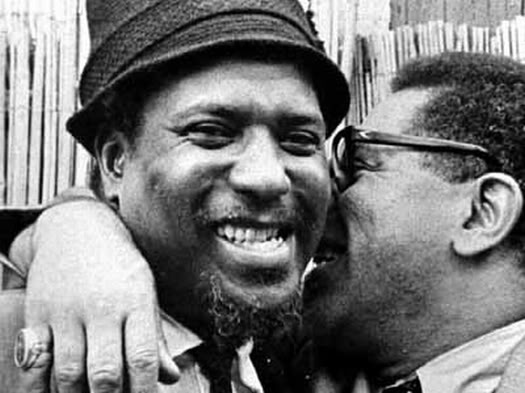
A graphic version of T. Monk (but not Bud Powell) getting unfairly busted by racist cops…

jazzmonkdizzy1

Bud P. may have unwittingly framed Monk (in a moment of fear) but at least Diz still loved him… image courtesy indulgy.com

http://boingboing.net/2013/02/01/john-wilcock-thelonious-monk.html

This great FB posting by the superb jazz historian and critic Ted Gioia (The Imperfect Art, The History of Jazz, etc.) gassed me enough to do a quickie post.

You’ll find on the link a sardonic, truth-telling cartoon strip detailing the infamous arrest of Thelonious Monk which led to his unjust imprisonment at Riker’s Island and loss of his New York cabaret card… A serious dent in his career at the time.

It’s apparently something conceived/written by the late John Wilcock and illustrated by artists Ethan Persoff and Scott Marshall.

The strip is in full color, to massage your eyeballs. I also love that the two artists collaborate with Persoff living in Austin, Texas and Marshall in New York.

Wilcock recounts seeing Monk perform at The Five Spot in New York for the first time after the reinstatement of his cabaret card. He describes how Monk almost magically appears without announcement on the stage, sits down and plays and, when he’s done, gets up and disappears again.

Now I think I know how Monk influenced the phenomenal pianist-composer Cecil Taylor in one way. Taylor, also a swiftly athletic dancer, does a similar sort of phantom-like appearance, perform-and-disappear routine, as a sort of performance-art aspect of his concerts. At least he did the last couple of times I last saw him live, a number of years ago (too long!).

This ‘toon about Monk is a serious piece of American cultural history, and will help you discover a cool, offbeat and politically aware website/ blog site Boing-Boing…

Apparently these co-blogger-artists enjoy watching the crazily bouncing repercussions of cultural events, great and small, bounding their sometimes predictable but as-often unpredictable ways.

As Milwaukee philosopher/saxophonist/sports-geek-homer Art Kumbalek sez, what a world, ain’a?

Thanks to Ted G, for the connection and turn on,

Kevernacular

btw, read about the sorry incident in greater detail (and everything you wanted to know about Monk’s amazing life and music) in Robin DG Kelley’s magnum opus biography Thelonious Monk: the Life and Times of an American Original.


http://boingboing.net/2013/02/01/john-wilcock-thelonious-monk.html

Does Marion Cotillard forge an anti-Ahab heroine for our time in “Rust and Bone”?

Rust-and-Bone---whalejpg

Marion Cotillard has proven her acting mettle many times over, and sounds like she’s still  forging a distinct destiny as one of the great actors of her generation, with this new performance. Just maybe she’s creating a new sort of anti-Ahab heroine. I look forward to this movie and maybe even to the rare occasion to applaud at the end. Genuine human courage has been forsaken too often in our times. Lance, are you listening?

Thanks for the critical tip-off from my former colleague at the Cap Times, Rob Thomas.

article_5b11cfe2-6033-11e2-87fd-001a4bcf887a.html

Santana, Trucks and Tedeschi feelin’ good

http://www.youtube.com/watch?v=DN0yy3iokJ4&feature=share

I just added this to my Facebook page and then I thought, what the hell, this is too damn good not to share with everyone. So go on, dig Carlos Santana, Derek Trucks and Susan Tedeschi… Have a happy new year and make somebody happy, make somebody strong.

Does rhetoric like this cut through any more? I hope so.


Rembrandt: Last Chances To See a Life-Changing Work of Art


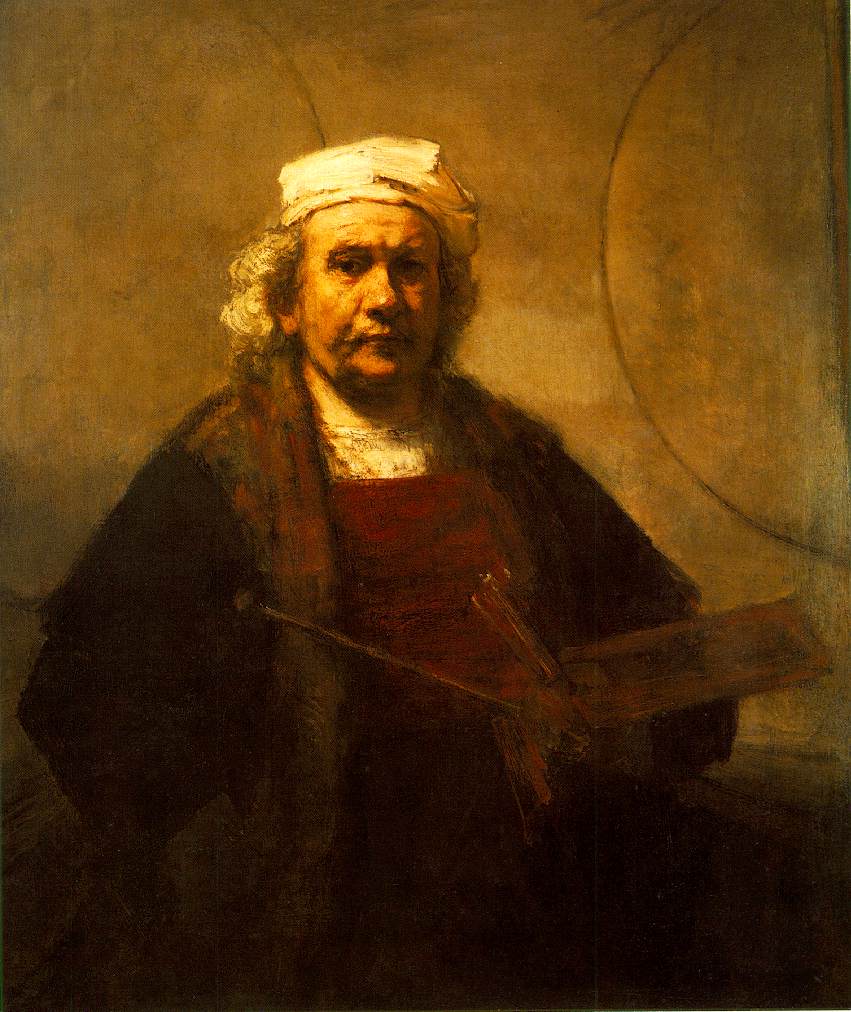
self-portrait-1665-1“Portrait of the Artist” by Rembrandt ca. 1665. Image courtesy wikipaintings.org. 

Admission to the Milwaukee Art Museum is free today, January 3, as it is each first Thursday of the month. The museum is open until 8 PM today . but normally 10 AM to 5 PM, Tuesday through Sunday. Single admission is $15 for adults, $12 for students, seniors (65 and over), and military (with ID), and free to members and children 12 and under. Memberships for the MAM are available at the museum or by phone from the Membership Hotline,414-224-3284, or online at www.mammembership.org.

(This is the partial first draft of a blog review I will finish and post soon. I am posting it partially due to the urgency of this show’s closing date, of January 13.)


It is a face for the ages, humanity writ larger and deeper than is otherwise imaginable, painted by perhaps the one artist capable of such.

Because visual art is experienced in a single fell-swoop intake of the senses, mind and heart, “Portrait of the Artist” by Rembrandt van Rijn, currently at the Milwaukee Art Museum through January 13, represents an extraordinarily concentrated and rare opportunity for immediate cultural enrichment. Seeing it ought to be a New Year’s resolution.

Because the painting is by common critical consensus “the definitive self-portrait by any artist,” the viewer stands to gain the uncommon insight into humanity that only the best artists can provide.

Perhaps you’ve procrastinated in seeing this truly phenomenal work of art at, not uncoincidentally one of the great contemporary architectural cultural facilities in the world today, designed by Santiago Calatrava.

Having just seen the Rembrandt portrait myself, I offer a fresh testimony to persuade any reader to make every attempt to see the painting, and the accompanying exhibit Rembrandt, VanDyke, Gainsborough: the Treasures of Kenwood house, London, before it leaves Milwaukee.

Perhaps your tastes are modernist and you resist much of this show’s Baroque-era artwork, wherein artists often depict the upper-class in deferential, indulgent manner as matter of practical employability.

But there’s more of strong interest to the exhibit than that, and even if there weren’t, the opportunity to see this great portrait in the flesh of its timeless oils makes it a worthy pilgrimage.

Seeing the late-life Rembrandt self-portrait in person can make all the difference, given that I have known it as a reproduction since I was a young man studying as an art major.

It is the only work in the exhibit behind glass and the only one with its own alcove and security guard, standing beside it during exhibition hours.

But here it is why it is worthy such special treatment. You see as precisely and as ambiguously what the man can embody — as a genius’s image of himself. The exhibit includes a small handout pamphlet which depicts all of Rembrandt’s painted self-portraits through his life, which allows you to see the man age and grow over his life — and thus visually contextualize this remarkable work.

Though the exhibit includes none of these seven reproduced renderings but the penultimate one, you can see immediately in the first one from 1629, a raffish bohemian with an unruly, tumbling mane. But there we see the artist’s already poised genius at using shadow to counter-intuitively infiltrate human character.

Nevertheless, not seeing the other works in person is hardly another excuse to not see the single work that virtually bespeaks that whole life.

Painted around 1665, this is not quite the artist as an old man but as an aging one probably around 58, who has yet to accept or shed many of life’s trials, burdens and illuminations.

Despite the unusual glass over oil, Rembrandt’s impasto highlights tenderly the offsetting mutations of chiaroscuro, or shading of shadows.

If one sees a certain wise serenity in his expression, there’s much more upon further in-person inspection.

One quickly senses that part of the genius lies in the looseness of brushstrokes that capture or interpret the details of a physical countenance. You sense the history of his life, in the face’s miniature valleys, peaks, pools and crevices — sculpted by 58 years, secrets of the soul that are partially and tantalizingly visible.

This is why you can’t look away immediately without sensing you’ve lost a precious thread to the inner self whom Rembrandt offered first to himself — the most crucial viewer — and then to posterity. It’s something to be cherished.

See the horizontal scar over his left brow, surely a story unto itself. Yet the slightly pursed lips demarcate measured and studied concentration and, yes, self-judgement. A somewhat pugnacious nose is marred on the left side with a creamy highlight which pushed the snout into an asymmetry that this self-defining classic modernist could appreciate, as self honesty. He had to go deeper than his contemporaries; he had no one to answer to but himself in this work unlike, say his famous group portrait of “Dutch Masters” which is actually titled “The Syndics of the Draper’s Guild,” from 1662.

Here his eyes appear as dark blotches, but their shadowed setting tells all: drooping eyelids, especially heavy under the left eye and their somewhat contained artistic focus, yet also his life burdens and, to me, a deep-seated insecurity, which many people of high accomplishment hide, yet face with. The brow casts his magical shadow on the eyes so this earthy-pigment sensuality and creamy highlights add dimension to the dark orifices of vision that seem bottomless even as they remain somewhat obscure.

For sure, precise technical delineation of eyeballs is hardly his concern. And so you can walk as close as the security guard will allow you — perhaps a couple of feet — and appreciate Rembrandt’s brushwork in its abstract luster, suppleness and sensitivity, and then step slowly back and allow the man to emerge with the weary history of a personal presence that may haunt you, like the mysterious yet beloved late uncle who never really went away.

His hair remains somewhat unruly though greatly grayed since the 1629 portrait. His contemporary academic observers must’ve shuddered at the jaunty carelessness of his hat’s tilt, and the slapdash depiction of it, the paint still seems to be drying, as an afterthought applied just five minutes ago.

If so transported, you might even whirl around to look for him at this moment, standing behind you.

The fact that the hat is barely rendered suggests Rembrandt’s lack of narcissistic regard for his own ornamentation (or scorn for such, for many its preening commission subjects) and a point of focus he doubtlessly observed to death in his  portrait-painting contemporaries.

There was far more important work to be done here, and a higher master to answer to than his physical self.

As he once said, in a statement balancing humility and highest ambition, “Choose only one master… Nature.”

So the murky earthen palette marks his fundamental yet complex relationship to Nature, just as it does evidently and most all humans captured by his palette. As he holds his actual palette and brushes, the famously sepia array of tones engulf his strong left artist’s fist with his financial and personal difficulties of the time, and profound nuances of a great artist’s still vital presence.

One can almost hear a heavy, faintly wheezing sigh seeping from his broad chest.

“Hope Springs” Bubbles Below the Oscar Radar

I feel like going out on a limb from which I might fall into a sea of rolling eyeballs among the perpetually hip.

But it’s interesting how Hope Springs has bubbled below the radar of most people’s year-end assessments of best movies. And with such superb but ponderously Oscar-seeking “masterpieces” like Lincoln and Argo, it’s no wonder that so many presume slightness to such an autumnal romance drama, even with the heavyweight star power of Meryl Streep and Tommy Lee Jones.

The discriminating yet populist-measuring Rotten Tomatoes critical review site complied a a comparatively grudging 73 per centile ranking among critics for the flick, and only 61 per cent among its viewers. I sense RT readers may not want to be caught in a less-than-serious posture in a social-media arena where everyone’s a critic.

I think the movie suffers from typical critical biases against comedy-dramas geared toward domestic and relationship issues. And despite the trend to a “new sincerity,” the ironic viewpoints that have dominated cultural discourse since the post-WWII existentialists may prompt many to reflexively dismiss a video title like Hope Springs. I did too, until I need a pick-me-up movie after a stressful full week.

I watched the movie last night and felt plenty in my gut and my brain as I laughed through superbly nuanced moments of situation comedy and brilliant acting. And today it feels like something of substance, filled with delectable and uneasy moments that ring as true as an iron gavel pounded in the court of public consciousness, if not opinion.

Rolling Stone’s Peter Travers — the most nominally “hip” among high-profile critics and, yes, a Rex Reed-ish blurb machine — notes that the movie “has all the earmarks of a mawkish Lifetime movie.” And yet Travers concludes, “Hope Springs knows happy endings are provisional.’’ That’s a succinct measure of the story’s spectrum of expectation and realization.

Strung between these two storyline poles is a surprisingly tough-minded movie about hetero relationships and marriages. And yet, in a comic twist, the couple gets sex tips from a gay author’s book.

Both main characters wear spectacles throughout, signifying the self-imposed perceptual and psychic walls they’ve built up over 30-plus years. Yet Kay (Streep) yearns to rekindle the love and sexuality they once enjoyed. So she virtually blackmails hubby Arnold into a plane trip to see a renowned marriage counseling specialist.

As much as Streep sparkles and plucks heartstrings like a wounded angel, we can thank Jones for that the movie’s sinewy strength, because his repressed, stick-in-the-mud Arnold has a sharp mind and with pointed, if flawed, repostes to marriage counselor Steve Carrell’s probings. It’s true that Arnold and Kay’s characters don’t develop much but beyond typically wronged wife and insensitive husband. Within those limits these two give us as much laughs and gut twistings as one might hope for. Playing it completely straight, Carrell convinces as the therapist partly because of his usual persona’s tension of between goofy romanticism and mocking cynicism.

So his foil to Streep and Jones’ comic turns works with surprisingly consistent emotional plausibility and at times tense gravity. After all, Jones is essentially a dramatic actor and there a few craggy faces and manners that undercut creeping sentiment as well the man who tracked down the fiendish mass murderer in No Country for Old Men, among his many other gritty dramatic roles.

Full disclosure: Part of my response to the film derives from my personal experience with marriage counseling. Sadly my spouse and I were “fired” by the counselor who felt we weren’t on-task enough.

But that guy, a therapist with a somewhat successful book, was a little too self-servingly careerist to bother with our unsure missteps to the core of our issues (I never mustered Jones’ screw tightenings on the therapist’s presumptions, but I was in overwhelming  pain at the time.)

Yet Carrell’s counselor remains nonplussed with his eye calmly on the ball, and he cheerleads after the couple fails in their first full sexual re-encounter: “You guys fumbled the ball on the one-yard line and a few days ago you weren’t even in the stadium!”

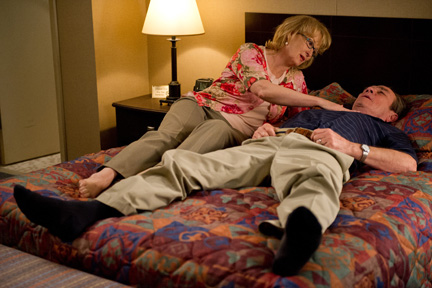
Scenes from Hope Springs courtesy www.google,com

Hope Springs reaches way down in the flinty depths of Arnold’s long-dry well. A series of such determined probings by Kay and the therapist are painful and sometimes hilarious.

The couple experiences mortifying and heart-wringing setbacks in the series of “intimacy exercises” the counselor assigns them. AndArnold proves the most vulnerable, with unsurprising performance issues for a man who can’t remember the last time he had sex with his wife.

Their two actors’ largely physical comedy in an “exercise” in a movie theater at a French movie is as visually effective and touching as anything Chaplin could’ve mustered.

They finally open up directly to each other in one therapy session: “Watching the boring golf shows with you is like being married to ESPN,” Kay says, which leads to a classic male-female dichotomy:

“I didn’t complain because Kay didn’t want sex,” Arnold says.

“Love, that’s what I wanted,” she responds. “I wanted you.”

One of the film’s most powerful and poignant scenes occurs when the counselor cajoles from Arnold his best sex memory – – getting Kay on the kitchen floor when she was deeply pregnant, with surprising tenderness. “She had a little bitty apron that was getting too small because her round belly…”

So his sexual attraction seems also for the fecundity of motherhood and the incalculably powerful promise of a new family.

Yet this plays as strictly an empty empty-nesters story with their children, Brad and Molly, virtually invisible in the background, a large issue the movie probably should’ve addressed.

Nevertheless, this is a PG-13 yet “uncool” movie that parents might encourage their teens to see, to gain insight into relationship challenges that undo many marriages and send offspring into a wrenching tailspins. (Imagine inserting into this story a vividly depicted teen on such a precipice, like the gifted Morgan Saylor as brooding Dana Brody in the brilliant Showtime series Homeland.)

Baby boomers with empty-nest struggles are accumulating like cast offs in a massive junkyard of the lovelorn, so this movie does feel like a kind of Zeitgeist touchstone.

And within its genre limits, the steady counterpoint among the film’s three central characters sustains an emotional suspense that heightens the tension-releasing comedy.

Such storytelling quality in the hands of such masterful actors is something worth acknowledging and considering for the substantial relationship content this movie trafficks in.

There ought to be an Academy Award for Best Comic Dramas, or even for Best Romantic Comedy, instead of movies like this butting up against the granite long-shadow Lincolns of the world.

(Spoiler alert:)  The innate chemistry between these two tough-hearted spouses makes the final inevitable “feel good” payoff plausible and gratifying. Kay vows to watch more golf programs with him and Arnold vows to watch fewer. Between them, you sense they can aim at a par, with the steadying confidence of shared hope.

______________

1 http://www.rollingstone.com/movies/reviews/hope-springs-20120809#ixzz2GMh7sjfV
Follow us: @rollingstone on Twitter | RollingStone on Facebook

The “Magic Book” of Weather Report and Zawinul interview

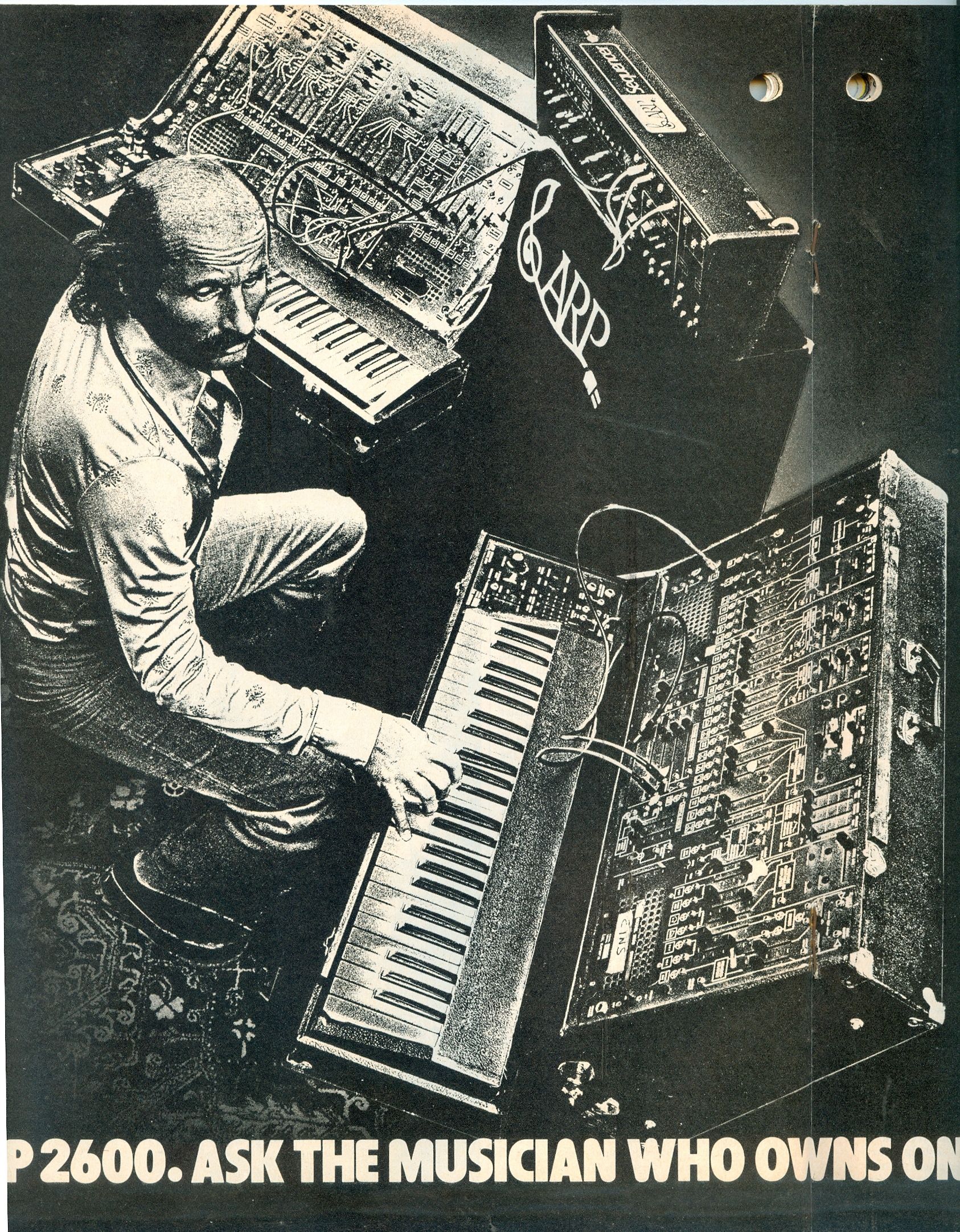
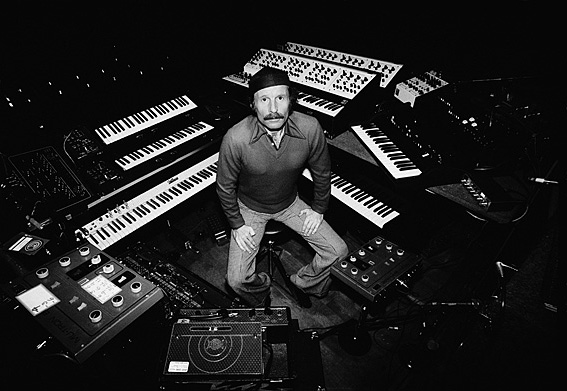
I think this image beautifully captures the particular genius of the late Joe Zawinul of Weather Report, playing his two ARP 2600 synthesizers.

In a recent blog, I alluded to how advances in the ARP 2600 opened new creative vistas for the innovative jazz group. Then I happened to be perusing some old Down Beat magazines and came across this striking image from an advertisement for ARP Instruments Inc. from the June 1976 issue, shortly after the album Black Market had been released and at the dawn of of their biggest hit “Birdland” from Heavy Weather.

In the ad, Zawinul comments, “I have my own ‘magic book’ of sounds I’ve created on the 2600. Melody lines from Black Market, “Scarlet Woman ” lots of music and sound effects from other albums I’ve done. I tape some nice stuff just playing around. With the 2600, you never have to listen to the same sound twice, if you don’t want to.”

Musical technology has advanced exponentially since then, of course, but this is a wonderful portrait of a creative music pioneer frozen in time’s amber.

Down Beat magazine courtesy of Bill Schaefgen.

As a bonus, here’s an excellent interview with Zawinul at age 65 with Howard Mandel:

Joe Zawinul at 65, The Wire

Garry Wills exposes the cultural roots of America’s gun mentality

Survivors of the Newtown massacre. Photo: policymic.com

Like so many, I’d love to change the Second Amendment’s “right to bear arms,” but saving more innocent people from random gun violence will take more than that. Laws would not stop outlaws or disturbed people, although stricter gun registration would logically help restrict the odds of tragedies continuing.

But the problem is deep-rooted and our peculiar American culture must change because this is a self-perpetuating view of “reality,” in the sense that a certain percentage of people in America are still cultivated to our self-destructive Wild West mentality of protecting oneself and one’s property with a gun. The powerful NRA gun lobby has saturated much of our mainstream politics with its influence, and contorted, stuck-in-the-mud-with-my-gun rationalizations for “let ’em be” firearms laws. And gun sales have flourished, partly from reactive fear of whatever the future might bring.

That’s why Garry Wills’ essay is so insightful and I think important for everyone — and especially for conservatives of conscience — to read and consider, because much of their moral grounding is Bible based. Wills’ argument derives from the Bible as well, so it’s an argument that might speak to them and break the stasis of dialogue that we suffer from today, between secular liberal and evangelical conservative mindsets.

He speaks of the evil Old Testament god named Moloch and it’s important to understand our culture through such mythology which reveals truth and archetypes of the American sense of self, for better and worse.

Wills understands the American Christian mentality as well is anyone, as he demonstrated in his wonderful book Head and Heart: American Christianities. Among other things, it probed the oppressive darkness of America’s Puritan psyche, which retains a strong grip on our collective psychosis as a culture.

In that book, he notes America’s elevation of the value of “individualism” – a word our ancestors did not even possess, a term “which we have created for our own use.”

Wills quotes the first great observer of America, Alexis de Tocqueville: “Egoism dries up the very seed of every virtue; individualism initially crushes only the impulses to public virtue, for over time it turns on and obliterates every other virtue and at last it disappears into egoism.”

Wills continues, this antisocial urge could be blunted by “the individual’s partial re-entry into society by way of voluntary associations, which served as buffers between the individual and the state” (Wills, Head and Heart, 79)

The problem is that we have turned the urge into a sunny virtue, erased the negative meaning and made “rugged individualism” more of an ideal principle of the American way of life.

The way we allow leeway for vigilante gunner rationalizations — like George Zimmerman’s about killing Trayvon Martin – is also symptomatic.

Another problem I see is the pervasiveness of broken families in America. It’s unclear whether the socially misfit Newtown mass murderer Adam Lanza had paternal guidance from his divorced father, or from his parents as a coherent and supportive familial unit. And his murdered mother’s Wild West zeal for guns surely facilitated the tragedy. She would have seemed to suffer from the Moloch mentality that Wills writes about in his New York Review of Books blog.

Wills’ other books include What Paul Meant and What Jesus Meant, which show his knowledge of biblical literature and its significance to us today. Then there’s his Pulitzer Prize-winning Lincoln at Gettysburg, which reveals his insights into the wisdom, challenges and leadership of our greatest American president at the peak moment of our most violent historical crisis, which, of course, resonates to the present, as Stephen Spielberg’s new Lincoln film underscores.

Due to Wills’ deep historical erudition, the blog essay is somewhat high-toned and didactic, but as often it’s powerfully pointed. I think many of the people who have already commented on it do get it and have very good down-to-earth responses and ideas which show that Americans can address this profound and festering problem.

Here’s the link to Wills essay: http://www.nybooks.com/blogs/nyrblog/2012/dec/15/our-moloch/

Note: Garry Wills, Head and Heart American Christianities Penguin Press 2007

My best albums of 2012 in roots vernacular music

Here’s my list of best albums of 2012 in roots-music vernaculars. This was also posted at NoDepression.com.

Field Report is the debut album of the Milwaukee folk-rock band Field Report (previously incarnated as Conrad Plymouth) which has received plenty of national press raves and provided the group with strong touring.

Best albums of 2012

  1. Various Artists – This One’s For Him: A Tribute to Guy Clark * (2 CD set) When writers as esteemed as John Prine, Steve Earle, Rodney Crowell, Emmylou Harris, Robert Earl Keen, Jerry Jeff Walker, Kris Kristofferson, Darrell Scott and Ray Wylie Hubbard interpret a man’s songwriting, you know he’s a “songwriter’s songwriter.” But Clark’s no esoteric technician. He carves rough-hewn tales illuminated by glimmers of the heart, traced with bittersweet memory, toughness and love — battered and resilient, as in the insouciant hope-against- fate of the long-distance love ode, “Dublin Blues,” a smaller-canvas variation of Dylan’s “Boots of Spanish Leather.” Clark’s jaunty melodies invariably fit the lyric and sentiment like a Randall knife swinging in a perfectly woven sheath.
  2. Various Artists — We Walk the Line: A Celebration of The Music Of Johnny Cash CD/DVD Note blog on this at http://www.nodepression.com/profiles/blogs/they-have-the-back-of-the-man-in-black-a-johnny-cash-celebration 
  3. Jamey Johnson — Living For a Song: A Tribute to Hank Cochran. Like Guy Clark, Cochrane cut to the heart of the matter with uncanny precision and insight, Clark with perhaps a bit more color. But here’s poetry stripped to its essence (“I Go to Pieces” of course; the terse jukebox ode “A-11” replays insistently like any “our song”) Johnson, a wise young traditionalist, exquisitely complements another heavyweight lineup, including Willie Nelson, Merle Haggard, Elvis Costello, Ray Price, Bobby Bare, George Strait, Emmylou Harris, Alison Krauss and Cochran’s own voice, reciting a few lyrics.
  4. Iris DeMent — I Sing the Delta. DeMent struggles with writer’s block, I suspect, because her creativity is so entwined with the nagging particulars of living (think of her classic “No Time to Cry”). Here she plumbs the depths of the Delta, allowing its soulfulness and mysteries to seep up through her singing and songs. Her clarion voice, for me, often catches healing sunlight to warm its hardest heartache. Her parallel struggle with faith abides with life as a wordless prayer to traditions that die off and rise again.
  5. Tedeschi Trucks Band Live — Everybody’s Talkin.’ It’s a tossup between DeMent and Susan Tedeschi for my favorite contemporary roots singer, rating DeMent’s disc slightly higher as a stronger personal statement. But no woman interprets others with more soulful zeal and sensitivity than Tedeschi. A fine guitarist, she has a musician’s mastery of her vocal instrument. Add arguably the greatest living slide guitarist, Derek Trucks and, on this live set, a stone jammin’ horn band, and you’ve got roots music gumbo boiling to the heavens, “Bound for Glory.”
  6. Kathy Mattea — Calling Me Home. Mattea’s disarmingly conceptual album calibrates the universal human longing for home as a timeless refuge. The dramatic and poetic friction arises as she deftly frames her Appalachian hills as threatened by the very industry — coal mining — that sustains it; one of contemporary America’s most pressing environmental/societal conundrums.
  7. Dr. John – Locked Down. Black Key Dan Auerbach’s poised reins facilitated this outrageously shambling parade of lusty self-mythologizing swamp-and-gutter groove. Dr. John has lived the quintessential New Orleans street hustler-hipster life. The music’s chug-a-lug roiling and left-handed aphorisms excavate comedy, tragedy and human possibility. His exotic yet sly wit exudes empowerment, as if he’s tossing out fistfuls of mojo like Mardi Gras talismans.
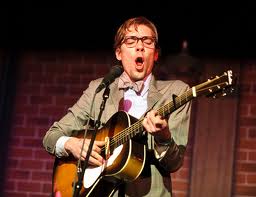
  8. Fiona Apple – The Idler Wheel is Wiser Than The Driver of The Screw and Whipping Cords Will Serve You More Than Ropes Will Ever Do. Yes, she’s a self-conscious artiste, yet Apple tells a musical tale as vividly as any vernacular folk artist, and with such idiosyncratic brilliance that it’s too this-that-‘n-the-other-way not to feel authentic. That’s how this artist manages the balance between her most arch conceit and the primal cries that sear a streak to the tip of her consciousness.Justin Townes Earle. Photo: blog.washingtonpost.com
  9. Justin Townes Earle – Nothing’s Gonna Change the Way You Feel about Me Now. Earle’s double-dose of nominal paternal legacies (Steve Earle and Townes Van Zandt) may help explain his personal struggles as he tries to be his own kind of singer-songwriter. He makes this warts-and-all confession-and-reflection work with slushy stylistic mélanges and a voice as palatable as tawny port, aged by time’s missteps and lessons. And he’s loosening up his style, which sweeps away any glimmers of preciousness.
  10. Field Report – Field Report. Few recent songwriters have fingered the crusty surfaces of life’s pains, confusions and compromises with more openness, honesty or deftness. So depth arises, in breaking buds of poetry. Christopher Porterfield and band add just enough harmonized refrains and ratty-couched sonics to deliver songfulness as quietly wounding experience. He opens up key moments as if experiencing them for the first and fiftieth time.

Re-issue:

Howlin’ Wolf — Smokestack Lightning: The Complete Chess Masters, 1951-1960 He’s still baaaad! And eevilll!

* Released in December 2011, the Guy Clark tribute album missed most 2011 “best of” lists, but won the 2012 Americana Music Association album of the year award.