Spy vs. Spy (vs. Spy) vs. Trump?


Review: Spy vs. Spy: The Big Blast (Special Collector’s Edition) and The New Yorker, April 21, 2025


I rarely take “selfies” but I couldn’t resist this time, given that I have these two current issues of classic magazine fare (hurry, the Spy Vs. Spy collection is only on newsstands until May 23rd!) – and an apt-enough “Spy” get-up.

The one-two punch of these two great publications pretty much  knocked me on the floor (literally, in the above photo).

Allow me to get up, dust myself off, and explain.

I’ve always been a fan of John le Carre, the British master of literary espionage novels, having read most of his books about George Smiley (or George :-), as my goddam voice dictation understands his name), and recently watched the brilliant and harrowing mini-series adaptation of Le Carre’s novel, The Night Clerk, about a callow, mid-30s hotel night clerk who pretty much allows his libido to get him caught up in deadly international intrigue.

Of course, as a youth, my brow drooped quite a bit lower, to the delicious depths of Mad Magazine which featured in every issue, “Spy vs Spy” on the back page, as I recall. 1

Some of the best of these one-page cartoons also involved a third spy (“Spy vs. Spy vs. Spy”), a voluptuous female who would always foil the excessively testosterone-driven male spies.

Here’s the very first appearance of the so-called “Grey Spy” in the series, according to a online fanzine:
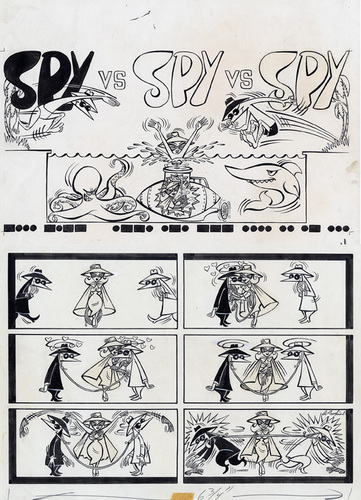
Spy vs Spy vs Spy MAD #73

Such triangulation of deceit has actually been a trope of espionage fiction for a long time: Think of James Bond’s famous opening line to any femme fatale he invariably beds (“My name is Bond. James Bond”). He’s sure that line, along with his square-jawed movie-star looks, are all you need (is not love). Of course, she knows that’s about all she needs to get him hooked into her deviousness.

So, yes, I guess they were trafficking in female stereotyping. But triangulation of deceit also brings to mind another male deceiver’s infamous line: “I did not have, sexual relations, with that woman.”

Young readers Google that quote and you will be duly instructed, in some of what power (real and perceived) breeds.

And though Le Carre’s shy and retiring George Smiley was too old and dumpy to fall for a female double agent, that’s a little bit of what happens in that author’s The Night Clerk — even if Le Carre’s dazzling, almost Byzantine, plot easily transcends that cliché.

So, I was struck by the synchronicity of the latest New Yorker magazine, which arrived a couple days after I bought the Spy collection. On that cover, the two hapless spies are tied to a globe-sized bomb which, the mag’s backside reveals, is being lit by, you guessed it, the snickering “grey” woman spy. On The New Yorker cover, in a five-scene sequence, Donald Trump (a satire by Frank Viva, titled “Hot Air”) blows up the whole world like a big balloon, which he proceeds to dance with (we know how well he can dance!), twirl and bounce with his big butt, before the whole thing explodes in his face.

And to think he castigated Ukraine President Zelenskyy for flirting with World War III ! The whole hot-air overheated world is lucky some of Trump’s staffers tugged on his leash enough to temporarily choke-back his globular tar-riffing. As MSNBC’s Rachel Maddow reported, and The New Yorker’s Benjamin Wallace-Wells seconded: “The tariffs had been so hastily designed that they imposed duties of 10% on Antarctic islands inhabited only by penguins and seals, and placed a duty of nearly 50% on Cambodia, a producer of cheap textiles that is too poor to plausibly buy much of what we produce.”

We kid you not. Trump’s kidding only one person. Or maybe two others: Harvard grad Vee-Pee J.D. Vance and “genius” Elon Musk.

Wallace-Wells continues, “The markets predictably plunged, wiping out more than $6 trillion in value.”…J.P. Morgan Chase’s CEO predicts the ‘likely outcome’ would be a recession. The labor economist Aridrajit Dube wrote, ‘never in human history has a whimsical decision by a single person destroyed so much wealth.’ ”

So what is the world thinking and feeling right now? How much is Vladmir Putin flexing his greasy, crooked grin?

Now, also imagine what disarray America’s current CIA spycraft may be now, with the chainsaw-weilding Elon Musk gleefully ripping into every government agency he can heedlessly reach.

The third brief article brief in this New Yorker’s “Talk of the Town” feature was about cartoonist Robert Crumb, who visits the Whitney Museum with the interviewer while chatting a bit about a brand-new biography by Dan Nadel, Crumb: A Cartoonist’s Life.

Lo and behold, a copy of the Crumb biography appeared on my front doorstep, Monday.

So I can blame my old high school pal — a publicity-shy guy preferring to be known as “my Crumby friend” — for this painful and delightful distraction. We are both cartoonists, of sorts, ourselves, and friends since plying such dubious artistic skills in The Poster Club at Marquette High School, back in the day.

Speaking of cartooning, here’s my graphite-and-pastel Trump caricature, now a protest poster I hoped I’d never need to use again. But I did at the “Hands Off!” protest of Trump/Musk in downtown Milwaukee on April 5, with 9,000 other people (more on that event in a coming post).

Ah, but the truth is, I had been toying with the idea of the spy get-up selfie since The New Yorker arrived.

To deter me from my seemingly interminable book projects, this meaty tome of “Crumbs” is a very “early birthday gift” from “Crumby,” who was probably afraid I would buy it before he could gift it, a reasonable fear. My birthday is not until July 1.

Plus (really full disclosure), my housemate is not here today to try to shame me out of such semi-foolishness (I did work fairly hard yesterday on my jazz book’s permission requests. The book’s excess of quotes has become a bit of an albatross for a project with, sadly, no publisher’s deadline.)

I feel a bit better about this “confession,” akin to Crumb cooperating with his biographer only  if he didn’t gloss the artist’s flaws and obsessions. We were both raised in Catholic families though his was a considerably harder slog than mine, as the biographer quickly reveals.

The new Spy vs. Spy collection features the strip originator’s Antonio Prohias’s close friend, Sergio Aragone (a fellow MAD cartoonist) drawing a delightful five-page story of Antonio’s life. Many of his original (b&w) cartoons have since been colorized by Carrie Strachan, and this is a 96-page, slick-paper, high-gloss production. Yet what goes around comes around (in such a manner), as MAD, and this collection, now includes the black and white stylings of the current heir to the Spy ‘toon job, Peter Kuper.

Current MAD editor John Ficarra posits that part of the original MAD’s appeal was the cheap paper it was printed on, to make it seem ” ‘underground’ and tacitly forbidden, and therefore more desirable” to young readers.” I’d sort of concur, though my folks were enlightened enough to not forbid me MAD. It ran “proudly” black and white from 1955 to 2000. Toward the end of that “proud” era, another MAD editor quipped “MAD looks like it was printed in Mexico in 1959.”

Such inky grubbiness was likely part of Crumb’s thinking when he self-produced his first “underground” ZAP Comix in the mid-late 1960s. One my favorites of his early surreal drawings, is from another boho rag, The East Village Other, titled “Burned Out,” for which they one-tone colored for its cover, illustrated in the Crumb biography.   The East Village Other Counterculture Newspaper February 1970 Robert Crumb Burned Out Cover - Mark Lawson Antiques

Courtesy Mark Lawson Antiques. 

So, one more synchronicity in the smallish world — it suddenly seems — of cartoon satire: I had finally re-subscribed to The New Yorker again, after decades of refraining, because the cartoons are as good as ever. Of course, the typically excellent, sometimes Pulitzer-winning, thumb-sucker lead articles are still awfully long.

So I need to pick and choose among them, or my authorial name will always be, pre-emptively, Mud.

And here’s my new Crumb book which I’ll surely finish the 400 pages (plus notes) of long before I finish the two doorstops underneath it. 2

__________________

  1. You can still subscribe to MAD, for one year of six issues for $19.99 “CHEAP!”

2. I was almost startled at the mounting synchronicity of this column’s subjects as soon as I turned a few more pages of Crumb. Turns out, MAD magazine would soon hit the adolescent Crumb like a lightnight bolt. Author Dan Nadel describes this even more provactively: “Seeing and then handling the magazine altered Robert’s brain chemistry as surely as LSD would a decade later. He would never normalize…

“MAD” was first a comic book and then a magazine cranked out by artists without pretensions to literature or acceptance; it could tell its audience that the world was a lie and that the only answer was all out cultural anarchy.
“MAD was effective because it was noisy, teeming, coming-out-of-its-skin, yet incredibly sophisticated, sustained by beautifully-crafted cartooning straight from working class Yiddishkeit Brooklyn.”
Crumb himself continues such raving: “I began to use my own free judgment about things. Being cast out, though painful, was a liberating process open bracket [MAD‘s] critique was coming out of a kind of craziness, and they didn’t have a real strong analysis of what they were criticizing, they were just laughing at it all. It was this irreverent nose-thumbing at the straight-backed hypocrisy of these old American values, which were hypocritical and try to brush all the bad stuff under the rug.”

(Crumb,” Scribner, 2025, 32-33)


“First they came for the socialists…” Time to remember and speak up.

First they came for the socialists, and I did not speak out—because I was not a socialist.
Then they came for the trade unionists, and I did not speak out—because I was not a trade unionist.
Then they came for the Jews, and I did not speak out—because I was not a Jew.
Then they came for me—and there was no one left to speak for me.
—Martin Niemöller
This quote is attributed to the prominent German pastor Martin Niemöller.
The first line is my new regular Facebook profile quote.
America is being profoundly threatened by similar Fascist powers attempting to destroy our democratic government and causing unfathomable harm to immigrants in America! 
The worst perpetrator is Elon Musk, an unelected pseudo-president whom Trump has given outrageous powers of indescriminate destruction in the guise of “efficiency.”
My downstairs neighbor, a long time ROTC recruiter with three children, has already lost his regular job to Trump’s draconian cuts and hopes to get another job out of government.
Trump very easily gives up his powers to appealing “power men,” this one who shamelessly uses his child as a prop, to cover for his moral degradation. Disgusting, and incredibly dangerous. 
For all his demogogue’s charisma to too many common people, Trump lacks the aptitude to actually deal with bureaucratic matters of governing. He now simply follows closely the radical conservative directives of Project 2025, which he had nothing to do with the crafting of.
This situation is similar to Trump’s recent acqueiscence to Putin about Ukraine, which has shocked all of Europe.
Of course, Trump has completely ignored his pledges to the common Americans who elected him. His approval ratings are declining already.  
“First they came for…” has been part of the permanent exhibition at the United States Holocaust Memorial Museum since its opening in 1993. Initially, Niemöller’s words were part of a text panel. Today, they are prominently featured on a wall as the final words of the exhibition. They serve as an indictment of passivity and indifference during the Holocaust.
Time to contact an elected leader and organize. The Democrats have been way too passive in the face of the Second Trump Administration. 
________________
All reactions:

John Ehlers

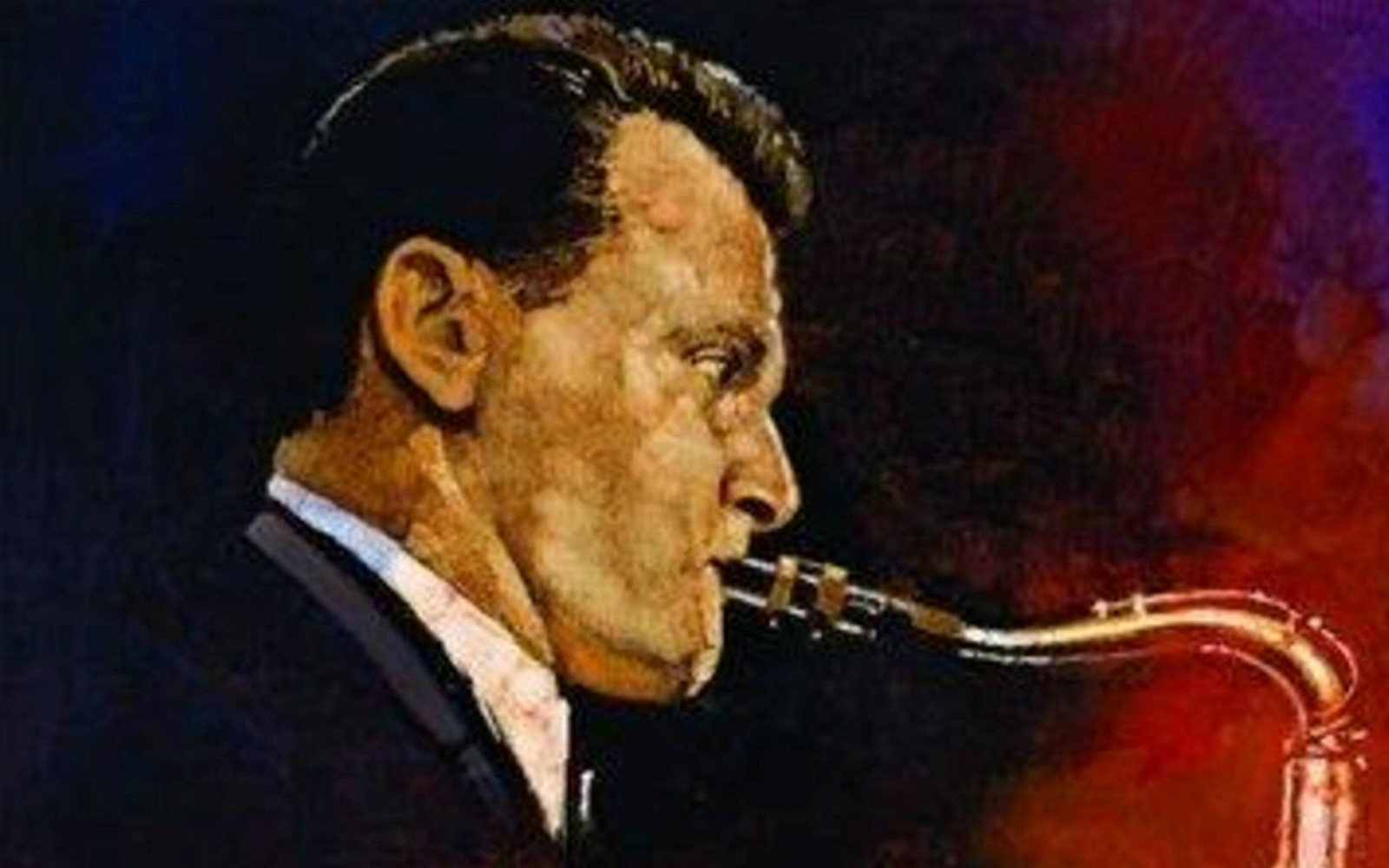
Stan Getz now? Why he still matters


Why now? Why Stan Getz now? I’d meant to post this on his birthday, February 2, but got sidetracked. Still, I post because this remains his birthday month, and because he’s a voice in time and beyond it, a voice within time and forever. Wherever I go, I’ve come to know, I yearn to hear him, and all he has to say.

I also share a warm moment with him, forever.

I understand now, as well as a non-saxophonist can, what John Coltrane meant when he said of Getz, “We’d all sound like that if we could.” Coltrane was, among other things, a supreme master of balladeering, where many saxophonists make their bid for a sound as beautiful as possible.

My own analogue to Coltrane’s indirect superlative: I would carry Getz’s sound with me further than any other instrument’s, if forced to forsake all but one. Maybe it’s a Sophie’s choice between Getz and Miles Davis.

As a relatively young music journalist, I had already reviewed a Getz performance at the Milwaukee Jazz Gallery for The Milwaukee Journal, a highlight among many superb artists I heard and reviewed there. Two years later, I interviewed him in his Chicago hotel room, then wrote a feature previewing a Getz performance at a Rainbow Summer concert in Milwaukee. There I met him again afterwards and, though brief, his thanks for the article seemed authentic. Then he surprisingly asked me to accompany him walking to his nearby hotel room, under one small condition.

Would I please carry his saxophone for him? After the performance, he was fatigued, partly the byproduct of years of abuse of his body with drugs and alcohol. He was only 57.

I accepted the task gladly, and the moment soon swelled into a thrill. I gripped and hoisted the case of one of the world’s most revered artistic instruments, beside its owner and artmaker. It inspired a short poem, “Bossa Not So Nova.”

So, I’ve written about Getz in three modes but, mea culpa, it still doesn’t seem enough.

You see, lately I’ve revisited him upon buying a used copy of the Getz musical biography Nobody Else But Me, by Dave Gelly. It discourses across the artist’s career with close readings of numerous Getz recordings, his legacy beyond memories, as he died in 1991.

This excellent book prompted me to dig out an array of Getz recordings. As I write, I’m listening to him essay “Infant Eyes,” an exquisite ballad by another giant of the tenor sax, Wayne Shorter, and each long whole note unfurls with delicious tenderness and knowing delicacy.

Here’s a link to Getz’s version of “Infant Eyes,” from the album Moments in Timehttps://www.youtube.com/watch?v=gvr_BrW_xk0

I couldn’t have responded to this recording much earlier than a couple years ago, when I obtained a copy of this album, recorded live by Getz’s Quartet in 1976, but not released until 2016 on Resonance, a label specializing in what I’d call “jazz archeology.”

And there’s more affinity between Getz and Shorter than a few tunes in Getz’s repertoire. The sound of their voices resonates similarly, an exquisitely soft vibration, a singing like a distinctly masculine bird that — warbles and vibratos aside — can hold a note like a distant horizon of destiny. Both saxophonists have lived lives deeply shadowed by tragedy, likely informing their profound sensibilities.

Indeed now, the tune playing is “The Cry of the Wild Goose,” by trumpeter Kenny Wheeler, and it belies one misplaced reservation I held about Getz in the past.

He disabused me of it when I saw him in 1982 at the Jazz Gallery. But I’m referring to back in the mid-1960s when he broke into public awareness with his lilting bossa nova luminosities. He could hold and caress a note as if it were palpable and breathing which, with him, it truly was. Such audible tenderness enchanted me as much as any other single jazz artist did with one recording, Getz/Gilberto. Created, arranged, and recorded by virtually all Brazilian musicians, the album racked up unprecedented sales for a jazz recording (2 million copies in 1964) and became the first non-American album to win a Grammy Award for Album of the Year, in 1965.

And sure enough, right now with Horace Silver’s “Peace” (also from Moments in Time), Getz is beguiling yet again. But back during the bossa nova craze, for all my admiration, I doubted whether Getz was capable of anything approaching what I call “The Cry.”

I do hear a cry in the “wild goose cry” tune I’d just heard, but I’m referring to a sound often heard among saxophonists in the 1960s, during the same time Getz lulled and seduced with “The Girl from Ipanema.”

The notion of “The Cry” is the expressionism that numerous saxophonists especially began manifesting during that period of social upheaval and raised consciousness over racial injustice. It’s a heavily freighted topic and subtext. So perhaps its unsurprising that a naturally lyrical white saxophonist isn’t easily associated with it. Nevertheless, over the years, the true and extraordinary range of Getz’s expressive power expanded, and his version of “The Cry” arose, as such a striking contrast to his inherently singing style that it carried the weight of striking effects, like a sculptor’s chisel discharging chards and sparks, to convey how life can force us to extremes of feeling and response.

To me, Getz seemed to be universalizing the plight and poignance conveyed in “The Cry,” most often associated with African-American musicians. This is not to minimize the racial suffering those artists endured and expressed, but to find the shared humanity in it. Getz’s suffering might be arguably his own demons’ making more than of a cruel society built on systemic racism. As a Russian Jew, he may have ancestral instincts of suffering and class oppression hounding his psyche. that of the perpetul serf, in the bottom rung of an bloted monarchial system. Even today, how do those millions in the nation’s lowest caste subsist in Putin’s oligarchic, war-mongering Russia? We may hear Stan’s echo in them, too.

Accordingly, he seems a different sort of expressive animal — “Nobody Else But Me” as the biography’s title seems to borrow from his voice. The simplicity of the declaration also may reflect Getz’s uniqueness, his fingerprint identity, his sonic originality as a pied piper whom, when heard, we still feel compelled to follow, decades after bossa nova first sailed across waves and valleys. Years after his last living breath.

Gelly insightfully notes a great irony, how the drugs and liquor might’ve facilitated an “alpha state” in which, Getz explained, “the less you concentrate the better. The best way to create is to get in the alpha state…what we would call relaxed concentration.”

Such can be the price of art. Does that make it ill-begotten? Illegitimate?

Nay, I say. Thank the music gods for his voice, retrieved and captured.

Stan Getz and Astrid Gilberto in Berline 1966.

https://www.youtube.com/watch?v=sVdaFQhS86E

Finally, here is my revised version of “Bossa Not So Nova.”

Bossa Not So Nova

Fattening and fifty-seven, Stan Getz

sweats out a melody, red-faced.

The sax sings effortlessly.

“Hey thanks for the article,
I gotta walk to the Hyatt,
can you carry my horn?” he croaks.
The sax sings light blue.

Young and tan, and tall and lovely
the girl in knee socks walks and sways.
And Stan stops his sax, and walks and goes,
“Ahhhh.”

It ain’t so much man appraising sweet youth.

Or it’s that too, with a clear trace of chagrin.

“I’m beat,” his cigarette breath bellows softly. “Just go slow.
Hey can you find a doctor?
My bass player needs one.”
His bass player?

We walk along the Milwaukee River
at 10 PM Sunday.
Is there a doctor in the river?
They’re all on-call, sleepin’ or smokin’
in a big, green, long-and-cold halllll.

Stan wonders about Mader’s, is it open do I know?
His belly rumbles southern volcanos.
The sax sings effortlessly, but just not really at me,

no, right from its case like the wind,

in her hair, in her long and lust-erous hair .

Tall and tan and young and handsome,
the boyish man from Ipanema is wheezin’

while a woman somewhere dreams…
to the old scratchy side that goes, Ahhh.

The sax singing ever so softly

as in a morning sunrise,

en la playa del aureo hombres…

(on the beach of golden men…)

(tenor sax solo to fade-out)

  • Stan Getz’s saxophone case was used to store his ashes after he died of liver cancer in 1991. His ashes were then scattered into the ocean off the coast of Marina del Ray, California.

– Kevin Lynch (Kevernacular), 1988

_________

I’m hardly the only person to poeticise Getz. I imagine numerous have. One who did it as beautifully as anyone is Jim Hazard, a poet from Milwaukee who served as my primary committee-member when I did my masters in creative writing at UW-Milwaukee.

Here’s my little remembrance of Jim and his Getz poem:

Note: James Hazard was a very gifted writer and a dedicated jazz cornetist who died in 2012. (disclosure: he was a professor of mine in grad school, 22 years ago. He was a warm, funny, soulful and deeply supportive teacher, and continued to champion my career efforts over the years. He loved especially Chet Baker and Stan Getz, among many jazz musicians) 


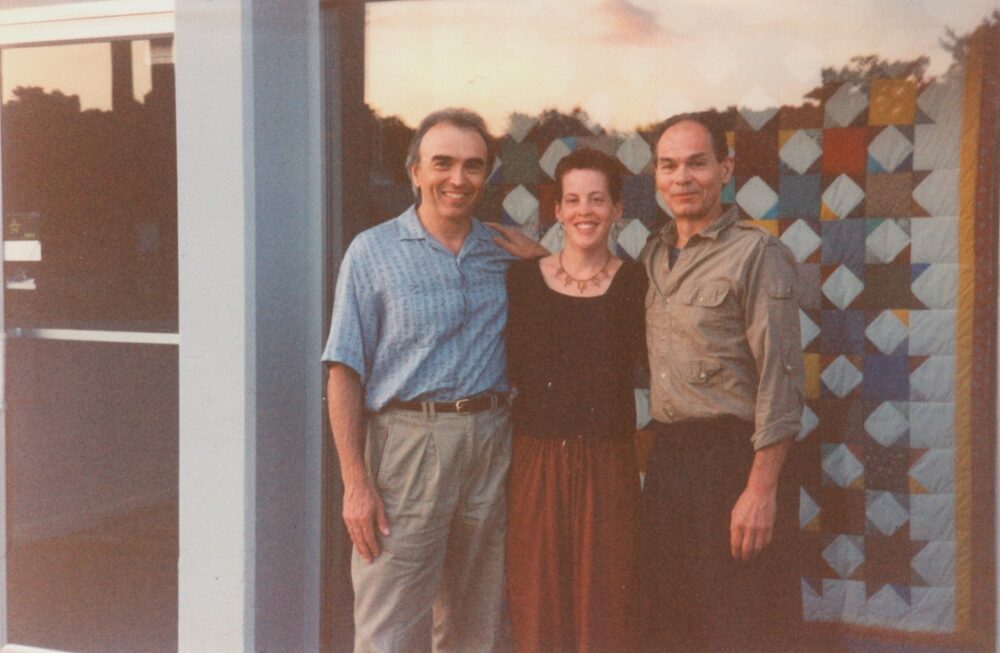
Writer and cornetist Jim Hazard with his spouse of 38 years, poet Susan Firer.

Coincidentally or not, Hazard and I both wrote Stan Getz poems. Hazard’s, “A True Biography of Stan Getz,” is great modern poetry, from this 1985 collection New Year’s Eve in Whiting Indiana, a masterful book-length ode to his hometown, shedding light on myriad shards and stories of naked, radiantly quirky humanity obscured by grimy smokestacks.

Jim’s poem suggests how Getz’s inimitable saxophone style channeled the romantic impulse in the young Hazard. My Getz poem is based on an actual encounter with Stan Getz (1927-1991), and quotes from his hit song “The Girl from Ipanema.”

Here are excerpts from:

A True Biography of Stan Getz

By James Hazard

“When you change the modes of music, the society changes.” — Confucius, via Gary Snyder

“Place yourself in the background.”, rule one , “An Approach to Style” — Strunk and White

I. 2013 Davis Ave., Whiting, Indiana

The place of his first grade appearance, 1950 or 1951. I was doing the Forbidden in the bathroom: listening to the radio while I bathed, heedless of electrocution and hoping for a jazz record , on the rhythm-and-blues Gary radio station.

Stan Getz played “Strike Up the Band” and I was heart-struck. I was already a heart-wreck, having seen Gene Tierney, her face hitting the screen as a flash flood in LAURA…

(Hearing for the first time that sound, the long and many noted phrases of it, but the sound itself carrying those long phrases out to the ends of breath as if Stan Getz’s lungs and heart would fall in on themselves, wreckage. And Gene Tierney filled one entire wall of the Hoosier Theater and like the bathroom radio – electric, fatal — could not be touched.)…

__________


Historian Timothy Snyder reveals the moment’s urgency pending a meeting in Munich on the Ukraine-Russian War

Ukranian soldiers disembark from a tank. Kyodo News

Timothy Snyder’s historically-informed essay is easily the most insightful writing I’ve read on the political and World War implications for appeasement of Russia, which Trump is moving heedlessly towards. Appeasement of Germany in Czechoslovakia in 1938 led to World War II. Please read this to gain understanding of where we’re now situated. Then perhaps contact one of your representatives to help send a message, at the very least.

https://open.substack.com/pub/snyder/p/appeasement-at-munich?r=5n8ot&utm_campaign=post&utm_medium=email

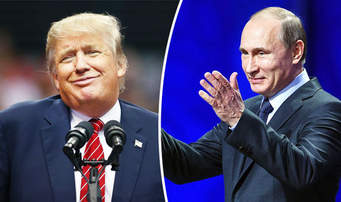
Russia is not America’s ally. Trump and Putin in Helsinki in 2018. Brookings Institute.

This is No Cold War Joke. It’s President-select Donald Trump Feeding Russia the Punchlines, One at a Time. Who’s Gonna Bomb First?

trump-putin

Courtesy cdn.images. express. co.uk

“The word mammoth is derived from the Tartar word mamma meaning the earth :”… From this some mistakenly came to believe that the great beast had always lived underground, burrowing like a big mole. And they were sure it died when it came to the surface and breathed fresh air!” – Roy Chapman Andrews from All About Strange Beasts of the Past (An epigraph to Lorrie Moore’s novel Anagrams)

“Whenever I’m serious, the only vocabulary I can come up with our words that have been spoken in the last 30 seconds. My sentences become anagrams sentences before. (That is an argument about intelligence and sexual fidelity in marriage”) – Lorrie Moore, from “The Nun of That,” from Anagrams

Has anyone been feeling furious lately, like right in the middle of the morning, without knowing why until they happen to check the news on their smart phone or turn on the tube?

Well, let’s try to focus that fury a bit into some something concentrated and somewhat analytic.

Let’s pay a little closer attention and start at a microscopic linguistic level. How might Trump morph into an American Putin? Is it any more than a coincidence that their two surnames are very pugnacious utterances when spoken aloud? Then notice how close they are to anagrams of each other. Try some letter juggling with Trump: “Pmurt.” Or “putrm.” Knock the second curve off the m, and you have “putrn.” Chop the curve off the “r” & pin it on top and you have Putin!

(Add the r to “putin” and turn the p upside down & you have “putrid.” How mellifluous.

A bit more seriously in a literary manner.  now certainly have perhaps the two strangest presidents to ever lead the two most openly antagonist superpowers in the globe. Trump and Putrid, I mean, Putin and Stump.

They are both mammoths, whose power is almost totally circular and inward-feeding from the energy and resources of the great nations they seem to be leading as elected presidents.

trump-angry

See The Donald Mammoth roar. Media.salon.com

It’s a bit like a woolly mammoth, say, from rising up from a prehistoric grave like a Neanderthal man wearing a woolly mammoth coat and headdress. Everybody flees in horror and they try to blow down any courageous challengers who might be a lingering. The working class or the lumpen proletariat seem to like some of the outrageous racist utterances from Trump’s mouth: Mexican rapists, radical Islamists (so let’s get rid of all his Islam Americans, even though the vast majority of domestic terrorism in America since the war and terror began has been committed by domestic right-wing offensive proto-Nazi mass killers).

But when people go to his rallies or get all their information from social media things like the truth are easily filtered out and Trump fans love the huff and the puff.

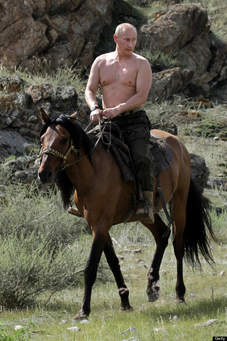
Let’s imagine a little showdown between Trump and Putin in which they’re both stripped-down to shirtless and face off, with Trump’s southward-sloping profile his belly curves tantalizingly close to Putin’s chest, being quite a bit taller and fatter.

putin-horse

Vladimir Putin. courtesy huffingtonpost.com

Although we’ve never seen Putin exhaling a big huff and puff, we’ve just seen the very posed photo op of him topless on a horse. But he seems to be in considerably better shape than Trump.

But the eyebrow-raising “bromance” between the two proceeds apace, to where we can only guess. We know that Trump admires Putin and probably wishes he was that smart and autocratic. Putin is possibly the richest man in the world because he has contrived to funnel a great percentage of his own nations GDP into his own bank account and is worth reportedly $86 billion.

As for Trump’s worth, who knows because he still hides behind a supposed audit to refuse to release his tax returns. We are aware of course that he lost something like $91 million a number of years back which may have allowed him to avoid paying income taxes for 15 years.

The Russian hacking of the U.S. election “was an attack on America, less lethal than a missile but still profoundly damaging to our system. It’s not that Trump and Putin were colluding to steal an election. But if the C.I.A. is right, Russia apparently was trying to elect a president who would be not a puppet exactly but perhaps something of a lap dog — a Russian poodle.”  – Nicholas Kristof, The New York Times

Is this a cruel, unfair metaphor? We know that Mr. Kristof, despite his Pulitzer Prizes, is one of those highly specious “liberals.” Consider, as per the Times’ Maureen Dowd, who seems to hate Hillary Clinton more than any other politician if you consider her journalistic track record. So she’s going to give her opponent a fair shake, no?

She wrote of the last debate: “Talking about Putin, Trump once more offered the simple reason he has flipped his party’s wary stance toward the Evil Empire, subjugating his party’s ideology to his own ego: ‘He said nice things about me.’’’

It seems the most disarming thing that any raging mammoth can do to this orange paper sabre-toothed tiger is not to stomp on him like Hillary Clinton did with mighty psychological glee especially in the last presidential debate, in which he finally responded with a devastatingly policy-dismantling riposte: ”Such a nasty woman.”

No, all a smart person like Vladimir has to do is ”say nice things” about him. The Donald seems to have an Pavlovian response to niceness when it is directed at him. This is the height of quasi-erotic banality, something that perhaps the French filmmaker Luis Bunuel might have worked into one of his satires of the empty lives of the bourgeoisie, laced with odd sado-masochism (think of Belle de Jour).

Of course, Trump is the bourgeoisie bloated into the upper 1%, his wealth is the whole buttressing of his self-esteem and ego. He seems to have no firm principles or values other than accumulating money and its attendant shiny object sheen and “prestige.”

So “saying nice things” to him, to disarm him seems a reasonable equivalent to petting a lapdog poodle. The little creature, with the funny red sweep of fur over his brow, and and involuntarily begins to wag his tail. He quivers and emits a tiny shuddering yelp of pleasure.

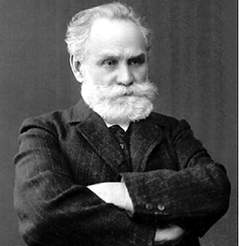
Is the tail wagging the dog? It certainly seems to be. Let’s remember that Pavlov was a great Russian psychologist and the best leaders of that nation have employed such manipulative powers, including Joseph Stalin. Look at Pavlov.

pavlov-photo

This is a man who knows what he want, and needs to do, to extract the desired effect in his object of experimentation which, by now, is well-accepted scientific psychological truth.

pavlov

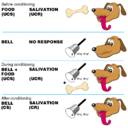
Add “NICE POODLE” (in soothing tones with steady strokes), to the left column of this chart. Then another “SALIVATION”.

Because the tail is being orchestrated by Vladimir Putin, like a hypnotist whispering to the alert tail, “You are getting verrry sleepy.” The tail begins following the Russian’s swaying vest clock… The poodle himself is virtually oblivious of this behind-the-butt love waltz.

You might also take one of those cute red “MAKE AMERICA GREAT AGAIN” baseball caps and put it on the head of Putin’s poodle, and his perky ears hold it in place neatly.

Such a “nice” image. Of course, that is nice mainly if we focus on the poodle’s perky, pretty posterior. If we look up front, prettiness, um, needs a napkin, or three.

pavlov-dog

Courtesy inkart.com

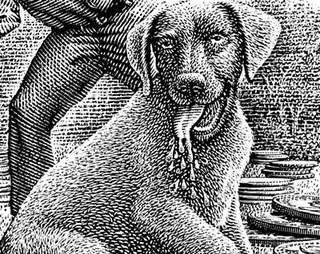
Now, this image of a “Pavlov’s dog” is not nearly as pretty as a lap poodle would be. But let’s imagine it starting as a Neanderthal in mighty-woolly-mammoth drag, morphing slowly into a fast-shedding shaggy dog, morphing into finally, a manicured lap poodle.

So  then one of his aides would read the whole column to him. You know what comes next .A detailed policy speech on culture intelligence strategies for responding to Russian hacking? Well, no. Maybe something more like, you know, what all (make America) great presidents do when challenged. He tweets. Eg.:

31 Dec 2016

This nasty blogger and people like Hillary are just jealous because Putin says nice things about me, and not them! Ha Ha!

OK, he’s eloquent. So let’s give our Trumpoodle a break, especially with the “optics.”

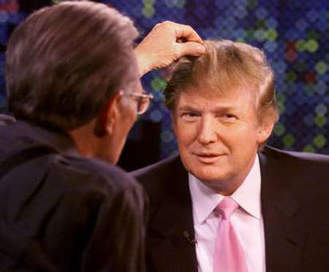
Ah, butt Larry King seems to have the right idea here:

larry-king-petting-trump

“Good Trump, good Trump.” celebalite.c

Okay, Okay, Trump fans who have, or are capable of, reading this far. I’ve tried to include lots of pictures. (I wonder, would The Donald read this far? Sure, if he scrolls down and sees his own face. So he’ll probably start reading around here. Sensing this possibility, I am striving for a bit of a Pavlov angle here 🙂

I am certainly willing to wait to see how the “president-select” (see the Electoral College fiasco) Trump “performs” once he puts his paw on the Bible and takes that solemn oath with a few muffled “ruffs”.

However, seriously speaking, what is scaring me is his cabinet appointing. If approved, it will be the most radically right-wing one in American history.

Trump media relations will be based on a propoganda mode; a daily misinformation campaign. Note his recent comment on the Russian hacking of the Democratic party files: “In the computer age, nobody knows exactly what’s going on.”

Media critic and professor of journalism Jay Rosen comments: “Journalism that tries to find its public through ‘inside’ coverage of the political class is vulnerable to rejection by portions of the public that are busy rejecting that class.  This is a hard problem, to which “listening” sounds like a soft, warm and fuzzy solution. It isn’t.”

The media needs to find fresh ways of actually listening to the public, especially that which completely distrusts the press, following Trump’ cues fervently.

Rosen extensively quotes Andrew Haeg, CEO of the journalism start-up Groundsource, who has a smart approach in mind.

“Haeg recently tried to sketch what a ‘listening’ model looks like. I found inspiring his imaginary description of a two-person listening team:

Emboldened by election postmortems urging better listening, inspired by (the movie) Spotlight, trained in new tools and techniques, and stoked to pioneer new forms of listening-first investigative journalism, the duo works deep into the night, tipped over Chinese takeout, bleary-eyed, adrenaline-fueled, writing as they go a new playbook comprised of equal parts data journalism, community outreach, crowdsourcing, and investigative journalism.

They print and post handmade signs in grocery stores and truck stops: “What should we know?” with a phone number to text or call. They FOIA 311 data, download 211 data from the United Way, use Splunk and IFTTT and other tools to trigger alerts when key community datasets are updated. They hold town hall forums, set open office hours at local coffee shops and diners, and form key partnerships with community organizations to invite underserved communities into the conversation. They build a community of hundreds who ask questions and vote on which ones get answered, get texts with updates on the newsgathering progress and ongoing opportunities to share their concerns and stories. The community feed that develops is rich, authentic, and often shockingly prescient.


A new strategy by the press in the interest of factual truth for every citizen to use, no matter how they voted, is crucial to the new American surreality that Trump toys with daily.  Or is it Putin doing the reality-manipulating daily, via his lap dog, right here in our very own virtual back yard?

Isn’t Trump’s possibly impeachment-worthy complicity with Putin your answer?