Getting down off your horse and savin’ a little face is as American as apple pie in the face.


Getting on a high horse means you might get kicked off if the critter’s not done kickin’ its habit.

So I’ll get off before I get any more ahead of the pack in what I’ll call the Bozoversharing Derby. And I know there’s a hell of a lot of oversharing bozos on that bus raising dust and dirt behind and ahead of me. A lot of the ones ahead are dead, a lot behind…are lost and coming on and everything in between.

So yeah, I’ll go back to the online social game cuz Ed’s algorithm story probably ain’t sci-fi. And riding a high righteous horse doesn’t make you less alone — in real life. (Match.com deems the great novel “Moby-Dick” as an “obscene” title. I’ve said my peace on this. See previous post)

So…How about “Moby Richard (third time) Or, The Whale?” Yes?

Or “Richard III, and the Whale inside me and you, the whiteness and the blackness.”

Or “Time, the most mysterious word of all.” Norman Mailer said that.

Do I contradict myself (by dismounting)? So I contradict myself. You know who said that? for extra credit (no, not H.M.).

I suppose worse is losing one’s meager audience, of you and you (yes, you).

But changing one’s mind to a degree is pretty damn American, as long as you know your core principles down in your gut, stuck to your bones — the ones that made it easy, maybe too easy, to fall in love with this country, for all its damn craziness and decrepit soul rot. Because of all the people and lives it represents because it’s the living that counts (the dying too) and if we screw each other over or forget where we came from…

I’m talking history of all kinds, not just navel-gazing type family mooning in the moonshine, as valid as that is. I’m talking our history.

But enough, I’m off this horse for the time being, partly because I was once accused of navel gazing by an editor. The folks of any gender, color or persuasion who appreciate the absurdities afloat in this matchless little controversy will be my friends.

Matchless, indeed. Besides if you can’t go over the top once in a while on your own blog then this peculiar new medium ain’t worth a whole lot because I’m hoping there’s a few people out there doing more than just staring at another screen full of type before they click onward. Which leads me to one last question: If “dick” is banned on Match.com, why isn’t “click” also banned? I mean, you let that c smooch that l and whaddya got?

“It’s a surprisingly slippery slope isn’t it Capt. Algorithm,” Starbuck said. “The whale is just a dumb brute. It’s madness chasing one whale and risking everything.” But then, maybe it’s a smarter-than-you-think white whale wearing his own version of the Scarlet Letter, A. Or wearing whole alphabets of scarlet letters on his scarred, hated hide.

So don’t be strangers friends, the blog is my place to be for now. Please share. A little more than just enough is better than nothing. — KL

The Perpetual Adolescence of Match.com: Social Network Bans Moby-Dick

My dear readers,

I had fully planned to spare Culture Currents and you any references to Melville in my latest posting but the social network match.com forced my hand. That author aside, anyone interested in censorship in the context of the First Amendment may find this posting of interest. The following is a letter I wrote — KL

To: Match.com

TWIMC

A breathtaking degree of intellectual and spiritual pettiness, small-mindedness and hypocritically obsessive prudery has been exposed in the popular online social media site Match.com. I will go to great lengths as a professional journalist, author and blogger to expose this fault if the offense is not corrected ASAP.

My profile has been rejected because Moby-Dick is listed among books recently read. This is the case regardless of the fact that the match.com person I spoke with on the phone is aware that Moby-Dick is one of the great works of world literature. It is also probably the most written about and studied work of fiction in the 20th century, from high school to college to full scholarly careers.

But don’t take my word for it. Please note the quote from Wikipedia below as the beginning of your education and growth out of adolescence.* (The relevant chapters on Moby Dick in F. O. Matthiessen critical masterwork American Renaissance are highly recommended).

The supposedly “obscene” title you object to has been published in 200 editions, in many languages, including abridged, illustrated versions for children and adolescents (e.g. The superb Candlewick Press Edition adapted by Carnegie Medal winner Jan Needle and illustrated by Patrick Benson, who won a Mother Goose Award winner for best book in British children’s lit. 1

Cover of Moby Dick (illustrated and abridged for adolescent readers) courtesy Candlewick Press

None of these editions has ever changed the title. (Evidently “Mother Goose” is a true subversive of youthful morals. Isn’t there also something obscene about the words “mother” and “goose”? And “apple pie” and “America”? Time to expand your censoring mechanism.)2

Moby-Dick has also been made into at least six different film versions and a major opera in 2010 by celebrated composer Jake Heggie (“Dead Man Walking”). If you are so concerned about such a proliferation of “obscenity” perhaps you should do something other than to censor your list of literate customers.

The reason for my rejection is that the word “-Dick” is used in my profile. This says far more about the mentality of match.com than any of the people who might incidentally use that word, in total innocence. First, the word is taken out of context – being the partial name of a whale, based on a real-life whale, Mocha-Dick, which sank a number of whaling ships in the early 1800s. The full title Moby-Dick or, The Whale makes clear what the name refers to before one even opens the book.

We are adults, not snickering adolescents. At least I am, as are the women I communicate with on the site. I now wonder about the people running your site. Would you also reject any Richard who uses his life-long nickname of Dick in his profile name or anywhere in his profile text?

That would be only a personal affront, bad as it is. But this rejection is far worse, an insult to every literate person on your website and, by extension, worldwide.

Besides writing the book commonly considered the Great American Novel, Melville wrote an important book of poetry about the Civil War, Battle Pieces and Aspects Of The War, other masterpieces including Bartleby the Scrivener and Billy Budd, pioneering short stories of feminist viewpoint: The Chola Widow and The Bachelors Of Paradise And The Maids Of Tartarus, and the epic poem Clarel, A Poem and Pilgrimage in the Holy Land. His novel White-Jacket is often credited for helping to outlaw torture in the U.S. Military. Moby-Dick itself is often understood as a meditation on the nature of good and evil, man versus man,  man in relation to nature, Man in relation to God, the pitfalls of America’s emerging empire politics, a celebration of democracy and an unprecedented appreciation of cultural diversity and human brotherhood, and a critique of the evils of demagoguery, among other things.

I will begin exposing your injustice with the column in my culture blog, which I envision with the working title The Perpetual Adolescence of Match.com.

The inevitable adolescence of the date site match.com was apparently born long before its actual birth, in 1851 when Herman Melville’s great novel was published. In 2012 the website remains in its sniggering whispering, judgmental adolescence. That makes match.com, in a sense, a 160-year old adolescent. Yet I do not criticize adolescence, which you give a bad name. Do you remember the joys, perplexities and wonders of puberty and early, oft-unrequited romance, or do you just presume its irredeemable evils?

Because a novel I am writing about Melville is speculative and set in the present, it will allow a reincarnated Melville to observe his legacy as well as the insults to it. I have now discovered the most egregious insult I know of and match.com will find a dubious place in the novel, unless this is corrected.

It is high time for your web site to drag its brain out of the gutter and join the rest of the civilized world.

As for civilization, I leave the penultimate word to Melville, on the moral hypocrisy of those who suppose to “civilized bodies,” as if civilization resides in some miniature notion of a purified body that recoils at any indirect allusion to the parts of itself that generate its existence (i.e. a self-hating Puritan prudery).

We may have civilized bodies and yet barbarous souls. We are blind to the real sights of this world; deaf to its voice; and dead to its death. And not till we know, that one grief outweighs ten thousand joys will we become what Christianity is striving to make us.” – Melville

I know what I grieve today, a death blow to freedom of thought, expression and education. 3

You can’t hide fom this, match.com; not even from poor, cowering, traumatized cabin boy Pip, who says : “I look, you look, he looks; we look, you look, they look.”

Sincerely,

Kevin Lynch

1. http://themobydickcollection.blogspot.com/

2. This isn’t the first time Moby-Dick has been censored. But the Longman Critical Edition of MD restores and delineates the full range of vast and picayune cuts made to the first British edition of the novel. Those sage British editors even omitted Ishmael’s Epilogue, which makes the story inconceivable, with no survivor to tell it. It’s an historic measure of the waterlogged censoring intellect.

3. However anyone who thinks Melville has been consigned to the dustbins of censorship or academic relevance should look into the summer-long 2012 Melville festival in the Berkshires, home of Melville’s farm Arrowhead, where he wrote Moby-Dick See: http://berkshirehistory.org/news-events/news/

*The Melville Revival

With the burgeoning of Modernist aesthetics (see Modernism and American modernism) and the war that tore everything apart still so fresh in memory, Moby-Dick began to seem increasingly relevant. Many of Melville’s techniques echo those of Modernism: kaleidoscopic, hybrid in genre and tone, monumentally ambitious in trying to unite so many disparate elements and loose ends. His new readers also found in him an almost too-profound exploration of violence, hunger for power, and quixotic goals. Although many critics of this time still considered Moby-Dick extremely difficult to come to grips with, they largely saw this lack of easy understanding as an asset rather than a liability.[citation needed]

In 1917, American author Carl Van Doren became the first of this period to proselytize about Melville’s value.[39]

In the 1920s, British literary critics began to take notice. In his idiosyncratic but landmark Studies in Classic American Literature, novelist, poet, and short story writer D. H. Lawrence directed Americans’ attention to the great originality and value of many American authors, among them Melville. Perhaps most surprising is that Lawrence saw Moby-Dick as a work of the first order despite his using the original English edition.[39]

In his 1921 study, The American Novel, Carl Van Doren returned to Melville with much more depth. He called Moby-Dick a pinnacle of American Romanticism.[39]

[edit] Post-revival

The next great wave of Moby-Dick appraisal came with the publication of F. O. Matthiessen‘s American Renaissance: Art and Expression in the Age of Emerson and Whitman.[40] Published in 1941, the book proposed that Emerson, Whitman, Thoreau, Hawthorne, and Melville were the most prominent figures of a flowering of conflicted (and mostly pre-Civil War) literature important for its promulgation of democracy and the exploration of its possibilities, successes, and failures. Since Matthiessen’s book came out shortly before the entry of the U.S. into World War II, critic Nick Selby argues that

Moby-Dick was now read as a text that reflected the power struggles of a world concerned to uphold democracy, and of a country seeking an identity for itself within that world.[41]


The Day the United States Hanged a Woman — Mary Surratt

A Southerly Cultural Journal Vol. 3

“There is sobbing of the strong/And a pall upon the land/ But the people in their weeping/Bare the iron hand/ Beware the people weeping when they bare the iron hand.” — Herman Melville, “The Martyr” Battle Pieces and Aspects of the War

Amid a rousing theatrical comedy, a Derringer pistol bullet tore into the back of Abraham Lincoln’s head. Somewhere in the shadows of the tragedy stood Mary Surratt. The horror of John Wilkes Booth’s fanatical assassination of Lincoln turned the national government into a vindictive prosecutor and it most likely miscarried justice for Surratt, the first woman ever executed by the US federal government.

Mary Surratt

Nine Union military officers deemed her guilty of conspiracy in Lincoln’s assassination. Surratt however  doesn’t even earn an index mention in the exhaustive Oxford Guide to United States History.

Nevertheless her case is the most controversial legal decision to emerge directly from the assassination. The recent Robert Redford-directed film The Conspirator, now out on video, brings the hanged woman back to life in one of the most compelling historical dramas in recent memory.

It is a tragedy of the South – especially of a border Civil War state — Maryland, not unlike Missouri where I visited recently — both with complicated Civil War legacies. It speaks to the unpredictable ways that a wounded   democracy can assert itself, all too often in perversions of our Constitutional ideals.

And it is a story of womanhood wronged by political blood lust for revenge. At a time when a woman still could not vote, Surratt became a sacrificial lamb for a nation understandably lashing out. President Andrew Johnson limited voting to white men who “assured the dominance of lawmakers unsympathetic to the rights of free people,” writes Michael Les Benedict. 1 This led to the reviled “black codes” which “circumscribed black southerners’ civil rights.”

And the Surratt trial also speaks to our post 9/11 era of sometimes reactive persecution of whomever might satisfy the lust for vengeance, disguised as justice for the sake of security.

The nine-man military commission appointed by Johnson to investigate the assassination  “was illegal in the sense that it should have been a civilian rather than the military proceeding “ and “seemed to be interested in vengeance, not truth,” Kenneth Davis writes 2.

The Conspirator reveals that Secretary of War Edwin Stanton (Kevin Kline) will settle for either Mary Surratt or her son John, who successfully eluded capture and was most likely an actual conspirator.

Robin Wright magnificently embodies the eloquently stoic suffering of Surratt, who spends a long time in jail as her case is processed. In reality Surratt suffered from extreme menstrual pain during this period.  This somewhat unseemly reality is glossed in the film which has her on a hunger strike which threatens her health.

Also excellent is James McAvoy as the young attorney Frederick Aiken, a former Union officer who is convinced of Surratt’s guilt though appointed to defend her. He gradually comes to understand the trial’s  injustice and fights valiantly, even despite Mary’s enigmatic recalcitrance.

Why is Surratt important? Because at a crucial point in our nation’s psychic history she showed how vulnerable our citizens and judicial system are to corruptions of self-righteousness.

It was like executing the mother of an accomplice of Lee Harvey Oswald because you couldn’t find the right man. Surratt ran a boarding house not far from the Ford Theater where she admitted John Wilkes Booth met with other men repeatedly before the assassination.

All the evidence against her was circumstantial. Knowing Booth, carrying a message for him to Lloyd (to have “the shooting irons” ready) and failing to recognize conspirator Lewis Powell one evening (after the assassination; she had poor eyesight) was the sum of the case against her, “none of which constituted a crime,” wrote historian Laurie Verge 3. Many testified that Surratt was actually loyal to the Union and took the “conspiratorial” trip in question only to collect debts owed her husband.

“She was simply an unsuspecting pawn of John Wilkes Booth,” Verge concludes.

Conspirator Lewis Powell a.k.a. Lewis Payne 

Given the ambiguity of her guilt, the real question is whether the gallows was the proper sentence for her. Thirty-one people testified for Surratt’s defense.  Among nine prosecution witnesses, only two provided notable testimony:  John Lloyd, who denied Surratt’s guilt then changed his story, and Louis Weichmann, who witnesses said was extremely intoxicated the night of the assassination but managed to fix a wagon wheel for Surratt.

President Johnson overturned Aiken’s writ of habeas corpus for a civil trial, (a war-era administrative power ironically enacted by Lincoln) and then denied seeing the clemency plea signed by five members of the commission. These circumstances became issues in his impeachment proceedings two years after Mary’s execution.

On July 7, 1865, at 1:15 P.M., a military procession led the four condemned prisoners through the courtyard and up the steps to the gallows. Each prisoner’s ankles and wrists were bound by manacles. Mary Surratt led the way, wearing a black bombazine dress, black bonnet, and black veil. More than 1,000 people—including government officials, members of the U.S. armed forces, friends and family of the accused, official witnesses, and reporters—watched.

Lincoln_conspirators_execution. (Mary Surratt hanging on left in gallows).


Powell, whose dagger failed to kill Secretary of State William Seward, swore to Surratt’s innocence shortly before he was hanged. “The worst pretense of all was to imagine the Civil War over,” writes historian Walter McDougall. The North “embraced the myth that the nation’s sins had been purged by the blood of their soldiers and president.” 4

Thus purged some became avenging angels. Director Redford infuses The Conspirator with deep shafts of sepia light evoking the “magic realism” of the proceedings and as  beacons for the truth in an era when men could bury it in the cold tombs of intransigent,  pompous hatred.

With all the technology that assists us today, DNA testing included, the truth and justice can still be just as elusive.

And sadly, violence — both legally codified and criminal — against women remains a topic of serious debate in 2012.


1 Michael Les Benedict “Mary Surratt” The Oxford Guide: United States History, Ed. Paul Boyer, 2001 Oxford University press, 406

2 Kenneth C Davis Don’t Know Much About the Civil War Avon 1996 415

3 Laurie Verge, The Trial: The Assassination of President Lincoln And the Trial of Its Conspirators, A Special Edition Of The Trial Transcripts. Ed. Edward Steers Jr. 2003 University Press of Kentucky.

4 Walter McDougall, Throes of Democracy: the American Civil War Era 1892 to 1887, HarperCollins, 2008, 492

Stepping Inside the Outside the Box New Music Festival


A Southerly Cultural Travel Journal Vol. 2.


The train ride into St. Louis was oddy disorienting. Suddenly the austere magnificence of the St. Louis Gateway Arch appeared, lording over the downtown skyline like an abstracted guardian angel. But it was moving as I looked, slowly rotating. Now it did seem like a living being, with its sleek, sloping shoulders, surveying the cityscape. Apparently the train track circles the giant structure, providing a shifting, multidirectional perspective that local motorists lack the luxury of. The optical phenomena cast a slight aura of refracted reality over the city. Plus, I was about to step inside Outside the Box.

Later, as dusk fell, I wended my way through downtown in a rented car, feeling like a partially blind rat in a maze. I was searching for a major event of Southern Illinois University – Carbondale’s annual Outside the Box new music festival. The event would present the Altgeld Chamber Players performing music by (full disclosure) one of my oldest friends, Frank Stemper, a gifted and highly skilled composer more widely performed in Europe and Mexico than in the U.S.

Unreliable Google map directions landed me in a dead-end alley where I found a man in a wheelchair with a heavy speech impediment. No, he didn’t leap up to mug me — the kindness of Missouri strangers prevailed for the first of several times on this trip. His garbled utterances and gesticulations somehow sent me in the right direction and I soon happened upon the Kranzberg Arts Center.

I was too late to hear the opening piece, which I am grateful for — that is, I was spared sympathetic anguish for what Stemper surely suffered. Playing piano, he had to stop the concert in the third movement of the piece, his right arm throbbing in pain. He’d been rigorously practicing for another work to be featured in the festival (Arnold Schoenberg’s Pierrot Lunaire) — which apparently triggered the injury. When he walked away from the piano before the surprised audience, the Schoenberg performance was doomed to cancellation.

Even without one of the modern music master’s most accessible and captivating works, this would prove an excellent festival.

Given the bias of a long friendship, I nevertheless felt this was one and the finest concerts of contemporary music I’d heard in quite some time. Stemper’s music has matured over the years without losing its mischievousness, with many of its strongest qualities intact and in bold, sharp relief.

Composer Frank Stemper

In his chamber music, those qualities include a deft juxtaposing of instrumental voices through poised rhythmic tension and release. The tension builds through striking and startling phrase spacing and meshing, sharp accenting and pungent harmonies. A key is the deft and surprising use of silence, what a sculptor would call negative space, or how a draftsman lifts the pencil off the paper at just the right point. The final effect in most each of these pieces was extremely satisfying.  I glibly told Stemper his duo for piano and flute, Bind 1, might be subtitled “Hines 57 Varieties of Grace Notes.” In fact, he never smothers his music in cheap sauce. Rather the pauses and spaces flitted with the notated sounds like sly bats in one’s mental belfry. One was teased, slightly maddened but also piquantly amused, sometimes by Thelonious Monk-ish trap-doors of sudden emptiness. Enjoyment assumes one hasn’t a phobia of contemporary composed music, a corner of our culture still stigmatized by foreboding perceptions (some duly earned), not unlike those mystifying winged inhabitants of darkness.

As it was, Stemper admitted later to less than total satisfaction with the performance of Bind 1, which is written to actually be funky, but at a very slow tempo, a combination difficult for most musicians, classical or otherwise, to execute. Stemper, with a strong jazz background and influence, recalled Ray Charles exhorting his musicians to slow down, to plumb the depths of funk. It’s perhaps a measure of the composer’s evolution that so much emerged of value, despite this performance flaw. An ensuing duet for baritone sax and drummer emitted more overt musical jokes, which famed musical jokemeister Josef Haydn might’ve appreciated if he could get his classical head around an unruly set of traps drums.

A concert highlight concluded the first half with soprano Lucy Shelton uncannily inhabiting the delightfully eccentric a capella Inner Voices. It’s a phantasmagoria  of expressive quirks and tics that characteristically had audience perceptions off balance with facial and bodily poses, aural collapses, primps and madcap wordless asides. It demonstrated that the best singers, such as Shelton, are nearly as good as actors.

Another Stemper piece Rope, is influenced by Alfred Hitchcock’s same-titled 1948 cinematic experiment, which was filmed in one no-cut sequence, and which tells the story of two fiendish intellectuals committing ritual murder just to prove that they can. Here the instrumental trio’s seamless accumulation of tension was interposed by a moments of deceptive lyricism.

As the composer notes in the program, with Hitchcockian relish, the piece metaphorically uncovers sinister first-degree murder “even though the guilty party is merely being true to his internal instincts, having nothing to do with learned behaviors, and therefore behaving honorably in is particular musical microcosm, even know this instinct is in fact dangerous psychopathic mental illness.”

I need to hear the piece again to be wholly convinced of all that, but the threatening aura and sense of interweaving dark deeds surely prevailed.

The piece titled 1963 is dedicated to the composer’s late father, a psychiatrist, set to a poem by the composer’s son, Frank Stemper Jr., and wrought with phrases such as “rock salt under worn wingtips” and “nurses weeping over bright countertops and dim headlines.” The sonorities and the vignette blend irony and tenderness, recounting the day of John F. Kennedy’s assassination. With Shelton’s vocal daubing, the probing psychic transference among three Stemper generations may have raised a ghost or two from rock-salted slumber.

— Kevin Lynch

More thoughts on Levon Helm from Louie Perez of Los Lobos and a great video

Thanks to my friend Harvey Taylor for this link. The film clip is from Martin Scorsese’s classic documentary “The Last Waltz.”

louie-p%C3%A9rez-memories-of-levon-helm.html


Riding with another African American as “guilty” as Trayvon Martin, and Pip


A Southerly Cultural Travel Journal,  Vol. 1

“Ahab’s cabin shall be Pip’s home henceforth, while Ahab lives.” – Moby-Dick, Heritage Press, 1948, Illustration by Boardman Robinson


(NOTE: I decided to re-post this blog column because it seems even more pertinent than ever with the current convolutions of the George Zimmerman second -degree murder case.)

This first posting documents an incident that occurred on my train ride back north to Milwaukee from Carbondale. However its timeliness and troubling nature allowed it to rise to the surface). 

The black youth settled in beside me on the train and within minutes pulled his hood up and seemed to doze off to the gently numbing rhythms of Amtrak. Glancing at him, I figured he was in his mid-to-late teens and, of course, I thought of the late Trayvon Martin. Sadly, this boyish male was risking profiling and even racist threat by wearing a hood in southern Illinois, not long after Martin had been gunned down in Florida for doing barely more than this tender-faced young man was. Sitting beside him, I could sense his slenderness; his frame virtually swallowed up the loose-hanging top and threadbare jeans.

Nothing about him threatened me, even though I’m aware that some people use hoods to hide their identity, while up to no good.

Yet sure enough, within ten minutes a porter arrived, roused the youth from his slumber and addressed him. By then I was reading and enveloped in the voice-muting hum that makes train transportation comfortingly attractive. The porter said something to him about “this section.” The youth — likely flashing on the sudden demise of his peer Martin — promptly stood up and headed for the rear. All I know is that it was the coach section of the train, which ostensibly has no limitations on passenger access. And yet here was a young black being deported from it. Was it merely the “threat” of his beardless brown face in his hood, and perhaps his jeans, which might’ve been low-slung?

A young woman, who soon replaced the young black man in the seat beside me, was just a scruffily dressed — wearing a faded peace symbol T-shirt and tattered, low-slung jeans– but she was white and female, and nobody disturbed her. So I ended up in pleasant conversation with her, which I might just as well had with young black man.

Melissa Harris-Perry points out in the April 16 issue of The Nation that “sagging pants laws” in Louisiana, Georgia, Florida and Arkansas now attempt “to legislate the public performance of black bodies by making it illegal to enact particular versions of youth fashion associated with blackness.”

I confess that pants hanging so low that the wearer must shamble along with one hand holding his pants up strike me as somewhat absurd fashion. But is it any more ridiculous than women wobbling around on five-inch spike heels — an extreme fashion that never goes out of style? Both fashions virtually disable their wearer’s mobility as a pedestrian. Both the black youth and the high-heeled woman make easy prey for real muggers of any color or even a hole in the sidewalk that slightly trips them up.

Of course, no one — except a few graying, bushy arm-pitted bra burners — seems to object to high heels, a convention codified and sustained by the patriarchal approval of the sexual allure such contrivances provide, even as they’re demonstrably harmful to women’s feet and body, over time. Not to get too self-righteous: My own libido and conscience struggle with the dichotomy.

But what if every Sex in the City babe strutting in spike heels was forced to wear instead clunky Air Jordans and barely upheld jeans? Would we outlaw the jeans? Unthinkable. Leering patriarchs would tacitly approve of the potential peek at plush tush cleavage. So the sagging pants laws present another one of our cultural hypocrisies.

I mean, anyone of any color can put on a hooded sweatshirt and be a devil or a saint, or more likely just another person passing through a chilly day.

I’m embarrassed to be an American again, underneath the great sense of tragedy that I feel for Martin’s family, for all black people and for all Americans. And before indignant flag wavers respond, know that for decades I’ve written about American culture by striving for a strong sense of inquisitive pride in all things the people of this nation produce to justifiably call it great, in ways that have enriched the world in every sense of the word.

But I’m also honest enough to admit my shame when our gun-toting, might-makes-right, testosterone-loaded adolescent mentality raises its ugly head again. This mentality — that gunned down an utterly innocent young boy — demonstrates the immaturity of our culture: that a man like George Zimmerman can build up an obsession that leads to a supposedly “self defense” killing of a teenager toting nothing but candy on a street. Then the laws ostensibly allowed the killer to go free until a national protest arises and we begin to think about how we behave toward black males as The Other in our society. Martin is akin to the Ishmael outcast Melville identified 160 years ago as an American kind of outsider, typically an immigrant, who felt compelled to go to the sea to escape “the damp, drizzly November in my soul.”

Ishmael saw the sea as a means of flight from society and also from what in himself he understood to be Narcissus, because he could not “grasp the tormenting, mild image he saw in the fountain,” and consequently “plunged into it and was drowned.”

But that same self-image “is the ungraspable phantom of life,” Ishmael concludes, with his redemptive gift for philosophically grappling with the mysteries of existence. He would have us understand that the phantom is a mystery we all share, in our condition of narcissistic self-love, with which the American Declaration of Independence and Bill of Rights give us full rein to pursue — individual freedom and self-assertion and self-betterment. Peoples and nations all over the world have since grown to emulate that American freedom of self-regard and self-assertion.

And yet Ishmael sensed the contradictions in the society that proclaimed freedom for everyone, while not according it to many, so he had to flee to the sea. That’s not so easy for anyone. Ishmael’s story in Moby-Dick shows that whaling was a dangerous, often fatal alternative life. And by the turn-of-the-century, W.E.B. Du Bois identified all blacks as Ishmaels — pointedly seen as societal problems because of their skin color. I suspect DuBois might not be shocked, but he would be profoundly chagrined to know how his racial descendants fare in contemporary America.

Oddly enough, when I began this post by trying to first dictate Trayvon Martin’s name on my Dragon dictation system, the computer wrote “unmarked grave.” It’s as if somehow this young dead man is computed as unworthy of a headstone with his name, or of acknowledgement of his premature death. (For me, reading signals of all types is part of the cultural process). How far have we come since the horrendous murder of young black Emmett Till in 1955, which spurred the modern Civil Rights Movement?

In a way we’ve regressed because Till supposedly “provoked” by talking to a Southern white woman. Zimmerman’s deadly response was codified by our recent laws. We certainly won’t fight another Civil War over the abuse or exploitation of African Americans. Reactionary race-based laws or culture will never again face such heroic and tragic resistance. So our national psyche continues with its long, ingrained racial responses to physical presence, style and imagery.

Each of us needs to deal with this racial response within him or herself. As New York Times columnist Brent Staples commented, “Gun laws that allow a community watch volunteer to run around armed are hardly responsible. But Trayvon Martin was killed by a very old idea that will likely take generations of enormous cultural transformation to dislodge.” 1

(Thar he blows! Another damn Moby-Dick sighting again, straight ahead, port side. Abandon ship or proceed.)

I think back to the two main black characters in Moby-Dick. Pip is an African-American cabin boy and Daggoo is a large African harpooner. Pip signifies the vulnerability of a youth like Martin, when he falls out of a whaling boat and is almost abandoned in a shark-infested sea. A cruel sailor had warned the unsteady Pip he’s not worth losing a whale. The experience leaves poor Pip with what we’d probably call now a post-traumatic stress disorder. Yet even monomaniacal Ahab realizes what this young man has endured and takes him under his wing, with surprising paternal tenderness for the remainder of the fateful voyage.

And the mighty Daggoo is framed as the heroic presence his great physical stature and abilities should command. In a famous scene, the ebony harpooner hoists the diminutive third mate Flask on top of his six foot five-inch frame to allow the mate a better view of whales yonder. Melville (as Ishmael) writes:

“But the sight of little Flask mounted upon gigantic Daggoo was yet more curious; for sustaining himself with a cool, indifferent, easy, unthought of, barbaric majesty, noble Negro to every role of the sea harmoniously rolled his fine form. On his broad back, flaxen haired Flask seemed a snowflake. The bearer looked nobler than the rider. Though truly, vivacious, tumultuous, ostentatious little Flask would now and then stamp with impatience; but not one added heave did he thereby give to the Negro’s lordly chest. So have I seen Passion and Vanity stamping the living magnanimous earth, but the earth did not alter her tides and her seasons for that.” *

Why could an observer like Melville so aptly understand, in turn, the human vulnerability and the human majesty of black males in 1851 — yet in 2012, we flounder in according them their due as members of our same democratic country? If the earth does not “alter her times and her seasons” for any man, why should we?

Apparently we do alter our laws because a young man like Martin is not innocent, as Harris-Perry notes with dripping irony. He is guilty of being a “problem,” that is of “being black in presumably restricted public spaces.”

So Martin’s very public being is indicted, as I suspected my seat partner was, rather than anything they actually did.

This existential travesty, of course, flies in the face of our whole judicial philosophy, that a person is innocent until proven guilty. The black man’s being is inherently guilty; how can he ever claim the right of innocence. we have bounty values on their heads in several different ways. Witness the millions spent on incarcerating blacks often for mere marijuana possession.

Conservative commentators noted that Martin had previously been caught with an empty bag containing traces of pot, among other trivial offenses. Here is another cultural hypocrisy: The drug he may have possessed is one that renders a person mellow and even compliant, unlike the belligerence and dangerous aggressiveness of many people intoxicated by alcohol — the drug our culture embraces with unabashed passion.

Where do we go from here? Surely we seek justice for Trayvon Martin’s needless death. And with justice we find hopefully some clarity about the cruel absurdity of recent sweeping self-defense legislation – like Florida’s “Stand Your Ground” law, or my own state of Wisconsin’s newly imposed “Castle Doctrine” (which recently allowed a man to kill another innocent black youth) — and threaten to shuttle us back to the era of lynching Jim Crow horror.

As Tony Judt has recently noted, echoing Tocqueville from Melville’s era: “The US is more vulnerable to the exploitation of fear for political ends than any other democracy I know.” 2  Judt (a British-born historian) provocatively calls this political demagoguery a “native American fascism.”

Perhaps. Ahab, at his worst, was the archetypal American demagogue in our literature. Yet even he “has his humanities,” as we see above.

Judt sees today’s American “fascism” in right-wing talk show hosts and unapologetic warmongers like Dick Cheney.

Or is it more likely we face our own version of the institutionalized “banality of evil,” which Hannah Arendt warned smug Western society of, during the darkest days of the Third Reich? Surely it is the numbing application of poorly justified laws, as much as fascist fanaticism, that can insidiously infect a democracy that lives in uneasy tension with its legal order.

Today, as vast tides of easily infected electronic info-tainment lull us, true citizens must remain on the lookout for  “evil” springing leaks in the American ship (or train?).  Otherwise we continue to sink into a democracy waterlogged and infected with cold-blooded, every-man-for-himself survivalism.

We’re still better than that.

— Kevin Lynch

*Moby-Dick Chapter 48 The First Lowering

1. New York Times, op-ed page, April 15, 2012

2. Tony Judt with Timothy Snyder, Thinking the Twentieth Century, Penguin, 2012, 324.


Levon Helm and The Band: A Speculative Fictional Fragment and a Tribute


 Levon Helm in his prime. Photo courtesy of stereogum.com

“Listen to this,” Ed said to his hirsute companion. “A guy named Robbie Robertson of a group called simply The Band wrote it. He’s from Canada. But the singer is from Arkansas.”

The singer, Levon Helm, deftly and powerfully massaged a drum beat, as he sang in the voice of the post-war Southern man, Virgil Caine:

“Like my father before me, I will work the land

And like my brother above me, who took a rebel’s stand

Just eighteen, proud and brave, but a Yankee laid him in his grave,

I swear by the mud below my feet, You can’t raise a Caine up when he’s in defeat.

The night they drove Old Dixie down and all the bells were ringing

The night they drove Old Dixie Down and all the people were singing,

They went, Na, Na, Na-na-na …and a Yankee laid him in his grave.”

“Virgil Caine was his name, and he worked the Danville train,” Melville repeated. “Ah yes, that is strong, deep bitters.”

As Ed’s CD played, horns blared and billowed, evoking both a plaintive dirge and a fanfare in a sequence of heaving choruses. The singer’s Southern accent and impassioned singing seem to be a genuine brother’s lament. The music felt strangely hybrid yet so old and familiar that Ed was not surprised when Melville’s old sailor’s body began softly nodding to the musical waves and the rhythmic verse.

Ed also knew that this song expressed the Southern pain and tragedy that this Northern writer had considered and articulated so deeply in writing Battle Pieces. That against-the-grain poetry and prose collection strove to explore the courage and the brutality of both sides, and to mute the North’s patriotic victor’s pride, to consider the people and culture now defeated and the unfathomable loss, even as the horrendously bloody war would end American chattel slavery and restore the Union called America.

But Ed also sensed that The Band’s brave, fraught song aligned with Melville’s larger philosophic stance — that collective wartime goodness rarely exists without the old sins, like pride and contempt, lurking close behind the victor’s glories, ready to obscure charity and compassion…”The glory of war falls short of its pathos — a pathos which now at last ought to disarm all animosity.”

–         From Melville’s Trace or, the Jackal

******************************

 “Where do we go from here?” is another line from a song by The Band, whose three great singers are gone: Richard Manuel (to suicide), Rick Danko and now Levon Helm, who died April 19, after a long, arduous battle with throat cancer.

The loss may feel palpable from the innards of musically sentient Americans and countless music lovers worldwide.

Perhaps no musical group in the history of pop culture had such three distinctive lead voices — as individual song interpreters and as a two-and-three part harmony as strong and sinewy as a Redwood, as deep and filled with currents of mystery as the Mississippi, and often sounding as alive and as old as those mighty trees and river way.

Yet the simple singularity of the group’s name was born less of self-importance than self-effacement. They’d wanted to call themselves The Crackers, until Capitol Records, their new record label, nixed that. Nevertheless, in time, the unadorned, generic name they chose grew to signify the ultimate and definitive band.

 Besides The Night They Drove Old Dixie Down (a hit for Joan Baez) the great songs of The Band,  -mostly penned by guitarist Robbie Robertson   – unfurl in the memory like the exposed underside of America, our history set slightly askew and mythical, yet feeling vividly true: The Weight, Tears Of Rage, Chest Fever, Rag Mama Rag, Unfaithful Servant, It Makes No Difference, Stage Fright, Up on Cripple Creek, When You Awake, Life Is A Carnival, Acadian Driftwood, Ophelia etc, and some stunning covers and collaborations, including Bob Dylan’s I Shall Be Released, Nothing was Delivered, This Wheel’s on Fire, and When I Paint My Masterpiece; and 4% Pantomime with Van Morrison, Don’t Do It, Mystery Train

Acadian Driftwood was the Canadian epic to complement the song about Dixie driven down — this one a heartbreakingly somber saga of displaced ethnic northerners.

Right at the height of the popularity of psychedelic music, The Band had suddenly redefined the possibilities of American vernacular music, in a musical language that almost any American might understand and feel. They laid the groundwork for the magnificently detailed and complex grains of today’s roots music — R&B, rockabilly, blues, gospel, bluegrass and country, melded and ringing, from church steeples to gambling dens, to dusty carnivals and highways.

Most music fans know they did it at first by playing for years with Arkansas-born  rockabilly singer Ronnie Hawkins, mastering their many instruments and deepening soul on the road. After forming their own band led by Helm, sharp-eared Bob Dylan heard and hired them, as his back-up band after losing the Butterfield Blues Band players who electro-shocked Newport  Folk Festival in 1965. The Band reformed on their own terms and produced two instant classic albums, Music from big Pink and The Band, and did one of the first great DIY albums of a new era, The Basement Tapes, recorded in the bowels of their legendary Woodstock house, Big Pink.

 The Band’s story would culminate all too soon, it seemed, in their last live performance, a celebration shared with their many gifted musical friends. This ultimate farewell concert was captured brilliantly by Martin Scorsese in the film  The Last Waltz in 1976.

Some may know Helm for his credible role as Loretta Lynn’s father in the 1980 film Coal Miner’s Daughter.

Through those transformative music years, Helm —  the band’s sole American among four Canadians – provided the deeply Southern authenticity to this greatest of North American bands. The group appeared on the cover of TIME in 1970 and a  career climax was perhaps playing at Watkins Glen, NY, in 1973 with the Allman Brothers and the Grateful Dead, before 600,000.

It was uncanny that four Canadians could mine, comprehend and interpret the hoary complexities, contradictions and beauties of “Old, Weird America,” as Greil Marcus once put it.

Canadian author Jason Schneider addressed what The Band accomplished as a socio-cultural breakthrough:

“Why should rock-and-roll still be the cause of social divisions?  Was it not true that what they and Dylan had been doing to entertain  themselves at Big Pink was no different from what generations of  North Americans have been doing for hundreds of years? Once this became clear, ideas of conflict between young and old, and unity based on anything other than shared humanity, seemed utterly incomprehensible.” 1

Yet the voices and music emanating from that musical Eden in Woodstock carried shards of all the crazy stuff that fed all those conflicts. Helm played with funk, swing, power and precision, which propelled the group though its many layered scenarios and strange interludes. So the music, deep as it often felt, rarely ever became ponderous.

Arkansan Helm’s singing sometimes had the sharp pitch of a man carrying bales of pain and secret treasures, and then the haunted wail of a coyote at dusk. The mixed metaphor is intentional. He had a skill that seemed wholly, yet beyond, human. This was an unmatched musical genius one could hear and witness as he played and sang at once, like few musicians ever have. He sometimes seemed like a slightly super-human beast of ambidextrous burden.

He also played mandolin on occasion. And he smoked heavily.

Helm’s solo career almost died when throat cancer struck in the late 1990s. His comeback was astonishing and deeply moving to behold, considering the all the 28 radiations and the affliction evident in his singing. Yet he played on, to raise money for his treatments, and produced several wonderful albums including Levon Helm/Ramble at the Ryman, Grammy winner for best Americana album 2011.

A crafty smile always seemed hidden somewhere in Levon Helm’s most anguished expression. He was a shrewd artist of many layers, but the soul’s real deal.

If this reads like a eulogy to The Band, that is because the group’s voices are stilled, even if their two greatest pure musicians — classically trained multi-instrumentalist Garth Hudson and the searing guitarist and songwriting master Robertson — remain alive.

But those two provide the majestic backdrop and deep story that will now only be retold in the electronically reborn past of The Band’s indelible legacy.

Despite the bitter tragedies of Virgil Cane’s South and of Acadian Driftwood, the song co-written early on with Dylan, “Tears of Rage,” strives towards pan-generational redemption:

We carry you in our arms/ on Independence Day/ and now you’d throw us all aside/ and put us on our way. / Oh, what dear daughter ‘neath the sun/ would treat a father so/  to wait upon him hand and foot/ and always tell him “No?”/ Tears of rage, tears of grief/ why am I the one who must be the thief?/ Come to me now, you know/ we’re so alone/ and life is brief.

1 Jason Schneider, Whispering Pines: The Northern Roots of American Music …from Hank Snow to The Band, ECW Press, 2009, 277.

 — Kevin Lynch

What’s Scott Walker up to now?

Rachel Maddow report on Walker’s further underhanded machinations

I know I risk seeming to stray too far into politics by posting this link, but a cultural writer needs to be aware of how culture and politics intermesh. The way we live (our culture) is profoundly affected by the law makers and law enforcers who enhance — or impinge upon — the way we live. I only offer Ms. Maddow’s thought-provoking and disturbing report. Judge for yourselves.

— KL

Does Walker walk the walk, too? Nah, he just pushes a pile he treats like garbage (cartoon by Kevin Lynch).

Another dose of too-slippery-to-peg Americana

I’m rootin’ around again today but hey, it’s spring right?

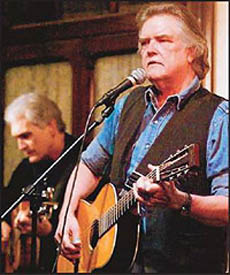
Actually Mr. Bill and Ms. Kitty, proprietors of Café Carpe in Fort Atkinson, gone done it again. They have a knack for digging up genuine borderline geniuses for their small corner of the roots music universe, with the creaky stage chair.

Saturday night it was Malcolm Holcombe. Seeing as he’s North Carolina-born, he might’ve evoked something of a historical namesake, one of those original “high, lonesome sound” wailers, Roscoe Holcomb.

And this Holcombe’s got more than a pipeful of hillbilly when he talks. But he’s sharp as a Bowie knife, and he plays more like a mix of Son House and Mississippi John Hurt. He says he listened to the WLS in Chicago as a youth, so he probably got a goodly exposure to the blues.

https://a4.ec-images.myspacecdn.com/images02/136/269dac2a73c04095a7456487941710c2/l.jpg

There are YouTube performances to be found, but none I’ve seen do him justice. In the flesh, Holcombe possesses an almost uncanny blend of brute intensity and backwoods charm.  A long shank of hair swaying across from his forehead and the mutton chops give him a hint of Luke the Drifter, a Hank Williams alter ego. But he’s a bona fide troubadour.  And when he shakes his head like a dog with something tasty in its jaws, you flash on the demons he admits to grappling with and overcome. He’ll drawl through a few sentences, set laconic pauses. Then his whole body explodes, with a kicker, or a punch line. You realize it’s a punch line when he chuckles and your shock at the outburst fades as you comprehend what he just said. He slyly claims to be “just an average passive-aggressive, vanilla.”

But there’s nothing vanilla about this guy, when you hear him bashing and slashing at his acoustic guitar, but with all the manual dexterity of, say, a master of exquisite hardwood chopping.   I’m talking about an eccentric, steely finger-style guitar technique that perfectly mirrors his slingshot/buckshot vocal dynamics. Part of that style includes a way of leaning on a chord change that hoists his rumbling baritone into a lyrical curve.

And the poetry of Holcomb’s lyrics tends to sneak up on you: “Silence is a loan, but nobody owes a dime. We ain’t supposed to last forever, and there’s a lot we ain’t supposed to know. Me, I don’t know nothin’, but my baby loves a slow love song.” I like how the romantic throw-away leavens the philosophizing.

Or : ”I grew up hungry… I left her for the sea… Going to a place made for giving. Your children don’t belong.” That last line seems peculiar, until you realize he’s talking, with terse eloquence, about dying.

You want blues wit? “Those high-heeled women make a fool out of you; they follow you around, and make your socks roll up and down.”

I bet 98% of you never heard of this guy, but the now-proverbial 99% oughta hear him. Hell, the other 1% needs to. But imagining this guy sidling up to a one per-center is like a cottonmouth spiraling round an elephant’s leg. He might toy with the notion, but knows he probably won’t draw blood, though you do think of fangs, sometimes, in his beat-manic moments.

But if Holcomb feels like he’ll lose his hat at any moment, the deep inhale of his music feels like a lifetime fully lived, hard and tender.

His latest album is “To Drink the Rain.” He has a very respectable website at:http://www.malcolmholcombe.com/